Showing posts with label Africa. Show all posts

Sunday, August 30, 2015

Film Photography Project and Picturing Wanteete

Image Source: http://www.picturingwanteete.com/project-history/
 
If you know me, you know that I'm a big fan of The Film Photography Project (FPP). (Click Here) to check them out.
 
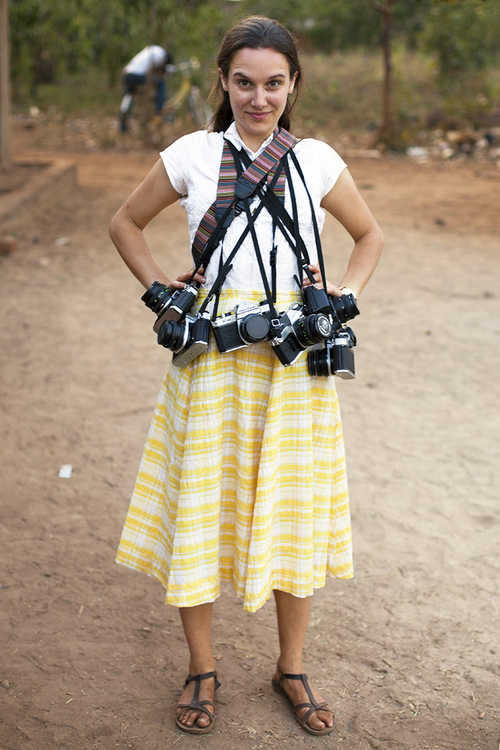
Well, FPP supported a project called Picturing Wanteete, where Louise Rita Contino moved to a village in Uganda (Wanteete), and shared photography with seventeen of its residents. The cameras she used, all Pentax K1000s, were donated by FPP.
 
(Click Here) to go to the project web page. I would love to see an exhibit of the pictures. Apparently, there was one in NYC earlier this year; I'm not sure if it's still up. But really, I just love the concept.
 
DMC-365.blogspot.com

Saturday, July 18, 2015

Impossible Project Magazine - Rooster Brennan Documents African Safari with Instant Film

I am still thinking about how equipment and creativity interact to tell a story. Just yesterday, I met with my photographic friends and mentors, and got some feedback on the Smithsonian Folklife Festival images that I've been posting here recently. I got comments ranging from something like "See, if you control the background, you can't tell that these shots weren't made in Lima, Peru, as opposed to DC," which I loved, to "Not really sharp. That's the problem with flatbed scanning of 35mm film." All of the comments were useful to me, and were correct.
 
So, how does one share an African safari on instant film?
 
 
Well, you can check out the Impossible Project's magazine to see how Rooster Brennan did it, using the Impossible Lab to print his images on instant film. The article focuses on storytelling, more than equipment. I think he's done a fine job. (Click Here) to read the story and see the pictures.
 
I think that I still need to work on my storytelling with pictures. If the storytelling were strong enough, the technical details would become much less important. That's my goal.
 
DMC-365.blogspot.com

Sunday, August 10, 2014

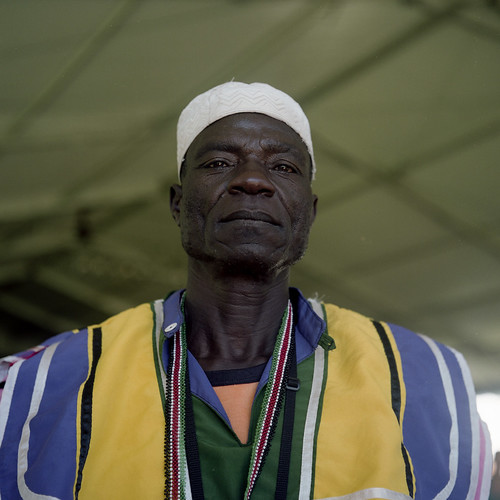
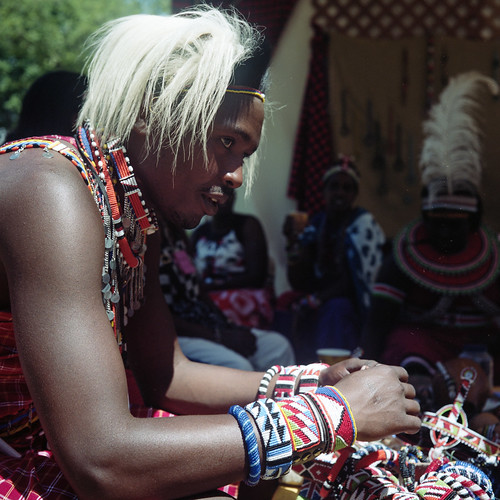
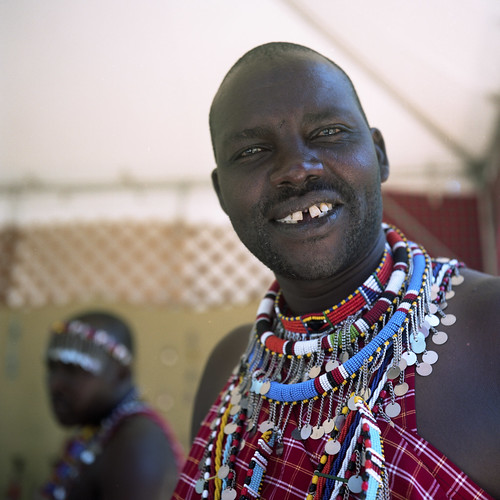
More Rolleiflex Images from the Smithsonian Folklife Festival - Celebrating Kenya

Yesterday, I shared a couple of images from the China side of this year's Smithsonian Folklife Festival. Today, Kenya.
 
All of these were shot with my Rolleiflex T twin lens reflex (TLR) camera and Kodak Portra 160 film.
Smithsonian Folklife Festival 2014 - Kenya
 
It was a very bright, contrasty sunny day, as you can see in the second image. So, getting under the tent coverings helped to diffuse the light quite a bit, leading to better overall images. That said, it made getting a natural looking background more challenging.
 
In any case, people did seem to like being photographed with an old TLR camera. I've had this camera for several years. I used it quite a lot when I first bought it, less so recently. I've still got it in my bag, and plan to shoot more with it in the near future.
 
DMC-365.blogspot.com
 

Friday, June 28, 2013

Andrew Esiebo on NYT Lens Blog - West African Barber Shop Project


I am always interested in new photography projects, and how to find them. Many times, they end up being concepts that sound routine, banal, but once the photos are made, an unexpected depth is discovered.
 
Nigerian photographer Andrew Esiebo decided to photograph barber shops across West Africa, including the countries of Ivory Coast, Senegal, Benin, Ghana, Liberia, and Mauritania. Mr. Esiebo comments on the trust that is required to allow a barber to shave you with a straight razor; it leads to a special kind of relationship.
 
Mr. Esiebo found similarities in the shops across West Africa - hand painted signs, posters of sports teams, religion, famous musicians. He also noted how similar hair styles are across the region, even though each may connote a different meaning in different countries. Men's hairstyles can be intended to communicate toughness, freedom from conformity, or attractiveness to females.
 
Mr. Esiebo notes that most foreign photographers coming to Nigeria want to focus on photographing the slums. He feels that the barber shop project provides a different view. I agree.
 
(Click Here) to read the entire post on the New York Times' blog "Lens."
 
DMC-365.blogspot.com