Showing posts with label Elmarit 90mm f28. Show all posts

Sunday, July 27, 2014

Korean War Memorial Reflecting Pool - Leica M9, 90mm Elmarit f2.8

 
Korean War Memorial Reflecting Pool, by Reed A. George
Leica M9, Leica Elmarit 90mm f2.8 v.1 Lens
iso 160, f4.8, 1/500 sec.
 
 
I went into DC with my friends Alain and Charlie today, to do a little shooting at the National Mall. It was a gorgeous day. While I find the national monuments a bit challenging to shoot, mainly because they've all been done so much, I do like this image. I think the combination of the curved lines, reflections, and people interacting with the environment are just enough to make it a decent composition.
 
DMC-365.blogspot.com
 

Sunday, April 20, 2014

Springtime for a New Teenager

My daughter has just turned thirteen. So, as you can imagine, I had to bribe her to come out for some pictures with the cherry blossoms, which have just really started to bloom near our home. Here are a couple of shots I made with the Leica M9 and Elmarit 90mm f2.8 lens.
 
I haven't used this lens as much as I should. In fact, when I want a telephoto on my M9, I usually grab the amazingly good Canon LTM 135mm f3.5. But, the Elmarit is also so good. As a result of remembering that, the Elmarit is in my bag for the trip to Japan. I'm leaving today for that one.
 
DMC-365.blogspot.com
 

Friday, January 31, 2014

Dreaming in Monochrom(e) - High ISO Analog!

I've been playing around, using my Leica M4-2 film camera as a test to see if I really want a Leica Monochrom digital rangefinder. (Click Here) to read more about it.
 
I said at the outset that I understand that shooting black and white film in a Leica M4-2 has its limits in terms of emulating the amazing new Leica Monochrom digital black and white rangefinder. For example, the Monochrom is noted for its great performance at high iso settings.
 
Well, I decided to "push" (quite literally) the high iso limits of the M4-2 by push processing Kodak TMax 400 film to iso 1600. It was quite simple. I just shot at exposure settings for iso 1600 instead of 400, then instructed my favorite processor (The Darkroom, www.thedarkroom.com) to push the film two stops. This cost an extra $2 in processing costs. Pretty reasonable.
 
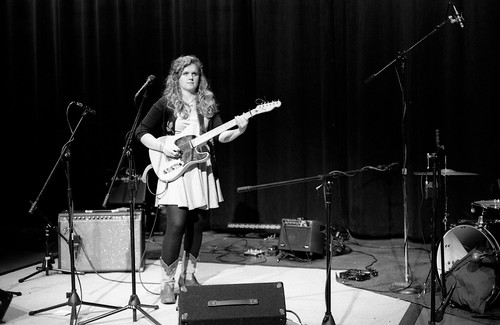
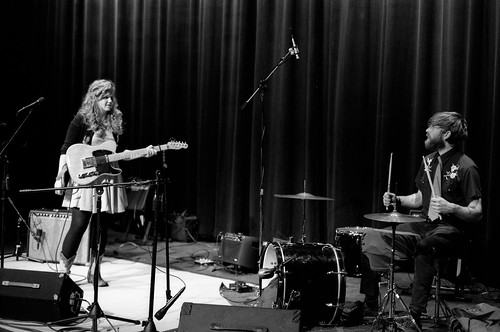
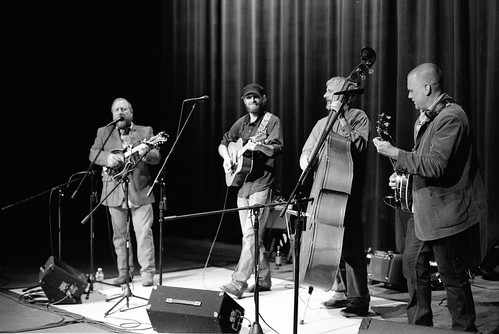
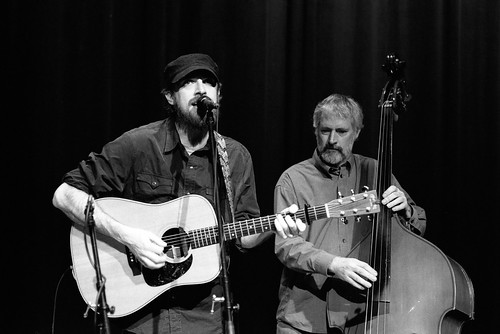
Here are some results from a concert I attended. I'll start with one of my favorite local performers, Melissa Wright and her band Mink:
 
 
Mink, by Reed A. George
Leica M4-2, Kodak TMax 400 pushed to 1600
 
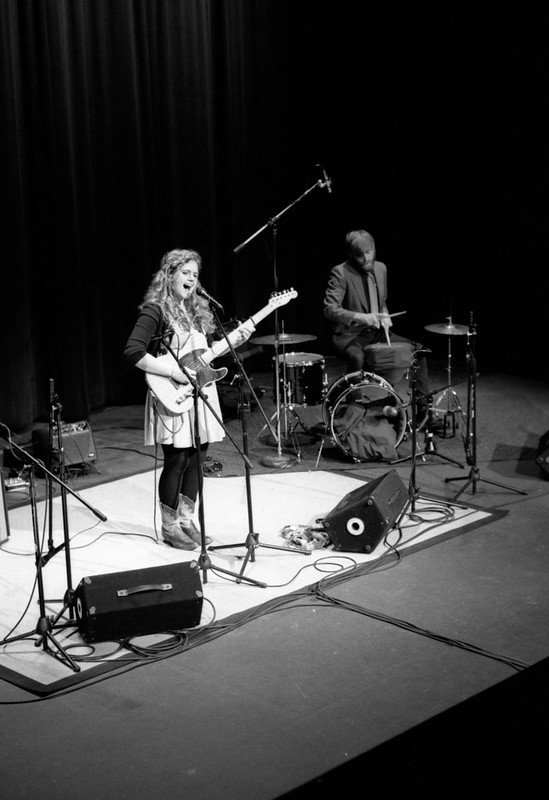
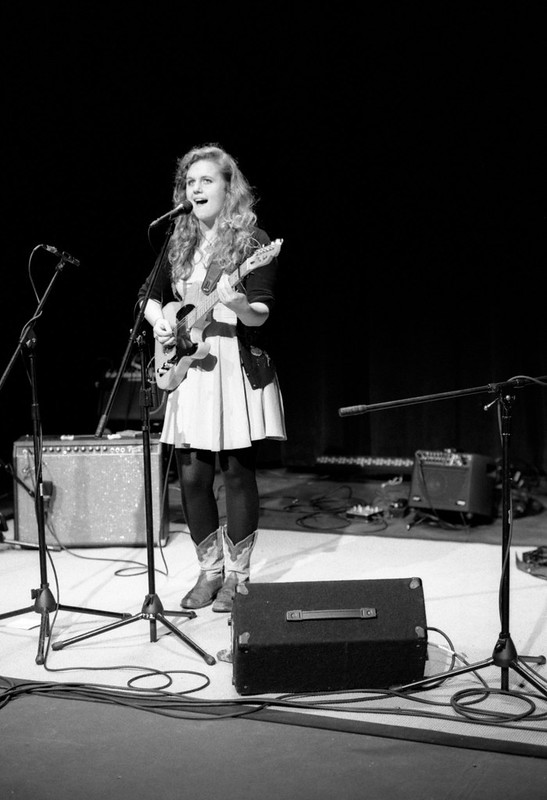
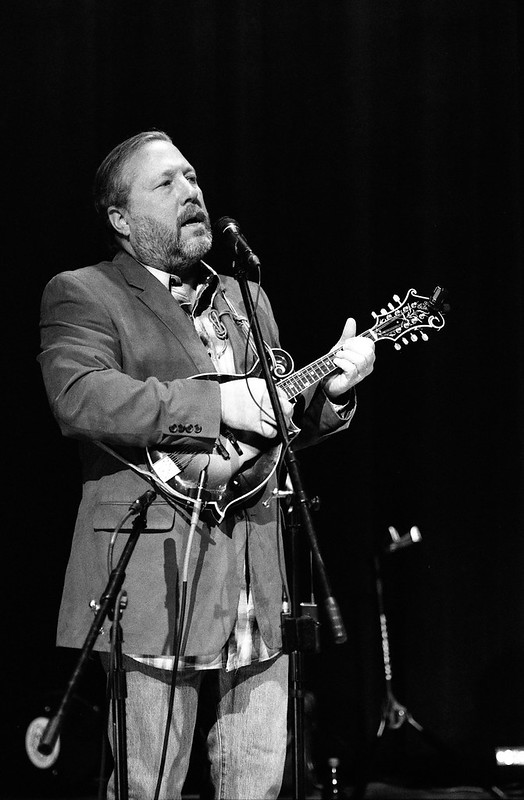
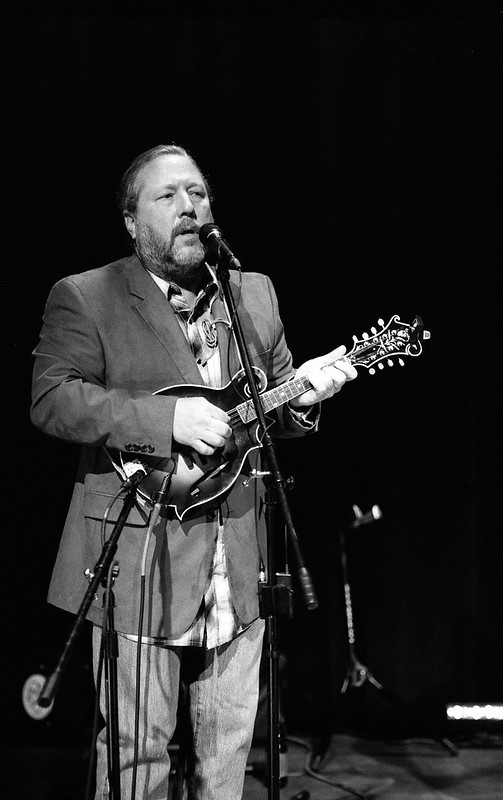
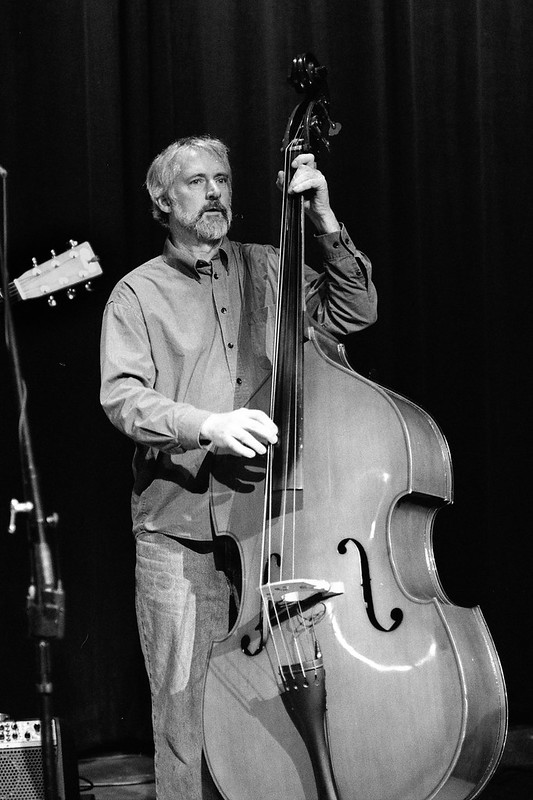
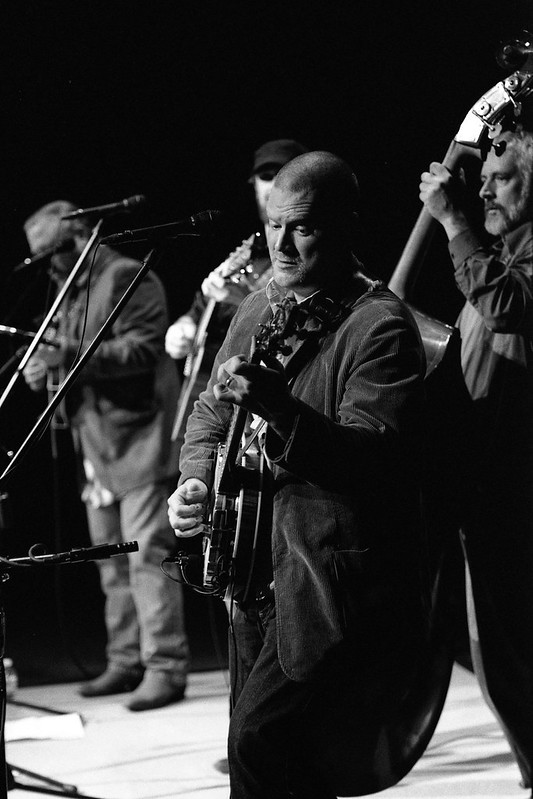
And a few more, these of the band Dry Mill Road:


Dry Mill Road, by Reed A. George

Leica M4-2, Kodak TMax 400 pushed to 1600

 
All of these shots were made with my Zeiss Sonnar 50mm f1.5 and Leica Elmarit 90mm f2.8 lenses.
 
As you can see, the contrast is pretty high in these shots. They don't have the amazing dynamic range of the modern digital monochrome. But, the film grain is quite nicely controlled in my opinion. In fact, I think these look better than equivalent shots with my digital rangefinder Leica M9 would at iso 1600. I may have to do that comparison to further convince myself. Already this little project is teaching me something about how much I can do with film and the M4-2. I haven't pushed a roll of film in years, and I feel that it frees me up to take the M4-2 along for shooting musical events that I would have only really considered the Nikon D700 for in the past. I'm pleased with that.
 
I also want to continue to extend this, seeing how TMax 400 holds up at 3200 and maybe even 6400. I'm sure it will start to degrade significantly at 6400. But, I think I may be able to pull of 3200 with no real problem.
 
From what I understand, Kodak TMax 3200 is no longer being produced, but Ilford Delta 3200 is. I used the Ilford film in the past, but found the grain to be very high at 3200. I liked that film much better at 1600. Considering that the Ilford 3200 is more than twice the price of TMax 400, I'm not sure I have much motivation to give it another try, especially when I can get this type of performance from the TMax.
 
DMC-365.blogspot.com



Thursday, June 27, 2013

Leica at The White House!

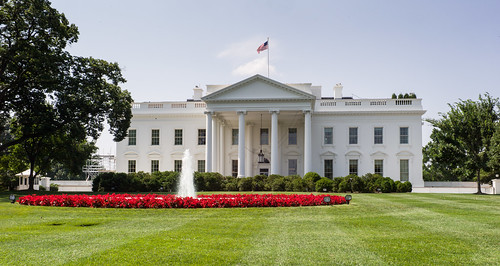
I recently nominated my friend and colleague, Jason Osborne, for a White House science award known as Champions of Change: Citizen Science. Guess what? He won! And, I got an invitation to accompany him to The White House in Washington, DC to receive his award.
 
The White House, by Reed A. George
Leica M9, Leica Summilux 35mm f1.4 Lens
iso 160, f16, 1/125 sec.
 
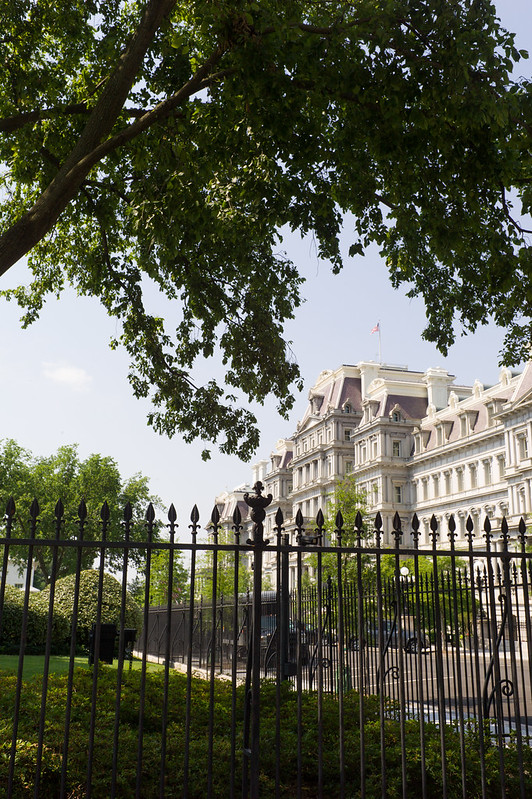
Okay. The event was at The White House, not in The White House. It was actually held inside the Eisenhower Executive Office Building (EEOB), adjacent to The White House. A massive, imposing structure, EEOB is full of history and executive presence.
 
EEOB, by Reed A. George
Leica M9, Leica Summilux 35mm f1.4 Lens
iso 160, f11, 1/180 sec.
 
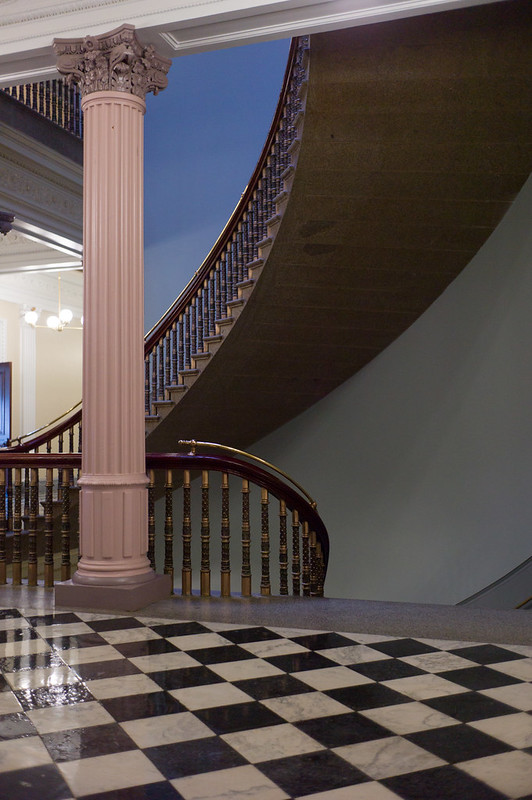
Stairway, EEOB, by Reed A. George
Leica M9, Leica Summilux 35mm f1.4 Lens
iso 640, f2.4, 1/125 sec.
 
 
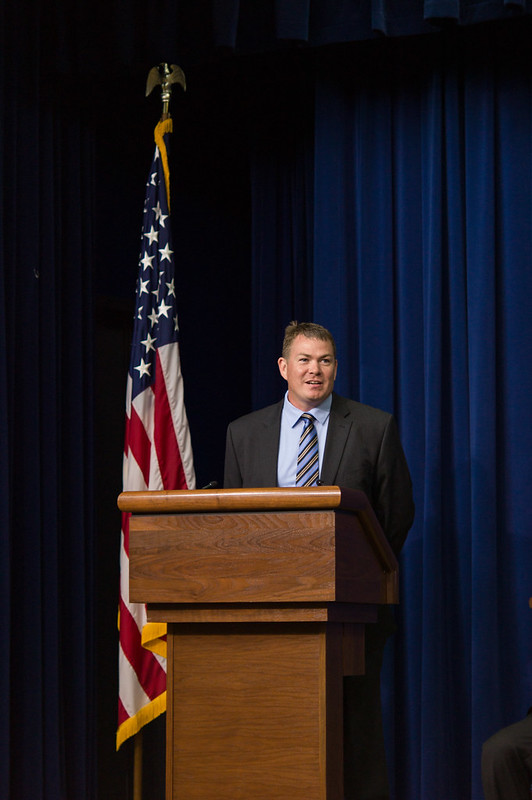
The event was moderated by Joe Palca, Science Desk Correspondent for National Public Radio (NPR). Philip Rubin, Principal Assistant Director for Science, White House Office of Science and Technology Policy and Ellen McCallie, Program Director for informal Science Education, National Science Foundation (NSF) gave brief talks about the importance and wonder of "Citizen Science," which is a new breed of science, where citizens (both ordinary and extraordinary, but not necessarily career scientists) contribute to scientific discovery and advancement, and gain science education through participating in real science projects.
 
Jason won the award because of the citizen science program that he and partner-in-crime Aaron Alford (co-founders of a non-profit called Paleo Quest) developed to involve the public in discovery and description of micro fossils. The program is called SharkFinder. (Click Here) to read about Paleo Quest and SharkFinder.
 
Jason's Talk, by Reed A. George
Leica M9, Leica Summilux 35mm f1.4 Lens
iso 640, f2.8, 1/180 sec.
 
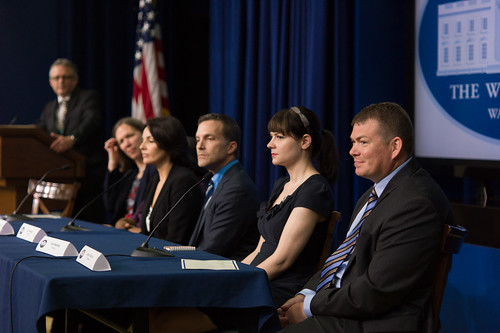
After each awardee made a short presentation, there was a panel discussion, addressing questions on citizen science from the audience.
Panel, by Reed A. George
Leica M9, Leica Elmarit 90mm f2.8 Lens
iso 640, f3.4, 1/180 sec.

 
Jason at The White House, by Reed A. George
Leica M9, Leica Elmarit 90mm f2.8 Lens
iso 640, f4, 1/180 sec.
 
This was an incredible opportunity for me. I thoroughly enjoyed the event, and consider it a once-in-a-lifetime chance to photograph at The White House. I'm also extremely proud of Jason, Aaron, and Paleo Quest for their success - all the result of hard work and concentration on the importance of science and education.
 
For more information on the Champions of Change program, (Click Here).
 
I decided to shoot my Leica M9 at this event, knowing that I'd want a fast lens, quiet operation, and likely no flash. I settled on the Summilux 35 because of the fast f1.4 aperture, and the 90mm Elmarit f2.8 for longer shots. I did not want to be fiddling with lens changes during the event, so I kept it to these two lenses. I'll admit that I was tempted to shoot a Nikon DSLR and zoom, which would have worked fine as well. As it was, I felt that my work was unobtrusive, and I'm pleased with the results overall.
 
DMC-365.blogspot.com