I recently nominated my friend and colleague, Jason Osborne, for a White House science award known as Champions of Change: Citizen Science. Guess what? He won! And, I got an invitation to accompany him to The White House in Washington, DC to receive his award.
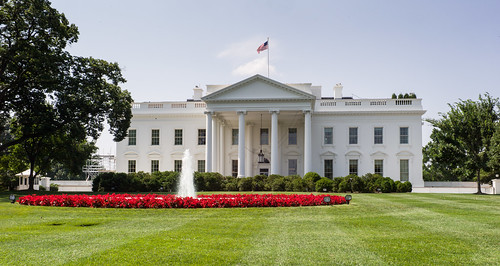
The White House, by Reed A. George
Leica M9, Leica Summilux 35mm f1.4 Lens
iso 160, f16, 1/125 sec.
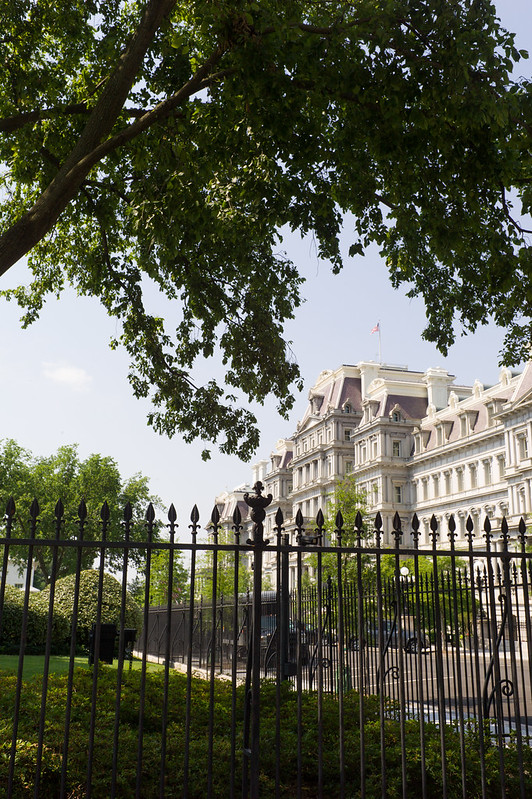
Okay. The event was at The White House, not in The White House. It was actually held inside the Eisenhower Executive Office Building (EEOB), adjacent to The White House. A massive, imposing structure, EEOB is full of history and executive presence.
EEOB, by Reed A. George
Leica M9, Leica Summilux 35mm f1.4 Lens
iso 160, f11, 1/180 sec.
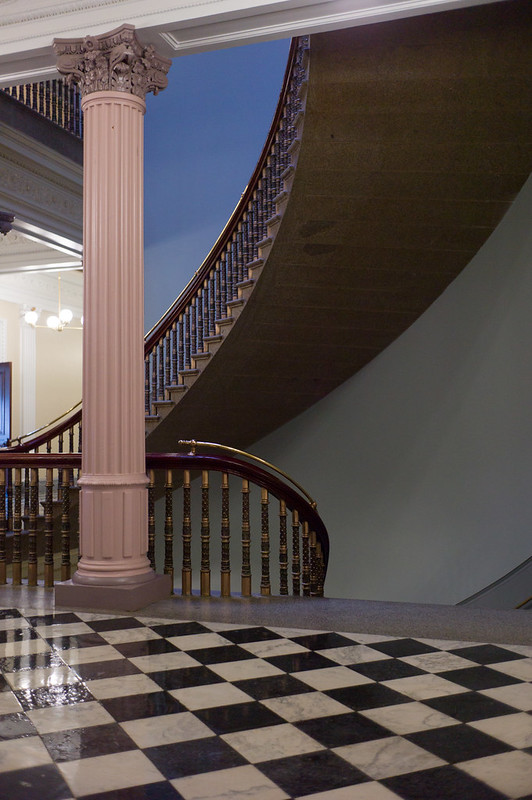
Stairway, EEOB, by Reed A. George
Leica M9, Leica Summilux 35mm f1.4 Lens
iso 640, f2.4, 1/125 sec.
The event was moderated by Joe Palca, Science Desk Correspondent for National Public Radio (NPR). Philip Rubin, Principal Assistant Director for Science, White House Office of Science and Technology Policy and Ellen McCallie, Program Director for informal Science Education, National Science Foundation (NSF) gave brief talks about the importance and wonder of "Citizen Science," which is a new breed of science, where citizens (both ordinary and extraordinary, but not necessarily career scientists) contribute to scientific discovery and advancement, and gain science education through participating in real science projects.
Jason won the award because of the citizen science program that he and partner-in-crime Aaron Alford (co-founders of a non-profit called Paleo Quest) developed to involve the public in discovery and description of micro fossils. The program is called SharkFinder. (
Click Here) to read about Paleo Quest and SharkFinder.
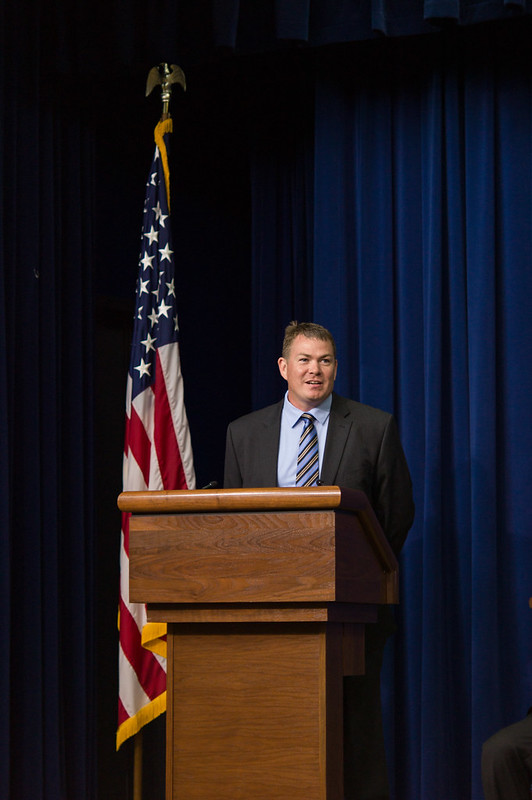
Jason's Talk, by Reed A. George
Leica M9, Leica Summilux 35mm f1.4 Lens
iso 640, f2.8, 1/180 sec.
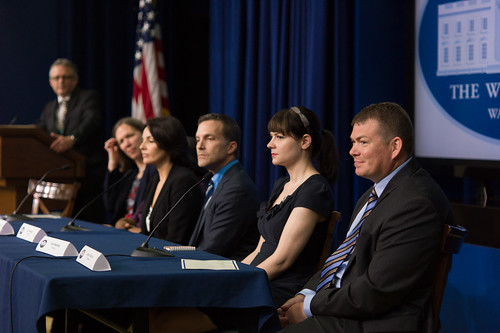
After each awardee made a short presentation, there was a panel discussion, addressing questions on citizen science from the audience.
Panel, by Reed A. George
Leica M9, Leica Elmarit 90mm f2.8 Lens
iso 640, f3.4, 1/180 sec.
Jason at The White House, by Reed A. George
Leica M9, Leica Elmarit 90mm f2.8 Lens
iso 640, f4, 1/180 sec.
This was an incredible opportunity for me. I thoroughly enjoyed the event, and consider it a once-in-a-lifetime chance to photograph at The White House. I'm also extremely proud of Jason, Aaron, and Paleo Quest for their success - all the result of hard work and concentration on the importance of science and education.
For more information on the Champions of Change program, (
Click Here).
I decided to shoot my Leica M9 at this event, knowing that I'd want a fast lens, quiet operation, and likely no flash. I settled on the Summilux 35 because of the fast f1.4 aperture, and the 90mm Elmarit f2.8 for longer shots. I did not want to be fiddling with lens changes during the event, so I kept it to these two lenses. I'll admit that I was tempted to shoot a Nikon DSLR and zoom, which would have worked fine as well. As it was, I felt that my work was unobtrusive, and I'm pleased with the results overall.
DMC-365.blogspot.com