Showing posts with label Reala. Show all posts

Wednesday, June 12, 2013

Skeletons From The Closet - May Results - Minolta Autocord TLR

I've been shooting the Minolta Autocord in the month of May.
 
(Click Here) to see and read about the camera.
 
I don't like to admit it, but I had a hard time getting used to shooting this camera. The twin lens reflex (TLR) design is somewhat challenging to shoot, but I've always enjoyed shootiing with my Rolleiflexes. When I first received my Autocord, which is in really great condition, I was impressed with the brightness and sharpness of the focusing screen. I thought I would get a lot more use out of the camera than I did this month.
 
I did take it several places, to try different applications. Here's a shot from a bluegrass festival, from a jam inside a livestock barn.
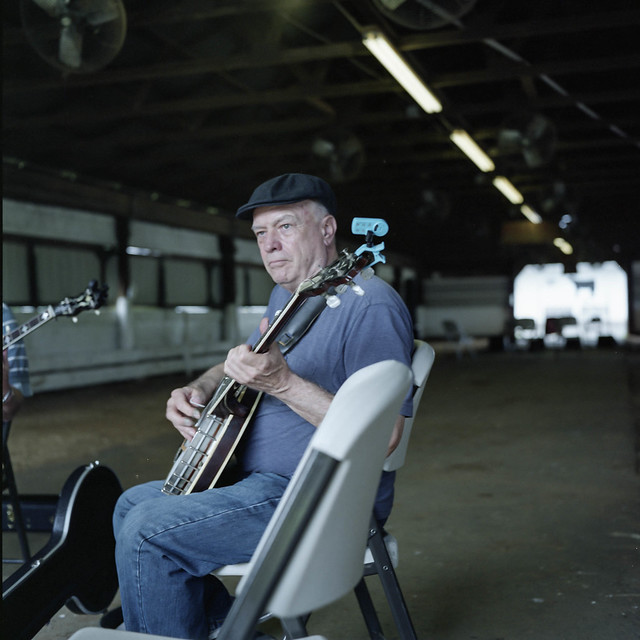
 
Barngrass, by Reed A. George
Minolta Autocord, Fuji Reala 100 Film
 
In an upcoming post, you'll see a lot more pictures from this event, taken with my Leica M3. I really used the M3 a lot more than the Autocord at this event. However, I do like the color in the shot above.
 
I also took the Autocord ot one of my local haunts, the Manassas National Battlefield. There I met Madison (below) and her parents, who were kind enough to let me take her picture on the front porch of the Henry House.
 
Madison, by Reed A. George
Minolta Autocord, Fuji Reala 100 Film
 
Perhaps part of my trouble finding the opportunity to shoot the Autocord had to do with the fact that I kept it loaded with Reala, which is iso 100 film. That, coupled with a relatively small maximum aperture of f3.5 meant that shooting in anything but bright light was a challenge.
 
I also noticed that some of my images from the Autocord are not super sharp, while others are very sharp. Now, that may very well be related to the slow film, again. I may not be holdiing the camera still enough for slow shutter speeds. At this size of the computer screen the images look plenty sharp; up close (pixel peeping), not so much. Again, probably more related to my technique than the camera or lens.
 
Another thing I need to keep in mind is that depth of field is shallower with medium format than with 35mm. So, at a given f-stop, with the longer "normal" lens of the TLR, and the larger film format, I may just need to be a little more careful in setting exact focus, or stop down to increase depth of field.
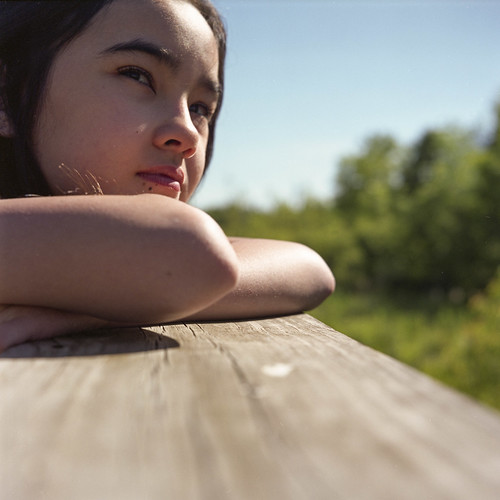
 
Into The Future, by Reed A. George
Minolta Autocord, Fuji Reala 100 Film, Rolleinar Closeup Lenses
 
Above is an example where I got a nice sharp image. For this shot, I used a Rolleinar close up lens set. I'm pretty sure mine is a Rolleinar 1. This is a pair of attachments that go on the front of the camera lens, which in the Autocord has the same bayonet filter mount as the f3.5 Rolleiflexes. One closeup lens (the thin one) goes on the taking lens, the other with a thicker attachment to provide parallax correction, goes on the viewing lens. The Rolleinar is a must for portraits with a TLR. I've always gotten great results using the Rolleinar on my Rolleiflexes. It does fine on the Autocord as well. The other factor in this shot above is that I set the camera on the handrail you see in the picture. So, I knew that camera motion would not be an issue. I think that strongly contributed to the sharpness of the image. I guess I need to load up some iso 400 film in the Autocord, shoot at higher shutter speeds, and pay more attention to holding the camera steady.
 
I used the Rolleinar closeup lenses for the next two shots as well.
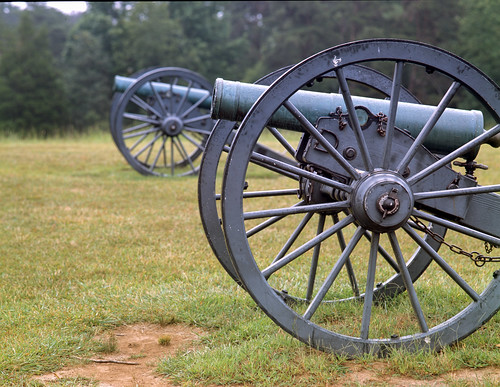
Manassas Cannon, by Reed A. George
Minolta Autocord, Fuji Reala 100 Film, Rolleinar Closeup Lenses
 
No problem with sharpness here, either.
 
Here's a portrait using the Rolleinar, window light, and a reflector (to bring up the dark side of my friend's face).
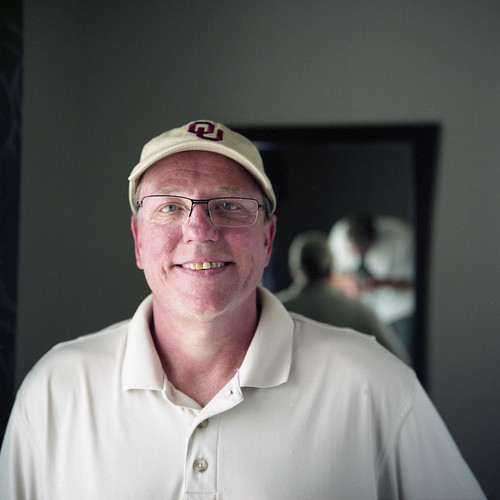
 
Lifelong Friend, by Reed A. George
Minolta Autocord, Fuji Reala 100 Film, Rolleinar Closeup Lenses
 
I set this shot up to show some Autocord bokeh (out of focus areas). That's me in a mirror in the background, standing on a bed, peering down into the Autocord. This shot would have been impossible without the Rolleinar, which allowed me to focus close enough, and reduced depth of field to highlight the bokeh effect.
 
Here are a couple more shots, from my wandering around the Northern Virginia, West Virginia area.
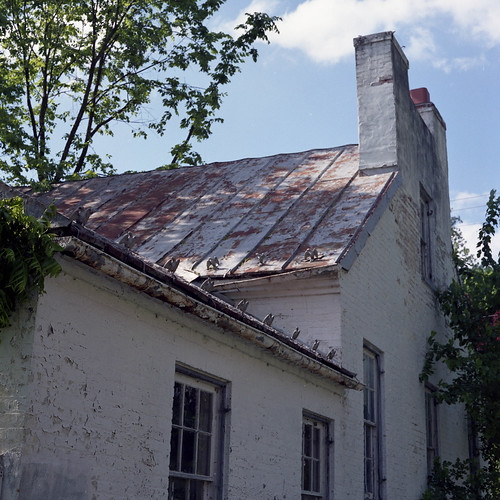
 
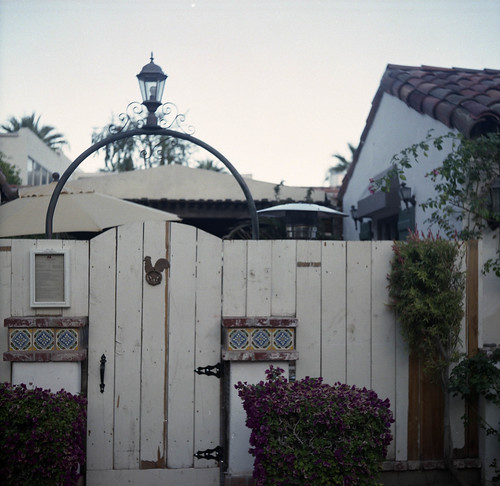
Harpers Ferry Roofline, by Reed A. George
Minolta Autocord, Fuji Reala 100 Film
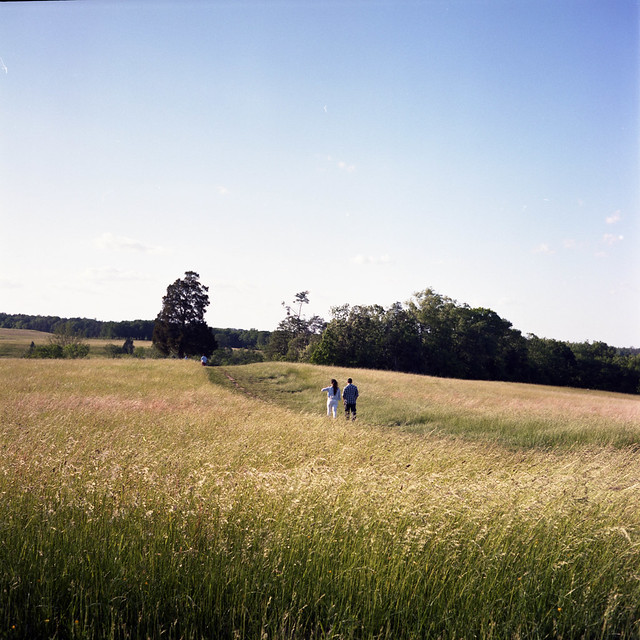
 
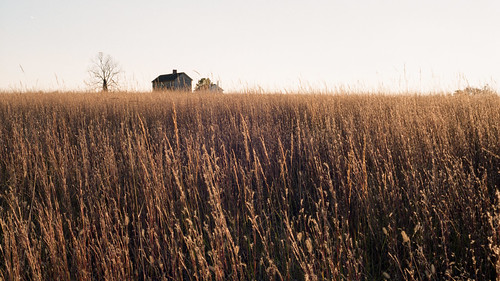
Evening Walk, by Reed A. George
Minolta Autocord, Fuji Reala 100 Film
 
In this final shot, I focused on the grass at the front of the picture. I like the way the focus drops off with distance in this shot.
 
So, yes, I do need to keep trying to perfect my technique with the Autocord. It produces lovely color and bokeh. I just need to learn to feel natural shooting a TLR again - I used to use them quite a lot. Overall, I'm pleased with the results from the Autocord, but I'm not selling off my Rolleiflex.
 
Meanwhile, I'll be shooting a completely different camera in June for SFTC - the Konica Auto S1.6 rangefinder.
 
DMC-365.blogspot.com


Tuesday, April 2, 2013

Skeletons From The Closet - March's Camera, the Zeiss Ikonta in the California Desert

Here are some results from March's Skeletons From The Closet (SFTC) camera, the Zeiss Ikonta 521/16 folding medium format camera.
 
(Click Here) to read my post describing this camera.
 
You may have seen my post from a few days back, sharing some pictures I took in the California desert with my Lumix DMC-G3. (Click Here) to see that post.
 
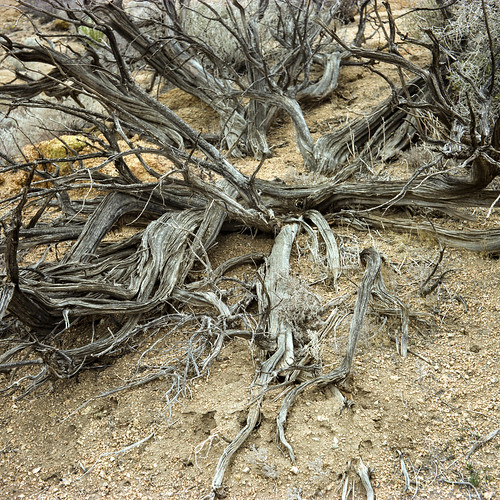
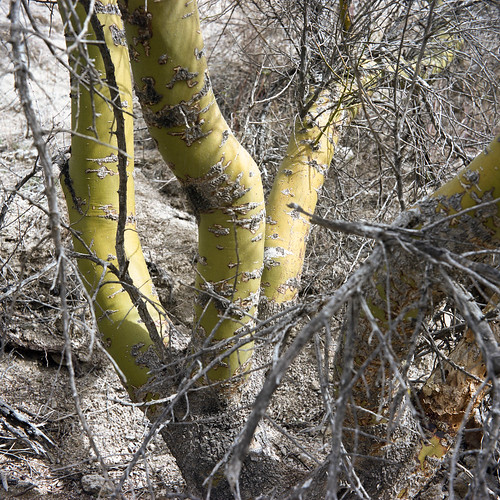
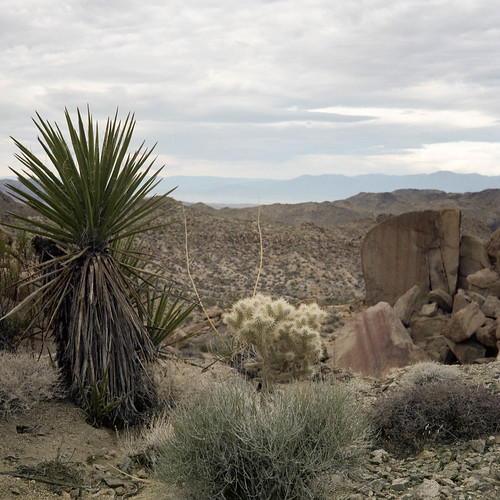
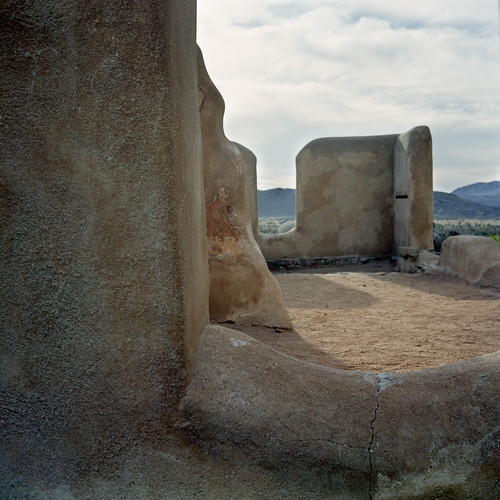
I also shot my Ikonta on that trip, and here are some results. I used Fuji Reala color print film, which gives wonderful muted colors. I find it a refreshing way to shoot the desert, which is typically overdone saturation-wise, in my opinion.
 
Wooden Bones, by Reed A. George
Zeiss Ikonta 521/16 Medium Format Folder with Tessar Lens
Fuji Reala Film
 
Palo Verde, by Reed A. George
Zeiss Ikonta 521/16 Medium Format Folder with Tessar Lens
Fuji Reala Film
Cloudy Desert Morning, by Reed A. George
Zeiss Ikonta 521/16 Medium Format Folder with Tessar Lens
Fuji Reala Film

Ryan Ranch, by Reed A. George
Zeiss Ikonta 521/16 Medium Format Folder with Tessar Lens
Fuji Reala Film
Quiet Corner in Palm Springs, by Reed A. George
Zeiss Ikonta 521/16 Medium Format Folder with Tessar Lens
Fuji Reala Film
 
So, how was using the Ikonta during the month of March? It was delightful! I really enjoy the image quality from this old camera. It is in such great condition, I feel that I'm getting the same type of results that the camera could have provided new - maybe better, since film technology has advanced so far since the 1950s.
 
There are some difficulties, however. For one thing, two out of three rolls I've shot so far have been loosely wound onto the takeup spool. I'm not sure why this is happening, but some of the exposures on the roll shown partially here were affected by light leaking down the edges of the backing film, as it didn't wind tightly onto the takeup spool. I've shot two more rolls since then - the first was fine, but the second also came off loose. I'm keeping my fingers crossed that no light leaked in. Look for more results in a week or so, when my negatives come back from The Darkroom.
 
Other than that, just the "normal" challenges of manual light metering and guess focus. I think guessing the focus distance is the most difficult thing. You can see in the last shot here that I don't always get it just right.
I use a do it yourself card that uses your own stereovision (the fact that your eyes are spaced apart from each other, which allows you to judge distance) to estimate distance. If you have a guess focus camera, you need to make one of these.
 
(Click Here) for a website that helps you to make your own rangefinder card.
 
I made mine double-sided, with distance in feet on one side, meters on the other. I carry this card in my wallet, so it's always with me. Great tool.
 
So, it was a blast shooting the Ikonta in March. But, back into the closet she goes! I'll keep practicing my exposure and focus guessing in April, when I'll be shooting an Agfa Solinette folding 35mm camera. I'll be introducing that camera soon in a new post. Stay tuned.
 
DMC-365.blogspot.com
 

Friday, November 16, 2012

Manassas National Battlefield Revisited - Bronica ETRS Medium Format Camera

 
Cannon, Manassas Battlefield, by Reed A. George
Bronica ETRS, Fuji Provia film, exposure unrecorded
 
I live very close to the Manassas National Battlefield, site of two of the deadliest battles of the American Civil War, exactly 150 years ago. I recently decided to take out my Bronica ETRS medium format camera, and Manassas was where I ended up. I've shot this site many times. While there's not really much there in terms of clear photographic subjects, the place has real feeling. It's a little difficult to take a shot of cannons that hasn't been taken before. I don't think I really succeeded with that here, but I do like how the barrels are aligned, with the one in the distance just a little out of focus. That was my goal.
 
Henry House, Manassas Battlefield, by Reed A. George
Bronica ETRS, Fuji Reala film, exposure unrecorded
 
 
One of the few remaining structures from the Civil War era is Henry House. You may remember that I have shot this house before, and won 2nd place in a contest, resulting in the shot being used in the Civil War Trust's 2012 calendar. That image, shot with a Panasonic Lumix DMC-G1, is shown below. The shot above is from the other side of the house.
 
Henry House, Manassas Battlefield, by Reed A. George
Panasonic Lumix DMC-G1, Leica Elmar 5.0cm f3.5 Lens
High Dynamic Range (HDR) Composite of Multiple Exposures
 
Finally, on my Bronica outing, I shot the old foundation of a house owned by a free mixed-race person during the Civil War. His name was James Robinson, and his mother was a black woman, and his father was reportedly a member of a prominent white family in the area. In any case, Mr. Robinson was very enterprising, and worked in many different ways to procure himself a piece of land and a house. As you can tell by visiting the remains of the old house, it was quite small. Judging only from memory, I would estimate the foundation to be about 400 square feet. Reportedly, it was a 1 1/2 story building, with the living quarters on the first floor.
 
Remains of James Robinson's House, Manassas Battlefield, by Reed A. George
Bronica ETRS, Fuji Reala film, exposure unrecorded
 
Mr. Robinson married an enslaved black woman, which meant by law at the time that there children were also slaves; they had eight together. While Mr. Robinson was able to arrange for some of his children to stay in the Manassas area, at least two of his sons were sold to distant plantations, including one in Louisiana.
 
For a short biography of Mr. Robinson, (Click Here).
 
During the first battle at Manassas (also known as "Bull Run") in summer 1861, after hiding under a bridge for the duration of the fight, Mr. Robinson came home to find 13 Confederate dead in his yard. His property had been in the direct path of the retreat from overwhelming Union forces. The Confederates would later push back, inspired by the arrival of Thomas Jackson's forces, routing the Union army and winning an important battle early in the war. This was the battle that earned Jackson his nickname, "Stonewall." Just 13 months later, the house served as a field hospital for the Union army in Second Manassas.
 
The house burnt down (due to arson) in 1993. While the National Park Service was dismantling the remains, they found an incredible cache of documents from the Robinson family, dating back as far as the 1830s.
 
I thoroughly enjoyed using the Bronica again. It has been a long time since I took it out. The camera and lenses are large, heavy, and noisy to use. This is no stealth camera. But, the optical performance is very nice. It certainly promotes slow, thoughtful composition. I hope you enjoyed seeing the result.
 
DMC-365.blogspot.com
 
I find Fuji Reala (iso 100) film to be very nice for scanning. It is a relatively low contrast color print film. Order yours here: