Showing posts with label memorial day. Show all posts

Monday, June 1, 2015

Extreme Kayaking

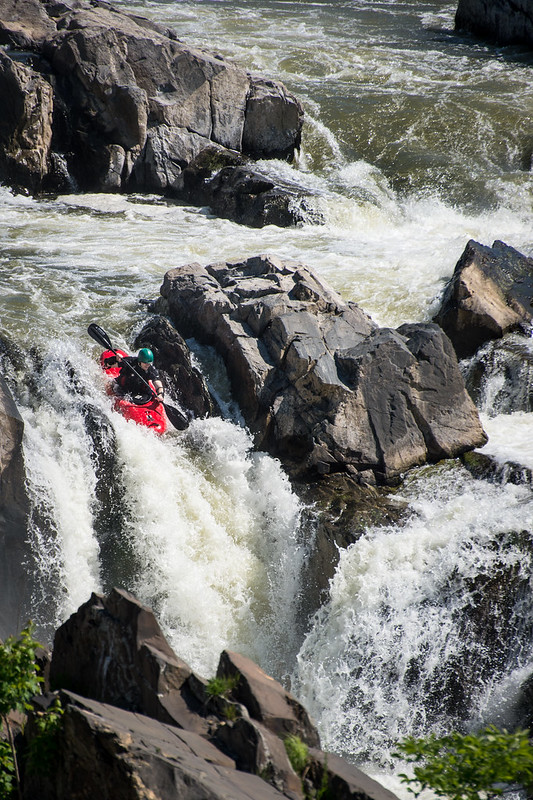
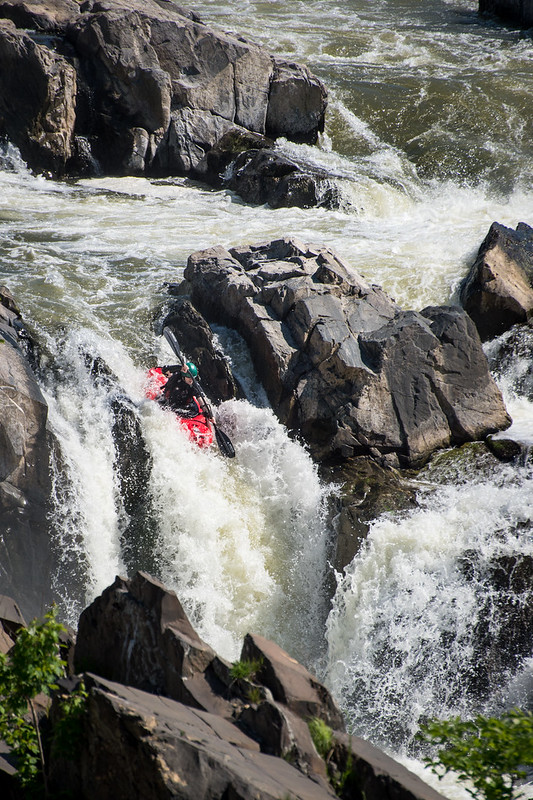
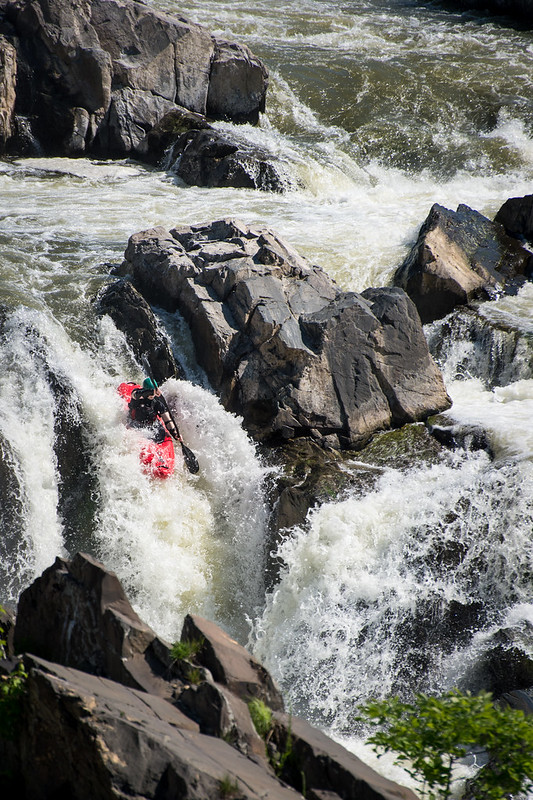
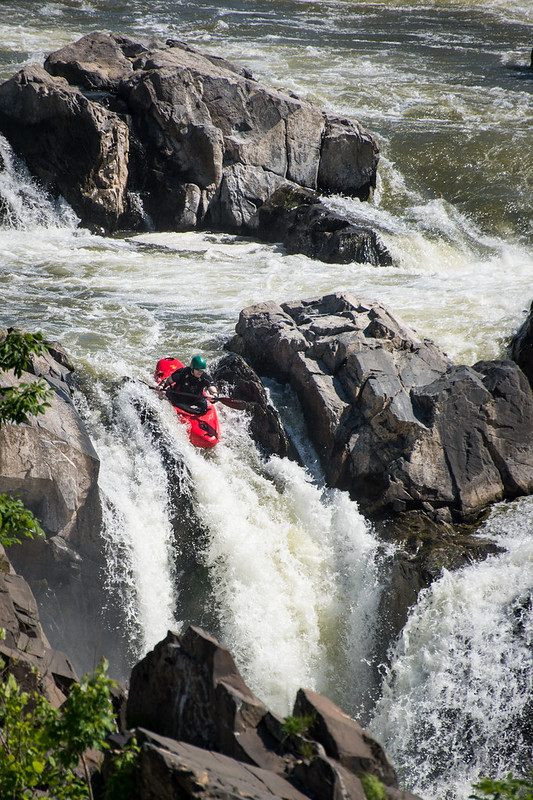
Today is Memorial Day. My daughter and I went to Great Falls Park in Virginia to attend a parkour event. That didn't work out, due to miscommunication about the location. But, we did get to watch some amazing kayakers, attacking the steep falls at the park. Here's a series I shot with the Nikon Df and 70-300 f4.5-5.6 VR lens.
 
 
After this shot, the kayaker literally disappeared behind the rocks. Amazing to watch.
 
DMC-365.blogspot.com


Wednesday, July 2, 2014

Washington DC - World War II (WWII) Leica at the WWII Memorial

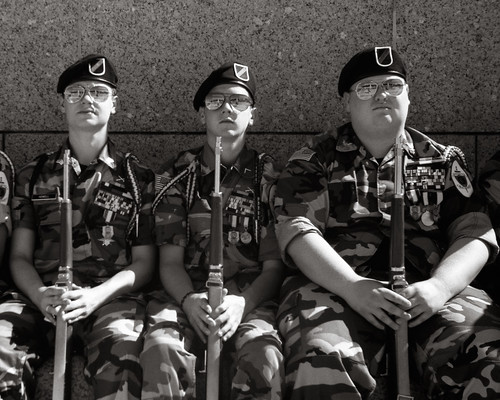
My friends and I went to the WWII memorial on the mall in Washington, DC on Memorial Day. Expecting the normal events held here every year, we were more than a little let down to learn that they'd taken place the day before.
 
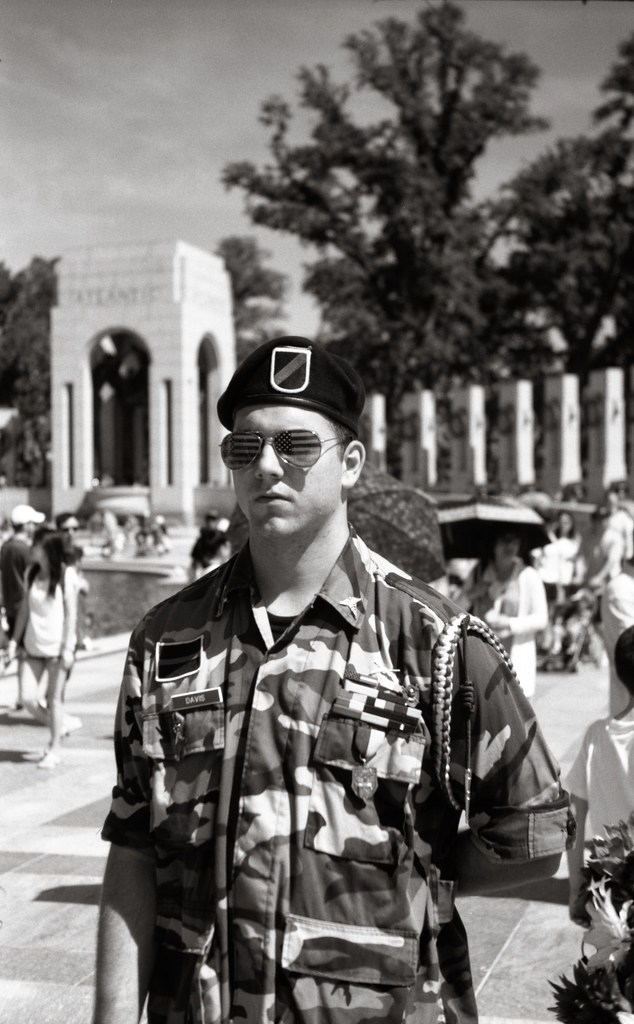
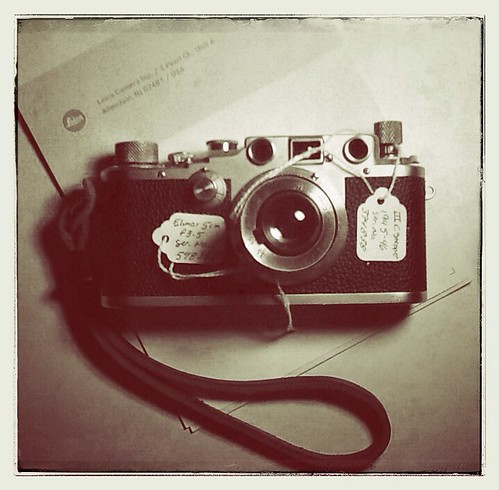
I had loaded up two of my wartime Leica IIIC cameras, one with TMax 100 black and white film and matching Elmar 5cm f3.5 lens, the other with TMax 400 and a 1937 Elmar 3.5cm f3.5 lens. These results are from the 5cm Elmar and TMax 100; the other camera is still loaded, as I didn't finish the roll.
 
Military School Students, by Reed A. George
Wartime Leica IIIC, Leica Elmar 5cm f3.5 Lens, Kodak TMax 100
 
True WWII Veteran, by Reed A. George
Wartime Leica IIIC, Leica Elmar 5cm f3.5 Lens, Kodak TMax 100
 
These old Barnack cameras are a lot of fun to shoot. I always enjoy seeing the images they can produce. I also think it was fitting to use two cameras that were most likely sold to Allied soldiers during the occupation of Europe at the end of the war for this event.
 
DMC-365.blogspot.com
 

Monday, May 26, 2014

Memorial Day Tomorrow - Planning to Shoot with Wartime Leicas

Wartime Leica IIIC
 
I'm going out today, Memorial Day, with a good friend. We're going into DC, where we'll photograph events on the National Mall. I'm going to shoot only wartime Leica gear, or at least gear that would have been in use at the time. That is, my kit will include a 3.5cm Elmar lens from 1937. The remaining pieces, two Leica IIICs and a 5.0cm Elmar, were all made during the years of WWII.
 
I'm really looking forward to seeing what I can do with this kit. I hope to have some images to share from the day soon.
 
DMC-365.blogspot.com
 

Monday, June 10, 2013

Panasonic Lumix DMC-LX7 Shoots Cicadas Close Up! The Cicada Class of 2013 is a Big One.

 
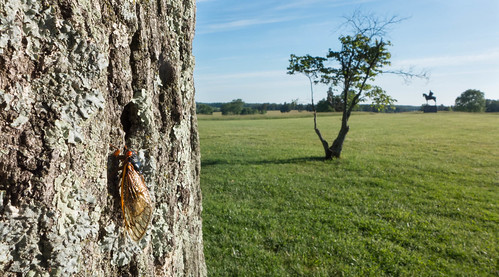
History Bug, by Reed A. George
Panasonic Lumix DMC-LX7
iso 100, f7.1, 1/250 sec
 
On Memorial Day weekend, I went to the Manassas National Battlefield a few times for some shooting. In the image above, you can see Thomas "Stonewall" Jackson's statue to the far right on the horizon. Up close, you see a 17 year cicada, freshly molted from the nymph stage into the adult.
 
(Click Here) to read about the cicadas of 2013.
 
Cicadas live between 13-17 years underground, and emerged in synchronized fashion with their siblings. Scientists don't know for sure why they do this - some believe it's to avoid predation, both by being unpredictable because of the long time scale and by safety in numbers making it more likely that some of them will get through. Others believe it's due to climate changes, whereby colder weather severely slowed down their previously faster development.
 
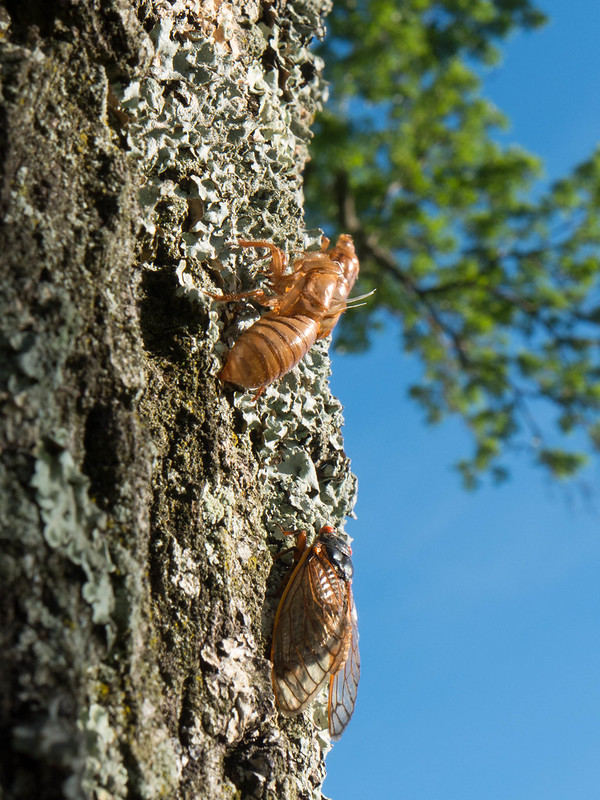
You Can Never Go Home, by Reed A. George
Panasonic Lumix DMC-LX7
iso 100, f8, 1/250 sec
 
In the picture above, you see the adult (lower center) next to the molted skin of a nymph. Quite a change in body plan, huh?
 
Big Year for the Cicadas, by Reed A. George
Panasonic Lumix DMC-LX7
iso 100, f3.5, 1/250 sec
 
As you can see in the picture above, there are a lot of cicadas in this year's brood. Those are the abandoned nymph skins left behind after moulting.
 
This subject reminded me again of the flexibility of the little Lumix DMC-LX7. I was also carrying my Leica M9 with Summaron 3.5cm f3.5 LTM lens and my Minolta Autocord TLR. Neither of them could have made these images. Even with the Rolleinar close up lens on the the Autocord, I couldn't have come close to this focusing distance. The LX7 sure does a lot of things right.
 
DMC-365.blogspot.com


Wednesday, June 5, 2013

Memorial Day at Manassas National Battlefield

If you follow my blog, you probably know by now that my home is close to the Manassas National Battlefield, site of two vicious battles of the American Civil War.
 
I got up early this morning (on Memorial Day) to walk around the battlefield, think, and shoot a few images.
 
Rebel Cannon, by Reed A. George
Panasonic Lumix DMC-LX7
iso 100, f2.8, 1/1000 sec
 
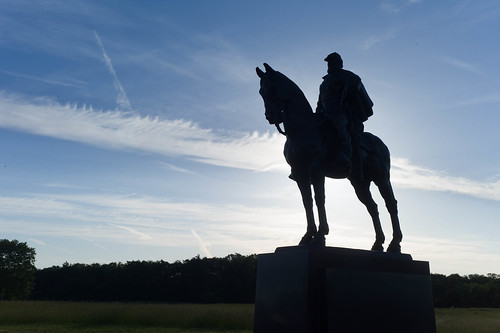
This cannon stands in the precise location of where Thomas Jackson's rebel troops rallied at First Manassas, where Jackson earned his nickname "Stonewall." I love the band of light grass against the much darker trees in the background. Everyone shoots pictures of the cannons; I still like the way the barrel of this on stands out from the background.
 
Stonewall Jackson Statue, by Reed A. George
Leica M9, Leica Summaron 3.5cm f3.5 LTM Lens (May's WLL Lens)
iso 160, f9.5, 1/500 sec
 
I shot the image above with May's Whole Lotta Leica lens, the Summaron 3.5cm f3.5 LTM. Here I tried to blend the base of the statue in with the treeline. I aimed for a complete silhouette, with no detail in the foreground, which I achieved reasonably well.
 
I'll finish up with an extreme wide angle shot.
 
Judith Henry's Grave, by Reed A. George
Leica M9, Voigtlander 12mm f5.6 LTM Lens
iso 160, f16, 1/180 sec
 
Judith Henry was an old lady at the time of First Manassas (July, 1861). Too old, in fact, to leave her home, even though it was placed right in the heat of the battle. Mrs. Henry was killed by Union artillery, which ripped through her room, removing one of her feet, amongst other injuries. She is buried with two family members in the front yard of her home, Henry House, on the National Battlefield.
 
Memorial Day in the states usually focuses on the military. We shouldn't forget that plenty of civilians die in these wars we wage against our own kind.
 
DMC-365.blogspot.com


Saturday, June 16, 2012

Olympus E-PL1, 14-150, and Lumix 20mm f1.7 Go On A Trip

 
Image Source: http://www.rangefinderforum.com/forums/showthread.php?p=1896778&posted=1#post1896778

User ywenz on Rangefinder Forum posted a gorgeous series of pictures from a recent trip.

(Click Here) to look at all of them. You owe it to yourself to see the other shots, in addition to the one above.

One interesting thing here is that all of the images are jpegs (not shot in raw format). There is a group out there of the opinion that Panasonic Lumix Micro 4/3 cameras don't produce acceptable jpeg images. Therefore, many (most?) shoot in raw format.

I always use raw, just in case I screw something up, like forgetting to change my white balance settings. It has happened. As I have written before, however, I don't like to spend more time than necessary post-processing my images. So, I've been trying different jpeg settings, in the hopes that when I shoot both raw and jpeg together, the jpeg will be acceptable for use, and the raw file will be there just in case.

I have posted a couple of others' ideas for ideal jpeg settings in the past. My latest post on the subject yielded settings that I'm now quite happy with.

(Click Here) to see the post with my favorite jpeg settings for the Panasonic Lumix DMC-G3, contributed by dixeyk on mu-43.com. These are now my standard jpeg settings, and are set up as a custom profile on both of my G3s. They're pretty good, in my opinion. Give them a try.

When I was primarily a Nikon shooter, I always chose very neutral jpeg settings (easy on the contrast, saturation, and sharpening), figuring that I could add all of those things back later, but cannot subtract them. The settings suggested in the post referenced above are very similar. Here's an example, pretty much right out of the camera.
Manassas Memorial, by Reed A. George
Panasonic DMC-G3, Lumix 14-140 f4-5.8 at 95mm
iso160, f5.8, 1/640 sec

I find that there's plenty of saturation here, contrast is well-controlled, and sharpness doesn't suffer.

DMC-365.blogspot.com
 

Thursday, May 31, 2012

Memorial Day Tribute - Manassas National Battlefield

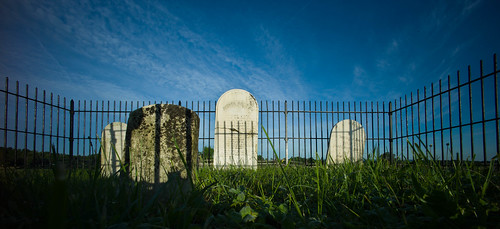
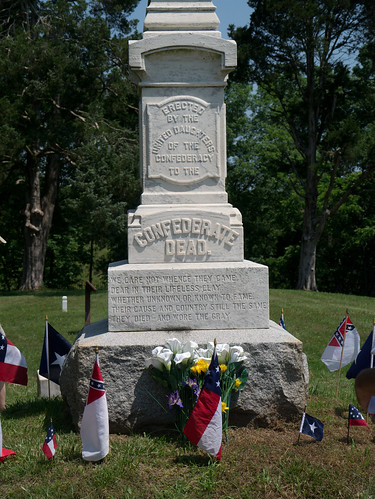
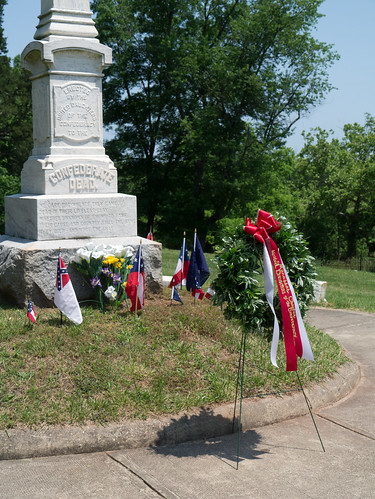
On Monday, May 28, 2012, I attended a Memorial Day tribute at the Manassas National Battlefield. The event began at the Groveton Cemetery, established in 1866 to permanently contain the remains of numerous soldiers killed in both battles at Manassas, and buried in shallow graves on the battlefield in the haste of war.
 
Groveton Cemetery, Manassas, by Reed A. George
Panasonic Lumix DMC-G3, Lumix 14-140mm f4-5.8 at 95mm
iso 160, f5.8, 1/640 sec
 
Of the 266 confederate soldiers buried at Groveton, only two are identified.
 
Groveton Cemetery, Manassas, by Reed A. George
Panasonic Lumix DMC-G3, Lumix 14-140mm f4-5.8 at 41mm
iso 160, f5.3, 1/600 sec
 
 
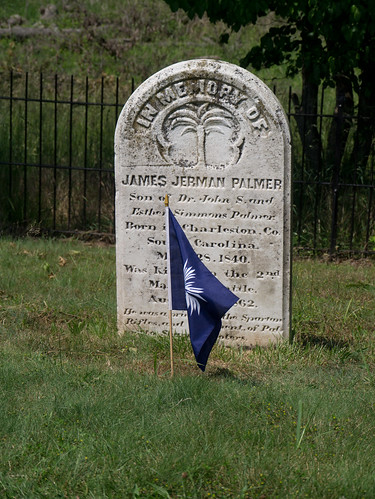
Groveton Cemetery, Manassas, by Reed A. George
James Jerman Palmer, South Carolina
Groveton Cemetery, Manassas, by Reed A. George
Panasonic Lumix DMC-G3, Lumix 14-140mm f4-5.8 at 54mm
iso 160, f5.3, 1/1250 sec
 
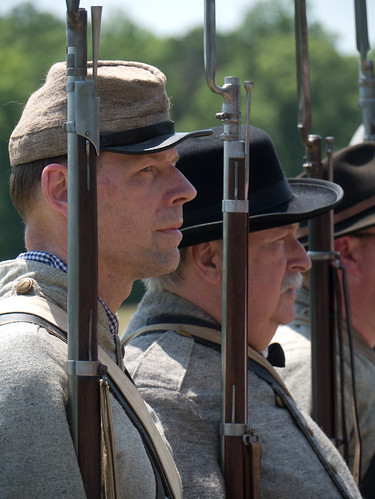
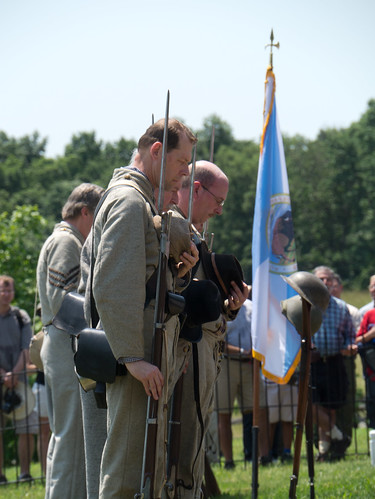
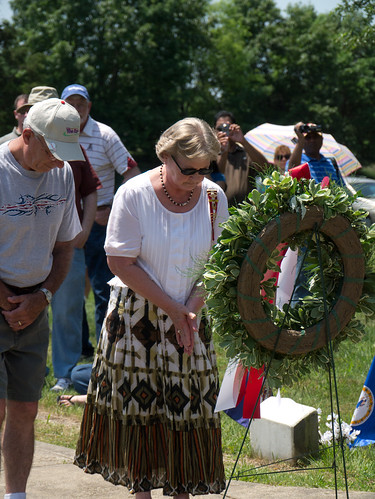
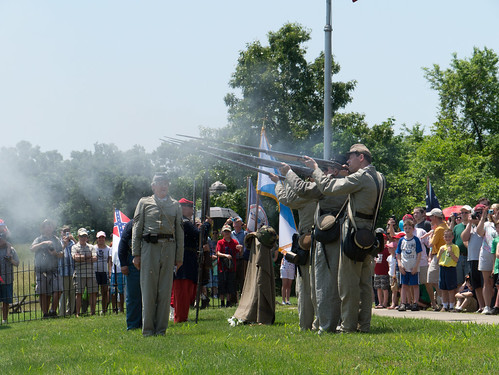
The 42nd Virginia reenactors were present to fire salute to their confederate comrades, and a wreath was presented at the memorial.
 
42nd VA, by Reed A. George
42nd Virginia, by Reed A. George
Panasonic Lumix DMC-G3, Lumix 14-140mm f4-5.8 at 140mm
iso 160, f5.8, 1/320 sec


42nd VA, by Reed A. George
42nd Virginia, by Reed A. George
Panasonic Lumix DMC-G3, Lumix 14-140mm f4-5.8 at 140mm
iso 160, f8, 1/250 sec
 

Groveton Cemetery, Manassas, by Reed A. George
Wreath Laying, by Reed A George
Panasonic Lumix DMC-G3, Lumix 14-140mm f4-5.8 at 75mm
iso 400, f5.8, 1/1600 sec


Groveton Cemetery, Manassas, by Reed A. George
Wreath at Groveton, by Reed A George
Panasonic Lumix DMC-G3, Lumix 14-140mm f4-5.8 at 32mm
iso 400, f5.6, 1/2000 sec


42nd VA, by Reed A. George
42nd Virginia, by Reed A. George
Panasonic Lumix DMC-G3, Lumix 14-140mm f4-5.8 at 70mm
iso 400, f8, 1/800 sec
 
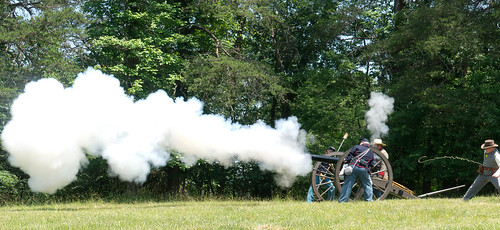
After the ceremony at the cemetery, Manassas' own resident reenactor group performed a cannon demonstration:
 
Cannon Fire, by Reed A. George
Panasonic Lumix DMC-G3, Lumix 14-140mm f4-5.8 at 32mm
iso 400, f6.3, 1/500 sec


I love the way the camera captured the fuse line still hanging mid-air, and the cannon fire at full extension from the barrel. Lucky shot.


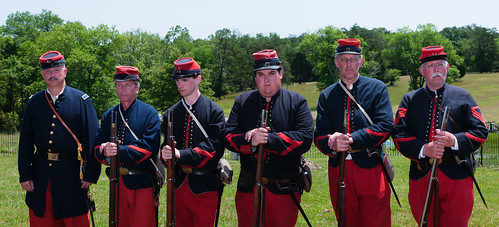
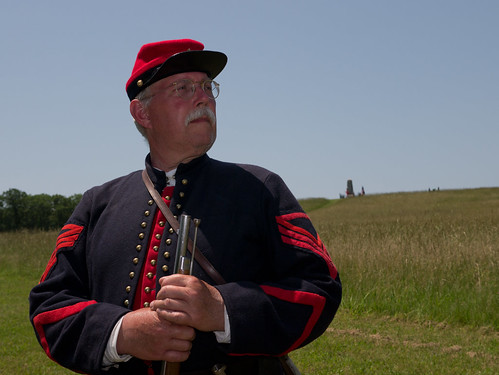
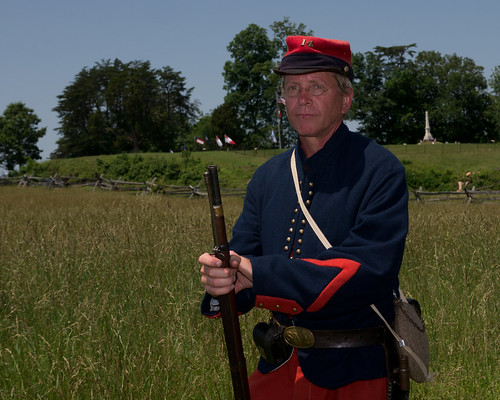
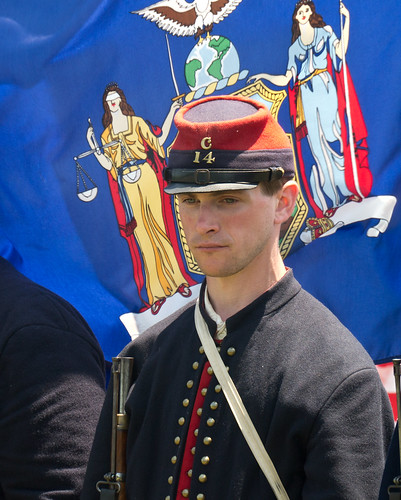
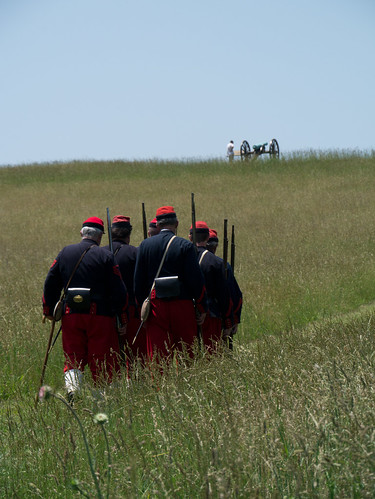
The rest of the event commemorated Union soldiers, who were represented by the reenactors of the 14th Brooklyn, the only outfit named after a city, rather than a state. They were also referred to as those "red-legged devils" by Stonewall Jackson and his troops.


14th Brooklyn, by Reed A. George
14th Brooklyn (Composite of Two Images), by Reed A. George
Panasonic Lumix DMC-G3, Pana-Leica Summilux 25mm f1.4
iso 160, f4.5, 1/160 sec
 
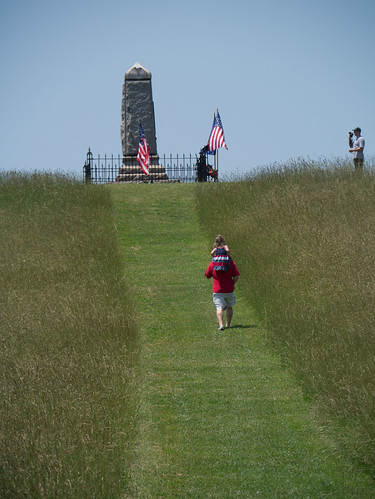
At this point, the activities moved across the road to the 14th's monument on the battlefield.
 
14th Memorial, Manassas, by Reed A. George
14th Monument, by Reed A. George
Panasonic Lumix DMC-G3, Lumix 14-140mm f4-5.8 at 140mm
iso 200, f6.3, 1/1000 sec


14th Brooklyn, by Reed A. George
14th Brooklyn Soldier, by Reed A. George
Panasonic Lumix DMC-G3, Pana-Leica Summilux 25mm f1.4
iso 160, f5.6, 1/160 sec
 
 
14th Brooklyn, by Reed A. George
14th Brooklyn Soldier, by Reed A. George
Panasonic Lumix DMC-G3, Pana-Leica Summilux 25mm f1.4
iso 160, f5.6, 1/160 sec

14th Brooklyn, by Reed A. George
14th Brooklyn Soldier, by Reed A. George
Panasonic Lumix DMC-G3, Lumix 14-140mm f4-5.8 at 140mm
iso 200, f6.3, 1/200 sec

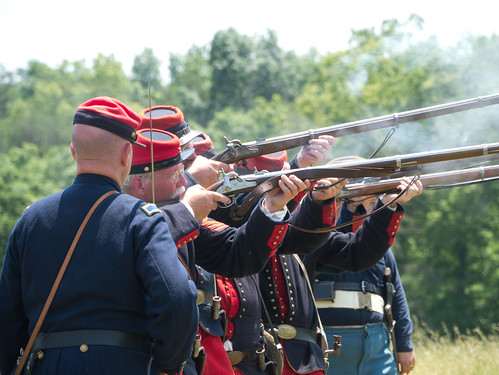
A final volley was fired by the 14th to commemorate all of the fallen veterans.

14th Brooklyn, by Reed A. George
14th Brooklyn Salute, by Reed A. George
Panasonic Lumix DMC-G3, Lumix 14-140mm f4-5.8 at 140mm
iso 200, f6.3, 1/200 sec


14th Brooklyn, by Reed A. George
Marching to Destiny, the 14th Brooklyn, by Reed A. George
Panasonic Lumix DMC-G3, Lumix 14-140mm f4-5.8 at 78mm
iso 200, f6.3, 1/800 sec
 

As this event was held in 90 degree weather at noon, it is hard to imagine worse lighting conditions. Okay, I can imagine worse, but the contrast was pretty high, and the shadows were not very complementary to my subjects.
 
You will see that I attempted to use fill flash on the shots taken with the Summilux 25mm f1.4. I did this with my Nissin Di466 flash set on manual, which allowed me to control the flash level better than TTL would have. I have found that even at minimum power, the Di466 can overpower the ambient light. In order to help out in this situation, I used a 3-stop Lumix neutral density filter on the Summilux. This allowed me to find an f-stop where the flash at minimum power was not overpowering, then select a shutter speed to balance the ambient light as well as possible. These are all manual settings, and since the flash power varies as a square to the distance from the subject, it is very hard to find one setting that works for multiple shots. In both of the Summilux portraits shown here, I think I underexposed the ambient, and allowed too much flash power to come through. This is a learning process for me, but at least I'm making some progress.
 
DMC-365.blogspot.com


Tuesday, May 29, 2012

First Shot (More To Come) From Memorial Day at Manassas National Battlefield

 
Civil War Cannon, Manassas, Virginia, by Reed A. George
Panasonic Lumix DMC-G3, Lumix 14-140mm f4-5.8 Zoom

Yesterday, I attended a Memorial Day event at Manassas National Battlefield in Virginia. Reenactors presented wreaths and musket salutes to both Confederate and Union memorials at the battlefield.

This is just the first image that I've worked with from the shoot. Even though it was held in 90 degree weather at noon, with the help of a little fill flash from the Nissin Di466, I did okay. I met several nice people, which also makes the effort worthwhile.

More to come.

DMC-365.blogspot.com