Showing posts sorted by relevance for query brownie. Sort by date Show all posts

Monday, February 16, 2015

Brownie Reflex 127 - Some Results

Remember when I posted the question pondering why cheap old cameras are so much fun? (Click Here) if you don't remember, or want to see what the Brownie Reflex looks like.
 
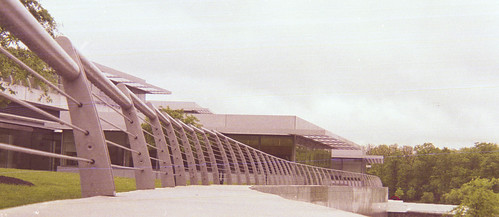
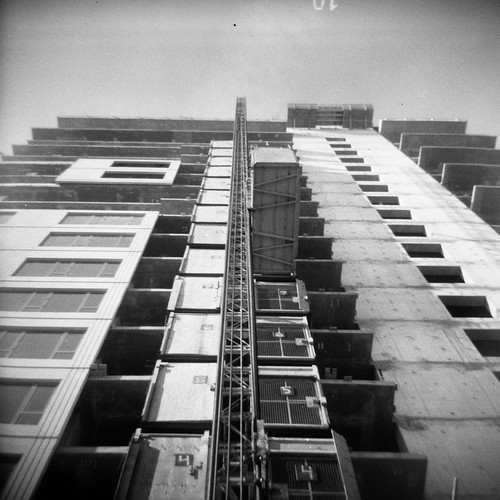
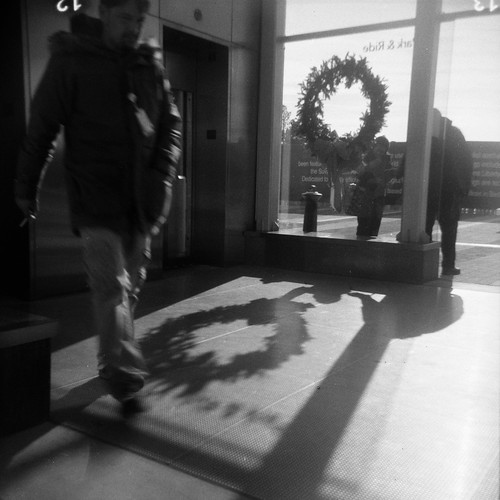
Here are a couple of results from my first roll of Efke 127 (I bought it a couple of years back), developed by Dwayne's. The first is just an odd perspective of the new Metro station in Reston, Virginia. I actually like the way the film exposure numbers show up at the top (who knows why?).
 
Metro, by Reed A. George, Kodak Brownie Reflex Camera
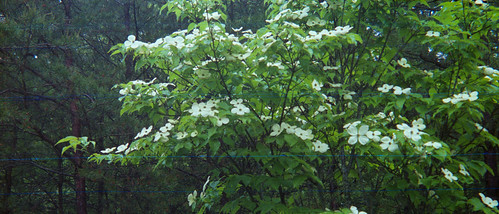
And here's a scene you may have seen before, as I shot it with both the Brownie and my new Nikon Df. (Click Here) to see the Df version.
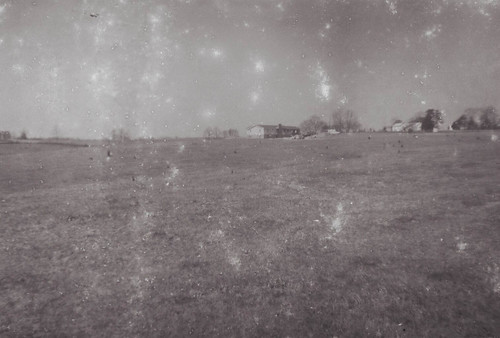
End of the Season, by Reed A. George, Kodak Brownie Reflex Camera
 
I like the randomness of shooting with very basic old cameras. They're cheap, and I think at least as much fun as shooting with a Holga. Once you've loaded film, the only variable in your control is composition. Exposure and focus are fixed.

This Brownie Reflex was $10, and cleaned up very nicely. However, getting 127 film is not easy, and it's expensive ($11-$12 per roll, twelve exposures). The only place I know to get it reliably is The Frugal Photographer (frugalphotographer.com). I bought a few rolls last time, including some black and white and some color.
 
You can still get 127 developed with no problem. This time, I used Dwayne's. But, I'm not as happy with their work as I am with The Darkroom (thedarkroom.com). Just my opinion. It's good to have them both as options.
I've got a few more images to share from this first roll, so stay tuned!
 
DMC-365.blogspot.com

Friday, June 14, 2013

Low Tech Wonders - A Triptych From The Brownie Bullet

I was looking over some of the first images I made on the Brownie Bullet last night. You may remember that I figured out a way to rig it to shoot panoramic images on 35mm film.
 
(Click Here) to read about how I did that.
 
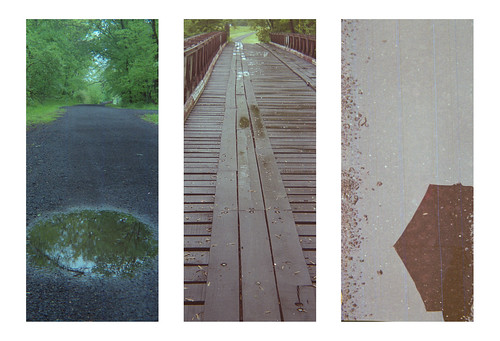
Anyway, three of the images seemed to go together. Following up on some recent advice I got in my Leica Akademie workshop, which was to "live with your images," I printed out a big 13x19 triptych of them. Here's what it looks like:
 
Brownie Bullet Triptych, by Reed A. George
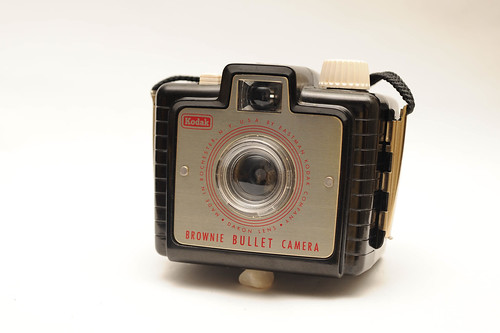
Brownie Bullet Camera, Converted To Shoot 35mm Panos
 
Personally, I like it. Imperfections and all.
 
DMC-365.blogspot.com


Sunday, May 19, 2013

Low Tech Wonders - Kodak Brownie Bullet Comes Back To Life!

I can already hear the questions: "Why, Reed, why? Why would you mess with a junk store camera that shoots film you can't even buy any more?" Well, maybe I'll be able to convince you that it's because it lies right at this interface of technology and art that I love to be in. Even if the tech is low...
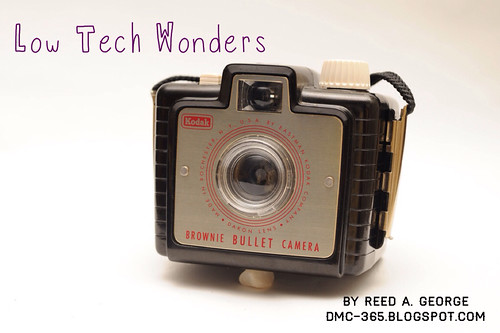
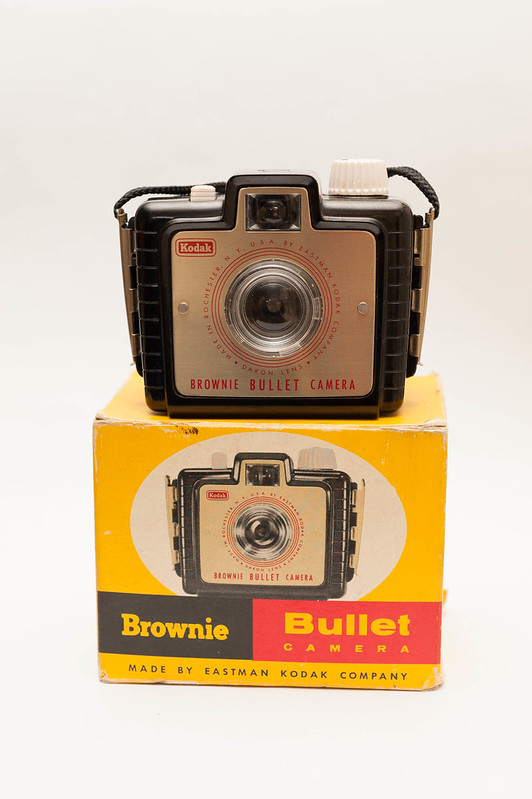
Kodak Brownie Bullet Camera
 
Okay. I bought this little Bakelite Kodak camera at an antique store. I paid too much (anything over $2 is too much). But, I'm still happy I did. Read to the end to see the special (hopeful) feature that really convinced me to buy it.
 
The Brownie Bullet was made from 1957-1964. It's final year of production was my birth year. It was designated as a "premium" model, which meant that you had to save up Campbell's soup labels to get one (no joke). It features a plastic Dakon lens, fixed aperture, fixed shutter speed.
 
(Click Here) to read a little more about the Bullet.
 
The Bullet is designed to shoot 127 roll film, which is essentially no longer available. Efke was making it until recently, but they've shut down. You can still buy Efke (iso 100) at Freestyle (Click Here), but it's just running down their stock. There is another company that still advertises 127 film, but they're out of stock.
 
Well, I just couldn't stand to let the Bullet sit without shooting something in it. After an hour or two of turning it different ways and thinking, I found a way to load 35mm film into it. The 35mm film cassette won't fit in the back. I had to unroll the film in the dark, roll it back up more tightly, and insert it into a modified film canister, cut down to fit inside. It worked!
 
But, there was one problem. The Bullet is designed with a curved film plane, which means that the 127 film doesn't lay flat in the camera; it's curved to match the curvature of the image produced by the Dakon lens. So, while I got images from the first roll (which pulled the film flat), they were unfocused in the center. A bonus, though, is that because the 127 film is wider than 35mm, the images were panoramic, and the sprocket holes were exposed. Cool.
 
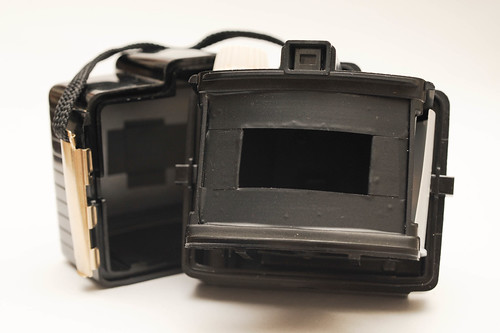
So, a little more modification was in order. I got some thin plastic material, and through trial and error cut it to the perfect size to fit inside the camera back, under where the film plane should be. It was important that it support the film from under the film plane, to put the film in the right place. Then, I cut a window into the plastic to serve as the image space. Finally, I covered the plastic in black electrical tape, both to reduce light bounce, and to smooth out the rough cut plastic surface.
 
Here's what the mod looks like:
35mm Mask for the Bullet, by Reed A. George
 
This time, I loaded up some iso 800 print film (I noticed that 400 was underexposed, even in daylight outdoors), and tried again.
 
Success! Here are the results. All are shot with the Bullet, all the same (only) aperture and shutter speed.
 
 
Here are some vertical orientation shots:
 
As you can see, I wasn't completely successful in eliminating scratches on the film. But, I'm pretty impressed by what this cheap old camera can do.
 
The hardest part? After finishing a roll, I have to once again open it in the dark, remove the 127 spool that it's now wrapped around, tape it to a leader sticking out of the original 35mm film cassette and wind it back in. Then I just take it to Walgreens, and remember to ask them to not cut the negatives.
 
So, I got my money's worth out of this experience. But, I still don't have an answer for a friend of mine who says "Hey, Reed, if you paid $20 more, could you get a camera that already works?" Yeah, yeah, I could.
 
I don't really understand the exposure. How can it take iso 800 to shoot in the daylight with this camera? 800 speed film sure wasn't there when this camera was made. It has no way to trigger a flash. And I doubt the shutter is faster now than when it was new.
 
I did order some iso 100 film in 127 size from Freestyle, but I honestly don't know how I'll use it. It will be too slow, even in broad daylight.
So, here's a true piece of history that still works.
 
Brownie Bullet
 
Oh, yeah. That hopeful secret? There was still a roll of 127 film in the camera when I opened it up. It was near the end. So, I'm hoping to get a glimpse into the last pictures this camera took before it got stuffed away into a closet or attic. Who knows how long ago that was? Fingers crossed - I'll be sending that roll off to The Darkroom for processing soon.
 
DMC-365.blogspot.com


Friday, May 31, 2013

Found Film! - The Brownie Bullet Yields Six Frames

A while back, I wrote about the Brownie Bullet that I found at an antique store. I converted it to shoot 35mm film, which is kind of cool.
 
(Click Here) to see the camera and some of my recent 35mm results.
 
The Bullet was a little challenging to convert for two reasons: 1) a roll of 35mm film doesn't fit inside the body; it has to be removed from the cassette, and 2) it shoots onto a curved film surface, so I had to build my own insert to get the correct film curvature.
 
But, the real reason I bought the camera was because it had a roll of 127 film still in it. I wanted to see if there were any images that had survived since the Bullet had been put on the shelf at some point in the past.
 
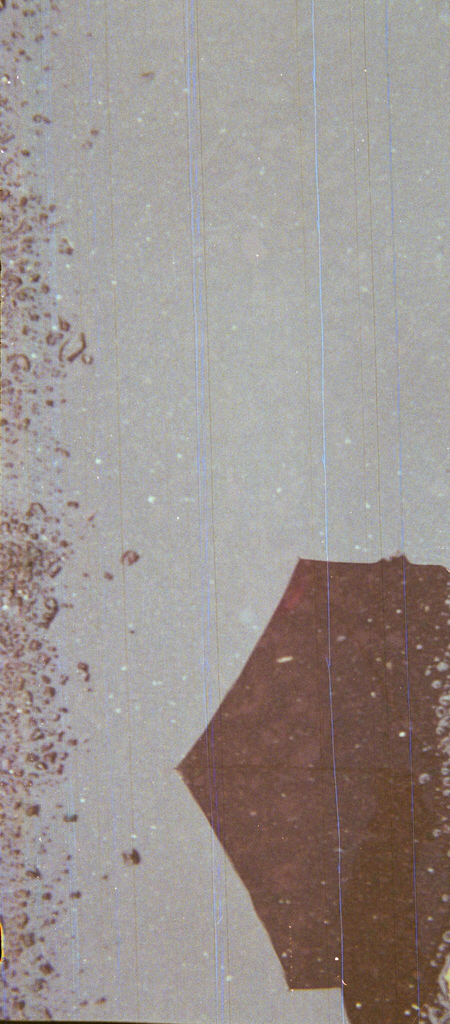
Well, The Darkroom (thedarkroom.com) has finished processing my 127 film, and guess what? Six frames came out!
 
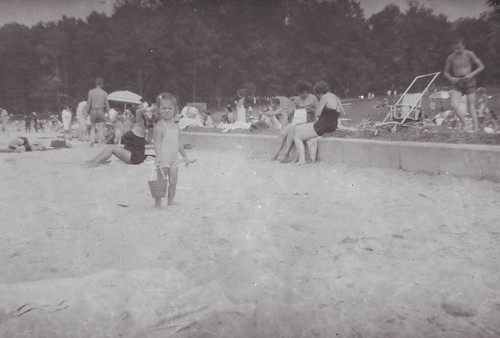
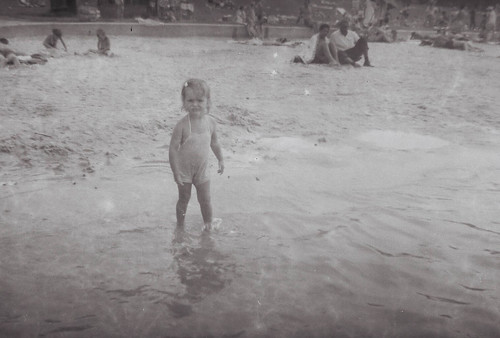
Seems one of its last trips was to the beach.


As far as I can surmise, this little girl is probably about my age (48) or a little older now, assuming all is well and she's still around.
 
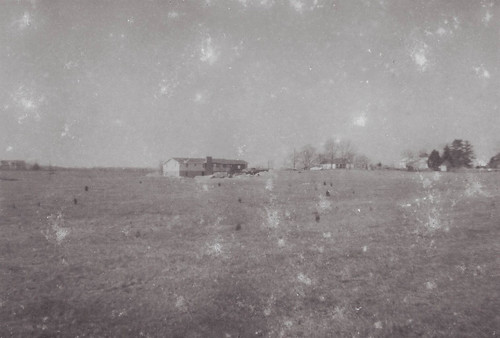
There were also a couple of shots of a house:
I haven't post-processed these scans from The Darkroom, other than to increase contrast a bit. If I zoom way in on the closer shot, I am pretty sure I see a Ford Mustang. That means it was at least 1964 when these images were taken.
 
I am always surprised at how well a roll of film can survive sitting for forty years or more in a camera. Getting six of the original eight frames was more than I could have wished for.
 
I have no idea where these were taken. If anyone recognizes the beach or the house, let me know!
 
DMC-365.blogspot.com
 
Here's a link to a book on Amazon about converting a larger 127 Brownie to 35mm film. I think this one's probably easier than the Bullet:


Wednesday, February 18, 2015

New Construction, Old Camera - Kodak Brownie Reflex Synchro

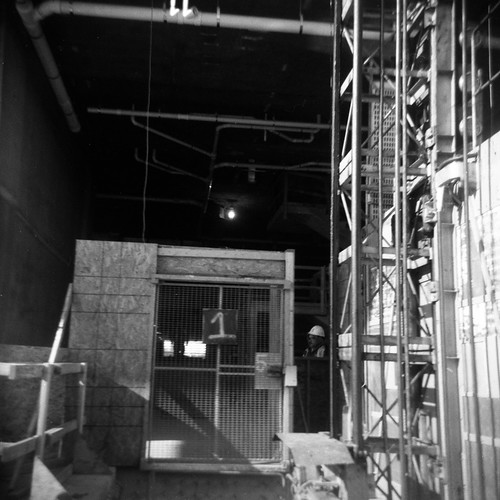
The Washington DC Metro has finally come to Northern Virginia. Not yet all the way to where I live, but it is now in Reston. Below, you'll see a few pictures of the construction going on around the new Wiehle Avenue Station on the Metro's Silver Line.
As in my previous two posts, these were made with the Kodak Brownie Reflex camera. (Click Here) to read a little about that camera. I picked mine up for $10 in dirty, but good working order.
 
Wiehle Station Construction, by Reed A. George
Kodak Brownie Reflex Synchro Camera, Efke 100 Film (127 size)
 
 
DMC-365.blogspot.com
 

Tuesday, February 17, 2015

More From the Brownie Reflex - The Corn Crib

A while back, I posted a slideshow of images of an old corn crib on the property where I work. (Click Here) to see those, shot with Nikon SLRs (both a 50 year old Nikon F and a brand new Nikon Df).
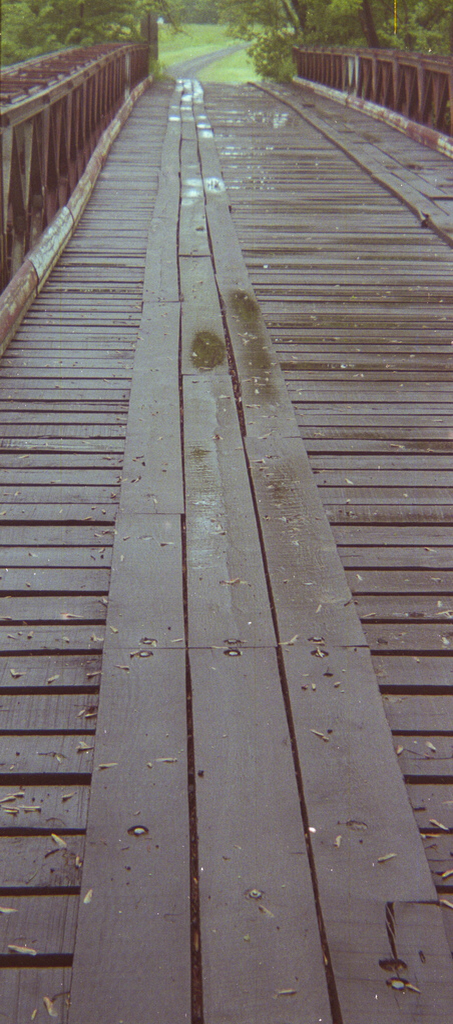
Here are two more shots of the same building, photographed with my $10 Kodak Brownie Reflex, on 127 Efke 100 film.
 
 
Rather dark and moody. I like them.
 
DMC-365.blogspot.com



Saturday, January 10, 2015

Why Are These Old Cameras So Much Fun?

I recently picked up a Brownie Reflex Synchro model camera in an antique shop. I paid $10, which is about $6 more than it originally cost.
 
It is a TLR design, but with fixed focusing only. So that really only means that it has a waist level finder. Anything >5 feet away will be in focus.
 
The camera was extremely dirty, but was easy to disassemble and clean; now it looks great. Another challenge: it shoots 127 film. Nearly extinct, 127 film can still be purchased at Frugal Photographer. (Click Here) to go to their website. It's pretty expensive, but at least it's available. You can get 127 film processed at The Darkroom.
 
I am guessing the fixed shutter speed to be about 1/50-1/100 second, and the aperture to be about f8. That means that iso 100 film should work in daylight situations. I have shot 10/12 frames of my first roll of Efke black and white 100 film. I look forward to seeing and sharing the results.
 
DMC-365.blogspot.com


Monday, December 30, 2013

The Change in Photography - Kirk Tuck Gives His Thoughts

 
It Should Be Simple to Tell a Story, by Reed A. George
 
I've been thinking a lot about where my photography is going. I've got a new project bubbling up, but it's not yet ready for prime time. I'm still absolutely all over the place with equipment, recently enjoying the use of my Nikon F2 as much or more than my digital wonders.
 
I recently read one of Kirk Tuck's posts on the Visual Science Lab, about his impressions of camera gear and photography, and what all of the changes mean. Change is certainly underway, but where is it all headed?
 
(Click Here) to read Kirk's post on Visual Science Lab. I'll summarize some of his points and give my own thoughts below.
 
First, Kirk says there are two photography communities: the old guys (I just celebrated my 49th birthday), who carry around big heavy gear and focus on "getting it right" technically, and the younger generation, who focus more on telling a story, regardless of equipment, video vs. still, or any other issues that may hold them back.
 
Another point Kirk makes is that we no longer need to worry about getting it right technically; that's easy. Unless of course you use old equipment like I do. The fact that I still sometimes wait to see if my pictures "come out" does show that I'm an anachronism. I can accept that fact.
 
Kirk also says that the difference between the very good and the very best cameras no longer matters. His example is the comparison between an Olympus OM-D (a very good camera), and a Nikon D800 (even better). His point is that you really cannot tell the difference with an online image from either camera, and that's all that matters these days. No one's going to look at prints in a gallery. At least no one but us old men.
 
Another point that I really identify with is that only those who resist the change in photography will feel any pain. I buy that. I like to use it all - old, new, difficult, simple. Hell, I had as much fun with an old Brownie 127 camera that I converted to shoot panoramic images on 35mm film as I had with my Lumix GX1 so far. Talk about different beasts. Meanwhile, I'm working through exactly how to use my new Lumix GX7.
 
Here is Kirk's prescription for what must happen with camera gear to support the change:
 
  1. Smaller, lighter, more accessible cameras
  2. Less user intervention required
  3. Cheaper camera/lens systems
  4. Connection with other technology (phones, tablets, etc.)
Personally, I believe that the camera companies are addressing some of these needs well. For example, Micro 4/3 is definitely hitting the mark with 1,3, and 4. Panasonic and Olympus are failing to meet requirement number 2 with their current Micro 4/3 cameras.
 
From my point of view, if I want simple (#2) in the digital world, it's Leica all the way. Of course, they fail at requirement #3, at least if we're talking about their system cameras.
 
And maybe I'm fooling myself about the M9 being a simple camera. After all, there's no autofocus. No video.
 
A Leica DLux 6 (Panasonic LX7) that had the manual controls and lack of menus that the M9 exhibits would be a killer camera. I don't want to accidentally hit a button that sends me into some labyrinth of menus when I'm grabbing my camera out of my jacket pocket.
 
I think the camera companies are taking different approaches, and someone will hit it just right. Nikon is appealing to us old farts with the Df (which I really like, and want). Leica is trying a little of everything, from the M240 to the C. However, I personally don't think they've developed the perfect product yet. Something along the lines of the X cameras, but with interchangeable lenses could be great. In short - small, few menus, superior interchangeable lenses, autofocus, autoexposure, video. That's what the new age is calling for.
 
As long as it also has manual controls that us old men can fiddle with, I'll be happy to give the new world order a try.
 
DMC-365.blogspot.com

 

Saturday, May 18, 2013

Kirk Tuck's Blog Takes A New Turn - Mine Is Finally Hitting A Straightaway Again

 
Department Store DJ, New York City, by Reed A. George
Pentax K1000
 
Kirk Tuck's blog, the Visual Science Lab, is going in a new direction. Wildly successful at leading discussion, debate, and yes, argument about photography equipment, Kirk is now focusing on process and technique.
 
(Click Here) to read about how it's going for Kirk on his blog, Visual Science Lab.
 
If you've been reading my blog very long, you'll know that I made a similar change in January of this year. For the first year of DMC-365 (2012), I focused mainly on using Panasonic Lumix cameras. However, I found that limiting. I'm an admitted camera junkie, and other equipment - Leica, Nikon, and others - kept creeping in.
 
So, for 2013, I've decided not to abandon the equipment side, but to add to it. In fact, my interest in Panasonic continues, and I'm even expanding that area, by becoming one of Panasonic's Early Adopters and testing new equipment as the opportunity presents itself. But, I've decided to bring in more of the creative side. In fact, I'm focusing at the exact interface between the two. Let's face it, photography is a bridge art. Photography depends upon technology, even if it's that old Brownie camera from your grandma's closet. But, even the latest greatest technology doesn't make a good picture without creativity. So, I'm going to focus on where they come together.
 
I did see a drop in page views when I first made this change in January. Now, in May, I'm consistently getting more traffic day by day than I did last year. And, I'm much happier with what I'm writing about. Of course, Kirk would never be happy with my level of blog activity. I think he's had about 200 times more hits than I. But, I'm gaining experience and exposure each and every day.
 
THANKS FOR READING!
 
DMC-365.blogspot.com