Showing posts with label filter. Show all posts

Sunday, August 23, 2015

Final Day at the Beach

And it already looks like this in my mind... Taken with the Lumix DMC-LX100 and built-in soft focus filter. I think the effect works well in this shot.
 
DMC-365.blogspot.com


Sunday, August 16, 2015

Haleakala Crater

Haleakala Crater, by Reed A. George
Panasonic DMC-GX7, Lumix 20mm f1.7 Lens
Graduated ND Filter
 
What an amazing, nearly-alien landscape this is...
 
DMC-365.blogspot.com
 

Tuesday, March 17, 2015

Visit to a Buddhist Temple - With My Rolleiflex 2.8F

Wat Lao Buddhavong, by Reed A. George
Rolleiflex 2.8F, Kodak TMax 400 Film
 
I made a visit to a local Buddhist temple that I'd never been to before - Wat Lao Buddhavong in Catlett, Virginia. Anticipating a festival that never materialized (I guess my information was wrong), I took the opportunity to walk around the grounds. These are a few of the things I saw there.
 
Shooting with TMax 400 in the bright sunlight and with snow still on the ground meant very fast shutter speeds (1/250-1/500) and small apertures. I did use a yellow filter, which reduced the sensitivity by about 1 - 1 1/2 stops, so really, I was shooting at an equivalent of about iso 150.
 
The square composition worked well for me here. The detail that the 2.8F's Carl Zeiss Planar bring out are just amazing.
 
DMC-365.blogspot.com


Sunday, March 1, 2015

Crows in Snow

We're having the most intense snowfall of the winter today. Forecasted at 1" yesterday, 1"-3" today, it's already well over six inches here and still coming down heavy. It even brought a murder of crows to my feeder.
Crows in Snow, by Reed A. George
Panasonic Lumix DMC-LX100
iso 200, f8, 1/60 sec.
 
I used the "Toy Camera" filter built into the LX100 for this shot. I think it suits the scene quite well.
 
I am / was a huge fan of the DMC-LX7, which I still have. The LX100 is missing a few features that LX7 had, but so far, the image quality from the LX100 is impressing me. Having wifi connection to my iPad is also really handy for blogging.
 
DMC-365.blogspot.com
 

Monday, February 23, 2015

Self Portrait

I've been referring to the Photographer's Playbook (see Amazon link below) for some inspiration. Self-portraits come up multiple times in the book.
 
It was a very cold Sunday, so I decided to set up and try to make one that I had in mind. Here's the result:
 
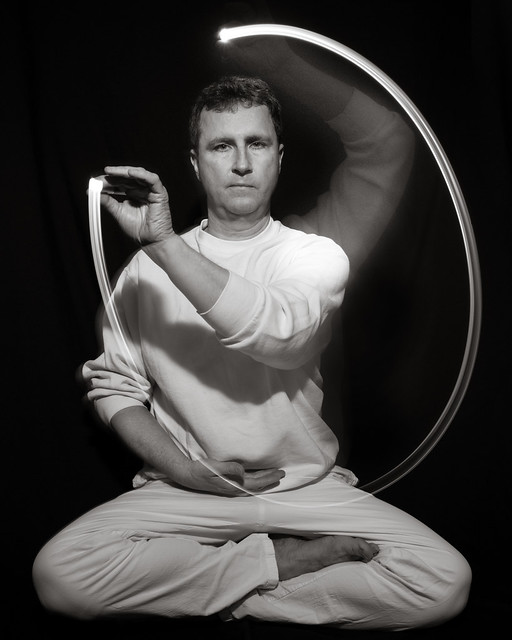
Zen Circle, Self-Portrait, by Reed A. George
Nikon Df, Nikkor 35mm f2 AF-D Lens, 3-stop ND Filter, Nikon SB-600 Flash
iso 200, f11, 2 seconds
 
I hung up a black backdrop, put the Df on a tripod, and connected the SB-600 flash with a remote cord and mounted it up higher on a second tripod with a small softbox over it. Using a 20 second self-timer setting on the Df, I was able to get situated before the shutter opened. With a 2 second exposure, I had enough time to make the circle with a small flashlight I held in my hand. It was my intention to leave the circle unfinished as it is. The flash was set to rear curtain sync, so that it froze my position at the end of the exposure. I also like how the preflash left an impression of where my arm was at the beginning of the exposure.
 
Overall, I'm pretty happy with this. I have a couple of other self-portrait ideas that I may try next.
 
If you think it's easy to do a self-portrait, you should give it a try. I find it quite difficult to get an image of myself that I don't hate.
 
DMC-365.blogspot.com


Tuesday, January 6, 2015

Making Tea - A Quick Slideshow

I was looking for something to photograph this evening, and decided to try out the new Teavana tea infuser that I got for Christmas. I set up a black cloth background, put the Nikon Df on iso 200 with my 28mm f2.8 lens and 3-stop ND filter. With this setup, at f16, I could leave the shutter open for minutes at a time without ambient light showing up in the pictures. I then proceeded to "paint" my subjects with a small flashlight, making images at various points in the tea making process.
 
Here's how it turned out:
 
Relaxing Holiday Tea, by Reed A. George
 
Just a little diversion for an afternoon. I learned a few things from this. First, I needed to be more careful about spots on the glass infuser. Second, I needed to pay close attention to the flashlight being directly reflected from the ceramic and glass surfaces. But, it's definitely something I could perfect in a second shooting, if I decided to. I see now why product photography is painstaking and difficult. But, it's actually pretty fun.
 
DMC-365.blogspot.com
 

Thursday, August 28, 2014

Lone Cypress, Pacific Grove, California

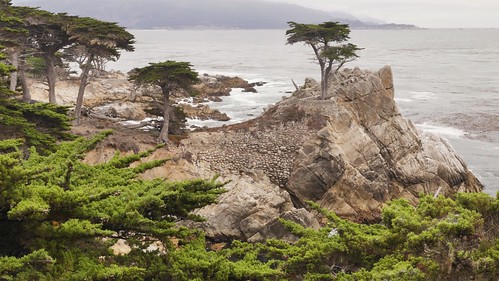
Here's a shot I made this afternoon of the Lone Cypress on the 17 Mile Drive in Pacific Grove (near Monterey) California.
 
Lone Cypress, by Reed A. George
Panasonic Lumix DMC-GX7, Lumix 14-42mm f3.5-5.6 Aspheric Series II Kit Zoom
at 23mm, with 3 stop ND + Polarizing Filter
iso 200, f22, 0.5 sec.
Edited in Snapseed on my iPad
 
This same spot is photographed hundreds or thousands of times every day. I tried to think hard about composition. I used the ND and polarizing filter to allow me to shoot a long exposure (1/2 second), in an attempt to make the water motion smooth and ethereal. It worked at a certain level.
 
What a gorgeous place this is.
 
DMC-365.blogspot.com
 

Sunday, June 29, 2014

Belizean Sunrise

I got my butt out of bed at 5AM this morning to catch the sunrise here in Belize. I shot several images, and plan to work on them when I get home, including a plan to try some subtle high dynamic range (HDR) processing. Here's one that I like pretty much as-is:
Belizean Sunrise, by Reed A. George
Panasonic Lumix DMC-GX1, Lumix 20mm f1.7 Lens with 3-Stop ND Filter
iso 160, f16, 1 sec.
 
I liked how the shoreline formed an S-curve, ending at the thatched dock shelter at the horizon. I edited this image in Snapseed on my iPad.
 
More to come.
 
DMC-365.blogspot.com
 

Sunday, March 9, 2014

O'er the Beautiful Snow

It's another snowy, stormy day here in Northern Virginia as I write this. Rather than let it keep me inside, I decided to take a walk in the woods and try to capture the mood. Choosing a simple and durable setup, I grabbed my Lumix DMC-TS5 (waterproof, everything-proof compact camera) and figured out how to set long shutter speeds manually. I wanted the longest exposures I could get, so that I could get some nice motion blur as I walked.
 
In order to use 1 second (or 1/2 second in some cases), I had to hold up a 3X neutral density filter over the lens on the TS5. No problem.
 
I've set a short selection of the images (unedited jpegs from the TS5) to one of my favorite songs, "O'er the Beautiful Snow," by Melissa Wright and the Acoustic Burgoo. The mood of the song is perfect for what I wanted to portray.

 
O'er the Beautiful Snow, by Melissa Wright and Acoustic Burgoo
Images by Reed A. George

 
(Click Here) to see the slideshow set to the music (~4 minutes playing time). Be sure to have your volume up to hear the music!
 
Melissa was nice enough to give me permission to use the song for this purpose. I hope you enjoy.
 
DMC-365.blogspot.com


Wednesday, February 5, 2014

When the Magic Happens - Howard Grill's Sunrise

Image Source: http://www.howardgrill.com/imagestorypages/pittsburghparks/528sunriseivstory.html

This is what I love about photography. You can go to a place many times, but only occasionally do you get to experience the perfect light and color to make a wonderful image.

(Click Here) to read Howard Grill's short story about the image above.

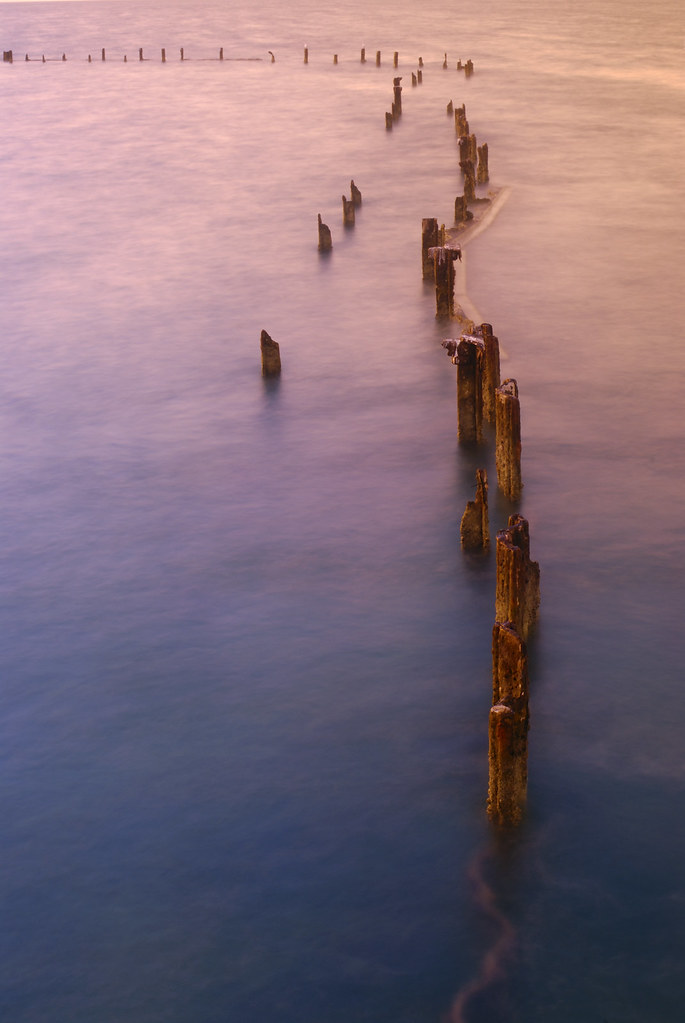
Below is one that I made in Key West several years back, at sunrise. I must admit that I used a blue/gold filter on this shot, one that I picked up in a purchase of several Cokin filters and holders. I haven't really used any of those filters since. I'm just not a filter type of guy. I occasionally use a polarizer, but usually limit myself to a yellow or orange filter for better sky contrast in black and white, and sometimes a neutral density filter to get the exposure I want.


Key West Pilings, by Reed A. George
Nikon D200, Nikkor AF-D 35mm f2 Lens
iso 100, f22, 10 sec.
 
I guess the filter really helped out in this shot.
 
DMC-365.blogspot.com


Friday, January 11, 2013

Bhupinder2002 at mu-43.com Shoots Olympus 45mm f1.8 With 10-Stop Neutral Density Filter for Motion Effect


I've posted about using neutral density filters in the past. For me, the most common uses are to:
  1. Reduce the light coming into the lens to allow me to shoot at wide apertures (for shallow depth of field) in bright light
  2. Reduce light to allow the use of longer shutter speeds, which provides the ability to blur motion.
I usually carry a 3-stop filter, which allows me to move from say f8 in daylight, as some reasonable shutter speed, to f2.8. That makes a real difference in depth of field, for instance if I want to take a portrait in bright light, and blur the background.
 
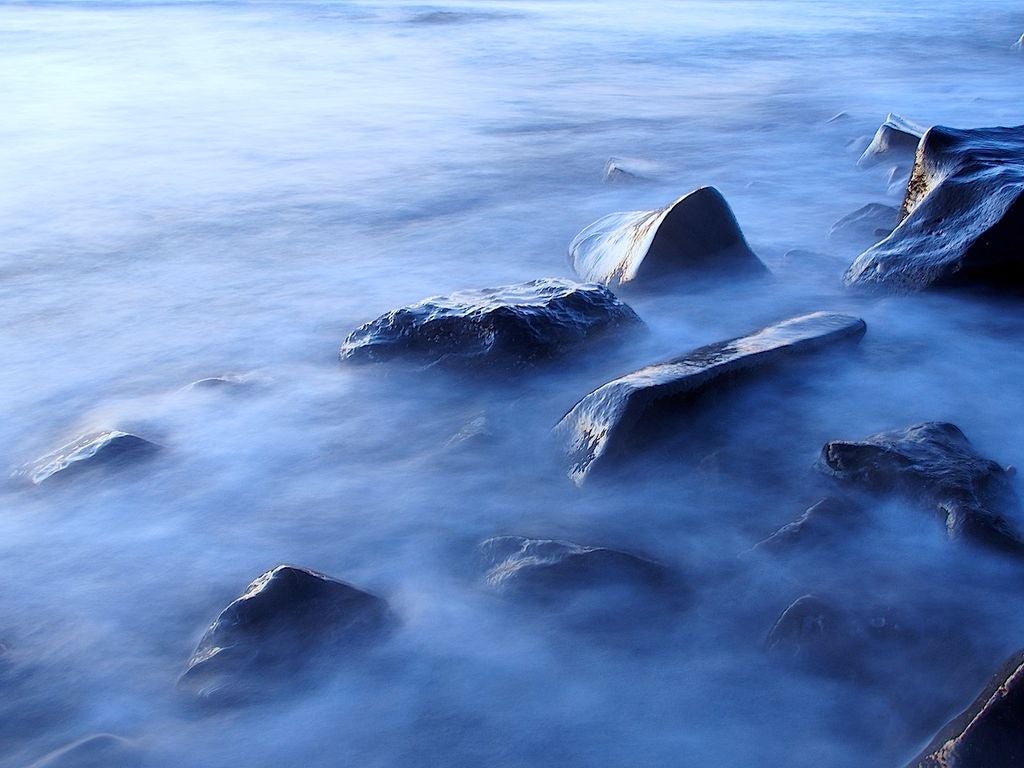
Bhupinder2002 has posted some shots using a 10-stop neutral density filter on a 45mm f1.8 lens with the Olympus OM-D. This provides for a much larger change in settings, including allowing very long shutter speeds in broad daylight. Hence the moody motion of the water in the image above. It's a cool effect.
 
(Click Here) to see all of the images Bhupinder2002 posted.
 
DMC-365.blogspot.com


Wednesday, September 12, 2012

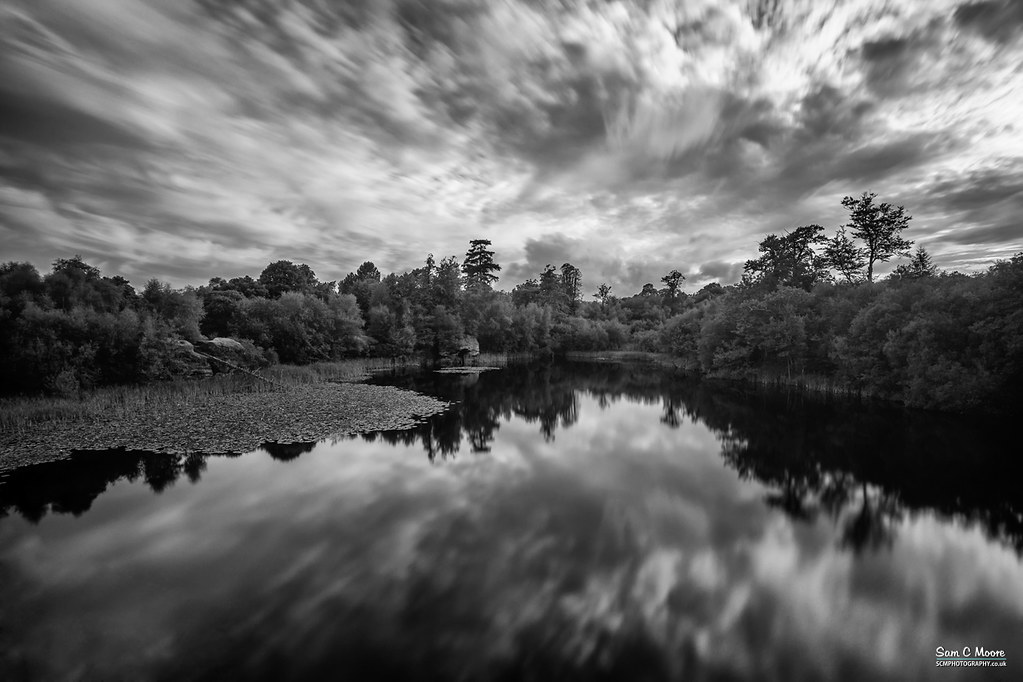
10 Stop Neutral Density - What For?

 
Dramatic Reflection, by Sam M. on mu-43.com
Image Source: http://www.mu-43.com/f60/dramatic-reflection-32274/
 
This is timely for me. I have been known to use a neutral density (ND) filter occasionally, usually to lengthen my shutter speed to allow a longer expsosure, as was done by Sam M. in the image above. However, I carry a 3-stop ND filter, which allows 8 times the normal shutter opening time.
 
(Click Here) to see Sam M.'s post on mu-43.com
 
ND filters basically block a substantial portion of the incoming light, in a color-balanced way, allowing you to increase exposure in bright situations (either by lengthening the shutter opening time, or by opening up your f-stop for shallow depth of field).
 
In my Leica Akademie class on the M9 recently, our instructor, Justin Stailey, talked about 10-stop NDs. I had trouble imaging where I'd need that much of an effect. Sam M.'s image above answers the question well. Let's say you're shooting in broad daylight at iso200 - using the sunny 16 rule, you would want to shoot at about 1/200 second at f16. What would a 10-stop ND filter do for you? Well, if you wanted to make a long exposure, you could shoot at f16 for four seconds!
 
The shot above was made at 20 seconds exposure. That's what makes the clouds look so cool.
 
By the way, this effect would be very hard (impossible) to replicate in post-processing. The same is true if you use your ND for decreased depth of field.
 
DMC-365.blogspot.com


Tuesday, September 11, 2012

Leica M9 Class - Interesting Twist With the New Leica M Monochrom

I took a nice Leica M9 user's class at the new Leica retail store in Washington, DC. It was a good chance to meet some fellow Leica photographers, and talk shop. Our instructor, Justin Stailey, Product Specialist for Leica M Products, North America, was a real source of great information.
 
I learned a few key things about setting up the M9 that I didn't know before, and also picked up some pointers on how to recognize great lighting opportunities for street photography.
 
I also got clued into something that wasn't obvious to me, relating to the new Leica M Monochrom. This is an M9-like camera which is designed specifically for monochrome (black and white) imaging.
 
Leica M Monochrome
Image Source: http://us.leica-camera.com/photography/m_system/m_monochrom/
 
Normal camera sensors, designed for color photography, accomplish their job by using filters of Red, Green, and Blue over a set of four sensors, in something known as the Bayer pattern. This means that in order to get all of the color information for a location in the image, the chip must blend information from four sensors on the chip. The new Monochrom does away with the Bayer filters, and uses all of those sensor locations to gather light level information in only black and white. This results in exquisite detail in monochrome images.
 
Well, here's the twist. Until now, digital imaging has sort of rendered those old red, green, and yellow filters we used for black and white film photography obsolete. When converting an image from color to monochrome, we can use our post-processing software to balance the color channels, effectively allowing us to apply filters digitally, after the fact. Since the Monochrom doesn't even gather any color information, that's impossible. So guess what? Dig out those old filters - they're useful again. I think that's kind of cool.
 
By the way - if you're in the area, there's a spectacular exhibition of images by Magnum photographer Jacob Aue Sobol, all taken with the M Monochrom. They are awesome. They really show how this camera can make black and white images that look like the classics, but with detail and tones that are just beyond belief.
 
I can't imagine paying that kind of money for a camera that only does black and white. But, if that's your thing, this is the camera.
 
The regular Leica M digital cameras are no slouches at black and white, either.
 
All in all, an interesting day at the Leica shop.
 
DMC-365.blogspot.com
 

Wednesday, July 25, 2012

Oh, Man, I Can't Wait For That Olympus 75mm f1.8 to Arrive!

 
Image Source: http://www.mu-43.com/f38/olympus-75mm-f1-8-first-thoughts-29556/
 
Member 938mm on mu-43.com has posted their initial thoughts and some results, shooting the new Olympus 75mm f1.8 lens for Micro 4/3 on the new Olympus OM-D.
 
(Click Here) to read the original post on mu-43.com.
 
938mm seems quite pleased with the handling of the lens, and the results speak for themselves.
 
Mine is on order from Amazon, but is not yet shipping in the US.
 
938mm mentions that one challenge with such a fast lens is that to use a wide aperture in bright sunlight, you may need to use a neutral density (ND) filter. This is probably something I will want to do. The filter diameter is 58mm, so I'll have to add another filter to my kit.
 
On the subject of NDs, many people are now purchasing extremely expensive variable ND filters. These allow you to adjust the density and resulting effect of the filter across a wide range of exposures with a twist of the wrist. So far, I have decided to go the less expensive route, sticking with a 3-stop filter for my Lumix lenses. In my opinion, that has not been a difficult compromise. I find that if I need an ND, 3-stops is usually sufficient.
 
Some photographers have complained that 75mm (equivalent to 150mm field of view on full frame) is too long for portraits. I wholeheartedly disagree, especially when you consider that you have to go a little longer on the Micro 4/3 sensor to achieve shallow depth of field. I have always leaned telephoto, so 75mm is going to work great for me.
 
Looking forward to sharing some results with this lens on the Panasonic Lumix DMC-G3, just as soon as it arrives!
 
DMC-365.blogspot.com