Showing posts with label effect. Show all posts

Friday, January 11, 2013

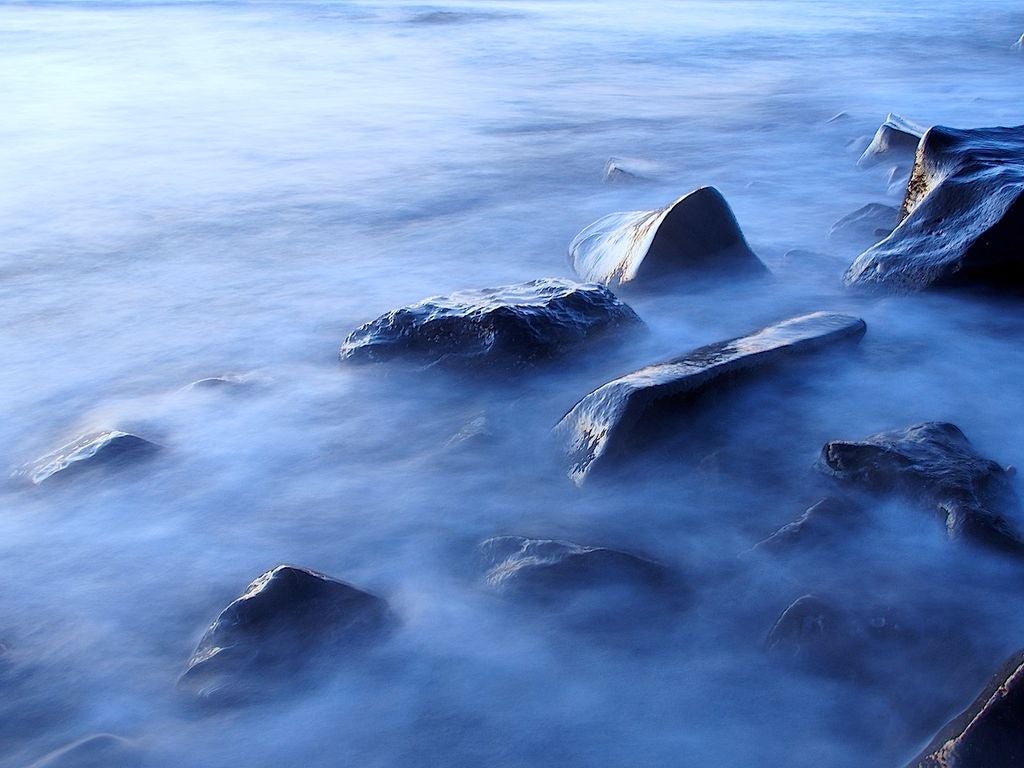
Bhupinder2002 at mu-43.com Shoots Olympus 45mm f1.8 With 10-Stop Neutral Density Filter for Motion Effect


I've posted about using neutral density filters in the past. For me, the most common uses are to:
  1. Reduce the light coming into the lens to allow me to shoot at wide apertures (for shallow depth of field) in bright light
  2. Reduce light to allow the use of longer shutter speeds, which provides the ability to blur motion.
I usually carry a 3-stop filter, which allows me to move from say f8 in daylight, as some reasonable shutter speed, to f2.8. That makes a real difference in depth of field, for instance if I want to take a portrait in bright light, and blur the background.
 
Bhupinder2002 has posted some shots using a 10-stop neutral density filter on a 45mm f1.8 lens with the Olympus OM-D. This provides for a much larger change in settings, including allowing very long shutter speeds in broad daylight. Hence the moody motion of the water in the image above. It's a cool effect.
 
(Click Here) to see all of the images Bhupinder2002 posted.
 
DMC-365.blogspot.com


Wednesday, September 12, 2012

10 Stop Neutral Density - What For?

 
Dramatic Reflection, by Sam M. on mu-43.com
Image Source: http://www.mu-43.com/f60/dramatic-reflection-32274/
 
This is timely for me. I have been known to use a neutral density (ND) filter occasionally, usually to lengthen my shutter speed to allow a longer expsosure, as was done by Sam M. in the image above. However, I carry a 3-stop ND filter, which allows 8 times the normal shutter opening time.
 
(Click Here) to see Sam M.'s post on mu-43.com
 
ND filters basically block a substantial portion of the incoming light, in a color-balanced way, allowing you to increase exposure in bright situations (either by lengthening the shutter opening time, or by opening up your f-stop for shallow depth of field).
 
In my Leica Akademie class on the M9 recently, our instructor, Justin Stailey, talked about 10-stop NDs. I had trouble imaging where I'd need that much of an effect. Sam M.'s image above answers the question well. Let's say you're shooting in broad daylight at iso200 - using the sunny 16 rule, you would want to shoot at about 1/200 second at f16. What would a 10-stop ND filter do for you? Well, if you wanted to make a long exposure, you could shoot at f16 for four seconds!
 
The shot above was made at 20 seconds exposure. That's what makes the clouds look so cool.
 
By the way, this effect would be very hard (impossible) to replicate in post-processing. The same is true if you use your ND for decreased depth of field.
 
DMC-365.blogspot.com