Showing posts with label blur. Show all posts

Saturday, November 2, 2013

Another Autumn Leaves Series, With Motion

This will mark my third small series of fall leaves in motion. As I said before, I did push myself to keep pursuing the idea, tweaking it as I went, to see how far I could push it. Of course, it could go further, but I think the following three images represent something of an accomplishment for me.
 
These shots were all made with the new Panasonic Lumix DMC-GX7 and 14-42mm f3.5-5.6 Series II kit lens. What I feel I've learned so far in this exercise is to play with the level of realism and abstraction, which I actually think I came close to in my previous mini-series (on November 1). I really like those previous images, but did push a little further.
 
This time, I paid more attention to color. The shots from the previous post are pretty bland, color-wise. I think these below pull together my intention in terms of both the level of abstraction and in fall color. I know these won't be attractive to everyone, but I am somewhat satisfied with where the exercise took me. Now you can judge them for yourself.
 
Color and Motion 1, by Reed A. George
Panasonic Lumix DMC-GX7, 14-42mm f3.5-5.6 Series II Kit Lens
iso 200, f22, 0.4 sec.
 
Color and Motion 2, by Reed A. George
Panasonic Lumix DMC-GX7, 14-42mm f3.5-5.6 Series II Kit Lens
iso 200, f22, 0.2 sec.
 
Number 2, above, is probably a little too swirled to stand on its own, in my opinion. In the context of the other two, I think it works.
 
Color and Motion 3, by Reed A. George
Panasonic Lumix DMC-GX7, 14-42mm f3.5-5.6 Series II Kit Lens
iso 200, f22, 1/8 sec.
 
If I had to pick one (I don't have to), I'd pick number 3. I love the color. I think it's right at the edge of complete abstraction, but it still says "autumn" to me. But, I think the three in this series hang together pretty well.
 
One thing I'm learning right now is to give my images time before being done with them. I've been playing with this project quite a lot, and living with the images, thinking about them. I think I'll probably print these three, and see if I'm done. At some point, the leaves will all be down, and I'll be finished by definition.
 
One thing I think is that I could crop all three of these to square images. All of them could lose some empty space on the left side. It would change the character a lot, moving the swirl center away from the center of the frame. I'll give that a try before calling it done.
 
DMC-365.blogspot.com


Friday, November 1, 2013

Pulled Skyward - Autumn Leaves With a Twist (Lumix DMC-GX7)

I've been feeling that I'm at a creative plateau for quite some time. I'm trying some things that are new, if not to the photographic world, at least to my portfolio.
 
Autumn leaves are not so impressive in my part of the world this year, at least not yet. So, I decided to try adding some motion to those same old fall pictures I take every year. On October 30, I posted a set of five images of leaves with motion, starting with simple lines, then moving on to rotations.
 
I really enjoyed looking at those images. I could hear the photographic mentor in my head saying:
 
Good. Nice start. Now go spend some time with it. See how far you can take it.
 
So, I went out for another session. As I was walking out to the small stand of trees that are my subject, I started thinking about the degrees of freedom I could play with in motion while the shutter is open. I came up with several: f-stop, shutter speed, lateral (x,y) motion, angle (of the sensor, in-plane rotation), and angle of view (zoom). So, I played with them all.
 
Here are three images that show one theme that came out. I call it "Pulled Skyward." The threads of white (there was no fog; it was a perfectly clear day) remind of a spirit being pulled up through the trees.
 
Pulled Skyward 1, by Reed A. George
Panasonic Lumix DMC-GX7, 14-42mm Series II Kit Zoom
iso 200, f22, 0.4s sec.
This first one is very nearly completely abstract. For me, abstract means that you can't really tell what the actual subject was. And, for me, it's a little too abstract to stand on its own. Hopefully the next two will give it some context, and help it to remain in the collection.
Pulled Skyward 2, by Reed A. George
Panasonic Lumix DMC-GX7, 14-42mm Series II Kit Zoom
iso 200, f20, 0.4s sec.

Number two clearly shows that we're looking up into the treetops. The white streaks show nicely.
Pulled Skyward 3, by Reed A. George
Panasonic Lumix DMC-GX7, 14-42mm Series II Kit Zoom
iso 200, f20, 0.4s sec.
 
Number 3 is my favorite of this set. I feel like I am being pulled up through the trees. The white streaks are just prominent enough to connect me to the treetops. However, I do feel that all three go together well.
 
If you know my photography, hopefully you'll recognize that this is a real departure for me. I'm somewhat of a photographic realist. I enjoy razor sharp images of interesting subjects, or street scenes where you can see multiple things going on. These are much more symbolic than my normal work.
 
It's good to stretch the mind.
 
I have a different set of images from this session, with a different color palette. I'm still working on those.
 
To those of you looking for how technically well the new DMC-GX7 and Series II kit zoom work, how sharp they are, sorry. I feel drawn in this direction at the moment, and the sharp, realistic images will have to come later.
 
DMC-365.blogspot.com


Wednesday, October 30, 2013

Autumn Leaves in Motion

Autumn is coming slowly here in Northern Virginia this year, or at least it feels that way. Lots of browns amongst the yellow and orange trees.
 
I was out playing around with my new Panasonic Lumix DMC-GX7 yesterday, and decided to put some motion into my images. Nothing new here, but I think they're interesting. I started by putting the camera on shutter priority exposure (S), picking the lowest speed I could use without serious overexposure. First, I tried moving the camera linearly, upward, to follow the lines of the trees.
 
 
Leaves in Motion 1, by Reed A. George
Panasonic Lumix DMC-GX7, 14-42mm Series II Kit Zoom
iso 200, f22, 1/6 sec.
 
This first shot has a little mood to it, I think. While the sky was actually completely clear and blue, the blur gives it a little feel of fog. I think there are multiple smaller images within this one. I could imagine cropping to just the lower 1/3 of the image, for example. Actually, I can see three images, each 1/3 of the vertical height of the original. I think I'll give that a try.
 
Here's another with upward movement, this time with some branches that go off the vertical quite a bit.
 
Leaves in Motion 2, by Reed A. George
Panasonic Lumix DMC-GX7, 14-42mm Series II Kit Zoom
iso 200, f22, 1/6 sec.
 
Then, I started rotating the camera around different centers in the image. Here are my three favorites:
 
Leaves in Motion 3, 4, 5, by Reed A. George
Panasonic Lumix DMC-GX7, 14-42mm Series II Kit Zoom
iso 200, f22, 1/6 sec.
 
I realize that these are the first images I've shared from the new GX7, and they don't help much if you're trying to see the capabilities of the camera or new kit lens. I promise to share some sharp, more traditional images soon. But for now, I can say that I am enjoying the new camera, and the lens is quite impressive for what it is.
 
DMC-365.blogspot.com


Monday, October 14, 2013

Accidental Degas (Impressionism) on THEME blog

Image Source: http://www.the.me/the-accidental-degas/?utm_source=feedburner

I love this. On the photography daily blog THEME, the author describes how they got the image above by accident - using an iPhone to photograph in low light at a gala dinner party.

It appears to me that noise reduction software in the iPhone provided the impressionist smearing. The colors are just magnificent.

(Click Here) to read about it, and see the image compared to a real Edgar Degas painting on THEME.

It is so easy to get hung up in technical perfection. Sometimes the impression is more important than the details. It was shown by the impressionists, who really weren't accepted at the time by more realistic painters. This picture proves that it translates to photography as well.

DMC-365.blogspot.com


Thursday, May 2, 2013

Worldwide Pinhole Camera Day - My Results

I've been out shooting my 4x5 film pinhole camera lately.
 
(Click Here) to see some of my recent shots.
 
I recently took part in Worldwide Pinhole Day, which occurred on Sunday, April 28.
 
(Click Here) to read about Worldwide Pinhole Day, and browse the gallery of results. There are some really nicely done images there, shot in everything from coffee cans to expensive cameras like the Ilford Titan. Click the Amazon link at the bottom of the page to see the Titan. I want one, but haven't decided to spring for it yet. It's a lot of money for a lensless camera, but the design is quite cool.
 
Anyway, here are my results from shooting on Worldwide Pinhole Photography Day:
 
White Horse, by Reed A. George
4x5 Pinhole Camera, Arista Edu 100 Film, 30 sec.
 
Dark Horse, by Reed A. George
4x5 Pinhole Camera, Arista Edu 100 Film, 30 sec.
 
Rushing Water, by Reed A. George
4x5 Pinhole Camera, Arista Edu 100 Film, 60 sec.
 
Still Water, by Reed A. George
4x5 Pinhole Camera, Arista Edu 100 Film, 180 sec.
 
You are only allowed to submit one image to the Worldwide Pinhole Photography Day gallery. Here is my selection:
 
On the Water, by Reed A. George
4x5 Pinhole Camera, Arista Edu 100 Film, 30 sec.
 
I like how the rushing water at the lower right contrasts with the sharp structure of the bridge. The canoe on the water in the background is the perfect addition to my composition.
 
I had some issues in developing the 4x5 sheet film. You can see the artifiacts of those issues in the first image, and maybe some others. However, that's part of the allure of shooting this way. It's truly low tech and messy. It's interesting to me how you can get a thought or message across, even using the most basic of tools - basically a wooden box with a tiny hole in it.
 
DMC-365.blogspot.com


Sunday, April 21, 2013

Time For Some Pinhole Shooting - ePHOTOzine's Peter Black Reviews the Ilford Obscura 4x5 Pinhole Camera

Image Source: http://www.filmsnotdead.com/wp-content/uploads/2013/03/20130311-094504-pm.jpg
 
 
I just read a review of a new product from Ilford - a 4x5 film pinhole camera called the Obscura.
 
(Click Here) to read the review on ePHOTOzine.
 
Here's what I learned from the review: 1) Ilford appears to be in the film game for the long haul, which I love, and 2) the Obscura requires film loading in a changing bag, as it doesn't use a normal 4x5 film holder. Wow. That doesn't seem very smart.
 
I have one that I bought used, but I'm pretty sure it's from, you guessed it, pinholecameras.com.
 
(Click Here) to see their website.
 
I'm quite happy with mine, but don't use it often enough. Do I hear inspiration coming on? Maybe.
 
I have also made a cardboard pinhole camera that uses 35mm film. This one is a kit. See the Amazon link below if you're interested in one of those. It's not exactly the same as mine, so I can't say how easy or hard it is to build. Mine was tougher than expected to get right, but it does work and was a fun project.
 
From My Cardboard 35mm Film Pinhole Camera
 
The result above is what you can expect from a 35mm format or smaller pinhole - funky, blurry, potentially fun.
 
I find that my 4x5 pinhole yields reasonably sharp images. Actually, it would be hard to tell a 4x5 pinhole image from one made with an old inexpensive lens. You can decide whether that's a plus or minus. Sometimes funky, blurry, is good.
 
I think I'll load mine up this weekend.
 
DMC-365.blogspot.com


Friday, January 11, 2013

Bhupinder2002 at mu-43.com Shoots Olympus 45mm f1.8 With 10-Stop Neutral Density Filter for Motion Effect


I've posted about using neutral density filters in the past. For me, the most common uses are to:
  1. Reduce the light coming into the lens to allow me to shoot at wide apertures (for shallow depth of field) in bright light
  2. Reduce light to allow the use of longer shutter speeds, which provides the ability to blur motion.
I usually carry a 3-stop filter, which allows me to move from say f8 in daylight, as some reasonable shutter speed, to f2.8. That makes a real difference in depth of field, for instance if I want to take a portrait in bright light, and blur the background.
 
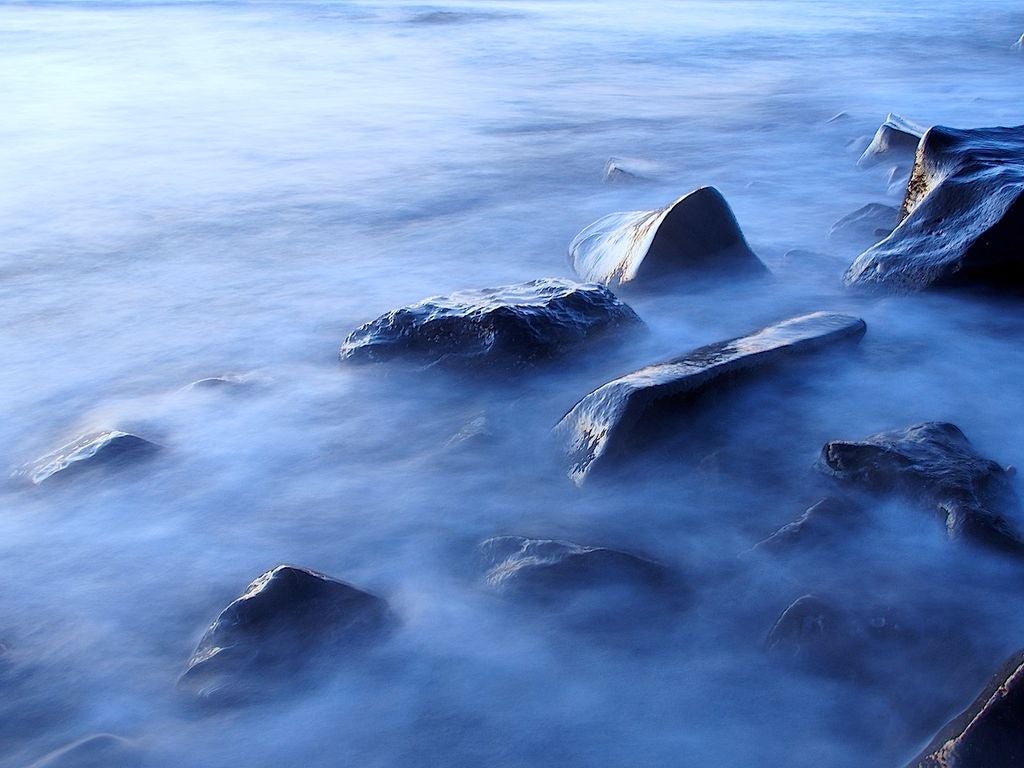
Bhupinder2002 has posted some shots using a 10-stop neutral density filter on a 45mm f1.8 lens with the Olympus OM-D. This provides for a much larger change in settings, including allowing very long shutter speeds in broad daylight. Hence the moody motion of the water in the image above. It's a cool effect.
 
(Click Here) to see all of the images Bhupinder2002 posted.
 
DMC-365.blogspot.com