Showing posts with label selective focus. Show all posts

Monday, September 1, 2014

Travel Photography Tip - Capture Details

When you travel to a new place, it's sometimes tempting to try and capture everything, to try and give the feel of the entire place in one or two shots. That approach usually fails, in my experience. It's much better to make multiple images, with varying sense of scale and focus, from sweeping landscapes to tiny details.
 
In a recent post on Digital Photography School's blog, Dylan Goldby explains how to capture details in your travel photography.
 
(Click Here) to read the post on DPS.
 
Goldby suggests including details in wide angle shots. You don't always have to focus only on the detail. You can emphasize details within a wider context in your image.

 
Lanterns, Korea Town, NYC, by Reed A. George
 
He also suggests paying attention to the lighting on the details themselves to emphasize a feeling. Of course, light always matters. In the post, Goldsby quotes Joe McNally as saying that you can make something more interesting by only lighting part of it.
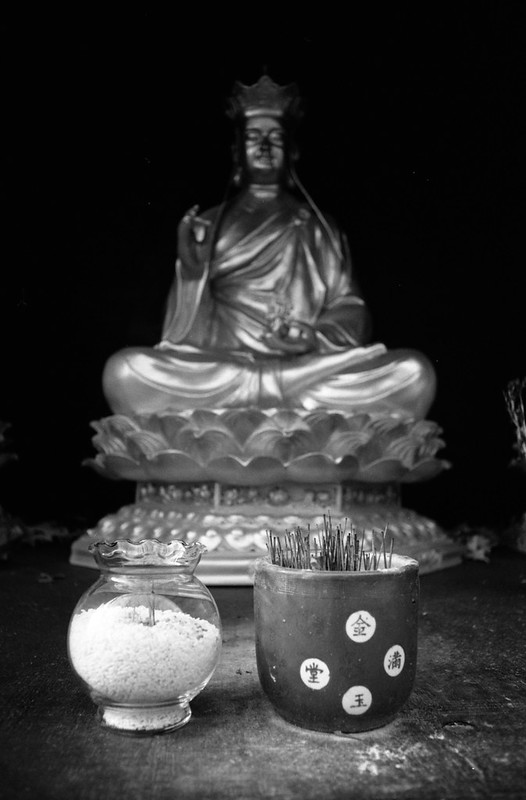
 
Mystery Through Light and Dark, by Reed A. George
 
The third tip is closely related to the second, suggesting that you expose for the highlights in the image, letting the shadows go dark if necessary.
 
Finally, Goldsby suggests using selective focus to highlight details within a scene.
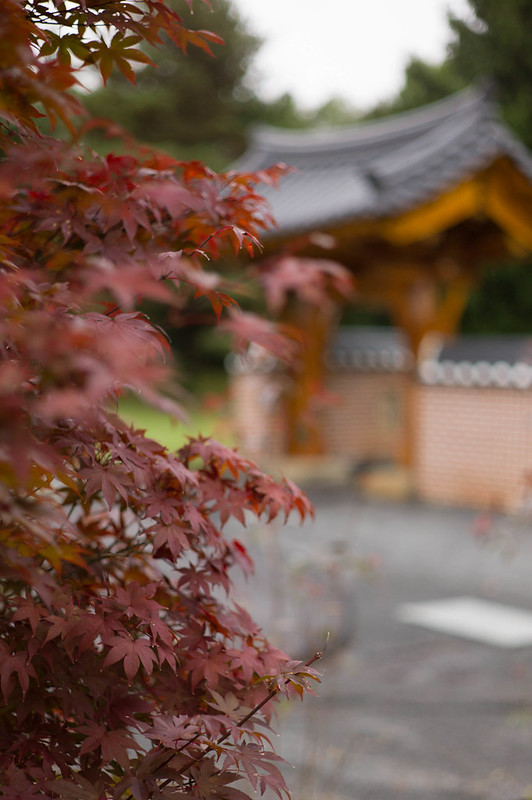
 
Japanese Maple Leaves, by Reed A. George
 
In the photo above, I was able to focus on the attractive shape and color of the maple leaves, yet still provide some context by showing the structure in the background, albeit in soft detail. This allows you to see some of the surroundings, yet still focus on what I intended - the leaves.
 
All good points to remember in emphasizing details in your travel photography.
 
DMC-365.blogspot.com
 

Wednesday, December 4, 2013

Different Takes on Autumn Leaves

As I wrote earlier in the season, I've tried to avoid taking the same autumn leaf pictures that I (and many other) photographers take each and every year. For example, I used the kit zoom on my new Panasonic Lumix DMC-GX7 to add some motion blur to shots that would otherwise have been quite static. I made threes separate posts about that:
 
(Click Here) to see my first post on leaves in motion.
 
(Click Here) to see where I developed the concept a little further, with a set that make me feel like I'm being pulled through the treetops up into the clouds.
 
And finally, (Click Here) to see my favorite of the series, where I attempted to get the best combination of detail in the leaves, blur from camera motion, and color.
 
Well, today's images take a less drastic departure from "normal" fall color photography, but I hope still show something a little unique. As in all three posts above, I shot these with the DMC-GX7 and the much-improved 14-42mm Series II kit lens.
 
On my way to have lunch with my lovely wife, I looked to the side of the road and saw this tree. The most important element that drew me to photograph it was not the tree, however, it was the way the leaves on the ground appeared. Because the ground slopes upward behind the tree, the fallen leaves provided a partial background for the image.
 
 
Ground As Background, by Reed A. George
Panasonic Lumix DMC-GX7, Lumix Aspheric 14-42mm f3.5-5.6 Series II Lens at 14mm
iso 200, f8, 1/125 sec.
 
I like the shot above, but it's quite conventional, other than the ground sloping up. Looking for a different perspective, I used the rotatable finder on the GX7 to get down low. I took several shots that way, but nothing that really looked different to me. Finally, I started playing with selective focus from the low angle. Here's an example of what I came up with:
 
Drawn to the Front, by Reed A. George
Panasonic Lumix DMC-GX7, Lumix Aspheric 14-42mm f3.5-5.6 Series II Lens at 24mm
iso 200, f8, 1/125 sec.
 
This shot has only a narrow band of leaves at the very bottom of the image in focus. Personally, I like how it sort of asks a question of the viewer. At first glance, it just looks like a blurry picture of a tree, and at that point, some may stop looking. Looking closer however shows that the leaves at the bottom are perfectly sharp. This draws the attention to the leaves on the ground, which were the element that drew me to the scene in the first place. The tree itself takes on only secondary importance. One could argue about which image is more "pretty," if either fit that bill; I can say that the second shot better communicates how I felt about the scene.
 
DMC-365.blogspot.com