Showing posts with label blog. Show all posts

Wednesday, September 16, 2015

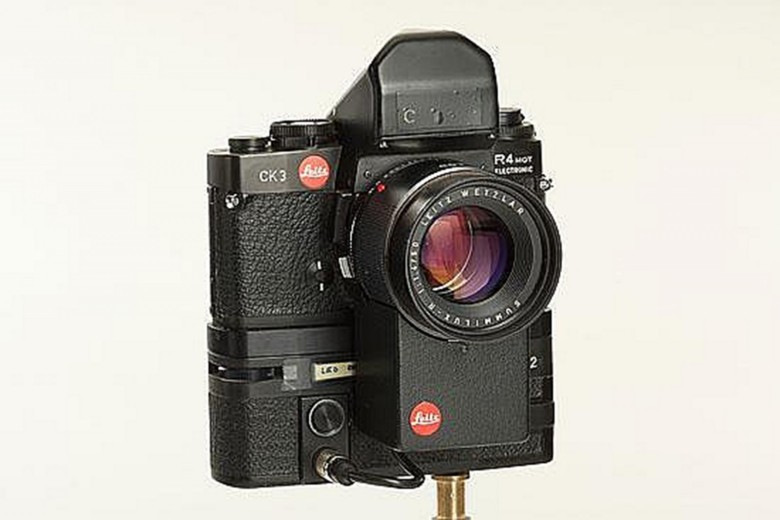
Who Would've Thought Autofocus Would Be Important? Apparently Not Leica

Image Source: http://www.cultofmac.com/383779/leica-invented-autofocus-then-abandoned-it/
 
The blog Cult of Mac has run a piece on how Leica invented autofocus, only to abandon it. Apparently, they were not able to perfect it to the level that they thought their exacting customers would be satisfied with it. I never knew this before reading this article.
 
(Click Here) to read more about how Leica invented then abandoned autofocus, and how it was made a commercial reality by other companies, chiefly Minolta.
 
Thanks to my friend Bill for hooking me up with this interesting article.
 
DMC-365.blogspot.com
 

Saturday, September 12, 2015

I Want to be a Better Printer, Too!

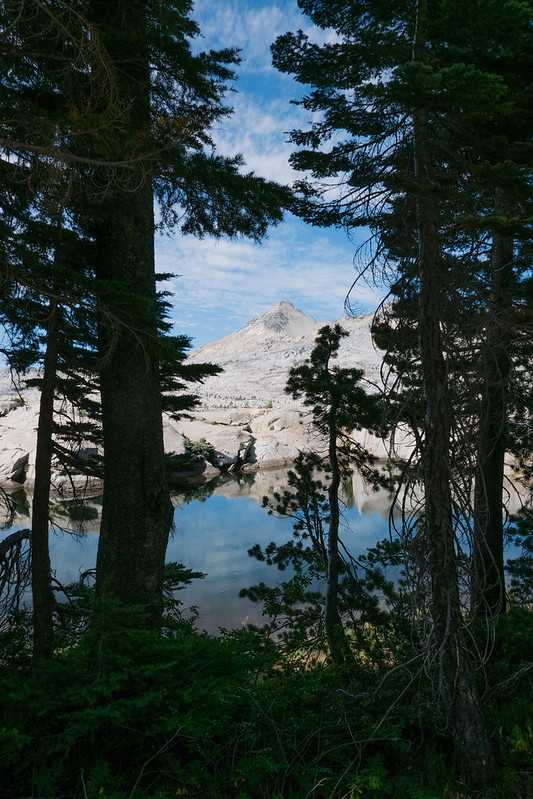
Alpine Lake and Shadows, by Reed A. George
 
I just read a post by Pascal on the blog Dear Susan, about how he really wants to become a better printer. Importantly, Pascal interviews Ctein, a master printer, to get some advice. Ctein's best advice is to go ahead and print your image once you think you have it close on the monitor. It won't print the same, but don't worry about that. Live with the print a while, making notes on it where and how you want to improve it. Don't focus on how it looks on the monitor any more; make the changes that will improve the print. Over time, you'll learn how to do this more automatically.
 
Okay. I can give that a try. Simple - no big focus on calibration, paper types, lighting, etc. Just print, live with it, adjust it for the paper instead of the monitor.
 
(Click Here) to read the full post on Dear Susan.
 
DMC-365.blogspot.com

Friday, September 11, 2015

Day Sleepers - Cool Project

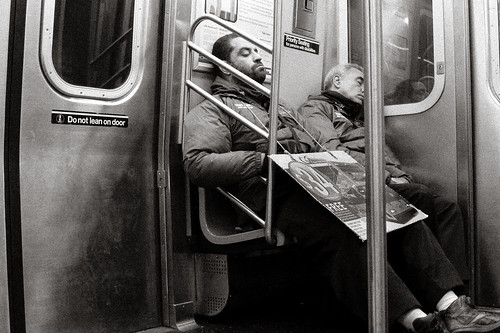
My Day Sleepers (NYC), by Reed A. George
Panasonic Lumix DMC-LX7
iso 800, f1.8, 1/125 sec.
 
I captured these guys sleeping on the subway in NYC. It's interesting to see people sleeping in public places, especially when they're not unfortunate homeless people.
 
I read an interesting piece on the Leica Camera Blog about Eric Leleu, a Frenchman who did an extensive project, photographing "day sleepers" in China. Interestingly, Eric used a Leica M6 for many years, and more recently a digital Leica M240, but in both cases with just one lens - a 35mm f1.4 Summilux.
 
(Click Here) to read the story on the Leica Camera Blog. Knowing he shot all of these with a 35mm wide angle impresses me. He had to get pretty close in many cases.
 
DMC-365.blogspot.com

Monday, August 10, 2015

Andy Summers of The Police on the Leica Camera Blog

Image Source: http://blog.leica-camera.com/photographers/interviews/andy-summers-del-mondo-at-the-leica-gallery-sao-paulo-jj-ready-to-review/
 
 
I didn't know that Andy Summers, guitarist of The Police, was also a photographer. The Leica Camera Blog interviewed Summers, regarding an upcoming exhibit of his work in Brazil.
 
(Click Here) to read the interview. I think some of his reponses are a little self-centered, but are probably also tongue-in-cheek. I'll give him the benefit of the doubt. Some of his photos do look quite good.
 
DMC-365.blogspot.com
 

Wednesday, August 5, 2015

Send Your Vacation Image to L' Oeil de la Photographie

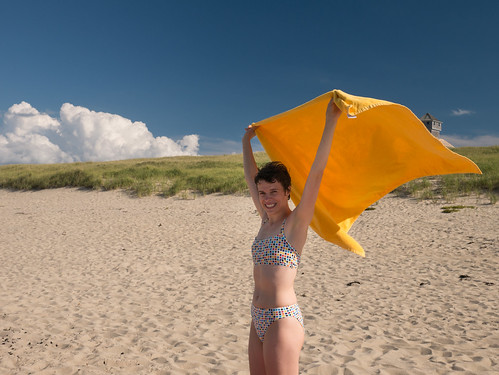
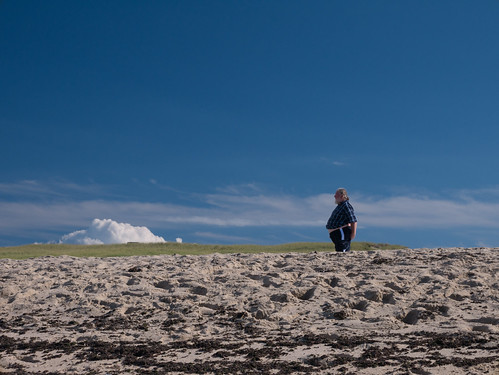
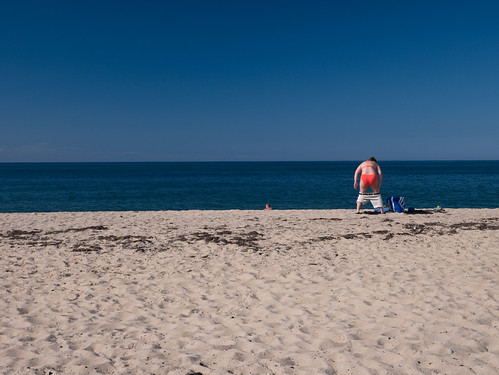
Fun Pics from Last Summer at Provincetown, Massachussetts, by Reed A. George
 
A daily online photography magazine, "L' Oeil de la Photographie," is accepting submissions of your holiday photos. (Click Here) to check out all of the submissions so far, or add your own.
 
I'm leaving for my own holiday very soon. Hopefully, I'll have some to add when I return!
 
DMC-365.blogspot.copm
 

Saturday, July 25, 2015

The Minolta Autocord

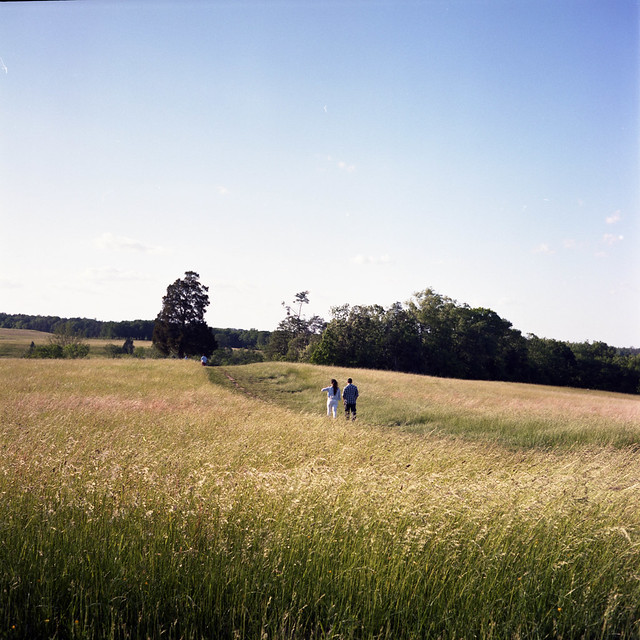
Manassas National Battlefield Walk, by Reed A. George
Minolta Autocord TLR
 
I'm really having a case of "too many cameras, not enough time" recently.
 
I was just looking at a new post by one of my favorite photographers, Evan Leavitt, a really cool color shot of a window with blood red curtains. Made with an Autocord, it's a wonderful image. (Click Here) to see Evan's post.
 
This got me thinking about my own Autocord, which I've used very little. Similar to my Rolleiflex T, the Autocord is a very special camera.
 
I've been considering a new theme or project for this blog. Maybe my TLRs, including the Autocord, will play a part in that.
 
DMC-365.blogspot.com
 

Thursday, July 23, 2015

Pinhole Portraits by Stefan Killen

 
I love shooting pinhole images. I've shot a lot of scenery images, and even some people pictures with my pinhole cameras. But, I've never really tried any portraits.
 
(Click Here) to check out Stefan Killen's pinhole portraits. Inspiring.
 
DMC-365.blogspot.com
 

Saturday, July 18, 2015

Impossible Project Magazine - Rooster Brennan Documents African Safari with Instant Film

I am still thinking about how equipment and creativity interact to tell a story. Just yesterday, I met with my photographic friends and mentors, and got some feedback on the Smithsonian Folklife Festival images that I've been posting here recently. I got comments ranging from something like "See, if you control the background, you can't tell that these shots weren't made in Lima, Peru, as opposed to DC," which I loved, to "Not really sharp. That's the problem with flatbed scanning of 35mm film." All of the comments were useful to me, and were correct.
 
So, how does one share an African safari on instant film?
 
 
Well, you can check out the Impossible Project's magazine to see how Rooster Brennan did it, using the Impossible Lab to print his images on instant film. The article focuses on storytelling, more than equipment. I think he's done a fine job. (Click Here) to read the story and see the pictures.
 
I think that I still need to work on my storytelling with pictures. If the storytelling were strong enough, the technical details would become much less important. That's my goal.
 
DMC-365.blogspot.com

Wednesday, July 15, 2015

Another Person Who Appreciates the Zeiss ZM Sonnar 50mm f1.5 Lens

 
by Reed A. George
 
The Zeiss Sonnar 50mm f1.5 lens engenders a lot of debate in the photo community. Acknowledged by Carl Zeiss as an updated build of a classic Sonnar design, it does not have all the technical performance of say a modern Leica Summilux. It does have character. I own both lenses, and love them both. But, the Sonnar has more character than the Summilux. If I want near perfection, I use the Summilux. If I'm willing to take a chance and maybe make something more unique, I use the Sonnar.
 
(Click Here) to read an account of using the Sonnar on the blog DearSusan. I think it's nicely done.
 
Thanks to my friend Bill for alerting me to the DearSusan blog!
 
DMC-365.blogspot.com


Saturday, July 4, 2015

Evan Leavitt Does It Again

Eternal Movement, by Evan Leavitt
Image Source: https://evanleavittphotography.wordpress.com/2015/06/23/eternal-movement/

Man, I really love this guy's work. Every once in a while I repost it here, when something catches my eye. Evan made this with a 4x5 Graflex Speed Graphic on a paper negative.

(Click Here) to go to Evan's blog.

DMC-365.blogspot.com


Tuesday, June 23, 2015

"Captured by Chance" - Inspired by the Work of Masahiko Kishino

 
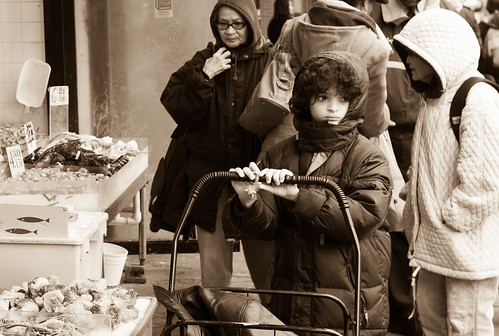
Weekend at NYC Fish Market, by Reed A. George
Leica M8
 
As you may know, after many years of photography, I have yet to narrow my focus on a particular subject, style, or approach. Sometimes I wonder if I'll ever grow up and narrow my definition. For now, the answer appears to be no. I love street, event, wildlife, even landscape photography. That's why I'm so impressed when someone else focuses and perfects just one thing.
 
That's the case with Masahiko Kishino. He shoots Leica M film cameras, PolyPan F black and white film, and that's it. He's an expert at photographing people, capturing a tiny bit of their personality without ever really getting to know anything about them. I feel that I kind of pulled that off in the image above, and would like to do more of it.
 
(Click Here) to read about Kishino's work on the Leica Camera Blog. Be sure to take a look at his images. The lead image, of a young lady in a coffee shop, is just astounding.
 
DMC-365.blogspot.com


Sunday, June 7, 2015

Parkour - By Maik Scharfscheer, Leica Photographer

 
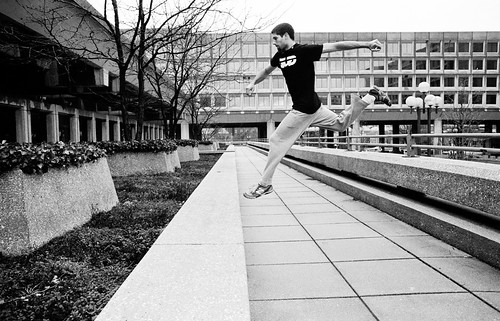
Parkour, by Reed A. George
Nikon F2SB
 
I've recently gotten into photographing the sport of parkour. These urban acrobats are excellent photographic subjects, and I've just started to scratch the surface.
 
I found an interesting post on the Leica Camera Blog about photographer Maik Scharfscheer, who made a series of photographs of a parkour practitioner in the city of Marrakesh. (Click Here) to see the post.
 
As you can see above, my first session shooting parkour was with a manual Nikon film SLR. My inclination, as with most photographers I'm sure, is to use a fast camera for this subject, something like a DSLR. In fact, I have now used my Nikon Df for that purpose. But, I've also been playing with Micro 4/3 (using a fisheye lens), and most recently with a Zeiss SW 35mm camera with a Voigtlander 12mm f5.6 lens. This sport works so well with wide angle lenses.
 
So, in some ways, I'm taking an approach similar to Scharfscheer, who chose to shoot parkour with a Leica, carefully selecting his moments rather than capturing high speed sequences with a DSLR.
 
That said, I captured some pretty cool sequences today at a parkour event with my Nikon Df. As I said, I'm trying a variety of approaches to develop my own look at this exciting sport. I'll share more parkour images in the near future.
 
DMC-365.blogspot.com


Wednesday, May 6, 2015

How to Get Better Pinhole Images

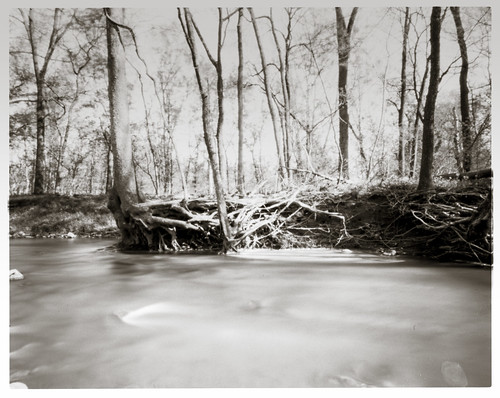
Bull Run Creek, by Reed A. George
4x5 Pinhole Camera
 
Today (the day I'm writing this, April 26, 2015) is World Pinhole Day.
 
(Click Here) to read about World Pinhole Day. You've missed this one, but read up and be prepared for the next one!
 
My friend, Bill, and I went put and shot pinhole images today at the National Arboretum in Washington, DC. I used my 6x17 panoramic pinhole camera for black and white. But, since there were so many great colors there because of spring, I also shot quite a lot with a pinhole body cap on my Nikon Df. I'll be posting some of those in the near future.
 
(Click Here) to read about the Reality So Subtle 6x17 panoramic pinhole camera that I use a lot these days.
 
After returning this evening, I did a web search to read a little more about pinhole techniques. I found a post on The Phoblographer (Click Here to read it), listing five keys to better pinhole photos:
 
  1. Shoot in black and white
  2. Use a tripod
  3. Use high contrast film
  4. Compose to guide the viewer through your image
  5. Use a lightmeter
 
I agree with most, but not all of these points. As I've already said, I do like to shoot color as well as black and white in my pinhole cameras. Also, I strongly recommend using a smart phone app, instead of a light meter. Personally, I use a great one called "Pinhole Meter" on my iPhone. It is very simple to use, and doesn't require me to mentally calculate anything. Better than a traditional lightmeter.
 
I had a great time shooting on World Pinhole Day. Now to process film, select a single image, and get it posted to the website!
 
DMC-365.blogspot.com


Tuesday, May 5, 2015

Is Photojournalism Really Dead? NY Times' Blog "Lens" Discusses Storytelling and Honesty

 
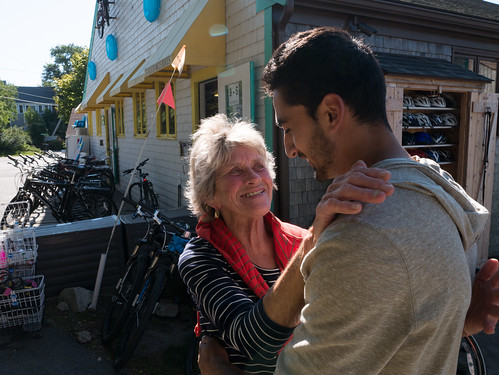
End of Summer Goodbyes, by Reed A. George
Panasonic Lumix DMC-GX7, 14-42mm Series II Kit Lens
iso 400, f11, 1/500 sec.
 
I just read an interesting article entitled "Modern Photography," about the state of photojournalism (PJ) today on the NY Times' blog, "Lens."
 
The piece compiles the thoughts of several photographers, curators, and editors, including Maggie Steber, who I recently had the great fortune to meet at the LHSA (International Leica Society)'s Spring Shoot in New Orleans. Maggie was our keynote speaker.
 
I used the photograph above for this post, as it is a piece of honest PJ that I shot, of a lady in Provincetown, Massachussetts, saying goodbye to a young man from Bulgaria who was returning home after his summer employment there. The change in P-town's population during the tourist season was a subject of interest to me.
 
More importantly, perhaps, I asked this young man to carry his suitcase out of his place of work for me, so that I could get a shot of him leaving. Actually, he was leaving the next day. He wasn't able to do that for me, but if he had, would that have been too much staging to qualify as PJ? Upon reflection, I think it would have been. These are tough lines to see and stay within.
 
Some of the interesting points in the Lens Blog post:
 
  • In earlier times, PJ could be used simply to show or prove that something was occurring outside the direct view of some readers. But, those events - war, famine, crime, etc. are now known to everyone. We don't need proof. Now, the photographer needs to somehow go further, to tell a story, to make it more "real" for the viewer/reader.
  • In fact, because the events represented are now known to everyone, a picture of the event can have the effect of trivializing the situation. Sort of "Oh, another famine," rather than engage the viewer in what it really means.
  • Because of this point, at least one authority states that "photojournalism is dead."
  • Many photographers engage in long term projects, where they certainly do affect the poses of their photographic subjects, move to better light, etc. This is where the lines get blurry.
  • The most important thing is for the photographer to be honest about how they produced their pictures. Admit what they are and are not showing.
  • When it comes to honesty, it used to be that a professional photojournalist would lose all credibility, and probably their job, if they were dishonest in representing a subject. Now, there's very little risk to most photographers, especially those who just happen to have a camera with them and capture events as they happen.
  • Honesty in photography has been a problem ever since photography was invented. We now know that some famous civil war photographers staged scenes, and even used the same body twice - once as a Union soldier, another time as a confederate.
These were the things that I found most interesting about the Lens Blog piece. (Click Here) to read it for yourself.
 
DMC-365.blogspot.com


Monday, May 4, 2015

Nick DeMarco (Rangefinder Chronicles) Uses His Hasselblad Xpan on the Street


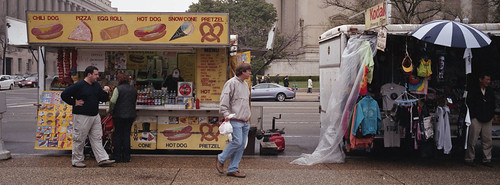
DC Street Vendors, by Reed A. George
Hasselblad Xpan
 
I used to a Hasselblad Xpan panoramic camera. Shooting 24x65mm images on regular 35mm film, it was interesting. I've always been partial to panoramic images.
 
I sold mine, for two major reasons: 1) it was worth too much money for the amount I used it, and 2) I found a panoramic back for my Bronica ETRS. I feel like I had just begun to get how to compose with the XPan when I sold it. Probably too soon. And, I have not used the Bronica pano back nearly as much as I expected.
 
What I did shoot with the Xpan was mostly landscapes.
 
I recently read a post on Nick DeMarco's Rangefinder Chronicles blog about how he uses the Xpan for street photography. (Click Here) to read about it on Nick's blog. He's got some great work there.
 

This doesn't have me back in the market for an Xpan, but it does make me motivated to get out with the Bronica. It's been sitting for far too long.


DMC-365.blogspot.com


Saturday, May 2, 2015

I Love Slow Photography - Jim Austin Shares "SloFo" on Film Photography Project Blog

Slow, by Reed A. George
Mamiya Universal Press Camera
 
I love slow photography. Probably my favorite camera for ultra-slow, contemplative photography is the Mamiya Universal Press (MUP). You just don't hurry this camera up. It's big, heavy, and stubborn. It makes me do photography it's way.
 
Jim ("Jimages") Austin has written a nice blog post on the Film Photography Project's blog about slow photography, which he refers to as "SloFo." I'm not sure why we need a new term for it, but I enjoyed Jim's post nonetheless. Jim was shooting in the Bahamas with a selection of Konica, Nikon, and Nikonos film cameras.
 
(Click Here) to read the blog post on the Film Photography Project's page. Be sure to watch the video that's linked to from the text; it shares different pictures than are used in the text. Plus, it's kind of fun to see Jim paddling his boat to shore.
 
If you're a rapid-fire high speed continuous shooter, you owe it to yourself to try some slow photography. Personally, I find it much more rewarding and useful in sharing my creative vision.
 
DMC-365.blogspot.com
Monday, March 16, 2015

Readers and Reading - On Books

 
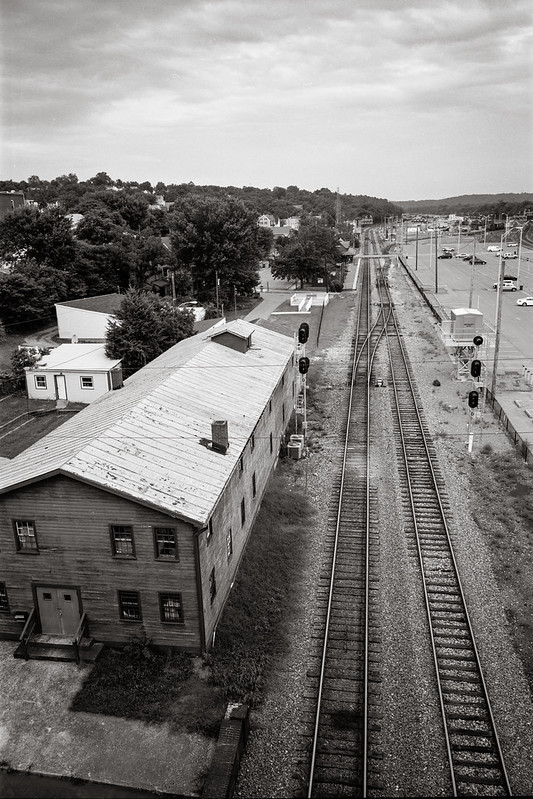
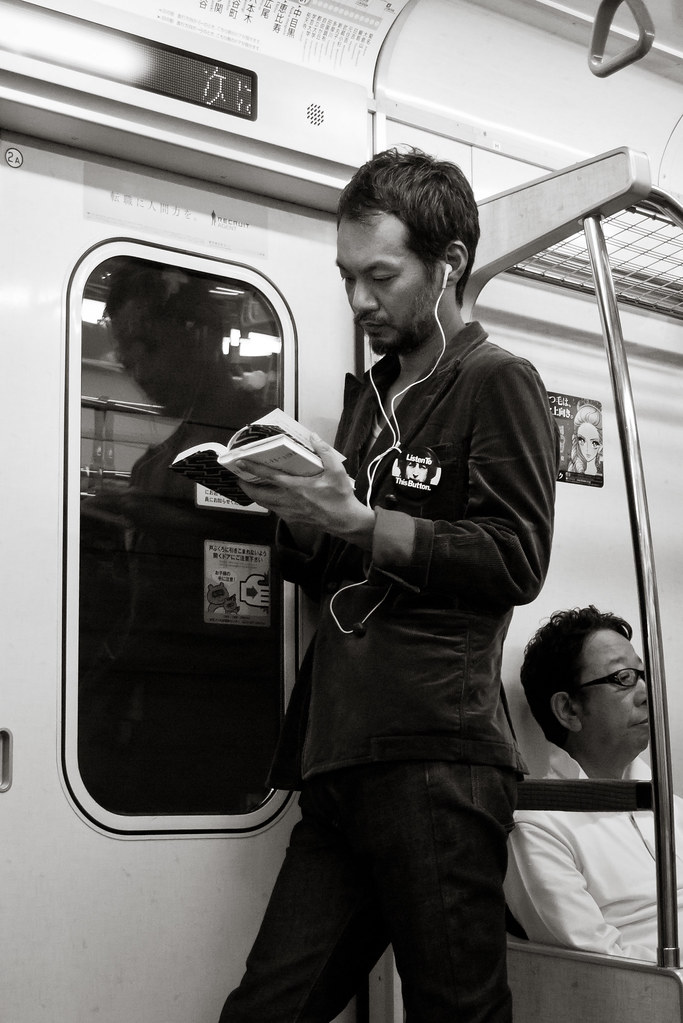
Reading Japanese Books with Upside Down Face Covers, by Reed A. George
 
I absolutely love to read. Always have. Even though I'm not a fast reader by any means, I enjoy both fiction and non-fiction.
 
So what got me on this subject today? An incredible portfolio by Lawrence Schwartzwald, featured on Elizabeth Avedon's blog. (Click Here) to see it. You really must.
Japanese Subway Reader, by Reed A. George
 
So, go grab a book and learn something! Looking for something to read? Try The Lotus Eaters, by Tatjana Soli (see the link below).
 
DMC-365.blogspot.com


Friday, March 13, 2015

Ruslan Pelykh and the Leica D-Lux 6

Made with the Lumix DMC-LX7, Sister to Leica D-Lux 6
 
As you may know, I recently purchased a Panasonic Lumix DMC-LX100, which is the approximate equivalent to the new Leica DLux (Type 109). It was a tough decision to buy the LX100, as the previous camera in the LX series, the LX7, is so darned good. The LX100 has the LX7 beat hands-down in image quality; the Micro 4/3 sensor stuffed into the LX100 assured that. But, the LX7 has some features (built-in ND filter, manual focus memory, real depth of field preview) that the LX100 lacks. All that said, I'm very happy with my purchase of the LX100.
 
I was just reading about Ukrainian photographer Ruslan Pelykh, and how he's used the Leica DLux-6 (equivalent to the Lumix LX7) to make both films and still photographs that are most impressive. Pelykh now lives in NYC, and is "obsessed" with the hazy weather that sometimes comes to the City. While Pelykh focuses a lot of effort on his movies, I find his still work to be very good. He tends to plan his shoots roughly, but then let the unexpected factors take control. He likes to add some chance to his plans. Pelykh likes to use the DLux-6 in low light situations, usually at iso 200, which necessitates very long exposures.
 
(Click Here) to read the article on the Leica blog, and see Pelykh's movies and still shots with the DLux-6. I bet he's really going to love the DLux (Type 109) when he gets his hands on one.
 
DMC-365.blogspot.com
 

Wednesday, March 11, 2015

Changes Coming in Leica's Financial Future?

Maybe We'll See More of This in the Future?
Image Source: http://assets.hardwarezone.com/img/2014/03/thumb-0112.jpg
 
My friend Bill sent me a very interesting article about a potential riff in the company management at Leica.
 
(Click Here) to read "Leica in Troubled Waters - Strategic Investor Blackstone Ups Pressure" on the Theme blog.
 
Now, I want to be clear here. I love Leica, and am not hoping for trouble in the company. Unlike many, I don't automatically hate industry leaders (think Microsoft), or even those who carve out and own a niche (think Leica). In fact, I can see good things coming for Leica. There's a hint at the bottom of the article on Theme about Panasonic becoming more official in its relationship to Leica (as in sending funds in some form, which will certainly increase Panasonic's influence, who knows to what degree). That could be good for Leica. My opinion of Panasonic's materials science and manufacturing capability couldn't be higher. And, that opinion comes from some real hands-on experience, as twenty one years ago today, I was living in Japan for a year and training at a Panasonic Factory Automation facility. Anyway, I digress.
 
I drove a Jaguar during the period that Jaguar was owned by Ford. I would say that my car was reliable, not something that most would have said about Jaguars built before that period.
 
DMC-365.blogspot.com
 

Monday, March 9, 2015

The Fountain at Bryant Park, NYC

I'm getting ready for a quick weekend trip to NYC. I love the place, and can't wait to walk around the City with my camera(s).
 
Here's a rather unremarkable shot I made earlier in the winter at Bryant Park, when it wasn't too cold:
 
Bryant Park Fountain, by Reed A. George
Leica IIIG, Summicron 50mm f2 Collapsible Lens
 
To see a truly remarkable image of the fountain as I assume it looks today, (Click Here).
 
DMC-365.blogspot.com