Showing posts with label studio. Show all posts

Friday, January 23, 2015

Shooting in Recording Sessions

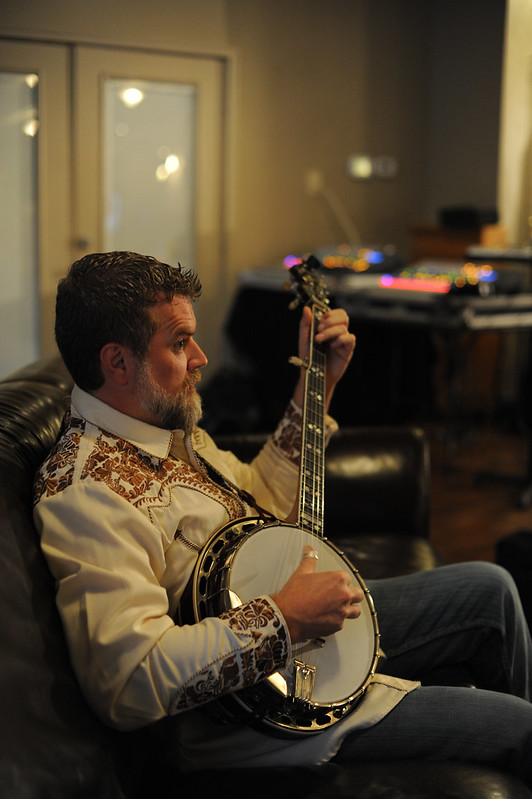
I've been developing my live music photography for several years now. I have also done a little studio promo shooting, mostly for friends. I've shot a couple of recording sessions, and definitely would like to do more of that. There's something about the atmosphere during recording. The musicians are not dressed and ready to perform in front of a bunch of people, but they're still focused, working hard to get the tracks down. Of course, the moments in between can be loose, funny, interesting visually.
Robert Mabe of Dry Mill Road, by Reed A. George
Nikon D700, Nikkor 50mm f1.4 AF-D Lens
iso 1600, f2, 1/60 sec.
 
Always interested in how others do it, I was happy to read when the Leica Camera Blog interviewed Andrew Stuart, who's photographed extensively in the recording studio. He's worked with the Foo Fighters, Mick Fleetwood, and others.
 
(Click Here) to read the interview on the Leica Camera Blog.
 
Since it was the Leica blog, Stuart highlighted that he uses the Leica M240 rangefinder and M6 film cameras. He says that 90% of his work with those cameras uses either the 35mm Summilux (f1.4) FLE or the 50mm Summilux Aspheric. Makes sense. Stuart also uses other cameras, including SLRs and his iPhone.
 
Stuart mentions that he uses a street-style approach to shooting in the studio, and alternates between being a fly on the wall, and actively interacting with his photographic subjects.
 
He mixes black and white and color in his work, his film (Fuji Neopan or Tri-X, usually pushed to iso 800 or 1600) work nearly always being in black and white.
 
Stuart has done some very nice work. It's always good to learn how others achieve their photographic goals.
 
DMC-365.blogspot.com
 

Friday, October 24, 2014

Some Tips for Taking Great Images in the Studio

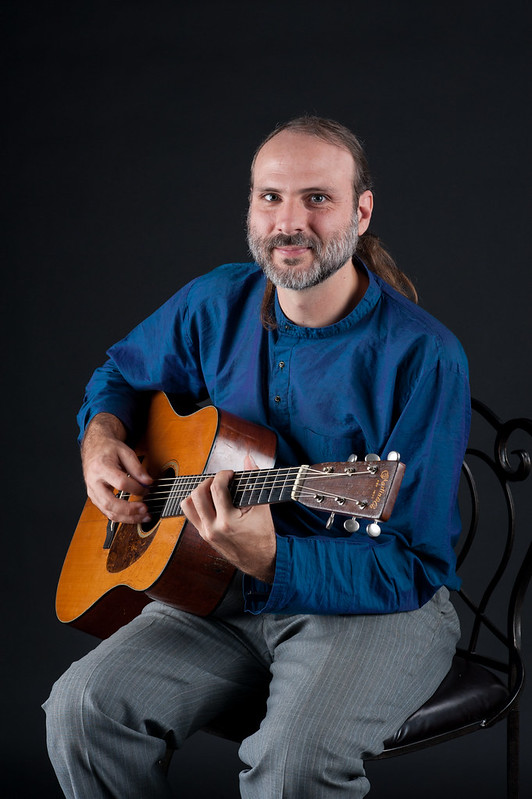
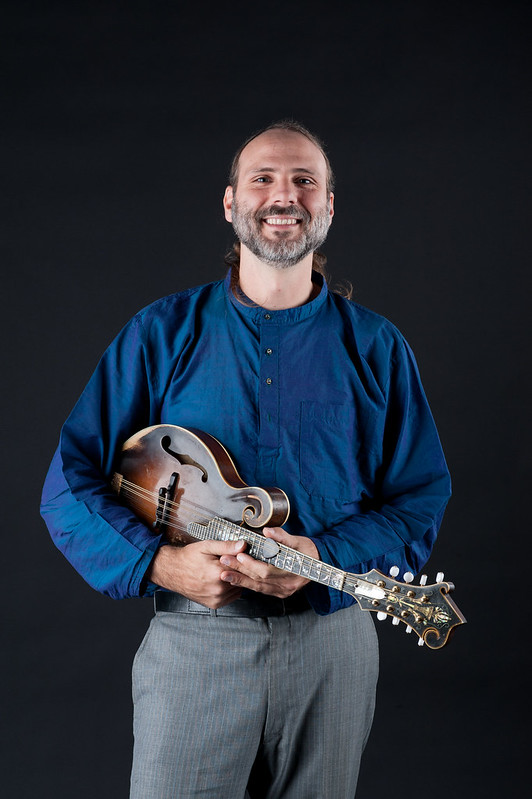
Danny Knicely, by Reed A. George
 
I've been doing some promo images for my musician friends lately. I'm thoroughly enjoying the process, and always looking for new tips. I thought that the studio lighting setup would be one of the challenges, and therefore looked up some common configurations before starting. After a couple of these sessions, I now feel pretty comfortable with the lights. Really, I think it's more important to get them set, stop fiddling with them, and develop trust and interaction with the person being photographed.
 
I recently read a post by Sarah Hipwell on the Digital Photography School website. It has several good tips for getting things to flow:
 
  • Music can help to calm down a tense atmosphere. I use this one every time when I'm shooting musicians. I have not tried bringing recorded music to the session, though. Since my subjects are musicians, and typically want to be photographed with their instruments anyway, I always ask them to play. I get a private concert, and they get to do what they love. Another added benefit is that it brings out the performer in the person; they're not used to being in a photo studio, but they are used to playing in front of people, and even in front of cameras.
  • A tip that Sarah shares is asking the subject to blink ten times. I like this idea very much, as it will give a better catchlight in the eyes if they're wet, and I bet it reduces blinking during exposures.
  • Ask them to wear neutral clothing. The pictures are about them, not their clothes.
  • Sarah mentions that most great images come at the end of a session. I've definitely found this to be true. I think it's when the pressure is off, and everyone is pretty sure you've got some good images, that both the photographer and subject relax. This relaxation shows in the pictures.
  • Get feedback during the session. This is a mixed bag, in my opinion. First, showing them tiny images on the camera LCD generally won't work. Connecting to a larger display requires some technical ability; if you have it, great. If not, don't fiddle with wires, cards, and gear while the studio clock is ticking.
  • Get them to talk. Yes! Except, as mentioned above, I generally get them to sing. This is easy with most musicians.
  • Work fast. Agreed. While I try to work fast, sometimes I rush myself too much, and don't go deep enough with the subject. In other cases, what should be a one hour session easily goes into the second hour, probably too long from the point of view of the person being photographed. So, for me, the challenge is to balance between rushing too much and taking too long.
  • Another practical tip - have them point their legs toward the main light source, and twist their upper body to face the camera.
(Click Here) to read Sarah's full piece on the Digital Photography School site.
 
 
It's harder than it looks, folks. In my opinion, getting the technical stuff out of the way so that you can focus on the person and interaction with them is key.
 
DMC-365.blogspot.com
 

Friday, October 17, 2014

Studio Shoot with Musician Danny Knicely

Danny Knicely is one of the most productive and talented musicians I know. Danny is a mandolinist, violinist, guitarist, and I'm sure capable on instruments I haven't listed here. He's a member of Furnace Mountain Band, one of the best I know.
 
(Click Here) to see one of my posts on Danny, where he led a mandolin workshop with other legends Sam Bush and Drew Emmitt.
 
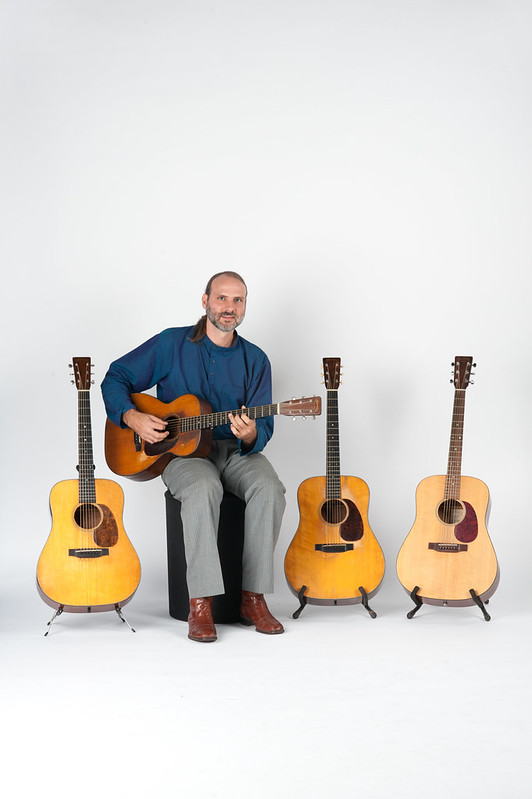
A few weeks back, I was thrilled to get a message from him, asking if I could help in making some promotional images for him. He wanted some images of himself to use in promoting his latest effort, a CD called "Waltz for Aimee." He also wanted some images of his classic guitar collection, including several Martin guitars, much older than either he or I.
 
Of course I was happy to oblige, and decided to rent a local photo studio for the project. I've had an increase in requests for this type of work recently, and hope to see that continue. I really enjoy it.
 
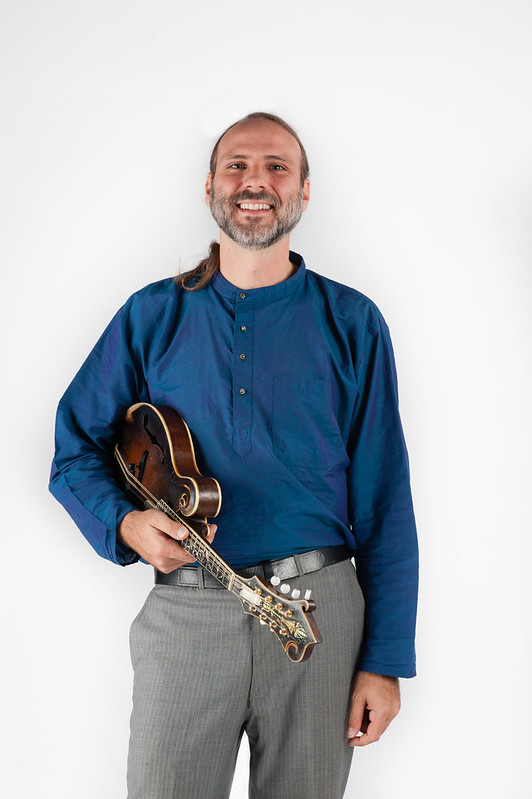
Anyway, here are a few of my favorite shots from the photo session.


I shot all of these with my Nikon D700 and prime lenses. I mostly relied on the 50mm f1.4 AF-D and 85mm f1.8 AF-D lenses. Using a relatively simple three light setup, supplied with the studio, I feel that I did a decent job with balancing the lighting overall. Getting the hairlight right on the images with a black background is something I've learned from previous sessions. This time, I struggled somewhat with the relatively narrow backdrop, even with shooting just one person and his instruments. This would become more of an issue shooting a multi-person band. I also need to focus on lighting the backdrop better for the white background images. I believe it's important to learn something from every shoot.
 
That said, I'm satisfied overall with the outcome. It was really a pleasure to spend some time with Danny and help him to promote his excellent musical talents.
 
DMC-365.blogspot.com


Saturday, August 3, 2013

Skeletons From The Closet - More Results From May's Autocord TLR in the Studio

I had a roll of film in the Autocord since May. I finished it up, and share some results today. These shots were made during my studio session with musician friend Melissa Wright.
 
(Click Here) to see the images I made of Melissa with the Nikon D700.
 
Near the end of our session, I asked Melissa if she minded being patient with me, long enough to shoot some pictures with my old film camera. She agreed. This entailed connecting up my sync cord to the studio wireless transponder (what a combination of technologies, huh?), putting my Rolleinar closeup lens on, and transferring exposure info from the D700 at iso200 to the Autocord, where I was shooting Portra 160 film. Here's the result.
 
Melissa Wright, by Reed A. George
Minolta Autocord, Kodak Porta 160 Color Print Film
 
I think I did okay on exposure and focus. This was at the end of our session, so Melissa was undoubtedly tired of being photographed, but she hung in there. The old Autocord did a pretty good job.
 
Here's a shot that I've rendered in both color and monochrome. Which do you prefer?
 
Monochrome or Color?, by Reed A. George
Minolta Autocord, Kodak Porta 160 Color Print Film
 
It really was pretty hard to see through the Autocord finder to focus, even though this camera has the brightest finder of any Twin Lens Reflex (TLR) I've used, including several Rolleiflexes. I have trouble imagining shooting the whole session with this camera, but it sure added to the fun. I suppose brighter modeling lights, or hot lights (instead of strobes) would make focusing easier.
 
That said, the Autocord is a joy to shoot, especially in good ambient light. It's one of the cameras I have trouble putting back in the closet after its month in the sun.
 
Avedon did the bulk of his shooting with a TLR in the studio. He must've figured it out.
 
DMC-365.blogspot.com


Tuesday, June 11, 2013

My First Experience Shooting in the Studio - Headshots For A Friend

So, one of my friends and favorite local musicians, Melissa Wright, inquired about my interest in shooting headshots for her. Having never done any studio work before, of course I was excited to give it a try. It took a couple of weeks to find a rental studio and get our schedules in sync, but we finally pulled it off.
 
(Click Here) to see all the full resolution images on my site, creativeobjective.com
 
We met at 9:30 on a Saturday morning, at which time I was still fooling with lighting setup. Both a little tense, we jumped right in and started shooting. I think the tension shows in the first shots.
 
Melissa, by Reed A. George
Nikon D700, Nikkor 85mm f1.8 Lens
iso 100, f8, 1/250 sec
 
Melissa, by Reed A. George
Nikon D700, Nikkor 85mm f1.8 Lens
iso 100, f8, 1/250 sec
Melissa, by Reed A. George
Nikon D700, Nikkor 85mm f1.8 Lens
iso 100, f11, 1/250 sec
I've known Melissa for a few years now, so it didn't take long for us both to loosen up. With headshots, by the conventional definition, your main goal is to show a person's face, what they really look like, without cheesy grins or fake expressions. Once we both felt that we had that covered, my goal was to experiment a little, and see if we could capture a range of expressions. As I've read many times, the trick is to get your minds off of being on both sides of a camera, and capture the model in her own mind, thinking of things. I think we did that pretty well. You be the judge.
Melissa, by Reed A. George
Nikon D700, Nikkor 105mm f2.5 AiS Lens
iso 100, f16, 1/250 sec
 
Melissa, by Reed A. George
Nikon D700, Nikkor 85mm f1.8 Lens
iso 100, f9.5, 1/250 sec
Melissa, by Reed A. George
Nikon D700, Nikkor 105mm f2.5 AiS Lens
iso 100, f16, 1/250 sec
Melissa, by Reed A. George
Nikon D700, Nikkor 85mm f1.8 Lens
iso 100, f9.5, 1/250 sec
Melissa, by Reed A. George
Nikon D700, Nikkor 85mm f1.8 Lens
iso 100, f9.5, 1/250 sec
Melissa, by Reed A. George
Nikon D700, Nikkor 50mm AF-D f1.4 Lens
iso 100, f5.6, 1/250 sec
Melissa, by Reed A. George
Nikon D700, Nikkor 50mm AF-D f1.4 Lens
iso 100, f5.6, 1/250 sec
 
Melissa is a very talented singer and strummer of many instruments. Her latest effort is called "Mink."
(Click Here) to see the Mink page on Facebook, and determine when and where you can see Melissa perform.
 
Melissa, by Reed A. George
Nikon D700, Nikkor 50mm AF-D f1.4 Lens
iso 100, f5.6, 1/250 sec
 
As you can see, I chose to shoot with my Nikon D700, 50mm/f1.4, 105mm/f2.5, and 85mm/f1.8 lenses. The studio was set up with multiple backgrounds (we used black and white only), two large light boxes, and a somewhat improvised hair light. It was also setup with a wireless trigger system. It took me a few minutes and tries to get everything right, but once that was done, I could leave it as-is and worry only about composition and getting the right expression. Focus was pretty quick and easy, even with the manual focus 105mm AiS lens. Because there was so much light, setting f5.6-11 for appropriate depth of field worked well.
I took a few shots with my medium format TLR, the Minolta Autocord, but it was really more of an afterthought, far into our session. I haven't gotten those processed yet, but my expectations are not that high. The Nikon really pulled through for me.
 
I found that I really enjoyed shooting this way. It is quite different than my normal shooting experience. I liked having full control of the lighting, and the challenge of capturing who Melissa really is. I'll do more of this as opportunities arise.
 
Thanks, Melissa! I hope the images are useful to you.
 
DMC-365.blogspot.com