Showing posts with label artist. Show all posts

Monday, February 8, 2016

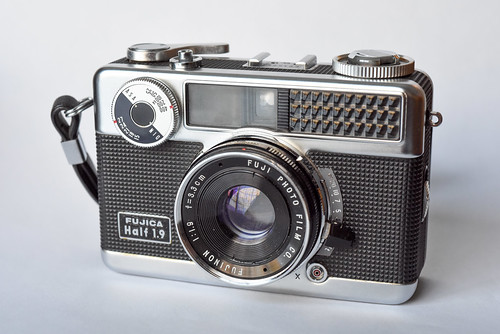
Someone I Met - and a New Camera. The Fujica Half 1.9 Half-Frame

I've been playing around with the 35mm half-frame format recently. (Click Here) and (Click Here) to see posts on my first half-frame camera, the Canon Demi EE17.
 
I recently bought a second half-frame camera, a Fujica Half 1.9. I picked it up on ebay for $22, including shipping, and it looks and works like new. It even came with the original soft leather case, strap and lens cap. Very cool.
 
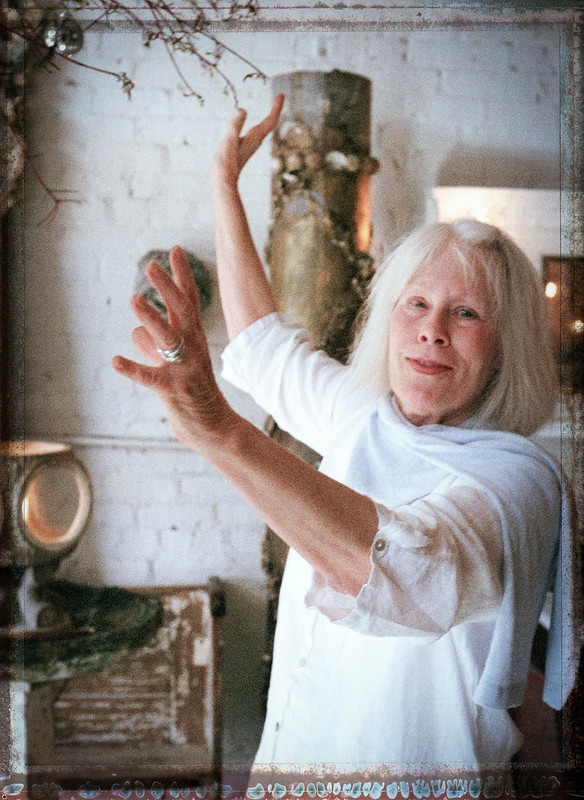
Here's the important part - a picture I made with it on a recent trip down to Greenville, South Carolina. My friend, Craig, and I took a run over to Asheville, North Carolina for the day. We met this fine lady in an art studio there.
 
 
I scanned the film, then edited it in Analog Efex 2 (Nik Software/Google) and Lightroom. Analog Efex has a wealth of film and camera emulations, and frames.
 
DMC-365.blogspot.com


Sunday, December 7, 2014

Leica Camera Blog Interviews Robert Mertens - Discussing Abstract and Surreal Images

Robert Mertens is an author, instructor of Master Classes at Leica Wetzlar, and a graphic artist.
 
 
The Leica Camera Blog interviewed Mertens to discuss his creative abstract and surreal imaging approach. Mertens says that his work "keeps revealing new elements through intense observation and interaction."
 
About his workflow, Mertens remarks:
"Think of the data from my Leica as modelling clay, from which my images are created in Photoshop."


His works take hours to sometimes days to complete in Photoshop.
 
Personally, even for my abstract work, I prefer to do as much in the camera as possible, including any composite construction of multiple images (multiple exposures). I certainly do post-process them, but prefer for that to take minutes, not hours or days.
 
Mertens uses a Leica M240 and 50mm Summilux for much of his work, and a Leica D-Lux for closeup images.
 
(Click Here) to read the full interview and see more images on the Leica Blog.
 
DMC-365.blogspot.com

Monday, October 27, 2014

From the Broad Creativity File - Using the Sun (and Magnifying Glass) to Make Art

Image Source: http://www.lostateminor.com/2014/10/10/artist-creates-landscape-artworks-using-magnifying-glass/
 
I love seeing new creative approaches to art. Usually, these come to me from the blog "Lost at E Minor," and this one is no exception.
 
This is Jordan Mang-osan. He makes the large murals by sketching them, then using a magnfying glass to burn the image into wood. Awesome, huh?
 
(Click Here) to read more.
 
I respect people who come up with different ideas like this. Once you see them, it's obvious. How many of us had wood burning kits when we were younger? For those who didn't, they were essentially electric soldering irons, which were used to burn pictures into wood. Using a magnifying glass instead isn't such a stretch. Why didn't I come up with that?
 
And regardless of who thought of it, I also respect people with the patience to put it to work on such a large scale. These pieces of art take Jordan months to complete.
 
DMC-365.blogspot.com


Friday, October 24, 2014

Some Tips for Taking Great Images in the Studio

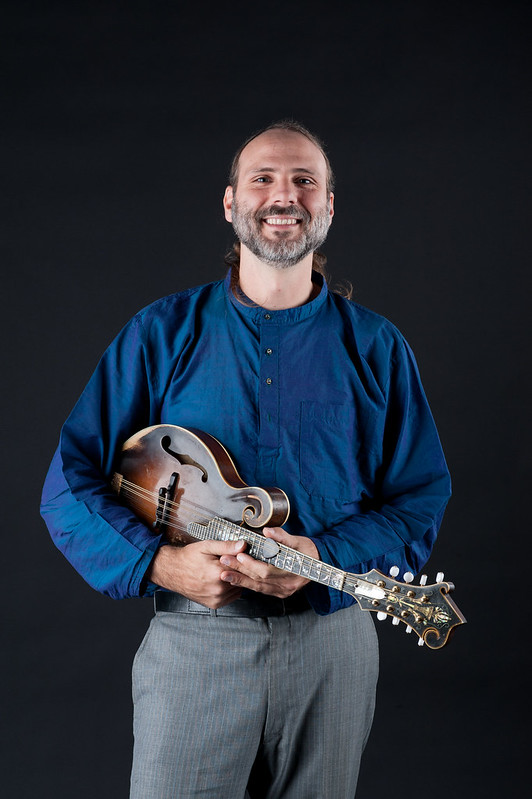
Danny Knicely, by Reed A. George
 
I've been doing some promo images for my musician friends lately. I'm thoroughly enjoying the process, and always looking for new tips. I thought that the studio lighting setup would be one of the challenges, and therefore looked up some common configurations before starting. After a couple of these sessions, I now feel pretty comfortable with the lights. Really, I think it's more important to get them set, stop fiddling with them, and develop trust and interaction with the person being photographed.
 
I recently read a post by Sarah Hipwell on the Digital Photography School website. It has several good tips for getting things to flow:
 
  • Music can help to calm down a tense atmosphere. I use this one every time when I'm shooting musicians. I have not tried bringing recorded music to the session, though. Since my subjects are musicians, and typically want to be photographed with their instruments anyway, I always ask them to play. I get a private concert, and they get to do what they love. Another added benefit is that it brings out the performer in the person; they're not used to being in a photo studio, but they are used to playing in front of people, and even in front of cameras.
  • A tip that Sarah shares is asking the subject to blink ten times. I like this idea very much, as it will give a better catchlight in the eyes if they're wet, and I bet it reduces blinking during exposures.
  • Ask them to wear neutral clothing. The pictures are about them, not their clothes.
  • Sarah mentions that most great images come at the end of a session. I've definitely found this to be true. I think it's when the pressure is off, and everyone is pretty sure you've got some good images, that both the photographer and subject relax. This relaxation shows in the pictures.
  • Get feedback during the session. This is a mixed bag, in my opinion. First, showing them tiny images on the camera LCD generally won't work. Connecting to a larger display requires some technical ability; if you have it, great. If not, don't fiddle with wires, cards, and gear while the studio clock is ticking.
  • Get them to talk. Yes! Except, as mentioned above, I generally get them to sing. This is easy with most musicians.
  • Work fast. Agreed. While I try to work fast, sometimes I rush myself too much, and don't go deep enough with the subject. In other cases, what should be a one hour session easily goes into the second hour, probably too long from the point of view of the person being photographed. So, for me, the challenge is to balance between rushing too much and taking too long.
  • Another practical tip - have them point their legs toward the main light source, and twist their upper body to face the camera.
(Click Here) to read Sarah's full piece on the Digital Photography School site.
 
 
It's harder than it looks, folks. In my opinion, getting the technical stuff out of the way so that you can focus on the person and interaction with them is key.
 
DMC-365.blogspot.com
 

Friday, October 17, 2014

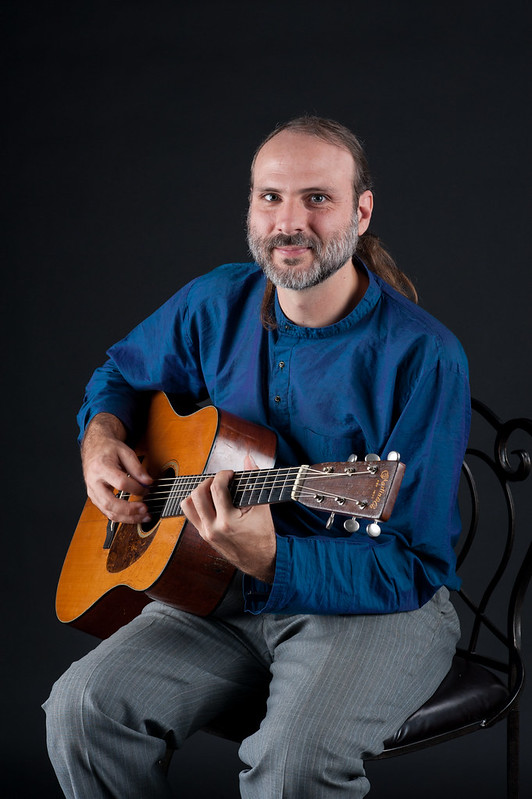
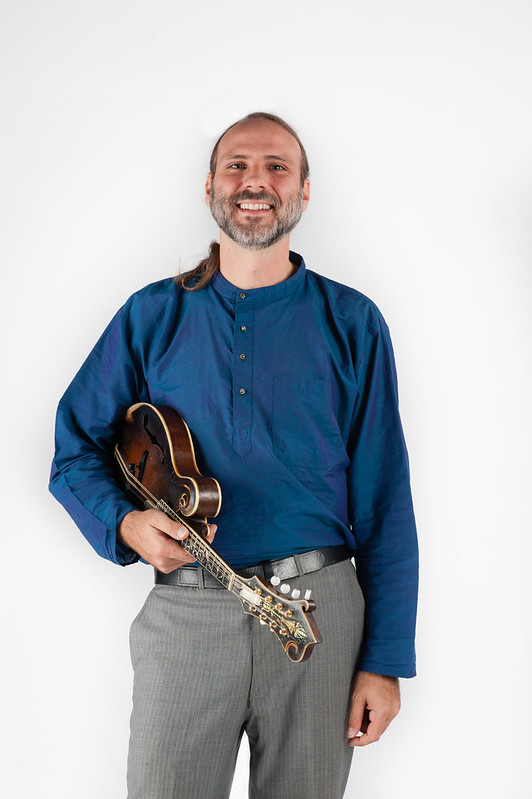
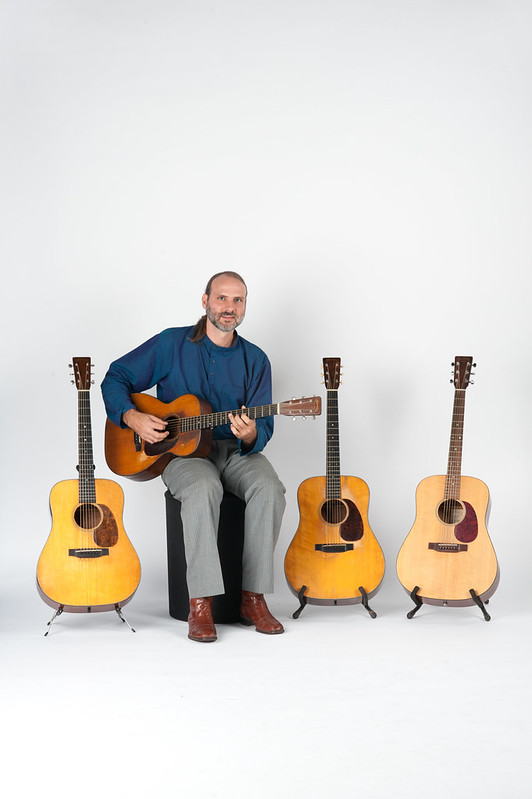
Studio Shoot with Musician Danny Knicely

Danny Knicely is one of the most productive and talented musicians I know. Danny is a mandolinist, violinist, guitarist, and I'm sure capable on instruments I haven't listed here. He's a member of Furnace Mountain Band, one of the best I know.
 
(Click Here) to see one of my posts on Danny, where he led a mandolin workshop with other legends Sam Bush and Drew Emmitt.
 
A few weeks back, I was thrilled to get a message from him, asking if I could help in making some promotional images for him. He wanted some images of himself to use in promoting his latest effort, a CD called "Waltz for Aimee." He also wanted some images of his classic guitar collection, including several Martin guitars, much older than either he or I.
 
Of course I was happy to oblige, and decided to rent a local photo studio for the project. I've had an increase in requests for this type of work recently, and hope to see that continue. I really enjoy it.
 
Anyway, here are a few of my favorite shots from the photo session.


I shot all of these with my Nikon D700 and prime lenses. I mostly relied on the 50mm f1.4 AF-D and 85mm f1.8 AF-D lenses. Using a relatively simple three light setup, supplied with the studio, I feel that I did a decent job with balancing the lighting overall. Getting the hairlight right on the images with a black background is something I've learned from previous sessions. This time, I struggled somewhat with the relatively narrow backdrop, even with shooting just one person and his instruments. This would become more of an issue shooting a multi-person band. I also need to focus on lighting the backdrop better for the white background images. I believe it's important to learn something from every shoot.
 
That said, I'm satisfied overall with the outcome. It was really a pleasure to spend some time with Danny and help him to promote his excellent musical talents.
 
DMC-365.blogspot.com


Tuesday, September 23, 2014

Glen Craig's Photos of The Man - Miles Davis

Image Source: http://blog.leica-camera.com/photographers/interviews/glen-craig-close-up-miles-davis-at-photokina-2014-daswesentliche/
 
As you may know, I'm into photographing musicians and creative souls. It brings balance to my life, which is also heavily involved in science and technology. Photography represents the perfect combination of the two perspectives for me.
 
In a post on the Leica Camera Blog, a full gallery of intimate images by Glen Craig shows a side of jazz master and innovator Miles Davis that I've never seen before. I suppose almost no one has.
 
(CIick Here) to read the post and see the full gallery of amazing images from 1970.
 
Craig shares that Davis generally didn't like to be photographed, but made an exception, letting him stay close and photograph him over three weeks in 1970. He also mentions that in order to gain access to the artist in the beginning, he had to pass a test of sorts, made up of questions about jazz music. Craig obviously passed the test.
 
I like that Craig shot many of the pictures of Davis working out in a boxing gym close up, with a 35mm lens. It gives the images a very intimate feel, one that would not have been accomplished with a long lens.
 
DMC-365.blogspot.com


Friday, September 5, 2014

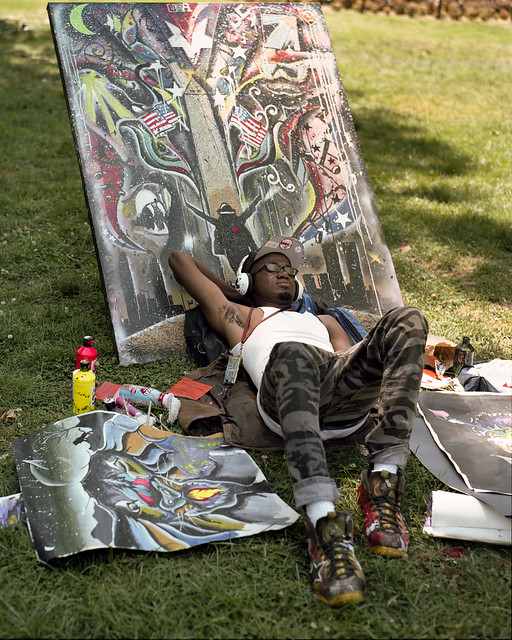
DC Artist - My Very First Shot with the Mamiya Universal

I've shared several images I've made with my new Mamiya Universal Press camera and instant film. Before I got the correct instant back for the camera, I shot a few rolls of normal 120 medium format film. This is the very first exposure I made with the camera:
 
Artist, DuPont Circle, by Reed A. George
Mamiya Universal Press, Mamiya Sekor 100mm f3.5 Lens
Kodak Portra 160 Color Negative Film
 
The Universal is becoming a favorite for me. It's not your typical street photography camera. Not what you'd call subtle. When you lift this thing to take someone's picture, they're going to notice. So, I asked this guy if it was okay. He said "Sure," and then went back to being himself, which I very much appreciated.
 
I'm very impressed with the image quality that the Mamiya is capable of producing. This first roll was shot in the 6x7 format back, which gives me ten shots per roll of 120. Can you say "slow photography?" Think of the contrast of having to change film rolls every ten shots with modern digital photography. You can shoot that many images in two seconds or less with a DSLR. But why?
 
DMC-365.blogspot.com

Friday, June 20, 2014

The Plank Stompers

Some of my best music buddies are in a band called The Plank Stompers. They were nice enough to give me a couple of tries at a group shot last week.
 
The first try was in nice but direct sunlight, and didn't work out that well. My only real chance to beat the contrast was a small amount of fill flash, and I'm not satisfied with the result. We went at it again a little later, when the sun was going down. Much better. Here's my favorite:
The Plank Stompers, by Reed A. George
Leica M9, Leica Summilux 35mm f1.4 v.3 Lens
iso 640, f9.5, 1/125 sec.
 
 
I've gotten a few more requests for whole band promo shots recently. I need to work on the techniques for getting this right. A little practice with the Plank Stompers helped me in that respect. I hope they'll find the pictures useful.
 
The Plank Stompers play a great down-home mix of bluegrass, folk, and space groove.
 
(Click Here) to find out more about them.
 
DMC-365.blogspot.com


Wednesday, June 18, 2014

Cole Thompson on Vision

 
I recently read a great post on Cole Thompson's blog, about how he found his own vision. Cole started the journey with a portfolio review where the reviewer simply said that he was copying Ansel Adams. He told Cole that Ansel had already done Ansel, and he was never going to do it better than him.
 
This set Cole on a journey to find and develop his own vision, which he describes in a set of ten steps.
 
(Click Here) to read the whole post on Cole Thompson's blog.
 
A few of the elements of the post I like best are:
 
  1. He printed 100 of his most loved images, then sorted out those that he personally loved (not those that others happened to love). Then, he set his mind to pursuing more images like those.
  2. A direct quote: "I had to remind myself that this was not a race or a contest, I was not competing against others...I was competing with myself."
  3. Cole's vision didn't come to him in a flash, but in a moment of realization: "Vision was simply the sum total of my life experiences that caused me to see the world in a unique way."
I also like Cole's assertion that your vision is not necessarily associated with a particular look or style. You can bring your own vision to anything you set your mind to.
This is a very well-written piece, and one that makes me think more about why and how I pursue photography.
 
DMC-365.blogspot.com
 

Monday, June 9, 2014

More New Orleans Street Art

I have a thing for artists who make their living sharing creativity on the street. This gentleman was most gracious when I asked if I could take his picture at Jackson Square in New Orleans.
 
Street Artist, New Orleans, by Reed A. George
Leica M6 Titanium, Kodak 400 Color Print Film
 
I honestly can't remember if I was using my 35mm f2 Summicron or 50mm f1.4 Summilux for this shot. I must learn to record my film shooting parameters better.
 
What attracted me to this man as a subject was the combination of beautiful morning light bouncing from his sketch pad and lighting his face, and his intense concentration on his subject. In composing the shot, I got down low, hoping to use the line of the fence to align somewhat with his line of sight. I think I achieved that reasonably well. I was able to get in and out of their way very quickly, and captured exactly what I wanted with the M6.
 
Nope, I'm not ready to give up film yet.
 
DMC-365.blogspot.com


Wednesday, April 2, 2014

Art for the Sake of Art - From the Broad Creativity Files

Sand drawings. Andres Amador makes them, mostly for his own creative release. And the phrase "sand drawings" really isn't grand enough for what he produces.


Image Source: http://blog.chasejarvis.com/blog/2014/03/the-key-characteristic-shared-by-all-the-most-creative-people-i-know-andres-amador-interview/?utm_source=feedburner&utm_medium=feed&utm_campaign=Feed%3A+ChaseJarvis+%28Chase+Jarvis+Blog%29
 
I read about Andres' artistic pursuits on Chase Jarvis' blog.
 
(Click Here) to read the story and see several great examples on Chase's blog.
 
There are two things that really strike me about this work. First, as Chase emphasizes, the best art is done because the artist simply must do it, as opposed to doing it for money, prestige, etc. Second, this particular expression impresses me because of the inherent impermanence of it. The article mentions that it's somewhat like Tibetan Buddhist mandala sand paintings, where monks spend weeks making intricate paintings from colored sand, and then destroy them.
 
(Click Here) to read more about sand mandalas. I've always wanted to see one of these being made.
 
DMC-365.blogspot.com
 

Monday, January 6, 2014

I've Been Thinking About a Trip to New Orleans

My Dad used to live there. I visited a couple of times, and really loved the place. My memory of it tells me that I could spend a lot of time just hanging out, meeting people, and shooting photographs with real feeling.
 
One of my friends, a young musician from here in Virginia, has now relocated to New Orleans as well. He is quite happy there, and seeing him over the holidays for a few minutes made me think of it again.
 
Poster DougVaughn on mu-43 has posted a few images of street artists, the first two taken with an Olympus OM-D and 75mm f1.8 lens.
 
Image Source: http://www.mu-43.com/showthread.php?t=57841
 
(Click Here) to see Doug's post on mu-43.com
 
This would need to be a solo trip for me. What draws me to the place is all of the strangers I would meet. I'd want to have little or no schedule, just hang out and experience New Orleans again. Eat good food, listen to good music. Yes, maybe I'll find a way to do that.
 
DMC-365.blogspot.com


Thursday, December 12, 2013

From the Broad Creativity Files - Japanese Artists Paint Hotel Rooms

Artist Naoki Takenouchi at the Park Hotel, Shiodome, Tokyo, Japan
Image Source: http://www.japantimes.co.jp/news/2013/12/02/national/hotel-room-walls-serve-as-canvas-for-takenouchis-contemporary-art/#.UpxvkDS9KSN
 
The Park Hotel in Tokyo is having artists come and spend some time in residence, under its "Artist in Hotel" program. Artist Naoki Takenouchi is painting his interpretations of "Fujin" and "Raijin," gods of wind and thunder, respectively, in a room now entitled "Japanese Paper Garden" for the sumi ink and washi paper used in his portrayals.
 
The hotel already has two other themed art rooms, one entitled "Sumo," the other "Zen."
 
What a cool idea. I'd love to stay in one of these one-of-a-kind rooms.
 
DMC-365.blogspot.com
 

Sunday, October 27, 2013

From the "Broad Creativity" File - Melting Ceramics

Image Source: http://www.lostateminor.com/2013/10/14/ceramics-melting-like-ice-cream/

Sometimes I like to look outside the confines of photography to broader creative pursuits. Usually, the things I'm interested still fall within the visual arts, as does this really cool project shown on the creative site Lost at E Minor.

Here, artist Livia Marin has converted porcelains into very diffferent works of art. I don't have a clue how she's done it, but I really like the effect. What strikes me is that the patterns are not melted or distorted. I imagine they're Marin's original designs, painted after the flowing background is produced. But, I can't be sure of that.

(Click Here) to read the original post on Lost at E Minor.

A nice diversion for a Monday morning (when I'm writing this).

DMC-365.blogspot.com


Monday, October 14, 2013

Accidental Degas (Impressionism) on THEME blog

Image Source: http://www.the.me/the-accidental-degas/?utm_source=feedburner

I love this. On the photography daily blog THEME, the author describes how they got the image above by accident - using an iPhone to photograph in low light at a gala dinner party.

It appears to me that noise reduction software in the iPhone provided the impressionist smearing. The colors are just magnificent.

(Click Here) to read about it, and see the image compared to a real Edgar Degas painting on THEME.

It is so easy to get hung up in technical perfection. Sometimes the impression is more important than the details. It was shown by the impressionists, who really weren't accepted at the time by more realistic painters. This picture proves that it translates to photography as well.

DMC-365.blogspot.com


Thursday, August 29, 2013

Mixed Media - Printing on Brushed-On Emulsion by Andrew Kaineder

 
Image Source:
http://www.lostateminor.com/2013/08/19/andrew-kaineder-professional-doer/?utm_source=feedburner&utm_medium=feed&utm_campaign=Feed%3A+LostAtEMinor+%28Lost+At+E+Minor%29
 
Not so excited with any equipment news recently, I'm once again widening the net in my search for interesting photographic subjects. I found this one on "Lost at E Minor," a broad creativity site.
 
(Click Here) to check out Lost at E Minor.
 
Andrew Kaineder and colleagues paint a liquid emulsion onto a surface, and then expose it, presumably from a negative. In the case above, the emulsion is painted onto paper, yielding one-of-a-kind character to each piece, and plenty of imperfection.
 
I'm not sure how I feel about the concept of making a photographic piece "one-of-a-kind." In some ways, I understand that increasing the value of a print, because no one else can have exactly the same print. However, is it merely a grasping at making photography more like painting, for example? One of the primary characteristics of photography is that it can be reproduced. Digital technology makes this even more true. I remember when digital audio came about and how it affected my friends who were into recording live performances (in their case mostly the Grateful Dead). It was an amazing piece of fortune to be able to duplicate a recording an unlimited number of times without ever losing a drop of sound quality. So, is that a bug or a feature?
 
I can also imagine the texture of Andrew's print. That is a little easier to appreciate for me.
 
I like to challenge and be challenged by new creative ideas like this.
 
DMC-365.blogspot.com
 
 
https://affiliate-program.amazon.com/gp/associates/network/build-links/individual/get-html.html?ie=UTF8&asin=B00023JE3E&marketplace=amazon


Saturday, March 16, 2013

Documentation of an Artist's Day - Yoshirou Shinkawa, Hill of Carnation Blog


Yoshirou's blog, hillofcarnation.blogspot.com, is in Japanese language. Therefore, I can't tell you much about this entry. I can refer you to this post:
 
(Click Here) to experience a day in the life of an artist, presumably in Japan.
 
The picture above really catches my eye. It is beautifully done - the colors are understated and real. The focus is in exactly the right place, and the background blurred, so as not to draw too much attention, yet retaining enough detail to make it interesting. A great environmental portrait.
 
I love to photograph people who are into their art. Here's one such person, who I found painting at an outdoor music festival:
 
Artist, by Reed A. George
Panasonic Lumix DMC-G3, Lumix 12-35 f2.8 Lens at 19mm
iso 400, f4, 1/500 sec
 
Artistic people are usually interesting.
 
DMC-365.blogspot.com
 

Thursday, March 7, 2013

Whole Lotta Leica - February Results - Ai Weiwei's Exhibit at the Hirshhorn With the W-Nikkor 3.5cm f2.5 Lens

I visited the Hirshhorn Museum in Washington, DC in February, where I saw a wonderful exhibit by Chinese artist Ai Weiwei. Weiwei is a multi-talented artist, working in an extremely wide range of media including photography and video, woodwork, pottery, architecture, social media, and sculpture. He has been the target of suppression by the Chinese government. He exposes social commentary in his art, for example in a series of pieces centered around the 2008 earthquake in Sichuan, China, where he decries the death of so many school children due to cheap construction of public school buildings.
 
(Click Here) to read about Ai Weiwei's exhibit at the Hirshhorn. It's certainly worth a visit.
 
I took the opportunity to shoot some images with my February Whole Lotta Leica lens - the W-Nikkor 3.5cm f2.5 LTM.
 
Ai Weiwei's Zodiac, by Reed A. George
Leica M9, W-Nikkor 3.5cm f2.5 Lens
iso 640, f4.8, 1/60 sec.
 
I like the radiating lines of the zodiac in the picture above. I waited until the lady walking around the exhibit came fully into a beam of light to release the shutter. The light on her face provides a small but powerful focal point.
 
Captivating Video, by Reed A. George
Leica M9, W-Nikkor 3.5cm f2.5 Lens
iso 640, f2.5, 1/30 sec.
 
Dragon's Gaze, by Reed A. George
Leica M9, W-Nikkor 3.5cm f2.5 Lens
iso 400, f4.8, 1/125 sec.
 
I find the W-Nikkor to be very sharp in the center, with a pretty nice range of contrast, if a little on the low contrast side. I think it's a little soft further from center, which can impart a particular look that's not good for every subject, but can be special in the right cases. Not exactly soft, but the peak sharpness is clearly in the center.
 
I elected to keep some of the images in color. Let's take a look at those. First off, this room of the exhibit is wallpapered with shots of the Olympic Stadium in Beijing, in which Ai collaborated on the architectural design. He makes wooden pieces, such as these geometric shapes (which, by the way, are constructed without a single nail, using traditional Chinese woodworking techniques), frequently using wood from ancient temples that have been disassembled or destroyed in the name of progress.
 
Ai Weiwei Exhibit, by Reed A. George
Leica M9, W-Nikkor 3.5cm f2.5 Lens
iso 640, f4.8, 1/15 sec.
 
Ai Weiwei Exhibit, by Reed A. George
Leica M9, W-Nikkor 3.5cm f2.5 Lens
iso 640, f4.8, 1/15 sec.
 
Ai Weiwei's "Snake Ceiling," by Reed A. George
Leica M9, W-Nikkor 3.5cm f2.5 Lens
iso 640, f5.6, 1/15 sec.
 
The snake in the picture above is constructed of children's backpacks. It is a statement about the Sichuan earthquake. Apparently, backpacks were an ever-present reminder of the many children lost in the disaster.
 
I enjoy shooting with the little Nikkor. I am very pleased with the way it renders subtle colors. It's a tiny lens, and is faster than my similarly-designed Leica 3.5cm f3.5 Summaron. However, I must admit that I prefer the Summaron's overall image quality.
 
I'm happy to have the Nikkor, but certainly would not want it to be my only or main 35mm lens for the M9. I have always wondered about the Nikon rangefinders, and wonder if the LTM lens performs similarly to the Nikon rangefinder mount lenses. I imagine that the performance is very similar.
 
DMC-365.blogspot.com


Monday, February 18, 2013

From the Leica Blog - Emilie Rosson on Photography and the Leica X1


Emilie Rosson
Image Source: http://blog.leica-camera.com/photographers/interviews/emilie-rosson-an-emerging-photographer-on-a-mission-of-joyful-self-discovery/
 
The Leica Blog has an interview with emerging artist and photographer Emilie Rosson, exploring her creative thoughts, and her preference for the Leica X1.
 
(Click Here) to read the full post on the Leica blog.
 
I found this article interesting for a few reasons. First off, Emilie is not an accomplished success, with funds to buy any camera she wants. In fact, while she obviously enjoys the 2nd hand X1 that she currently uses, she admits to really wanting a Leica M9. She is also uncommon in that her style is still developing; she's not yet focused on a specialty. In fact, she says that she's currently into portraits, architecture, macro, flowers, and has an emerging interest in street photography.
 
While Emilie is a self-diagnosed cynic, that does not come through in her images. In fact, they're somewhat joyful. Emilie explains that photography provides her a measure of freedom from her own cynicism.
 
As a bonus, there's a link to a short video on street photography in the blog entry.
 
Read the whole story. I find it to be a refreshing break from my own concept of the typical Leica photographer.
 
DMC-365.blogspot.com


Thursday, October 25, 2012

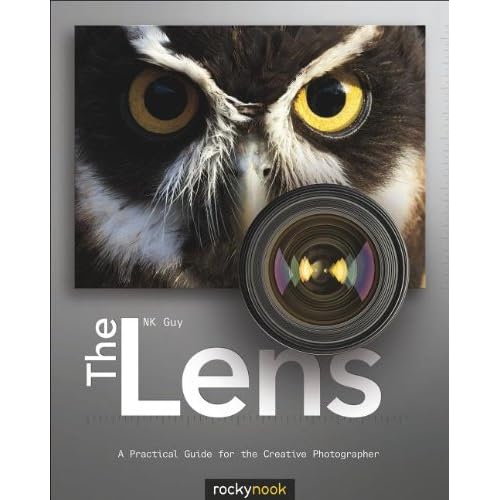
Here's A Book For Me - and Maybe For You? And, My Decision To Try A Zeiss Sonnar ZM

 
Image Source: http://www.amazon.com/Lens-Practical-Guide-Creative-Photographer/dp/1933952970/ref=sr_1_1?s=books&ie=UTF8&qid=1350039622&sr=1-1&keywords=The+Lens%3A+A+Practical+Guide+for+the+Creative+Photographer
 
Digital Photography Now (dpnow.com) has announced this new book by NK Guy, written with the purpose of helping real photographers (not optics designers or lens testers) understand the terms, charts, and subtle aberrations we're deluged with when we study a new lens.
 
(Click Here) to see the announcement on dpnow.
 
I'll be buying this book for sure. If you decide to, please buy it through my link to Amazon below. My sales have been zero for mulitiple months now, so help me out as you help yourself out. Not that it really matters; this blog is my hobby. But, any little commission does help to fund my daily coffee...
 
I'm interested in this book because, even though I'm an engineer, the technical criticisms that I read about lenses are difficult to understand, weigh, and consider when deciding whether or not to try a new lens.
 
I'm working on a case in point at the moment. I have traded my used Leica M8 for a used Zeiss ZM Special Edition camera body (no questions there) and Zeiss 50mm Sonnar f1.5 lens. This lens is so highly maligned by the technical folks that if I listened to that bunch, I'd never consider it. The big issue seems to be a focus shift at wide apertures. What this means is that on a rangefinder camera, if you shoot at f1.5 (or maybe f2), the focus point of the lens will be shifted a few inches in front of where your rangefinder tells you to focus. This is a very real effect, and can be troublesome if you're shooting a portrait, and want the focus point to be exactly on the subject's eyes. I know the effect is real, because I've experienced it with my own lenses on the Leica M9. It varies by lens design. My Leica Summicron 50mm f2 is probably the best (smallest shift), and my 1955 Summarit 5 cm f1.5 is the worst. My most valuable Leica lens, the pre-aspheric 35mm f1.4 Summilux, shows the effect clearly at f1.4.
 
It's really easy to get hung up on these things. However, both of my lenses that exhibit focus shift are personal favorites. Until now, I have always thought that they were just a little "soft" at wide apertures. Now I think it's mostly focus shift. Both of them are masters of the "Leica glow," another highly debated lens characteristic.
 
Anyway, the newer Zeiss Sonnar is a modern version of an earlier lens design, with known technical peculiarities. Zeiss knows this, of course. In fact, a piece on Luminous Landscape includes a written message from Zeiss at the bottom of the page explaining it. It also explains that this is an artist's lens, not a lens tester's lens.
 
(Click Here) to read about the Sonnar on Luminous Landscape.
 
When I think about it, some of my older, less technical lenses are my favorites. Maybe it's my own age creeping in?
 
In any case, the Sonnar is on its way, and I'll report on whether I'm more artist or engineer in the end :).
 
Also, I'll let you know how I like this book. Or, you can order it for yourself through the link below (please).
 
DMC-365.blogspot.com