Showing posts with label lighting. Show all posts

Friday, February 27, 2015

Leica M9 - Still Something Special About It

 
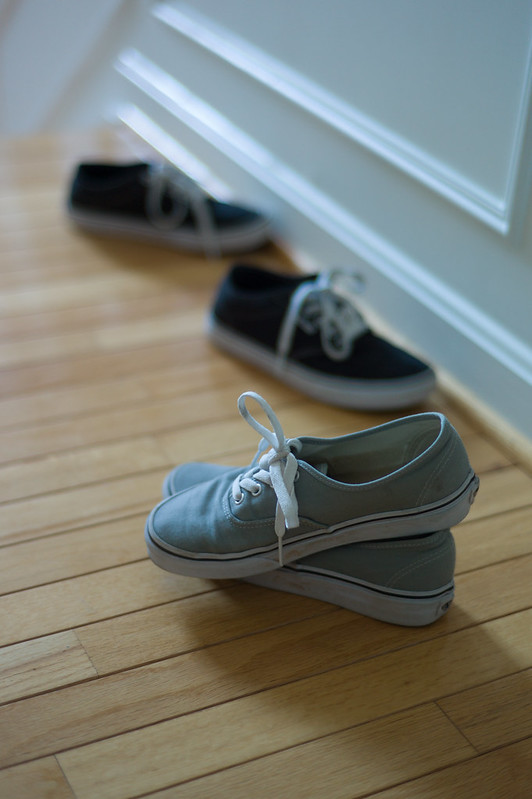
Teen Style, Morning Light, by Reed A. George
Leica M9, Zeiss Sonnar C 50mm f1.5 Lens
iso 500, f1.7, 1/15 sec.
 
Yes, there's still something unique about how the Leica M9 sensor renders an image. Nothing in your face, for sure. But, this is basically the tonality that I had in mind when I made this shot on the way out of the house this morning. There's something subtle about the way this camera draws.
 
DMC-365.blogspot.com

Friday, October 24, 2014

Some Tips for Taking Great Images in the Studio

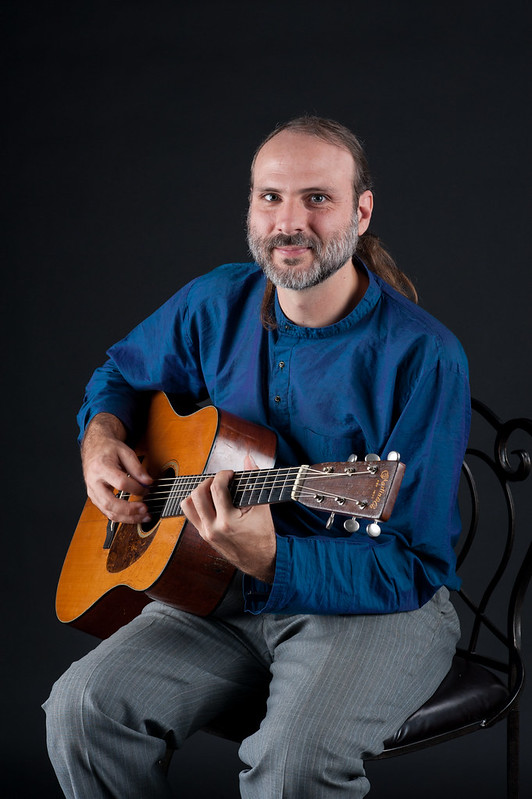
Danny Knicely, by Reed A. George
 
I've been doing some promo images for my musician friends lately. I'm thoroughly enjoying the process, and always looking for new tips. I thought that the studio lighting setup would be one of the challenges, and therefore looked up some common configurations before starting. After a couple of these sessions, I now feel pretty comfortable with the lights. Really, I think it's more important to get them set, stop fiddling with them, and develop trust and interaction with the person being photographed.
 
I recently read a post by Sarah Hipwell on the Digital Photography School website. It has several good tips for getting things to flow:
 
  • Music can help to calm down a tense atmosphere. I use this one every time when I'm shooting musicians. I have not tried bringing recorded music to the session, though. Since my subjects are musicians, and typically want to be photographed with their instruments anyway, I always ask them to play. I get a private concert, and they get to do what they love. Another added benefit is that it brings out the performer in the person; they're not used to being in a photo studio, but they are used to playing in front of people, and even in front of cameras.
  • A tip that Sarah shares is asking the subject to blink ten times. I like this idea very much, as it will give a better catchlight in the eyes if they're wet, and I bet it reduces blinking during exposures.
  • Ask them to wear neutral clothing. The pictures are about them, not their clothes.
  • Sarah mentions that most great images come at the end of a session. I've definitely found this to be true. I think it's when the pressure is off, and everyone is pretty sure you've got some good images, that both the photographer and subject relax. This relaxation shows in the pictures.
  • Get feedback during the session. This is a mixed bag, in my opinion. First, showing them tiny images on the camera LCD generally won't work. Connecting to a larger display requires some technical ability; if you have it, great. If not, don't fiddle with wires, cards, and gear while the studio clock is ticking.
  • Get them to talk. Yes! Except, as mentioned above, I generally get them to sing. This is easy with most musicians.
  • Work fast. Agreed. While I try to work fast, sometimes I rush myself too much, and don't go deep enough with the subject. In other cases, what should be a one hour session easily goes into the second hour, probably too long from the point of view of the person being photographed. So, for me, the challenge is to balance between rushing too much and taking too long.
  • Another practical tip - have them point their legs toward the main light source, and twist their upper body to face the camera.
(Click Here) to read Sarah's full piece on the Digital Photography School site.
 
 
It's harder than it looks, folks. In my opinion, getting the technical stuff out of the way so that you can focus on the person and interaction with them is key.
 
DMC-365.blogspot.com
 

Friday, October 17, 2014

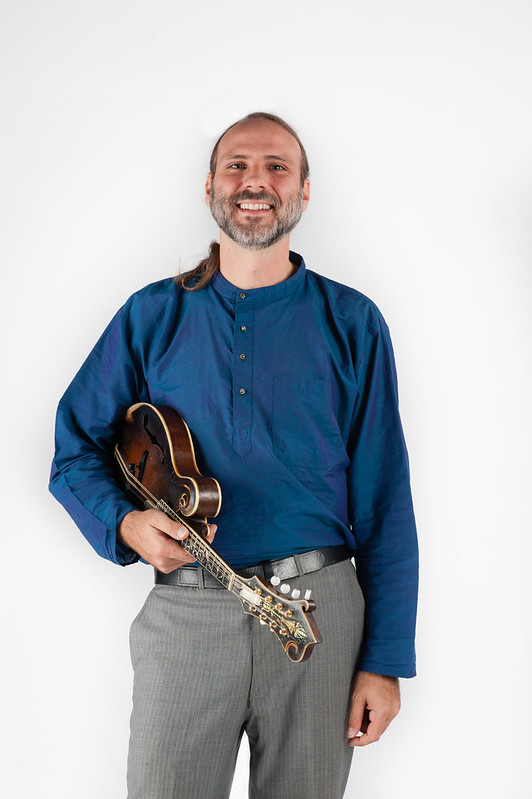
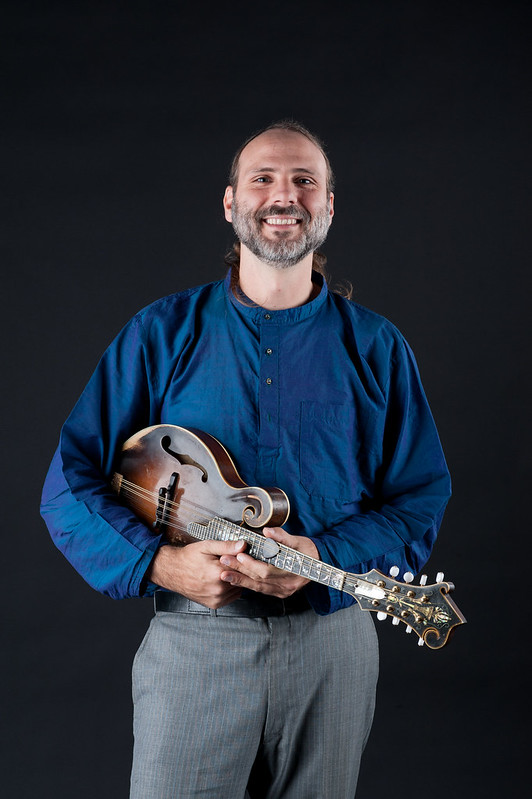
Studio Shoot with Musician Danny Knicely

Danny Knicely is one of the most productive and talented musicians I know. Danny is a mandolinist, violinist, guitarist, and I'm sure capable on instruments I haven't listed here. He's a member of Furnace Mountain Band, one of the best I know.
 
(Click Here) to see one of my posts on Danny, where he led a mandolin workshop with other legends Sam Bush and Drew Emmitt.
 
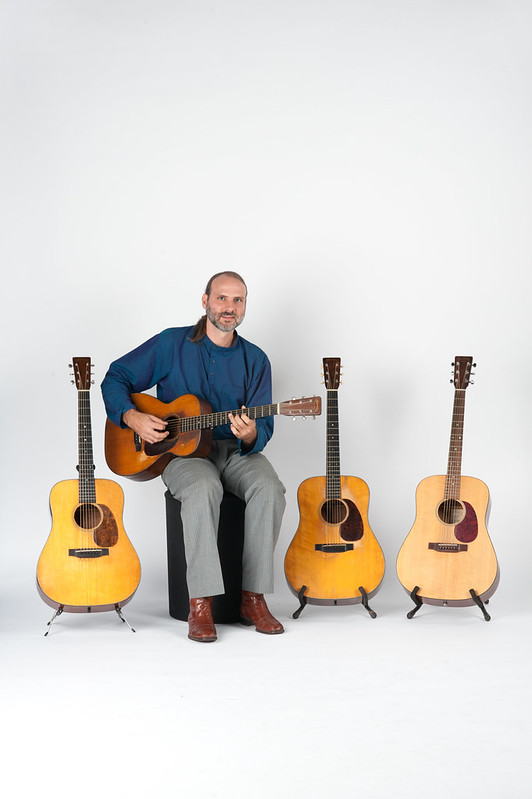
A few weeks back, I was thrilled to get a message from him, asking if I could help in making some promotional images for him. He wanted some images of himself to use in promoting his latest effort, a CD called "Waltz for Aimee." He also wanted some images of his classic guitar collection, including several Martin guitars, much older than either he or I.
 
Of course I was happy to oblige, and decided to rent a local photo studio for the project. I've had an increase in requests for this type of work recently, and hope to see that continue. I really enjoy it.
 
Anyway, here are a few of my favorite shots from the photo session.


I shot all of these with my Nikon D700 and prime lenses. I mostly relied on the 50mm f1.4 AF-D and 85mm f1.8 AF-D lenses. Using a relatively simple three light setup, supplied with the studio, I feel that I did a decent job with balancing the lighting overall. Getting the hairlight right on the images with a black background is something I've learned from previous sessions. This time, I struggled somewhat with the relatively narrow backdrop, even with shooting just one person and his instruments. This would become more of an issue shooting a multi-person band. I also need to focus on lighting the backdrop better for the white background images. I believe it's important to learn something from every shoot.
 
That said, I'm satisfied overall with the outcome. It was really a pleasure to spend some time with Danny and help him to promote his excellent musical talents.
 
DMC-365.blogspot.com


Wednesday, June 4, 2014

Visual Poetry - Audubon Park, New Orleans

Visual Poetry, by Reed A. George
Leica M9, Leica Summicron 35mm f2 v.3 lens
iso 200, f3.4, 1/1000 sec.
 
Knowing that it was important to get out of the French Quarter, at least for a little while on my recent trip to New Orleans, I hopped a streetcar to Audubon Park one morning. After my own SNAFU, whereby I rode past the station where I needed to change lines, walked several blocks to recover, then discovered that the streetcar line was under construction and being supported by bus, I was quite a bit later arriving than I had planned. The bright Louisiana sun was well up in the sky when I got to the park. That did not stop me.
 
This is one of my favorite couple of images from that morning. I saw this composition as soon as I walked into the park; an hour later and the lighting would have been all wrong. There are several things I love about this shot. The light is at nearly exactly the right position to put the statue's face in a nice combination of light and shadow, and light the body of the statue perfectly to stand out against the dark backround of the live oak branches behind it. I love how the statues interact, including the third and fourth, slightly out of focus in the background above the child statue at bottom right. They're barely even elements in the composition, which is how I wanted it. The palm tree in silhouette way back there is another important element to me. The similarity of the main statue's pose and arm position to that of the lovely live oak tree behind is probably what attracted me to this composition in the first place.
 
Of course, the next time I go to New Orleans, I will be at the park at sunrise; that would just be spectacular. Not having made it at the perfect time on this morning, I'm quite pleased with this result.
 
The Leica M9 and 35mm Summicron pulled it off nicely for me. I think this one warrants a print.
 
DMC-365.blogspot.com
 

Wednesday, January 8, 2014

DIYPhotography Shows Great Photo Setups With Granite Tile

Still in the process of trying to recover my hard drive after the failed "within Lightroom" transfer process, I'm having to resort to cross-posting a little more than normal. No to worry, I'll be back post some of my own work very soon.
 
(Click Here) to read what happened to me in my file-transfer nightmare; maybe it'll help you avoid the same issues.
 
I saw a great post on DIYPhotography today, about how to use a granite tile as a base for cool product-style photography. Here's the shot that caught my eye:


Image Source: http://www.diyphotography.net/granite-tile
 
(Click Here) to read the full post on diyphotography.net
 
There are lots of good examples in this post, including how to integrate light painting with this style of shooting. Not exactly what you'd want to use for selling products on ebay, but certainly cool. There's another image of a Rolleiflex that I really love.
 
So, if you're bored on a cold winter day, there are certainly some ideas at the link above for you to play around with.
 
DMC-365.blogspot.com
 

Saturday, December 28, 2013

Too Much Emphasis on Low Light? Look for Good Light

 
Key West Cemetery, by Reed A. George
Lumix DMC-GX1
 
It really is easy to get caught up in technical capabilities of our cameras, focusing on what they can do in near darkness, rather than looking for good light, wherever it may be found. Frequently, the low light that necessitates super high iso and low noise performance isn't really that good.
 
Why am I thinking about this? I read a post along these lines on prosophos.com.
 
(Click Here) to read that post.
 
It reminds me how much we did (and some of us still do) with film cameras, where the realistic limit of iso is about 400, okay maybe 800 or 1600 by pushing the film. Delta 3200 was always so grainy at that iso setting, I always used it at 1600 max. Today, a digital camera that shows noise at 1600 is looked down upon by most.
 
Anyway, this inspires me to worry less about low light, f1.4, and iso 6400. I'll get out and look for some good light.
 
DMC-365.blogspot.com


Wednesday, June 26, 2013

This Might Be A Fun Little Gadget - The Kick by Photojojo

 
Photojojo is marketing "The Kick," an LED light array, complete with an iOS (iPhone, iPad, iPod Touch) app. You can use it to light photographic scenes, either attached to your iPhone, or remotely. It even has a tripod mount so you can stably mount it just about anywhere.
 
The Kick provides constant light (not strobe), and has the following features:
 
  • Color balance via the app (2,500 - 10,000 K)
  • Intensity control
  • Tripod mount
  • Rechargeable Li ion battery (charge with USB)
  • Ability to sample light and mimic color balance with the LEDs
There are some pretty cool example shots on the website.
 
(Click Here) to investigate The Kick on Photojojo
 
Cute. $179 cute? Hmm. That seems like a lot. Probably not buying one this week.
 
DMC-365.blogspot.com


Saturday, March 9, 2013

Skeletons From The Closet - February Results - Super Ricohflex in Dramatic Light

As you may have seen, I've been exploring strong directional light here and there. I took the February SFTC camera, the Super Ricohflex, to DC for a day of wandering around the Smithsonian museums in DC. I found some wonderful light inside the lobby of the Smithsonian castle. I just sat and waited until people walked into that light. Here are some of the results.
Into the Light #1, by Reed A. George
Super Ricohflex Twin Lens Reflex, Kodak Tmax 400 Film
 
The design of the Ricohflex TLR allowed me to sit in the same position, looking down into my camera, rather than pointing it at face level at my subjects. At one point, someone came up behind me and asked if I was "filming." I assumed he meant videotaping, and replied that no, I wasn't. I suppose in fact that I was filming.
 
Into the Light #2, by Reed A. George
Super Ricohflex Twin Lens Reflex, Kodak Tmax 400 Film
 
I love the profile of the guy's face peaking out from the darkness at right.
 
Into the Light #3, by Reed A. George
Super Ricohflex Twin Lens Reflex, Kodak Tmax 400 Film
 
The Super Ricohflex has a relatively dim finder, as the viewing lens is f3.5. I had to prefocus, then just wait for someone to walk into the light.
 
Here's one from the entrance of the Natural History Museum. The dark interior contrasted nicely with the backlight coming from the bright daylight outside.
 
"That's One Big Elephant," by Reed A. George
Super Ricohflex Twin Lens Reflex, Kodak Tmax 400 Film
 
I'll finish the post up with a couple of other shots from DC.
 
Street View, DC, by Reed A. George
Super Ricohflex Twin Lens Reflex, Kodak Tmax 400 Film
 
I recently wrote about artist Ai Weiwei's exhibit at the Hirshhorn in DC. While I shot mostly with my M9 (see my recent Whole Lotta Leica post), I did make this shot with the Ricohflex:
 
Ai Weiwei's Zodiac, by Reed A. George

Super Ricohflex Twin Lens Reflex, Kodak Tmax 400 Film

 
I have one more roll of film from the Super Ricohflex to finish up and get processed. I've already moved onto shooting March's SFTC camera, the Zeiss Ikonta folder, but need to finish up the roll in the Ricohflex.
 
So, you'll be seeing a few more from the Ricohflex in the weeks to come.
 
DMC-365.blogspot.com


Friday, February 22, 2013

Sometimes the Light Just Happens - Strong Directional Lighting Portrait With Leica M9

How Long Will He Make Me Sit Here? #1, by Reed A. George
Leica M9, Leica Elmarit 90mm f2.8 Lens
iso 400, f5.6, 1/180 sec
 
Feeling limited by the gray days and cold weather lately, I was very pleased to walk into my dining room and see this lovely, warm, directional light coming in from the sunset. So, I called my favorite model (who happened to be home with me at the time) and made her sit for a few pictures. Eleven years old, she's not exactly patient with my need to get a photograph of her whenever the moment happens. Lucky for her, this light only lasted a few minutes.
 
I shot a few images of her with the lens that was on my camera, the W-Nikkor 3.5cm f2.5 that is this month's pick for Whole Lotta Leica. You'll see one or two of those images in my next Whole Lotta Leica post. Then, having at least a few shots in the bag before the light disappeared, I ran down to grab my 90mm Elmarit. The images you see here are all from the 90mm lens. Oh yeah, I also shot a couple with my Super Ricohmat, the camera I selected for February's Skeletons From The Closet project.
 
In any case, I love the warm directional light. There's just enough to see the outline of her hair, and the normally bright room behind her went nearly completely black. The picture above, and this next one, are both warm in tone.
 
How Long Will He Make Me Sit Here? #2, by Reed A. George
Leica M9, Leica Elmarit 90mm f2.8 Lens
iso 400, f5.6, 1/180 sec
 
Looking back on it now, it would have been good to reflect a little light back with a reflector. The shadow from her nose is very distinct and dark. But, I didn't have enough time or hands to make that happen.
 

I think this type of light can also be a little mysterious and moody. That was my goal for the shot below. Converting the image to black and white makes it a little less warm. I suppose I could've taken that further with some cooler toning of the monochrome image, but I kind of like it like this:

Mood, by Reed A. George
Leica M9, Leica Elmarit 90mm f2.8 Lens
iso 400, f5.6, 1/180 sec
 
So, the next time you see some interesting light in an unexpected place, don't just walk by it. Inconvenience someone you love so that you can get the shot! :).
 
DMC-365.blogspot.com


Thursday, January 17, 2013

Breathtaking Photos of Switzerland


As you know, I scour the internet daily for interesting things to report about the world of photography. I frequently post others' work from places I've never visited. Occasionally, rarely actually, I find an image that blows my mind. This one does.
 
sumi41 has posted this and one other image of their native Switzerland on mu-43.com.
 
(Click Here) to see the full post.
 
 
Being that it's posted on mu-43, I must conclude that this image was taken with a Micro 4/3 camera. No other details were provided.
 
I find this picture absolutely sublime. It's the orange sunlight on that top peak, contrasting with the blue cast everywhere else, that does it for me. sumi41 promises more images - I look forward to them.
 
That image needs to be printed and hung real big, somewhere.
 
DMC-365.blogspot.com
 

Friday, December 7, 2012

Those Blasted Pop-Up Flashes

 
Shot With Panasonic Lumix DMC-GF3 by nonnit on mu-43.com
 
Anyone who's used one knows the limitations of those little pop-up flashes that are built into your cameras. Nearly every photography seminar I've attended tells you to leave them down, rip them off, whatever, don't use them. On a few exceptions, I've been told to use them the opposite of your first thought: turn them off inside or in low light, use them outside or in bright light for fill-in flash.
 
Those little flashes have a few major problems. First, they're small. That means they have low light output, and are only good close up to your subject, if you're relying on them as the main light in picture. Second, they are built-in. That means that they're optimally placed to give you "red eyes" in your subject, as the light coming from the flash reflects directly back into your lens. Finally, they give very harsh light. This is a result of them being very small sources (nearly point sources) of light, and being directly aimed at the subject. They can really make a nice-looking person ugly.
 
So, what are they good for? If you can dial down the intensity, they're fine for fill-in flash in otherwise good lighting. For example, if you're taking outdoor pictures in strong midday light, that little flash can fill in those deep black shadows under your subject's eyes, and provide a little catch-light at the same time.
 
They can also be used to trigger other flashes wirelessly.
 
nonnit on mu-43.com demonstrated both in his recent post of images shot with a Panasonic Lumix DMC-GF3.
 
(Click Here) to see nonnit's post on mu-43.com
 
So, don't literally rip that little flash off of your camera; just use it very carefully.
 
DMC-365.blogspot.com


Friday, October 19, 2012

Todd Owyoung On Backlighting Musicians

Todd Owyoung runs a really nice blog on concert photography. While Todd shoots more heavy metal and hard rock bands, as opposed to my interest in bluegrass and jam, his examples are inspirational. I'm going to shoot a local show tonight, which will include the opportunity to meet and greet the band members at a reception, and go backstage. So, I was perusing Todd's sight for some lighting tips.
 
(Click Here) to see a very nice post on Todd's site (ishootshows.com) regarding backlighting.
 
I have been working on photographing local musicians and shows for quite a while now. I feel that I've made real progress in a few areas. First, I've gotten more comfortable interacting with the musicians. I've also improved my compositional skills, and the technical details of shooting a brightly lit stage in a dark room, or a dimly lit show under a canopy at a farmer's market. Hey, it's not all glitz and bright lights, you know. I have also improved my ability to capture those micro moments of emotion that show who the band members are.
 
However, when I quickly scan through my music images, one thing is clearly missing - dramatic light. There are a few venues (including the one I'm going to tonight, Franklin Park in Purcellville, VA) that offer great stage lighting. Most others around here don't. And beyond that, how am I using light in the off-stage work? I'm using "available light," which is "any damn light that's available" in a quote attributed to the master photographer W. Eugene Smith. I'm not using every lever I have to adjust and improve the quality of my shots.
 
I use flash reasonably often when shooting stage acts. I rarely use it when the band is off-stage. It just seems so intrusive. I need to get over that. I'm already intruding, either peeking around a corner with my lens, or asking them to stand a little closer. So, a flash or two won't hurt anything.
 
In his article, Todd states that carrying two speedlights (hotshoe-based strobes) is plenty for great opportunities to backlight and frontlight a band or musician. I had one Nikon SB800 already in my bag for tonight. Guess what else is going in? A second flash.
 
Todd also talks about how some venues backlight the performers on the stage, which we can use. Again, looking through my images, dramatic lighting is not what catches your eye. Here's one example of a nice side light on Tmony Griffin of Jake and the Burtones.
 
 
Tmony Griffin, by Reed A. George
Panasonic Lumix DMC-G3, Voigtlander 75mm f2.5
iso 6400, f-stop unrecorded, 1/100 sec
 
I'm sure that the strong side lighting caught my eye when I took this image. But, not consciously. I need to keep directional lighting more in mind as I compose my images. And, I need to control and add to it where possible.
 
I think I'd better pick up some AA batteries this afternoon...
 
DMC-365.blogspot.com


Tuesday, September 18, 2012

From the Zeiss Lens Blog - Photographer David Zimand Talks Portraits


Carl Zeiss Planar 50mm f1.4
Image Source: http://www.adorama.com/ZI502PB.html
 
The Zeiss Lens Blog has posted an interview with portrait and people photographer David Zimand.
 
(Click Here) to read the story and see several of David's gorgeous black and white portraits.
 
(Click Here) to go to David's site.
 
Also, google David's name to see tons of great images.
 
David shares several important thoughts about how he approaches people photography. First off, he loves people. That's important, and shows through in his work.
 
He especially seeks out people with "bright eyes." Then he accentuates their eyes, or other distinguishing features, including with the use of ring lights. You'll see the characteristic profile of a round ring light in the eyes of many of David's subjects. Some people find this troublesome. I think it is defintiely "in your face," and not subtle at all. However, it does make for dramatic eyes. Along those lines, David also prefers to shoot his subjects looking into the lens.
 
David shoots about 80% black and white. He feels that it gives him better control, and allows him to produce the richness in tone that he prefers.
 
In terms of suggestions for developing photographers, David's advice sounds like many others - try many different approaches to develop your style, step out of the comfort zone.
 
I find this kind of advice vaguely motivating, helping me to go a little further. However, it is generic, a little abstract. I think it's the kind of advice that makes more sense once you've experienced its use in your own way. It's sort of like saying - "Work on projects, with subjects you love." Well, sometimes we don't know what we love most until we've spent time and effort trying to photograph it.
 
DMC-365.blogspot.com


Thursday, August 9, 2012

Damsels - Not in Distress - Pentax M42 Macro on Lumix DMC-GH2

 
Damselflies, by GShooter on mu-43.com
Image Source: http://www.mu-43.com/f40/asahi-pentax-100mm-macro-lens-gh2-29746/
 
Poster GShooter on mu-43.com posted two awesome images of damselfiles, made with a Pentax screwmount 100mm macro lens. This is right up my alley. The subject, the equipment, the execution are all great!
 
(Click Here) to see the original post and comments. GShooter followed up with links to high resolution images.
 
I bet no one at Asahi Optical ever dreamed how that sweet little macro lens would end up being used...
 
DMC-365.blogspot.com


Friday, May 18, 2012

Nice Post on Natural Light from Digital Photography School

 
Image Source: http://digital-photography-school.com/are-you-practicing-these-5-natural-lighting-tips

The Digital Photography School has a nice post on how to think about, observe, and capture natural light. They give the following five tips:
  1. Be aware of the characteristics of light. Learn to think about how that scene you're observing now would look at a different time of day (or night). The differences can be dramatic.
  2. There is no "good" or "bad" light. Yes, the golden hour is great for beautiful images. Sometimes, you want to communicate something other than just "beautiful." Sometimes the harsh light of mid-day is exactly right for communicating your story.
  3. Obsess about observing light. Even when you don't have a camera. Look at contrast, how the shadows are illuminated. I find it useful to think about how many stops difference I think there are between the shadows and highlights, and about how I would expose an image, if I were taking it.
  4. Give it a try, experiment. To me, this point follows on the one above. Why ever be without a camera? If you see it, shoot it. It's digital, right? You can simply delete it later, with no cost, and with the potential of learning something.
  5. Don't forget that you can post-process. Learn to shoot challenging scenes with a plan in mind for post-processing. Want to capture that person's face, but also want the sky correctly exposed? See if you can capture the sky and bring the face exposure up a little in post-processing.
And most importantly, the article reminds us to get out an make photos. That's the thing we're interested in, right?
 
(Click Here) to read the whole article on digital-photography-school.com.
 
DMC-365.blogspot.com


Wednesday, May 16, 2012

Civil War Event - John Mosby's Rangers at Mount Bleak, Virginia

 
Paris, Virginia, by Reed A. George
Panasonic Lumix DMC-G3, Pana-Leica Summilux 25mm f1.4
iso160, f8, 1/250 sec

On Sunday, May 13, 2012, I attend a Civil War historical event at Sky Meadows State Park in Delaplane, Virginia. This is amazingly serene countryside, as the panorama of nearby Paris above demonstrates.

This area was deeply involved in the Civil War, and was home to John S. Mosby, a confederate officer turned vigilante, who constantly tested and perturbed federal forces in the heart of Virginia. Mosby was known as the "Gray Ghost," based on his rangers' ability to appear and disappear seemingly instantly, using local "safe houses" to harbor himself and his men. In fact, the historic home at Mount Bleak in the park was one of those safe houses.


Rich Gillespie, by Reed A. George
Richard Gillespie, Director of Education for the Mosby Heritage Area Association
by Reed A. George
Panasonic Lumix DMC-G3, Pana-Leica Summilux 25mm f1.4
iso160, f2.8, 1/125 sec

The evening's event presented several vignettes of individuals from the period, played by local reenactors associated with the Gray Ghost Interpretive Group. Starting near sundown, we listened to their stories as the sky grew dark, the program transformed to lantern light - wonderful for setting the mood and allowing our minds to go far back in time.


George Slater (Reenacted), by Reed A. George
In the Role of Estate Owner and Former Mosby Ranger, George M. Slater
by Reed A. George
Panasonic Lumix DMC-G3, Pana-Leica Summilux 25mm f1.4
iso160, f2.8, 1/200 sec


Local Virginia Girl and Mosby Aid, by Reed A. George

Local Girl and Aid to Mosby's Rangers, by Reed A. George
by Reed A. George
Panasonic Lumix DMC-G3, Pana-Leica Summilux 25mm f1.4
iso3200, f1.5, 1/800 sec


Former Mosby Ranger, by Reed A. George
Memoirs of a Ranger, by Reed A. George
by Reed A. George
Panasonic Lumix DMC-G3, Pana-Leica Summilux 25mm f1.4
iso400, f1.8, 1/1250 sec


Lone Federal, by Reed A. George
Lone Federal Soldier Watches From the Shadows, by Reed A. George
by Reed A. George
Panasonic Lumix DMC-G3, Pana-Leica Summilux 25mm f1.4
iso6400, f1.4, 1/15 sec


Rich Gillespie, by Reed A. George
The Tour Wraps Up After Dark, by Reed A. George
by Reed A. George
Panasonic Lumix DMC-G3, Pana-Leica Summilux 25mm f1.4
iso640, f1.4, 1/25 sec


(Click Here) for more information on the beautiful Sky Meadows Park, which is about an hour east of Washington, DC, and is a beautiful natural and historical reserve.

(Click Here) for more about the Mosby Heritage Area Association, who put on this event. They are excellent at bringing civil war history to life.

Here are a few more images of the beautiful scenery in the area:


Cultivation, by Reed A. George
Panasonic Lumix DMC-G3, Lumix 14mm f2.5
iso400, f8, 1/250 sec


Whitewashed Fence, by Reed A. George
Panasonic Lumix DMC-G3, Pana-Leica Macro-Elmarit 45mm f2.8
iso400, f2.8, 1/400 sec

Ivy, by Reed A. George
Panasonic Lumix DMC-G3, Pana-Leica Summilux 25mm f1.4
iso400, f8, 1/80 sec


As you can see from the exposure information, as the evening wore on, I relied on the Summilux for its fast f1.4 aperture, and increased iso to 6400 near the end. It was a nice challenge to capture the event in near darkness. I hope I've done well enough that you can get a feel for this early summer evening in the countryside.
 
DMC-365.blogspot.com


Sunday, April 29, 2012

The Stove Eye Lifters Rock the Barns at Rose Hill in Berryville, Virginia

April 28, 2012 was the first public showing of the new band Stove Eye Lifters, made up of some of the members of two other great local bands, the Acoustic Burgoo (Melissa Wright, Rudy Bzdyk, Ben "Benjo" Walters), and Dwayne Brook and Jesse Shultzaberger of the Woodshedders. They were joined on-stage for a couple of songs by Erik Burnham, also of Burgoo fame.


By the way:


(Click Here) to get info on Acoustic Burgoo's new album, "Word." Support this local band, get a great CD in the process! I bought my copy yesterday.


The Stove Eye Lifters, by Reed A. George
Panasonic Lumix DMC-G3, Lumix 14mm f2.5
iso1600, f2.8, 1/30 sec
Nissin Di466 flash, manual fill setting


The show opened with an acoustic mandolin and guitar set by the Spruce Brothers, Marty and Stuart, who work together at Fairbuilt Guitars in Neersville, Virginia. In addition to being wonderful musicians, these guys build some beautiful stringed instruments! The highlight of their set (for me) was “Pastures of Plenty,” by Arlo Guthrie.


The Spruce Brothers, by Reed A. George
Panasonic Lumix DMC-G3, Pana-Leica 45mm f2.8 Macro-Elmarit
iso1600, f2.8, 1/30 sec
Nissin Di466 flash, manual fill setting


The Stove Eye Lifters played a wide range of tunes, most memorable for me being “Maybellene” by Chuck Berry, “Wake Up Little Susie,” “Don’t Come Home Drinkin’” by Loretta Lynn, and the topper for this child of the sixties through eighties was “Honky Tonk Women” by the Rolling Stones!


The Stove Eye Lifters, by Reed A. George
Panasonic Lumix DMC-G3, Pana-Leica 45mm f2.8 Macro-Elmarit
iso1600, f2.8, 1/30 sec
Nissin Di466 flash, manual fill setting


The Stove Eye Lifters, by Reed A. George
Panasonic Lumix DMC-G3, Pana-Leica 45mm f2.8 Macro-Elmarit
iso1600, f2.8, 1/30 sec
Nissin Di466 flash, manual fill setting


The Stove Eye Lifters, by Reed A. George
Panasonic Lumix DMC-G3, Pana-Leica 45mm f2.8 Macro-Elmarit
iso1600, f2.8, 1/30 sec
Nissin Di466 flash, manual fill setting


The Stove Eye Lifters, by Reed A. George
Panasonic Lumix DMC-G3, Pana-Leica Summilux 25mm f1.4
iso1600, f2, 1/30 sec
Nissin Di466 flash, manual fill setting


Keep your (stove) eyes open for this band. See ‘em if you get the chance!


Thanks to Cheryl Ash and The Barns at Rose Hill for another great show.


Shades on Piano, by Reed A. George
Shades on the Piano, by Reed A. George
Panasonic Lumix DMC-G3, Lumix 14mm f2.5
iso1600, f2.5, 1/30 sec


Now for some photography-related notes. I have written before about the challenges of photographing in venues with the new style high intensity LED lights. The Barns at Rose Hill has them as their main lighting source. LED lights emit a very narrow wavelength of light, which plays hell with my cameras' white balance. I have tried many white balance settings, to no avail. The first tip for shooting in LED light is ALWAYS shoot raw images. You will definitely want to adjust them later. 
You can see in the image of the Spruce Brothers the effect of mixed tungsten and LED lighting. It's not too bad, and gives a pretty reasonable mix of colors. When the Lifters came on stage, Dwayne asked for the house lights to be turned off - he wanted it real dark. I have figured out that shooting at iso1600, f2.8 (or thereabouts), 1/30 sec, with fill-flash (manually controlled, which is impossible with the G3's built-in flash, but easy with the Nissin Di466 add-on flash) does a pretty good job of compensating and filling in some of the other wavelengths of light. I hope this is helpful to others faced with this significant lighting challenge.

DMC-365.blogspot.com


Wednesday, March 28, 2012

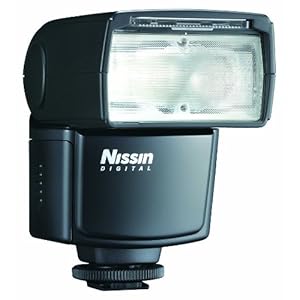
External Flash For Panasonic Micro 4/3 - I Bought the Nissin Di466

 
Image Source: www.amazon.com
Nissin Di466 External Flash for Micro 4/3

Well, I have once again come back to the subject of external flash for my Lumix DMC-G3s. I really dislike the fact that the Lumix cameras do not allow you to control flash in any type of manual way. Yes, you can compensate up or down by up to two stops on the G3, but only based on the camera's ttl exposure system. I have been largely unable to use the in-camera flash for daylight fill.

I did find that I can use my (huge) Nikon flashes (SB600 or SB800) with the Nikon remote cable in manual mode with the G3. But, in that case, only manual mode. Also, as I understand it, wireless triggering from the Lumix cameras does not work with the Nikon flashes, because the Lumix uses a preflash that prematurely triggers the Nikons. Now, that is based on what I have read; I have not tried that myself.

I read a post on dpreview on this subject, which reviews several options, including the Olympus FL360, as well as products from Cactus, Metz, and Nissin. From what I can surmise, the Nissin offers the best combination of features, including bounce capability (tilt but not swivel, which means bounce flash in landscape only), ttl and manual, and wireless triggering.

(Click Here) to read the post on dpreview. It is worth clicking through all of the replies, each with additional information.

A month or two ago, I decided to buy the Nissin Di466, which goes for about $130 on Amazon, but it was out of stock. It is now in stock, so I clicked that dangerous little "Add to Cart" button and bought it. Since I have Amazon Prime, I got free shipping, and will receive it in two days.

I usually like to have a new little something to test out (but not rely on) when I go on a trip. This will be the gadget for my upcoming trip to Japan. I'll let you know how it works. Hopefully,I'll have some nice sample pics to share.

DMC-365.blogspot.com


Friday, March 23, 2012

Dual Exhibit at Tokyo Metropolitan Museum of Photography

 
Exploring Steel Bridge, by Masao Horino
Image Source: http://www.japantimes.co.jp/text/fa20120322a1.html?utm_source=feedburner&utm_medium=feed&utm_campaign
=Feed%3A+japantimes+%28The+Japan+Times%3A+All+Stories%29
 
As I have mentioned, I will be traveling to Japan in a little over a week from now. I love Tokyo, and am never without something new to explore, a new neighborhood to walk, or someone new to meet. I usually make it to the excellent gallery at Fujifilm's modern facility in Midtown. But, I have yet to make it to the Tokyo Metropolitan Museum of Photography. The last time I was there, I made the mistake of planning to go on a Monday, the only day of the week the museum is closed.
 
This time, while I'm there, there are two concurrent exhibits, one showing the work of Felice Beato (1832-1909), the other Masao Horino (1907-1998).
 
Beato was an early war photographer, active as Brady and his cohort were busy photographing the American Civil War. Beato photographed British military activities throughout Asia, but ended up spending 20 years in Japan. In addition to military subjects, he photographed local culture, and introduced hand coloring of photographs to the region. He also manually produced enormous panoramic images, ten of which are included in the exhibit. About 140 of his photographs in total are included.
 
Masao Horino was most active in the 1930s, and was very interested in advancing modern photography. He put his efforts into improving low, available light. He also showed female subjects in a new, casual way, unconventional in Japanese society. Horino stopped photographing, and showing his work, after World War 2, claiming his photographs had been lost in the war. This exhibit, including about 200 of his works, is his first show in 75 years.
 
(Click Here) for more information on the show, at Japan Times online.
 
I am planning to view both shows on my upcoming trip. Hopefully I'll have a good story to tell, or at least some of my own impressions to share.
 
DMC-365.blogspot.com


Monday, March 12, 2012

More Local Music - Jake and the Burtones

 
Jake and the Burtones, by Reed A. George, creativeobjective.com
Jake and the Burtones, by Reed A. George
Panasonic Lumix DMC-G3, Lumix 14mm f2.5
iso3200, f2.5, 1/50 sec

Last Friday night, I went to see a local bluegrass band play at Market Street Coffee, in Purcellville, Virginia. The first thing I realized was that Market Street is the same shop that closed down a couple of years ago in Leesburg. When I say "the same," I mean "the same," right down to the paint color on the walls and every piece of decor. It literally could have been picked up as one piece in Leesburg and placed back down in Purcellville.

The next thing I noticed is that Market Street is a young person's hangout. They accepted the old man (me) in very courteous fashion, however.

The band, Jake and the Burtones, showed up at show time, moved a table out of the way, and voila! a stage! They played a very nice set of Grateful Dead tunes, including 1/2 Step Mississippi Uptown and Catfish Joe. Very nice welcome for an old Deadhead (me, again).

(Click Here) to see the band's facebook page.
 
After a few songs, bassist Jack Pugh had a seat, and two of the band's friends stepped in to cover bass and add fiddle.
 
Jake and the Burtones, by Reed A. George, creativeobjective.com
 
... and Friends, by Reed A. George
Panasonic Lumix DMC-G3, Lumix 14mm f2.5
iso3200, f2.5, 1/50 sec

After several songs, the originals reformed and whipped up some mighty good music.

Here are a few more shots I like:


Jake and the Burtones, by Reed A. George, creativeobjective.com
Fiddle
Panasonic Lumix DMC-G3, Pana-Leica 45mm f2.8 Macro-Elmarit
iso3200, f2.8, 1/40 sec


Jake and the Burtones, by Reed A. George, creativeobjective.com
A Few Laughs
Panasonic Lumix DMC-G3, Pana-Leica Summilux 25mm f1.4
iso1600, f1.8, 1/50 sec


Jake and the Burtones, by Reed A. George, creativeobjective.com
Those Shoes
Panasonic Lumix DMC-G3, Pana-Leica 45mm f2.8 Macro-Elmarit
iso3200, f2.8, 1/40 sec

This was a very relaxed setting. I got to introduce myself to the band, and hope to see more of their shows in the near future.

The G3 performed very well for me. I am now quite comfortable with iso3200, as long as I expose properly. The Summilux allowed me to shoot at iso1600 some, as well. No flash was used, or necessary.

DMC-365.blogspot.com
All of these images and more are available for purchase at creativeobjective.com.
(Click Here) for a link to this set.