Showing posts with label minolta. Show all posts

Wednesday, September 16, 2015

Who Would've Thought Autofocus Would Be Important? Apparently Not Leica

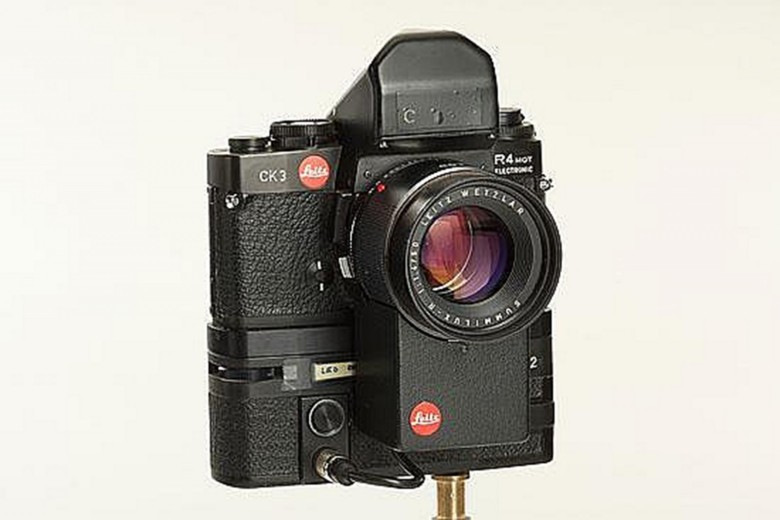
Image Source: http://www.cultofmac.com/383779/leica-invented-autofocus-then-abandoned-it/
 
The blog Cult of Mac has run a piece on how Leica invented autofocus, only to abandon it. Apparently, they were not able to perfect it to the level that they thought their exacting customers would be satisfied with it. I never knew this before reading this article.
 
(Click Here) to read more about how Leica invented then abandoned autofocus, and how it was made a commercial reality by other companies, chiefly Minolta.
 
Thanks to my friend Bill for hooking me up with this interesting article.
 
DMC-365.blogspot.com
 

Saturday, July 25, 2015

The Minolta Autocord

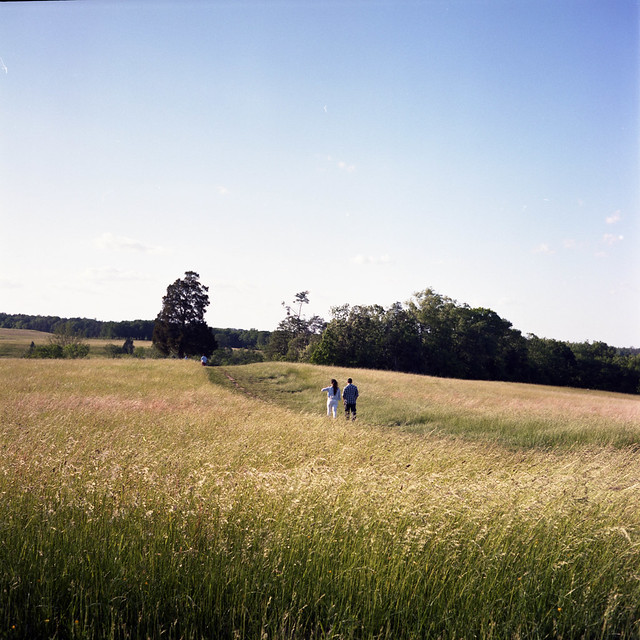
Manassas National Battlefield Walk, by Reed A. George
Minolta Autocord TLR
 
I'm really having a case of "too many cameras, not enough time" recently.
 
I was just looking at a new post by one of my favorite photographers, Evan Leavitt, a really cool color shot of a window with blood red curtains. Made with an Autocord, it's a wonderful image. (Click Here) to see Evan's post.
 
This got me thinking about my own Autocord, which I've used very little. Similar to my Rolleiflex T, the Autocord is a very special camera.
 
I've been considering a new theme or project for this blog. Maybe my TLRs, including the Autocord, will play a part in that.
 
DMC-365.blogspot.com
 

Tuesday, January 13, 2015

Not All TLRs Are Rolleiflexes

 
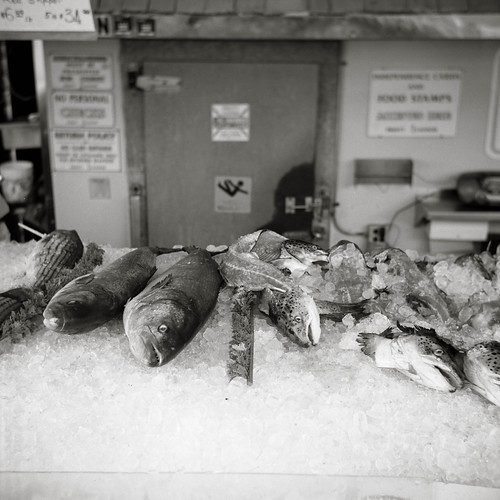
Seafood Market, Super Ricohflex TLR
 
Well, of course not all twin lens reflex (TLR) cameras are Rolleiflexes. There are also Rolleicords! But, all jokes aside, there were many, many respectable TLR cameras by makers other than Rollei. I've owned a Yashica TLR that was quite capable. I still have a Minolta Autocord, which rivals any of my f3.5 Rolleis. I also have a couple of Ricoh TLRs, including the Super Ricohflex that I used to make the picture above.
 
Most of the other brands are less expensive than Rolleis, as well. My first TLR was a Chinese camera, made by Seagull. Not as robust as the Japanese or German makes, but it worked quite well.
 
(Click Here) to check out a post by Rick Schuster on the blog "shot on film." Rick uses a Super Ricohflex himself, and shares some nice color shots. However, Rick also mentions a strange phenomenon of the area of focus being somewhat unpredictable on his camera, toward the edges of the frame. I've never experienced anything like this with my Super Ricohflex. If forced to speculate, I'd say that Rick's camera has suffered an impact that misaligned the lens axis with the film plane. That said, Rick's still making great pictures with his camera, and by all appearances enjoying the process.
 
DMC-365.blogspot.com


Thursday, May 8, 2014

I Like Tea - and Found a Nice New Place to Drink It

I've been on a bit of a tea kick lately. There's so much variety in tea - green, black, fermented (Puerh), and from so many interesting locations. And, I'll admit, I like the more subtle caffeine boost, as compared to coffee (which I still love, too).
 
I also believe that social networking is not the only thing killing real socialization, at least not directly. Where I live (Northern Virginia), now that book, camera, and music stores are a thing of the past, there is a dearth of places for people to meet in person, especially any not associated with drinking alcohol. Well, I found such a place. It's called Ching Ching Cha, and it's located in the Georgetown section of Washington, DC.
 
(Click Here) to go to Ching Ching Cha's website.
 
My wife is from Japan, where public places to meet and have a hot beverage with friends are not rare at all. So, I didn't have a hard time convincing her to go have tea with me. I brought along one of my favorite cameras from the "Skeletons From The Closet" series of last year, the Minolta Autocord medium format TLR. Here are a few images I made there.
 
 
Ching Ching Cha Tea House, by Reed A. George
Minolta Automat, Kodak Porta 400 Film
 
For all but the second image, I used my Rolleinar 1 closeup lenses, which mount to the front of the Autocord lenses perfectly, as the Minolta shares the bayonet filter mount with Rollei Bay 1 cameras. The Rolleinars significantly reduce depth of field, which I must admit was a challenge for me. I didn't exactly nail the focus on the shots of my wife. But, it's pretty close. The big medium format negative is pretty forgiving.
 
I'm glad to know about Ching Ching Cha, and will certainly be a repeat customer.
 
DMC-365.blogspot.com

Wednesday, April 30, 2014

Outstanding Multiple Exposure by Evan Leavitt, Using Minolta Autocord

I've shown Evan's work here a few times before. He uses classic equipment, and adds a real artistic touch to his compositions. Here's one he made with one of my favorites, a Minolta Autocord twin lens reflex (TLR).
 
Recollection, by Evan Leavitt
Image Source: http://evanleavittphotography.wordpress.com/2014/04/21/recollection/
 
(Click Here) to visit Evan's blog.
 
DMC-365.blogspot.com


Saturday, December 7, 2013

Self Portrait, In the Shadow

Me, by Reed A. George
Leica CL, Minolta Rokkor 40mm f2 Lens, Kodak Tmax 400 Film
 
There's one side of the camera lens that I distinctly prefer to be on - behind it. However, I did include myself in this image.
 
I loved the crazy shadow shape on the deck of this housing unit overlooking the Potomac River at Georgetown University. I can't decide if it looks like I'm ascending to that shape, or being oppressively threatened by it. It's graphic; you have to give me that.
 
DMC-365.blogspot.com


Wednesday, November 27, 2013

Look Deeper

 
Look Deeper, by Reed A. George
Leica CL, Minolta Rokkor 40mm f2 Lens
Kodak TMax 400 Film
 
 
DMC-365.blogspot.com


Tuesday, October 1, 2013

Whole Lotta Leica Results - Minolta 45mm f2.8 Rokkor LTM

I have been very busy this month, but did get out a couple of times so far with this month's WLL lens, the Rokkor 45mm f2.8 in LTM.
 
(Click Here) to read about the lens.
 
First off, I took the lens to a meetup with some fellow Leica fans. I'm learning a lot from these guys, who have an amazing knowledge of not only the equipment but of how to use it to great advantage. Anyway, while meeting in the coffee shop, I saw this lovely lady sitting in wonderful backlight and asked if I could take her picture, to which she agreed.
Backlit 1, by Reed A. George
Leica M9, Minolta Rokkor 45mm f2.8 LTM lens
iso320 f5.6, 1/250 sec.
Backlit 2, by Reed A. George
Leica M9, Minolta Rokkor 45mm f2.8 LTM lens
iso320 f5.6, 1/250 sec.
 
I may have benefitted from opening the lens wider in the shots above, as some of the lines in the background (especially those at the top of the lady's head) are distracting.
 
The Rokkor is quite sharp, especially closed down a little as above. One thing I mentioned in the description post is that the aperture setting on my copy is a little fidgety. First, the reference point moves with the focus ring, which will be true of all copies of this particular design. Secondly, and more important, there are no click stops. So, it's very easy to bump it, especially while focusing, and change the aperture setting. I don't know if this is specific to my copy, or if this lens was designed without click stops.
 
On the same day as the meetup, I took the Rokkor to National Harbor in DC, where I was meeting some friends for dinner. It's a lively place, with plenty of people to photograph on a weekend evening.
 
The Awakening Sculpture, by Reed A. George
Leica M9, Minolta Rokkor 45mm f2.8 LTM lens
iso320 f9.5, 1/1000 sec.
"The Awakening" is a focal point of National Harbor. I didn't feel that I found a great composition of the sculpture, but did enjoy the interplay of the people and the piece.
 
Mosaic, by Reed A. George
Leica M9, Minolta Rokkor 45mm f2.8 LTM lens
iso320 f8, 1/1000 sec.
Basking in the Weekend Sun, by Reed A. George
Leica M9, Minolta Rokkor 45mm f2.8 LTM lens
iso320 f9.5, 1/1000 sec.
Another observation about the Rokkor has to do with which framelines you want to bring up on the M9. Since the focal length is closest to the 50mm Leica standard, I chose an LTM-M adapter ring that brings up the 50mm framelines. I find that the angle is much wider, and therefore produces images that go well outside the 50mm framelines. In fact, I think it's close to matching the 35mm framelines. However, I'd rather include some extra elements that may be cropped out later than miss something that was inside the framelines. For this reason, I live with the extra space in the image outside of the 50mm lines, rather than guessing how far inside the 35mm lines it will actually capture.
 
I've found a similar situation with the 40mm Rokkor f2, which came with the Leica/Minolta CL. One of my favorite lenses, the 40mm used to live on my Leica M8 when I had it. I used the 35mm framelines for that lens, which matched the Rokkor 40's actually field of view quite well.
 
Overall I'd say the Rokkor 45mm f2.8 LTM is a decent lens. Mechanically, it's not up to Leica standards, at least at its current age. Optically, it does quite well. I'll probably not use it a lot on the M9 after this month, but it's a fun little piece to have on a screwmount film camera, for example. It's quirkiness only adds to the fun in that case.
 
DMC-365.blogspot.com


Wednesday, September 25, 2013

Another Classic Camera Blog! And Some Examples From A Yashica 124G TLR.

I just found a great blog by Matthijs van Ede van der Pals in the Netherlands. Matthijs has a nice and growing collection of classic cameras, and is getting them out to shoot! If you like my Skeletons From The Closet series,
 
(Click Here) to visit Matthijs' blog.
Image Source: http://matthijsvede.blogspot.nl/
 
Matthisj made the shot above with a YashicaMat 124G twin lens reflex (TLR) camera. I love TLRs, and have several in my collection. My favorites, and the benchmarks for the TLR design, are from Rollei. I have a Rolleicord and a couple of f3.5 Rolleiflexes. One camera I'd love to add to my collection is a Rolleiflex f2.8, with either a Zeiss Planar or a Schneider Xenotar lens. I just haven't run across exactly the right camera yet.
 
I also have a Minolta Autocord (Click Here), and a Super Ricohflex (Click Here), both nice TLRs. In fact, I have a later Ricohflex waiting in the wings for testing.
 
For some reason, I've never used a YashicaMat 124G like Matthijs'. I did have a very old, beat up early Yashica TLR, which worked pretty well, but I sold it. I have never been a big fan of Yashica's rangefinders, like the Electro 35 GSN, even though the 45mm Yashinon f1.7 lens is excellent. The mechanics of their rangefinders just don't feel right to me, and I also nearly require manual exposure capability. I have heard that the 124G TLR is a super camera, though. Maybe I'll try one some day.
 
DMC-365.blogspot.com


Friday, September 13, 2013

Whole Lotta Leica Lens for September - the Minolta Super Rokkor 45mm f2.8 LTM

 
Super Rokkor 45mm f2.8 in LTM
 
I don't know a lot about this lens. I am always attracted to oddball lenses that will adapt to or fit my Leicas. The Super Rokkor (named after the Rokko Mountains, near Osaka, Japan) is a very compact lens, and overall feels right (if different) on the Leica M9. Apparently, it was made from 1947-1955, and was standard fare on the "Minolta 35" series of rangefinder cameras. I've looked for a Minolta 35 body, but have yet to find one that's operational. Most Japanese-made cameras of that time work for a very long time, so it's a little uncommon to not be able to find one. However, I don't think there were too many of these cameras to begin with.
 
45mm is an odd focal length. I am using the 50mm frame in the M9 finder, and find the resulting image is quite a lot wider than what's in the finder. In fact, it seems closer to the 35mm framelines to me, but I want to make sure that what I'm composing actually ends up in the image, so I'll stick with the 50mm framelines. Of course, I could change to the 35mm lines by simply using a 35mm LTM-M adapter, instead of the 50mm adapter.
 
The Super Rokkor has a scalloped metal focusing ring. Different, but kind of nice. The aperture ring on mine has no click stops whatsoever, and moves very freely (too freely, in fact). It's very easy to accidentally bump the f-stop, especially during focusing. I don't know if all of them are like this, or if mine is simply missing something. The f-stop is referenced to the rotating part of the lens that moves when you focus. So, it can be a little fiddly. Mine came with a simple tube-style hood, that is marked with the Minolta 35 name.
 
(Click Here) for a little more information on Minolta's rangefinders and lenses. Here's an image of a vintage ~1950 ad from that website:
 
minolta35_l_ad_s.jpg
Image Source: http://www.huffman.tk/id35.html
 
So, we'll see how this little vintage piece performs on the modern M9. If it's anything like it's younger cousin, the Rokkor 40mm f2 that came with the Leica CL, we're in for some nice images. Unlikely, but we'll give it a try.
 
DMC-365.blogspot.com


Monday, August 12, 2013

Easy Post Today - Inspiration - Thanks to Evan Leavitt

I've been struggling for a subject today. Tired of reading about new digital gadgets, I wanted something with feeling. Here it is:
Image Source: http://evanleavittphotography.wordpress.com/2013/08/01/in-tune/
 
Man, I LOVE this. Just look at it for thirty seconds.
 
And shot with a Minolta Autocord, too!
 
(Click Here) to go to Evan's blog.
 
DMC-365.blogspot.com


Saturday, August 3, 2013

Skeletons From The Closet - More Results From May's Autocord TLR in the Studio

I had a roll of film in the Autocord since May. I finished it up, and share some results today. These shots were made during my studio session with musician friend Melissa Wright.
 
(Click Here) to see the images I made of Melissa with the Nikon D700.
 
Near the end of our session, I asked Melissa if she minded being patient with me, long enough to shoot some pictures with my old film camera. She agreed. This entailed connecting up my sync cord to the studio wireless transponder (what a combination of technologies, huh?), putting my Rolleinar closeup lens on, and transferring exposure info from the D700 at iso200 to the Autocord, where I was shooting Portra 160 film. Here's the result.
 
Melissa Wright, by Reed A. George
Minolta Autocord, Kodak Porta 160 Color Print Film
 
I think I did okay on exposure and focus. This was at the end of our session, so Melissa was undoubtedly tired of being photographed, but she hung in there. The old Autocord did a pretty good job.
 
Here's a shot that I've rendered in both color and monochrome. Which do you prefer?
 
Monochrome or Color?, by Reed A. George
Minolta Autocord, Kodak Porta 160 Color Print Film
 
It really was pretty hard to see through the Autocord finder to focus, even though this camera has the brightest finder of any Twin Lens Reflex (TLR) I've used, including several Rolleiflexes. I have trouble imagining shooting the whole session with this camera, but it sure added to the fun. I suppose brighter modeling lights, or hot lights (instead of strobes) would make focusing easier.
 
That said, the Autocord is a joy to shoot, especially in good ambient light. It's one of the cameras I have trouble putting back in the closet after its month in the sun.
 
Avedon did the bulk of his shooting with a TLR in the studio. He must've figured it out.
 
DMC-365.blogspot.com


Wednesday, June 12, 2013

Skeletons From The Closet - May Results - Minolta Autocord TLR

I've been shooting the Minolta Autocord in the month of May.
 
(Click Here) to see and read about the camera.
 
I don't like to admit it, but I had a hard time getting used to shooting this camera. The twin lens reflex (TLR) design is somewhat challenging to shoot, but I've always enjoyed shootiing with my Rolleiflexes. When I first received my Autocord, which is in really great condition, I was impressed with the brightness and sharpness of the focusing screen. I thought I would get a lot more use out of the camera than I did this month.
 
I did take it several places, to try different applications. Here's a shot from a bluegrass festival, from a jam inside a livestock barn.
 
Barngrass, by Reed A. George
Minolta Autocord, Fuji Reala 100 Film
 
In an upcoming post, you'll see a lot more pictures from this event, taken with my Leica M3. I really used the M3 a lot more than the Autocord at this event. However, I do like the color in the shot above.
 
I also took the Autocord ot one of my local haunts, the Manassas National Battlefield. There I met Madison (below) and her parents, who were kind enough to let me take her picture on the front porch of the Henry House.
 
Madison, by Reed A. George
Minolta Autocord, Fuji Reala 100 Film
 
Perhaps part of my trouble finding the opportunity to shoot the Autocord had to do with the fact that I kept it loaded with Reala, which is iso 100 film. That, coupled with a relatively small maximum aperture of f3.5 meant that shooting in anything but bright light was a challenge.
 
I also noticed that some of my images from the Autocord are not super sharp, while others are very sharp. Now, that may very well be related to the slow film, again. I may not be holdiing the camera still enough for slow shutter speeds. At this size of the computer screen the images look plenty sharp; up close (pixel peeping), not so much. Again, probably more related to my technique than the camera or lens.
 
Another thing I need to keep in mind is that depth of field is shallower with medium format than with 35mm. So, at a given f-stop, with the longer "normal" lens of the TLR, and the larger film format, I may just need to be a little more careful in setting exact focus, or stop down to increase depth of field.
 
Into The Future, by Reed A. George
Minolta Autocord, Fuji Reala 100 Film, Rolleinar Closeup Lenses
 
Above is an example where I got a nice sharp image. For this shot, I used a Rolleinar close up lens set. I'm pretty sure mine is a Rolleinar 1. This is a pair of attachments that go on the front of the camera lens, which in the Autocord has the same bayonet filter mount as the f3.5 Rolleiflexes. One closeup lens (the thin one) goes on the taking lens, the other with a thicker attachment to provide parallax correction, goes on the viewing lens. The Rolleinar is a must for portraits with a TLR. I've always gotten great results using the Rolleinar on my Rolleiflexes. It does fine on the Autocord as well. The other factor in this shot above is that I set the camera on the handrail you see in the picture. So, I knew that camera motion would not be an issue. I think that strongly contributed to the sharpness of the image. I guess I need to load up some iso 400 film in the Autocord, shoot at higher shutter speeds, and pay more attention to holding the camera steady.
 
I used the Rolleinar closeup lenses for the next two shots as well.
Manassas Cannon, by Reed A. George
Minolta Autocord, Fuji Reala 100 Film, Rolleinar Closeup Lenses
 
No problem with sharpness here, either.
 
Here's a portrait using the Rolleinar, window light, and a reflector (to bring up the dark side of my friend's face).
 
Lifelong Friend, by Reed A. George
Minolta Autocord, Fuji Reala 100 Film, Rolleinar Closeup Lenses
 
I set this shot up to show some Autocord bokeh (out of focus areas). That's me in a mirror in the background, standing on a bed, peering down into the Autocord. This shot would have been impossible without the Rolleinar, which allowed me to focus close enough, and reduced depth of field to highlight the bokeh effect.
 
Here are a couple more shots, from my wandering around the Northern Virginia, West Virginia area.
 
Harpers Ferry Roofline, by Reed A. George
Minolta Autocord, Fuji Reala 100 Film
 
Evening Walk, by Reed A. George
Minolta Autocord, Fuji Reala 100 Film
 
In this final shot, I focused on the grass at the front of the picture. I like the way the focus drops off with distance in this shot.
 
So, yes, I do need to keep trying to perfect my technique with the Autocord. It produces lovely color and bokeh. I just need to learn to feel natural shooting a TLR again - I used to use them quite a lot. Overall, I'm pleased with the results from the Autocord, but I'm not selling off my Rolleiflex.
 
Meanwhile, I'll be shooting a completely different camera in June for SFTC - the Konica Auto S1.6 rangefinder.
 
DMC-365.blogspot.com


Tuesday, May 28, 2013

Skeletons From The Closet Supplement - Inspiring Blog About Minolta Autocord

 
Image Source: http://www.autocord.com/about/
 
While searching for some inspiration for getting out to shoot my Skeletons From The Closet camera for May, the Minolta Autocord, I came across an interesting blog by Agust Olafsson, specifically focused on using the Autocord.
 
(Click Here) to see my post introducing my Autocord.


Agust has a couple of interesting features on his blog.
 
(Click Here) to read about why he's chosen to commit a lot of time to using an Autocord.
 
Agust has also started a series of interviews with other photographers who use the Minolta Autocord.
 
(Click Here) to read the Autocord Interviews.
 
The last interview seems to have been posted back at the end of 2010. I wonder if I can revive Agust's series by offering to do an interview with him once I've produced some nice images with my Autocord? I may just have to give it a try.
 
DMC-365.blogspot.com


Sunday, May 12, 2013

Skeletons From The Closet Camera For May: The Minolta Autocord TLR!

 
Minolta Autocord, May's SFTC Camera
This month's camera actually isn't coming out of the closet - it's never been in there yet. It's a Minolta Autocord, with 75mm f3.5 Rokkor lens. This is a twin lens reflex (TLR) camera that shoots twelve square images on a roll of 120 medium format film. It's very similar in design to the Rolleiflex.
This is my first Minolta TLR. In fact, I have not used much Minolta equipment at all, other than the awesome Rokkor 40mm f2 that I shoot on my Leica CL. I also have a Minolta 45mm f3.5 lens in Leica Thread Mount (LTM), which I'll be shooting for my Whole Lotta Leica series sometime soon. Other than that, I don't have much experience with Minolta equipment.
I ended up with this Autocord after seeing it posted on a forum for a very good price. Once I'd agreed and paid, the seller nicely informed me that he just realized the shutter button was intermittently sticking. So, I decided that I would cancel my order; who wants a camera that may or may not expose an image when you press the shutter release? Well, the seller went one step further, and sent the camera off to Karl Bryan, a highly respected repairman in Oregon who specializes in Autocords. Then, he offered me the fully CLA'd camera for only $75 more than the original asking price. So, I got a fully refurbished camera for a great deal!
Let me tell you that almost everyone considers Rollei to be the top of the line in TLRs, and I agree. I have a couple of nice 3.5 Rolleis (have always wanted but never sprung for a Rolleiflex with f2.8 lens), and they are spectacular. HOWEVER, the view on the ground glass of this Autocord is brighter and prettier than any of my Rolleis. If the taking lens is similar, this is going to be one awesome picture taking machine, and the Autocord lenses have a great reputation. So, I'm really looking forward to seeing some results with this camera.
So, wish me luck! May is a great month to get to know such a gorgeous new/old camera.
DMC-365.blogspot.com


Sunday, December 9, 2012

Felix at efix:photography: "Goodbye M8, hello CL!"

 
Leica CL and Zeiss Biogon 28mm f2.8 ZM Lens
 
I just found a new (to me) blog, called efix:photography. The operator, Felix, has just sold his beloved Leica M8, as did I.
 
I was lucky enough to replace mine with an M9. Felix, for reasons of his own, went a different and I think very productive way - he purchased a Leica CL film camera.
 
(Click Here) to read the post on efix:photography
 
The Leica CL, which was produced through a collaboration of Leica and Minolta, is an excellent camera. It has a slightly shorter rangefinder base than the other Leica M bodies, which means that theoretically it is harder to focus to high accuracy. I have never had any problem with this in real experience. The CL is the most compact Leica rangefinder camera, and will mount any Leica M lens. Back in the day, it came with a 40mm f2 Summicron (sometimes labeled as a 40mm Rokkor by Minolta). That's what I have attached to mine. The 40mm lens is just plain spectacular. The finder on the CL has lines for 40mm, 50mm, and 90mm lenses. There is also a CL-matching 90mm f4 that is tiny and super sharp. I don't have that one. Another important feature of the CL is a built-in exposure meter. This makes it a very self-contained, easy to use camera.
 
The 40mm Summicron, by the way, is a wonderful "normal" lens for the M8, with it's 1.33X crop factor. This gives it a field of view equivalent to ~53mm on a full frame 35mm camera when used on the M8. The 40mm Rokkor f2 was my most-used lens on the M8.
 
How much do I like the CL? Well, I'm leaving soon for a trip to Barcelona (I'll be back by the time this posts), and am relying on Lumix Micro 4/3 cameras for the trip. However, I do have the CL and 40mm Rokkor in my bag as well. It's the only non-Panasonic camera going with me on this trip. I have a few rolls of Tmax 400 in the bag as well. I know I'll use the CL while I'm there.
 
So, check out Felix's blog, and watch for what he's going to produce with his new camera - the Leica CL!
 
Here's a sample shot from my CL:
 
Chinese New Year Antics, by Reed A. George
Leica CL, exposure unrecorded
 
DMC-365.blogspot.com