Showing posts with label abstract. Show all posts

Saturday, March 7, 2015

Abstracts - Winter Moon

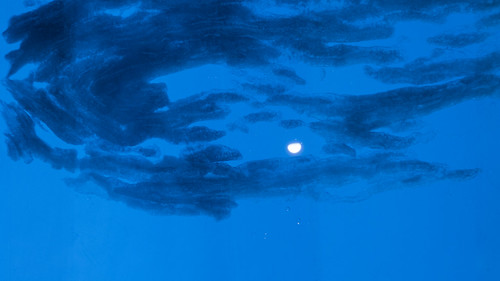
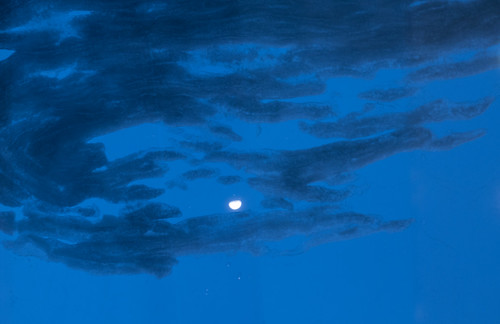
Just a little fun with my new Panasonic Lumix DMC-LX100. See if you can tell what this is:
 
Winter Moon, by Reed A. George
Panasonic Lumix DMC-LX100
iso 200, f2.8, 1/25 sec.
 
This is indeed the moon, but those aren't clouds. They are snow/ice drifts deposited on the glass in the building where I work. I thought they made an interesting juxtaposition.
 
DMC-365.blogspot.com


Sunday, December 7, 2014

Leica Camera Blog Interviews Robert Mertens - Discussing Abstract and Surreal Images

Robert Mertens is an author, instructor of Master Classes at Leica Wetzlar, and a graphic artist.
 
 
The Leica Camera Blog interviewed Mertens to discuss his creative abstract and surreal imaging approach. Mertens says that his work "keeps revealing new elements through intense observation and interaction."
 
About his workflow, Mertens remarks:
"Think of the data from my Leica as modelling clay, from which my images are created in Photoshop."


His works take hours to sometimes days to complete in Photoshop.
 
Personally, even for my abstract work, I prefer to do as much in the camera as possible, including any composite construction of multiple images (multiple exposures). I certainly do post-process them, but prefer for that to take minutes, not hours or days.
 
Mertens uses a Leica M240 and 50mm Summilux for much of his work, and a Leica D-Lux for closeup images.
 
(Click Here) to read the full interview and see more images on the Leica Blog.
 
DMC-365.blogspot.com

Friday, December 5, 2014

I Like This - Bizarre Panorama With iPad Air in NYC

Bizzare City, by Reed A. George
Shot From a Moving Bus
 
This image is really worth looking at closely.
 
(Click Here) to see it on flickr, where you can zoom in.
 
DMC-365.blogspot.com
 

Wednesday, November 19, 2014

And Now for Something Very Abstract

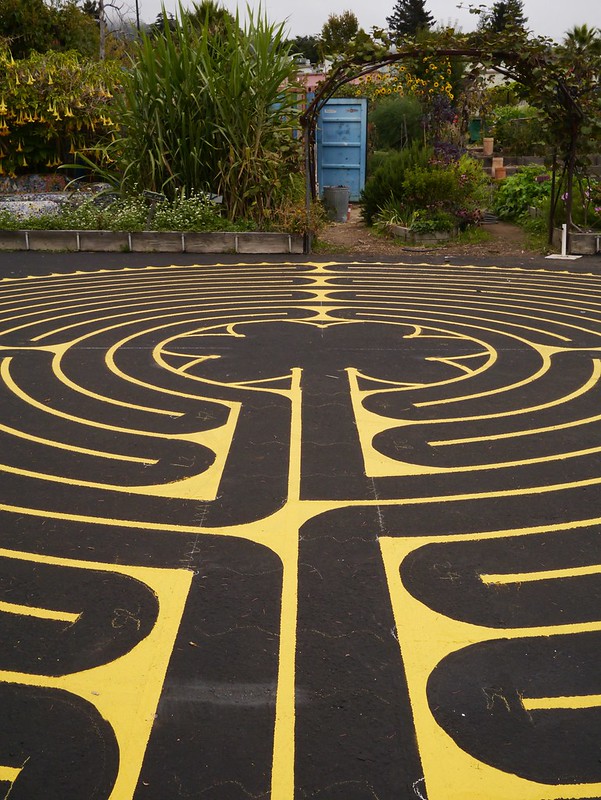
I have been into meditation for quite a while now. It helps me to keep my mind clear. On a trip to California earlier this year, I visited this labyrinth in an urban garden and did a little walking meditation, camera (Lumix GX7 and 20mm f1.7 lens) in hand.
Berkeley Labyrinth, by Reed A. George
 
I decided to capture some long exposures of the labyrinth markings as I walked twisting and turning through them. I attached a 3-stop neutral density (ND) filter, and shot several images at 1/4 second and f16.
 
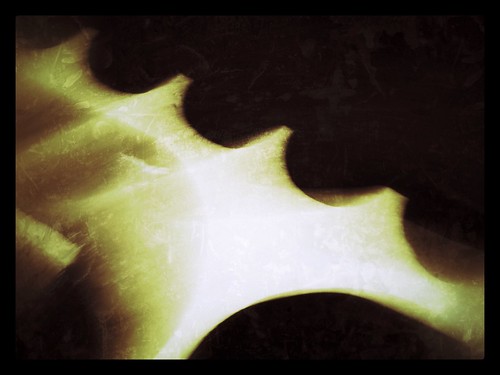
Then I manipulated the images in Snapseed on my iPad. Here are the results:


Quite abstract, I know. I feel that they do say something about the state of mind I was in during the walk.
 
DMC-365.blogspot.com


Wednesday, May 28, 2014

The Hole in the Fence

The Hole in the Fence, by Reed A. George
Leica M6 Titan, 50mm f1.4 Summilux
Ilford Delta 3200 Film
 
I'm not sure why I like this scene, but something told me to capture it. Shot in the French Quarter, New Orleans.
DMC-365.blogspot.com
 

Monday, December 23, 2013

Simply Done, Beautiful. Andy Bell Shoots Agate (Stone) Abstracts.

 
Agate by Andy Bell
Image Source: http://www.deceptivemedia.co.uk/?s=Agate

Andy Bell has posted a series of abstracts which are closeups of agate stone. It's tough to beat the beauty of nature. Andy's done a nice job of capturing it here.
 
(Click Here) to see the whole series on deceptivemedia.co.uk.
 
A question that has come up in photo critique is whether abstracts require that the viewer be unable to identify the subject. Personally, many times I prefer being able to catch glimpses of what the subject was, even though the overall result is an abstract.
 
In this case, I can see that these are agate stone, once I've been informed. I probably would not have guessed it outright. Maybe that's the right level of recognition? Or maybe it doesn't matter, as "abstract" is simply a label. What really matters is that the art works. And this does, in my opinion.

DMC-365.blogspot.com


Tuesday, July 30, 2013

To Crop or Not to Crop?

I am a believer in cropping images if needed. I know, many purists believe that cropping represents a failure to compose properly. However, if you think back to when cameras had primitive means of framing (think sports finders on folding medium format cameras), it would be nearly inevitable that you need to crop sometimes.
 
Here's an example where I think a crop may make the image more interesting. Let's start with the full image.
 
Old Truck, Key West, by Reed A. George
Panasonic Lumix DMC-GX1, Lumix 20mm f1.7 Lens
iso 200, f5.6, 1/1250 sec
 
 
I kind of like this shot. I think the full image shows enough of the truck body, even a little of the steering wheel, to provide context; you know it's a truck.
 
Now, here's a crop:
 
Cropped
 
Actually, an even tighter crop really shows the cracks in a more dramatic way, but I settled for this compromise between a complete abstract of just the cracks, and the wider shot above.
 
Which do you like best?

I did finally shoot my Lumix DMC-GX1 a little on my trip to Key West. It's a wonderful little camera.

DMC-365.blogspot.com

DMC-GX1 for an unbelievably low price at Amazon:


Monday, May 27, 2013

Film Photography Project Report on Shooting B&W Film


Photo by Lance King
Image Source: http://filmphotographyproject.com/content/features/2013/05/exploring-engaging-enlarging-black-and-white
 
I fell in love with the picture above when I saw it. It was taken on a recent walking workshop, put on by the Film Photography Project (FPP).
 
(Click Here) to check out FPP. These guys are great. They have a regular podcast that's pretty fun, and their store sells Kodak film for prices equivalent to the big NYC stores. I like to support FPP.
 
In a recent article on the FPP site, Jim Austin writes about black and white photography's important characteristics of austerity, authenticity, and abstraction.
 
By austere, I take Jim to mean that black and white photos offer none of the warmth or comfort of rich colors. It makes me think of the expression "It's right there, in black and white."
 
His point on authenticity is that monochrome images give the impression of being made before the days of photo manipulation. This is not true, of course, as manipulation has been around since the beginning of photography. But, I see his point. Most photos that are manipulated with modern software tools are likely to be color images.
 
The abstraction point is also good, in my opinion. Lack of color immediately takes us away from ust trying to replicate and show exactly what we saw, and hopefully leaves us with what we felt.
The Libyan Sibyl, by Reed A. George
Leica M4-2
 
So, go buy your film at FPP. Let's support the guys (and gals) who are keeping film photography alive!
 
DMC-365.blogspot.com