Showing posts with label 20mm f17. Show all posts

Sunday, August 16, 2015

Haleakala Crater

Haleakala Crater, by Reed A. George
Panasonic DMC-GX7, Lumix 20mm f1.7 Lens
Graduated ND Filter
 
What an amazing, nearly-alien landscape this is...
 
DMC-365.blogspot.com
 

Sunday, August 9, 2015

Another Corn Crib Shot - HDR

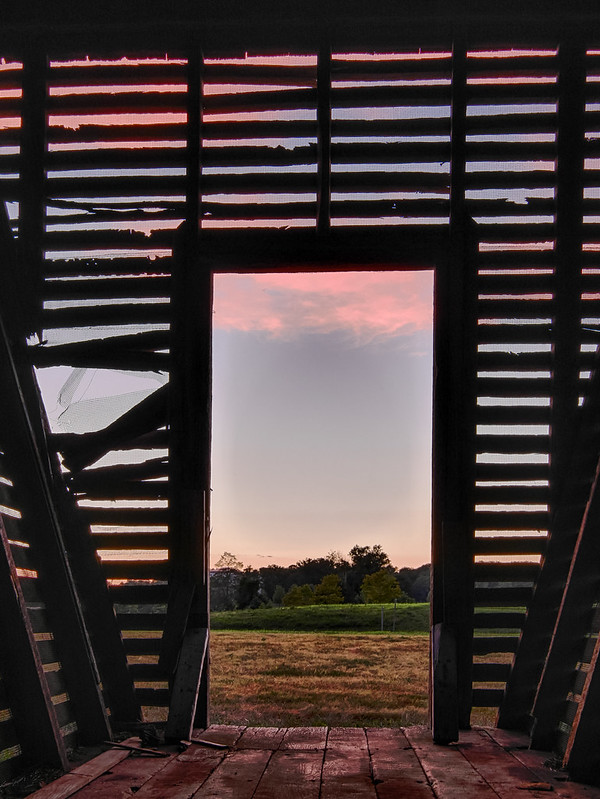
I added one more shot to the corn crib set, this one a high dynamic range (HDR) image from inside the corn crib.
 
Inside Looking Out, by Reed A. George
Panasonic Lumix DMC-GX7, Lumix 20mm f1.7 Lens
HDR from three separate exposures
 
I'm looking forward to getting refamiliarized with the GX7 on my upcoming vacation.
 
DMC-365.blogspot.com

Saturday, August 8, 2015

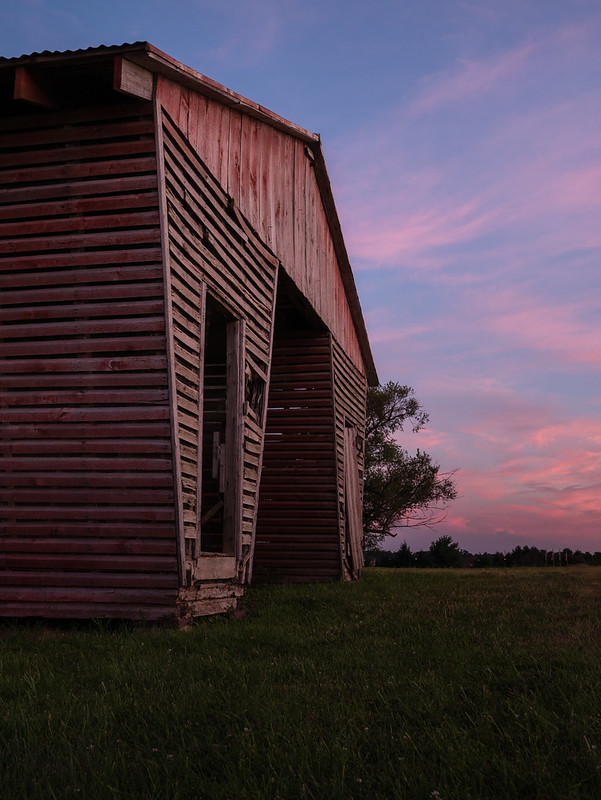
The Old Corn Crib, Revisited

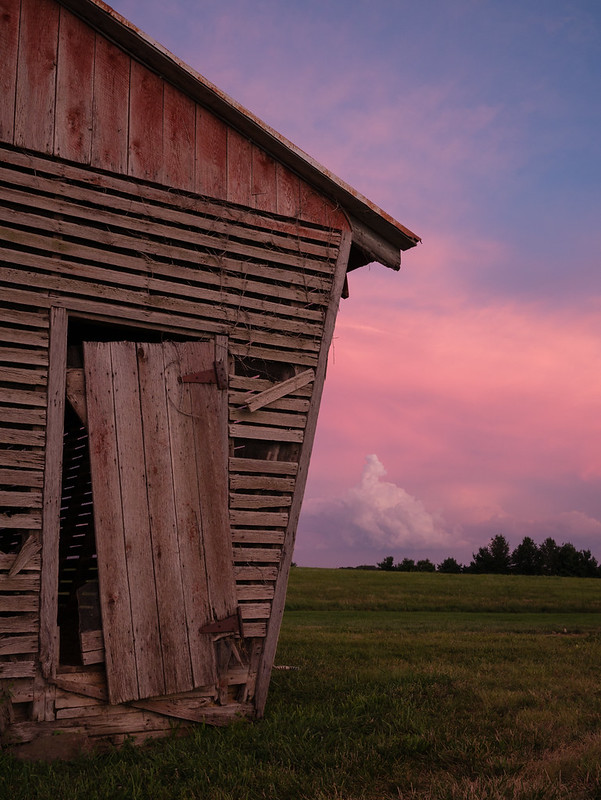
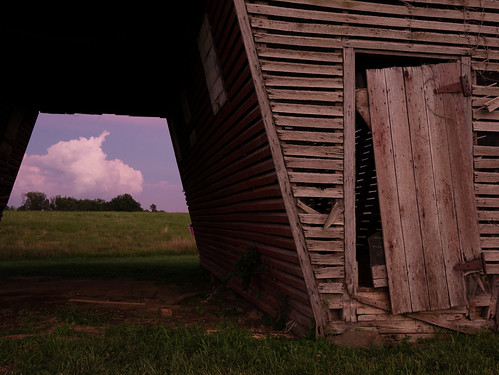
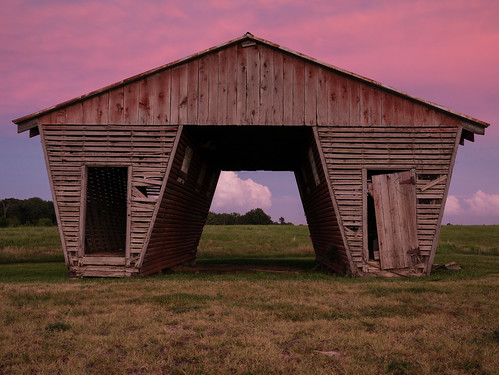
I was driving home this evening and noticed a lot of dramatic clouds in the sky, accentuated by the sunset. So, I stopped at the old corn crib that I've photographed in the past and made some images. (Click Here) to see one of my previous posts of this cool old building.
 
This time, I had my Panasonic Lumix DMC-GX7 and 20mm f1.7 lens with me. I'm trying to decide whether to bring this camera on vacation with me. I've drifted away from my Micro 4/3 gear recently, but this little shoot has me once again appreciating the GX7.
 
I actually sold some of my Micro 4/3 lenses recently, keeping only those that I hold most dear. Also, I kept the smallest lenses, as that's what shines about Micro 4/3 cameras, small size. So, I sold my 14-140mm zoom, 25mm f1.4 Summilux, and 75mm Olympus lenses. All excellent lenses, I felt that keeping my 20mm f1.7, Pana-Leica Micro-Elmarit 45mm f2.8, 14mm f2.5, Bower fisheye, and the amazing 100-300 f4-5.6 zoom was sufficient. Now I find that I'm missing the medium telephoto length of the Oly 75, especially in planning for travel. So, I'm going to try the new Sigma 60mm f2.8 Art lens, which is very cheap ($200 new), and getting great reviews. More on that to come.
 
DMC-365.blogspot.com
 

Wednesday, August 27, 2014

More UC Berkeley Trees

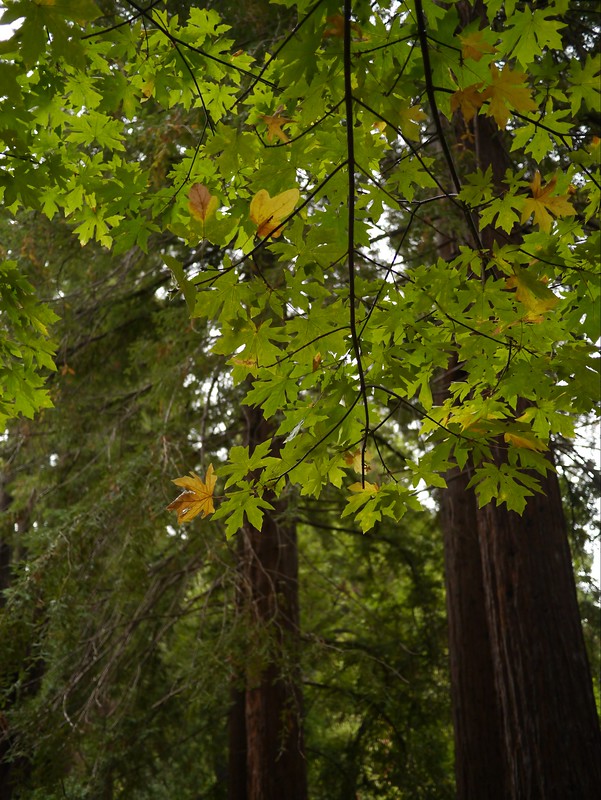
A couple of days back, I posted about the tree sit-in protest at Berkeley from 2006-2008. You may or may not think the protesters crazy for living in the trees for so long, but you have to admit that the landscape on the campus is beautiful and is worth protecting. Here's a shot I took on my walk around UC Berkeley.
 
Berkeley Trees, by Reed A. George
Panasonic Lumix DMC-GX1, Lumix 20mm f1.7 Lens
iso 400, f1.7, 1/640 sec.
 
This is an unedited image straight from the camera. I shot it wide open to render the leaves in the foreground sharp, and slightly blur the trees in the background.
 
DMC-365.blogspot.com
 

Monday, August 25, 2014

Hangin' Around in Berkeley - Quite Literally

While walking around the campus of the University of California, Berkeley, I met these young fellows.
 
Hanging Out in Berkeley, by Reed A. George
Panasonic Lumix DMC-GX1, Lumix 20mm f1.7 Lens
iso 400, f5.6, 1/100 sec.
 
Hanging out in trees has a dramatic history at UC Berkeley. History's longest tree sit-in, a protest against the university's decision to cut down a grove of 42 native trees to make way for a new athletic center, took place there. From December 2006 to September 2008, protesters literally lived in the treetops, getting supplies brought in, and waste taken out by volunteers. In the end, the protesters lost and the trees were cut down.
 
(Click Here) to read more about the tree sit-in on wikipedia.
 
These guys were doing nothing of the type, and I would guess were waiting for their parents who probably work at the university.
 
Gotta love Berkeley. At least I do.
 
DMC-365.blogspot.com
 

Sunday, June 29, 2014

Belizean Sunrise

I got my butt out of bed at 5AM this morning to catch the sunrise here in Belize. I shot several images, and plan to work on them when I get home, including a plan to try some subtle high dynamic range (HDR) processing. Here's one that I like pretty much as-is:
Belizean Sunrise, by Reed A. George
Panasonic Lumix DMC-GX1, Lumix 20mm f1.7 Lens with 3-Stop ND Filter
iso 160, f16, 1 sec.
 
I liked how the shoreline formed an S-curve, ending at the thatched dock shelter at the horizon. I edited this image in Snapseed on my iPad.
 
More to come.
 
DMC-365.blogspot.com
 

Tuesday, April 1, 2014

Taking Advantage of the Lumix GX7 Silent Shutter

New Mexico Diner, by Reed A. George
Panasonic Lumix DMC-GX7, Lumix 20mm f1.7 Lens
 
The GX7 has an electronic (silent) shutter feature, which is very nice. The first thing I do when setting up any digital camera is find the controls to make all of the beeps and sounds go away. Permanently. Up until the GX7, all of my Lumix Micro 4/3 cameras have had a mechanical shutter, which is not all that quiet. The GX7 gives you the option of using either the mechanical shutter, or the silent electronic option.
 
The electronic shutter is not always appropriate. It doesn't work with flash (which I use as sparingly as possible, anyway), and it reportedly has problems with specific wavelengths of fluorescent lighting. But, as you can see above, it can really be handy in the right situation. I had the camera on my table, and simply pointed it in the right direction and pushed the shutter release. This was shot wide open at f1.4 f1.7 (thanks to Dennis Gallus for pointing out my typo). The image is right from the camera (unedited jpeg).
 
DMC-365.blogspot.com


Friday, February 14, 2014

Is 40mm (or Equivalent) the Most Natural Field of View?

I have always liked the 40mm field of view on a 35mm camera. It's a nice middle point between 35mm (which I'm learning to love, but initially felt a little too wide) and 50mm (which has always been my standard focal length, but can be a little tight).
 
I first discovered the 40mm focal length with my Leica CL and Rokkor 40mm f2 lens that was designed for it. A world-class lens, the Rokkor (or otherwise branded 40mm Leica Summicron) is about as good a lens as I could hope for.
 
I rediscovered the focal length with the Lumix 20mm f1.7 on my Panasonic Micro 4/3 cameras (giving the same field of view as a 40mm on 35mm format). Here's an example shot with the 20mm f1.7:
 
Perfect Field of View?, by Reed A. George
Panasonic Lumix DMC-GF1, Lumix 20mm f1.7 Lens
iso 100, f8, 1/80 sec.
 
(Click Here) to read a great post on mu-43.com to see what other people think. Be sure to click on the link to read a related piece by Mike Johnston.
 
Not being a real wide angle shooter most of the time, I find the Leica CL's standard 40mm and 90mm focal lengths to be an excellent choice for a two prime lens travel kit. If I pick either 35mm or 50mm as my standard lens, I feel that I need to carry three lenses (35, 50, 90). The biggest issue I have with the 40/90 two lens kit is that my CL is the only rangefinder camera I own with 40mm framelines. Of course, the Micro 4/3 format fixes that with the electronic viewfinder (EVF).
 
DMC-365.blogspot.com


Wednesday, July 31, 2013

Panasonic Continues to Refine Micro 4/3 with Lumix 20mm f1.7 (II)

 
The New Lumix 20mm f1.7 (II) - Aspheric
Image Source: http://panasonic.net/avc/lumix/pressrelease/h_h020a/
 
I have the original Lumix 20mm f1.7 "pancake" lens. Not one of Panasonic's Leica collaborations, the 20mm is an amazing lens none the less. It is fast, sharp, and small. Mounted on my DMC-GX1, it's simply a huge amount of quality and flexibility in an impressively small package.
 
Panasonic has announced a second generation of this lens, this time with aspheric lens elements to further reduce any spherical aberration (of which I've noticed none in my first generation lens). Spherical aberration results from diffraction of light rays at the edge of a lens element differing from that at the center.
 
(Click Here) to read about the new lens.
 
Even though I've always been pleased with my 20mm, I'm sure the new one's even better.
 
Here's a shot I made with my lens:
 
Beginning of Virginia Autumn, by Reed A. George
Panasonic Lumix DMC-GF1, Lumix 20mm f1.7 (I)
iso 200, f8, 1/40 sec.
 
DMC-365.blogspot.com


Tuesday, July 30, 2013

To Crop or Not to Crop?

I am a believer in cropping images if needed. I know, many purists believe that cropping represents a failure to compose properly. However, if you think back to when cameras had primitive means of framing (think sports finders on folding medium format cameras), it would be nearly inevitable that you need to crop sometimes.
 
Here's an example where I think a crop may make the image more interesting. Let's start with the full image.
 
Old Truck, Key West, by Reed A. George
Panasonic Lumix DMC-GX1, Lumix 20mm f1.7 Lens
iso 200, f5.6, 1/1250 sec
 
 
I kind of like this shot. I think the full image shows enough of the truck body, even a little of the steering wheel, to provide context; you know it's a truck.
 
Now, here's a crop:
 
Cropped
 
Actually, an even tighter crop really shows the cracks in a more dramatic way, but I settled for this compromise between a complete abstract of just the cracks, and the wider shot above.
 
Which do you like best?

I did finally shoot my Lumix DMC-GX1 a little on my trip to Key West. It's a wonderful little camera.

DMC-365.blogspot.com

DMC-GX1 for an unbelievably low price at Amazon:


Tuesday, July 23, 2013

Key West Cemetery - Shot With Panasonic Lumix DMC-GX1

When in Key West, I always like to look for hints of the local culture, which all too often get covered over with the trappings of tourism. The historic Key West cemetery is always worth a quick visit. This time, I grabbed my Lumix DMC-GX1, 20mm f1.7 lens, and Canon LTM 135mm f3.5 lens and headed there for an early morning walk.
 
Rather than try to paraphrase, I'll quote directly from the historic marker at the cemetery to provide some background:
 
"Key West Cemetery was founded in 1847 following a hurricane the previous year that destroyed the earlier cemetery located near present day Higgs Beach. To protect from future flooding the 10-acre cemetery was located here on Solares Hill, the highest natural elevation in Key West. An estimated 75,000 people are interred here, divided among parcels that reflect the cultural diversity that continues to characterize the city of Key West today. The cemetery contains a historic Catholic section, Jewish section, the USS Maine plot dedicated in 1900, and the Los Martires de Cuba, a memorial for those who fought in the 1868 Cuban revolution. In addition to these defined areas, African Americans, Cubans and Americans, rich and poor, are interred throughout. In-ground and crypt style graves range from simple concrete copings filled with soil to elaborate monnuments. Plot enclosures of wrought iron, wood, or concrete were often used to mark family plots.
A Florida Heritage Site Sponsored by the Historic Florida Keys Foundation, The City of Key West, and the Florida Department of State"
 
Let's take a look at the place.
Key West Cemetery, by Reed A. George
Panasonic Lumix DMC-GX1, Lumix 20mm f1.7 Lens
iso 160, f2.8, 1/400 sec


Fallen, by Reed A. George
Panasonic Lumix DMC-GX1, Lumix 20mm f1.7 Lens
iso 160, f2.8, 1/40 sec


Gravestones and Chickens, by Reed A. George
Panasonic Lumix DMC-GX1, Lumix 20mm f1.7 Lens
iso 160, f2.8, 1/320 sec


Family Plots, by Reed A. George
Panasonic Lumix DMC-GX1, Lumix 20mm f1.7 Lens
iso 160, f2, 1/1000 sec
 
Occupying a relatively small area of land, completely surrounded by residential neighborhood, this is a place of visual details. For example, the flowers really stand out from the dull gray stone.
Pink Flowers, by Reed A. George
Panasonic Lumix DMC-GX1, Lumix 20mm f1.7 Lens
iso 160, f1.7, 1/640 sec
 

Sleeping Angel, by Reed A. George
Panasonic Lumix DMC-GX1, Lumix 20mm f1.7 Lens
iso 160, f1.7, 1/1250 sec


This next shot was made with the adapted Canon 135mm f3.5 LTM lens. I'm amazed by the sharpness of this old lens. I also really like the out of focus areas in the background.

Isolated, by Reed A. George
Panasonic Lumix DMC-GX1, Canon LTM 135mm f3.5 Lens
iso 160, f4, 1/200 sec
 
Thoughtful, by Reed A. George
Panasonic Lumix DMC-GX1, Lumix 20mm f1.7 Lens
iso 160, f5.6, 1/40 sec
Cross, by Reed A. George
Panasonic Lumix DMC-GX1, Lumix 20mm f1.7 Lens
iso 160, f1.7, 1/640 sec
 
Peaceful, by Reed A. George
Panasonic Lumix DMC-GX1, Lumix 20mm f1.7 Lens
iso 160, f1.7, 1/800 sec
 
Key West is such a funky place. It's somehow comforting to know that even in death, you can retain a little uniqueness. The cemetery here is another thing about Key West that reminds me of another unique place, New Orleans.
DMC-365.blogspot.com


Saturday, March 30, 2013

Joshua Tree National Park - Lumix In The Desert

 
Prickly, by Reed A. George
Panasonic Lumix DMC-G3, Lumix 20mm f1.7 Lens
iso 160, f4.5, 1/500 sec
 
Desolate, by Reed A. George
Panasonic Lumix DMC-G3, Lumix 20mm f1.7 Lens
iso 160, f5.6, 1/250 sec
 
The detail in the twisted tree in the foreground contrasts nicely with the smooth, weather-worn cliffs. The dry riverbed gives the eye something to follow.
Namesake Joshua Trees, by Reed A. George
Panasonic Lumix DMC-G3, Lumix 100-300mm f4-5.6 Lens at 162mm
iso 200, f8, 1/160 sec
 
The space between features at Joshua Tree makes composition a challenge. In this case, I decided to shoot from afar with the 100-300mm, to compress the Joshua Trees a little closer together in perspective.
 
I decided to put the 45mm f2.8 Macro-Elmarit on and shoot some macros:
 
Wood Detail, by Reed A. George
Panasonic Lumix DMC-G3, Pana-Leica 45mm f2.8 Macro-Elmarit
iso 200, f5.6, 1/25 sec
 
 
Monarch's Demise, by Reed A. George
Panasonic Lumix DMC-G3, Pana-Leica 45mm f2.8 Macro-Elmarit
iso 200, f5.6, 1/30 sec

 
Radial, by Reed A. George
Panasonic Lumix DMC-G3, Pana-Leica 45mm f2.8 Macro-Elmarit
iso 200, f4, 1/320 sec
 
Miniature Flower, by Reed A. George
Panasonic Lumix DMC-G3, Pana-Leica 45mm f2.8 Macro-Elmarit
iso 200, f4, 1/200 sec

 
Skeleton, by Reed A. George
Panasonic Lumix DMC-G3, Pana-Leica 45mm f2.8 Macro-Elmarit
iso 200, f11, 1/60 sec
 
Wherever there is water, life abounds. These are fan palms at a small spring.
Fan Palms, by Reed A. George
Panasonic Lumix DMC-G3, Lumix 100-300mm f4-5.6 Lens at 300mm
iso 200, f5.6, 1/200 sec
 
Ocotillo, by Reed A. George
Panasonic Lumix DMC-G3, Pana-Leica 45mm f2.8 Macro-Elmarit
iso 200, f4.5, 1/800 sec

My trip was a little early in the year for the short-lived desert bloom. The ocotillo (above) was well on its way, though.
 
The desert is an amazing place to shoot. It's challenging. You really have to tune in to see what to photograph. I find it stimulating. It stretches me beyond my normal shooting situations, which is always a good thing.
 
 
Earth's Spine, by Reed A. George
Panasonic Lumix DMC-G3, Lumix 14mm f2.5 Lens
iso 200, f5.6, 1/640 sec


Split Rock, by Reed A. George
Panasonic Lumix DMC-G3, Lumix 14mm f2.5 Lens
iso 200, f11, 1/320 sec

 
Window To The Horizon, by Reed A. George
Panasonic Lumix DMC-G3, Lumix 14mm f2.5 Lens
iso 200, f11, 1/200 sec
Wispy Clouds, by Reed A. George
Panasonic Lumix DMC-G3, Lumix 14mm f2.5 Lens
iso 200, f8, 1/320 sec
 
 
This little guy is called a side-blotched lizard:
Side-Blotched Lizard (Uta stansburiana), by Reed A. George
Panasonic Lumix DMC-G3, Lumix 100-300mm f4-5.6 Lens at 300mm
iso 200, f8, 1/1600 sec
 
Even though it was only about 75 degrees fahrenheit on this day, as the sun rose directly overhead at mid-day, it was brutal. I got sunburned much more quickly than I expected. I also stepped off the trail, and got myself into a walk several miles longer than planned. The desert is no place to mess around. Stay on the trail. Period.
 
Mid-day Shadows, by Reed A. George
Panasonic Lumix DMC-G3, Lumix 14mm f2.5 Lens
iso 160, f16, 1/200 sec
 
I hope you enjoyed this little tour of the desert. I will take any opportunity to go back and shoot here again.
DMC-365.blogspot.com


Thursday, February 28, 2013

Another Parallel Image Moment - On the Farm


juangrande posted some images "on the farm," shot with a Panasonic Lumix DMC-GX1 and Lumix 20mm f1.7 lens. I like what he posted.
 
(Click Here) to see all three of juangrande's images on mu-43.com
 
So what's the parallel? Well, if you saw my recent post of what I'm calling parallel images of circus horses (Click Here), you may or may not appreciate this.
 
Here's a shot I took last summer as part of a film challenge, while I was visiting family in Oklahoma:
 
On the Farm, by Reed A. George
Leica CL
 
Do you see a resemblance? Of course, these irrigation systems are interesting to look at. But, it's not like cats or kids - you don't see pictures of them every day.
 
Maybe I need to get some original conceptual ideas...
 
DMC-365.blogspot.com


Friday, February 15, 2013

Philippine Festivals - Shot by krijtin on mu-43.com with Panasonic Lumix DMC-G3, Plus One of My Festival Shots

krijtin of mu-43.com has posted a series of images captured at two separate festivals in the Philippines. Both were shot with the Lumix DMC-G3. The first, the Sinulog Festival, was covered with the Lumix 20mm f1.7 lens.
Sinulog Festival, by krijtin on mu-43.com
Panasonic Lumix DMC-G3, Lumix 20mm f1.7 Lens
 
The second festival, Dinagyang, was shot with the G3 and kit lens (14-42mm):
 

Dinagyang Festival, by krijtin on mu-43.com
Panasonic Lumix DMC-G3, Lumix 20mm f1.7 Lens
 
I thoroughly enjoy shooting events like this. krijtin has done a nice job with the G3 here, especially with the kit lens, which I find quite limiting due to its small maximum aperture. Here's one I shot at a Japanese Obon festival in Fairfax, Virginia, using the G3 and 20mm f1.7:
Japanese Obon Festival, by Reed A. George
Panasonic Lumix DMC-G3, Lumix 20mm f1.7 Lens
iso 200, f4, 1/125 sec
 
 
DMC-365.blogspot.com


Tuesday, January 29, 2013

An Image That Sticks in My Mind

Sunset Approaching, by Reed A. George
Panasonic Lumix DMC-GF1, Lumix 20mm f1.7 Lens
iso 400, f4, 1/640 sec
 
For various reasons, I've had very little time to get out and shoot much in the past week or so. So, I'm going back through some old images, looking for the ones that make me think "Hey, I remember that one!" The shot above is an example.
 
I shot this one right before sunset on the boardwalk in Sacramento, California. To me, it says something about aging, the passage of time. I love the texture in the wood on the boardwalk, and the paddlewheel boat in the distance.
 
Perhaps I also remember this shot because I was in Sacramento that evening to meet with some good friends that I hadn't seen in a while at that point. I spent part of our dinner time explaining why I was so pleased with the GF1.
 
I still have my GF1, even though it's multiple generations old now. The form factor is so attractive. The image quality was quite good. I find that I don't use it much anymore, but with the price of used digital gear, I'd rather keep it as my in-car camera than sell it for a little over $100. The GF1 was a ground-breaking design, in my opinion. I'm waiting for the announcement of the GX2, which should bring me back to that form factor, yet with the very latest sensor technology.
 
Maybe I'm not done with Micro 4/3 yet.
 
DMC-365.blogspot.com


Monday, December 10, 2012

A Deeper Look at the New Olympus 17mm f1.8 Micro 4/3 Lens

Ming Thein (blog.mingthein.com) has done a very nice write-up on the new Olympus 17mm f1.8 lens. I covered the announcement of this exciting new lens a few days ago.
 
Unfortunately, Ming copyright protects all of his images, so rather than using one of his excellent images, I grabbed this one (also nice) from photoxels.com:
 
Shot With Olympus 17mm f1.8 Lens
Image Source: http://www.photoxels.com/photography/wp-content/uploads/2012/11/olympus-m-zuiko-17mm-f1.8-low-light-photo-pa170026_Art.jpg
 
Ming compares the new lens to two existing ones: the Olympus 17mm f2.8 and the Panasonic Lumix 20mm f1.7. I have the 20mm f1.7, and it's an amazing little lens. However, Ming's article brings out one very important feature of the new Olympus lens that really has me interested - a real depth of field scale! More on that later.
 
Ming says that the Olympus 17mm f1.8 is built similarly to the new Olympus 75mm f1.8, that is, it's one of their premium lenses, with no plastic construction. I can say that the 75mm is built very nicely, and feels great in the hand. Ming also says the expensive Olympus accessory hood is poorly designed, and makes it hard to remove the lens cap.
 
Focus is reportedly "very, very fast," even when compared to the Lumix 20mm lens. I have never felt that the 20mm is slow to focus, but I have read it in other places. Focus speed is not enough to interest me in the new lens
 
The new Olympus lens focuses to a minimum of 25 cm.
 
Ming reports that the field of view difference between the Lumix 20mm and Olympus 17mm f1.8 is nearly negligible; from that standpoint it makes me think that it's not worth adding the Olympus lens to my kit.
 
However, as I mentioned above, the fact that the 17mm has a depth of field scale may change all that. You see, none of my Micro 4/3 lenses have any type of focus scale or depth of field indicator on the lens body. Importantly, you also cannot trust the scale on lenses adapted to Micro 4/3 from other mounts; they are usually not correct. This means that doing zone focus manually (where I use a set f-stop and manual focus to allow for very quick shooting on the street) is impossible, other than a trick for setting hyperfocal distance. This is a major drawback, as I love to use a small aperture (usually f8), and manually focus to get a very large range of distances in focus. I also like to use the depth of field scale to tell me how far away the minimum point of clear focus will be. With my Leica, for example, I can look down and tell myself mentally "anything beyond 8 feet is mine." This new Olympus lens will make that possible on a Micro 4/3 body. Therefore, I've got to give this lens a try.
 
The new lens is reportedly going to be priced at around $500, and should be available in the US in December.
 
(Click Here) to read Ming's full review.
 
DMC-365.blogspot.com
 
The new Oly lens is not yet on Amazon. Here's a link to the very nice Lumix 20mm f1.7: