Showing posts with label post-processing. Show all posts

Saturday, September 12, 2015

I Want to be a Better Printer, Too!

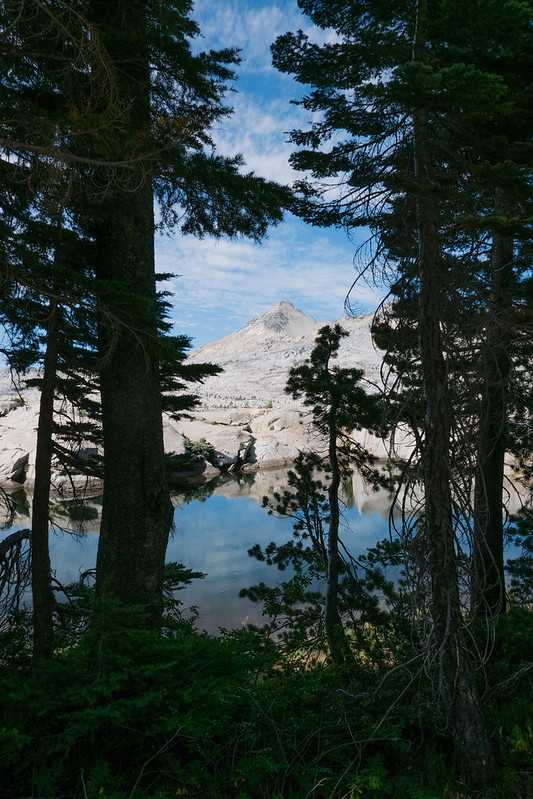
Alpine Lake and Shadows, by Reed A. George
 
I just read a post by Pascal on the blog Dear Susan, about how he really wants to become a better printer. Importantly, Pascal interviews Ctein, a master printer, to get some advice. Ctein's best advice is to go ahead and print your image once you think you have it close on the monitor. It won't print the same, but don't worry about that. Live with the print a while, making notes on it where and how you want to improve it. Don't focus on how it looks on the monitor any more; make the changes that will improve the print. Over time, you'll learn how to do this more automatically.
 
Okay. I can give that a try. Simple - no big focus on calibration, paper types, lighting, etc. Just print, live with it, adjust it for the paper instead of the monitor.
 
(Click Here) to read the full post on Dear Susan.
 
DMC-365.blogspot.com

Sunday, December 7, 2014

Leica Camera Blog Interviews Robert Mertens - Discussing Abstract and Surreal Images

Robert Mertens is an author, instructor of Master Classes at Leica Wetzlar, and a graphic artist.
 
 
The Leica Camera Blog interviewed Mertens to discuss his creative abstract and surreal imaging approach. Mertens says that his work "keeps revealing new elements through intense observation and interaction."
 
About his workflow, Mertens remarks:
"Think of the data from my Leica as modelling clay, from which my images are created in Photoshop."


His works take hours to sometimes days to complete in Photoshop.
 
Personally, even for my abstract work, I prefer to do as much in the camera as possible, including any composite construction of multiple images (multiple exposures). I certainly do post-process them, but prefer for that to take minutes, not hours or days.
 
Mertens uses a Leica M240 and 50mm Summilux for much of his work, and a Leica D-Lux for closeup images.
 
(Click Here) to read the full interview and see more images on the Leica Blog.
 
DMC-365.blogspot.com

Sunday, September 7, 2014

Nature's Tapestry

 
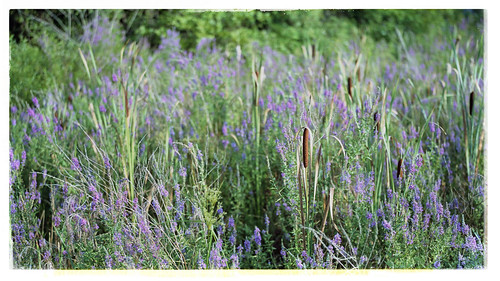
Nature's Tapestry, by Reed A. George
Mamiya Universal Press Camera, Mamiya Sekor 100mm f3.5 Lens
Kodak Portra 160 Color Print Film
 
A simple nature shot I made with my recently-acquired Mamiya Universal. I tried to keep the depth of field quite thin, and centered on the cattail just right of center. I love the color in this shot. The purple contrast to all the green and yellow works for me. I also really like how Portra gives such subtlety to color. I actually boosted the vibrance a little in post-processing.
 
I also cropped the image, and added some framing effects in Nik's Analog Efex Pro add-in.
 
I am really enjoying the slow, deliberate style that the new Universal forces on me.
 
DMC-365.blogspot.com
 

Monday, March 17, 2014

How Leica Killed "Leica Photography" on Leicaphilia

Now this is an interesting post, especially for me to be reading one day after I posted about taking a modern digital image from my Leica M9, removing many of the gray levels through boosting contrast, adding grain, and in my opinion, improving it.
 
The blog Leicaphilia provides a perspective on how Leica has killed its own style of photography by abandoning their expertise in making compact, functional, straightforward rangefinders and instead shifting their focus to exacting optical designs and products.
 
(Click Here) to read the post on Leicaphilia.
 
What do I think of all of this?
 
Sketching, by Reed A. George
Leica IIIC, Canon 50mm f1.4 Lens, TMax 400 Film
 
Well, I certainly agree that the attraction to Leica, especially old Leica cameras like the IIIC I used for the shot above, has something to do with the camera body design. Simple, effective, obviously hand-built. And, I must agree about the quality of some of Leica's competitors' lenses back in the day. The Canon 50mm f1.4 I used for the shot above is really quite nice.
 
I'm not sure that I agree that other brand lenses were actually better than Leica's back in the day. No, I don't judge them by micro-contrast or even necessarily sharpness, but my Leica Summar and Summaron lenses make beautiful images. They take quite a beating in the above-referenced post. There also seems to be a marked lean toward Nikkor lenses in that post. Not that I disagree; I have a nice Nikkor 3.5cm f2.5 in Leica thread mount (LTM) that does quite a nice job. Honestly, though, I prefer my Leica Summaron 3.5cm f3.5 in terms of the images it produces.
 
Finally, I don't agree that Leica has turned away from its design basics. The Leica M9 is about as straightforward to use as you could make a modern digital camera, while still giving the user complete control. I can easily switch back and forth between the M9 and a 1955 M3, without having to worry about differences in controls.
 
Now, the same cannot be said for some of Leica's other cameras. Some of them do have the same issues with complicated controls and multilayer menus that their Japanese counterparts have. Anyone notice the differences between shooting a Nikon F film camera and the wonderful, but complicated D700, for example?
 
So, I agree with some of the points in the article, not with others. I would say it's a call for Leica to be vigilant about future designs.
 
The author is correct that optical perfection does not necessarily lead to a great image. I'm learning to remove some perfection to get to the image that I really want.
 
DMC-365.blogspot.com
 

Sunday, March 16, 2014

Emulating Delta 3200 Film Look in Lightroom

I've been shooting real Ilford Delta 3200 film in my Leica M4-2 recently. I've been using it at live music events, and really like the look, especially shooting it at iso 1600 and developing it normally (at thedarkroom.com).
 
I've been interested in emulating that look with digital files, specifically with shots from my Leica M9, shot at iso 1600. Now that my M9 is back from Leica Service, I will likely carry the M9 and M4-2 together to some shows.
 
First, I decided to try the preset in Nik software's SilverEfex Pro. I didn't find it to be particularly comparable to my film results. So, I decided to work through adjustments in Lightroom 5 until I got something closer and save them as presets. I've now done that. Here's an example of a shot made with the M9 (at iso 200 in this case). The first version is what I would normally do to process this type of image from the M9 in black and white. The second is done using my Delta 3200 presets.
 
Charlie - "Normal" versus "Delta 3200" Versions, by Reed A. George
Leica M9, Leica Summilux 35mm f1.4 v.3 Lens
iso 200, f1.4, 1/125 sec.
 
For this particular shot, I strongly prefer the "Delta 3200" version.
 
I made two separate presets. Here are the adjustments I made in each.
 
Preset #1 - Delta 3200 Contrast Settings 
Contrast = +38
Clarity = +18

Preset #2 - Delta 3200 Grain and Sharpening Settings

Sharpening Amount +2
Sharpening Radius 0.7
Sharpening Detail 25
Sharpening Masking 0

NR Luminance 26
NR Detail 50
NR Contrast 0

Grain Amount 60
Grain Size 17
Roughness 94
 
 
I find it very interesting that adding this amount of grain and removing gray levels (in the form of increased contrast) can actually improve some images.
 
I hope others find the settings useful.
 
DMC-365.blogspot.com


Friday, October 25, 2013

A Shot From Last Autumn

I am noticing that I tend to miss some nice images by reviewing them too soon after I capture them. As I mentioned before, my expectations are tough to meet, and images that don't do it tend to be ignored. However, looking back later, I often find some that are not so bad.
 
Here's an example:
Sunset, Whitefield, New Hampshire, by Reed A. George
Panasonic Lumix DMC-G3, Lumix 14-140mm f4-5.8 Lens
iso 200, f8, 1/15 sec.
 
 
I did some post-processing on this shot. Most notably, I changed the white balance from Auto to Fluorescent. Believe it or not, that best replicates the color I remember from the scene. I also adjust the color of the reflection on the water surface, making it more like the sky. Finally, I added a brush stroke of increased clarity along the mountain ridges and tree silhouettes on the water. I hope none of that is too obtrusive, as I really feel that it now looks like I remember.
 
I have been neglecting my Micro 4/3 gear this year, in favor of other systems. This shot reminds me that I need to get back to it sometime soon.
 
DMC-365.blogspot.com


Thursday, May 30, 2013

Some Fun With the Lumix DMC-LX7 and Snapseed

I am on the airplane, returning home from a visit with my parents in Oklahoma. I didn't do a lot of photography on this trip, but did get out for a morning hike at Roman Nose State Park, near the town of Watonga. Here's a simple shot I made of a butterfly at Roman Nose.
 
Backlit Butterfly, by Reed A. George
Panasonic DMC-LX7
 
Certainly what caught my eye in this instant was the backlighting, with the pattern showing through the thin translucent wings.
 
I thought I'd play around with this shot on my iPad, using Google's Snapseed program. Here's what I came up with:
 
After Snapseed Adjustments
 
In order to get this effect, I used one of Snapseed's vintage film colorations, cropping, and of course a custom frame. I tried not to overdo it. I find it reminiscent of cheap color print film and drugstore processing. Kind of fun.
 
DMC-365.blogspot.com


Saturday, February 9, 2013

Saturated Colors and Emotion - A Leica Strength, I Believe

Me & My Balloon
 
This shot was made with a digital Leica M9-P and teh Leica 50mm Summilux. When I look at this, especially the saturated red balloon, and the enhanced vignetting, darkening the areas surrounding the child, I can almost remember what it felt like to be a little kid. Wearing my hood up, with my new balloon, in a world of my own. I think this image really succeeds in taking us elsewhere, in time and space.
 
There is clearly some significant post-processing in this image.
 
(Click Here) to see the original post on rangetraveler.com
 
The color here reminds me of what I get with one of my favorite old lenses, a Leica Summaron 3.5cm f3.5 thread mount (LTM) lens. Here's an example of what my lens produces, without boosting saturation, etc.
 
Autumn Colors, by Reed A. George
Leica CL, Leica 3.5cm f3.5 Summaron Lens
iso200 Film
 
I'll be featuring my Summaron at some point in the coming months on my M9, as part of my "Whole Lotta Leica" series. I'm always pleased with the images this tiny little lens produces.
 
DMC-365.blogspot.com