Showing posts with label macro. Show all posts

Monday, September 7, 2015

A Glass Menagerie - Panasonic Lumix DMC-TS5

I carry a camera with me every day. Today, it happened to be my little waterproof Lumix TS5, which I was bringing in to work to loan to a friend. The camera has accompanied her to Central America, and is now on its way to Tibet.
 
Anyway, the building where I work represents one of the world's largest installations of structural glass. Walking to my office, I noticed these apparently random tracks on the condensed water droplets on the outside surface. Obviously not guided by gravity, these tracks twist and turn, intersecting themselves and wandering both up and down. After looking at a few of them closely, I determined the source.
 
Slug, by Reed A. George
Panasonic Lumix DMC-TS5
 
At about 1 1/2" in length, these guys cover some territory.
 
Further down the hall, I found this predator:
 
Praying Mantis, by Reed A. George
Panasonic Lumix DMC-TS5
 
I'm not sure if a mantis will eat slugs, but I have a suspicion they will. Quite an interesting little world in operation just on the other side of the glass...
 
The TS5's macro capability came in handy here. The wifi did as well, allowing me to quickly transfer the images to my iPad so I could include them in this morning's post.
 
Then, I look up from the table where I'm writing and see this:
 
 
I grabbed this shot with the iPad's onboard camera. Okay, digital imaging can be pretty cool.
 
DMC-365.blogspot.com


Friday, July 10, 2015

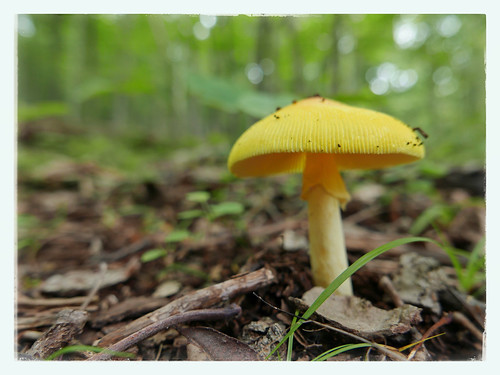
Some Fungi - Lumix LX100 in Macro Mode

Yesterday, I posted a couple of images from my hike at Sky Meadows State Park in Delaplane, Virginia. Here are a few interesting fungi I found along the trail and shot with the Panasonic Lumix DMC-LX100.
This one was enormous (~4" diameter) and looked like it was made of velvet.
The closeup capability of the LX100 is also impressive. Such a flexible camera.
 
DMC-365.blogspot.com
 

Monday, September 22, 2014

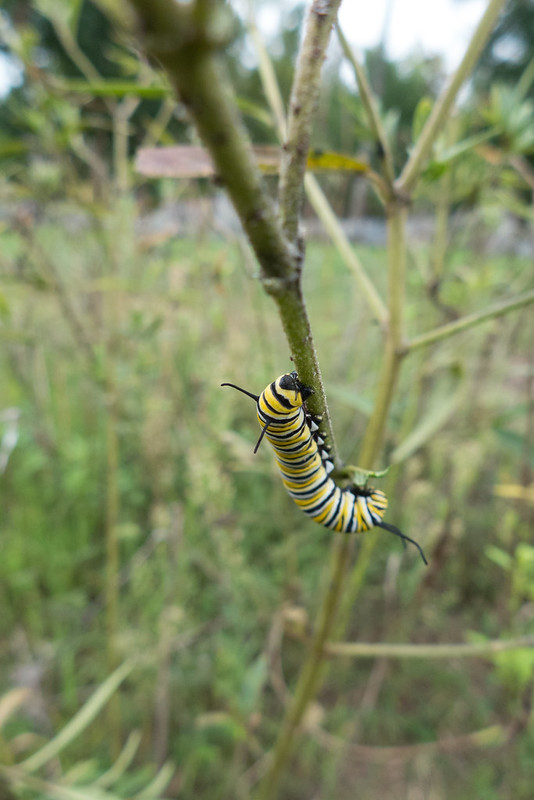
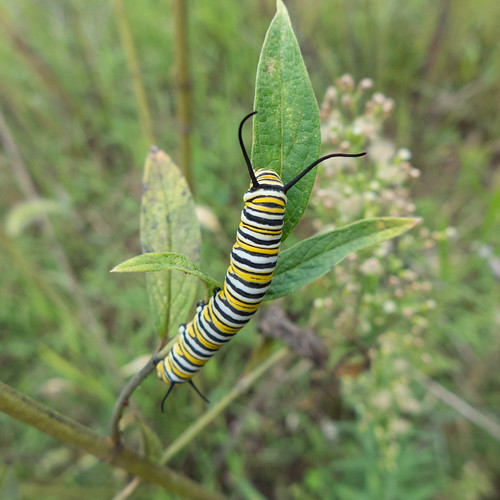
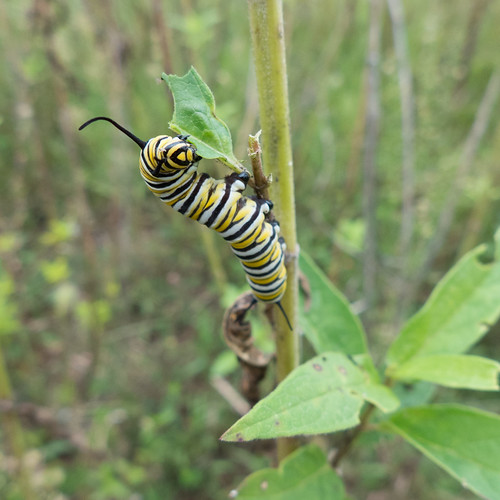
Monarch Butterflies - Our Waystation Worked!

Last year was a bad one in terms of the number of monarch butterflies in our area. Some coworkers and I decided to plant a patch of milkweed to see if we could bring back a little habitat in a safe area for the butterflies to lay eggs and for the larvae to grow and mature. It was a failure. We didn't see any last year.
 
This year, I've visited the area a few times, and only saw one single adult monarch. However, they've obviously been around. Yesterday, I counted about ten of these lovely monarch caterpillars in our little planting.
 
 
I happened to be carrying my Panasonic Lumix DMC-LX7, which makes a very nice closeup shot. I simply set the autofocus to Macro setting, exposure to P, and shot.
 
After considering the idea of bringing the caterpillars inside for more protected rearing, I decided that their chances are probably better right where they are. So, I wish the little guys luck!
 
DMC-365.blogspot.com
 

Friday, August 8, 2014

Real Macro With a Leica Rangefinder? Why Not?

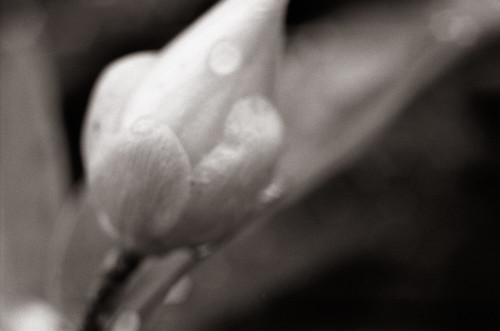
I shot this image with a gadget that I picked up on ebay, called the "Accura III," a Japanese version of an early Leica Visoflex attachment, which essentially converts your rangefinder camera to an SLR.
 
Tiny Blossom, by Reed A. George
Leica IIIC Rangefinder Camera, Accura III attachment, Leica 5cm f2 Summar lens
 
Now, this is really bending the rules of what camera systems are good at. Rangefinders were designed for getting no closer than a few feet from your subject, and for generally short focal length lenses. In the history of photography, SLRs came in to dominate most applications, and certainly macro and telephoto.
 
Here's the Accura III:
 
Accura III Closeup Adapter for Leica Screwmount Cameras
 
I was inspired to pick this up when I saw it cheap on ebay because my friend, Charlie, loaned me a much more premium version, his being made by Novoflex. Charlie's Novoflex has the correct 13.5cm f4.5 Hektor lens attached to it, which is a much more suitable focal length for this type of rig. The Novoflex also allows a lot more range in focus, as it has a bellows between the lens and the adapter housing. I haven't tried that rig yet, but expect good results; it's always good to have a future project in the queue.
 
My Accura III is quite limited in what it can do. With the 5cm Summar attached, it becomes an extreme closeup affair, with little to no focus adjustment. You basically have to get very close to your subject, and move the camera until things appear to be in focus through the dim little eyepiece.
 
This was a pretty half-hearted try, handheld, while I was trying to finish up a roll of film. Sharp? Nope. Carefully executed? Nope. But, I find it rather pleasing. Both the Accura, and especially Charlie's Novoflex, deserve more exploration.
 
DMC-365.blogspot.com
 

Monday, July 14, 2014

Bug Closeups with the Micro 4/3 Panasonic-Leica 45mm f2.8 Macro Elmarit

I have had the Pana-Leica 45mm f2.8 Macro Elmarit lens for quite some time. When I purchased it, the Macro-Elmarit was the only medium telephoto available for the Micro 4/3 mount. Had the Olympus 45mm f1.8 been out at the time, I probably would have bought that instead.
The extra >1 f-stop of the Olympus would be nice. That said, the macro ability of the Pana-Leica is great. I like to be able to take closeups of details when I travel.
I have not really explored the capabilities of this lens in more classical macro applications. Yesterday, I had the time and opportunity to go bug hunting while my wife practiced free swimming in a local quarry. I decided to see what the Macro-Elmarit could do. So, I mounted it on my Panasonic Lumix DMC-GX7, set up the touch screen to focus and trigger exposure (I rarely use the touch screen features of the GX7), and connected my Nissin flash with a remote cord. Having mounted the camera on a sturdy tripod, I was ready to go.
Well, it was hot, and the bug hunting was a little tough. After waiting an eternity (okay, about 30 minutes) for a gorgeous dragonfly to return to a particular perch to no avail, I started stalking. By the way, dragonflies usually will come back to exactly the same spot over and over. I think maybe I was just too close for comfort. This is where a longer macro focal length would come in handy, giving me more working distance.
My stalking actually resulted in finding a stationary dragonfly, but my best subject of the day was this bug you see below. I'm not sure of his exact species, but guess that he's part of the hemiptera family of true bugs.
Bug, by Reed A. George
Panasonic Lumix DMC-GX7, Pana-Leica 45mm f2.8 Macro Elmarit, Remote Flash
iso 200, f11 1/100 sec.
 
I used a mini softbox mounted on the flash head, and handheld the flash. Even with the camera on a tripod, I had too many things to hold, and the flash-to-subject distance wasn't well controlled with my hand holding method. I should work on mounting the flash to a bracket if I continue this line of imaging. I did use the touch screen to identify where to focus and trigger the exposure. I must admit it's a pretty cool tool, as long as the camera is held stationary. It was a little difficult to get the focus point just right, on the bug's head, at this magnification. But, I did get it a few times.
 
I was not at the closest focus distance of the lens, but was at about the shortest useful working distance for this subject. Here's a 100% enlargement of the same image (a little clarity and sharpness applied in Lightroom):
 
100% Crop of Image Above
 
So, I'd say this lens is pretty capable in the true macro realm. I don't shoot a lot of nature macro images like this, and would normally tend toward the large sensor of my Nikon D700, and either my true macro 60mm Micro-Nikkor f2.8, or a longer lens (say 105mm f2.5) with extension tubes. The longer lens would make the working distance more reasonable. Now I know that the Micro 4/3 sensor in my GX7 and Macro-Elmarit are quite capable in this realm.
 
On top of that, the Macro-Elmarit is a reasonably good portrait lens (limited in its shallow depth of field potential by the relatively small maximum aperture of f2.8), and an excellent lens for capturing closeup details when on travel.
 
DMC-365.blogspot.com

Saturday, July 5, 2014

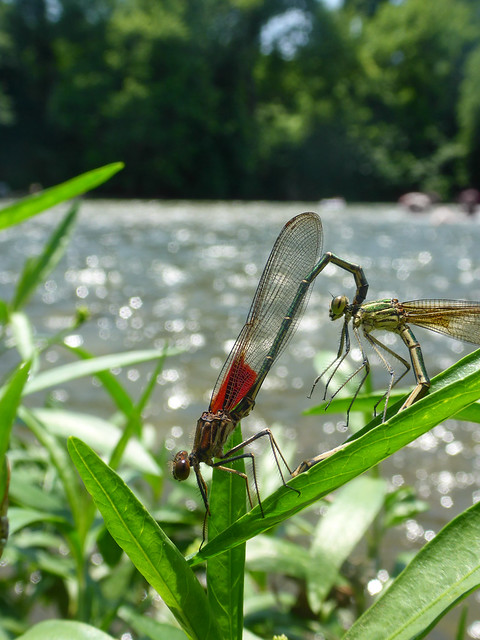
Panasonic Lumix DMC-TS5, Macro, and Damselflies


P1010917.jpg
 
Damselflies - American Rubyspot (Hetaerina americana)
by Reed A. George
Panasonic Lumix DMC-TS5
 
Last weekend, I took a little float trip down the Shenandoah River. Part of the River and Roots music festival, held at Watermelon Park in Berryville, Virginia, this educational event was led by musician and teacher Josh Bearman of The Hot Seats.
 
Anyway, back to the subject at hand - damselflies. This potential couple of American Rubyspots was perched very near the water surface. I say potential couple, because at this stage, the female (to the right) is being held by the male, and allowed to evaluate him for suitability. If she approves, her abdomen and terminal genitalia will connect to his body, forming a sort of circular orientation between their bodies.
 
These guys spend 1-3 years as aquatic larvae, with only a couple of weeks as adults, during which they mate and then die.
 
The tiny sensor on the Panasonic Lumix DMC-TS5 has all of the drawbacks of a small sensor, of course, which includes digital noise at high ISO settings. However, a big advantage of the small sensor is the closeup capability, as demonstrated here. This would have been exceedingly difficult to capture with a DSLR, even forgetting about the risk of getting it wet. In this case, I simply left the camera in iAuto mode, and slid it down into the grass next to the damselflies. I shot several images in a few seconds, but found this one to be the best.
 
DMC-365.blogspot.com

Monday, April 28, 2014

Petroglyph National Monument, New Mexico

One final post of images from my recent trip to Albuquerque, New Mexico. Very close to my hotel, Petroglyph National Monument offered a unique early morning walk before my business meetings started.
 
Petroglyphs are images by native people of the area, made by chipping away at the surface of the basalt rock in the area. The basalt stones were created about 200,000 years ago, when lava flowed 5-50 feet thick over a series of six separate eruptions. These boulders have a thin dark patina layer on their surface, caused by water, sun, temperature extremes, and microbes. It was by chipping away at the outer layer and exposing the lighter stone color underneath that native Americans made the petroglyph images.
 
Petroglyph on the Mesa Top, by Reed A. George
Panasonic Lumix DMC-GX7, Bower 7.5mm f3.5 Fisheye Lens
iso 400, f-stop unrecorded, 1/250 sec.
 
Most of these petroglyphs were made 400-700 years ago. Those from that period ("Rio Grande" style) include human figures, masks, hands, feet, as well as animal shapes and tracks, and geometric designs. Others date back as far as 3,000 years.
 
Various Petroglyphs, by Reed A. George
Panasonic Lumix DMC-G1, Pana-Leica Macro-Elmarit 45mm f2.8 Lens
 
As I've written in other posts, I found the Bower fisheye lens to be very useful on this trip. This was a bit of a surprise for me, as I've always thought of fisheye lenses as gimmicks, for special effects only. On this walk, I carried the GX7 with the fisheye attached, and my backup Micro 4/3 body, the GX1, with the Macro-Elmarit. This made for a very good combination in this particular setting.
 
DMC-365.blogspot.com
 

Monday, December 23, 2013

Simply Done, Beautiful. Andy Bell Shoots Agate (Stone) Abstracts.

 
Agate by Andy Bell
Image Source: http://www.deceptivemedia.co.uk/?s=Agate

Andy Bell has posted a series of abstracts which are closeups of agate stone. It's tough to beat the beauty of nature. Andy's done a nice job of capturing it here.
 
(Click Here) to see the whole series on deceptivemedia.co.uk.
 
A question that has come up in photo critique is whether abstracts require that the viewer be unable to identify the subject. Personally, many times I prefer being able to catch glimpses of what the subject was, even though the overall result is an abstract.
 
In this case, I can see that these are agate stone, once I've been informed. I probably would not have guessed it outright. Maybe that's the right level of recognition? Or maybe it doesn't matter, as "abstract" is simply a label. What really matters is that the art works. And this does, in my opinion.

DMC-365.blogspot.com


Friday, August 30, 2013

The "Sketchbook" Concept

User jl-lb.ms on Rangefinder Forum has put a name to the concept of exploring a subject or concept with a camera, simply documenting a scene, or exploring a thought. He calls it a "sketchbook."
 
(Click Here) to read the post on Rangefinder Forum, and see a couple of examples posted in the comments.
 
I think I do this regularly. Below is an example of my exploration of some raindrops on a tree in the dreary winter of Virginia.
 
"Sketchbook" Raindrops, by Reed A. George
Panasonic Lumix DMC-G3, Pana-Leica DG Macro-Elmarit 45mm f2.8 Lens
 
Little glimpses like this are interesting. I remember well the day I took these. I was out for a late January walk, cabin fever having set in. I also remember lamenting the barren scene of winter, with very little interesting to look at or shoot. White sky, no leaves on the trees, lots of gray. Even in these times, if you look hard enough, something is interesting. One approach is to simply go with the lack of color and shoot monochrome. Look for structure. Another is always to shoot closeups.
 
What works in these shots, if anything at all, is the glowing dots of out-of-focus raindrops. The final shot shows these best, in my opinion. Even though the overall outdoor light was very dull, even, low contrast, the drops against a relatively dark shadow background lends at least a little drama. No masterpiece here, these are still worthy of the "sketchbook." They bring back the day for me now, 18 months later.
 
DMC-365.blogspot.com


Wednesday, July 10, 2013

User Report: Panasonic Lumix DMC-TS5 Waterproof Compact

Panasonic Lumix DMC-TS5 Lifestyle Tough Camera
Image Source: shop.panasonic.com
 
I am pleased to be a participant in Panasonic's Early Adopter program. My first review was of the new DMC-TS5 waterproof, shock proof, wifi-enabled, GPS-enabled, compact camera. How's that for a list of features?
 
(Click Here) to read my report on Panasonic's website.
 
I thought I'd add some images and video to the mix, since that's the real result of tesing a camera, right?
 
First off, this little camera is very convenient. I took it along on a family trip to pick strawberries at the farm. The macro capabilities are impressive. Put the camera into iAuto mode, and you're good to go.
 
Berries and Blossoms, by Reed A. George
Panasonic Lumix DMC-TS5
 
For a real test of the specific strengths of this waterproof, toughened camera, I took it with me on a trip to the Florida Keys. We arrived in Key West just before sunrise, so I stayed up and shot a little at the hotel beach. Here's a video of the surf coming in. At the end of the video, you'll see the camera get knocked over by an incoming wave! No worries; it's tough.
 
Click the Picture to See the Video!

Sunrise, Key West, by Reed A. George
Panasonic Lumix DMC-TS5
 
To really test the camera, we took it on a scuba diving trip. Here's the ride out to the reef:
 
Click the Picture to See the Video!

Headed to the Reef, by Reed A. George
Panasonic Lumix DMC-TS5
 
The seas were pretty rough on this day, with waves from three to five feet being the norm. Here's what it looked like from the water's surface, before we went down:
 
Rough Seas, by Reed A. George
Panasonic Lumix DMC-TS5
 
Of course, once we were under water, waves didn't matter, just current. And there was plenty of current.
 
All Is Good, by Reed A. George
Panasonic Lumix DMC-TS5
 
Shooting in the "Underwater Advanced" mode, I think the camera does a nice job of achieving color balance. This isn't bad for ~30 feet underwater with just the on-camera flash!
 
Snappers, by Reed A. George
Panasonic Lumix DMC-TS5

Here's an underwater video - look for the two barracudas:


Click the Picture to See the Video!

Barracuda!, by Reed A. George
Panasonic Lumix DMC-TS5

Here are some other shots from the Key West trip:

"Through Glass" Scene Mode Seems To Work!, by Reed A. George
Panasonic Lumix DMC-TS5


I Can Still Feel The Humidity, by Reed A. George
Panasonic Lumix DMC-TS5


Local, by Reed A. George
Panasonic Lumix DMC-TS5

I'll finish with a couple of shots of one of the things Key West is famous for - sunsets. I shot these in the sunset scene mode, which also works quite well:

Sunset From The Boat, by Reed A. George
Panasonic Lumix DMC-TS5

And finally, a sunset panorama, made completely in-camera, using the panorama mode.


I thoroughly enjoyed using the DMC-TS5 on this trip. It's wonderful to be able to carry a camera literally anywhere without having to worry about damaging it. After we got back to the hotel, I simply filled the sink with fresh water and submerged the camera for ten minutes or so. Clean and good as new!
 
DMC-365.blogspot.com


Monday, June 10, 2013

Panasonic Lumix DMC-LX7 Shoots Cicadas Close Up! The Cicada Class of 2013 is a Big One.

 
History Bug, by Reed A. George
Panasonic Lumix DMC-LX7
iso 100, f7.1, 1/250 sec
 
On Memorial Day weekend, I went to the Manassas National Battlefield a few times for some shooting. In the image above, you can see Thomas "Stonewall" Jackson's statue to the far right on the horizon. Up close, you see a 17 year cicada, freshly molted from the nymph stage into the adult.
 
(Click Here) to read about the cicadas of 2013.
 
Cicadas live between 13-17 years underground, and emerged in synchronized fashion with their siblings. Scientists don't know for sure why they do this - some believe it's to avoid predation, both by being unpredictable because of the long time scale and by safety in numbers making it more likely that some of them will get through. Others believe it's due to climate changes, whereby colder weather severely slowed down their previously faster development.
 
You Can Never Go Home, by Reed A. George
Panasonic Lumix DMC-LX7
iso 100, f8, 1/250 sec
 
In the picture above, you see the adult (lower center) next to the molted skin of a nymph. Quite a change in body plan, huh?
 
Big Year for the Cicadas, by Reed A. George
Panasonic Lumix DMC-LX7
iso 100, f3.5, 1/250 sec
 
As you can see in the picture above, there are a lot of cicadas in this year's brood. Those are the abandoned nymph skins left behind after moulting.
 
This subject reminded me again of the flexibility of the little Lumix DMC-LX7. I was also carrying my Leica M9 with Summaron 3.5cm f3.5 LTM lens and my Minolta Autocord TLR. Neither of them could have made these images. Even with the Rolleinar close up lens on the the Autocord, I couldn't have come close to this focusing distance. The LX7 sure does a lot of things right.
 
DMC-365.blogspot.com


Saturday, May 25, 2013

"Scanning" Negatives and Slides with the Leica M9 - Lars-Goran Hedstrom Shares His Approach

Leica M9 and BEEON Copy Stand
 
Here's an example of one of the benefits of being in the International Leica Society (LHSA). Today on our Google+ community page, one of the members posted a question about film scanning. Among several good answers, I found Lars-Goran Hedstrom's approach - using a Leica M9 on a Leica BEEON copy stand! Lars' blog is called Sculpting With Light.
 
(Click Here) to read the full post on Sculpting With Light
 
Lars started off using a flatbed scanner, but wasn't pleased with the resulting sharpness. So, he decided to try using a Leica Visoflex III, which essentially turns a Leica rangefinder into an SLR by adding a mirror box, which allows for through the lens focusing. While this worked well for him, the challenge of getting the negative that he was "scanning" and the M9 sensor in paralle was very challenging. Even at f16, using either a 50mm lens (giving 1:1 reproduction) or a 35mm lens (2:1), he often found part of the image to be just out of focus.
 
Next, Lars moved on to using a Leica copy stand made many years ago. Called the BEEON in Leica terminology, this stand allows you to use a magnifiying loupe to focus, then attach your camera to the stand. This is necessary, since Leica rangefinders don't allow for close focus. This works very well for Lars.
 
I've played around with this concept, using my Nikon D700 and Micro-Nikkor 60mm lens. It works well, but I've never taken it to the level of reproducibility that Lars did.
 
One of the best things is that by photographing your negatives or slides with a digital camera, you get raw files, which are easily adjusted in Lightrooom or other software. This is a big benefit. And, if you are set up properly, it can be very fast. I'm sure it's faster than flatbed scanning.
 
So, I may give this another try. I'll use my Nikon again, and put my effort into standardizing a setup (both arranging the camera and film planes to always be parrallel, and getting the backlighting right). I could even connect the D700 to my computer and have the files write directly to my hard drive.
 
Beyond this single concept, I'm happy to have found Lars' blog, Sculpting With Light. There's a lot of great information there.
 
Finally, I love this Ansel Adams quote that I found there:
 
"I have often thought that if photography were difficult in the true sense of the term -meaning that the creation of a simple photograph would entail as much time and effort as the production of a good watercolor or etching - there would be a vast improvement in total output. The sheer ease with which we can produce a superficial image often leads to creative disaster".
- Ansel Adams - "A Personal Credo," in American Annual of Photography, vol. 58 (1944; repr. in Photographers on Photography, ed. By Nathan Lyons, 1966), Photographers on Photography : A Critical Anthology by Nathan Lyons (Editor)

If you're interested in joining the International Leica Society (LHSA), please (Click Here). We'd love to have you. If you're a member, and want to join the LHSA Google+ community, drop me an email. I can help.

DMC-365.blogspot.com


Sunday, March 31, 2013

Springtime Closeups with the Panasonic Lumix DMC-LX7

I'm preparing to leave on a trip to Japan (will be back by the time this posts), and plan to rely heavily on my new LX7 for shooting while I'm there. Yes, I'll have other equipment with me, but the LX7 will likely get a lot of use.
 
I'll also be shooting my M9 a lot, and my Skeletons From The Closet camera for March, the Ikonta, when I get the chance. Neither of these has closeup capability, which I frequently find useful on travel. So, I decided to play around a little with shooting closeups last night.
 
Since Spring is officially here, I grabbed a low-hanging branch of blossoms from a neighborhood tree. Yes, I know, if everyone did it, that would be bad. Not everyone will. And I will only do it once a year. :)
 
Anyway, here are a couple of results:
Spring Traditions, by Reed A. George
Panasonic Lumix DMC-LX7
iso 200, f2.1, 1/40 sec.
 
"Bokeh" of Flowers, by Reed A. George
Panasonic Lumix DMC-LX7
iso 200, f1.5, 1/60 sec.
 
I have to admit, I stole the name "Bokeh" of Flowers from a commenter on Google+. If you don't know, "bokeh" is a Japanese word for "out of focus areas." It's broadly (too broadly) used in the camera tech world.
 
I like the second shot much more than the first. The regular patterned background of the cloth that the vase was sitting on works for me, just out of focus. The opening in the vase provides a second area of interest that doesn't compete too much with the blossoms. Both of these shots felt better in square format than rectangular.
 
Anyway, I'm feeling pretty good about the LX7 being along with me on this trip.
 
And don't forget! I wrote an ebook about the LX7 which can be yours for only $2.99! Thirty pages of time-saving hints and details. See the Amazon link below, or search for "DMC-LX7" under Books on Amazon. Support your friendly blogger!
 
DMC-365.blogspot.com


Thursday, February 14, 2013

Skeletons From The Closet - Pentax K1000 Results, In Color This Time

While using my Pentax K1000 during the month of January, I shot mostly black and white film. However, I did shoot a couple of rolls of color print film as well. Here are some of my color results.
 
Winter Berries, by Reed A. George
Asahi Pentax K1000, SMC Pentax 40-80mm f2.8-4 Lens
 
I had never tried this Pentax zoom lens before. It came with some other lenses I was more interested in. However, at f2.8-4, it's pretty fast. And, it has close focus capability. To me, 40-80mm is sort of a funny focal range, but it does seem to work pretty well. Mine is in excellent condition. I was impressed with the sharpness of the lens.
 
I took the camera and lens out for a walk during a break from work. We have a walking path that goes down to the river. The bridge is a common subject for me.
 
Bridge, by Reed A. George
Asahi Pentax K1000, SMC Pentax 40-80mm f2.8-4 Lens
 
On this particular winter day, the sky was clear and bright, making for some interesting reflections of the trees that tower over the river side.
 
Flowing Trees, by Reed A. George
Asahi Pentax K1000, SMC Pentax 40-80mm f2.8-4 Lens


Flowing Trees, by Reed A. George
Asahi Pentax K1000, SMC Pentax 40-80mm f2.8-4 Lens
 
The following images were shot during a Japanese New Year event in Washington, DC. Taking advantage of the fast SMC Pentax 50mm f1.7 and iso 400 film, I did a couple of rounds of the event. I found that people were happy to let me photograph them with the old film SLR. I felt like a kid again shooting with it.
 
Japanese Festival, by Reed A. George
Asahi Pentax K1000, SMC Pentax 50mm f1.7 Lens
 
Japanese Festival, by Reed A. George
Asahi Pentax K1000, SMC Pentax 50mm f1.7 Lens
 
The shot above is an example where I believe that out of focus foreground objects (like on the right side of this image) help to focus the viewer on the true area of interest.
 
Japanese Festival, by Reed A. George
Asahi Pentax K1000, SMC Pentax 50mm f1.7 Lens
 
I love the warm design on the girl's kimono in the shot above.
 
Japanese Snacks, by Reed A. George
Asahi Pentax K1000, SMC Pentax 50mm f1.7 Lens
 
Japanese Festival Games, by Reed A. George
Asahi Pentax K1000, SMC Pentax 50mm f1.7 Lens
 
Japanese Festival, by Reed A. George
Asahi Pentax K1000, SMC Pentax 50mm f1.7 Lens
 
Sometimes I wonder what all of my other gear really adds to my creative pursuit, when I can have so much fun with the first real camera I ever owned, and a couple of lenses. And, the Pentax has capabilities wider than I've explored here. There is a full set of lens options, from very wide to long telephoto. It's a very capable camera system. Of course, other cameras bring different strengths and weaknesses, but the Pentax K1000 is a favorite for a reason.
 
What a blast to get out and shoot mine after such a long time! Not bad for a 35 year old camera.
 
DMC-365.blogspot.com