Showing posts with label Ilford. Show all posts

Monday, November 30, 2015

Fun with Nikon Film SLR - the Venerable FM

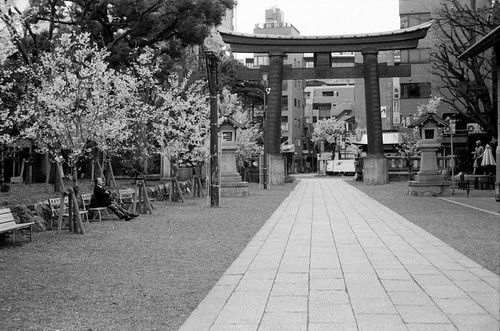
My Nikon film SLR collection is nearly complete, I've had my eye out for one I didn't have - the original FM. I finally found one in essentially mint condition, used, on Amazon. I took the chance and was rewarded with this great little camera. One of the best things about the FM is that it can mount and use both AI and non-AI lenses, making it the perfect film companion to my digital Nikon Df.
 
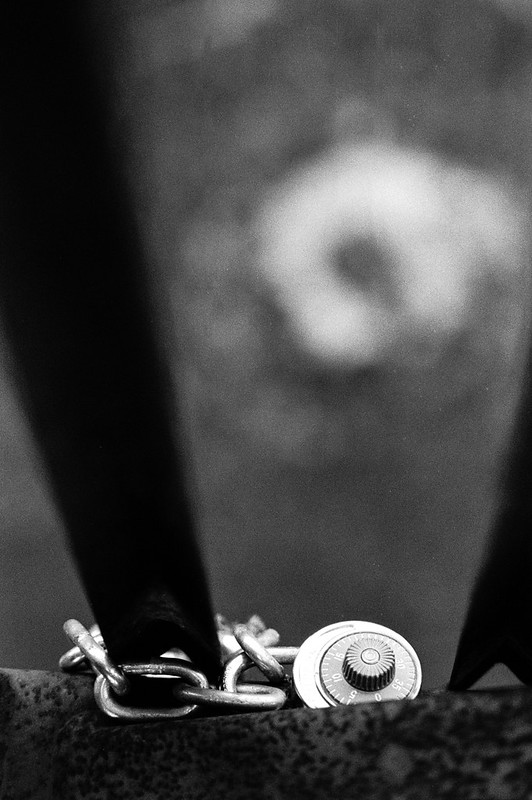
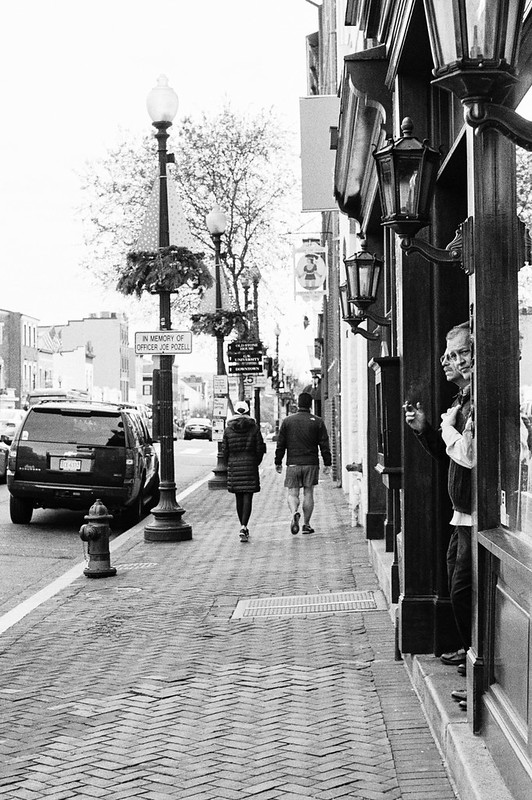
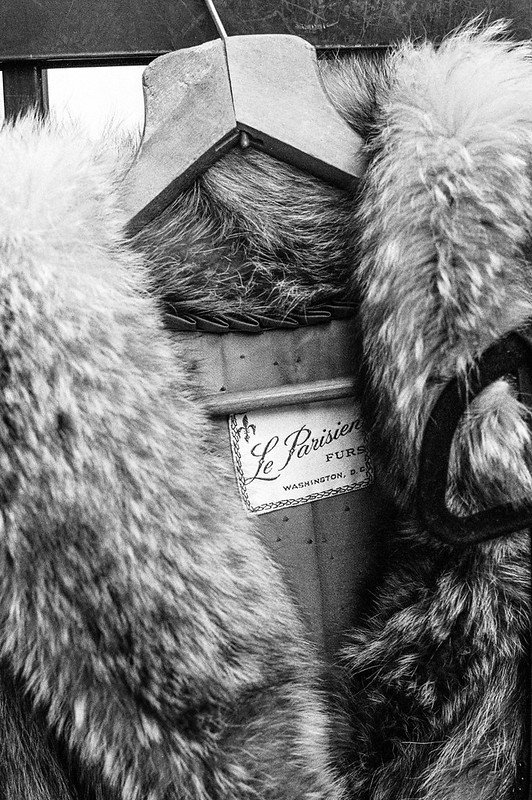
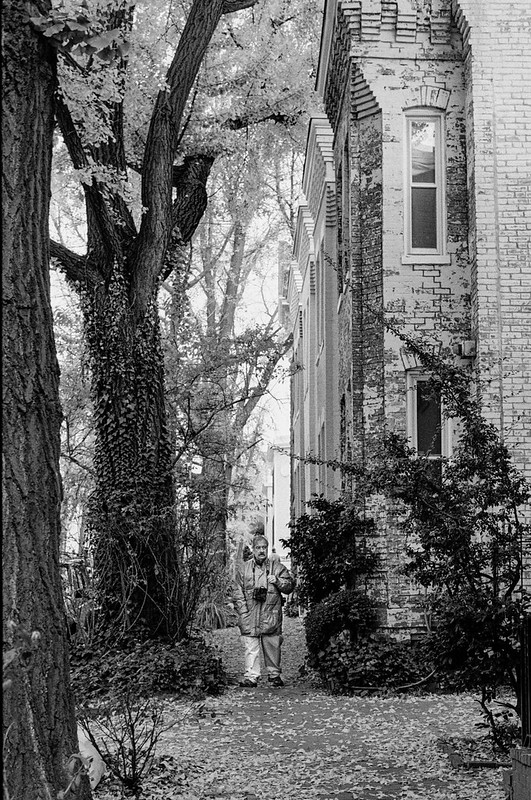
Here are some shots from the test roll of Ilford HP5 that I put through the FM.
 
 
Saying that I'm pleased is an understatement.
 
By the way, I scanned these on a new dedicated film scanner, the Pacific Image XA. While all of the autoloading on this scanner is a bit oversold, the image quality is outstanding. I can actually see film grain in my scans, something that has been elusive on flatbed scanners, even the Epson V750. If you're serious about scanning 35mm films, I suggest you give the XA a try.
 
DMC-365.blogspot.com
 

Sunday, June 21, 2015

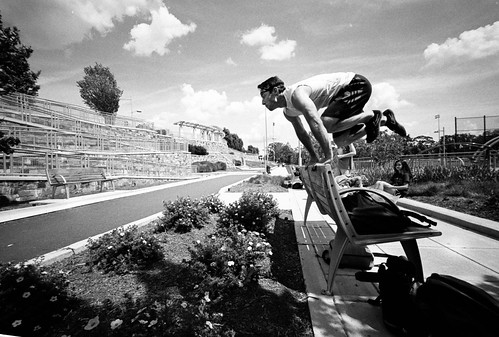
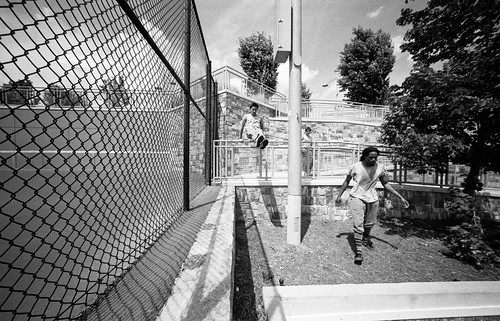
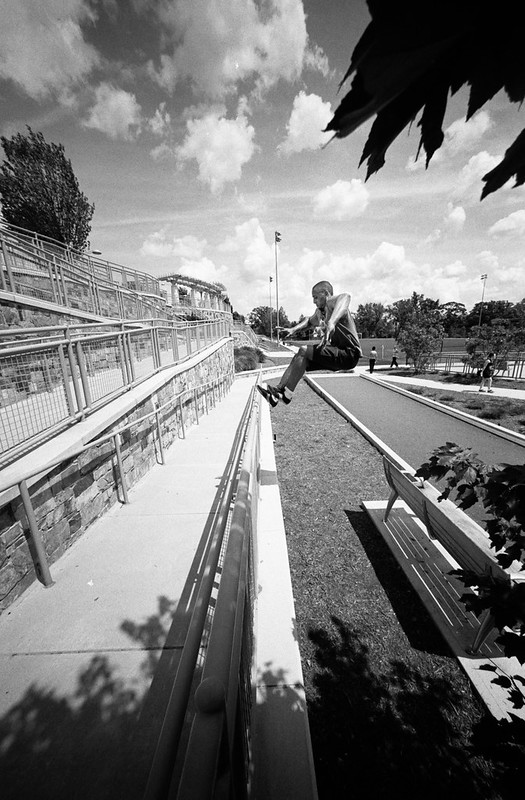
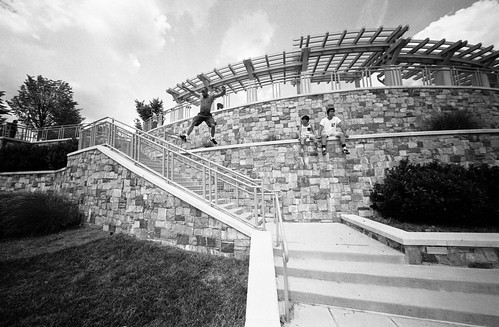
Some Ultrawide (12mm) Film Shots of Parkour

I recently shared a slideshow of parkour images, made with the Nikon Df. (Click Here) to see that post.
 
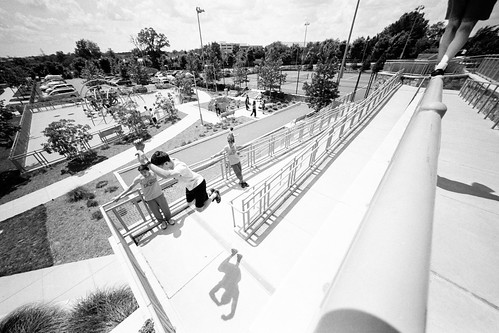
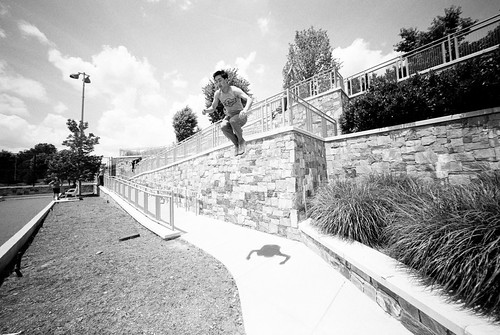
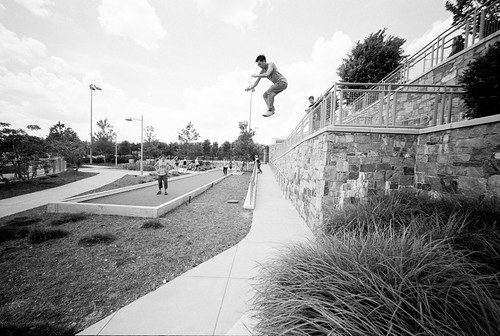
Today, I'll post some images I made at the same event, but these were all shot on the Zeiss SW film camera, with the Voigtlander 12mm f5.6 (LTM) ultra wide angle lens. These were all shot on Ilford HP5+ black and white film. I processed them myself.
 
I loved shooting parkour with this oddball lens. I have also done some fisheye shooting with parkour. (Click Here) to see that. In both cases, the wide angle of view is great for including a lot of the context for the sport. But, it also means that I have to get very close. So close, in fact, that there's a risk of interfering with the practitioner's concentration. That did happen once; thankfully, he thought it was funny. The last thing I want to do is interfere.
 
I think what I'm learning about shooting parkour is that variety is key. These wide angle shots tell a lot about the setting, but have relatively little detail of what the person is putting into the effort.
 
Approaching this with the standard photojournalistic search for a combination of wide, normal, and close up detail shots seems to be in order. I'm about to get a great opportunity to pull together a group of parkour practitioners, specifically to photograph them. My plan will be to get that variety, and to experiment with some ideas with flash, showing motion, etc. I've got some thinking to do.
 
DMC-365.blogspot.com

Sunday, May 3, 2015

Finding Space in the Big City of Tokyo - with Leica IIIG

 
Urban Space, by Reed A. George
Leica IIIG, Ilford HP5 Film
 
This gentleman on left was out early in the morning at the Tomioka Hachiman shrine in Tokyo. The lesser shrines are always a good place to go for some space and relaxation. The big ones, like Meiji Shrine, are frequently very crowded. The secret in either case is to be out early.
 
I find this to be true in almost any big city. New York City, Barcelona, Tokyo, they're all pretty quiet in the early mornings.
 
Here's another shot from the shrine. I focused on the cherry blossoms, rendering the fountain slightly out of focus with shallow depth of field. There was no one else in sight when I shot this.
Quiet Morning, by Reed A. George
Leica IIIG, Ilford HP5 Film
 
So, if the crowds in the big city get to you, simply get up early! Jet lag sure helped with that while I was in Tokyo.
 
DMC-365.blogspot.com
 

Tuesday, March 3, 2015

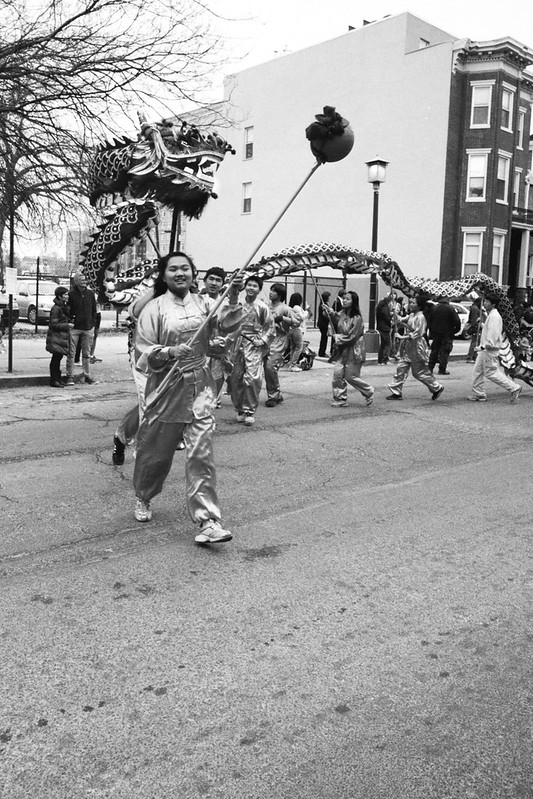
Going Out in the Weather for Chinese New Year

The weather outside is horrible. Yesterday, we got several inches of snow, followed by some freezing rain. Today, it's warming up, but the roads are still questionable.
 
But, I have cabin fever. With a new DMC-LX100 having arrived, I'm packing it up, along with my trusty Leica IIIG (loaded with black and white HP5+ film), and meeting my friend Charlie for the drive into DC. We'll attend the Chinese New Year celebration there. Here's a shot I made there last year:
 
(Click Here) to read a post on the Leica blog about this subject. The images embedded in the text aren't much to look at, but the gallery at the top of the post, especially those images by Su Li, are.
 
DMC-365.blogspot.com


Wednesday, February 25, 2015

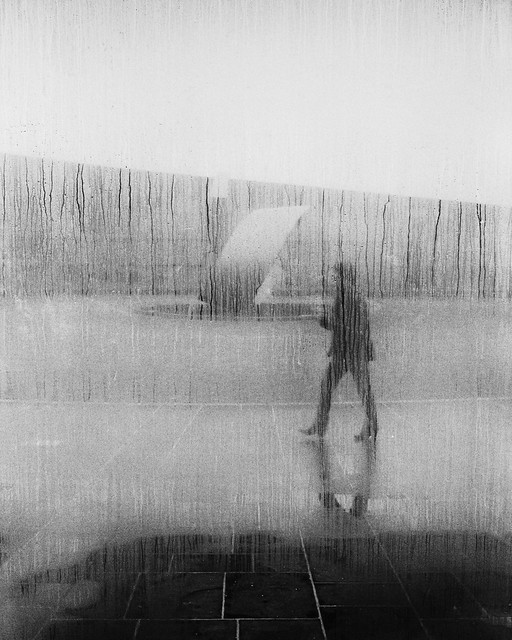
Obscured

I made this shot recently at work. I was shooting my Leica CL and Rokkor 40mm f2 lens, one of my all-time favorite combinations.
Obscured, by Reed A. George
Leica CL, Minolta Rokkor 40mm f2 Lens
Ilford HP5+ Film, Developed in Kodak D-76
 
I've recently gotten back into bulk loading 35mm film, with a couple of my friends. It's weird, but at current prices, Kodak's products cost the same per exposure in bulk (100' rolls) as they do packaged into single rolls. So, there's no advantage to bulk loading Kodak at the moment. Ilford's products are still priced so as to make bulk loading economical. At $54 per 100' roll of Ilford HP5+ (Adorama), I'm paying $3 per roll of 36 exposures. You get 18 rolls of 36 exposures from a bulk roll.
 
I'm also back to processing my own black and white film. I figure that with the relatively little time I have available for shooting, bulk loading will force me to focus on shooting black and white for a while, which is a good thing. So, I'll take the much cheaper route of processing my own film, since it will be mostly black and white anyway. To be honest, I really enjoy the hands-on processing of my film, anyway. It's good to smell the fixer once in a while.
 
The fact that my friend Dennis gave me 20 rolls of Gekko 100 black and white film, and a 100' roll of Agfa black and white 400 speed film only adds to my rationale.
 
So, get ready for a lot of black and white film shots from me! Hope you enjoy.
 
DMC-365.blogspot.com
 

Saturday, January 24, 2015

About to Try Ilford HP5 (35mm B&W Film) for a While

Image Source: http://filmphotographyproject.com/store/ilford-hp5-plus-bw-35mm-x-305m-100-ft
 
My friend Charlie has a couple of bulk film loaders. Since a small group of us have been regularly meeting and shooting film for a while now, we decided to start bulk loading our 35mm cassettes. It's actually interesting what's happening with film prices today. Charlie's a Tri-X shooter, so that's where we looked first. We were unable to locate a 100' roll of Tri-X anywhere at a price that would result in any savings over buying by the 36 exposure roll (savings is about the only reason to bulk load, unless you want to tailor the number of exposures you get per roll). HP5 is still reasonably economical.
 
(Click Here) to buy your film from the Film Photography Project.
 
So, we're just about ready to roll (pardon the weak pun).
 
In the past, I've played with pushing Kodak Tmax 400 to 1600. (Click Here) to see how that worked out.
 
I also found a post on the very interesting blog "35 MMC." (Click Here) to read about shooting HP5 at iso 3200. That's a three-stop push, but sure seems to work well.
 
I don't have any experience with HP5, but will soon!
 
DMC-365.blogspot.com
 

Friday, January 9, 2015

Film Fear-Mongering at Pop Photo?

 
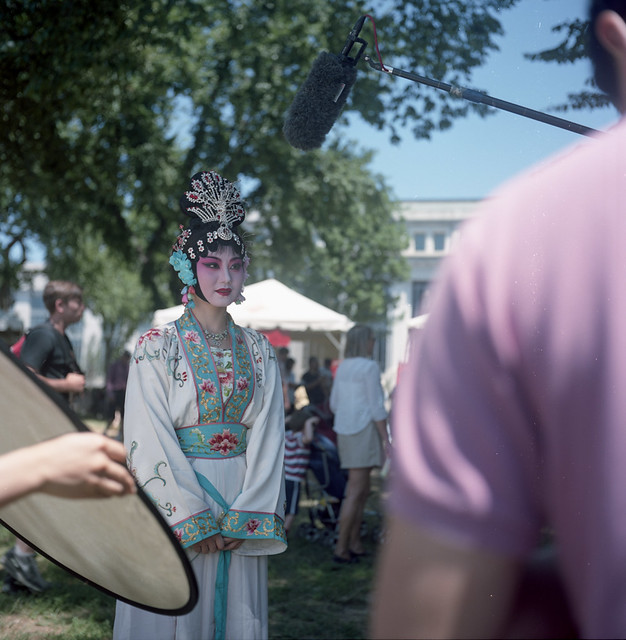
Chinese Actress, by Reed A. George
Rolleiflex T, Kodak Portra 160 Film
 
As you probably know, I love shooting film. I have so far stuck with the big names in film, with few exceptions. Kodak TMax is my choice for black and white film in iso 100 and 400. Ilford Delta 3200 is my favorite fast black and white film (I shoot it at 1600). For color, I shoot mostly Kodak and some Fuji.

While there are some other great films out there, including many to try out at the Film Photography Project's store, I have been content to stick with my favorites.


I recently started to read an article at Pop Photo entitled "12 Films Worth Shooting With Before They're Gone". I thought that maybe they had some information on films that truly are on their way out. As soon as I started the article, I noticed that the first two films listed were my favorites: Portra 400 and TMax 400! Oh, no! Did they know something I didn't? Nope, I don't believe so. Their third listed film is Tri-X, the most beloved of Kodak standards still available. I am pretty sure I would have heard if any public announcement had been made about Tri-X.

Now, I'm not saying it won't happen. We may see the sad day when these films disappear. I'm just not convinced that now is the time to get people worried about it. So, thanks for nothing useful in this case, Pop Photo.

If you feel the need to read this article (as in, if you want to worry unnecessarily), you can
(click here) to see it on Pop Photo's site.


DMC-365.blogspot.com


Saturday, December 6, 2014

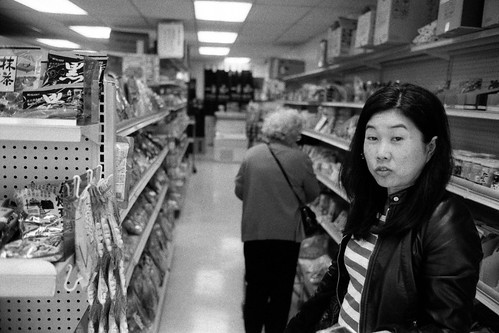
Dreaming in Monochrom(e) - Japanese Lunch and Grocery Shopping With My Wife

I enjoy having Japanese food with my wife. Recently, we went to the (very) small area in Bethesda, Maryland for lunch and to visit the Japanese grocer. I shot these two images with my Leica M4-2, 35mm f1.4 Summilux, and Ilford Delta 3200 film.
 
 
DMC-365.blogspot.com


Thursday, May 29, 2014

Morning in Jackson Square, New Orleans

Morning in Jackson Square, by Reed A. George
Leica M6 Titan, Summicron 35mm f2 v.3 Lens
Ilford Delta 3200 Film
 
As I sit writing this morning in my local Starbucks, this image reminds me of the wonderful coffee and chicory I had just enjoyed at Cafe Du Monde a few minutes before I shot it. I like Starbucks; I loved my Cafe Du Monde coffee that morning.
 
Morning is very quiet in the French Quarter; most of its denizens are at least semi-nocturnal. I always enjoy seeing new places early in the morning, to get a different perspective.
 
The sunlight was just coming up over the bank of the Mississippi River, which would be on the right in the photo above. I like how the edge of the light follows the intersection of the two sets of stairs, going off at different angles. While the steps in the lower section are fully light, those in the middle have light only on their edges. The pigeon at right is similarly edge-lit, which gives it a bit of a focal point in my opinion.
 
DMC-365.blogspot.com
 

Wednesday, May 28, 2014

The Hole in the Fence

The Hole in the Fence, by Reed A. George
Leica M6 Titan, 50mm f1.4 Summilux
Ilford Delta 3200 Film
 
I'm not sure why I like this scene, but something told me to capture it. Shot in the French Quarter, New Orleans.
DMC-365.blogspot.com
 

Tuesday, May 27, 2014

New Orleans Street Poet

Performing Poet, New Orleans, by Reed A. George
Leica M6 Titan, Summilux 50mm f1.4 Titanium Lens
Ilford Delta 3200 Film
 
I really love creative people. This poet was set up in the French Quarter, and would write about anything you asked. He was asking for donations if you liked what he wrote. I very much respect him for using his creativity and skill to make a living here.
 
I asked him to write about my daughter, Christine. I only told him a few things - her age, her interests, that we are very close. He asked me to give him 15 or 20 minutes. When I returned, here's what he had written:
 
"Christine
 
The paintball warrior
with art in her blood,
jumping into the flood of
emotions, running toward
adulthood.
 
A family well in tune,
a room, a canvas,
Christine sees with an
artist's eye, drinking in
the colors and textures,
becoming the young woman she
was meant to be.
 
A Renaissance woman in training
determined to put her mark
on the world,
one ball of paint at at time"
Perfect. Couldn't be more correct.
 
DMC-365.blogspot.com
 

Friday, April 18, 2014

Dreaming in Monochrom(e) - Ilford Delta 3200 Film at a Concert

A few weeks ago, I posted digital pictures from a Keel Power Trio concert at Gypsy Sally's in Washington, DC. They were all shot on the Nikon D700, and processed in Lightroom to emulate Ilford Delta 3200.
 
(Click Here) to see that post.
 
I also shot my "Dreaming in Monochrom(e)" camera, the Leica M4-2, loaded with the real deal, actual Ilford Delta 3200 film. Here are the results:


Larry Keel Power Trio, by Reed A. George
Leica M4-2, Carl Zeiss C-Sonnar 50mm f1.5 Lens
 
Man, I really love shooting the M4-2, and Delta 3200 opens up a lot of opportunities for low light shooting. I typically shoot it as if it were rated at 1600, and have it processed normally at The Darkroom (thedarkroom.com).
 
This "Dreaming in Monochrom(e)" project has taught me so much. First, it reopened my ability to shoot film at live music events. It also refocused me on a style of monochrome images that I think fit my chosen type of music very well. In fact, it even transformed how I process my digital images from these events.
 
But the experience is giving me the distinct feeling that restricting any given camera to black and white only may not be for me. While I love shooting the M4-2 with TMax 400 or Delta 3200, I sometimes leave it at home because I've temporarily dedicated it to this project and am not using it for color. I would not be happy with a several thousand dollar digital Leica Monochrom that I couldn't carry without reservation any time I want.
 
I feel very fortunate to be around such great musicians. What could be better than bringing together two passions - live music and photography?
My Friend, Polly, by Reed A. George
Leica M4-2, Carl Zeiss C-Sonnar 50mm f1.5 Lens
 
 
DMC-365.blogspot.com
 

Saturday, March 22, 2014

The Plank Stompers - Leica M9, Summilux 35mm, Emulating Ilford Delta 3200

 
The Plank Stompers, by Reed A. George
Leica M9, Leica Summilux 35mm f1.4 v.3 Lens
iso 1600, f2, 1/125 sec.
 
I think this shot of my friends' band, The Plank Stompers, really shows the character of the older 35mm Summilux lens. It's simultaneously sharp (look at the eyeglasses) and dreamy.
 
I shot this with my digital Leica M9, and emulated the look of Ilford Delta 3200 film as described (here).
 
I am really enjoying this look to my live music images.
 
DMC-365.blogspot.com


Friday, March 21, 2014

Dreaming in Monochrom(e) - Taarka (Live Music) on Ilford Delta 3200 Film

I recently wrote about how I wanted to try Ilford Delta 3200 for my live music photography.
 
(Click Here) to read about what sent me in this direction.
 
Well, here are my first results, from a great show by the band Taarka at the Barns of Rose Hill in Berryville, Virginia, on March 1, 2014.


I shot all of these with my Leica M4-2 (ca. 1978) and Zeiss Sonnar C 50mm f1.5 lens. On some of them I use just a tiny touch of fill flash (1/32 power on the compact Nikon SB30 flash). The shot immediately above is one of those. It helped to fill in some of the shadows.
 
I exposed all of these as if the Delta 3200 were rated at iso 1600, and had them developed by The Darkroom (thedarkroom.com) normally (as if shot at 3200). This decision was based on my previous experience with Delta 3200, where my negatives were a bit thin when shot at 3200. I found lots of references to shooting it this way (at 1600), and I agree.
 
So, how does Delta 3200 compare to Kodak TMax 400 pushed two stops to iso 1600? I think it did help me to tame the extreme high contrast of pushing TMax 400, which was one of my goals. The grain is more pronounced with Delta 3200, but I kind of like it. So, as far as I'm concerned, this experiment was a success. I'll certainly be shooting more Delta 3200.
 
(Click Here) to see how I've made presets in Lightroom to emulate Delta 3200 in my Leica M9 shots.
 
DMC-365.blogspot.com


Wednesday, March 19, 2014

Sunday Afternoon Jam Session - Leica M9 and Summilux 35mm Lens

As you may have seen, I've been exploring the use of high iso film in my Leica M4-2, specifically for shooting live music. I've also worked on emulating the look of that film in Lightroom, during post-processing of files shot on my digital Leica M9. Today's post shares more of those digital emulations.
 
(Click Here) to learn more about Jammin' Java.
 
Jammin' Java, a local music venue in Falls Church, Virginia, periodically has afternoon jam sessions. For this one, I only had an hour to spare, so had to leave early. Lighting was about as challenging as it gets, with bright open sunlight outside, black curtains in the windows and very low light inside. However, I think that made the light quite interesting. Shooting my Leica M9 and Summilux 35mm f1.4 v.3 lens wide open at iso 1600, here are some of the images I captured in the short time I was there.
 
Jammin' Java, by Reed A. George
 
That fourth image shows a strange internal reflection I was getting in the Summilux, even though I was using a lens hood. It was repeatable, but I've never had it happen before with this lens. The light coming in around the black curtains was very bright and very directional. I doubt I'll ever see that artifact again.
 
All shot wide open at f1.4, these images show the characteristics of the older Summilux lenses - quite a lot of flare and coma wide open, while remaining mostly sharp. This is one example of what people call the "Leica glow."
 
I don't mind these imperfections, and in fact added to them with my settings in Lightroom designed to emulate Ilford Delta 3200 film. Big increases in contrast and grain are what gets them there.
 
I'm having lots of fun with this new approach to music photography. I feel that I can get the same style now out of either real Delta 3200 film or my M9, shooting at iso 1600. Very nice.
 
DMC-365.blogspot.com


Sunday, March 16, 2014

Emulating Delta 3200 Film Look in Lightroom

I've been shooting real Ilford Delta 3200 film in my Leica M4-2 recently. I've been using it at live music events, and really like the look, especially shooting it at iso 1600 and developing it normally (at thedarkroom.com).
 
I've been interested in emulating that look with digital files, specifically with shots from my Leica M9, shot at iso 1600. Now that my M9 is back from Leica Service, I will likely carry the M9 and M4-2 together to some shows.
 
First, I decided to try the preset in Nik software's SilverEfex Pro. I didn't find it to be particularly comparable to my film results. So, I decided to work through adjustments in Lightroom 5 until I got something closer and save them as presets. I've now done that. Here's an example of a shot made with the M9 (at iso 200 in this case). The first version is what I would normally do to process this type of image from the M9 in black and white. The second is done using my Delta 3200 presets.
 
Charlie - "Normal" versus "Delta 3200" Versions, by Reed A. George
Leica M9, Leica Summilux 35mm f1.4 v.3 Lens
iso 200, f1.4, 1/125 sec.
 
For this particular shot, I strongly prefer the "Delta 3200" version.
 
I made two separate presets. Here are the adjustments I made in each.
 
Preset #1 - Delta 3200 Contrast Settings 
Contrast = +38
Clarity = +18

Preset #2 - Delta 3200 Grain and Sharpening Settings

Sharpening Amount +2
Sharpening Radius 0.7
Sharpening Detail 25
Sharpening Masking 0

NR Luminance 26
NR Detail 50
NR Contrast 0

Grain Amount 60
Grain Size 17
Roughness 94
 
 
I find it very interesting that adding this amount of grain and removing gray levels (in the form of increased contrast) can actually improve some images.
 
I hope others find the settings useful.
 
DMC-365.blogspot.com


Friday, March 7, 2014

About to Try Ilford Delta 3200 For My Concert Photography

As you may know, I've been shooting some concerts with black and white film in my Leica M4-2 film camera, as part of a series I'm calling "Dreaming in Monochrom(e)." The idea is that I'm exploring using one of my Leicas in monochrome only, exploring how I'd really work with a digital Leica Monochrom if I had one.
 
Anyway, I've been shooting concerts with Kodak TMax 400 black and white film, pushed two stops to iso 1600.
River Whyless, by Reed A. George
Leica M4-2, 50mm Zeiss C-Sonnar f1.5 Lens
Kodak TMax 400 Film Pushed to iso 1600
 
While I'm really liking this new look to my concert photography, I'm finding the extreme contrast that I get by pushing 400 speed film two stops a little bit limiting. So, I've decided to try some Ilford Delta 3200 black and white film. My experience with Delta 3200 in the past was that the negatives can be a little thin; I've had better luck shooting it at iso 1600 than the labeled 3200. Apparently, the native iso is more like 1000, but it's got extremely wide exposure tolerance.
 
So, I think I'll shoot it at 1600 this time.
 
Here's an example concert shot on Delta 3200by Kontantinos Bezios:
 
Image Source: http://kbesios.com/blog/wp-content/uploads/2012/09/20120904-105104.jpg
 
Konstantinos shot this on a medium format Plaubel 67 camera. I think the gray tones are very nice, and I hope to get a similar effect in my Leica.
 
(Click Here) to visit Konstantino's blog and see more of his work.
 
My only question now is whether or not I need to inform The Darkroom (my favorite mail-in film developer) that I shot Delta 3200 at 1600 or not. I tend to think not, as I read a lot of posts about shooting it at 1600 and developing normally.
 
By the way, if you want truly excellent film developing, (Click Here) to visit thedarkroom.com.
 
With any luck, I'll have some interesting new concert photos to share in a week or so!
 
DMC-365.blogspot.com