Showing posts with label DMC-GX1. Show all posts

Saturday, March 18, 2017

A (Holga) Day in the Life

I decided to pull out an old, neglected camera today, the cute little Panasonic Lumix DMC-GX1.  I was in the mood for some low-thought, low-effort shooting, so I mounted the 25mm f8 Holga plastic toy lens.  Here is what I captured today:


DMC-365.blogspot.com

Thursday, May 28, 2015

My Second Shot at Parkour Photography

Back in March, I had the opportunity to photograph some local practitioners of parkour, which is basically acrobatics in public places. (Click Here) to see that post, in which I used my Nikon F2SB and black and white film. I enjoyed it immensely, and they appreciated seeing the photos.
 
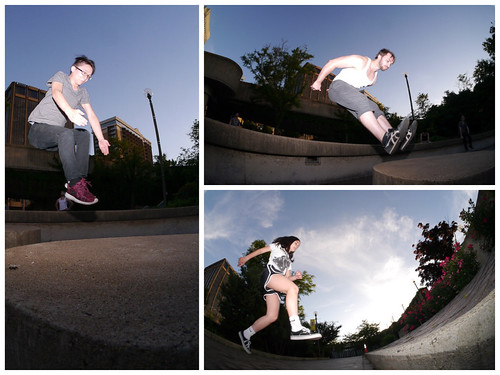
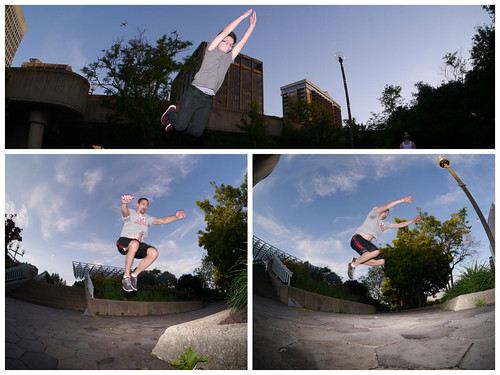
Last night, I went to one of the practice sessions for a larger group of DC Metro Parkour members. Here are some of the shots.
Parkour, by Reed A. George
 
While I shot a few of these images with my Nikon Df, most were made with my Micro 4/3 Lumix DMC-GX1 and Bower fisheye lens. All used flash to freeze the motion.
 
I recently came very close to selling off my Micro 4/3 gear, since I just have not been using it much. That, and the fact that the new Lumix LX100 (which also uses a Micro 4/3 sensor) is so capable, it replaces much of my interchangeable lens Micro 4/3 gear on travel, made me consider selling all of it. I did sell several pieces of gear, but decided to keep a smaller set of Micro 4/3 bodies and lenses. Specifically, I kept the most compact lenses, and the ones that are special in some way. The Bower fisheye is an example of that - I don't have a fisheye lens for any other camera system, so I kept it. It sure came in handy last night!
 
I'm planning to continue to work on creative techniques for photographing this exciting sport.
 
DMC-365.blogspot.com
 

Wednesday, November 19, 2014

And Now for Something Very Abstract

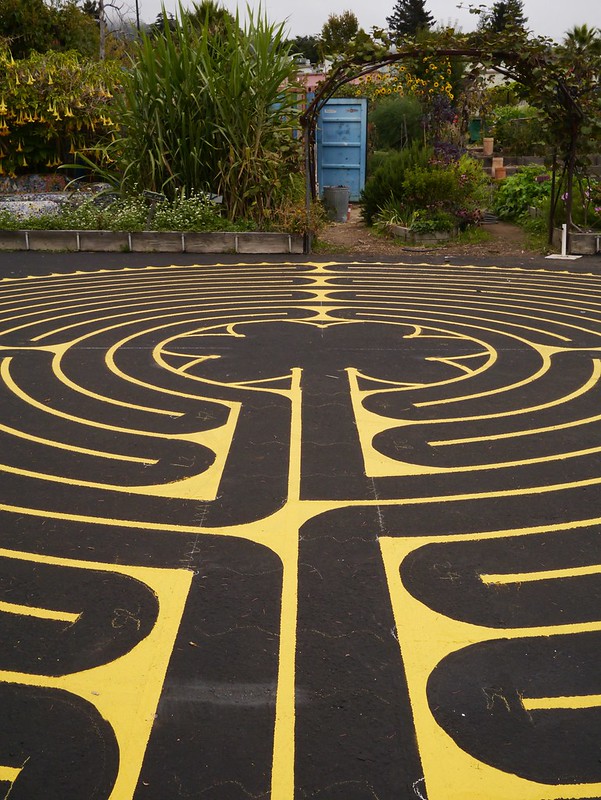
I have been into meditation for quite a while now. It helps me to keep my mind clear. On a trip to California earlier this year, I visited this labyrinth in an urban garden and did a little walking meditation, camera (Lumix GX7 and 20mm f1.7 lens) in hand.
Berkeley Labyrinth, by Reed A. George
 
I decided to capture some long exposures of the labyrinth markings as I walked twisting and turning through them. I attached a 3-stop neutral density (ND) filter, and shot several images at 1/4 second and f16.
 
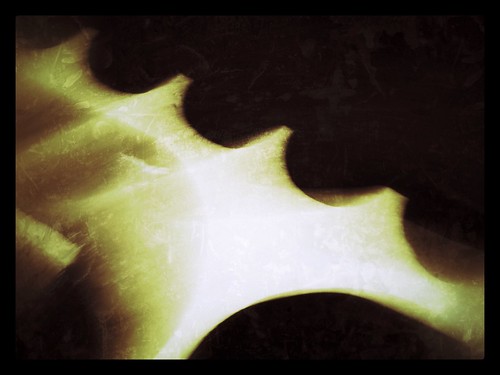
Then I manipulated the images in Snapseed on my iPad. Here are the results:


Quite abstract, I know. I feel that they do say something about the state of mind I was in during the walk.
 
DMC-365.blogspot.com


Tuesday, October 14, 2014

Thoughts on the Panasonic Lumix DMC-LX100

 
Size Comparison - DMC-GX7 (Left) v. DMC-LX100 (Right)
Image Source: http://www.dpreview.com/articles/0540594623/opinion-why-buy-a-panasonic-lx100-when-you-could-buy-a-gx7
 
I am a huge fan of the Panasonic Lumix DMC-LX7. I have owned LX-series cameras since the LX2 came out. They are absolutely amazing in terms of features, lens speed and quality (Pana-Leica lenses, including the DC Vario-Summilux f1.4-2.3 lens on the LX7), and compact design. Up until now, the only downside to the LX cameras has been small sensor size. Of course, that small sensor enabled some of the very positive features already mentioned, most clearly the overall compact design of both body and lens (not interchangeable). From the LX3 on, there has been an available accessory electronic viewfinder (EVF).
 
The newest LX-series camera is the DMC-LX100, which was announced a few weeks back. The LX100 addresses that small sensor question by putting a full-size Micro 4/3 sensor into a compact camera body. Not as small as the LX7, but still pocketable, the LX100 sports a 24-75mm equivalent f1.7-2.8 lens. And, the LX100 has a built in EVF. Very nice.
 
Knowing that the LX100 is a little larger than the LX7, I began to wonder if the GX1 Micro 4/3 camera I already have doesn't fill the space of the LX100. Both have the Micro 4/3 sensor, though the LX100 reported uses slightly less than the full sensor area. The GX1 is truly tiny, especially without the accessory EVF attached. Even with, it's quite small. But, I have nothing like a 24-75mm equivalent zoom with fast f1.7-2.8 aperture for the GX1. There's the 14-42 Series II kit lens, which is nothing short of great in my opinion, but it's a slow f3.5-5.6 aperture lens and makes the camera too big to fit in a pocket. The Lumix 12-35mm f2.8 zoom lens for Micro 4/3, slower than that on the LX100, quite expensive, and a lot larger, just doesn't compare.
 
If it weren't for the compact and fast lens on the LX100, I think the GX1 would make it completely redundant. As it is, that differentiates the LX100 as a very capable pocket camera from the GX1 or GX7 for that matter, which have the benefits of many great interchangeable lenses, but at the cost of size.
 
I still wonder how they can make this lens on a Micro 4/3 sensor as small as it is. Maybe I need to hold an LX100 to see just how compact it has remained (or not)
 
I decided to see if others had the same question about the overlap of the larger LX camera and the smallest Micro 4/3 cameras. Of course they did.
 
(Click Here) to read a comparison of the LX100 and GX7 on dpreview.com.
 
Author Damien Demolder comes to essentially the same conclusion as I did - the LX100 is indeed distinct from both the previous LX-series cameras, and the interchangeable lens G cameras.
 
At about $900, the LX100 is more expensive than the LX7 was. But, I'm pretty convinced that it's going to be worth every penny.
 
DMC-365.blogspot.com


Wednesday, August 27, 2014

More UC Berkeley Trees

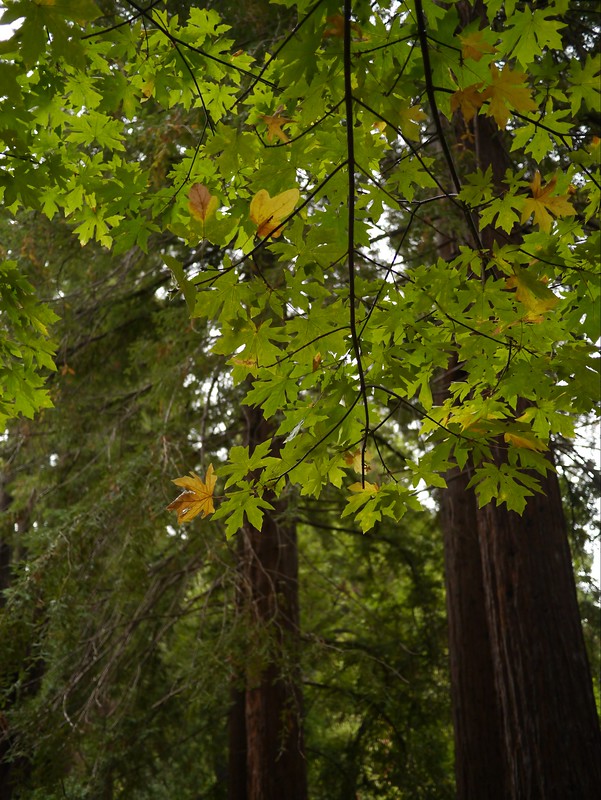
A couple of days back, I posted about the tree sit-in protest at Berkeley from 2006-2008. You may or may not think the protesters crazy for living in the trees for so long, but you have to admit that the landscape on the campus is beautiful and is worth protecting. Here's a shot I took on my walk around UC Berkeley.
 
Berkeley Trees, by Reed A. George
Panasonic Lumix DMC-GX1, Lumix 20mm f1.7 Lens
iso 400, f1.7, 1/640 sec.
 
This is an unedited image straight from the camera. I shot it wide open to render the leaves in the foreground sharp, and slightly blur the trees in the background.
 
DMC-365.blogspot.com
 

Monday, August 25, 2014

Hangin' Around in Berkeley - Quite Literally

While walking around the campus of the University of California, Berkeley, I met these young fellows.
 
Hanging Out in Berkeley, by Reed A. George
Panasonic Lumix DMC-GX1, Lumix 20mm f1.7 Lens
iso 400, f5.6, 1/100 sec.
 
Hanging out in trees has a dramatic history at UC Berkeley. History's longest tree sit-in, a protest against the university's decision to cut down a grove of 42 native trees to make way for a new athletic center, took place there. From December 2006 to September 2008, protesters literally lived in the treetops, getting supplies brought in, and waste taken out by volunteers. In the end, the protesters lost and the trees were cut down.
 
(Click Here) to read more about the tree sit-in on wikipedia.
 
These guys were doing nothing of the type, and I would guess were waiting for their parents who probably work at the university.
 
Gotta love Berkeley. At least I do.
 
DMC-365.blogspot.com
 

Sunday, July 20, 2014

Belizean Palm

 
Belizean Palm, by Reed A. George
Panasonic Lumix DMC-G1, Lumix 14-42mm f3.5-5.6 Series II Kit Zoom
iso 800, f11, 1/125 sec.
 
Getting up at sunrise on the final day of our vacation in Belize, I was rewarded with this image. It could only be taken at dawn or dusk, as the contrast would have been excessive at any other time.
 
The Series II 14-42mm kit zoom is really quite impressive. Paired with the diminuitive GX1, they can really deliver in good light such as this.
 
DMC-365.blogspot.com

Tuesday, June 24, 2014

Holga 25mm f8 Lens on Lumix Micro 4/3 - Down by the Riverside

I attended the Shenandoah Riverside Festival in Brunswick, Maryland last weekend.
 
(Click Here) to read a little about the festival, and hosting organization, Earth Korps.
 
In addition to my Nikon D700 kit, I brought along the tiny Panasonic Lumix DMC-GX1 and a couple of specialty lenses, including a plastic toy lens, the Holga 25mm f8. I had some fun with that, and here are the results.


And here's my favorite:
 
Fun with the Holga 25mm f8 Lens for Micro 4/3, by Reed A. George
All Images Made with Panasonic Lumix DMC-GX1
 
For $20, the Holga lens is worth a try. See below for a link to yours on Amazon.
 
Recently, I've been having fun with low tech. Not only cameras that were once state-of-the-art but happen to be from the age of film, but also things that started out low tech, like the Holga lens and my pinhole camera.
 
I've got an exhibit in mind along these lines. Just a concept, I need to work through writing an artist's statement and see if it holds up. It's time for a new project.
 
DMC-365.blogspot.com


Monday, April 28, 2014

Petroglyph National Monument, New Mexico

One final post of images from my recent trip to Albuquerque, New Mexico. Very close to my hotel, Petroglyph National Monument offered a unique early morning walk before my business meetings started.
 
Petroglyphs are images by native people of the area, made by chipping away at the surface of the basalt rock in the area. The basalt stones were created about 200,000 years ago, when lava flowed 5-50 feet thick over a series of six separate eruptions. These boulders have a thin dark patina layer on their surface, caused by water, sun, temperature extremes, and microbes. It was by chipping away at the outer layer and exposing the lighter stone color underneath that native Americans made the petroglyph images.
 
Petroglyph on the Mesa Top, by Reed A. George
Panasonic Lumix DMC-GX7, Bower 7.5mm f3.5 Fisheye Lens
iso 400, f-stop unrecorded, 1/250 sec.
 
Most of these petroglyphs were made 400-700 years ago. Those from that period ("Rio Grande" style) include human figures, masks, hands, feet, as well as animal shapes and tracks, and geometric designs. Others date back as far as 3,000 years.
 
Various Petroglyphs, by Reed A. George
Panasonic Lumix DMC-G1, Pana-Leica Macro-Elmarit 45mm f2.8 Lens
 
As I've written in other posts, I found the Bower fisheye lens to be very useful on this trip. This was a bit of a surprise for me, as I've always thought of fisheye lenses as gimmicks, for special effects only. On this walk, I carried the GX7 with the fisheye attached, and my backup Micro 4/3 body, the GX1, with the Macro-Elmarit. This made for a very good combination in this particular setting.
 
DMC-365.blogspot.com
 

Saturday, April 12, 2014

New Mexican Art, Shot With Lumix DMC-GX7 Micro 4/3 Camera

I've been posting a few images from New Mexico, including a couple of fisheye images. Well, here are a few more, probably the last I'll post from this particular trip.
 
Old and New, by Reed A. George
Panasonic Lumix DMC-GX7, Lumix 14-42mm f3.5-5.6 Series II Kit Lens at 31mm
iso 200, f22, 1/200 sec.
 
This was shot outside an art museum. I very much like the contrast of the modern art right up front, and the more traditional looking sculpture in the background. After capturing this, I decided to get up close and personal with the stature, taking advantage of the fisheye lens' capability of simultaneously showing detail of the sculpture and the distinctly Southwestern architecture and courtyard surrounding it.
 
Native, by Reed A. George
Panasonic Lumix DMC-GX7, Bower 7.5mm f3.5 Fisheye Lens
iso 200, f-stop unrecorded (f8?), 1/1000 sec.
 
I really like how the fisheye captured this scene. I don't consider this to be only a special effect lens, as I had anticipated. Yes, there is quite a lot of distortion of the lines in the building, but I don't think it takes much away from the composition. I would like to compare this image to what I would get with the Voigtlander 12mm f5.6 (rectilinear, not fisheye) lens on a Leica M body. Less distortion, and even a little wider angle would be expected, but I don't know if I'd like the image as much or more. Sounds like a good test for the future.
 
Finally, a purely tourist-targeted scene:
 
Southwestern Kitsch, by Reed A. George
Panasonic Lumix DMC-GX7, Lumix 14-42mm f3.5-5.6 Series II Kit Lens at 34mm
iso 200, f11, 1/640 sec.
I don't mind that this is a stereotypical tourist trap scene, including some fake, painted peppers (the multicolor ones; the red ones are real). It's part of the environment in New Mexico now. So, why not show it?
 
One of my goals on this short trip was to see if I can rely on the GX7 for good travel photography. Carrying the GX7 and the even smaller GX1 as a backup body worked very well for me. I'm thoroughly impressed with the image quality of the GX7, if not the handling. I still don't feel that it quite fits my hands. But, it's pretty darned good.
 
DMC-365.blogspot.com
 

Tuesday, April 8, 2014

I Love Meeting Interesting People When I Travel

This is Doc. I met him on my recent trip to New Mexico.
 
Doc, by Reed A. George
Panasonic Lumix DMC-GX7, Lumix 14-42mm f3.5-5.6 Series II Lens at 33mm
iso 200, f5.4, 1/200 sec.
 
Doc had just gotten out of the hospital and ventured into town looking for work. He loves living in New Mexico, and it shows.
 
Doc's Hands, by Reed A. George
Panasonic Lumix DMC-GX7, Lumix 14-42mm f3.5-5.6 Series II Lens at 29mm
iso 200, f5.4, 1/320 sec.
 
As you can see, I was using my Lumix DMC-GX7 on this trip. With the Series II kit zoom mounted, I think of it as a reasonable stand-in for the Leica X-Vario. I find the lens specifications to be extremely similar. While the GX7 has the disadvantage of a smaller sensor, it has the major advantage of interchangeable lenses, making it a much more flexible system camera. I'm quite impressed with the performance of the Series II kit lens.
 
One of my goals on this trip was to bond with the GX7, which I've had for a while now, and used very little. Did I meet that goal? Well, to some extent, yes. I now better respect the imaging capability of the GX7, which is really quite tremendous. I also reminded myself just how compact and light the Micro 4/3 kits can be. I carried two bodies (GX7, GX1), several lenses: a Bower fisheye 7.5mm f3.5, Lumix 20mm f1.7, Lumix 14mm f2.5, Olympus 75mm f1.8, 14-42mm Series II kit lens, a Pentax 55mm f1.8 lens and adapter (just for fun), and a small flash, all in a single messenger bag. It was light and easy to carry.
 
That said, the form factor of the GX7 is just not ideal for me. Can I live with it? Yes, but I do inadvertently hit buttons sometimes. I find the GX1 fits my hand better. Maybe one of the SLR-shaped Lumix cameras, perhaps the DMC-G6, would suit me better. But, the performance in such a small package in the GX series cameras is truly impressive to me.
 
More results to come from the GX7 and GX1 on this trip.
 
DMC-365.blogspot.com
 

Monday, March 31, 2014

Fisheye Image - Zen Heart - Panasonic Lumix DMC-GX7 and Bower 7.5mm Fisheye Lens

As I write this, I'm on the final day of a trip to New Mexico. I've had precious little free time, which means the meeting I'm attending is actually pretty good.
 
I decided to make this a "Micro 4/3 only" trip, in an attempt to bond with my new GX7. I must say it's working. The image quality from this camera is stunning. I'm still not completely sold on how it feels in my hand, actually preferring the feel of either the earlier DMC-GX1 (which is also along for the trip), or one of the more SLR-shaped Lumix cameras (which I've now sold off).
 
Here's a shot I made at the Upaya Zen Center in Santa Fe:
 
Zen Heart, by Reed A. George
Panasonic Lumix DMC-GX7, Bower 7.5mm f3.5 Fisheye lens
 
I visited the Center for an early morning meditation session (7:00 am). It was really worth the drive up from Albuquerque, where I'm staying. I was back in time for my meeting.
 
(Click Here) to read about Upaya Zen Center. They host a no-charge meditation session every morning.
 
This silver heart pendant (about 2" in size) was attached to the fence around Upaya's community garden. My lens was about 4" away from it, which is one of the cool features of the fisheye. You can get very close focus. In the background, you can see the Center and the base of their windmill (on left) and prayer flags on the back fence (on right). I like how this single image has the focal point of the heart, but also includes a lot of information about the place.
 
I really am impressed by the image quality of the GX7. Now if I can just get comfortable with it in my hand.
 
DMC-365.blogspot.com


Tuesday, February 18, 2014

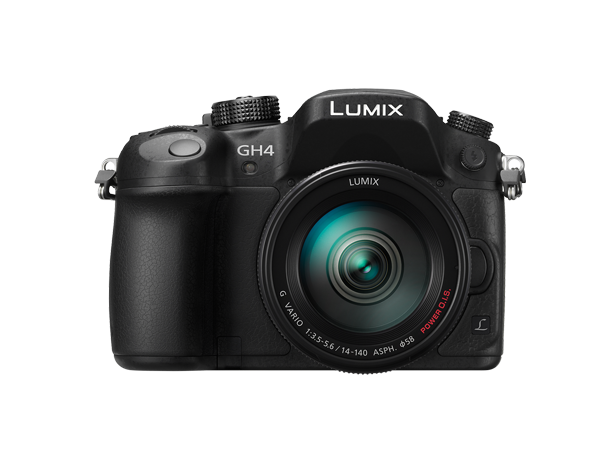
New Panasonic Micro 4/3 Hybrid Camera - the DMC-GH4

Image Source: http://www.panasonic.com/uk/consumer/cameras-camcorders/lumix-g-compact-system-cameras-dslm/dmc-gh4heb.html?utm_source=eloqua_audience-all&utm_medium=email&utm_content=newsletter/link-GH4page-1&utm_campaign=newsletter_2014-0212_LumixGH4-launch-PCME&elq=~~eloqua..type--emailfield..syntax--recipientid~~&elqCampaignId=~~eloqua..type--campaign..campaignid--0..fieldname--id~~


Well, you've probably see my recent written meanderings about my own connection to and future with the Micro 4/3 system. The way I feel at the moment is that I have yet to really bond with my relatively new Panasonic Lumix DMC-GX7 body, but have not really given it a chance yet. I'm not thrilled with the form factor, with the built-in EVF way over at the end of the camera body, and buttons that seem to get in my way. The few image results I have so far are quite impressive, however. So, I'm wondering if I'd be happier with one of the faux SLR-type bodies.
 
Until now, the DMC-GH3 was the latest in this style of camera, and has a lot of shared features with the GX7. Now, the GH4 has been announced. So, what's to like about it?
 
The biggest feature being emphasized at this point is "4k" video capability. If you know me, you know that video is not really my gig. I don't even know what 4k is or means. But, it's to be expected that video capability leads the features of a GH series camera; they have always been Panasonic's hybrid still/video line. It's a little difficult to tell from the specs if this camera really has any noise / high iso performance advantage over the GH3. However, that said, the sample gallery of still images is very impressive.
 
(Click Here) to see work by Bence Mate, Daniel Berehulak, and Takehito Miyatake (all still photos) and video by Bryan Harvey. For me, Bence Mate's bird images are quite impressive.
 
Honestly, though, I have not explored my GX7 and 100-300mm f4-5.6 OIS lens together. My guess is I can make some similarly impressive images with that. If I can get over the form factor, that is.
 
So, I'm resolved to doing a trip with only Micro 4/3 gear, relying on my GX7 (and GX1 as a second body) to do its best to impress me. I'd really like to fall in love with that camera. If it doesn't happen, I may have to trade the GX7 for a different Micro 4/3 body. It's not a question of image quality, it's more about useability and comfort with controls.
 
We'll see how it goes.
 
DMC-365.blogspot.com


Saturday, February 15, 2014

Still on the Edge with Micro 4/3 and Lumix DMC-GX7

Ice, by Reed A. George
Panasonic Lumix DMC-GX7, 14-42mm Series II Kit Lens at 32mm
iso 200, f5.4, 1/400 sec.
 
I have been buying a few cameras lately. Also, I currently have four cameras out for service or cleaning: my Leica M9 (which deserved it after a year of Whole Lotta Leica), my beloved Leica M3 double stroke (which locked up and went to Youxin for a minor adjustment), a IIIC wartime camera (these just keep popping up for good prices, and usually need a CLA), and my M6 Titan (which started making a squealing sound at 1/15 sec and went for what I hope is a simple lubrication).
 
If you read my blog much, you probably also know that I've been going through somewhat of a renaissance with film and film cameras, falling back in love with old Nikon SLRs like the F2 and my very first Leica, the M4-2.
 
Well, all of this has me wondering where Micro 4/3 fits in my photography. It was my strong focus for the first year of DMC-365. Currently, I have a DMC-GX7 and DMC-GX1 as a backup. I also have an amazing set of Lumix, Olympus, and Pana-Leica lenses. Yesterday, I was tallying up all of my Micro 4/3 gear, with a mind to selling and reducing my camera gear by one format. Simplifying can be good. However, as soon as I was done listing, I started thinking about what I'd be giving up - first to mind was the 100-300mm zoom with OIS - this is simply the most amazing handheld birding lens I've ever seen.
 
 
Barred Owl (Strix varia), by Reed A. George
Panasonic Lumix DMC-G3, Lumix 100-300mm f4-5.6 OIS Lens
iso 400, f6.3, 1/800 sec


And there are many others. The Summilux 25mm f1.4 is a gorgeous lens. The Lumix 20mm f1.7 is a true miniature wonder. The Olympus 75mm f1.8 is simply amazing. So, I just have not yet reached the point of giving up on the format.

One thing's for sure - before I sell off my Micro 4/3 kit, I need to make sure I'm out for good. Getting into and out of formats can be very expensive. New bodies (like the GH4) keep coming, and Micro 4/3 will only improve from here.
I did read a post by David Taylor Hughes, another GX7 owner, who's sort of in the same frame of mind as me.
(Click Here) to read David's post on SoundImagePlus.
 
Maybe this is just me doing some hand-wringing with the funds I've been spending on Leica gear lately.
 
I simply have not fallen for the GX7 yet. Maybe it's the form factor, as I do prefer the feel of the G3 (SLR-emulating) body to that of the GX7. The GX7 makes me feel like I'm shooting a pocket camera - all plastic and electronics. So, I think my current issues may be more related to form than function.

So, here's what I'm going to do. I have a trip to New Mexico coming up next month. It will be my concentrated effort to fall in love with the GX7, and Micro 4/3 again. I will not take any other gear with me, and will treat my Micro 4/3 kit as I intended when I started it - as a travel kit. Hopefully, I'll come back once again in love with Micro 4/3. If not, I may have to trade the GX7 for something else, like a GH3, or get out of Micro 4/3 altogether.

One telling fact, though. I have another trip planned in May, a pure photography trip to New Orleans. I am already 95% sure that will be a Leica trip, and not Micro 4/3. I think that may say where my true love lies.
 
DMC-365.blogspot.com


Sunday, January 12, 2014

Now It's a Tradition - the Annual New Year's Oseichi (Japanese Food) Post

Third year in a row, I like to share my family's tradition of eating Japanese holiday food at breakfast on January first. This year, I shot it with my new Bower fisheye lens (Micro 4/3). I've been looking at a fisheye lens for a couple of years, but decided it would not be used often enough to justify the $300-$700 cost (depending on which brand I chose). This holiday season, it dropped to $200, including shipping, so I bought a Bower manual focus fisheye lens.
 
These were all shot with the Bower lens on my Panasonic Lumix DMC-GX1:
 
Oseichi Ryori (Japanese Traditional Food), by Reed A. George
Panasonic Lumix DMC-GX1, Bower 7.5mm f3.5 Fisheye Lens
 
Happy Family, New Years Day, by Reed A. George
Panasonic Lumix DMC-GX1, Bower 7.5mm f3.5 Fisheye Lens
 
Salmon and Salmon Eggs, by Reed A. George

Panasonic Lumix DMC-GX1, Bower 7.5mm f3.5 Fisheye Lens

 
Hope everyone's having a nice year so far!
 
DMC-365.blogspot.com


Saturday, December 28, 2013

Too Much Emphasis on Low Light? Look for Good Light

 
Key West Cemetery, by Reed A. George
Lumix DMC-GX1
 
It really is easy to get caught up in technical capabilities of our cameras, focusing on what they can do in near darkness, rather than looking for good light, wherever it may be found. Frequently, the low light that necessitates super high iso and low noise performance isn't really that good.
 
Why am I thinking about this? I read a post along these lines on prosophos.com.
 
(Click Here) to read that post.
 
It reminds me how much we did (and some of us still do) with film cameras, where the realistic limit of iso is about 400, okay maybe 800 or 1600 by pushing the film. Delta 3200 was always so grainy at that iso setting, I always used it at 1600 max. Today, a digital camera that shows noise at 1600 is looked down upon by most.
 
Anyway, this inspires me to worry less about low light, f1.4, and iso 6400. I'll get out and look for some good light.
 
DMC-365.blogspot.com


Tuesday, October 15, 2013

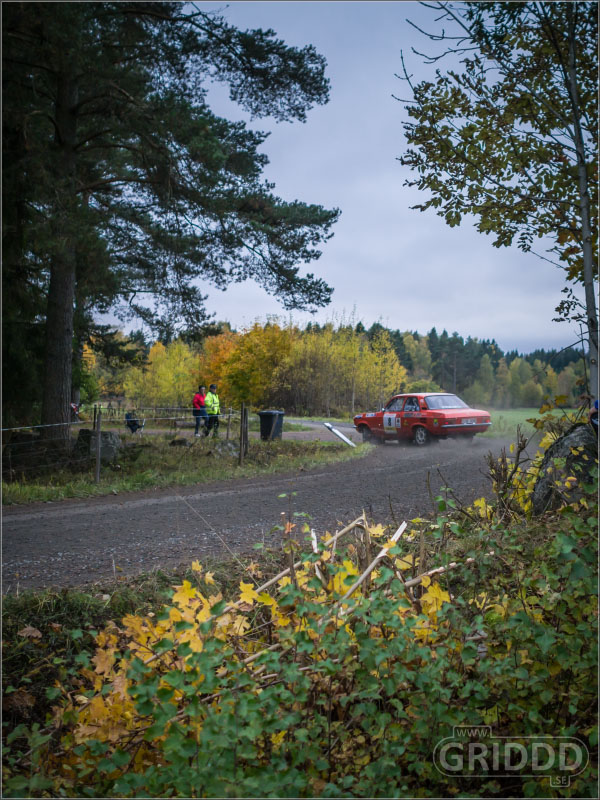
Swedish Rally Championship, Photographed on Micro 4/3 by Lars Martensson

 
Image Source: http://www.mu-43.com/showthread.php?p=535446#post535446

Swedish photographer Lars Martensson made the image above with a Panasonic Lumix DMC-GX1, Micro 4/3 camera, and Olympus 17mm lens. He didn't say whether it was the original Oly 17mm f2.8, a much-maligned but probably very capable lens, or the newer f1.8 lens (which gets great reviews).

(Click Here) to see all of the pictures Lars posted on mu-43.com.

(Click Here) to see Lars Martensson's web page.

I appreciate a photographer who can put a wide angle lens to good use in an event like this. Martensson also used a 300mm lens on an Olympus E-M5, but I think his wide angle usage adds significantly to the series. My first thought would be to grab a telephoto, and I may bring something wider to shoot the crowd, drivers up close, etc. That would be conventional. Lars shows us how to do that, and still make some unique images using the wide angle lens.

As I've mentioned, I've made the decision to add Micro 4/3 back into my active kit very soon. Just waiting on delivery of my new DMC-GX7.

DMC-365.blogspot.com


Friday, August 2, 2013

Finally! The Panasonic Lumix DMC-GX7 is Announced and Looks Great!

 
Image Source:
http://www.dpreview.com/news/2013/08/01/panasonic-reveals-lumix-dmc-gx7-enthusiast-mirrorless-camera
 
I have not been using my Micro 4/3 camera system much at all this year. Focusing more on Leica and film cameras, I just have not had the time to use it all. I did invest in a DMC-GX1 for a pittance earlier in the year, and took it along on a trip to Key West, Florida.
 
(Click Here) to see some shots I made with the GX1 on that trip.
 
The GX1 works very, very well in my hands. But, we Panasonic fans have been waiting for a next generation of GX cameras, bringing the sensors up to date with the state of the art, especially as it concerns high iso performance. Well, it's finally here, or at least announced.
 
(Click Here) to read about it on dpreview.com
 
What are the great features? Well, first, the GX7 reportedly has an all-new sensor with improved signal-to-noise performance. This means that it will indeed perform better at high iso settings (low light), with less noise. The maximum iso setting is now 25,600, though I would bet that the maximum useable setting is somewhat lower than that, if you don't want to deal with a lot of sensor noise. We'll see.
 
It also has in-body stabilization, which has been in Olympus cameras for some time, but never in a Lumix Micro 4/3 body. I hope this will work well with my older Micro 4/3 lenses that have stabilization built into the lens.
 
The next GX7 also has a built-in electronic viewfinder (EVF), rather than the accessory finders required for previous GX cameras.
 
Finally, the GX7 provides "focus peaking," which allows you to know when you're in focus when you're using manual focus.
 
These cameras will be in high demand for some time. They'll sell lots of them. I can't wait to see just how good the new sensor is.
 
There's more news from Panasonic as well. They have announced a new Pana-Leica "Nocticron" 42.5mm f1.2 super fast lens. This will be a wonderful portrait lens, taking advantage of the compact Micro 4/3 design, yet with a sufficiently fast maximum aperture to produce shallow depth of field, a common desire in portraiture. More on that later.
 
DMC-365.blogspot.com
 

Tuesday, July 30, 2013

To Crop or Not to Crop?

I am a believer in cropping images if needed. I know, many purists believe that cropping represents a failure to compose properly. However, if you think back to when cameras had primitive means of framing (think sports finders on folding medium format cameras), it would be nearly inevitable that you need to crop sometimes.
 
Here's an example where I think a crop may make the image more interesting. Let's start with the full image.
 
Old Truck, Key West, by Reed A. George
Panasonic Lumix DMC-GX1, Lumix 20mm f1.7 Lens
iso 200, f5.6, 1/1250 sec
 
 
I kind of like this shot. I think the full image shows enough of the truck body, even a little of the steering wheel, to provide context; you know it's a truck.
 
Now, here's a crop:
 
Cropped
 
Actually, an even tighter crop really shows the cracks in a more dramatic way, but I settled for this compromise between a complete abstract of just the cracks, and the wider shot above.
 
Which do you like best?

I did finally shoot my Lumix DMC-GX1 a little on my trip to Key West. It's a wonderful little camera.

DMC-365.blogspot.com

DMC-GX1 for an unbelievably low price at Amazon:


Tuesday, July 23, 2013

Key West Cemetery - Shot With Panasonic Lumix DMC-GX1

When in Key West, I always like to look for hints of the local culture, which all too often get covered over with the trappings of tourism. The historic Key West cemetery is always worth a quick visit. This time, I grabbed my Lumix DMC-GX1, 20mm f1.7 lens, and Canon LTM 135mm f3.5 lens and headed there for an early morning walk.
 
Rather than try to paraphrase, I'll quote directly from the historic marker at the cemetery to provide some background:
 
"Key West Cemetery was founded in 1847 following a hurricane the previous year that destroyed the earlier cemetery located near present day Higgs Beach. To protect from future flooding the 10-acre cemetery was located here on Solares Hill, the highest natural elevation in Key West. An estimated 75,000 people are interred here, divided among parcels that reflect the cultural diversity that continues to characterize the city of Key West today. The cemetery contains a historic Catholic section, Jewish section, the USS Maine plot dedicated in 1900, and the Los Martires de Cuba, a memorial for those who fought in the 1868 Cuban revolution. In addition to these defined areas, African Americans, Cubans and Americans, rich and poor, are interred throughout. In-ground and crypt style graves range from simple concrete copings filled with soil to elaborate monnuments. Plot enclosures of wrought iron, wood, or concrete were often used to mark family plots.
A Florida Heritage Site Sponsored by the Historic Florida Keys Foundation, The City of Key West, and the Florida Department of State"
 
Let's take a look at the place.
Key West Cemetery, by Reed A. George
Panasonic Lumix DMC-GX1, Lumix 20mm f1.7 Lens
iso 160, f2.8, 1/400 sec


Fallen, by Reed A. George
Panasonic Lumix DMC-GX1, Lumix 20mm f1.7 Lens
iso 160, f2.8, 1/40 sec


Gravestones and Chickens, by Reed A. George
Panasonic Lumix DMC-GX1, Lumix 20mm f1.7 Lens
iso 160, f2.8, 1/320 sec


Family Plots, by Reed A. George
Panasonic Lumix DMC-GX1, Lumix 20mm f1.7 Lens
iso 160, f2, 1/1000 sec
 
Occupying a relatively small area of land, completely surrounded by residential neighborhood, this is a place of visual details. For example, the flowers really stand out from the dull gray stone.
Pink Flowers, by Reed A. George
Panasonic Lumix DMC-GX1, Lumix 20mm f1.7 Lens
iso 160, f1.7, 1/640 sec
 

Sleeping Angel, by Reed A. George
Panasonic Lumix DMC-GX1, Lumix 20mm f1.7 Lens
iso 160, f1.7, 1/1250 sec


This next shot was made with the adapted Canon 135mm f3.5 LTM lens. I'm amazed by the sharpness of this old lens. I also really like the out of focus areas in the background.

Isolated, by Reed A. George
Panasonic Lumix DMC-GX1, Canon LTM 135mm f3.5 Lens
iso 160, f4, 1/200 sec
 
Thoughtful, by Reed A. George
Panasonic Lumix DMC-GX1, Lumix 20mm f1.7 Lens
iso 160, f5.6, 1/40 sec
Cross, by Reed A. George
Panasonic Lumix DMC-GX1, Lumix 20mm f1.7 Lens
iso 160, f1.7, 1/640 sec
 
Peaceful, by Reed A. George
Panasonic Lumix DMC-GX1, Lumix 20mm f1.7 Lens
iso 160, f1.7, 1/800 sec
 
Key West is such a funky place. It's somehow comforting to know that even in death, you can retain a little uniqueness. The cemetery here is another thing about Key West that reminds me of another unique place, New Orleans.
DMC-365.blogspot.com