Showing posts with label design. Show all posts

Thursday, August 14, 2014

The Nikon FM2 - One of the Best SLRs Ever Made

I haven't shot my Nikon FM2 in a long time. Too long. Here's a shot I made with it in 2011, most likely the last time I used it.
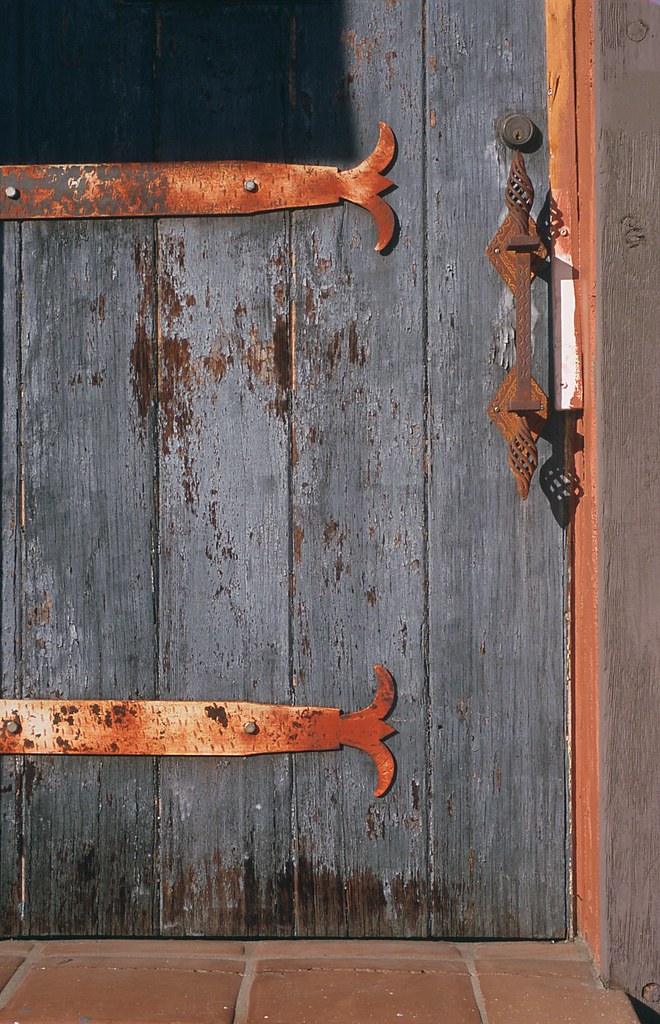
Southern California Doorway, by Reed A. George
Nikon FM2, Fuji Sensia Slide Film
 
The FM2 is sort of the perfect result of one branch of SLR evolution, in my opinion. Not the same branch that ultimately ended up in the Nikon F6, a highly technical feat of automation and speed, the FM2 is the result of optimization of simplicity and effectiveness.
 
Now, some may argue that the FM3A was the successor to the FM2, and continued the evolution. In fact, that's the official word from Nikon. (Click Here) to read a little about the FM2 on Nikon's page. I have no experience with the FM3A, so am not in a position to say. However, it's hard to imagine that it does what the FM2 does only better. I suppose I owe it to myself to check that out.
 
In a way, I think of the FM2 as similar to the Leica rangefinder. While it benefitted from lots of experience in design and implementation, it didn't become a collection of features and gadgets. Not by any stretch of the imagination.
 
I started thinking about my FM2 because I read a post by Nick DeMarco on Rangefinder Chronicles, about Nick borrowing his father's FM2, and how much he enjoyed it.
 
(Click Here) to read Nick's post.
 
I have no reason to put off shooting my FM2. I know for a fact that it's sitting there, where it's been for the past three years, 100% ready to go and shoot. I'm even sure that the battery (which is unnecessary, anyway) is still charged and ready to go.
 
DMC-365.blogspot.com

Wednesday, October 16, 2013

New Lumix G Vario 14-42mm Series II Kit Lens - Cousin To the Leica X Vario Lens?

Indulge me in a little fantasy, please. Read on.
 
I have decided to jump back into Micro 4/3 in a big way, with the new DMC-GX7 from Panasonic. I packed up my Panasonic Lumix DMC-GF1 and G3, sending them off to KEH for resale. Hard to see them go, but it was time. So now I'll be shooting with the new GX7, and the GX1 as my backup body. Two tiny, full-featured cameras.
 
Panasonic Lumix DMC-GX7
Image Source: shop.panasonic.com
 
I happened to order the GX7 with the new Panasonic kit lens, the 14-42mm G Vario Series II. Interested to see what had changed from the last version of the cheap 14-42mm Lumix kit zoom, I was intrigued to find that they've made it smaller, and reportedly better, through the use of two aspheric elements. This rang a bell in my head.
 
Here's how Panasonic describes the new lens:
 
"Lens Construction:  9 elements in 8 groups (2 aspherical lenses)"
 
Intrigued, I decided to look up the new, highly-acclaimed zoom on Leica's new X Vario camera. Here's how Leica describes their lens:
 
"Lens Leica Vario-Elmar 18-46 mm f/3.5-6.4 ASPH. (corresponds to 28-70 mm in 35 mm format),
9 lenses in 8 groups, 2 aspherical lenses."
Now, I know they're not the same lens. They're not the same focal range, but they're close. And, the Leica lens must cover the larger APS-C sensor. But, it does seem a little ironic to me that they have the same number of elements, groups, and aspheric lenses, especially since we know Panasonic and Leica collaborate at some level, as evidenced by the excellent Pana-Leica lenses (the 14-42 is not one of those, and is branded solely by Panasonic).
 
So, I'm going into this with the probably-unrealistic belief that my new kit zoom has some influence in design from the X Vario!
 
DMC-365.blogspot.com
 

Monday, September 2, 2013

Moon Hoon House - A Virtual "Artist Date" Study in Design

I'm pretty disciplined about some things in my life, writing included. I write every day here on my blog. I also write a journal every day. In four years, I have not missed two consecutive days of writing.
 
Today, I'm just uninspired by photographic equipment and recent images in the sites I follow. I need something different.
 
So, I decided to take a virtual "Artist Date." One of my inspirations for me beginning the writing life was the excellent book by Julia Cameron, The Artist's Way. The book is really worth reading, but boils down to two areas of focus - "Morning Pages" and "Artist Dates." Morning pages consist of writing three pages in a journal, long-hand (as in with a pen) every morning. Artist dates are roughly one hour diversions, by yourself, to explore something creative that is outside your primary interest area. I have been religious about writing every day, less so about artist dates. So, when I literally couldn't find anything photographic to write about this morning, I decided to do an artist date virtually.
 
A quick search in Feedsy led me to some design-related sites. Here's the most interesting thing I found - a wild custom home in Korea:
 
Image Source: http://www.yatzer.com/conan-house-by-moon-hoon
 
A really cool characteristic is the stairway - open, non-uniform spacing and arrangement, it's one of the "playful architecture" features of the house.


Image Source: http://www.yatzer.com/conan-house-by-moon-hoon
 
I could live in a place like this. Weird, but certainly not dull.
 
(Click Here) to read more about the house.
 
I'm sure you didn't come to my blog this morning to read about a custom house in Korea. Sometimes I have to go off a little, just to keep my own interest up. Design is a great subject to study, to keep things churning in your creative mind. When you think of a house, you probably think of the square with a triangular roof on top, like you draw as a child. This house design challenges that, making it something to explore. It is also a little disorienting, giving a feeling of instability. Instability can be good.
 
Thanks for taking a look. Try Julia Cameron's book (Amazon link below). It may stimulate you to think a little differently.
 
DMC-365.blogspot.com


Saturday, January 12, 2013

Studying Color - The Color Wheel and Complementary Colors

 
The Color Wheel
Image Source: http://en.wikipedia.org/wiki/Color_wheel
 
Reading a new series of posts about on JPG Magazine's blog has me remembering middle school art class, and thinking about color schemes.
 
(Click Here) to read about the complementary colors red and green (for the holidays) on JPG Magazine's blog.
 
Complementary colors are defined as those that will make gray when combined. In a simpler sense, they are colors that lie opposite (or near opposite) one another on the color wheel. Use of complementary colors can make for dramatic images.
 
There are some very nice examples in the blog link above.
 
So do I have any examples of using complementary colors in my own work? Here's one:
 
Koi and Lily, by Reed A. George
Panasonic Lumix DMC-G1, Lumix 45-200mm f4-5.6 at 97mm
iso 100, f5.6, 1/60 sec
 
And here's one you may have seen posted here before.
 
Beautiful Obsolesence, by Reed A. George
Panasonic Lumix DMC-G3, Pana-Leica 25mm f1.4 Summilux
iso 160, f5.6, 1/160 sec
 
I like the JPG blog. There is already a follow-up post on other complementary colors. I don't think that I consciously picked this color combination in the shots above, but they must have caught my eye.
 
DMC-365.blogspot.com


Sunday, October 7, 2012

More Vicarious Travel Through Other Photographers - Lapland, This Time.

 
Swedish Lapland, by Lasse Eisele on dpreview.com
Image Source: http://forums.dpreview.com/forums/read.asp?forum=1041&message=42573637
 
This is a series you must see. Lasse Eisele shared an impressive series of landscapes shot with the Lumix DMC-G3 (and Olympus lenses) in Swedish Lapland. The images are just gorgeous.
 
(Click Here) to see all of the images on dpreview.com.
 
Lasse expresses general overall satisfaction with the G3, yet comments on weak dynamic range and clumsiness of the design of the camera controls. I can add that the G3 indeed does do better in low contrast situations, if you're looking for tonal range. Of course, that's true of any film or sensor, but it is an area for improvement in the G3 sensor.
 
Related to accidentally hitting controls that you don't want to hit, I feel the pain. I have more than one accidental video, for example, which causes a several second delay in getting back to still photographs. You can turn the button off in the menu, but then you can't respond quickly when you do want to shoot a video.
 
I imagine the GH3 may improve performance in both dynamic range and control layout. However, that comes at significantly higher cost and large overall size than the G3. It all comes down to compromises. The G3 is a pretty good set of compromises, overall.
 
DMC-365.blogspot.com