Showing posts with label dynamic range. Show all posts

Friday, January 31, 2014

Dreaming in Monochrom(e) - High ISO Analog!

I've been playing around, using my Leica M4-2 film camera as a test to see if I really want a Leica Monochrom digital rangefinder. (Click Here) to read more about it.
 
I said at the outset that I understand that shooting black and white film in a Leica M4-2 has its limits in terms of emulating the amazing new Leica Monochrom digital black and white rangefinder. For example, the Monochrom is noted for its great performance at high iso settings.
 
Well, I decided to "push" (quite literally) the high iso limits of the M4-2 by push processing Kodak TMax 400 film to iso 1600. It was quite simple. I just shot at exposure settings for iso 1600 instead of 400, then instructed my favorite processor (The Darkroom, www.thedarkroom.com) to push the film two stops. This cost an extra $2 in processing costs. Pretty reasonable.
 
Here are some results from a concert I attended. I'll start with one of my favorite local performers, Melissa Wright and her band Mink:
 
 
Mink, by Reed A. George
Leica M4-2, Kodak TMax 400 pushed to 1600
 
And a few more, these of the band Dry Mill Road:


Dry Mill Road, by Reed A. George

Leica M4-2, Kodak TMax 400 pushed to 1600

 
All of these shots were made with my Zeiss Sonnar 50mm f1.5 and Leica Elmarit 90mm f2.8 lenses.
 
As you can see, the contrast is pretty high in these shots. They don't have the amazing dynamic range of the modern digital monochrome. But, the film grain is quite nicely controlled in my opinion. In fact, I think these look better than equivalent shots with my digital rangefinder Leica M9 would at iso 1600. I may have to do that comparison to further convince myself. Already this little project is teaching me something about how much I can do with film and the M4-2. I haven't pushed a roll of film in years, and I feel that it frees me up to take the M4-2 along for shooting musical events that I would have only really considered the Nikon D700 for in the past. I'm pleased with that.
 
I also want to continue to extend this, seeing how TMax 400 holds up at 3200 and maybe even 6400. I'm sure it will start to degrade significantly at 6400. But, I think I may be able to pull of 3200 with no real problem.
 
From what I understand, Kodak TMax 3200 is no longer being produced, but Ilford Delta 3200 is. I used the Ilford film in the past, but found the grain to be very high at 3200. I liked that film much better at 1600. Considering that the Ilford 3200 is more than twice the price of TMax 400, I'm not sure I have much motivation to give it another try, especially when I can get this type of performance from the TMax.
 
DMC-365.blogspot.com


Saturday, August 24, 2013

Harsh Light and People Shots - Give Up and Go Home?

I was reading a blog post on Digital Photography School that discusses how to shoot people pictures in harsh, midday light. Many photographers really believe that the "golden hours" around sunrise and sunset are the only time to get great outdoor images. While these are certainly the best times, especially for landscapes (yes, you landscape shooters who are up a 4AM can go to sleep again about 9 AM), I refuse to limit my hobby to those hours.
The blog entry is written by guest contributor, Oded Wagenstein. (Click Here) to read the post on Digital Photography School.
I'll summarize the most important points for you. First, the problem. Shooting in harsh daylight produces high contrast, unflattering images. Either the highlights are blown (saturated), the shadows are pure black, or both. This is caused by lack of dynamic range, either in your sensor or your film. No adjustment of exposure will allow you to go past that limit, but there are solutions. I'll list them in the order Oded presents them, with my own comments, of course:
1. Go into the shade. If you can get your subject into the shade, the demands on dynamic range are significantly reduced. Here's a shot I made in the shade on a sunny day:
2. Shoot silhouettes. This is the "if you can't beat 'em, join 'em" approach. Silhouettes are easy to shoot, and can be very dramatic. However, you're going to get tired of looking at hundreds of silhouettes if that's your general approach to shooting in harsh daylight.
3. Blow out the background. In the shot below, I knew that I did not have enough dynamic range, even on film, to capture detail in the dark areas (see the black shirt, for example) and the bright white sky. So, I decided to use my available dynamic range on the part of the picture I was interested in, the faces. This sounds technical; all I really did was spot meter on their faces to select the best exposure, knowing that the sky behind would be overexposed. That's ok. The sky clearly was not my subject here. A good tip - meter your own hand to get the right exposure settings in a situation like this.
 
4. Use a reflector. This is a great tip. I usually don't have enough hands to position a reflector and shoot the camera at the same time. But, if you can get someone to hold one for you, a reflector can very effectively light up those dark shadows. You can use a gold one to bring some warmth back into the color as well.
 
5. Fill flash. Use a small amount (I mean small amount) of flash to fill in the shadows. This can easily be overdone. But, it can save the day in a pinch. This is one of those few places where your on-camera flash can be useful, if you can dial it down to a very low output level.
 
6. High dynamic range (HDR). HDR combines multiple exposures at different settings to allow you to select the best exposure for shadows, mid tones, and bright areas. It can be very effective. Like fill flash, it's also very easy to overdo it. I consider HDR a last option for people shots. Mostly because you must shoot at least two, probably three shots at a minimum. This means the person has to freeze while you shoot, shoot, and shoot again. I've never used HDR for people shots.
 
So, don't give up when the sun rises high overhead. Just think about the light, exposure, and most importantly, dynamic range.
 
DMC-365.blogspot.com


Monday, November 5, 2012

Now Here's A Rumor That I Hope Is True - Lumix DMC-GX2 Will Have GH3 Sensor!

 
Panasonic Lumix DMC-GX1
Image Source: shop.panasonic.com
 
I have pretty much decided to ship a model in the Panasonic Lumix G series - the new DMC-G5. While I really like the ergonomic design better than my G3, there doesn't seem to be enough image quality improvement to justify the upgrade. Apparently, the G5 has about one stop better dynamic range than the G3, which would certainly be welcome, but it doesn't gain much in high iso performance.
 
The newly-announced DMC-GH3, the flagship Lumix that is also a high end video machine, promises much more. The new GH3 sensor is preliminarily reported to be much better at high iso settings. While I do like the idea of being able to shoot the highest quality video, especially in my live music project, the truth is that I'm currently just not a video guy. So, I'd love to have a still photography-targeted camera with the new GH3 sensor.
 
According to a post on m43blog.com, the rumors are saying that a new DMC-GX2, with the GH3 sensor, will be announced before the end of this year.
 
(Click Here) to read the post on m43blog.
 
I would really welcome this development. The GX series is a little different from the main G line, mainly in that it does not include an integral electronic viewfinder (EVF). The GF1 (predecessor to the GX1) and the GX1 both have optional add-on finders. They're expensive, and really take away from the small size and simple shape of the camera, but EVF is essential to me. I just can't shoot by framing on an LCD. This is why I chose the G3 over the GX1. I know that I will always have the EVF mounted, so I'd rather just have it built into the body.
 
In any case, I would seriously consider getting the GX2 and accessory EVF, if it indeed uses the GH3 sensor.
 
DMC-365.blogspot.com
 
 
If you can't wait, PLEASE order your GH3 here :).


Sunday, October 7, 2012

More Vicarious Travel Through Other Photographers - Lapland, This Time.

 
Swedish Lapland, by Lasse Eisele on dpreview.com
Image Source: http://forums.dpreview.com/forums/read.asp?forum=1041&message=42573637
 
This is a series you must see. Lasse Eisele shared an impressive series of landscapes shot with the Lumix DMC-G3 (and Olympus lenses) in Swedish Lapland. The images are just gorgeous.
 
(Click Here) to see all of the images on dpreview.com.
 
Lasse expresses general overall satisfaction with the G3, yet comments on weak dynamic range and clumsiness of the design of the camera controls. I can add that the G3 indeed does do better in low contrast situations, if you're looking for tonal range. Of course, that's true of any film or sensor, but it is an area for improvement in the G3 sensor.
 
Related to accidentally hitting controls that you don't want to hit, I feel the pain. I have more than one accidental video, for example, which causes a several second delay in getting back to still photographs. You can turn the button off in the menu, but then you can't respond quickly when you do want to shoot a video.
 
I imagine the GH3 may improve performance in both dynamic range and control layout. However, that comes at significantly higher cost and large overall size than the G3. It all comes down to compromises. The G3 is a pretty good set of compromises, overall.
 
DMC-365.blogspot.com


Thursday, April 19, 2012

Thoughts On How iso6400 Has Transformed Photography

Virginia Ramblers, by Reed A. George
Nikon D700, iso8000

Rangefinder Forum writer BobYIL recently wrote a post about how enabling the ability to shoot iso6400 on the latest digital cameras is.

(Click Here) to see the original post on Rangefinder Forum.

This was a very lively thread, with plenty of good responses. The first of two links included in the post includes a series of sports images. They are great, and deserve a click to look through.

I know that I used to occasionally shoot Delta 3200 film, but only when there was no other alternative (shooting available light in very low light situations). It was very grainy, though I did perfect shooting it at iso 1600, and adjusting the development time, to get very good results.

Now, I shoot iso 1600 with what I consider to be very nice output with my Lumix DMC-G3. I can shoot iso 3200 on the G3, but it takes some post-processing to control the noise. Not a big deal, especially with the excellent noise reduction now resident in Adobe Lightroom. Rather than miss a shot, I will shoot the G3 at 6400, but it's definitely pushing the noise situation.

My Nikon D700 shoots at iso 3200 with no problems whatsoever. I can reliably shoot at iso 6400 (or even 8000, as shown above).

One reply to the post notes that the results certainly look better in images downsized for posting on the web than they do in printed pictures. While I must agree with that statement, I would also submit that has always been true. That said, I recently printed some iso 3200 images from the DMC-G3 for a band I photographed. I was quite pleased with 8x10s, and think they would have held up well at 13x19.

I love the fact that I can shoot in very dark musical venues and not worry too much about image quality. I have found that it's better to go ahead and crank up the iso and shoot at full exposure, rather than underexposing at lower iso settings and trying to bring the levels up in Lightroom. That's when the noise levels really go crazy.

Anyway, it's a great time to be a photographer. The equipment just gets better and better.

DMC-365.blogspot.com


Friday, April 6, 2012

Ohio Storm Clouds - Lumix 7-14mm At 7mm


http://admiringlight.com/blog/the-storm-cometh/
by Jordan Steele

Now here's a place I have been - Ohio. In fact, I was born there. Ohio can get some nasty storms. I remember when the town of Xenia was basically moved from the map by tornadoes when I was a kid. Just to demonstrate that my family ain't scared of no any storms, we moved to Oklahoma. Hello, fire, we're the frying pan family.

Anyway, I found this image on Jordan's blog very striking.

(Click Here) to go to the Admiring Light blog.

The distortion in this image adds to the immensity of the subject. The exposure is also very well done, with lots of depth and tonality. Thanks, Jordan!

DMC-365.blogspot.com

Buy your lens (or anything else!) here:


Friday, March 30, 2012

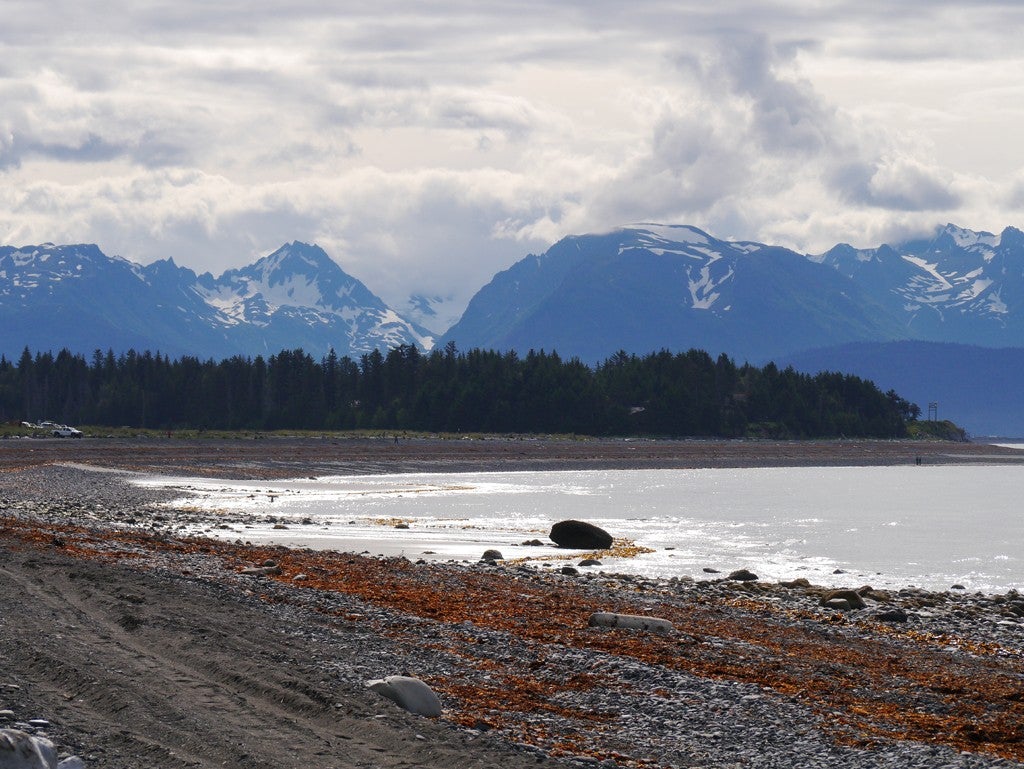
Panasonic DMC-G3 in Alaska, and Some Information on jpeg Settings

 
pjohngren's Alaska jpegs from DMC-G3
Mu-43 Member pjohngren's Image From Alaska
Image Source: http://www.mu-43.com/f43/g3-heads-alaska-14984/

I was attracted to this post on Mu-43.com because, as you probably have noticed, I like to travel vicariously through other Lumix users' photographs. I have never been to Alaska, and the images in this post give me a feel for the place.

(Click Here) to see the full post.

Once I saw the pictures, I wanted to know more about pjohngren's settings, which turned out to be really interesting. He shoots jpegs, instead of raw. Here is a quick summary of the settings he used in this case, and uses most of the time:

"... I actually leave it on Vivid all the time, but have the contrast at -1, the sharpening at +2, the saturation at 0, and the noise reduction at -2. Both Intellignt Resolution and Intelligent Dynamic on high all the time. Both do fine and a conservative and don't ever cause problems."

I find this very interesting. I always shoot in raw+jpeg, so that I can have the most flexibility in editing later on. However, I really don't like spending time editing on the computer, so would like to have great jpeg settings, to avoid editing altogether in at least some cases.

I have to admit that I have accidentally shot only jpeg images a couple of times, and found that the DMC-G3 jpeg processing, even at default settings, is wonderful. So, I will definitely give these settings a try. In fact, I will put these settings into both of my G3s as one of the custom settings.

Update: I tried these settings, and am not at all pleased with them. The saturation in Vivid is terrible for people pictures in my opinion. I have tried bringing saturation down to -1, and it helps. But, I think I'm going to end up concluding that iResolution and iDynamic should not be maxed out. So, my conclusion is that these are not the best settings for me. Your results may vary.

The ideal for me will be to have good enough jpeg settings to avoid editing most images at all, yet still have the raw files to do it well on the rare occasions that editing is necessary.

I am traveling to Japan in about a week. On these trips, I always shoot a lot of images (thousands), and have to deal with the editing load when I turn. Hopefully this will reduce editing to only a small number of images.

DMC-365.blogspot.com


Friday, March 9, 2012

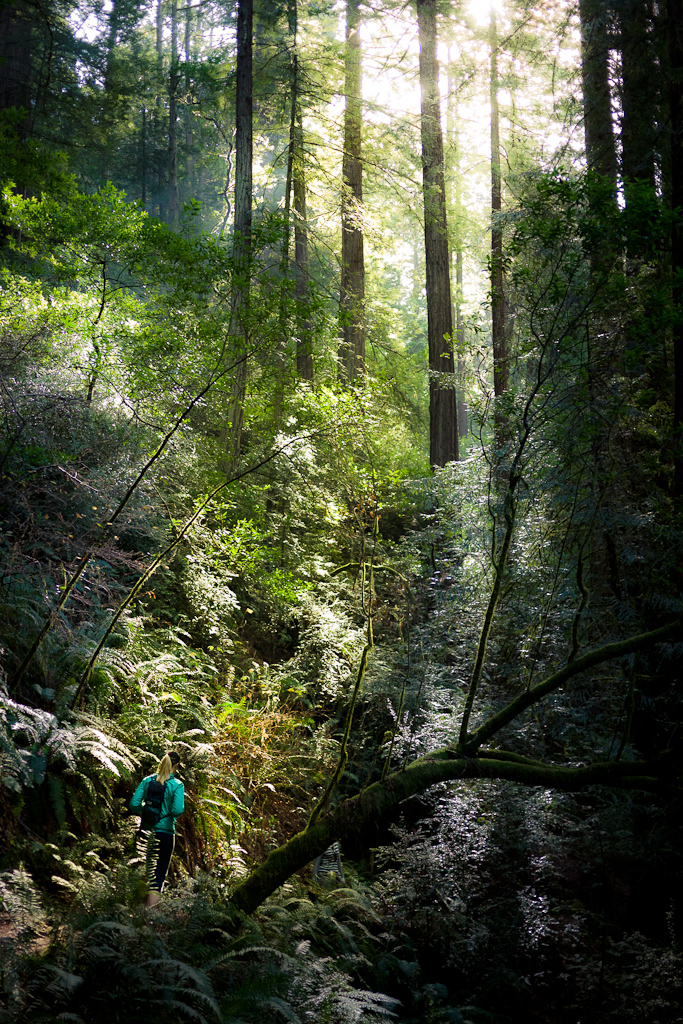
Redwoods Shot with DMC-GF1, by Graham Gibson

Graham Gibson posted this and a couple of other shots of hiking in the redwoods over on dpreview.
Image Source: http://farm8.staticflickr.com/7029/6805773075_4acac555ed_o.jpg
Panasonic Lumix DMC-GF1, Lumix 20mm f1.7
 
(Click Here) to see the original post on dpreview.com.
 
The shot I've included in this post is just wonderful. The diffuse light coming through the fog at top is a winning element on its own. To see if you agree, just use your hand to "crop" the human figure from the bottom of the image; still looks pretty darned good, doesn't it? But, the figure adds scale and interest as well. This is an excellent image.
 
Multiple replies in the post joke about the fact that the GF1 is three years old, and doesn't have the latest in high iso and dynamic range performance. The GF1 is a great camera. The GX1 is even better. Micro 4/3 has truly arrived.
 
DMC-365.blogspot.com
 
Please support the DMC-365 blog by clicking here to order from Amazon:


Sunday, February 26, 2012

Lumix DMC-G3 in Cyprus - Amazing Dynamic Range, Shot With Kit Lens


Look at the dynamic range in this shot! Wonderful!
 
 
Such Detail and Dynamic Range From the Panasonic Lumix DMC-G3 and Kit Lens!
The Tomb of the Kings, Paphos Cyprus
by Annie381 on flickr
Image Source: http://farm8.static.flickr.com/7149/6772722113_873f2c39f4.jpg
Panasonic Lumix DMC-G3, 14-42 f3.5-5.6
iso160, f4.5, 1/200 sec

This is a great testament to the G3 sensor, and the frequently-panned 14-42 kit lens. I have two of these lenses that came with my G3s, and have never tried either of them. Hmmm. Perhaps I should.

It is going to be tough to rival this shot anywhere, anytime, but especially Virginia in winter!

DMC-365.blogspot.com

Get your G3 kit here: