Showing posts with label Micro 43. Show all posts

Friday, December 9, 2016

Back to Color, Digital, Lumix? Well, Maybe a Little

I've been offline, mostly, working with black and white film in the darkroom. And, enjoying it immensely.
 
But, I decided to give Micro 4/3 a go again, after never being able to quite fall in love with the DMC-GX7 body. The image quality is fine, quite fine, in fact, but the camera feels weird in my hand, and I don't like the electronic viewfinder (EVF) on that particular camera. So, I decided to jump on a Black Friday deal and get the similar but somewhat less full-featured DMC-G7. Much better, for me. I gave up in-body image stabilization (which the GX7 has), but gained a camera that feels right in my hand, with what I feel is a better EVF.
 
Here's a shot I made with the new G7 today, using the Lumix 100-300mm f4-5.6 zoom lens, at 800 iso:
Mockingbird in Winter
 
I'm still really having a blast in the darkroom, but this was SO easy, and shooting color again is also fun...
 
DMC-365.blogspot.com
 

Thursday, September 10, 2015

Contemplative Geology

Contemplative Geology, by Reed A. George
Panasonic Lumix DMC-LX100
iso200, f5.6, 1/800 sec.
 
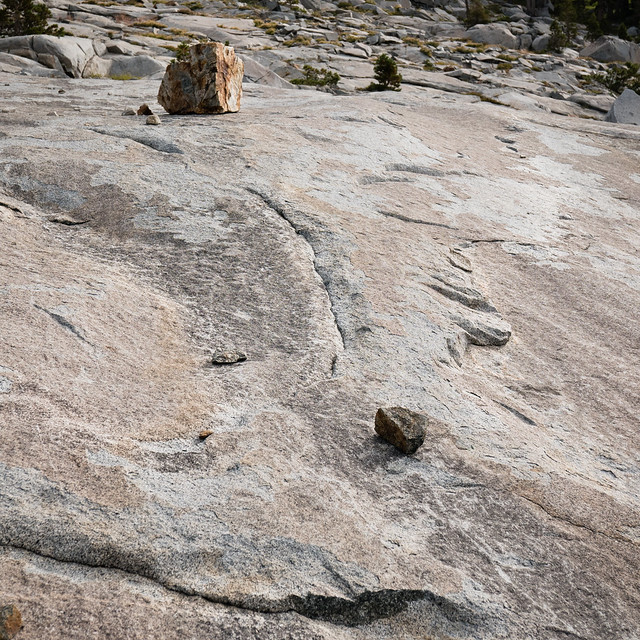
Just part of the geology at the Desolation Wilderness in Northern California. This place is pretty zen.
 
DMC-365.blogspot.com


Sunday, September 6, 2015

16:9 Format - Panasonic Lumix DMC-LX100

 
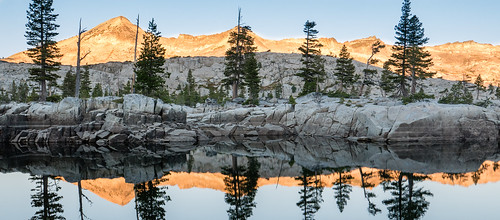
Landscape in 16:9, by Reed A. George
Panasonic Lumix DMC-LX100
iso 400, f5.6, 1/100 sec.
 
I've just uploaded a set of images from my recent trip to the Desolation Wilderness in Northern California to my flickr page. (Click Here) to view them all (or if you want to see this image larger). Every single one of the images in this set was captured with the LX100. What a wonderfully compact and capable camera this is, perfect for a long hiking trip like the one I was on (3 days, two nights camping).
 
I love the native 16:9 format in the LX100, though I did crop a larger image to get it in this case.
 
DMC-365.blogspot.com
 

Sunday, August 23, 2015

Final Day at the Beach

And it already looks like this in my mind... Taken with the Lumix DMC-LX100 and built-in soft focus filter. I think the effect works well in this shot.
 
DMC-365.blogspot.com


Wednesday, August 19, 2015

Sunday, August 9, 2015

Another Corn Crib Shot - HDR

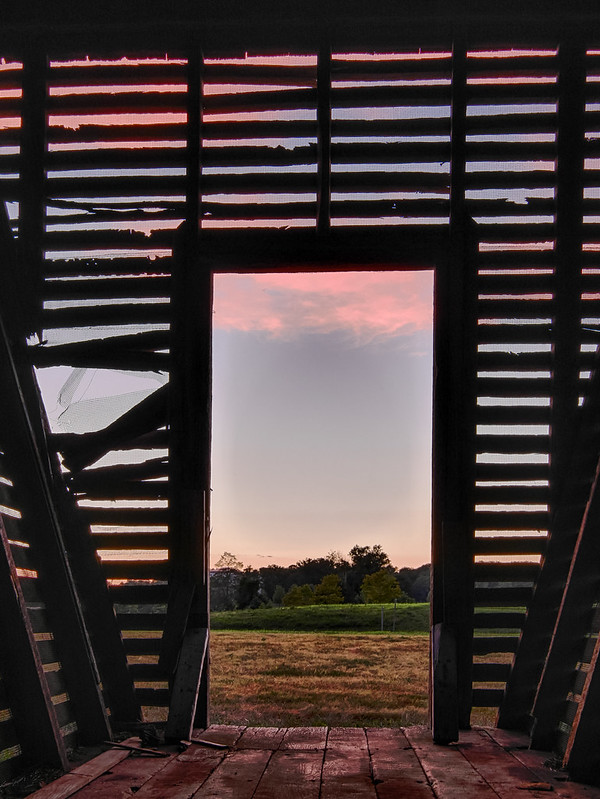
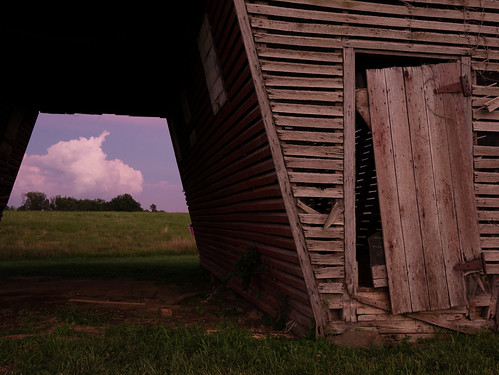
I added one more shot to the corn crib set, this one a high dynamic range (HDR) image from inside the corn crib.
 
Inside Looking Out, by Reed A. George
Panasonic Lumix DMC-GX7, Lumix 20mm f1.7 Lens
HDR from three separate exposures
 
I'm looking forward to getting refamiliarized with the GX7 on my upcoming vacation.
 
DMC-365.blogspot.com

Saturday, August 8, 2015

The Old Corn Crib, Revisited

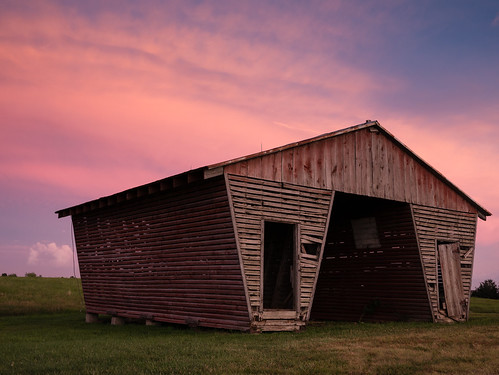
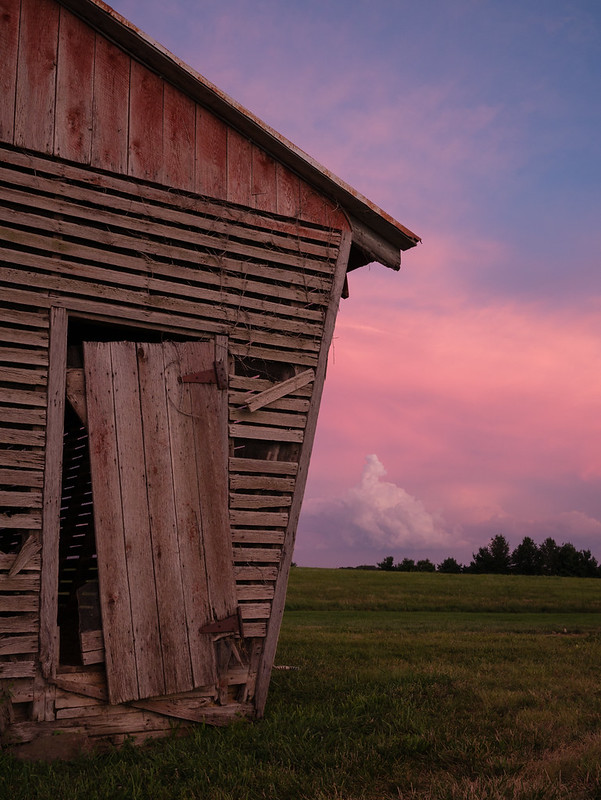
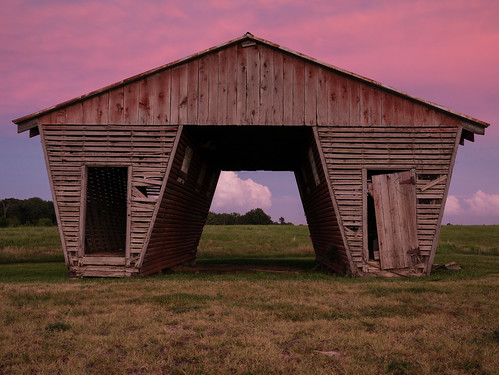
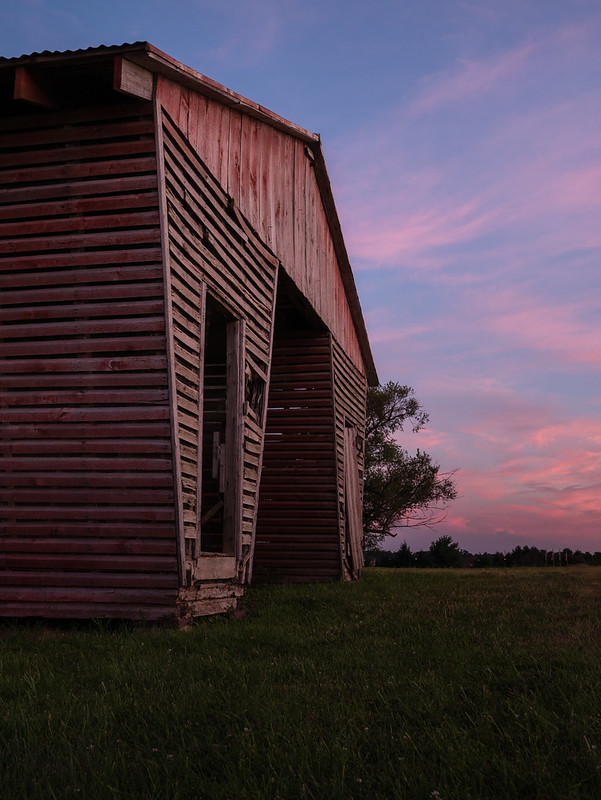
I was driving home this evening and noticed a lot of dramatic clouds in the sky, accentuated by the sunset. So, I stopped at the old corn crib that I've photographed in the past and made some images. (Click Here) to see one of my previous posts of this cool old building.
 
This time, I had my Panasonic Lumix DMC-GX7 and 20mm f1.7 lens with me. I'm trying to decide whether to bring this camera on vacation with me. I've drifted away from my Micro 4/3 gear recently, but this little shoot has me once again appreciating the GX7.
 
I actually sold some of my Micro 4/3 lenses recently, keeping only those that I hold most dear. Also, I kept the smallest lenses, as that's what shines about Micro 4/3 cameras, small size. So, I sold my 14-140mm zoom, 25mm f1.4 Summilux, and 75mm Olympus lenses. All excellent lenses, I felt that keeping my 20mm f1.7, Pana-Leica Micro-Elmarit 45mm f2.8, 14mm f2.5, Bower fisheye, and the amazing 100-300 f4-5.6 zoom was sufficient. Now I find that I'm missing the medium telephoto length of the Oly 75, especially in planning for travel. So, I'm going to try the new Sigma 60mm f2.8 Art lens, which is very cheap ($200 new), and getting great reviews. More on that to come.
 
DMC-365.blogspot.com
 

Friday, July 24, 2015

Preparing for Some Travel

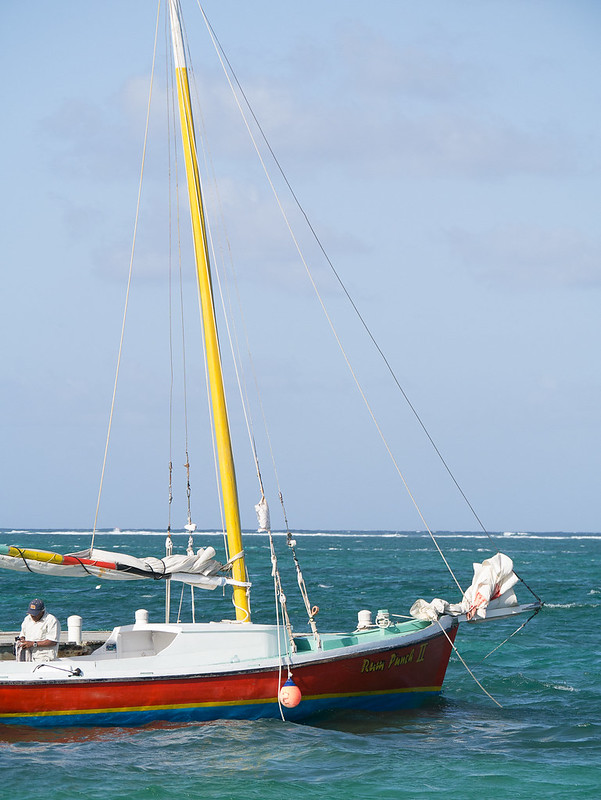
Belizean Scene, by Reed A. George
Panasonic DMC-G1, 100-300mm f4-5.6 Lens at 100mm
iso 2000, f5.6, 1/400 sec
 
I'm mentally gearing up for my trip to Maui and California. This is mostly a family trip, followed by a couple of days of hiking in the Northern California mountains. I'm trying to figure out how little gear I can get away with and be happy on the trip. We'll be in transport quite a bit, especially flying the small airlines between Hawaiian islands.
 
For the camping portion of the trip, it's already decided. I'll be taking my Panasonic DMC-LX100 and Fujifilm GS645S. The LX100 is the super-compact, super-capable solution. With its Micro 4/3 sensor and 24-75mm equivalent, fast (f1.7 at the wide end) lens, I'm almost convinced it's all I need for the entire trip. The GS645S will fill my need for a more manual camera, and as a bonus, it shoots medium format film.
 
For the Hawaiian portion of the trip, I'm tempted to take a camera with a longer focal length lens. Since the GS645S is a wide 60mm (35mm equivalent on 35mm format), the longest I'll have is the 75mm equivalent on the LX100. As you can see above, sometimes I like to shoot longer lenses on travel. So, this has me considering a small Micro 4/3 interchangeable lens kit.
 
For some travel gear tips from a real pro, (Click Here) to check out an article and video on B&H's "Explora" website.
 
DMC-365.blogspot.com
 

Thursday, May 28, 2015

My Second Shot at Parkour Photography

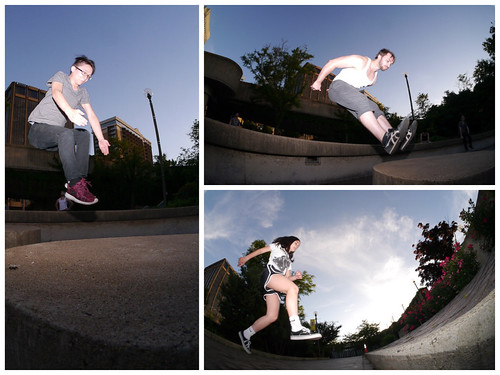
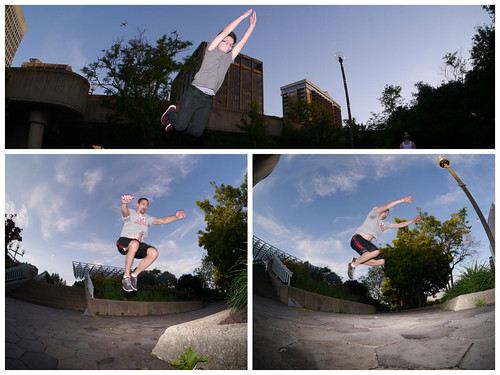
Back in March, I had the opportunity to photograph some local practitioners of parkour, which is basically acrobatics in public places. (Click Here) to see that post, in which I used my Nikon F2SB and black and white film. I enjoyed it immensely, and they appreciated seeing the photos.
 
Last night, I went to one of the practice sessions for a larger group of DC Metro Parkour members. Here are some of the shots.
Parkour, by Reed A. George
 
While I shot a few of these images with my Nikon Df, most were made with my Micro 4/3 Lumix DMC-GX1 and Bower fisheye lens. All used flash to freeze the motion.
 
I recently came very close to selling off my Micro 4/3 gear, since I just have not been using it much. That, and the fact that the new Lumix LX100 (which also uses a Micro 4/3 sensor) is so capable, it replaces much of my interchangeable lens Micro 4/3 gear on travel, made me consider selling all of it. I did sell several pieces of gear, but decided to keep a smaller set of Micro 4/3 bodies and lenses. Specifically, I kept the most compact lenses, and the ones that are special in some way. The Bower fisheye is an example of that - I don't have a fisheye lens for any other camera system, so I kept it. It sure came in handy last night!
 
I'm planning to continue to work on creative techniques for photographing this exciting sport.
 
DMC-365.blogspot.com
 

Wednesday, February 18, 2015

You Saw it Here! Panasonic Lumix DMC-LX100 for $720 New!

Okay, here's the best deal I've seen on this camera, by far.
 
 
$719.99, with Amazon order delivery and return policy. Excellent. Grab it now. I have not seen it below $799 before, and the list is $899.
 
Please use my link below to get this price, and support your favorite blogger, me!


Saturday, November 22, 2014

Lumix DMC-GX7 for Live Music

I've been focused on other cameras lately. So many great cameras out there, so little time to shoot them.
 
I read an interesting piece on Steve Huff's blog about using the Lumix GX7 for live music.
(Click Here) to read it, and see some nice GX7 images from bars in Amsterdam.
 
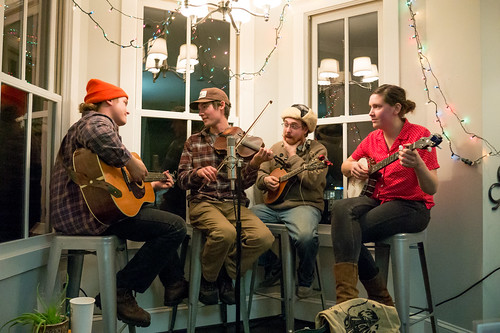
Here are a couple of shots of my friends Jake and the Burtones, shot with my GX7.
 
Jake and the Burtones, Plus Melissa, by Reed A. George
Panasonic Lumix DMC-GX7, Bower 7.5mm Fisheye Lens
iso 3200, f4 (or so), 1/50 sec.
 
 
Burtones, by Reed A. George
Panasonic Lumix DMC-GX7, Lumix 14-42mm f3.5-5.6 Aspheric Series II Zoom
iso 6400, f3.5, 1/100 sec.
 
The GX7 does pretty well in low light, even at iso6400. Not like a full frame Nikon, of course, but respectable. And so much easier to lug around.
 
DMC-365.blogspot.com


Monday, November 17, 2014

A Morning Out Birding as Winter Approaches

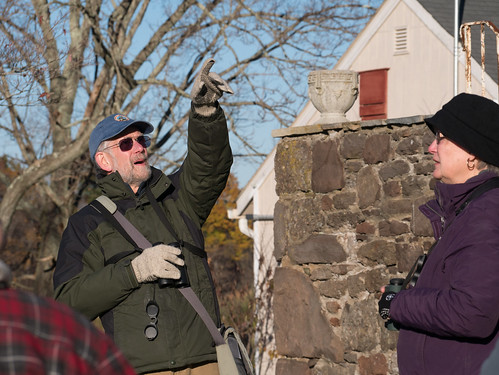
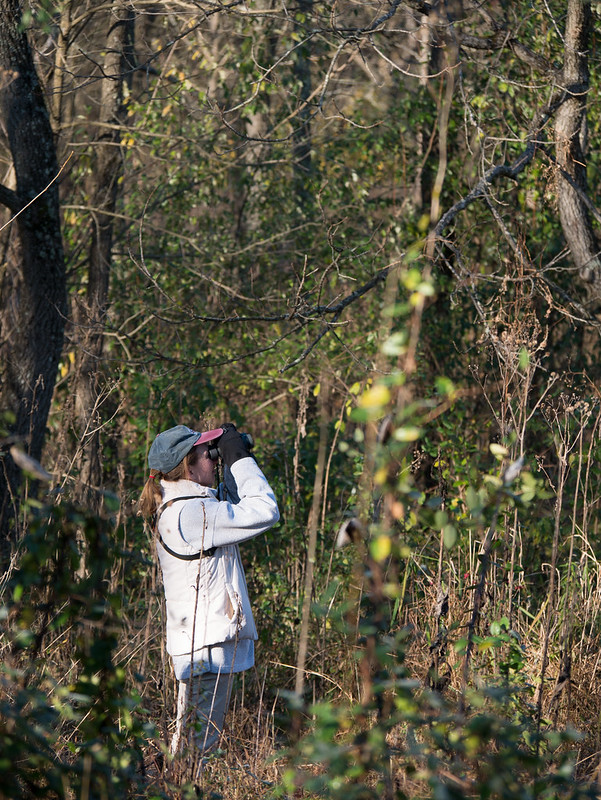
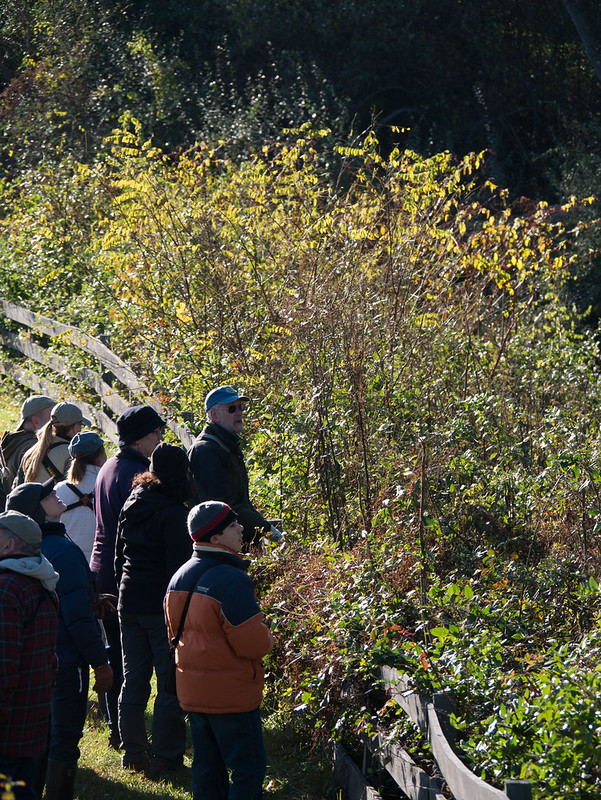
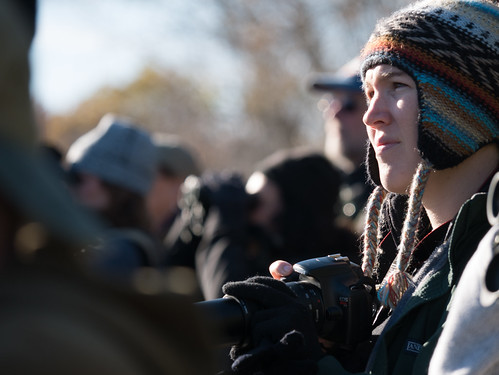
Yesterday, I joined a bird watching walk at my nearest wildlife preserve, which is called Banshee Reeks. The walk happens monthly, and is sponsored by the Loudoun Wildlife Conservancy. (Click Here) to read about the organization. They host quite a number of interesting events.
 
I realized that the walk was happening at 7:35 AM; it started at 8:00 AM. I quickly grabbed my Lumix GX7 and 100-300mm f4-5.6 OIS lens and headed out the door. A quick stop at Peets for my Saturday morning coffee, and away I went. I arrived just in time to join the group.
 
 
I really am a telephoto guy at heart. Though I've expanded my skills to include normal and wide angle lenses, from the start I've loved shooting long lenses. The 100-300 Lumix lens is a fantastic combination of long reach (600mm equivalent) and compact size. Because of the OIS vibration isolation, it's even more reasonable to use handheld.
 
Considering that it's winter, and the majority of migratory birds have already gone, we saw quite a range of birds: white throated sparrow, bluebird, fish crow, American crow, flicker, hawk (didn't get a good identification, but probably either red tailed or red shouldered), an immature bald eagle, mockingbird, plenty of robins. It's always great to go with someone like our tour leader Joe and his sidekick Del, who can spot and identify birds well beyond my capabilities.
 
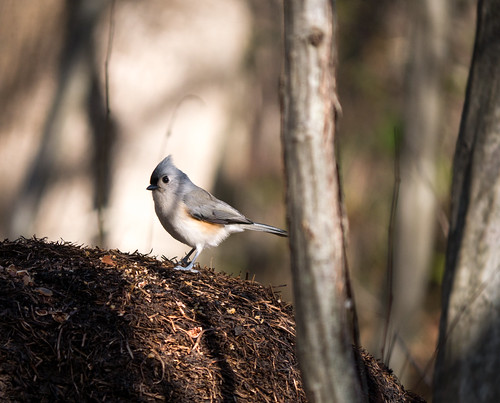
Knowing that I had to get back home, after about an hour with the group I just wandered off into the forest and sat down. After a few minutes, I heard a single bird call. Then, I heard a different bird answer, much closer to where I was sitting. Within a few minutes, a small group of tufted titmouse had been drawn to an old hay bale, rolled off into the woods next to me.
 
I sat and enjoyed watching them for another ten minutes or so, and then got up, got the blood back into my legs, and began the walk back to the car.
 
I shot a few more pictures on the way back.
 
I think that telephoto lenses get underrated for their use in landscape photography.
 
Finally, coming around a corner in the trail, I got a quick shot off of this Mockingbird, against the blue autumn sky.
 
 
It was a very nice way to spend just a couple of hours on an autumn Saturday morning.
 
DMC-365.blogspot.com

 

Saturday, September 27, 2014

Nice Summary of Six Years of Micro 4/3 on m43photo.blogspot.com

Dancing, Golden Gate Park, by Reed A. George
Panasonic Lumix DMC-G1, Voigtlander 28mm f2 Ultron Lens
 
 
I have spent a lot of time shooting, and thinking about, the Micro 4/3 format. In fact, my blog is named in observance of the standard "DMC-XX..." camera model designation of Panasonic's Lumix cameras. For Panasonic, the DMC-G1 was the first Micro 4/3 camera. I made good use of that one. Then, for an entire year, I focused mostly on shooting a pair of DMC-G3s.
 
I have ventured far and wide since that first year of 2012, but still regularly include Micro 4/3 gear and images in my posts.
 
The blog m43photo.blogspot.com, started in 2009, has been focused on Micro 4/3 longer, and more exclusively than my own, but with fewer overall blog posts. Now they have posted a brief retrospective of what's gone on in terms of camera and lens development over the past six years.
 
(Click Here) to read the post on m43photo.blogspot.com
 
I have been ambivalent over the years about whether or not the Micro 4/3 sensor size was the right compromise between sensor size (larger would provide better image quality) and equipment size (smaller sensors lead to smaller cameras and lenses). About a year or two ago, it seemed that APS-C was about the smallest you could go and still expect truly excellent image quality at higher iso settings. Now, I'm beginning to once again think that Micro 4/3 may turn out to be an ideal size.
 
In the Magnum workshop that I just attended, I shot with both my Leica M9, a full frame digital rangefinder, and the Lumix DMC-GX7, a Micro 4/3 camera. As it turned out, I used the GX7 for most of my shooting, which included a lot of bike rides around the Cape Cod National Seashore; most of the images in my final project submission were shot on Micro 4/3. There were certainly no complaints about image quality.
 
In fact, at the same workshop, David Alan Harvey showed us his new book Based on a True Story. The cover shot was made with a Lumix GF1 Micro 4/3 camera. It's hard to argue with the image quality he achieved.
 
It will be interesting to see how the evolution of Micro 4/3 proceeds over the coming several years.
 
DMC-365.blogspot.com

Sunday, September 14, 2014

Is That New Panasonic LX Series Camera Really Coming?

Were you waiting through the month of July for an announcement from Panasonic? Well, history did not serve as a great predictor for a new product introduction from Panasonic, at least not for a new LX series camera. As you may know, I'm a huge fan of the current LX7.
 
(Click Here) to read my (incorrect) musings about a successor to the wonderful DMC-LX7 being announced last July. It didn't happen.
 
Well, if the latest rumor on 43rumors.com is true, it will be worth the wait. Rated by the site as "FT5" (81-99% confidence), this rumor says the new "LX100" will have a Micro 4/3 sensor and 24-75mm f1.7-2.8 equivalent lens, all in a very compact body. It also says it will have a built-in electronic viewfinder (EVF). Now, I'm not sure how they'll make such a fast zoom for a sensor that size truly compact (at least in comparison to the current LX7 model). It hasn't really been done elsewhere. Some of it is limited by the laws of physics. I don't immediately see how they could make a fast zoom for this camera any smaller than the ones that are already available for the Micro 4/3 cameras, if they're going to take advantage of the full sensor size.
 
In any case, (Click Here) to read the latest rumors on 43rumors.com. If they're correct, we'll hear more today (September 15).
 
DMC-365.blogspot.com
 

Wednesday, August 27, 2014

More UC Berkeley Trees

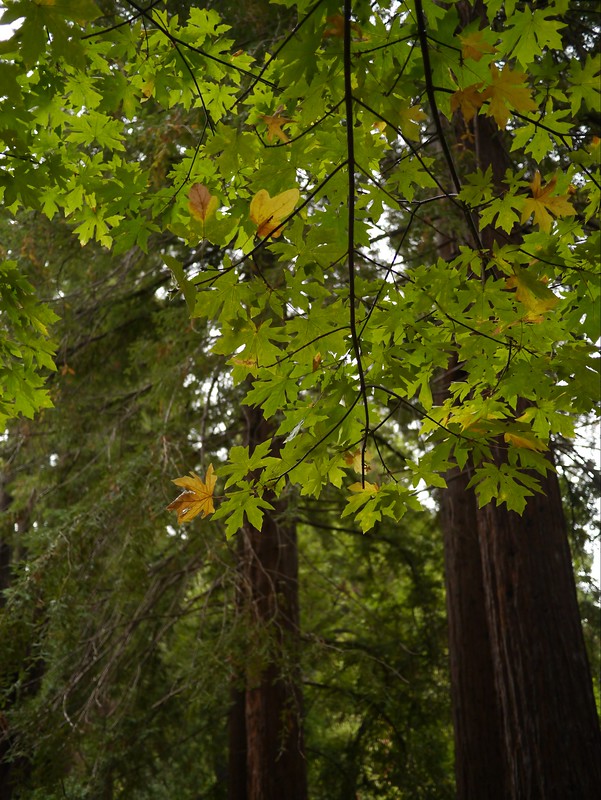
A couple of days back, I posted about the tree sit-in protest at Berkeley from 2006-2008. You may or may not think the protesters crazy for living in the trees for so long, but you have to admit that the landscape on the campus is beautiful and is worth protecting. Here's a shot I took on my walk around UC Berkeley.
 
Berkeley Trees, by Reed A. George
Panasonic Lumix DMC-GX1, Lumix 20mm f1.7 Lens
iso 400, f1.7, 1/640 sec.
 
This is an unedited image straight from the camera. I shot it wide open to render the leaves in the foreground sharp, and slightly blur the trees in the background.
 
DMC-365.blogspot.com
 

Monday, August 25, 2014

Hangin' Around in Berkeley - Quite Literally

While walking around the campus of the University of California, Berkeley, I met these young fellows.
 
Hanging Out in Berkeley, by Reed A. George
Panasonic Lumix DMC-GX1, Lumix 20mm f1.7 Lens
iso 400, f5.6, 1/100 sec.
 
Hanging out in trees has a dramatic history at UC Berkeley. History's longest tree sit-in, a protest against the university's decision to cut down a grove of 42 native trees to make way for a new athletic center, took place there. From December 2006 to September 2008, protesters literally lived in the treetops, getting supplies brought in, and waste taken out by volunteers. In the end, the protesters lost and the trees were cut down.
 
(Click Here) to read more about the tree sit-in on wikipedia.
 
These guys were doing nothing of the type, and I would guess were waiting for their parents who probably work at the university.
 
Gotta love Berkeley. At least I do.
 
DMC-365.blogspot.com
 

Thursday, August 21, 2014

Pana-Leica Summilux 15mm f1.7 For Micro 4/3 - Great, but Neither Here Nor There?

Image Source: http://shop.panasonic.com/shop/model/H-X015K
 
Leica's product emphasis seems nearly as varied as my own these days. With the advent of the new Leica T system with APS-C sensor, Leica seems to have made it even more clear that sensors smaller than that are not serious enough to warrant their direct attention. That said, their compact camera offerings continue, and are pleasing to many. To me, it seems that Micro 4/3 is in a bit of a no man's land with Leica.
 
Actually, Micro 4/3 is occupying a similar place for me personally. With only so many hours free to use my camera gear, I find my interest pulled in many directions. Leica rangefinders are my most common companions. However, on any given day, you may also find me with a Nikon SLR, a medium format film camera, or even a 4x5 pinhole camera in my hand. Yet, my Micro 4/3 gear persists. It's still my favorite choice for many types of travel.
 
Anyway, back to Leica. Their collaboration with Panasonic continues, and the newest addition to the Pana-Leica lens kit is the 15mm f1.7 Summilux. I won't speculate on the performance of the lens, except to say that I expect it to be wonderful, just like the 25mm f1.4 Summilux is in my opinion. For more on those aspects, please
 
(Click Here) to read a nice introduction to the lens by Napier Lopez on mu-43.com.
 
From my point of view, the 15mm focal length, which provides an equivalent field of view as a 30mm lens on full frame 35mm sensors, is an odd choice. To me, it's neither here nor there. In between the classic lengths of 35mm (a wide normal) and 28mm (what was once considered a very wide angle lens), 30mm equivalent field of view would take some getting used to. Now, my view on this is not purely based on sticking to the most common lengths. For example, I find the 40mm focal length on full frame to be nearly ideal for my style of shooting.
 
I am very pleased to see the Pana-Leica lens lineup continue to grow. I'm certain that many people will make great use of this non-standard field of view lens. I'll have to keep my eyes and mind open to see if it leads to any new styles or views that I should consider.
 
DMC-365.blogspot.com


Saturday, August 2, 2014

Combining Systems - Micro 4/3 (Lumix GX7) and Nikkor Super Telephoto 500mm f4 AiP Lens

Just for fun, I decided to take out my enormously heavy Nikkor AiP 500mm f4 lens, and mount my Panasonic Lumix DMC-GX7 body to it, for some bird photography. That's right, the body mounts to the lens in my mind, as it's tiny in size compared to the big telephoto.
 
I put the combination on my even heavier Gitzo tripod with Manfrotto gimbal mount, and commenced to photographing wading birds at my local nature walk. I set the GX7's in-body image stabilizer to 500mm, but left it on. You would usually turn it off when using a tripod.
 
Here's an example shot of a great blue heron.
 
Portrait of a GBH, by Reed A. George
Panasonic Lumix DMC-GX7, Nikkor AiP 500mm f4 Lens (Manual Focus)
iso 1600, f8, 1/1000 sec.
 
With an equivalent field of view to a 1000mm lens on full-frame 35mm, it's obviously a challenge to manually focus this big lens, and hold it steady enough to get a decent shot, even at 1/1000 second exposure. The manual focus magnifier and focus peaking helped immensely, especially the magnifier. The peaking seems to be a little too forgiving, overestimating the depth of field at this long focal length.
 
This bird actually was a little too close for me to get the shot I wanted, not your normal situation in bird photography.
 
Even at iso 1600, the noise levels are quite reasonable with the GX7.
 
So, rather than worry about carrying a tele-converter to get just a little more reach from my 500mm lens, I can just carry the GX7 body! It probably weighs less than a converter, and you don't lose an f-stop of light gathering. Pretty cool.
 
Now that I know it technically works okay, I need to go back and see if I can get some more interesting images with this combination.
 
DMC-365.blogspot.com


Saturday, July 26, 2014

Great Egret - Super Telephoto on Micro 4/3

Yesterday, I posted an image of a green heron, shot with my GX7 and modern Lumix 100-300mm f4-5.6 OIS lens.
 
Just for fun, I decided to try shooting at the same place with my very old (Nikon Pre-AI mount) Sigma 400mm f5.6 lens, adapted to fit the GX7. Here's a great egret shot with that combination.
 
 
Great Egret, Ardea alba, by Reed A. George
Panasonic Lumix DMC-GX7, Sigma 400mm f5.6 Manual Focus Lens (Pre-AI Nikon mount)
iso 1600, f11, 1/1000 sec.
 
Not bad for an old lens, huh? By the way, this is the lens that I won at the Film Photography Project's Walking Workshop in May. (Click Here) to read more about that.
 
I know that most of you can't click and zoom on this image, due to the way I post from flickr. Here's a ~100% crop from the image above:
 
You can see that he's just caught a minnow. While the results from this 30-40 year old lens don't match the modern Lumix 100-300mm zoom, they're pretty good, in my opinion. This is an extremely low-cost 800mm equivalent field of view combination for someone who has the patience to shoot nature with a manual focus lens. The GX7's manual focus magnifier really helps out, but is obviously only useful for static subjects. The Nikon-to-Micro 4/3 adapter is also very inexpensive, and available on Amazon (please buy yours from the link below and support my blog!).
 
DMC-365.blogspot.com


Tuesday, July 22, 2014

Caught in the Maze

The National Building Museum in Washington, DC is currently hosting an exhibit called the BIG Maze.
 
(Click Here) to read about the museum and the maze.
 
The BIG Maze, by Reed A. George
Panasonic Lumix DMC-GX7, 14-42mm f3.5-5.6 Series 2 Kit Lens
iso 800, f5.5, 1/80 sec.
 
I like the context of the enormous museum interior to help show where the maze is in the larger space. I also like the single person in the very middle of the maze in this picture. She adds a lonesome element. People tended to gather in the center of the maze; I'm not sure why.
 
If you decide to attend this exhibit, be sure to get your maze entry tickets early. We came late and were not able to get it. But, that gave me the opportunity to photograph it from above as we watched others go through.
 
DMC-365.blogspot.com