Showing posts with label architecture. Show all posts

Wednesday, July 6, 2016

Getting Out and About With the 4x5 Speed Graphic

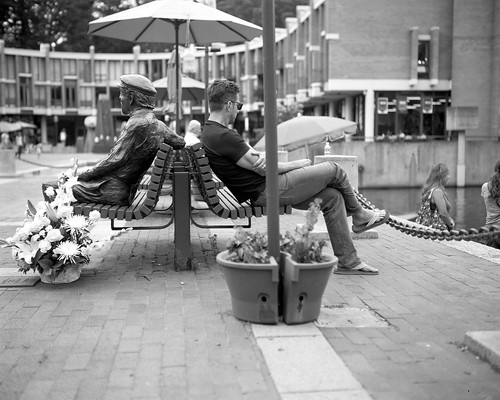
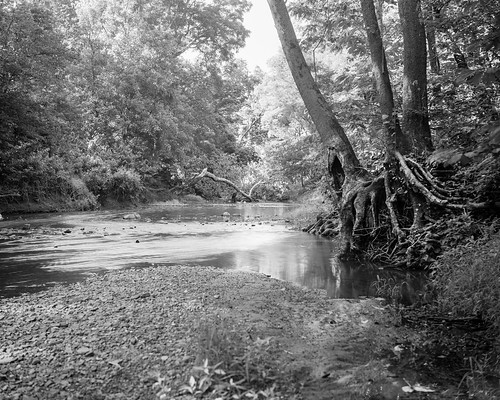
I have a beautiful early Graflex Speed Graphic 4x5 camera. Because it's not so convenient to use, I haven't spent much time with it. I decided to change that over the three day 4th of July weekend. I made a total of ten exposures (on Arista EDU film), and found that five of them are worth sharing. That's a pretty good hit rate compared to smaller formats, where I shoot a lot more images per scene.
 
Here are my five favorites from the weekend:
 
 
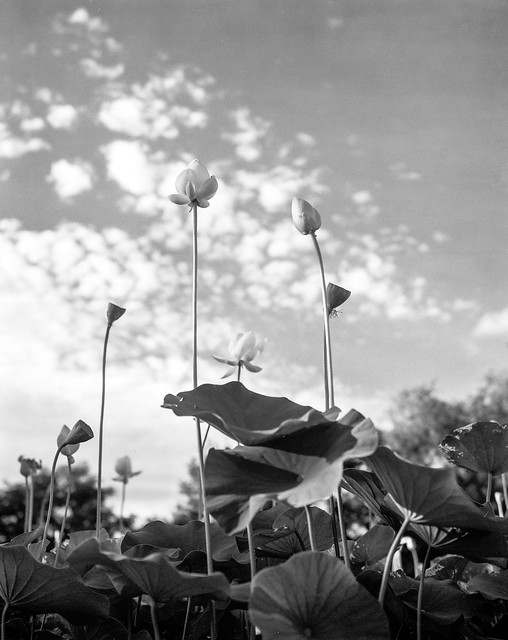
I usually set the camera on a tripod, using the ground glass back to frame and focus. I did that for the last three images above. For the first two, I used the rangefinder and shot handheld. Getting the focus right is a challenge, and I missed on some other shots. But, when you get it right, it's pretty nice.
 
In the picture of the house (Thornton House at Manassas National Battlefield), I used the front rise movement of the camera to allow me to keep the camera level to avoid distortion, yet still capture the roof and chimney. Pretty cool.
 
In the shot of the lotus flowers, I threw all concern for distortion to the wind, shooting with the camera nearly on the ground, pointing up at a steep angle.
 
I'm very happy that the Speed Graphic is not my only camera, or even my main one. But, it's instructive and fun to use.
 
DMC-365.blogspot.com

Thursday, October 2, 2014

More From the Leica I Model C and Summar - Architectural Illusions

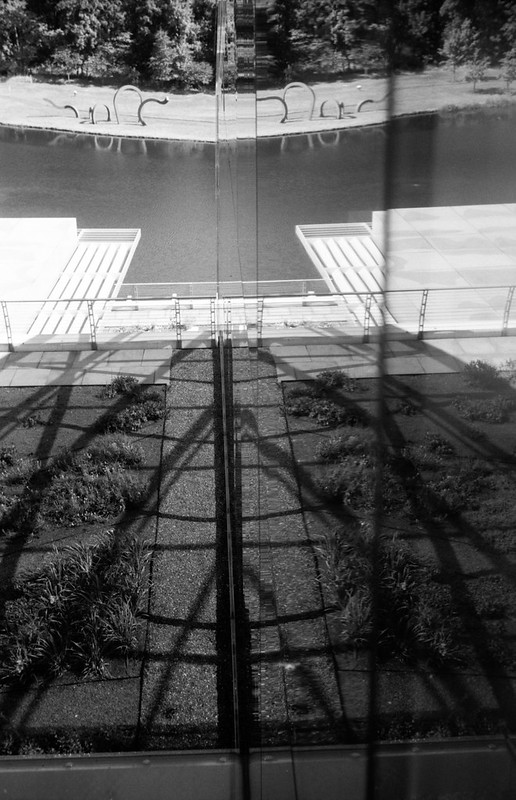
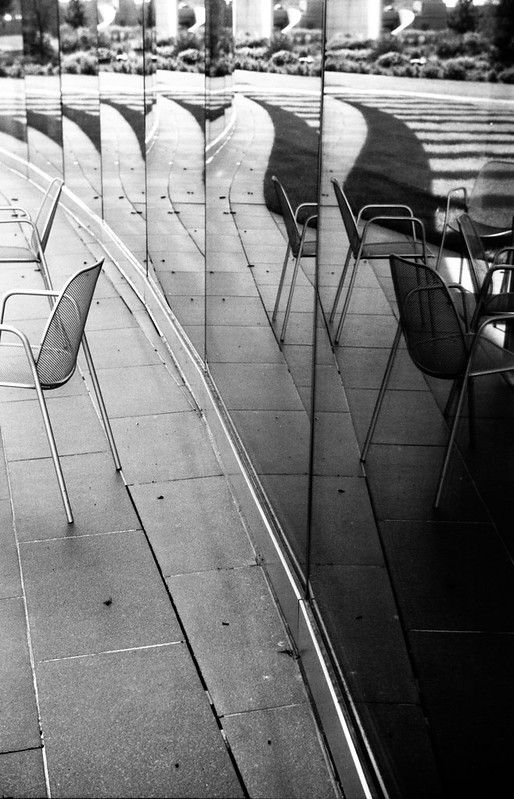
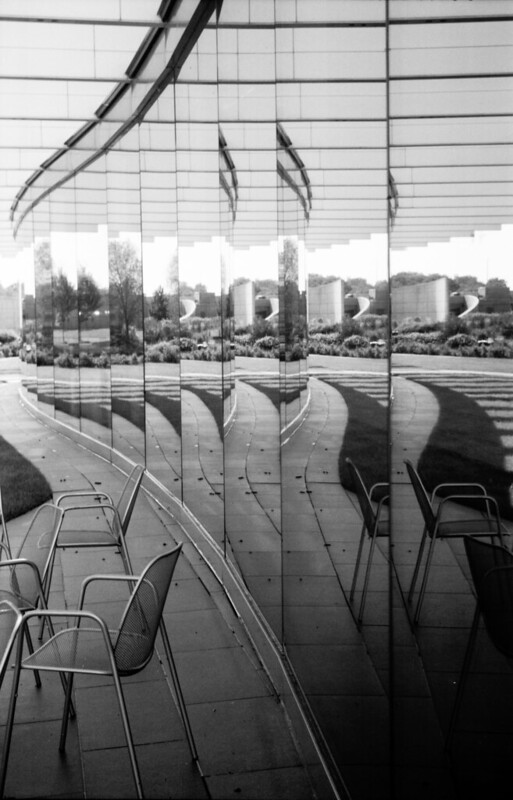
The building I work in is an amazing feat of architectural design. I don't photograph there very often, but on the day I was testing my new 1931 Leica I, I happened to notice a couple of interesting illusions formed by the architectural glass and surroundings. All were shot with my Summar 5cm f2 and Kodak Tmax 100 film.


The Leica I doesn't have an integrated rangefinder, so it is "guess focus.". The little viewfinder you use to compose feels inaccurate, and obviously doesn't provide for parallax compensation. But, it's a gas to use this little piece of history.
 
DMC-365.blogspot.com
 

Wednesday, March 26, 2014

New Orleans by Night - Frank Relle's Project on NYT's Lens Blog

 
Image Source: http://lens.blogs.nytimes.com/2014/03/19/new-orleans-by-streetlight/?_php=true&_type=blogs&_php=true&_type=blogs&_r=1&#/2/

The New York Times blog, Lens, has reported on a project by photographer Frank Relle, a New Orleans
native. Relle started photographing New Orleans houses (from rich to poor) while in college, as a sort of therapy for a broken heart (his girlfriend had broken up with him). Thinking that Hurricane Katrina had ruined his project, Relle actually found that it extended it, gave it new life.

(Click Here) to read the story on Lens.

Personally, I really like Relle's approach to these images. Moving over the years from long exposures with existing light (or lack thereof) to his current approach of bringing his own lighting (in the form of a lighting truck) to some of the scenes, His goal is to provoke his viewers to make up their own stories about the lives inside these structures. This is not an explicit expose' of others' lives. Just hints are given, enough to make us think on our own.

DMC-365.blogspot.com


Saturday, September 28, 2013

What is it About Buildings Being Destroyed and Old Cameras?

 
Demolition, Washington, DC, by Reed A. George
Agfa Record III
 
The picture above is a repost. I've reposted it for a reason, which is to discuss why these types of scenes are interesting. I suppose when a building is being torn down, you get a view inside that would be impossible in any other way. Even though I'm sure the building was emptied before the wrecking ball came in, it feels like I can simultaneously look into ten or more peoples' homes. I've never recognized myself as this type of voyeur, but must admit it's intriguing. Intriguing to the point, in fact, that I immediately pulled the car over out of DC traffic when I saw it. I even had to move a couple of times to avoid the construction guys yelling at me for parking. But, I had to get the shot.
 
And for some reason, I found the scene to be exactly what I wanted to shoot with my SFTC camera for August, the Agfa Record III. Now, I doubt if there's really any meaningful connection between this particular type of scene and vintage film cameras. But, here's another similar combination to look at:
 
(Click Here) to see Matthijs van Ed van der Pals' shots of a demolition site, made with a Rolleicord IV. Same medium format film as the Agfa Record, but the similarities rapidly fall off from there, with the Record being a folding camera, the Rolleicord a twin lens reflex (TLR).
 
 
DMC-365.blogspot.com


Monday, September 2, 2013

Moon Hoon House - A Virtual "Artist Date" Study in Design

I'm pretty disciplined about some things in my life, writing included. I write every day here on my blog. I also write a journal every day. In four years, I have not missed two consecutive days of writing.
 
Today, I'm just uninspired by photographic equipment and recent images in the sites I follow. I need something different.
 
So, I decided to take a virtual "Artist Date." One of my inspirations for me beginning the writing life was the excellent book by Julia Cameron, The Artist's Way. The book is really worth reading, but boils down to two areas of focus - "Morning Pages" and "Artist Dates." Morning pages consist of writing three pages in a journal, long-hand (as in with a pen) every morning. Artist dates are roughly one hour diversions, by yourself, to explore something creative that is outside your primary interest area. I have been religious about writing every day, less so about artist dates. So, when I literally couldn't find anything photographic to write about this morning, I decided to do an artist date virtually.
 
A quick search in Feedsy led me to some design-related sites. Here's the most interesting thing I found - a wild custom home in Korea:
 
Image Source: http://www.yatzer.com/conan-house-by-moon-hoon
 
A really cool characteristic is the stairway - open, non-uniform spacing and arrangement, it's one of the "playful architecture" features of the house.


Image Source: http://www.yatzer.com/conan-house-by-moon-hoon
 
I could live in a place like this. Weird, but certainly not dull.
 
(Click Here) to read more about the house.
 
I'm sure you didn't come to my blog this morning to read about a custom house in Korea. Sometimes I have to go off a little, just to keep my own interest up. Design is a great subject to study, to keep things churning in your creative mind. When you think of a house, you probably think of the square with a triangular roof on top, like you draw as a child. This house design challenges that, making it something to explore. It is also a little disorienting, giving a feeling of instability. Instability can be good.
 
Thanks for taking a look. Try Julia Cameron's book (Amazon link below). It may stimulate you to think a little differently.
 
DMC-365.blogspot.com


Wednesday, November 14, 2012

This Charges Me Up For My Upcoming Trip to Barcelona!

 
Barcelona (Placa Catalunya) by jky on rangefinder forum
 
Member jky on rangefinderforum posted three excellent images from a recent trip to Barcelona.
 
(Click Here) to see them all.
 
I will be leaving for Barcelona for a family vacation, about a week from when I'm writing this post. I'm excited about street shooting there.
 
We usually end up going back to one of our favorite places on family vacations, and decided to do something really different this time. This will be a challenge trip for us, as we don't speak the language. But, we're very excited to meet nice people, eat great food, enjoy Gaudi' architecture, and anything else that comes our way.
 
I've read that theft can be a real problem, especially in the tourist areas. I'm thinking that I won't take my most expensive camera (Leica M9), even though it pains me to leave it at home. I'm also pretty sure that Barcelona is far safer than New York City, where I have used my Leica gear in the past.
 
That said, my Micro 4/3 kit of two Lumix DMC-G3 bodies will give me more flexibility anyway, and I won't commit suicide if anything goes missing. I won't like it, but I'll recover. Right now, I'm thinking that I'll take the two G3 bodies, and maybe only a couple of lenses - the Lumix 20mm f1.7 and Lumix 14-140mm f3.5-5.8 zoom. The zoom will give me awesome range in a single lens, including enough telephoto reach for external architecture shots. The 20mm is tiny and fast. Of course, I'm sure the lens list will grow before I get on the plane. Oh yeah, I'm sure I'll throw in the diminutive Lumix DMC-LX5 as well. It weighs nothing, and takes up very little space. I will also take a 35mm optical finder to use the LX5 for street shooting.
 
What do you think? Is this too minimal?
 
I'm getting psyched for this trip...
 
DMC-365.blogspot.com


Wednesday, September 19, 2012

A Few Tips on Shooting Ruins on ePhotoZine

 
ePhotoZine has posted a brief piece on how to shoot ruins - abandoned buildings and obsolete facilities. Clearly, the author lives in the U.K. - speaking of shooting abbeys and the like.
 
(Click Here) to read the entry on ePhotoZine
 
In terms of equipment, the suggestion is to bring a wide angle lens, a longer zoom, a tripod (either full-size or tabletop), and a polarizer.
 
For technique, the author suggests walking the site carefully before jumping in to take pictures. Give context to the rubble piles that you find interesting, rather than just shooting closeups of them. Try shooting out through window openings, and down long corridors. Also, consider including signs as part of detail compositions.
 
If you're able, get a high perspective for overall shots of buildings, in order to reduce distortion caused by having to point the camera upward. Another way to achieve this is to shoot the building from further away, using a telephoto lens.
 
Finally, consider shooting a panorama, if the site warrants it.
 
Here are a couple of recent shots by my friend Rob Svirskas (flickr id: robsv), taken at an abandoned Bethlehem Steel factory.
 
 
On Deck, by Rob Svirskas (flickr id: robsv)
Nikon D300, 18-200mm Nikkor f3.5-5.6 at 70mm
iso 400, f6.3, 1/160 sec
 
Bus Stop, by Rob Svirskas (flickr id: robsv)
Nikon D300, 300mm Nikkor f4
iso 200, f6.3, 1/160 sec
 
 
These dilapidated facilities hold real opportunities for great photography. Typically, especially in industrial ruins, there are lots of details that make for interesting compositions. Many times, the function of the apparatus is not clear, adding a little question to each image. Usually, there are also echoes of a busy past, left bouncing around in now-empty buildings and parking lots.
 
DMC-365.blogspot.com


DMC-365.blogspot.com
 

Friday, June 15, 2012

Mike Johnston of The Online Photographer Shares Some Lumix DMC-GF1 Shots of the Abandoned Pabst Brewery

 
Abandoned Pabst Brewery in Milwaukee, by Mike Johnston of the Online Photographer
Image Source: http://theonlinephotographer.typepad.com/the_online_photographer/2012/05/the-abandoned-pabst-brewery.html?utm_source=feedburner&utm_medium=feed&utm_campaign=Feed%3A+typepad%2FZSjz+%28The+Online+Photographer%29

Mike Johnston of the Online Photographer has posted some great images from an abandoned Pabst beer brewery in Milwaukee, WI, USA.

(Click Here) to see Mike's post on the Online Photographer blog.

Mike's images were shot with the Panasonic Lumix DMC-GF1 at iso1600 - a real stretch in terms of image quality for that camera. Of course, at the resolution of small online images, they sure look great. Mike reports that the noise would make printing of them pretty tough.

Mike toured the building with photographer Jack MacDonough, and includes a shot of Jack working with his Leica S2 on a tripod in his post. That's Mike's favorite of the bunch; it's my favorite, too.

We have all made the mistake of going to a great location without a tripod. Mike made that mistake (admittedly), but pulled through pretty well with his GF1, if you ask me.

I've written in the past about the photographic allure of abandoned places and things.
(Click Here) to see my last post on the subject.

The subject still intrigues me.

DMC-365.blogspot.com
 

Friday, June 8, 2012

How About Nepal?

 
Nepal, by phrenic at mu-43.com
Kathmandu, by user phrenic on mu-43.com
Image Source: http://www.mu-43.com/f56/golden-nepal-25259/
 
In another edition of my "traveling vicariously through the lens of other photographers" series, user phrenic from mu-43.com takes us to Kathmandu, Nepal.
 
(Click Here) to see the whole set. Some lovely shots there.
 
All of these shots were taken with first-generation Micro 4/3 cameras (Olympus E-P1 and Panasonic Lumix DMC-G1), one fisheye lens, and the rest zoom lenses. I had a G1 for a couple of years, and absolutely loved it. It now lives with my friend James, who continues to put it to good use. I think this speaks to the capability of Micro 4/3, even at the time of its market debut. Things only continue to improve, especially with all of the nice prime lenses now available.
 
I need to stop looking at all of those lenses, and save my own money for a trip to Nepal!
 
DMC-365.blogspot.com


Saturday, May 26, 2012

James McKearney's New Lumix 14mm Lens

My photographer buddy, James McKearney, has just gotten a Lumix 14mm lens of his own to go with his twin Lumix DMC-G1s. In line with my earlier post today, I present a couple of his first shots with this little jewel of a lens:
 
James McKearney's Charles River
Charles River, by James McKearney
Image Source: http://www.flickr.com/photos/jamesmck38/7274118146/

Fenway Park, by James McKearney
Image Source: http://www.flickr.com/photos/jamesmck38/7222183634/in/photostream/

By the way, James ordered this lens new on ebay for a pittance - less than $200! That is a great deal for this lens. The 14mm f2.5 literally makes the Lumix 20mm f1.7 lens look big (and it certainly isn't!), and is a regular go-to lens for me.

DMC-365.blogspot.com

 
DMC-365.blogspot.com
 

Saturday, May 5, 2012

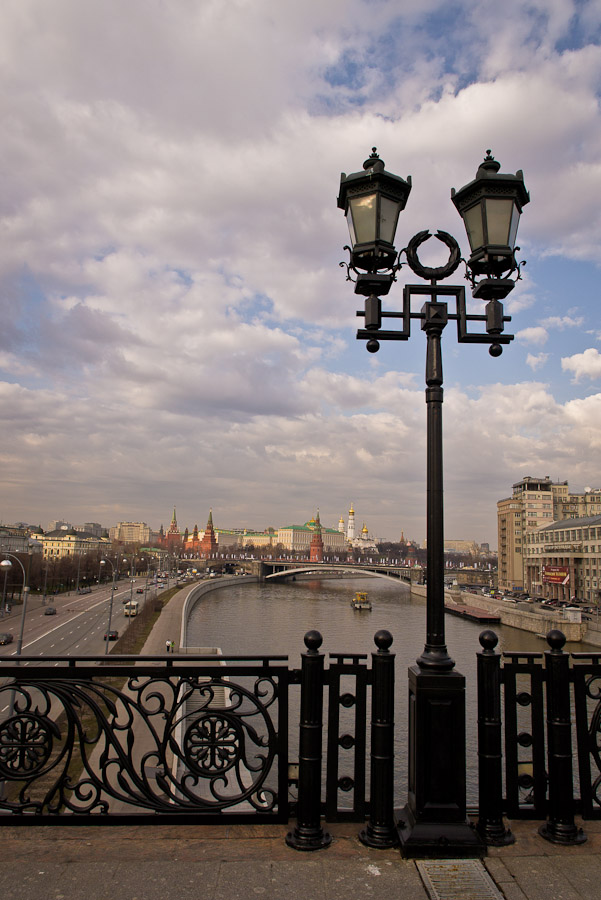
Moscow - Beautiful Series Shot With DMC-GX1 and Prime Lenses

Poster PiterM on mu-43 posted a spectacular series of images from Moscow.
 
(Click Here) to see the entire post. You really owe it to yourself to see all of the images.
Moscow, by PiterM on mu-43.com
Image Source: http://www.mu-43.com/f56/russia-love-gx1-3-primes-12-20-45-a-24469/
 
PiterM comments on how much satisfied he is with the Panasonic Lumix DMC-GX1 and three primes for his travel photography. On this trip, he carried two Olympus lenses (12mm f2 and 45mm f1.8) and the Panasonic Lumix 20mm f1.7. He notes that so far, he has used the two Olympus lenses most on this trip.

PiterM also mentions how "out of place" he would have felt if he'd been carrying his Nikon DSLR instead.

As always, I love seeing faraway places through the lens of other photographers. PiterM and I certainly agree on how well Micro 4/3 works for travel. Moscow is another place I'd love to see one day.

DMC-365.blogspot.com


Friday, April 27, 2012

Carl Weese - Documenting America's Drive-In Theaters

 
Carl Weese's Drive-In Project
Image Source:
http://theonlinephotographer.typepad.com/.a/6a00df351e888f88340167644a0890970b-popup
 
I enjoy documentary photography. That includes everything from the straightforward imaging of scientific specimens for future reference (see my post on the Calvert Marine Museum), to war photography, a very dangerous proposition for the photographer (you won't see any war pictures taken by me).
 
Today's post is about Carl Weese, who lives in Connecticut, and travels the country documenting America's vanishing drive-in theaters. Drive-ins have been on the decline for a very long time, but are being dealt the death blow by digital technology. Sounds familiar (camera stores, bookstores, ...).
 
(Click Here) to read a piece about Carl's project on The Online Photographer.
 
(Click Here) to see a post on the NY Times blog.
 
Carl's big sweep across the western part of the country was funded within three weeks on kickstarter
(www.kickstarter.com). This is a great site where you can support projects that you believe in.
 
(Click Here) to see more of Carl's pictures on kickstarter.
 
Apparently, Carl has plans to sell exhibition-quality prints and maybe a calendar of his work.
 
Nice job, Carl! I hope the kickstarter funds will cover some coffee for those late night drives between theaters.
 
DMC-365.blogspot.com
 
By the way, if you like the kickstarter idea, consider funding one of my favorite Virginia Bluegrass band (and photography subject)'s effort to fund their new album:
 
(Click Here) to fund Furnace Mountain's album.
 
To see the band, (Click Here) to see my previous post on their recording session.


Tuesday, April 17, 2012

Civil War in Virginia - Shot With Panasonic Lumix 14-42mm Kit Lens

 
Union Soldier at Mount Zion Church, by Reed A. George
Union Solder at Mount Zion Church, Aldie, Virginia, by Reed A. George
Panasonic Lumix DMC-G3, Lumix 14-42mm f3.5-5.6 Kit Zoom
iso160, f5.5, 1/400 sec

I recently attended a local civil war event with my good friend Stan. Stan happens to be an avid Nikon photographer, and a Historian.

We attended an event entitled "Mosby: A Scout Along the Turnpike," which included three distinct historical sites here in Northern Virginia. The first stop for us was at the historic Mount Zion Church in Aldie, where we received detailed descriptions from re-enactors (one playing John S. Mosby, the famous guerilla leader fighting for the confederacy in the area, and another playing a Union soldier, above). The church, built in 1851, at various times in the civil war served as the first rendezvous site for Mosby and his Rangers, a field hospital, a barracks, a prison, and an actual site of military action. Union troops convalescing in the church as field hospital left graffiti on the walls that remains today. Also at this first site was a nice display of period-style weapons, like those shown below.


Muzzle Loader, by Reed A. George
Muzzle-loading Springfield Rifle, by Reed A. George
Panasonic Lumix DMC-G3, Lumix 14-42mm f3.5-5.6 Kit Zoom
iso160, f7.1, 1/500 sec


Colt and Remington Style PIstols, by Reed A. George
Colt and Remington-Style Pistols, by Reed A. George
Panasonic Lumix DMC-G3, Lumix 14-42mm f3.5-5.6 Kit Zoom
iso160, f7.1, 1/500 sec

The next stop on our tour was the Aldie Mill. The mill was owned and operated during the civil war by John Moore, who was genuinely against Virginia's secession from the Union, which put him in a bad situation with his mostly-rebel neighbors. He explained how because there was no room for neutrality in this part of the country during the war, both armies caused him problems at one time or another.

Miller John Moore, by Reed A. George
Panasonic Lumix DMC-G3, Lumix 14-42mm f3.5-5.6 Kit Zoom
iso400, f6.3, 1/350 sec

The old mill is still operational, and was running for the event. Here are a couple of shots from inside the mill.
 
Mill Works, by Reed A. George
Panasonic Lumix DMC-G3, Lumix 14-42mm f3.5-5.6 Kit Zoom
iso800, f4, 1/40 sec
 
 
Grain Detail, by Reed A. George
Panasonic Lumix DMC-G3, Lumix 14-42mm f3.5-5.6 Kit Zoom
iso200, f5.3, 1/160 sec

The final highlight of the Mill site was a slave's tale of the "Aldie Races," where Union soldiers nearly freed Aldie slaves. They had a glimpse of freedom before being returned to their Rebel owners.

Glimpse of Freedom, by Reed A. George
Panasonic Lumix DMC-G3, Lumix 14-42mm f3.5-5.6 Kit Zoom
iso200, f5.4, 1/50 sec

The final stop on our tour was at the Caleb Rector House at Atoka. In this house, John Mosby formed his group of rangers in 1863. Our interpretor at this site impressed upon us how similar Loudoun County is today to what the Rangers knew 150 years ago. He stated that you could drop any one of the rangers in Western Loudoun County today, and they would know exactly where they were.

Rector House Interpreter, by Reed A. Georeg
Rector House Interpreter, by Reed A. George
Panasonic Lumix DMC-G3, Lumix 14-42mm f3.5-5.6 Kit Zoom
Nissin Di466 flash (bounced)
iso160, f5.6, 1/160 sec
 
That wrapped up our civil war lesson for the day. It is great fun to have access to motivated historians with a depth of knowledge of our local history. Each site has its own special charms. For me, the mill is really something. The fact that it is still operational after all this time is very impressive.
 
That said, the church is also deeply interesting, with a cemetery that holds remains of both Union and Confederate soldiers within its walls, and approximately 60 unmarked African American graves just outside. While the Primitive Baptists allowed African Americans to worship in the church, they were always separate, with the whites seated downstairs, and the African Americans upstairs. This separation extended to the burial grounds.
 
Now on to the photographic discussion. I decided to limit myself to a single lens on this trip, the Panasonic Lumix 14-42mm f4-5.6 kit lens. I must admit, I regretted this during the day, and it cost me some nice available light shots inside all three sites, particularly the mill. I found the slowness of the f-stop particularly limiting; it has been a long time since I used a kit zoom for any length of time. And this was a bright sunny day, so conditions don't get much better for a lens of this type.
 
I find the image quality acceptable, but qualitatively lower than I would have gotten with the much more expensive Lumix 14-140 f4-5.8. That's not surprising, given the difference in price. However, since I have the 14-140, the only advantage of the 14-42 would be size, which to me is not worth the trade off in image quality. The 14-140 is not that big, after all. And, if I want small, I'll go for the Lumix 20mm f1.7.
 
In summary, I'll say that the 14-42 is acceptable for a kit lens, but any other native Micro 4/3 lens will yield better image quality. I'll also say that over-constraining myself was instructive, but did cost me a decent image or two.
 
For comparison, and a nice post about the Nikon 18-55mm kit zoom, see this post by my friend Graham Serretta over on Nelson Foto:
 
(Click Here) for the post on Nikon's kit lens.
 
I hope you find the history interesting, and the photography notes useful. It was a great day out for me!
 
DMC-365.blogspot.com


Tuesday, March 27, 2012

Panasonic DMC-GX1 in Milan, the Human Element

 
Milan Church by 13Promet on mu-43.com

Image Source: http://www.mu-43.com/f56/church-basilica-di-santambrogio-386-d-22735/#post217597
 
mu-43.com member 13Promet posted several images of the Basilico di Sant' Ambrogio, dated from 386AD.
 
(Click Here) to see the original post.
 
Of all the images posted, I appreciate the one above most. It was made with the GX1 and 14mm f2.5 Lumix lens. I find this lens very useful for interiors, just like shown here. The person in red, praying, significantly adds to the meaning of the picture for me.
 
The original post also includes some nice images made with an Olympus Pen FT 40mm F1.4 lens. I would like to try one of those some day.
 
Another "Lumix somewhere in the world I have not seen" post. It occurs to me just how many places I haven't been.
 
DMC-365.blogspot.com


Friday, March 23, 2012

Dual Exhibit at Tokyo Metropolitan Museum of Photography

 
Exploring Steel Bridge, by Masao Horino
Image Source: http://www.japantimes.co.jp/text/fa20120322a1.html?utm_source=feedburner&utm_medium=feed&utm_campaign
=Feed%3A+japantimes+%28The+Japan+Times%3A+All+Stories%29
 
As I have mentioned, I will be traveling to Japan in a little over a week from now. I love Tokyo, and am never without something new to explore, a new neighborhood to walk, or someone new to meet. I usually make it to the excellent gallery at Fujifilm's modern facility in Midtown. But, I have yet to make it to the Tokyo Metropolitan Museum of Photography. The last time I was there, I made the mistake of planning to go on a Monday, the only day of the week the museum is closed.
 
This time, while I'm there, there are two concurrent exhibits, one showing the work of Felice Beato (1832-1909), the other Masao Horino (1907-1998).
 
Beato was an early war photographer, active as Brady and his cohort were busy photographing the American Civil War. Beato photographed British military activities throughout Asia, but ended up spending 20 years in Japan. In addition to military subjects, he photographed local culture, and introduced hand coloring of photographs to the region. He also manually produced enormous panoramic images, ten of which are included in the exhibit. About 140 of his photographs in total are included.
 
Masao Horino was most active in the 1930s, and was very interested in advancing modern photography. He put his efforts into improving low, available light. He also showed female subjects in a new, casual way, unconventional in Japanese society. Horino stopped photographing, and showing his work, after World War 2, claiming his photographs had been lost in the war. This exhibit, including about 200 of his works, is his first show in 75 years.
 
(Click Here) for more information on the show, at Japan Times online.
 
I am planning to view both shows on my upcoming trip. Hopefully I'll have a good story to tell, or at least some of my own impressions to share.
 
DMC-365.blogspot.com