Showing posts with label composition. Show all posts

Friday, June 26, 2015

Three Levels of Subject in Landscapes

 
Foreground, Midground, Background
 
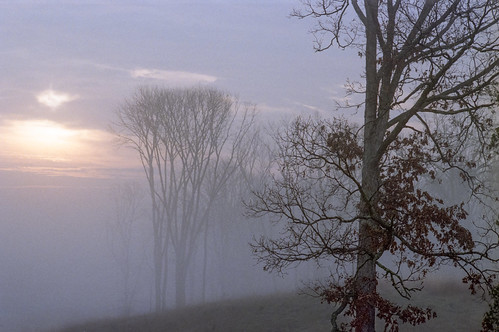
I've read that it can be helpful to think of landscape compositions in this way, having interest at the foreground, mid, and background. Looking back on some of my older images, I came across this one. Not a simple formula for success perhaps, but I think it worked here.
 
DMC-365.blogspot.com
 

Wednesday, June 10, 2015

That One Necessary Element

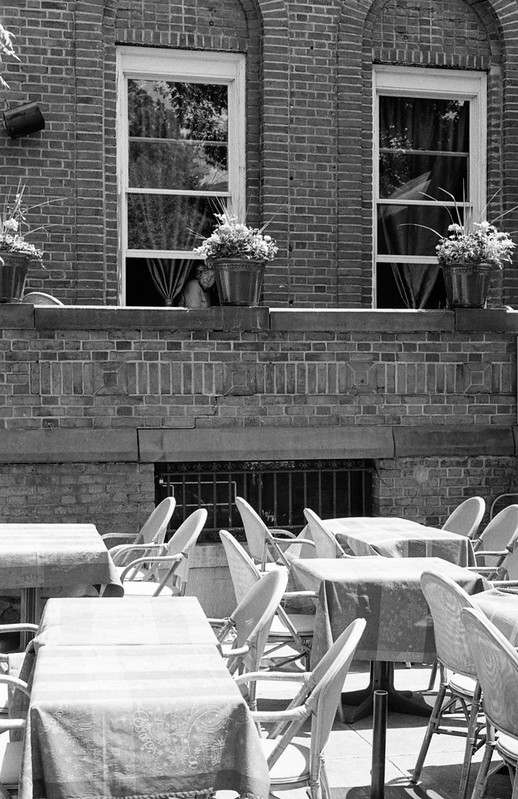
Face in the Window, by Reed A. George
Leica M3, Summicron 50mm f2 v.3
Ilford HP5+ 400 Speed Film
 
I was admiring the contrast of the bright tablecloths and dark shadows, and the potted plants on the railing through the finder of my Leica M3, but just didn't see a compelling image there. Then, the missing element appeared - the face in the window. Snap!
 
DMC-365.blogspot.com
 

Friday, June 5, 2015

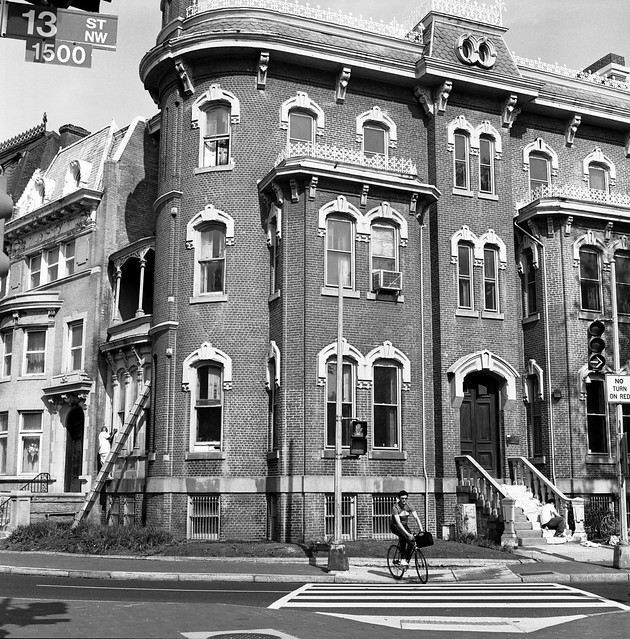
13 St NW - Washington, DC, Shot with Rolleiflex 2.8F Planar

 
13 St NW, by Reed A. George
Rolleiflex 2.8F Planar, Kodak TMax 400 Film
 
I know it looks like a simple shot, but I worked hard on this composition. I took a few other shots, but this one appeals to me the most. I believe that the two workers (one on a ladder on left, one on stairs at right), the bicyclist, and especially the open window at the top corner of the building are importnat compositional elements. The street sign at top left is as well. I see a compositional triangle of the ladder, window, and either bicyclist or worker on stairs that works well for me. The street sign sort of breaks up the scene in an interesting way.
 
Probably over-thought, but I like it.
 
DMC-365.blogspot.com
 

Wednesday, May 6, 2015

How to Get Better Pinhole Images

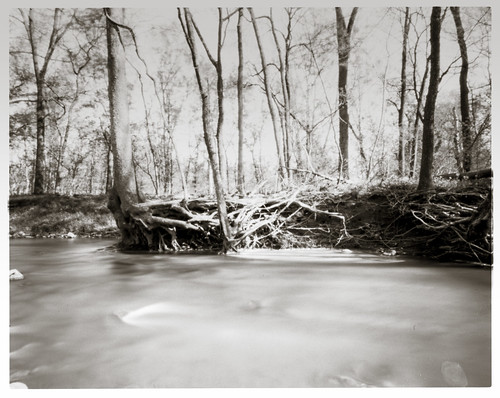
Bull Run Creek, by Reed A. George
4x5 Pinhole Camera
 
Today (the day I'm writing this, April 26, 2015) is World Pinhole Day.
 
(Click Here) to read about World Pinhole Day. You've missed this one, but read up and be prepared for the next one!
 
My friend, Bill, and I went put and shot pinhole images today at the National Arboretum in Washington, DC. I used my 6x17 panoramic pinhole camera for black and white. But, since there were so many great colors there because of spring, I also shot quite a lot with a pinhole body cap on my Nikon Df. I'll be posting some of those in the near future.
 
(Click Here) to read about the Reality So Subtle 6x17 panoramic pinhole camera that I use a lot these days.
 
After returning this evening, I did a web search to read a little more about pinhole techniques. I found a post on The Phoblographer (Click Here to read it), listing five keys to better pinhole photos:
 
  1. Shoot in black and white
  2. Use a tripod
  3. Use high contrast film
  4. Compose to guide the viewer through your image
  5. Use a lightmeter
 
I agree with most, but not all of these points. As I've already said, I do like to shoot color as well as black and white in my pinhole cameras. Also, I strongly recommend using a smart phone app, instead of a light meter. Personally, I use a great one called "Pinhole Meter" on my iPhone. It is very simple to use, and doesn't require me to mentally calculate anything. Better than a traditional lightmeter.
 
I had a great time shooting on World Pinhole Day. Now to process film, select a single image, and get it posted to the website!
 
DMC-365.blogspot.com


Wednesday, February 11, 2015

In Cars - On Composition

I believe that once you've learned the mechanics of photography - exposure, depth of field, focusing, etc., you can begin to look at the less concrete aspects of making good photographs. However, I think there are some concepts that bridge the gap between purely technical and artistic: lighting and composition, for example.
 
I shot a couple of rolls of Gekko 100 black and white film (donated to me by my good friend Dennis Gallus) last weekend. While doing the embassy row walk in DC, I shot two pictures from the Dumbarton Bridge. Here they are, side by side.
 
Two Compositions, by Reed A. George
Leica CL, Rokkor 40mm f2 Lens, Gekko 100 Film
 
Can you see the difference that the location of the cars in the scene makes? To my eye, the line of cars in the image on the left leads the viewer into and up the entrance ramp on the left. In the image on the right, the line of cars leads the eye in a curve to the right, and back to the bridge in the distance. Other than the placement of the cars, these images are nearly identical.
 
I feel that I have mastered the purely technical aspects of photography. Composition and lighting continue to challenge me, and perhaps always will. That's okay; it's part of the fun. I'm just scratching the surface of the higher "artistic" aspects of photography.
 
Here's a fun car shot, made the same day, from the new Metro Silver Line that runs from Reston, VA into DC.
 
Zoom Zoom, by Reed A. George
Leica CL, Rokkor 40mm f2 Lens, Gekko 100 Film
 
 
DMC-365.blogspot.com
 

Friday, January 30, 2015

First Shots - 6x17 Panoramic Pinhole - "Reality So Subtle"

Some cameras take a while to figure out. Pinhole cameras are definitely different from everything else I shoot, and require a different frame of mind. That's one of the things I love about shooting them. And then there's panoramic format. I remember when I purchased a Hasselblad Xpan, a camera that I never fell in love with. It took me several rolls to get used to composing in the long panoramic format. I did eventually get comfortable with it, but then moved on to a panoramic 35mm back for my Bronica ETR.
 
Anyway, I digress. The subject of this post is the "Reality So Subtle" 6x17 medium format panoramic pinhole camera that my lovely wife gave me for my birthday. (Click Here) to read my post about the camera.
 
Here are some images from my first two rolls of film through the camera. Remember, there are only four exposures per roll of 120 film, so this hit rate may not be too bad. I shot one roll of Portra 160, another of Portra 400.
 
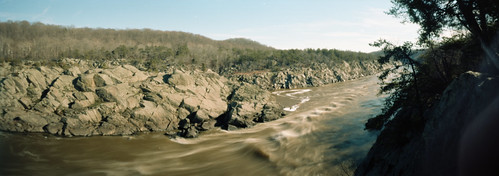
These first three were shot at Great Falls National Park in Virginia.


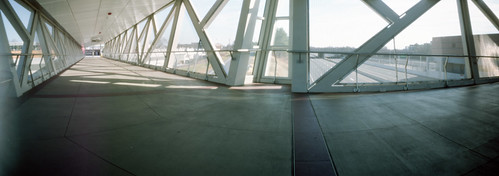
This next one came from the new Metro station in Reston, Virginia. It's my favorite of the bunch. There were actually some people walking through as I shot this one; they didn't show up because they were only there for a small fraction of the time the shutter was open.
 
 
So, I'm pretty pleased with this camera overall. That said, I need to use my head to find the right applications for it, and learn to use it just right. And that's not cheap. At four exposures per roll, plus the fact that my favorite film processor, thedarkroom.com, charges $10 extra per roll for panoramic format (!), I figure these cost well over $6 per exposure. That leads me to the conclusion that I'll start shooting black and white film in it for a while, and develop the images myself. That will bring it back to the "reasonable" level of about $1.50 per shot or so. That's less than a Polaroid image.
 
So, wish me luck! More to come.
 
DMC-365.blogspot.com


Wednesday, November 5, 2014

Cropping and Composition - Just an Exercise

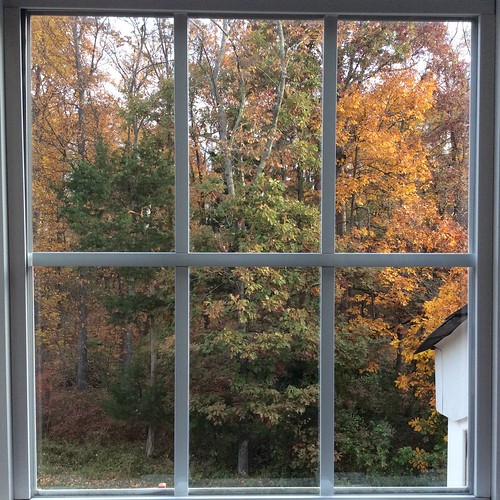
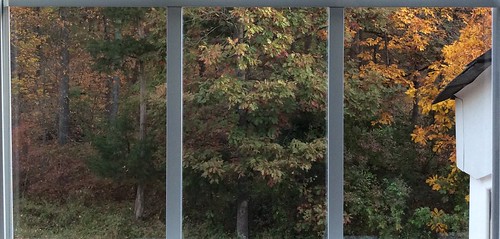
I saw this scene outside my window today.
 
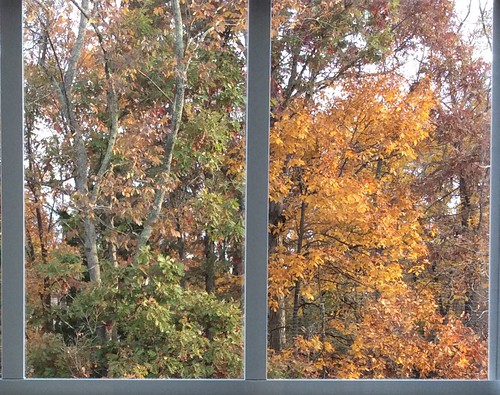
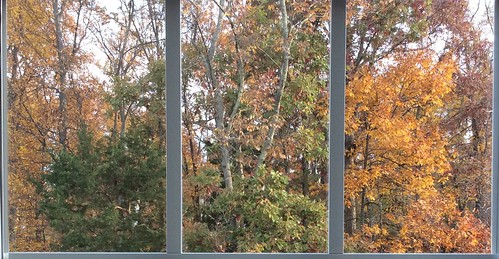
I thought it presented an interesting opportunity to try cropping in multiple ways. So, I shot it with my iPad and proceeded to play around, cropping into various configurations based on the window pane lines.
 
My first try was this, based solely on my gut feeling of what may look best:
 
Then, I tried others:
 
 
I realized at this point that the bright sky detracted from most compositions. Then, I decided to try some vertical crops.


This one turned out to be my favorite. I added a few touches in Snapseed, including a white frame, and this is what resulted:
 
Not a masterpiece, by any means, it did help me to think about cropping and composition. At first, the little bit of my house that shows in the picture seemed like a distraction; I would not have picked a composition that included it. In the end, it turned out to be the best subset of the original picture to show.
 
If nothing else, this reminds me that my first inclination on how to compose a scene may not be the best. It's worth playing around and trying different compositions.
 
DMC-365.blogspot.com
 

Monday, November 3, 2014

Reductionism in Photography, as Covered by Theme

Reduction, by Reed A. George
Panasonic Lumix DMC-GX7, 14-42mm f3.5-5.6 Series II Kit Lens
iso 200, f9, 1/60 sec.
 
I read an interesting post on the blog Theme, about reductionism in photography. It considers the act of boiling down everything that we see, hear, and think to a simple concept. In photography, that translates to reducing composition to the absolute minimum.
 
(Click Here) to read the post about reductionism on the Theme blog.
 
Personally, I'm not sure where the intersection is between reductionism and simplicity. Many photographic texts and teachers stress simplicity in photographic composition. I don't really work that way. I have been told that some of my images have too much clutter, are not simple to understand. In general, I don't mind this, if the image still transmits a message. I don't want my images to be so simple as to be obvious or shallow.
 
The picture above is a rare example of simplicity (or is it reductionism?) for me. I took this one in Provincetown, Massachussetts when I was there for a workshop. To me, it represents a special quality to the light that I experienced there. It also reminds me of the simple yet completely satisfactory room that I stayed in while I was there. Of course, no other viewer will have the benefit of that experience.
 
It was the light that caught my eye, not the subject. I love how the light coming through the holes in the strainer is golden; I didn't set that up in any way. It's just the way it was.
 
Anyway, I'm sure that I can benefit from considering reductionism in my photographic work. I will do that, without losing some of the complexity that I feel when I make a picture. There's something to learn from each and every person's approach to photography and art.
 
But, I still don't really know if reductionism and simplicity are the same concept.
 
DMC-365.blogspot.com
 

Sunday, October 19, 2014

Miho Kajioka's "Hello October" on burn.

Sometimes, I love simple images. In my own work, I tend toward more complicated compositions. In fact, I think I need to stretch and do a project of simple images.
 
Here's one by Miho Kajioka, posted on burn. magazine's site. David Alan Harvey is the curator of burn.
Hello October, by Miho Kajioka
Image Source: http://www.burnmagazine.org/burn-diary/2014/10/hello-october/
 
(Click Here) to go and see burn.
 
DMC-365.blogspot.com

Thursday, August 28, 2014

Lone Cypress, Pacific Grove, California

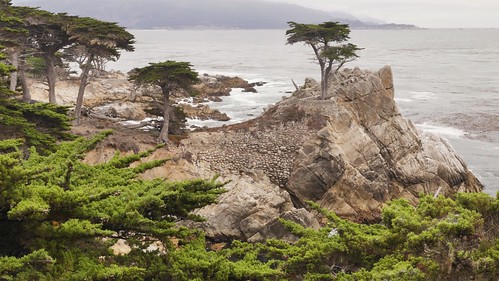
Here's a shot I made this afternoon of the Lone Cypress on the 17 Mile Drive in Pacific Grove (near Monterey) California.
 
Lone Cypress, by Reed A. George
Panasonic Lumix DMC-GX7, Lumix 14-42mm f3.5-5.6 Aspheric Series II Kit Zoom
at 23mm, with 3 stop ND + Polarizing Filter
iso 200, f22, 0.5 sec.
Edited in Snapseed on my iPad
 
This same spot is photographed hundreds or thousands of times every day. I tried to think hard about composition. I used the ND and polarizing filter to allow me to shoot a long exposure (1/2 second), in an attempt to make the water motion smooth and ethereal. It worked at a certain level.
 
What a gorgeous place this is.
 
DMC-365.blogspot.com
 

Tuesday, August 26, 2014

Another Berkeley Favorite - Used Book Stores

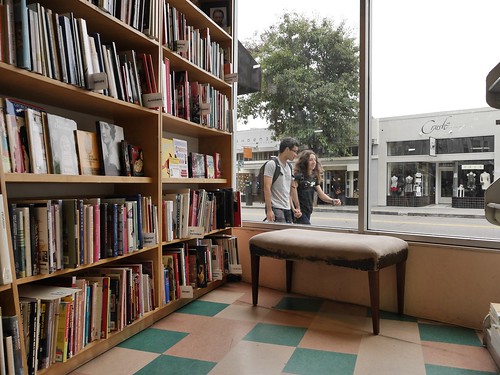
Actually, this bookstore (Pegasus) is at Rockridge in Oakland, just across the border from Berkeley. I find used bookstores to be a sign of true culture. Of course, that' just my opinion.
 
View from Pegasus, by Reed A. George
Panasonic Lumix DMC-GX7, 14-42mm f3.5-5.6 Series II Kit Zoom
iso 800, f5, 1/320 sec.
Unedited image straight from the camera
 
The light on this foggy morning was very subtle. It was the soft shadows around the bench the first caught my eye. Then the line of the bookshelves provided a nice lines, intersecting with the window ledge to focus attention near where the people outside were walking by.
 
Not an important shot, but a fun one none and an exercise in composition none the less.
 
DMC-365.blogspot.com


Sunday, July 27, 2014

Korean War Memorial Reflecting Pool - Leica M9, 90mm Elmarit f2.8

 
Korean War Memorial Reflecting Pool, by Reed A. George
Leica M9, Leica Elmarit 90mm f2.8 v.1 Lens
iso 160, f4.8, 1/500 sec.
 
 
I went into DC with my friends Alain and Charlie today, to do a little shooting at the National Mall. It was a gorgeous day. While I find the national monuments a bit challenging to shoot, mainly because they've all been done so much, I do like this image. I think the combination of the curved lines, reflections, and people interacting with the environment are just enough to make it a decent composition.
 
DMC-365.blogspot.com
 

Monday, July 21, 2014

Just A Shot I Like - San Pedro Home

 
San Pedro Home, by Reed A. George
Panasonic Lumix DMC-LX7
iso 200, f5.6, 1/2000 sec.
 
This image would really have benefitted from a person in the composition, especially just the right person. As it is, I still like it. The tied curtain in the door on the right is the most important element. If I'd had time, I would have waited for the right person.
 
I still think the image says something. The distinct sunlight/shade line reminds me of the time of day, and the Carribean sun. I can imagine how it may feel inside, in the cool darkness. The door on the left is a little mysterious to me.
 
Maybe I'm reading too much into a simple picture of a Belizean house front. That's okay, too.
 
DMC-365.blogspot.com
 

Thursday, June 19, 2014

Composition Choices - Tension at the Edge of the Frame

Today I want to demonstrate an element of composition that I like to use once in a while - adding tension to a photograph with an important element near the edge of the frame. Now, it really does add tension, not comfort, so it's not something you want to use all the time, most likely.
 
Here's what I mean.
New Orleans Balcony #1, by Reed A. George
Panasonic Lumix DMC-LX7
 
Now, I like the shot above quite a bit. Very strong leading lines everywhere, and the waitress at left is a very nice focal point, somewhere near the edge, but not at it. I like this shot, but don't love it.
 
Here's another, same place, just a few seconds different timing, with just a little different composition.
 
New Orleans Balcony #2, by Reed A. George
Panasonic Lumix DMC-LX7
 
Overall, I'd say this shot is not as nicely composed as the first. The lines converge more centrally to the image, giving a balance that I don't really like. Except. Except for the gentleman standing at the extreme left edge. He throws off that balance completely. His face is a slightly unexpected element in the composition, and I think he adds just that thing to make this picture better than the one above.
 
I don't think this technique makes for a comfortable, pretty image in most cases. In my opinion, good photographs impart an emotion, not always "oh, that's pretty!" I think the second image does that better than the first.
 
However, if I were picking one of these to hang on my wall, I'm not sure which I'd pick.
 
Opinions? Please share.
 
DMC-365.blogspot.com
 

Monday, June 9, 2014

More New Orleans Street Art

I have a thing for artists who make their living sharing creativity on the street. This gentleman was most gracious when I asked if I could take his picture at Jackson Square in New Orleans.
 
Street Artist, New Orleans, by Reed A. George
Leica M6 Titanium, Kodak 400 Color Print Film
 
I honestly can't remember if I was using my 35mm f2 Summicron or 50mm f1.4 Summilux for this shot. I must learn to record my film shooting parameters better.
 
What attracted me to this man as a subject was the combination of beautiful morning light bouncing from his sketch pad and lighting his face, and his intense concentration on his subject. In composing the shot, I got down low, hoping to use the line of the fence to align somewhat with his line of sight. I think I achieved that reasonably well. I was able to get in and out of their way very quickly, and captured exactly what I wanted with the M6.
 
Nope, I'm not ready to give up film yet.
 
DMC-365.blogspot.com


Wednesday, June 4, 2014

Visual Poetry - Audubon Park, New Orleans

Visual Poetry, by Reed A. George
Leica M9, Leica Summicron 35mm f2 v.3 lens
iso 200, f3.4, 1/1000 sec.
 
Knowing that it was important to get out of the French Quarter, at least for a little while on my recent trip to New Orleans, I hopped a streetcar to Audubon Park one morning. After my own SNAFU, whereby I rode past the station where I needed to change lines, walked several blocks to recover, then discovered that the streetcar line was under construction and being supported by bus, I was quite a bit later arriving than I had planned. The bright Louisiana sun was well up in the sky when I got to the park. That did not stop me.
 
This is one of my favorite couple of images from that morning. I saw this composition as soon as I walked into the park; an hour later and the lighting would have been all wrong. There are several things I love about this shot. The light is at nearly exactly the right position to put the statue's face in a nice combination of light and shadow, and light the body of the statue perfectly to stand out against the dark backround of the live oak branches behind it. I love how the statues interact, including the third and fourth, slightly out of focus in the background above the child statue at bottom right. They're barely even elements in the composition, which is how I wanted it. The palm tree in silhouette way back there is another important element to me. The similarity of the main statue's pose and arm position to that of the lovely live oak tree behind is probably what attracted me to this composition in the first place.
 
Of course, the next time I go to New Orleans, I will be at the park at sunrise; that would just be spectacular. Not having made it at the perfect time on this morning, I'm quite pleased with this result.
 
The Leica M9 and 35mm Summicron pulled it off nicely for me. I think this one warrants a print.
 
DMC-365.blogspot.com
 

Thursday, May 29, 2014

Morning in Jackson Square, New Orleans

Morning in Jackson Square, by Reed A. George
Leica M6 Titan, Summicron 35mm f2 v.3 Lens
Ilford Delta 3200 Film
 
As I sit writing this morning in my local Starbucks, this image reminds me of the wonderful coffee and chicory I had just enjoyed at Cafe Du Monde a few minutes before I shot it. I like Starbucks; I loved my Cafe Du Monde coffee that morning.
 
Morning is very quiet in the French Quarter; most of its denizens are at least semi-nocturnal. I always enjoy seeing new places early in the morning, to get a different perspective.
 
The sunlight was just coming up over the bank of the Mississippi River, which would be on the right in the photo above. I like how the edge of the light follows the intersection of the two sets of stairs, going off at different angles. While the steps in the lower section are fully light, those in the middle have light only on their edges. The pigeon at right is similarly edge-lit, which gives it a bit of a focal point in my opinion.
 
DMC-365.blogspot.com
 

Friday, January 3, 2014

"Dreaming in Monochrom(e)," What Might I Learn?

Image Source: http://johnbuckley100.files.wordpress.com/2013/08/new-jim-crow.jpg

As I mentioned in yesterday's post, I'm interested in the Leica Monochrom. However, I want to really know more about how it would affect my photography before contemplating the purchase of one. So, I'll be working with my M4-2 film camera and black and white film in the coming months, to help answer that question.

The cost of this camera is enormous. It would probably require me to sell my belove M9, which I'm not in a hurry to do. So, I'll refer to this exercise as "Dreaming in Monochrom(e)." Look for it in coming posts.

I read a post on John Buckley's blog "Tulip frenzy," reflecting on a full year with the Leica Monochrom.

(Click Here) to read the full post on Tulip Frenzy.

In the beginning, he writes of discovering monochrome images that he never would have desaturated from color on his own. One note here - for reasons I don't know, John writes from a perspective of "we." I'll substitute "he" here. I hope no one minds.

After the discovery process, it seems that John transformed his photographic thinking when carrying the Monochrom, thinking in luminance (light level) instead of chroma (color). This led him to photograph different people than he would have with color. It also impacted his landscape images. It even drew him to classic photography books, where most of the work (or all) was black and white.

Later in the year, his confidence in choosing which images would be best in monochrome clearly increased.

My take is that if I dedicate my M4-2 (Leica film rangefinder camera) to black and white, and spend some time working with it, I should be able to experience all of the things John describes in his piece. One thing that John mentions about the Monochrom gives me even more confidence in my belief, where he refers to the sensor as:

"...precisely as limited as black and white film..."

Now, I don't think that statement is completely accurate. Apparently, you can shoot very useable images at iso 8000 with the Monochrom; I won't be achieving that with my M4-2. And, I have no illusions about my scanned black and white film rendering anything like the dynamic range of the Monochrom. No, I'm looking for qualitative aspects of dedicated black and white photography here. For example, how often will I carry only black and white film? I'm certainly not looking to add another camera to the bag I put over my shoulder.

In any case, I'm sure it will be an educational experience.

DMC-365.blogspot.com


Sunday, December 8, 2013

Chinatown Sky, San Francisco

Chinatown Sky, by Reed A. George
Leica M6, Kodak 400 Color Print Film
 
I have always been attracted to the Chinese lanterns and dragon-design lightposts in San Francisco's Chinatown. In this shot, the clouds against the bright blue sky, boxed-in by the building roofs, provide a nice backdrop for them. The diagonal line of the lanterns also works for me.
 
This is a low resolution scan that I downloaded from The Darkroom's online site. I added some saturation in the lanterns, and darkened up the shadows under the roof eaves, and added the frame in Snapseed. I may do some more work with this image when the negatives arrive in the mail next week. I'm sure it will look somewhat different if I scan it at home and post process with Lightroom.
 
DMC-365.blogspot.com