Showing posts with label DMC-G1. Show all posts

Tuesday, October 28, 2014

Asian Archery - Japan and Korea

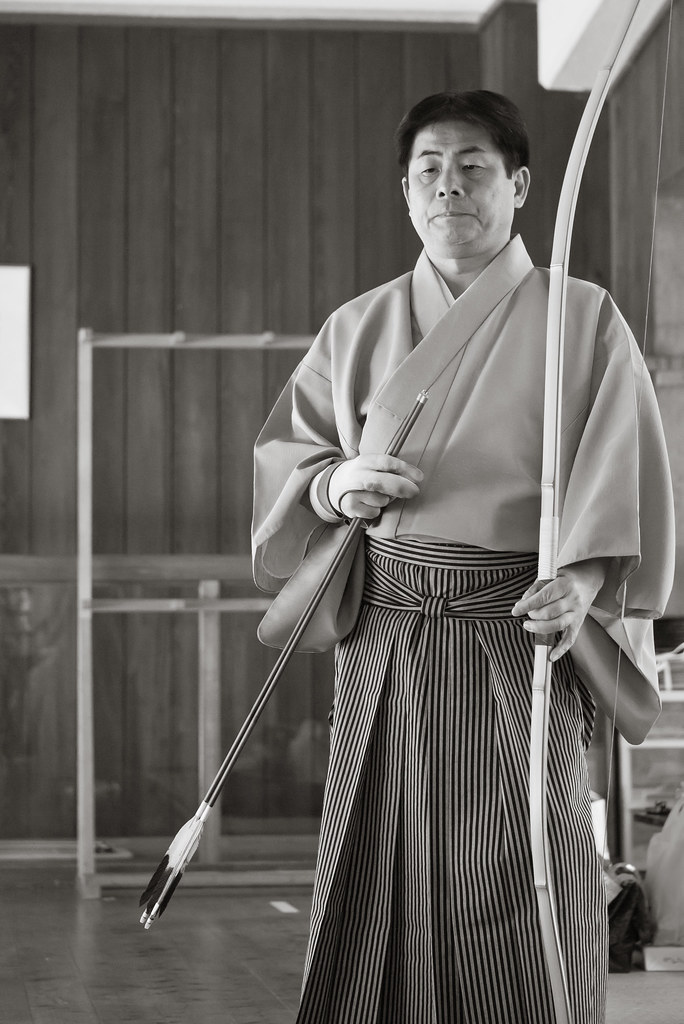
Japanese Kyudo Practitioner, by Reed A. George
Panasonic DMC-G1, Pana-Leica 45mm f2.8 Macro-Elmarit Lens
iso 400, f2.8, 1/50 sec.
 
Japanese archery, known as kyudo, has been practiced in Japan since prehistory. It first shows up in art a few hundred years B.C. No longer a part of military weaponry, kyudo in Japan is a contemplative art form, as well as a sport.
 
I found a related post on Walter Ulreich's blog, in his case writing about archery in Korea.
 
(Click Here) to see images of Korean archery, both today, and in some photojournalist's photos Walter found from 1961. Very cool.
 
Ulreich's blog reports the following:
 
"In the year 1894 bows were excluded from military use, but Emperor Gojong gave command to use archery for the cultivation of mind and body of the Korean people. As a result of that command, the Hwanghakjeoung pavilion was built in the Royal Palace and opened to the public. It is said, that Emperor Gojong personally enjoyed archery and often visited Hwanghakjeoung."

So, it seems that archery has made a similar transition from warfare into mental and physical concentration exercise in Korea, as it did in Japan.
 
DMC-365.blogspot.com
 

Saturday, September 27, 2014

Nice Summary of Six Years of Micro 4/3 on m43photo.blogspot.com

Dancing, Golden Gate Park, by Reed A. George
Panasonic Lumix DMC-G1, Voigtlander 28mm f2 Ultron Lens
 
 
I have spent a lot of time shooting, and thinking about, the Micro 4/3 format. In fact, my blog is named in observance of the standard "DMC-XX..." camera model designation of Panasonic's Lumix cameras. For Panasonic, the DMC-G1 was the first Micro 4/3 camera. I made good use of that one. Then, for an entire year, I focused mostly on shooting a pair of DMC-G3s.
 
I have ventured far and wide since that first year of 2012, but still regularly include Micro 4/3 gear and images in my posts.
 
The blog m43photo.blogspot.com, started in 2009, has been focused on Micro 4/3 longer, and more exclusively than my own, but with fewer overall blog posts. Now they have posted a brief retrospective of what's gone on in terms of camera and lens development over the past six years.
 
(Click Here) to read the post on m43photo.blogspot.com
 
I have been ambivalent over the years about whether or not the Micro 4/3 sensor size was the right compromise between sensor size (larger would provide better image quality) and equipment size (smaller sensors lead to smaller cameras and lenses). About a year or two ago, it seemed that APS-C was about the smallest you could go and still expect truly excellent image quality at higher iso settings. Now, I'm beginning to once again think that Micro 4/3 may turn out to be an ideal size.
 
In the Magnum workshop that I just attended, I shot with both my Leica M9, a full frame digital rangefinder, and the Lumix DMC-GX7, a Micro 4/3 camera. As it turned out, I used the GX7 for most of my shooting, which included a lot of bike rides around the Cape Cod National Seashore; most of the images in my final project submission were shot on Micro 4/3. There were certainly no complaints about image quality.
 
In fact, at the same workshop, David Alan Harvey showed us his new book Based on a True Story. The cover shot was made with a Lumix GF1 Micro 4/3 camera. It's hard to argue with the image quality he achieved.
 
It will be interesting to see how the evolution of Micro 4/3 proceeds over the coming several years.
 
DMC-365.blogspot.com

Monday, June 23, 2014

Saul Leiter - "In No Great Hurry"

Photographer Saul Leiter (Left) and Director Tomas Leach
Image Source: http://erickimphotography.com/blog/wp-content/uploads/2013/06/INGH7-Saul-Leiter-and-Director-Tomas-Leach.jpg

Here's a movie I'm actually looking forward to seeing. Director Tomas Leach was given a book of Saul Leiter's photographs, called Early Color. He decided to approach Leiter with a proposal to make a biographical film about him, and it was accepted.
 
Based on the trailer, which you can see by
 
(Clicking Here) on http://watch.innogreathurry.com

I'm convinced this will be an interesting film for me. Leiter seems like a very down-to-earth guy. The trailer is somewhat reminiscent of the film about Bill Cunningham, which I wrote about earlier. (Click Here) to see that post.
 
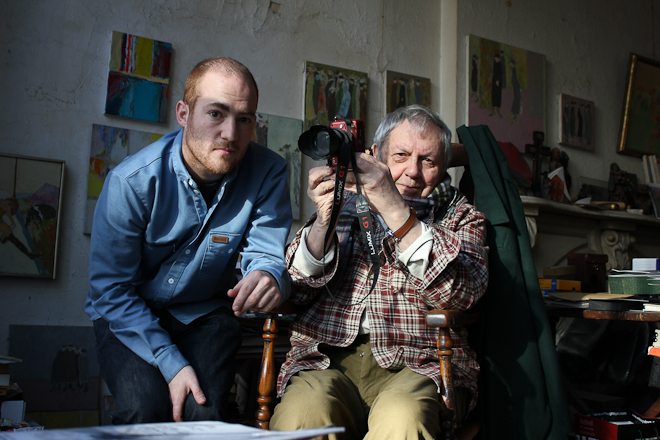
While Cunningham continued to use a Nikon FM2 camera for his whole career, we see in the picture above that Leiter at least toyed with more modern digital cameras, including a Panasonic Lumix G1, and an LX series (LX5), both excellent cameras in my opinion.
 
Use google image search to look for Leiter's pictures. There's a lot for me to learn from this man.
 
I learned about Leiter on Google+ in a post by Kent Forrest. The image above came from Eric Kim's photography blog. (Click Here) to see Eric's post about the film, which opens in the US in July.
 
DMC-365.blogspot.com


Saturday, January 12, 2013

Studying Color - The Color Wheel and Complementary Colors

 
The Color Wheel
Image Source: http://en.wikipedia.org/wiki/Color_wheel
 
Reading a new series of posts about on JPG Magazine's blog has me remembering middle school art class, and thinking about color schemes.
 
(Click Here) to read about the complementary colors red and green (for the holidays) on JPG Magazine's blog.
 
Complementary colors are defined as those that will make gray when combined. In a simpler sense, they are colors that lie opposite (or near opposite) one another on the color wheel. Use of complementary colors can make for dramatic images.
 
There are some very nice examples in the blog link above.
 
So do I have any examples of using complementary colors in my own work? Here's one:
 
Koi and Lily, by Reed A. George
Panasonic Lumix DMC-G1, Lumix 45-200mm f4-5.6 at 97mm
iso 100, f5.6, 1/60 sec
 
And here's one you may have seen posted here before.
 
Beautiful Obsolesence, by Reed A. George
Panasonic Lumix DMC-G3, Pana-Leica 25mm f1.4 Summilux
iso 160, f5.6, 1/160 sec
 
I like the JPG blog. There is already a follow-up post on other complementary colors. I don't think that I consciously picked this color combination in the shots above, but they must have caught my eye.
 
DMC-365.blogspot.com


Sunday, November 25, 2012

Three Years of B&W Images from noizy's Lumix GF-1

 
"I Will Come for You," by noizy on mu-43.com
Image Source: http://500px.com/photo/15016967
 
I still have a Lumix DMC-GF1. When I bought my G3 bodies, I happily sold my trusty G1. I chose to keep the GF1, mainly because I really like the form factor. However, I have not used it since getting the G3s.
 
Member noizy on mu-43.com has shared an awesome selection of monochrome images shot with the GF1 over a three year period.
 
(Click Here) to see noizy's post on mu-43.com.
 
I really like the shape, size, and style of the GF1. However, I always use the accessory electronic viewfinder (EVF), which really breaks all of that in my opinion. I just can't be happy shooting from an LCD. The accessory EVF makes the GF1 really no smaller than the G3, which has the finder integrated. I thought it may be a great back-up body to carry on travel, but since it uses a different battery than the G3, I don't use it for that, either. I don't want to carry yet another charger. I really should sell the GF1.
 
I love it when someone just uses a camera, regardless of what else is out there in terms of new products. This is exactly what noizy has done here.
 
DMC-365.blogspot.com


Saturday, November 24, 2012

Olympus OM-D and Lumix 45-200mm Zoom - Nice Horseback Pictures by caimi on mu-43.com

 
Olympus OM-D, Panasonic Lumix 45-200mm f4-5.6 Lens
 
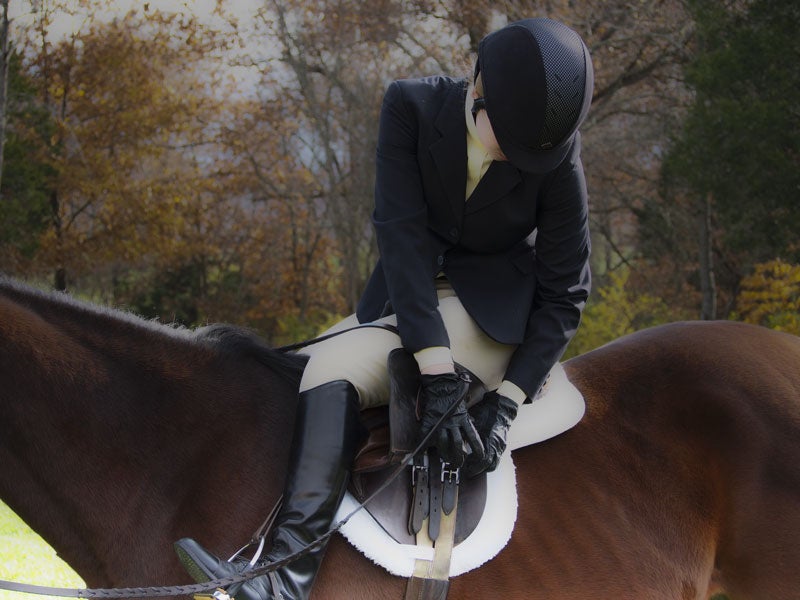
Member caimi posted several very nice pictures from a horseback riding event, all shot with the Olympus OM-D and Panasonic 45-200mm f4-5.6 lens.
 
(Click Here) to see the full post on mu-43.com
 
I bought the Lumix 45-200 with my first Micro 4/3 camera, the DMC-G1. It is an awesome lens - very compact, fast, and sharp. I sold it when I moved to the 14-140mm f4-5.8 and the 100-300mm f4-5.6. I believe the 45-200 is sharper than the 14-140. The 100-300 is so good, I can't say either one is better in the range where they overlap.
 
Ducking Parade, by Reed A. George
Panasonic Lumix DMC-G1, Lumix 45-200mm f4-5.6 Lens
iso 400, f6.3, 1/640 sec.


Goldfinch, by Reed A. George
Panasonic Lumix DMC-G1, Lumix 45-200mm f4-5.6 Lens
iso 400, f5.6, 1/500 sec.

Nothing wrong with the 45-200, even though it was one of the first Lumix Micro 4/3 lenses.

DMC-365.blogspot.com


Tuesday, October 16, 2012

Shooting in Bad Weather

It's that time of year, at least here in the Northern Hemisphere - yes, here in Northern Virginia, along with the welcome cooler temperatures, gorgeous changing leaves, and approach of winter, we get a fair amount of rain. I try my best not to let it keep me indoors, or away from shooting.
 
I recently read an article on shooting in inclement weather on the Photo Blog ePHOTOzine.
 
(Click Here) to read the full article.
 
Here are some points that author John Gravett makes about shooting in the rain:
 
  1. Wear protective gear for yourself - a good rain jacket, waterproof pants, maybe gloves. John doesn't wear gloves, but suggests neoprene fishmerman's gloves, if you need them.
  2. Carry a waterproof camera bag. Many of the LowePro bags come with a handy integrated rain cover, for example. You can also always use a plastic bag, but it doesn't look as cool.
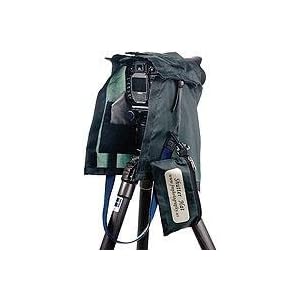
  3. Protect your camera when it's out of the bag. John makes the point that some gear (he mentions Nikon) is very water resistant. I use the Shutter Hat (below) for my Nikon or Micro 4/3 kits when it's really raining. I use a hotel room hair cover (the ones that you get free in the hotel room bathroom) for smaller cameras. I also use a DiCaPac cover for my Lumix DMC-LX5, which makes it completely waterproof.
Shutter Hat Camera Protector
Image Source: www.amazon.com
 
In terms of the photography itself, John likes to work with telephoto lenses to compress the perspective, and often uses water to provide a flow to the composition.
Rain on Branches, by Reed A. George
Panasonic Lumix DMC-G1, Lumix 45-200mm Zoom Lens
iso 800, f5.6, 1/125 sec
 
John also suggests trying black and white in the rain.I find that black and white, with a yellow or red filter to make the sky contrast more dramatic, can really work well.
 
Here's a shot I took in the pouring rain, using my DMC-LX5 in the DiCaPac cover.
 
Chesapeake On A Rainy Day, by Reed A. George
Panasonic Lumix DMC-LX5
iso 80, f2.8, 1/320 sec
 
If I were to try that again today, I would certainly do it with my waterproof Lumix DMC-TS3. It's so much easier to use than operating camera controls through a waterproof cover. And there was enough light on this day that the TS3 would have done fine. The TS3 doesn't shoot raw, and doesn't have near the low light and lower noise capability of the LX5. But, in this case, convenience would have been very nice.
 
DMC-365.blogspot.com


Friday, October 12, 2012

Awesome Bird Shots With Panasonic Lumix DMC-G5, Lumix 100-300 f4-5.6, and a Telescope

 
By FernandoBatista on mu-43.com
Shot with DMC-G5 and Lumix 100-300mm f4-5.6
Image Source: http://www.mu-43.com/f54/bird-new-g5-image-heavy-33977/
 
FernandoBatista on mu-43.com has posted several amazingly sharp bird photos, all shot with the new Lumix DMC-G5. Some were shot with the Lumix 100-300mm f4-5.6, others with an apochromatic telescope adapted to the Lumix body.
 
(Click Here) to see them all.
 
I have really gotten some nice images with the 100-300mm Lumix lens. Sitting birds are one thing. Shooting them in flight, which really helps to make them look less like stuffed taxidermy models, is much harder. The Lumix lens' fast autofocus is pretty good, but it's definitely still not a high hit-rate endeavor.
 
 
Red-Wing Blackbird, by Reed A. George
Panasonic Lumix DMC-G1, Lumix 100-300mm f4-5.6 at 275mm
iso400, f5.6, 1/80sec
 
This is about the best I've done on birds in flight with the Lumix 100-300:
 
Osprey in Flight, by Reed A. George
Panasonic Lumix DMC-G1, Lumix 100-300mm f4-5.6 at 177mm
iso400, f8, 1/1250sec

I've actually done much better with a manual focus Nikkor 500mm f4 than with any autofocus lens. That said, I've spent a lot more time perfecting my technique with that lens, and matched with the superb Nikon D700 full-frame sensor, it's not really a fair comparison:


Ospreys in Flight, by Reed A. George
Nikon D700, Nikkor Ais 500mm f4 (manual focus)
iso500, f5.6, 1/1500 sec


I have this one enlarged to 12x18 on my wall, and the sharpness is remarkable. It's easy to tell these guys aren't stuffed!


DMC-365.blogspot.com


Friday, September 21, 2012

Well, A Little Reporting Balance, Perhaps

If you read my blog regularly, you know that I am a big fan of the Micro 4/3 format. I chose the Lumix DMC-G3 as my Micro 4/3 camera, and regularly carry two bodies and primes lenses. I'm quite happy with the results.
 
Panasonic Lumix DMC-GX3
Image Source: shop.panasonic.com
 
 
Micro 4/3 is by design a compromise between sensor size and overall camera and lens weight and volume. Micro 4/3 is a great compromise in that way, in my opinion. While the sensor is ~1/4 the size of 35mm full frame (50% in each direction), the compactness of the system is just plain right. If it were smaller, it would be too hard to use with human hands, in my opinion. As it is, I certainly hit the wrong buttons on the G3 once in a while, but that's probably my fault. Again, in my opinion, if I were designing a system, I would likely do exactly what they did with Micro 4/3 - go slightly smaller in sensor size, in favor of a compact system overall. This is because we all know that sensor technology will continue to improve, so the down sides to a small sensor will decrease over time. The progress made in high iso performance since Micro 4/3 started a few years ago is amazing. And, it's getting better all the time. The only real limitations are physical - like the effect on depth of field imposed by the small sensor. That can't be fixed by sensor improvements.
 
That said, not everyone agrees with me on how good the format is. PhotoPat on mu-43.com posted that he had a terrible experience with the Lumix DMC-GX1. He's now sold it off.
 
(Click Here) to read PhotoPat's thread on mu-43.com
 
As you can imagine, and read in the comments in PhotoPat's thread, posting disappointment in Micro 4/3 on a Micro 4/3 forum invites some dissent. Nothing too bad, but interesting.
 
Sometimes I have to go back and compare images that I've gotten with full-frame cameras to what I'm getting with Micro 4/3, just to convince myself again that Micro 4/3 image quality is good. It is. I'm pleased with it for much of my photography.
 
Here's an example shot, which won me a contest and made it into the Civil War Trust's 2011 calendar (September page). This was shot with a first-generation Micro 4/3 camera, the DMC-G1.
 
Henry House at Manassas National Battlefield, by Reed A. George
Panasonic Lumix DMC-G3, Leica Elmar 3.5cm f3.5 Screwmount Lens
 
I would never prescribe Micro 4/3 only to anyone else. In fact, you'll see that I shoot plenty of other systems. But, if you use it carefully, the Micro 4/3 system is surely capable of producing some nice images.
 
DMC-365.blogspot.com


Monday, September 10, 2012

How Well Does Micro 4/3 Format Work For Landscapes?


Landscape, by JohnW on getdpi.com
Image Source: http://forum.getdpi.com/forum/4-3rds-cameras/39861-m4-3-landscape-system.html
 
Garnet Lake, by Reed A. George
Panasonic Lumix DMC-G1, Lumix 14-45mm kit lens at 14mm
iso 100, f8, 1/200 sec
 
NOTE: the original picture for this post, from JohnW on getdpi, is no longer available. So, I've substituted one of my own landscapes made with Micro 4/3 equipment.
 
Everyone knows that the tradeoff in Micro 4/3 camera gear is sensor size, which gives you awesome small form factor cameras and lenses in exchange for the small image format. This has been written about, and argued about, ad nauseum. In my opinion, Micro 4/3 cameras started out pretty good in the image quality department (my Panasonic Lumix DMC-G1 produced very nice images, and still does now in the hands of a friend), and have only gotten better. I'm pretty pleased with the Lumix DMC-G3 in terms of image quality and reasonably high iso situations. I understand the Olympus OM-D is even better. Maybe even better than the new products coming out from Panasonic. That last part is a little unclear, as the Lumix DMC-G5 has just come out, and the GH3 is anxiously awaited.
 
Anyway, one of the places where large format has always been king is in landscape photography. Ansel and his ilk carried 8"x10" or even larger cameras, films, and associated hardware (think BIG tripods) into the field to do their best work. So, how does Micro 4/3 fair in landscapes?
 
As usual, it's not black and white (pardon the pun). If you're printing wall-size, the bigger the format, the better. Unless, of course, it's so big that you can't carry it out to that pristine landscape that you want to capture. For those of us who print to 16"x20" or less, Micro 4/3 may just do the trick. Do we want better? Of course. Do we want to carry more and spend more? Well, not so clear.
 
(Click Here) to read a post on the subject by JohnW on getdpi.com. My personal opinion is that JohnW's image above is gorgeous. I see lots of subtle gray levels, smooth transitions, and high contrast in places where it matter.
 
Here's an example of a cropped panorama that I made with the DMC-G3:
 
Rural Virginia, by Reed A. George
Panasonic DMC-G3, Pana-Leica Summilux 25mm f1.4
iso 160, f8, 1/250 sec
 
I have printed this to 18" wide, and am reasonably happy with it. Yes, a larger format would have been better. As it is, I'm quite pleased with the result.
 
DMC-365.blogspot.com


Friday, June 8, 2012

How About Nepal?

 
Nepal, by phrenic at mu-43.com
Kathmandu, by user phrenic on mu-43.com
Image Source: http://www.mu-43.com/f56/golden-nepal-25259/
 
In another edition of my "traveling vicariously through the lens of other photographers" series, user phrenic from mu-43.com takes us to Kathmandu, Nepal.
 
(Click Here) to see the whole set. Some lovely shots there.
 
All of these shots were taken with first-generation Micro 4/3 cameras (Olympus E-P1 and Panasonic Lumix DMC-G1), one fisheye lens, and the rest zoom lenses. I had a G1 for a couple of years, and absolutely loved it. It now lives with my friend James, who continues to put it to good use. I think this speaks to the capability of Micro 4/3, even at the time of its market debut. Things only continue to improve, especially with all of the nice prime lenses now available.
 
I need to stop looking at all of those lenses, and save my own money for a trip to Nepal!
 
DMC-365.blogspot.com


Wednesday, June 6, 2012

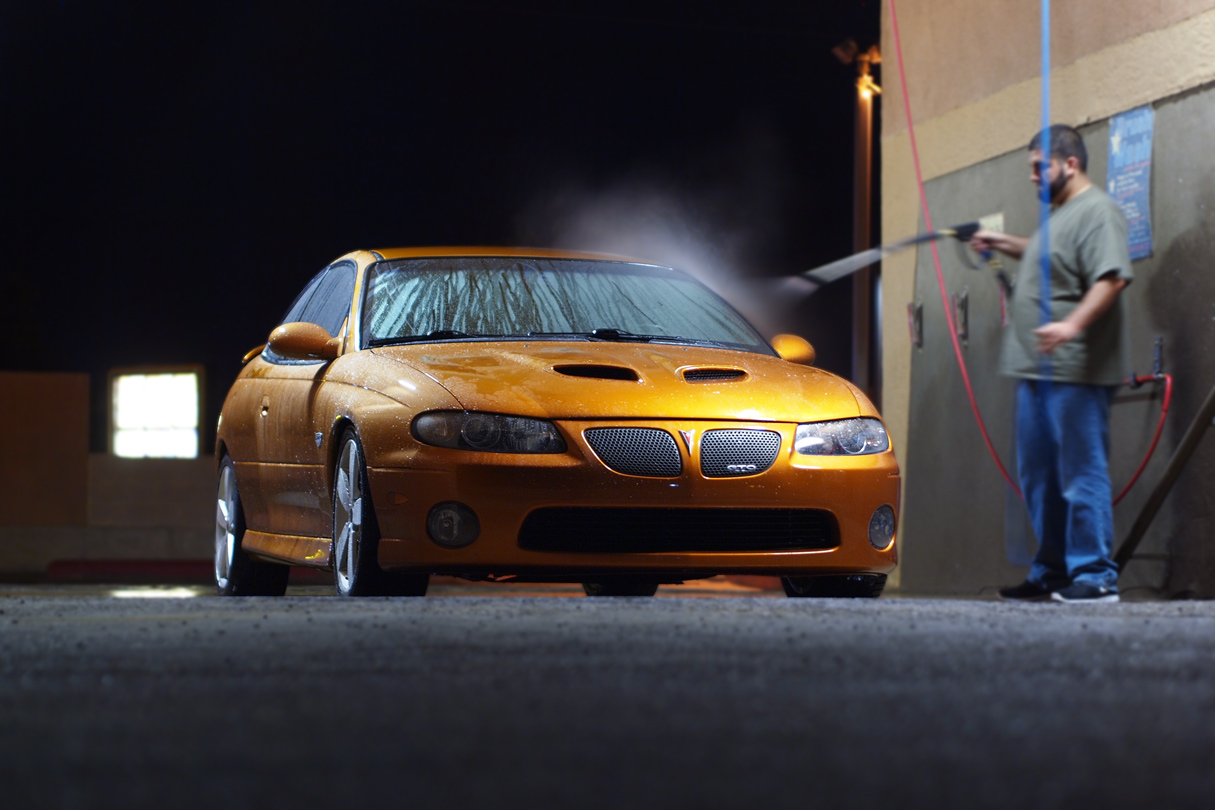
More Great Car Shots by littleMT on mu-43.com

 
GTO by littleMT
GTO, by littleMT on mu-43.com
Image Source: http://www.mu-43.com/f42/my-2006-twin-turbo-gto-shot-e-pl1-27130/

I've been on a little diversion with car photography lately. Poster littleMT on mu-43.com has been a great source for me. littleMT posted a few intriguing images of the 2006 GTO shown above.

(Click Here) to see the others on mu-43.com.

You saw a post a while back from the same source:

(Click Here) for littleMT's other work I posted here.

I'm heading out to a car show myself this afternoon (which will be some days old before you read this), after getting a little work done at the office. It is one I've been to before, so I'm struggling to think of ways to do something different with my photography there. The people are always fun. Here's one from 2009:
 
 
Car Show Attendee, by Reed A. George
Panasonic Lumix DMC-G1, Lumix 14-45mm Kit Lens
iso100, f8, 1/125 sec

Here's another, trying to do something a little different:
Jag on Glass, by Reed A. George
Leica M8, Leica 35mm f1.4 Summilux
iso640, f-stop not recorded, 1/250 sec

So, wish me luck. I'm hoping for some inspiration this afternoon. Will report back :).

DMC-365.blogspot.com


Saturday, May 26, 2012

James McKearney's New Lumix 14mm Lens

My photographer buddy, James McKearney, has just gotten a Lumix 14mm lens of his own to go with his twin Lumix DMC-G1s. In line with my earlier post today, I present a couple of his first shots with this little jewel of a lens:
 
James McKearney's Charles River
Charles River, by James McKearney
Image Source: http://www.flickr.com/photos/jamesmck38/7274118146/

Fenway Park, by James McKearney
Image Source: http://www.flickr.com/photos/jamesmck38/7222183634/in/photostream/

By the way, James ordered this lens new on ebay for a pittance - less than $200! That is a great deal for this lens. The 14mm f2.5 literally makes the Lumix 20mm f1.7 lens look big (and it certainly isn't!), and is a regular go-to lens for me.

DMC-365.blogspot.com

 
DMC-365.blogspot.com
 

Thursday, May 17, 2012

The PhoBlographer Tests the Zeiss Planar 50mm f2 M Lens on Micro Four Thirds

 
Zeiss Planar 50mm f2 on Olympus E-P1 by Phoblographer
Image Source: http://www.thephoblographer.com/wp-content/uploads/2012/03/P5112317_lr-1000.jpg
I read an interesting post about using the Zeiss Planar 50mm f2 (Leica M mount) lens on Micro Four-Thirds cameras.
(Click Here) to see the original post at www.thephoblographer.com
The author (Felix Esser) makes several important points. First, he says that while he's satisfied with the Zeiss lens performance on both the Olympus E-P1 and the Panasonic Lumix DMC-G1, neither delivers a certain image quality that he sees using the same lens on the Leica M8. This is difficult to evaluate. Each M4/3 camera has so many settings, I find it a little hard to believe that one couldn't fiddle long enough and pretty much replicated the Leica's color, tone, and sharpness. The Micro 4/3 cameras have more recent sensor technology than the M8. The only differentiating thing I can think of is the lack of an IR filter on the M8 sensor, which is supposed to increase sharpness, but at the cost of color accuracy. I find with my M8 that the add-on UV/IR filters are absolutely necessary to achieve good color rendition, so I any benefit from not having the filter there must be lost.
I also found Felix's comments comparing the Olympus E-P1 and Lumix DMC-G1 of interest. It seems that he prefers the native jpeg output of the Olympus, but finds the Panasonic much easier to use with legacy manual focus lenses. This is mainly because of the increased resolution of the G1's electronic viewfinder (EVF). I bet he'd really like it if he tried the DMC-G3 or DMC-GH2.
Felix also provides a little information on the history of the Planar, which has always rivaled the Leica Summicron, both considered benchmarks for image quality in the normal lens range.
I don't have a 50mm Planar. I do have a Zeiss 25mm Biogon T f2.8, which should make a very nice 50mm equivalent on Micro 4/3. The 25mm Biogon is as well-recognized for image quality as the Planar. On my Leica M8, the Biogon makes a wonderful 35mm replacement (at ~33mm equivalent field of view).
However, I must admit, I rarely use the Biogon on M4/3. Why? A few reasons: 1) manual focus, 2) f2.8 (I prefer faster), 3) the existence of the Pana-Leica Summilux 25mm f1.4. The Summilux offers autofocus, 2 stops of increased speed, and excellent image quality. So, it's just a little hard to grab the Biogon and leave the Summilux behind.
I would be interested in hearing others' opinions about this. For a normal lens, I don't see much reason to use anything other than the Pana-Leica 25mm Summilux on my M4/3 cameras.
DMC-365.blogspot.com


Friday, May 11, 2012

It's Springtime in the Audubon Garden in Charleston, South Carolina - Lumix 45-200mm f4-5.6

Poster isabel95 on mu-43.com posted this image of a male anole, signaling for a girlfriend in the Audubon Magnolia Plantation Garden, in Charleston, South Carolina.
 
(Click Here) for the original post.
 
Anole, Shot with Lumix GH2 and 45-200mm
Image Source: http://www.flickr.com/photos/isabel95/7094862123/
Panasonic Lumix DMC-GH2 and Lumix 45-200mm f4-5.6
 
The Lumix 45-200mm lens was one of the very first Micro 4/3 lenses offered by Panasonic. It's range has been encroached (not fully in either case) by the newer 14-140mm f4-5.8 and the 100-300mm f4-5.6 lenses. I had the 45-200, and sold it when I got the two newer lenses. While the 100-300 is a superior lens for wildlife in my opinion, the 14-140 suffers a little in image quality as compared to the 45-200, especially at the longer focal lengths. I still have images from the 45-200 on my wall. That says something about the lens.
 
Goldfinch, by Reed A. George
Panasonic Lumix DMC-G1, Lumix 45-200 f4-5.6
iso400, f5.6, 1/500 sec
 
Because of its age (only), the 45-200 is remarkably inexpensive these days. You can find it used for less than $200 if you look for a while. If you're considering this lens, I would say go for it. It is a perfect companion to the kit zoom, and would be my recommendation for a second zoom for anyone on a budget, but looking to expand their capabilities.
 
Notice, I said "second zoom." I would always recommend the awesome Lumix 20mm f1.7 as a second lens, but it's a prime (fixed focal length) lens. The combination of a kit lens (14-45 or 14-42), the 20mm f1.7, and the 45-200 would make a relatively inexpensive yet highly flexible kit. It was my Micro 4/3 kit for quite a while (with the DMC-G1 body).
 
DMC-365.blogspot.com


DMC-365.blogspot.com
 

Sunday, April 29, 2012

New Fun "Salon" Contest on mu-43.com

 
First Train Departs, by Reed A. George
Panasonic Lumix DMC-G1, Pana-Leica 45mm f2.8 Macro-Elmarit
iso100, f7.1, 1/6 sec
 
There is a fun contest being hosted at mu-43.com. The current theme is "Motion."
 
(Click Here) for the contest announcement and instructions for entering.
 
My entry is the image above, of the first train leaving Gora Station in Hakone, Japan. This is the Japan Tozan Railway, which follows single-track switchbacks up the mountain from Hakone Yumoto Station.
 
(Click Here) for more of my images and information about the railway.
 
DMC-365.blogspot.com


Wednesday, April 25, 2012

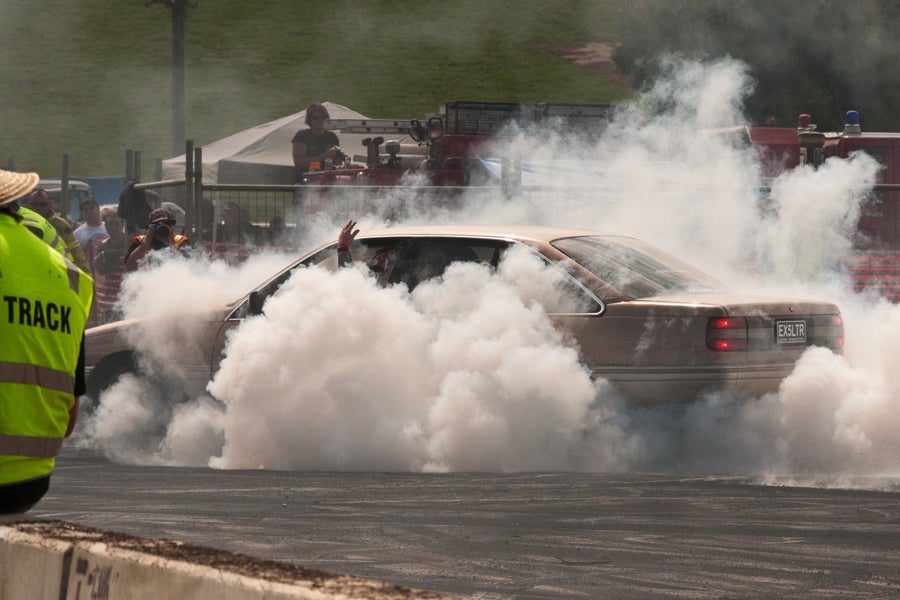
Burnouts Down Under

 
Burnouts Down Under
Image Source: http://www.mu-43.com/gallery/data/500/1060776.jpg
Panasonic Lumix DMC-G1, Lumix 45-200mm lens


Member DownUnderDog on mu-43.com posted a series of shots with his telephoto zoom and G1 from a burnout event in Australia.
 
(Click Here) to see the full post.
 
It's amusing to me that the Ford Cortina was a popular "motorsports" car in Australia. My brother's first car, given to him by a neighbor in the early 1970s, was a Cortina.
 
DownUnderDog did a nice job of covering this event in journalistic style, capturing not only the main attraction, smoking tires, but also the drivers and others involved in the event. The collapsed tires after burnout, the team pushing a blown engine car away, and the drivers celebrating were all interesting additions. The only thing I would have tried to add would be the spectators, and maybe a wide angle shot or two (tough to do when the only lens you bring is a 55-200).
 
Thanks for bringing a little Australian smoke to me here in the USA!
 
DMC-365.blogspot.com
Support this blog. Order from Amazon by clicking below.


DMC-365.blogspot.com
 
DMC-365.blogspot.com
 

Tuesday, February 21, 2012

My Presentation on Contemplative Photography


On Monday, February 20, I gave a presentation to the Reston Photographic Society (RPS) in Reston, Virginia, about an interesting photography book and process. The book is entitled Contemplative Photography, Seeing the World With Fresh Eyes, by Andy Karr and Michael Wood.

Click below to see the book on Amazon:


Contemplative Photography - Texture, by Reed A. George
Texture, By Reed A. George
Panasonic Lumix DMC-G1, Pana-Leica 45mm Macro-Elmarit f2.8
iso400, f2.8, 1/13 sec
 
The contemplative photography approach is very different than conventional photography. Instead of focusing on subject matter, contemplative photography emphasizes the process. Instead of trying to make pretty or otherwise pleasing pictures, it aims to allow the photographer to share their vision and feelings at the time the image is captured. The book breaks the image making process into three steps:
 
1) "Flash of Perception"
2) "Visual Discernment"
3) "Forming the Equivalent"
 
There are several challenging exercises in the book. I worked through all of them, and assembled some of my results into my presentation for the group.
 
(Click Here) to link to my presentation (in pdf format).
 
I found the book to be very interesting, and the exercises to be both unconventional and difficult. However, I do feel that the process helped me to further develop as a photographer. I also now use some of the exercises to help get me into the picture taking groove when I go to a new location.
 
Give the book a try. You may just find some new ways to look at your photography.
 
DMC-365.blogspot.com