Showing posts with label memorial. Show all posts

Thursday, February 11, 2016

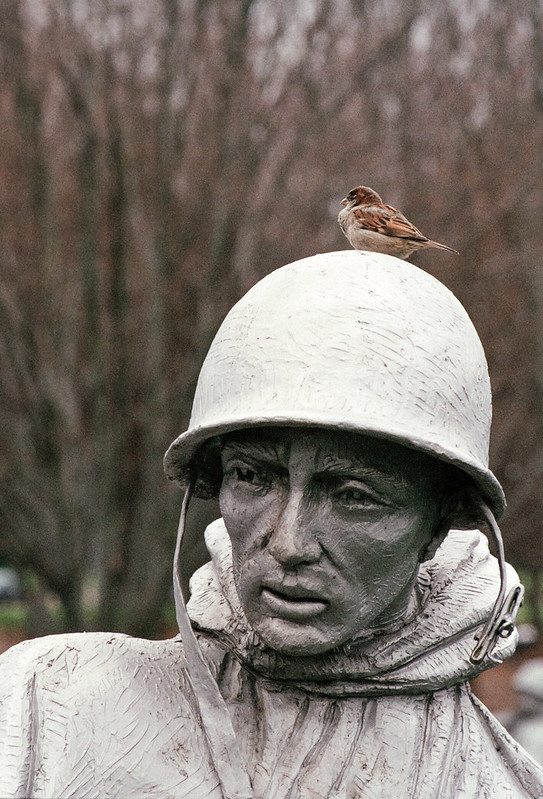
Korean War Memorial - Rolleiflex SL2000F

I'm still thoroughly enjoying the somewhat uncommon Rolleiflex SL2000F that I bought a while back. (Click Here) to read about it.
 
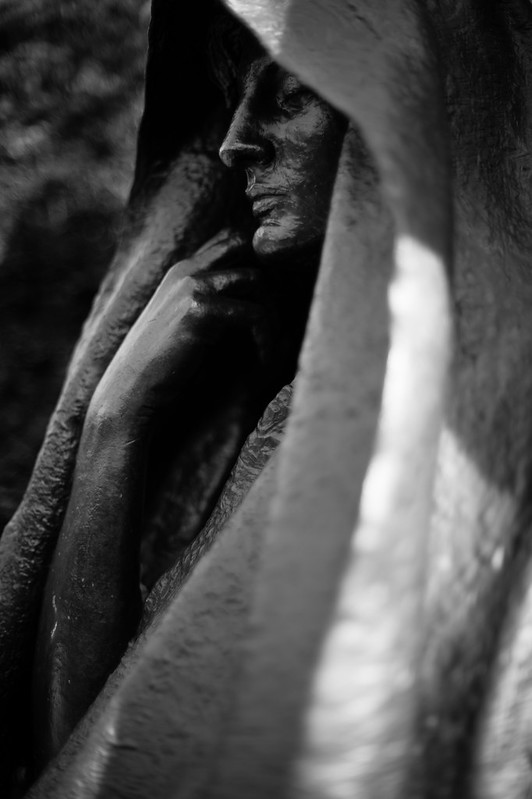
Here's a shot I made with the SL2000F and Rollei 135mm f2.8 lens.
 
Korean War Memorial, by Reed A. George
 
What a blast this camera is to use.
 
DMC-365.blogspot.com
 

Friday, May 22, 2015

In Honor of our World War II Veterans - DC Mall Flyover

I recently had the opportunity to participate in a media event for the World War II Memorial Flyover, an event where dozens of war era aircraft flew in various formations over the National Mall in Washington, DC.
 
(Click Here) to read about the event, which took place on Friday, May 8, 2015.
 
On the day before the event, my associate, Rob, and I got to go to a local regional airport and witness the take-off of several of the airplanes that would take part in the event.
 
I brought along my Nikon D700, 35-70mm f2.8, and 70-300 f4.5-5.6 AF-S G lenses. All of the images below were made with the 70-300.
 
The event began with a short press conference, and then we were allowed out on the tarmac. Preparations for the day's flights were underway.
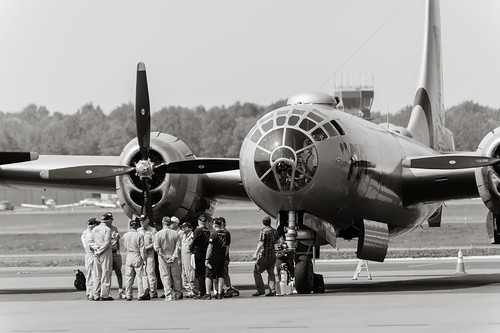
B-29 Superfortress, by Reed A. George
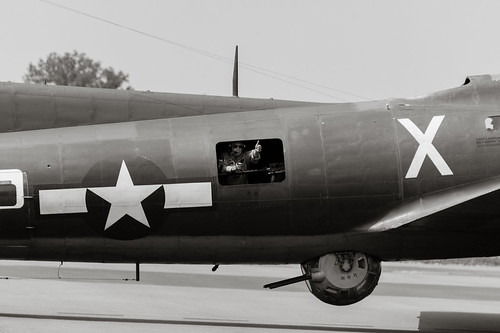
B-17 Crewmembers, by Reed A. George
 
 
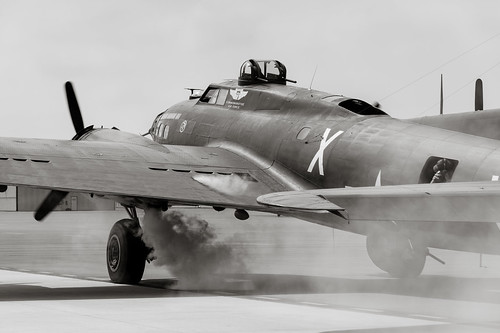
Then, the engines started to crank.
Cranking up, B-17, by Reed A. George
 
We were warned about the noise, oil, and propwash (wind) that would result when this happened, and the B-17 didn't fail to deliver. It was quite a thrill to be so close to these aircraft.
 
B-29 Cranks Up, by Reed A. George
 
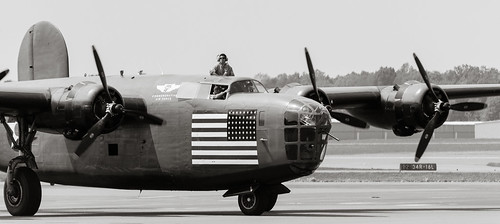
As the planes taxied for takeoff, we got some close up views of them in motion.
 
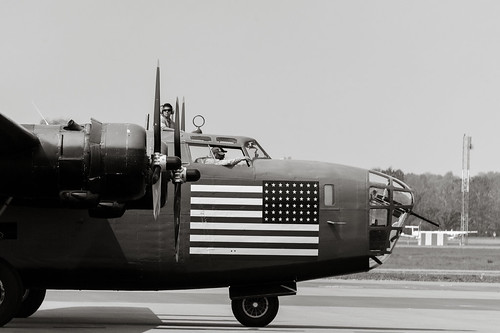
B-24 Liberator on Taxi, by Reed A. George
 
Here's my favorite shot from the day:
Between the Props, by Reed A. George
 
I used a gradual neutral density (ND) filter on my 70-300, to prevent the pure white skies from overexposure. It's a subtle effect, but I think it helped. Sure would have been nice to have a cloud or two.
 
Once all of the aircraft were lined up for takeoff, the staff lifted the barrier tape and let those of us with media passes out closer to the runway. At this point, having captured decent sharp images of all of the airplanes on the ground, I started thinking about what made this event unique. It wasn't the aircraft alone. I had photographed some of the crew, which I cannot see on a normal trip to my local Air & Space Museum (yes, I know I'm lucky, not everyone has the Udvar-Hazy Museum ten miles from their home). The real unique point, though, was to see these old beasts in flight. Asking Rob to be sure and capture sharp images of them taking off, I decided to try some panning, in an attempt to show the motion in my images.
 
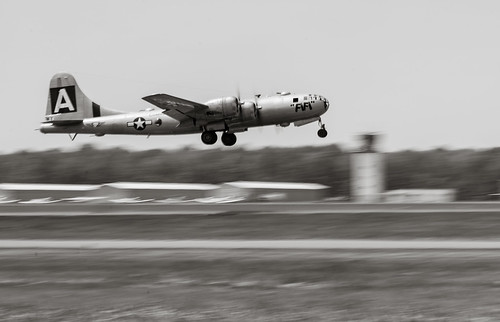
I consider myself to be pretty good at panning, matching the angular speed of my moving camera to that of the object I'm tracking. Doing that with these big aircraft turned out to be really challenging. I set the 70-300's VR to "Active," which is supposed to be designed for panning. Every shot came out blurry. Not just most, all of them. Finally, turning VR off completely, I was able to capture one decent panning shot of the B-29. Here it is.
Superfortress Takes Off, by Reed A. George
 
So, I worked hard for it, but feel that I captured most of the feeling of the event that I was after. What an incredible opportunity.
 
I hope that many of our remaining World War II veterans were able to see or watch the live feed of this event. It's really something to see these 70 year old airplanes still in prime running (flying) condition.
 
DMC-365.blogspot.com
Saturday, April 4, 2015

Another Example of How Technology Affects Vision

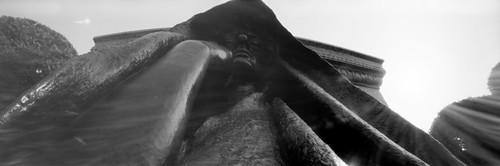
I've posted this picture before, taken with the Nikon Df and Nikkor 50mm f1.2 AIS lens.
 
Here's the same statue, shot with the Reality So Subtle 6x17 panoramic pinhole camera.
 
 
I love figuring out how to use different tools to make images that appeal to me.
 
DMC-365.blogspot.com

Thursday, April 2, 2015

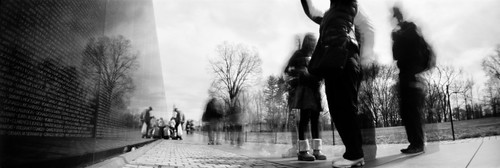
Vietnam War Memorial In Panoramic Pinhole View

 
Vietnam Memorial, by Reed A. George
Reality So Subtle 6x17 Panoramic Pinhole Camera
Kodak TMax 100 Film (120 Size), 10 sec. at f256
 
I've been shooting more pinhole images lately, using the wonderful new "Reality So Subtle" camera that I received from my wife for my 50th birthday.
 
(Click Here) to read about the camera.
 
Don't forget, Worldwide Pinhole Day is coming up on April 26, 2015! (Click Here) to read about that. I'll be shooting pinhole images that day, for sure.
 
More to come.
 
DMC-365.blogspot.com
 

Friday, November 7, 2014

First Post With Nikon Df - Marine Memorial (Iwo Jima)

Well, I think I like the Nikon Df. One day out with it and I'm amazed at its capabilities. Here's my first post with it, shot at the Iwo Jima memorial in Arlington, Virginia.
 
Reaching for Freedom, by Reed A. George
Nikon Df, 105mm f2.5 AIS Lens
iso 1100, f8, 1/250 sec.
 
The high iso capability of this camera is unbelievable. Normally, I would never dream of shooting at iso 1100 in broad daylight. In this case, I put the camera on Auto-ISO, set the shutter speed fast enough to ensure sharpness handholding the 105mm lens, and f-stop at 8 to get decent depth of field. The camera chose iso 1100, which in the old days would have meant a lot of digital noise. There is next to none in this picture, at least not enough to worry about, even if I were to print it large.
 
Great fun. I'm going to enjoy this new camera.
 
DMC-365.blogspot.com


Sunday, October 26, 2014

How A Shot Develops - Mamiya Universal Press (MUP) at the World War II Memorial

I had a couple of hours free this morning, so I packed up my MUP and drove into Washington, DC, to the World War II memorial. Planning to capture some people out in the fall color, I spent a little time doing that, and then walked over to the memorial itself. I saw a nice composition in my mind, with the columns and wreaths of the memorial (one for each state) tapering off into the background, and nice contrasty light separating them from the foreground. A steady parade of people, including veterans, mostly in wheelchairs, was coming up the walkway.
 
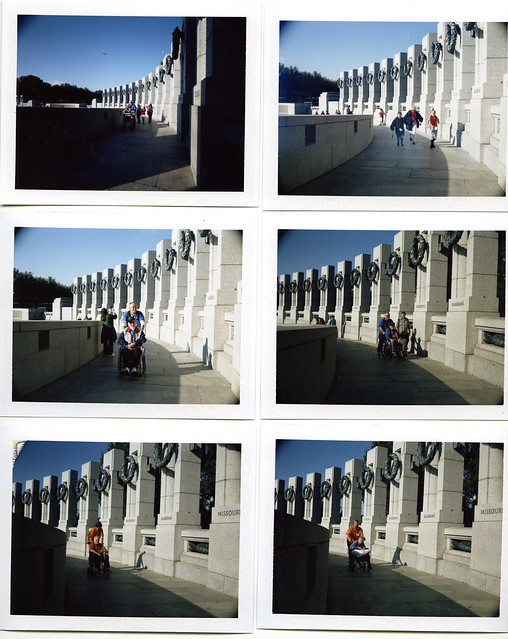
I set up the MUP on a tripod, changed the film back to my Polaroid back, which was loaded with Fuji FP100C color pack film, and started shooting. I shot a total of six images. They're shown in the contact scan below, and are in order from left-to-right, top-to-bottom.
"Contact Scan," by Reed A. George
 
You may notice the wider perspective in the first shot. It was made with the Mamiya 50mm lens, which is very wide on the MUP, especially with the oversized image of the pack film. Notice the vignetting in the corners, which is normal, since the MUP is designed for 6x9 image size and the pack film is larger than that. After the first shot, I changed lenses to the 100mm f3.5 "normal" lens for the MUP.
 
I was shooting at about 1/250 sec and f16 throughout the series.
 
I also slowly moved my tripod to the left as the series developed.
 
In the beginning, the veterans that were being escorted up the walkway were just too far away. I wasn't trying to make portraits of them, but wanted to capture some detail of them in the context of the memorial.
 
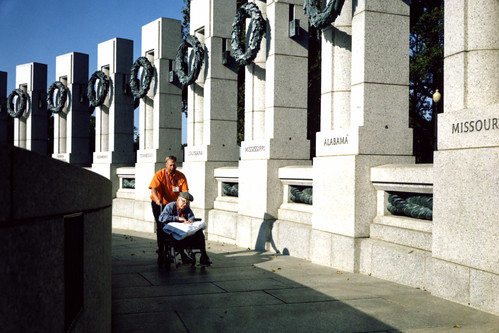
I consider the final two images to be pretty good, but the last one (bottom right in the contact scan) goes furthest in telling a little story of our remaining World War II veterans and the memorial that reminds us all of what they gave for their country.
 
Here it is, scanned at higher resolution:
Final Shot, by Reed A. George
 
Remember that these instant films are not really designed to be enlarged, so the image you see on your screen is probably much larger than intended by the engineers at Fujifilm. I think the color came out very nice, and there's enough detail to see what's going on here.
 
I've become very interested in how a decent photograph develops through the shooting process. This interest was sparked by starting to read the excellent book Contact Sheets by Magnum press. I highly recommend this book. Be sure to read the introduction, as it discusses a lot of aspects of contact sheets, like the fact that many photographers, including Henri Cartier Bresson, were not in favor of sharing them with viewers.
 
If you decide you want this book, please buy your copy by clicking on the Amazon link below. You'll get a great book for the same price as going directly to Amazon, and help support my blog in the process!
 
DMC-365.blogspot.com