Showing posts with label book. Show all posts

Friday, June 12, 2015

So What Are You Reading? Agfa APX 400 Film Test

 
The Wide View, by Reed A. George
Zeiss SW, Voigtlander 12mm f5.6 Lens
Agfa APX 400 Film
 
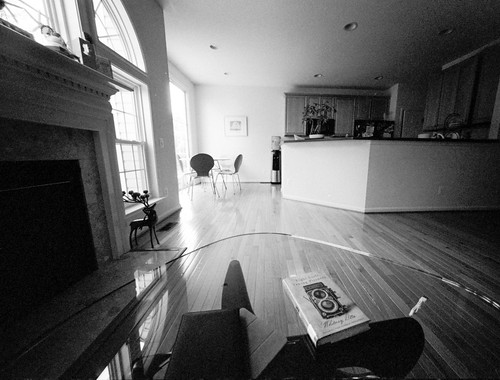
I'm testing and getting my shooting parameters down for a new (discontinued) film, Agfa APX 400. My friend Dennis Gallus gave me (!) a 100' roll, which I've started to bulk load. My first roll came out underexposed and possibly underdeveloped (7 mins in D-76, 1:1). After seeing that, I read up about the film online, and found that many people used to shoot it at 200 instead of the indicated 400 speed. I will try that, and believe it will really help.
 
This shot was made with my widest lens, the Voigtlander 12mm f5.6. You can see my current book of choice in the foreground, Eight Girls Taking Pictures, by Whitney Ott. It is a fictional work, telling the story of eight female photographer/artists. I'm enjoying it very much.
 
Thanks again for the film, Dennis! I'll have it all worked out in another roll or two.
 
DMC-365.blogspot.com
 

Monday, March 16, 2015

Readers and Reading - On Books

 
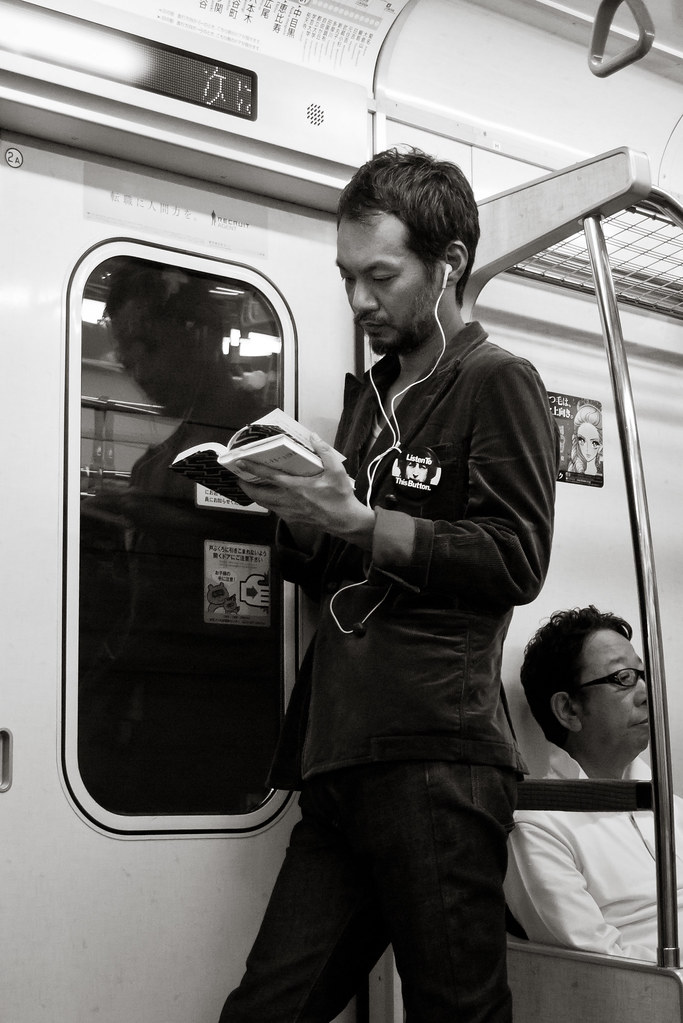
Reading Japanese Books with Upside Down Face Covers, by Reed A. George
 
I absolutely love to read. Always have. Even though I'm not a fast reader by any means, I enjoy both fiction and non-fiction.
 
So what got me on this subject today? An incredible portfolio by Lawrence Schwartzwald, featured on Elizabeth Avedon's blog. (Click Here) to see it. You really must.
Japanese Subway Reader, by Reed A. George
 
So, go grab a book and learn something! Looking for something to read? Try The Lotus Eaters, by Tatjana Soli (see the link below).
 
DMC-365.blogspot.com


Thursday, January 15, 2015

Haruki Murakami and Photography

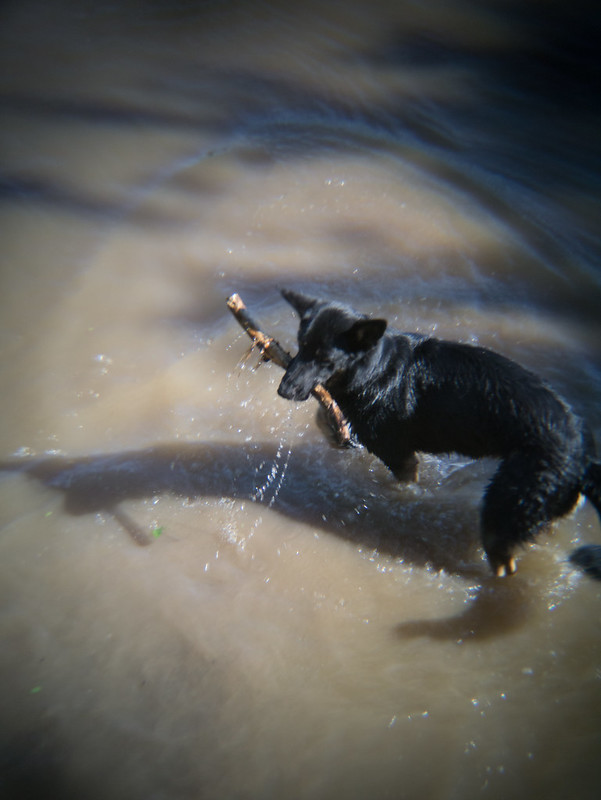
Black Dog, by Reed A. George
I love to read Japanese fiction. Haruki Murakami is probably my all-time favorite author. As with many Japanese authors, Murakami's works leave us with stories that don't just end on the last page. They're rarely wrapped up with a bow and finished when the book ends.
 
This weekend, I read Murakami's latest novella, The Strange Library. True to form, it's got all of the oddness of Murakami's mind, nicely packaged in under 100 pages. I highly suggest giving it a try. There's an Amazon link to the book at the end of this post.
 
Looking into what others make of the meaning of this story, I happened across some interesting photography on Murakami's web page.
 
First, (Click Here) to see a gallery of images by Eizo Matsumura, sharing scenes of Murakami's Tokyo. These seem like they could have been made with a Holga, Diana, or other toy camera. Lots of interesting feel to them.
 
Next, (Click Here) to see a gallery of images that were contributed by readers of Murakami's Facebook page, specifically answering the question "What's the strangest thing in your library?" Obviously targeted to the new book mentioned above. It seems that Murakami's readers may be as interesting as the author himself.
 
DMC-365.blogspot.com


Sunday, October 26, 2014

How A Shot Develops - Mamiya Universal Press (MUP) at the World War II Memorial

I had a couple of hours free this morning, so I packed up my MUP and drove into Washington, DC, to the World War II memorial. Planning to capture some people out in the fall color, I spent a little time doing that, and then walked over to the memorial itself. I saw a nice composition in my mind, with the columns and wreaths of the memorial (one for each state) tapering off into the background, and nice contrasty light separating them from the foreground. A steady parade of people, including veterans, mostly in wheelchairs, was coming up the walkway.
 
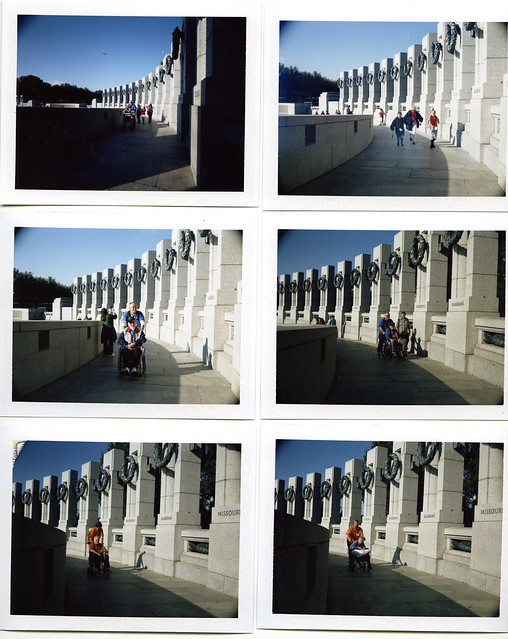
I set up the MUP on a tripod, changed the film back to my Polaroid back, which was loaded with Fuji FP100C color pack film, and started shooting. I shot a total of six images. They're shown in the contact scan below, and are in order from left-to-right, top-to-bottom.
"Contact Scan," by Reed A. George
 
You may notice the wider perspective in the first shot. It was made with the Mamiya 50mm lens, which is very wide on the MUP, especially with the oversized image of the pack film. Notice the vignetting in the corners, which is normal, since the MUP is designed for 6x9 image size and the pack film is larger than that. After the first shot, I changed lenses to the 100mm f3.5 "normal" lens for the MUP.
 
I was shooting at about 1/250 sec and f16 throughout the series.
 
I also slowly moved my tripod to the left as the series developed.
 
In the beginning, the veterans that were being escorted up the walkway were just too far away. I wasn't trying to make portraits of them, but wanted to capture some detail of them in the context of the memorial.
 
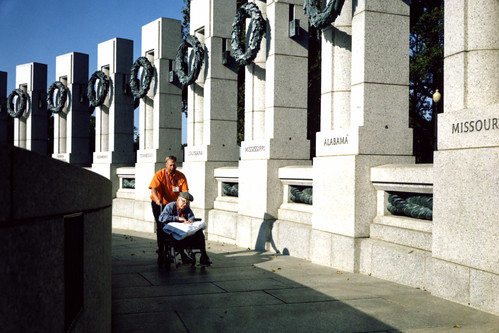
I consider the final two images to be pretty good, but the last one (bottom right in the contact scan) goes furthest in telling a little story of our remaining World War II veterans and the memorial that reminds us all of what they gave for their country.
 
Here it is, scanned at higher resolution:
Final Shot, by Reed A. George
 
Remember that these instant films are not really designed to be enlarged, so the image you see on your screen is probably much larger than intended by the engineers at Fujifilm. I think the color came out very nice, and there's enough detail to see what's going on here.
 
I've become very interested in how a decent photograph develops through the shooting process. This interest was sparked by starting to read the excellent book Contact Sheets by Magnum press. I highly recommend this book. Be sure to read the introduction, as it discusses a lot of aspects of contact sheets, like the fact that many photographers, including Henri Cartier Bresson, were not in favor of sharing them with viewers.
 
If you decide you want this book, please buy your copy by clicking on the Amazon link below. You'll get a great book for the same price as going directly to Amazon, and help support my blog in the process!
 
DMC-365.blogspot.com


Saturday, October 4, 2014

How to Pursue a Quest - by Chase Jarvis, on Author Chris Guillebeau

We all know that life is a journey, not a destination. How you get there is as important as where you end up.
 
Chase Jarvis recently interviewed author Chris Guillebeau, who's just written a new book called The Happiness of Pursuit. Chris also runs a blog called "Art of Nonconformity." I'm going to check both of these out.
 
(Click Here) to read the interview post on Chase's blog. I love the story that Chris shares of the family living in Oklahoma who decides to have an international perspective, which they obtain through preparing ethnic food from around the world. Pretty cool.
 
I've copied the following directly from Chase's blog, rather than restate them myself:
 
"According to Chris, here are the 5 key qualities of a quest:
    1. A clear goal and a specific end point
    2. A clear challenge
    3. A sacrifice of some kind
    4. A calling or sense of mission
    5. A series of small steps and incremental progress toward the goal"
This whole idea of a quest having a beginning and end, milestones, etc. sounds very familiar to me. This is the same set of features that are used to describe a project, any project, from a project management perspective. Pretty boring, actually. The inspiring part comes from the challenge, sense of mission, expecting the unexpected, and sacrifice. That's not typically part of the project management discussion.
 
There are many questions to answer in forming your own quest. How big, how long should it be? Lifelong quest or weekend quest? How do you get a quest with a sense of mission that will still be enjoyable, or at least endurable? How many quests can you be on at any given time?
 
I am going to buy this book and see what I can pick up from it. If you're interested, please use the link below to purchase yours from Amazon.
 
DMC-365.blogspot.com


Thursday, October 25, 2012

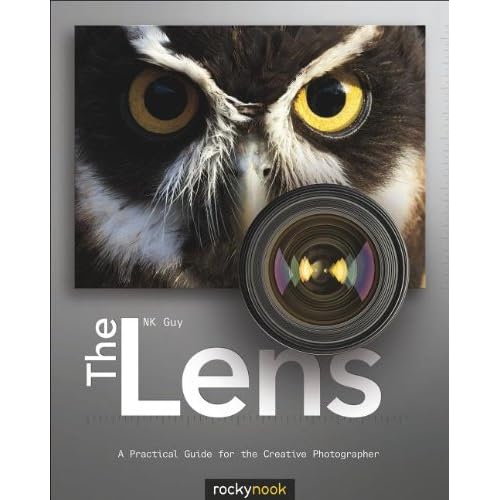
Here's A Book For Me - and Maybe For You? And, My Decision To Try A Zeiss Sonnar ZM

 
Image Source: http://www.amazon.com/Lens-Practical-Guide-Creative-Photographer/dp/1933952970/ref=sr_1_1?s=books&ie=UTF8&qid=1350039622&sr=1-1&keywords=The+Lens%3A+A+Practical+Guide+for+the+Creative+Photographer
 
Digital Photography Now (dpnow.com) has announced this new book by NK Guy, written with the purpose of helping real photographers (not optics designers or lens testers) understand the terms, charts, and subtle aberrations we're deluged with when we study a new lens.
 
(Click Here) to see the announcement on dpnow.
 
I'll be buying this book for sure. If you decide to, please buy it through my link to Amazon below. My sales have been zero for mulitiple months now, so help me out as you help yourself out. Not that it really matters; this blog is my hobby. But, any little commission does help to fund my daily coffee...
 
I'm interested in this book because, even though I'm an engineer, the technical criticisms that I read about lenses are difficult to understand, weigh, and consider when deciding whether or not to try a new lens.
 
I'm working on a case in point at the moment. I have traded my used Leica M8 for a used Zeiss ZM Special Edition camera body (no questions there) and Zeiss 50mm Sonnar f1.5 lens. This lens is so highly maligned by the technical folks that if I listened to that bunch, I'd never consider it. The big issue seems to be a focus shift at wide apertures. What this means is that on a rangefinder camera, if you shoot at f1.5 (or maybe f2), the focus point of the lens will be shifted a few inches in front of where your rangefinder tells you to focus. This is a very real effect, and can be troublesome if you're shooting a portrait, and want the focus point to be exactly on the subject's eyes. I know the effect is real, because I've experienced it with my own lenses on the Leica M9. It varies by lens design. My Leica Summicron 50mm f2 is probably the best (smallest shift), and my 1955 Summarit 5 cm f1.5 is the worst. My most valuable Leica lens, the pre-aspheric 35mm f1.4 Summilux, shows the effect clearly at f1.4.
 
It's really easy to get hung up on these things. However, both of my lenses that exhibit focus shift are personal favorites. Until now, I have always thought that they were just a little "soft" at wide apertures. Now I think it's mostly focus shift. Both of them are masters of the "Leica glow," another highly debated lens characteristic.
 
Anyway, the newer Zeiss Sonnar is a modern version of an earlier lens design, with known technical peculiarities. Zeiss knows this, of course. In fact, a piece on Luminous Landscape includes a written message from Zeiss at the bottom of the page explaining it. It also explains that this is an artist's lens, not a lens tester's lens.
 
(Click Here) to read about the Sonnar on Luminous Landscape.
 
When I think about it, some of my older, less technical lenses are my favorites. Maybe it's my own age creeping in?
 
In any case, the Sonnar is on its way, and I'll report on whether I'm more artist or engineer in the end :).
 
Also, I'll let you know how I like this book. Or, you can order it for yourself through the link below (please).
 
DMC-365.blogspot.com


Thursday, September 20, 2012

Emotions - Not Always Smiles or Stern Looks

 
Stage Fright, by Reed A. George
Panasonic Lumix DMC-G3, Lumix 20mm f1.7 Lens
iso400, f2.0, 1/400 sec
 
I have mentioned before Chris Orwig's book on People Photography. I was recently reading an assignment in it about capturing emotion other than canned smiles or stern glares into the lens. It reminded me of the shot above, which I took at a Japanese Obon festival. I love the look on the little girl's face.
 
I also enjoyed a single image post on mu-43.com by user LC55.
 
(Click Here) to see the post on mu-43
 
I need to complete the assignment in Chris' book, and see if I can come up with some more shots of emotion.
 
DMC-365.blogspot.com


Monday, August 13, 2012

So This Poll Has Me Thinking... Should I Be Planning My Photos More?

 
View Poll Results: Do you stage your pictures?
Yes, I usually do56.94%
Sometimes I move things around or adjust the lighting.2331.94%
I shoot what I see.4461.11%
Voters: 72. You may not vote on this poll


Table Source: http://www.rangefinderforum.com/forums/showthread.php?t=122125
 
I found the table above on rangefinder forum. I really enjoy these polls there. I am in the middle grouping, where I normally like to just shoot what I see, but sometimes arrange things a little. I rarely stage a picture. I am beginning to think that this is an area that would improve my range and results.
 
I have been reading a book by Chris Orwig, People Pictures: 30 Exercises for Creating Authentic Photographs.
 
Here is a link to the book on Amazon:
 
 
Chris' book is a series of assignments for exploring and improving your people photography. I have been reading it slowly, over a month or so.
 
In the past, I have had good luck with following assignments in photography books, most notably the book Contemplative Photography.
 
(Click Here) to see my post on that book and the associated exercises.
 
For some reason, I have not actually done any of the assignments in Orwig's book. I think it's a real stretch for me. In fact, he comes at photography from such a different place than I do, he has an assignment that "challenges" the photographer to take an unstaged series of photos.
 
I don't like the look and feel of totally posed photographs. However, I think the trick is in getting the shot set up, then getting a little bit of unstaged emotion from the subject. I don't have any interest in taking high school portrait-style images. But, a little planning can really help. I will challenge myself to actually perform some of the exercises in Orwig's book, and report back.
 
Here's an example of a mildly-staged shot. I asked these girls if I could photograph them as they lay onthe grass in front of the stage at the Floyd Festival. I simply asked them to put their heads as close together as possible, then walked up between them so that I could shoot nearly straight down. I like the result. If I hadn't been nervous and feeling like they'd want me to hurry, I would have added a little fill flash. They don't look like they're bothered by my presence now, do they? That was a feeling I generated myself. Next time, I'll stay a little longer and try to get the perfect shot.
Buddies, by Reed A. George
Panasonic DMC-G3, Lumix 12-35mm f2.8 at 17mm
iso400, f3.5, 1/3200 sec
 
 
So, I'll try to put some focus on planning my shots a little more, and see what develops.
 
DMC-365.blogspot.com


Sunday, June 10, 2012

Final Two Chapters of My Free G3 Settings eBook Available For Download! Get the Whole eBook Here, Free!

Lumix DMC-G3 by Reed A. George
Panasonic Lumix DMC-G3 and Nikon Nikkor AIS 28mm f2.8 Lens
by Reed A. George
 
Well, since I'm expecting the announcement of a new Panasonic Lumix Micro 4/3 body (the rumored DMC-G5? DMC-GH3?) any time now, I figured I had better wrap up my ebook on how I use the DMC-G3. In fact, I use two of them.
 
The final installment includes a chapter on setting up custom configurations, and a short chapter on my conclusions on the camera.
 
I learned a lot by working through every detail of how to set up this camera. And the best thing is, now that I've done it, and saved some custom configurations, I can forget about the details of what many of those menu settings actually mean. This camera has so many options, it's amazing. But, I want to set most of them once, and forget them. Custom Modes help a lot, as does the Quick Menu.
 
(Click Here) to download the final two chapters of my ebook, in Adobe pdf format.
 
For ease of navigation, I'm including links to the previous chapters below:
 
(Click Here) for Chapter 1 - Introduction and External Controls
 
(Click Here) for Chapter 2 - Menu Settings
 
(Click Here) for Chapter 3 - Focusing
 
I hope that you'll find them useful.
 
I recommend that you download and save all of them; I will consolidate them into a single file, but cannot guarantee that it will remain available for free forever...

 
DMC-365.blogspot.com
 

Monday, May 28, 2012

Chapter 3 of My eBook on the G3 Is Now Available For Free Download!

Panasonic Lumix DMC-G3
with Nikon Nikkor 28mm f2.8 Manual Focus Lens

If you've been following the development of my eBook, you may be interested to know that Chapter 3 is now available for free download. Chapter 3 takes on the subject of focusing - both the extensive autofocus (AF) technologies and the superb manual focusing tools resident in the DMC-G3.

(Click Here) to download Chapter 3 - Focusing


As a reminder, here are the links to the posts for the first two chapters:
 
(Click Here) for Chapter 1 - Introduction and External Controls
 
(Click Here) for Chapter 2 - Menu Settings
 
Writing this chapter helped me to work through some questions I had with AF settings. Probably the most important thing I learned is how cool Pinpoint Focus can be when used in conjunction with the Touch Screen. As a regular user of the Electronic View Finder (EVF), I don't use the Touch Screen often. However, after trying out Pinpoint Focus, I now have it in mind should the opportunity present itself.
 
I hope you're enjoying the eBook! Please comment, drop me a line, or even purchase something on Amazon by clicking through the link below. It doesn't cost you anything extra.
 
Enjoy!
 
DMC-365.blogspot.com


Sunday, May 13, 2012

Free Again! Chapter Two of My eBook for How To Set Up Your DMC-G3 Is Now Available For Download

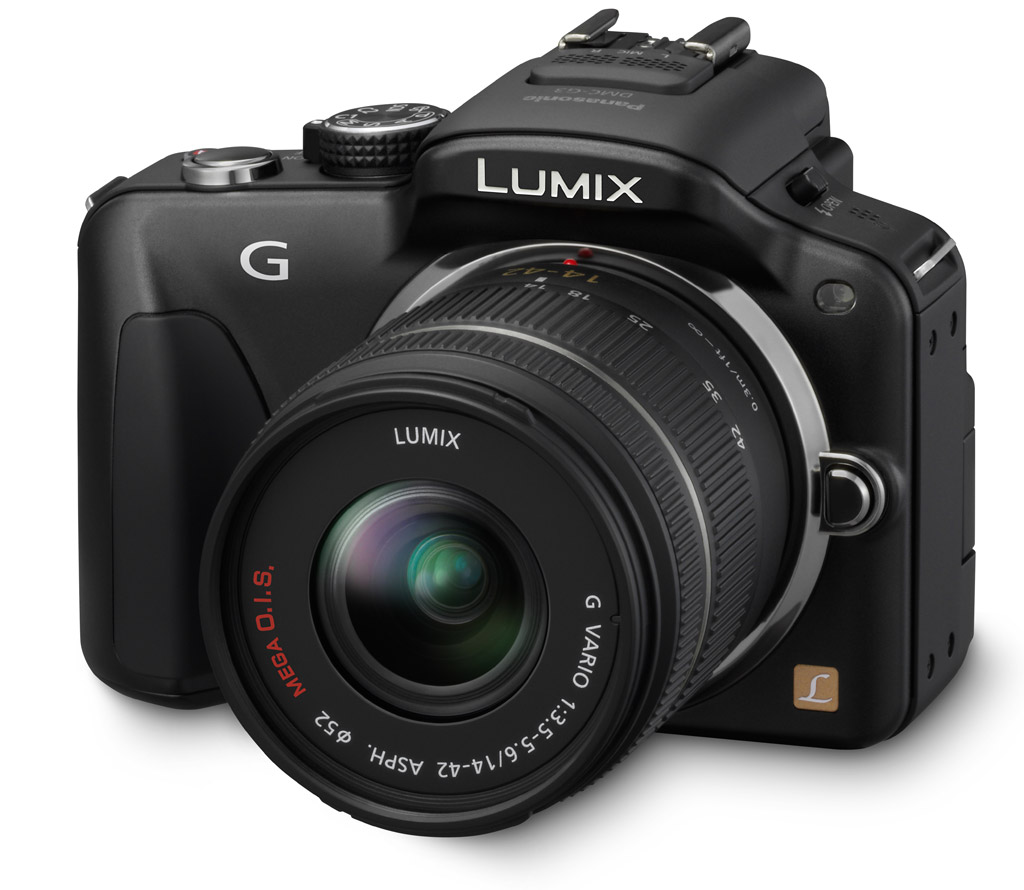
DMC-G#
Image Source: http://www.imaging-resource.com/PRODS/DMCG3/ZURBE.JPG

My second ebook chapter on how I set up and use my Panasonic Lumix DMC-G3 is now available.

This one took a long while to write. In Chapter Two, I go through all of my settings in the Recording, Custom, Setup and Playback menus. These are the settings that most affect my daily shooting.

(Click Here) to download Chapter Two in Adobe pdf format.

Again, if you appreciate this document, drop me a comment, tell your friends, purchase your Amazon items by clicking through from this blog, etc. Any support is always appreciated.

Most importantly, if you see any mistakes, let me know!

My plan is to follow up these initial two chapters with some information about custom settings, and some real applications with the camera. Chapter Two is purely focused on menu settings, which I am glad to be through, to be honest.

I hope you find this useful. Let me know!

DMC-365.blogspot.com


Sunday, May 6, 2012

Free! My First Installment of an ebook on How to Set Up Your DMC-G3!

Image Source: http://shop.panasonic.com/shop/model/DMC-G3KK
 
Ok, folks, for those of you who are Panasonic Lumix DMC-G3 users, I've embarked on a project to document how I set mine up, and share it with all of you.
 
There is a dizzying array of menus and settings on the G3. I worked through all of them, at least to some extent, and documented not only HOW I set them, but WHY. Now I don't expect you to agree with all of my settings, but at least you'll know what you're disagreeing with, if you decide on a different setting.
 
I have completed the first chapter, which I share here with you now.
 
(Click Here) to download the first installment of my G3 Settings Manual in Adobe pdf format.
 
The second chapter, much more extensive, outlining my settings for the Priority, Shutter, and Aperture Priority and Manual modes, is nearly finished. It will be distributed in the same way.
 
All I ask in return is that you buy your Amazon items by clicking through from my site. That really hasn't paid off yet; I think I'm up to about $15 revenue, total, ever. Of course, if you'd like to contribute directly to this blog, rather than buying things from Amazon (on which I make a very small percentage commission), you can always send me Paypal at rgeorge911@hotmail.com.
 
But, I'm really not in this for the money. It would be great to bring in enough to pay my annual flickr and smugmug bills...
 
I sure hope you find this manual useful. I actually learned some things in the process of writing it.
 
UPDATE 5/13/2012: Chapter Two is now available as well! (Click Here) to get it.
 
DMC-365.blogspot.com


Tuesday, April 17, 2012

Tyson Robichaud Writes About Creativity and Inspiration

 
BUTTerfly by Tyson Robichaud
Image Source: http://tysonrobichaudphotography.wordpress.com/2012/03/29/
avoid-the-void/#comment-1495

(Click Here) to read a recent entry on Tyson Robichaud's blog, regarding how to get out of creative ruts. I find his thoughts interesting. His approach is to grab a subject, anything interesting enough to spend some time with, and explore variations on perspective, lighting, etc.

I have a couple of other techniques I use. One is to go to a new place, without any real idea what I'm going to shoot there. This can be very hit-or-miss. In fact, you may come home more frustrated than when you left.

Another approach for me is to grab a camera, lens, or system that I haven't used in a long time. My recent post of some Rolleiflex images was a result of exactly that exercise.

Finally, I have written about the book Contemplative Photography, Seeing the World with Fresh Eyes, by Karr and Wood. I find their series of exercises very refreshing.

(Click Here) to see my post about the book and methods. By the way, I don't know the authors, or have any other connection with the book (other than I'll get a little support if you happen to order it through Amazon's link below).

Anyone else have useful ideas for breaking the creative logjam? Comments appreciated!

DMC-365.blogspot.com


Saturday, March 10, 2012

Civil War History - Stone Bridge at Manassas 150 Years After Destruction

Manassas Stone Bridge, by Reed A. George
(Click Here) to see the image larger.
 
Exactly 150 years ago yesterday, on March 9, 1862, the Stone Bridge at Manassas, Viriginia, was destroyed by Confederate forces. The bridge was the site of a failed diversionary demonstration by the Union, to take attention away from their main Forces, approaching from the north on July 21, 1861. This was the beginning of the First Battle of Bull Run, a resounding victory for the Confederates.
 
Leaving Manassas on March 9, 1862, Confederate Captain Edward Porter Alexander blew up the bridge to avoid future use by the Union army. The destruction was successful, as you can see in the image on the left. However, the Union reconstructed it long enough to use it once again in August, 1862, as a retreat route from Second Bull Run. Union forces again destroyed it after the battle.
 
The bridge was restored in the 1880s, and remains as a footbridge today. Automobile traffic is now carried across the river along the same roadway, now called Lee Highway, but on a modern concrete bridge.
 
In order to get a similar angle of view for the modern shot, I had to stand on the new highway bridge and shoot with a wide angle lens (Lumix 14mm f2.5).
 
It was meaningful to me to be there to photograph it 150 years to the day after the initial photograph by George Bernard. The original photograph is part of the collection at the Library of Congress:
 
(Click Here) for the link to the Library of Congress page.
 
DMC-365.blogspot.com
 
Interested in the civil war? Buy this great book and support the Civil War Trust, and this blog at the same time!


DMC-365.blogspot.com
 

Tuesday, February 21, 2012

My Presentation on Contemplative Photography


On Monday, February 20, I gave a presentation to the Reston Photographic Society (RPS) in Reston, Virginia, about an interesting photography book and process. The book is entitled Contemplative Photography, Seeing the World With Fresh Eyes, by Andy Karr and Michael Wood.

Click below to see the book on Amazon:


Contemplative Photography - Texture, by Reed A. George
Texture, By Reed A. George
Panasonic Lumix DMC-G1, Pana-Leica 45mm Macro-Elmarit f2.8
iso400, f2.8, 1/13 sec
 
The contemplative photography approach is very different than conventional photography. Instead of focusing on subject matter, contemplative photography emphasizes the process. Instead of trying to make pretty or otherwise pleasing pictures, it aims to allow the photographer to share their vision and feelings at the time the image is captured. The book breaks the image making process into three steps:
 
1) "Flash of Perception"
2) "Visual Discernment"
3) "Forming the Equivalent"
 
There are several challenging exercises in the book. I worked through all of them, and assembled some of my results into my presentation for the group.
 
(Click Here) to link to my presentation (in pdf format).
 
I found the book to be very interesting, and the exercises to be both unconventional and difficult. However, I do feel that the process helped me to further develop as a photographer. I also now use some of the exercises to help get me into the picture taking groove when I go to a new location.
 
Give the book a try. You may just find some new ways to look at your photography.
 
DMC-365.blogspot.com