Showing posts with label Magnum. Show all posts

Monday, January 5, 2015

In Photography as in Hunting, Sometimes it's Best to Stay Put

I know that there are a lot of similarities between photography and hunting. Take, for example, that both result in "shooting" your subject. I don't mean to carry that analogy further, but believe it's appropriate in this case. In working to photograph a particular subject, as in hunting, the photographer can choose to cover as much ground as possible, photographing what he/she sees along the way, or they can find a likely spot (not just any spot), and wait for the story or subject to come to them.
 
I've written about this picture before. (Click Here) to see my original post in the context of the project I was working on.
 
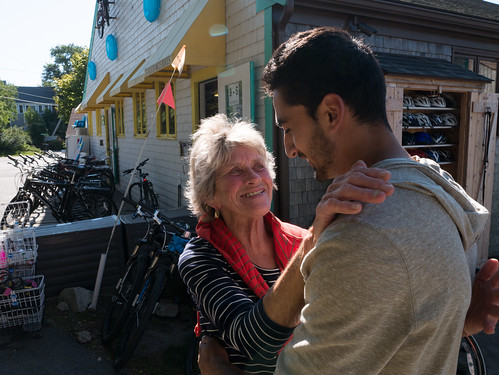
Goodbye My Friend, by Reed A. George
 
I shot this picture while attending the Magnum Days workshop in Provincetown, Massachussetts. (Click Here) to see the whole series of posts from the workshop.
 
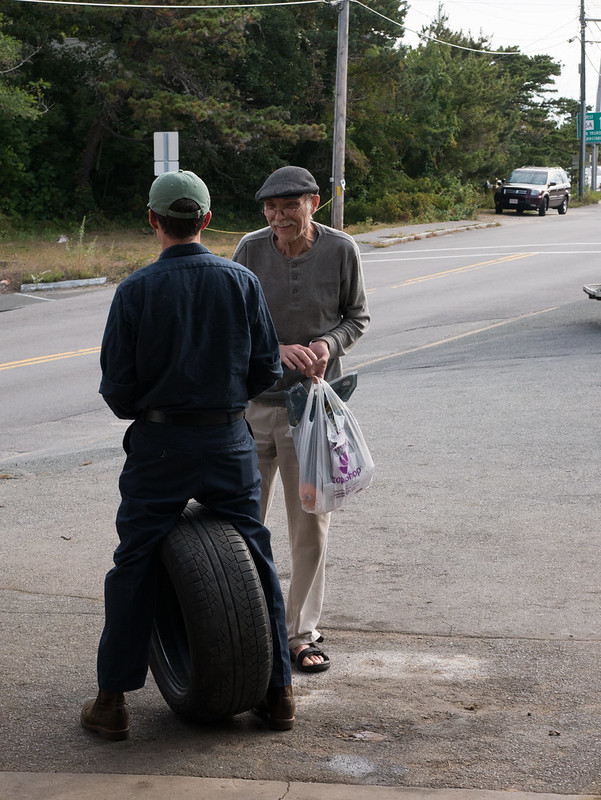
I was hoping to photograph the end of summer in Ptown in a broad sense. I was struggling for how to do that more specifically. I found this summer bicycle rental shop, which was clearly wrapping up its season, and decided to stop and hang out. I met this very nice young man from Bulgaria, and just stayed around talking to him. I found out that he would leave for home the next day. Finally, after nearly moving on from there a couple of times, and getting hints from him that leaving would probably make him more comfortable as well, this nice lady from the neighborhood came over to say goodbye to him. There was my shot.
 
I just read an article on the NY Times' blog, Lens, about the same technique. (Click Here) to read how Fred Conrad used this technique, sitting on the roof of a building in Kosovo, to get his story.
 
This idea of finding a good location and waiting for a story is not new. In fact, I've read and heard it many times. But, like all good lessons for me, until I'm using it regularly and successfully, it's okay to be reminded of it. It's so easy to grab my camera and just start walking around, shooting what I see. Sometimes that's not the most productive approach.
 
DMC-365.blogspot.com

Sunday, October 26, 2014

How A Shot Develops - Mamiya Universal Press (MUP) at the World War II Memorial

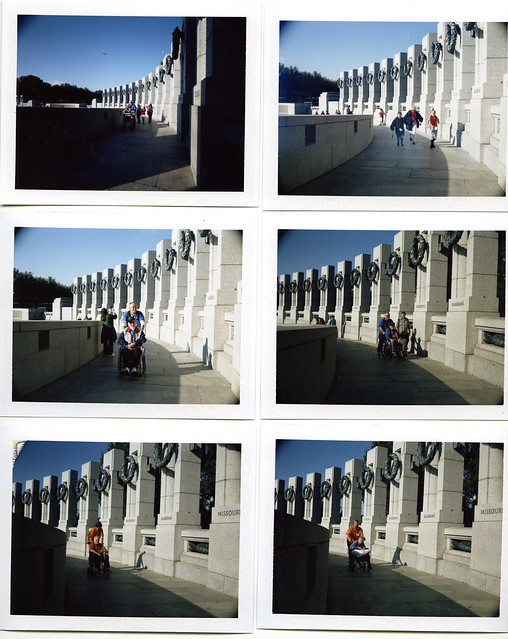
I had a couple of hours free this morning, so I packed up my MUP and drove into Washington, DC, to the World War II memorial. Planning to capture some people out in the fall color, I spent a little time doing that, and then walked over to the memorial itself. I saw a nice composition in my mind, with the columns and wreaths of the memorial (one for each state) tapering off into the background, and nice contrasty light separating them from the foreground. A steady parade of people, including veterans, mostly in wheelchairs, was coming up the walkway.
 
I set up the MUP on a tripod, changed the film back to my Polaroid back, which was loaded with Fuji FP100C color pack film, and started shooting. I shot a total of six images. They're shown in the contact scan below, and are in order from left-to-right, top-to-bottom.
"Contact Scan," by Reed A. George
 
You may notice the wider perspective in the first shot. It was made with the Mamiya 50mm lens, which is very wide on the MUP, especially with the oversized image of the pack film. Notice the vignetting in the corners, which is normal, since the MUP is designed for 6x9 image size and the pack film is larger than that. After the first shot, I changed lenses to the 100mm f3.5 "normal" lens for the MUP.
 
I was shooting at about 1/250 sec and f16 throughout the series.
 
I also slowly moved my tripod to the left as the series developed.
 
In the beginning, the veterans that were being escorted up the walkway were just too far away. I wasn't trying to make portraits of them, but wanted to capture some detail of them in the context of the memorial.
 
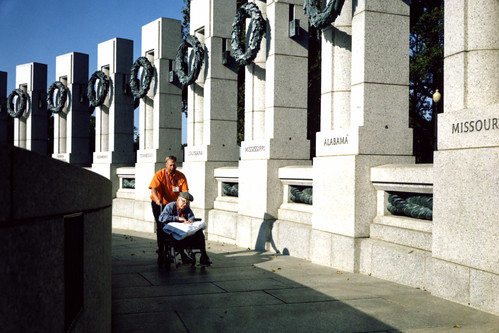
I consider the final two images to be pretty good, but the last one (bottom right in the contact scan) goes furthest in telling a little story of our remaining World War II veterans and the memorial that reminds us all of what they gave for their country.
 
Here it is, scanned at higher resolution:
Final Shot, by Reed A. George
 
Remember that these instant films are not really designed to be enlarged, so the image you see on your screen is probably much larger than intended by the engineers at Fujifilm. I think the color came out very nice, and there's enough detail to see what's going on here.
 
I've become very interested in how a decent photograph develops through the shooting process. This interest was sparked by starting to read the excellent book Contact Sheets by Magnum press. I highly recommend this book. Be sure to read the introduction, as it discusses a lot of aspects of contact sheets, like the fact that many photographers, including Henri Cartier Bresson, were not in favor of sharing them with viewers.
 
If you decide you want this book, please buy your copy by clicking on the Amazon link below. You'll get a great book for the same price as going directly to Amazon, and help support my blog in the process!
 
DMC-365.blogspot.com


Tuesday, October 21, 2014

Sad Day - Rene Burri Passes On

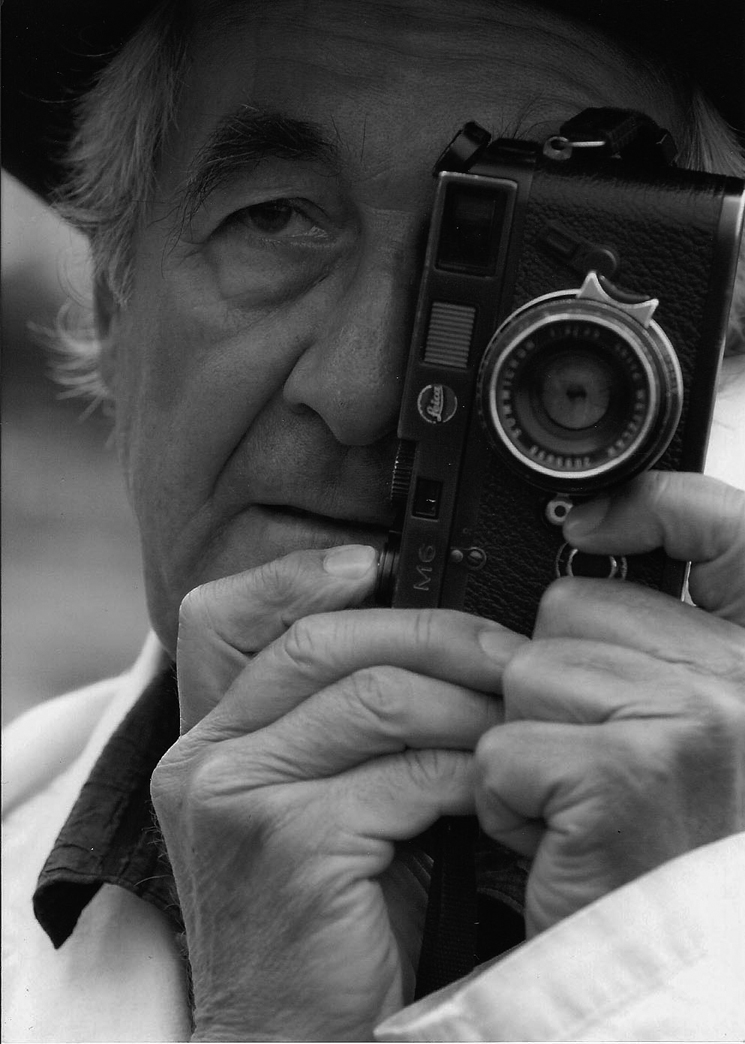
Image Source: http://leicaphilia.com/magnum-photographer-rene-burri-dead-at-81/
 
Rene Burri, Magnum photographer who took the most famous images of Che Guevara, died on Monday, October 20, 2014, at the age of 81.
 
(Click Here) to read more on Leicaphilia.
 
Referring to my new book Magnum Contact Sheets, the section about Burri's shoot with Guevara in Havana, Cuba in 1963 recounts the experience. Burri says that Che would not allow him to open the blinds to get more light. Shooting with his Leica M3, Burri said it was remarkable that Guevara never looked at him, which is apparent in the three rolls of film displayed in the contact sheets. He was embroiled in an interview with Laura Berquist from Look magazine. Shot over two hours, the total of 84 shots (two rolls of 24 exposures, one of 36) show Guevara's animation and passion about his beliefs.
 
Burri also comments about the odd experience of purchasing t-shirts with his own image of Guevara on them.
 
Sorry to see him go, but Burri left an amazing record for us to study and learn from.
 
DMC-365.blogspot.com
 

Saturday, October 11, 2014

Magnum Workshop Day 7/7 - Honoring Bruce Davidson

Bruce Davidson
Image Source: http://onlinebrowsing.blogspot.com/2011/05/bruce-davidson.html
 
Saturday, the workshop is officially over. I slept in, rolling in to the work center sometime in the late morning.
 
The big event was a presentation by Bruce Davidson, who arrived the night before. Bruce has been in Magnum for 56 years.
 
Davidson met Henri Cartier-Bresson while stationed in France with the US military. This clearly had a positive effect on Davidson's direction and focus in photography.
 
One of Bruce's most famous projects was "East 100th Street," where he documented life in an almost-exclusively black neighborhood in NYC. Davidson shot 4,000 negatives, most of them 4x5, in this project. In order to gain access to the neighborhood, he presented the residents with his work and his goal in photographing them. They held a neighborhood meeting and voted to let him in. That said, he still required a "helper" for the first year of the project.
 
Another famous project set in NYC, Davidson documented the subways and people who rode them. In this project, Davidson was mugged, and witnessed a lot of crime against others. One picture that stuck with me was an armed mugging.
 
(Click Here) to see that picture on the Magnum website.
 
Once color film became widely available and useful, Davidson could normally be seen carrying two Leicas - one loaded with color, one with black and white - and only one lens (a 35mm).
 
When asked for advice for photographers trying to improve their work, Davidson repeated what I'd heard multiple times during the workshop, and multiple times from David Alan Harvey: "Stick Around." By this, he meant don't be in a hurry, find the scene and let it develop. This is probably the most important lesson I learned during the weeklong workshop.
 
It is apparent that Davidson also has an interest in nature, as he's photographed it in urban settings including Central Park in NYC, Los Angeles, and Paris. He has a current work in progress where he's photographing people interacting with displays at the Museum of Natural History with a digital Leica and Voigtlander wide angle lens.
 
So, this is the last post about the Magnum Days workshop in Provincetown. What are my conclusions?
 
  1. Definitely a worthwhile experience for me.
  2. I learned, firsthand, many of the things I've read and only partially practiced over the years.
  3. Each and every Magnum photographer is different, and their personalities are wide-ranging.
  4. Telling a story with pictures in a relatively short time is difficult.
  5. Magnum is very exclusive; the workshop assistants are great examples of first-rate photographers who are not in Magnum.
  6. There are a lot of amazing photographers developing out there. The students in this workshop are not just digital "point and clickers." I'm encouraged about the future of people making quality images.
I really feel that I was exposed to both the history and future of photojournalism for a week, and loved the experience. Thanks to everyone at Magnum, in Ptown, and a the FAWC who made it happen.
 
DMC-365.blogspot.com
 

Thursday, October 9, 2014

Magnum Workshop Day 5/7 - Focus Pays Off, With One Usable Shot

Okay, at the end of Day 4 I felt pretty confident. I had a few images from the beach and the ladder shot, which reasonably tied in to my "end of the season" in Ptown theme. DAH selected a couple of the images, didn't like the beach exit picture I posted yesterday, and told me frankly that I had more work to do. He did suggest that I head back to the beach to see what else I could make of that.
 
I had in the back of my mind that I may once again find the surf fishermen, but that didn't happen.
 
I threw my Lumix GX7 over my shoulder, grabbed lunch to go in a bag, and biked back out to the shore. I went to the places I'd been the day before, met and talked with a few different people on the beach, and even got a young couple to let me shoot their relaxing day in the sand. None of these made it past my own filter.
 
Making a long loop ride around the seashore as shown below, I ended up at a bike shop near the west end of town.
 
Original Map Source: http://www.visit-provincetown.com/wp-content/uploads/2013/03/parkingPtown.png
 
Sort of out of options after leaving the beach with no real good additions to show for my efforts, I decided to act on DAH's advice to find a spot and let the image develop. The bike shop had lots of "Sale" signs up, indicating the end of the season. The deli inside the store was already closed for the season, and I photographed that, but not to much effect.
 
Going back outside, I noticed one of the shop employees working there. I struck up a conversation, and found that he himself was a sign of the change of seasons in town. Having come to Ptown for the summer from Bulgaria, this young man was preparing to return home in a couple of days. While he had enjoyed Ptown very much, working very long hours (90 hours per week!), he was looking forward to getting home to see his family. I asked where he had lived during the summer, and he told me he'd shared a space with two other people on the property. Asking if I could photograph his room, he told me that he was not allowed to bring guests in. And, he was working at the moment, anyway.
 
Having to pursue it further, I asked him if he could grab his suitcase, and let me photograph him walking out the door of the shop. Not exactly what I wanted, and staged for sure, it would have at least been something. He politely told me that he'd already been on break that afternoon, and wasn't allowed to take another. I asked him if I could request that his boss make an exception. He replied that his boss himself was on break, and not available. He would not be back for about 30 minutes. I said I'd wait.
 
Now at this point, it was clear that I was pushing hard, and quite possibly had outstayed my welcome. This guy was extremely nice, but was getting a little uncomfortable about my persistence. Anyway, I decided to wait it out.
 
Sitting on a picnic table in front of the store, waiting, I shot a couple of pictures of people coming and going, but nothing with a story. And then it happened. A lady from the neighborhood who'd befriended this young gentleman over the summer came to say goodbye before he left to return to Bulgaria. She hugged him, and told him how much she enjoyed knowing him. Real emotion, finally! I asked her permission to photograph them together, and she happily obliged. Here's the one shot I got from a few hours of pursuit:
 
Goodbye My Friend
 
This one shot made it all worthwhile. In fact, it was the only useful image I got the entire day.
 
That evening back at the Fine Arts Work Center (FAWC), Costa Manos was our featured speaker. Like Bruno Barbey, Costa has been with Magnum for 50 years. Costa was the main motivator for the Magnum Days in Provincetown program. Costa walked us through his amazing career in photography, beginning with his early coverage of a South Carolina island known as Daufuskie. This was where Costa made his first "serious" image, in 1952.
 
(Click Here) to see that image on the Magnum website.
 
It is an amazing image. In fact, it haunted me. Haunted me to the point that I purchased a limited edition print of it. I am not an art collector, but I really wanted to have this image to put on my wall as a reminder of the workshop, meeting Costa, and all of the other great people involved in the workshop.
 
DMC-365.blogspot.com


Wednesday, October 8, 2014

Magnum Workshop Day 4/7 - Starting to Find My Way

Day 4. Wednesday. David Alan Harvey (DAH) had arrived on Tuesday night, and I knew that I'd be working with him for the rest of the week.
 
My final meeting with Bruno Barbey in the morning allowed me to share my images from Rego Automotive, two or three of which Bruno actually liked. I also showed him my shots from meeting the NYC surf fishermen. Bruno suggested that I try to find them again.
I joined DAH at around 10:30AM, and each of us students shared what we had so far. David was clear in telling us that we didn't have much for being on the third day of the workshop, and I agreed. He shared some of his own work, including a series from a strip bar in NYC, and showed us every exposure. This helped us to understand how he built up to the final few amazing images by working the scene. DAH doesn't believe in walking around looking for images. He finds a spot and sticks with it until a photograph emerges. This was an important lesson for me, and one that would pay off in the end.
 
After lunch, I grabbed my bike and headed back toward the beach, hopeful of finding the surf fisherman again.
 
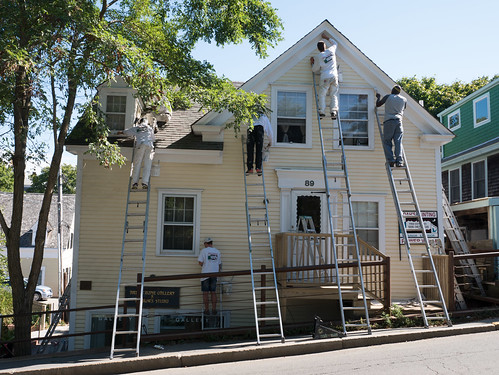
On the way, I noticed this scene, which has some relation to the changing of seasons in Ptown. Trying to follow directions and work the scene, I shot this one, which I thought was just an ice breaker. Then I proceeded to get close, and shoot images of individuals working. Technically fine, they just showed one or two guys painting. DAH picked this shot below because the real visual draw was having all of these ladders in place on one house. It gives the impression of working to get the painting done quickly. So, this was the only one that made the cut.
 
 
Winter Preparations
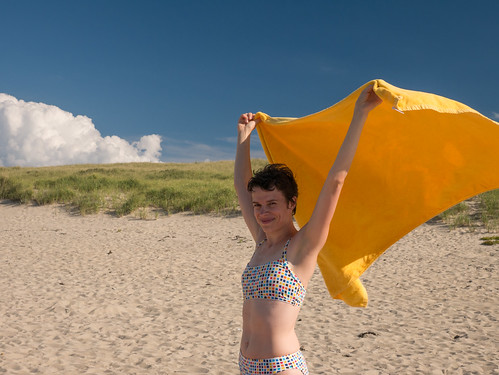
I never did find the surf fishing group again. However, on this day, I did finally start to find my groove. It was Wednesday, DAH was in town, and the pressure was on. Walking the beach, I caught a flash of brilliant color out of the corner of my eye. It was this young lady, letting her beach towel blow in the breeze. Walking over to her, I explained that I simply had to have that image for my workshop series. She happily obliged. I knew at this point that things were starting to go somewhere, at least a little.
Golden Towel
 
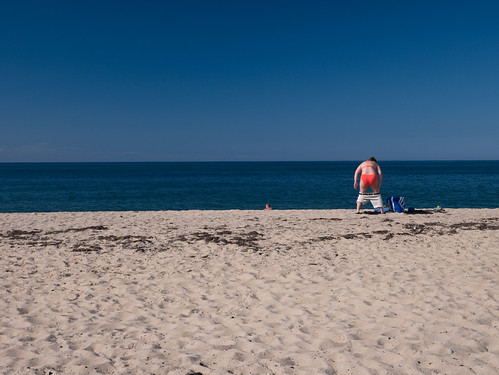
Then, I happened to catch this amusing little moment. Having my Lumix DMC-GX7 and kit zoom allowed me to quickly capture this image without anyone noticing. One second later and it was gone.
 
Caught in the Moment
 
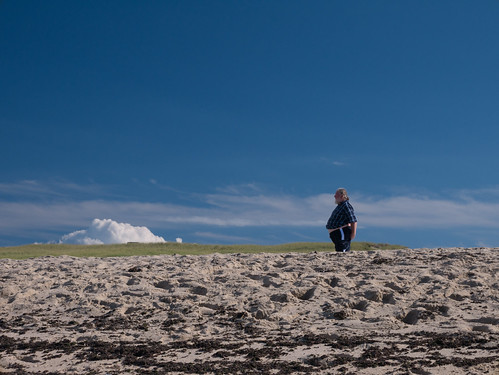
Not five minutes later, I found this somewhat similar scene:
 
 
A Theme, Perhaps?
 
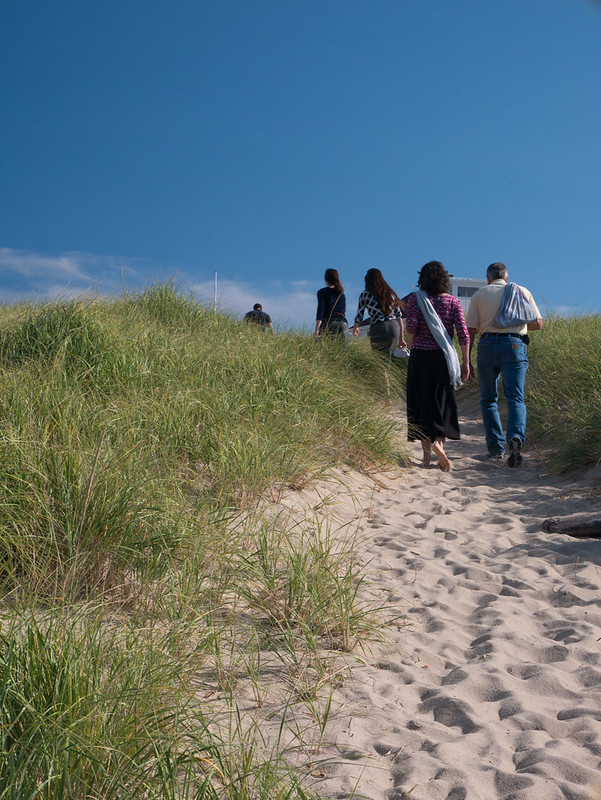
Deciding that a final day or two at the beach did fit my story line of Ptown shutting down for the season, I was happy to bring these into my image collection. I knew that I would need some pictures of people departing, and grabbed the shot below to try to capture that feeling.
 
Leaving the Beach
 
That shot didn't make the cut. DAH liked the concept, but not the execution. Getting a couple of closing shots would prove to be no simple feat. At least I had a start, however. I went into Wednesday evening feeling much more confident. Maybe too much so.
 
The public talk was by DAH on this evening. Knowing that he'd just arrived after days of trying to fly in from Europe, and had worked the full day that day, I was impressed with his energy and clear thought in presenting his work. There are many great examples of DAH's work to look at. Having been a National Geographic photographer for many years, of course he had stories. One of his latest projects, "Based on a True Story," demonstrates an edgy, energy-filled depiction of Rio de Janeiro. I was very pleased to get a copy of the book, complete with signature, as part of being in David's workshop.
 
So, I had a start. Far from really having a full story, I knew I had to find more good images in the coming two days, but at least I had a start.
 
DMC-365.blogspot.com


Tuesday, October 7, 2014

Magnum Workshop Day 3/7 - Still Searching

Tuesday. Now I was really feeling that I needed to find a groove and produce some pictures. I knew just how quickly it was going to be Friday.
 
I didn't sleep well on Monday night, thinking of just how I might get a photo story out of this week. Ptown was winding down for the season and I didn't want to shoot the more obvious topics. The Center for Coastal Studies was an intriguing possibility, but the chances of getting together with them while they were so busy were just too low.
 
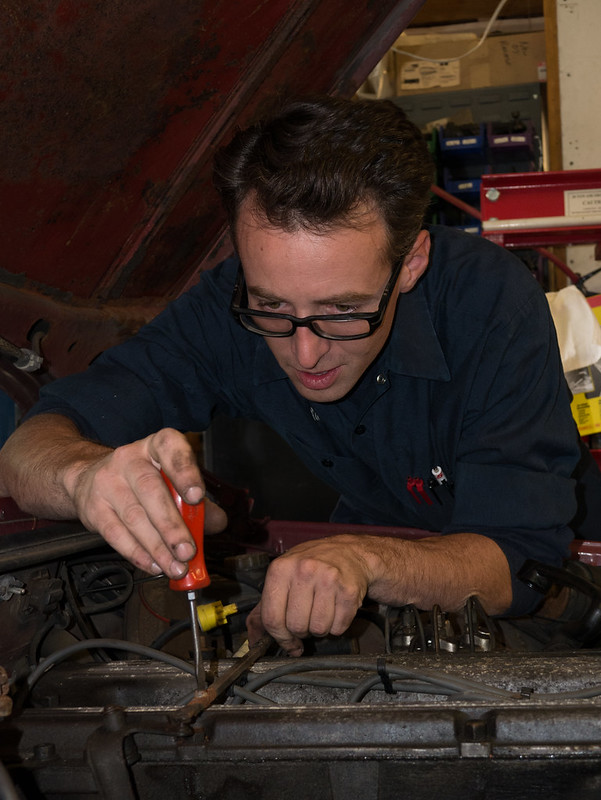
I knew that I was thinking too hard about it, and needed to pursue something. Stop thinking and start doing. I convinced myself that the best opportunity to go a little deeper was at Rego Automotive. No, it wasn't a flashy story, but Pat was an interesting and talented guy, working hard to make a small business successful in Ptown. Since I didn't really get any photographs to share on Monday, I let Bruno know that I would miss the morning session and go pursue some images at Rego Automotive.
 
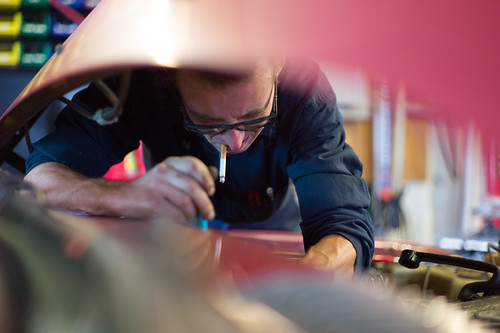
I was very pleased to find Pat already hard at work when I showed up, and that he was willing to let me hang around and shoot more pictures. I supplied several images to Pat and his wife, Lacey, to use on their facebook page. I am happy to see them on the Rego Automotive page, and hope they help!
 
Anyway, I spent a few hours hanging out, talking with Pat while he worked, and photographing the course of his business.
 
I left around lunch time, feeling that I had at least pushed a little further into a story. I wasn't sure that I had enough to make a project from, but the experience had been good and in the right direction.
 
In the afternoon, I rode my bike out to the National Seashore to visit Richard Ryder at the Lifesaving museum. Mr. Ryder had answered my email inquiry from before the workshop. There were no special events during my week in Ptown, but he invited me to come and see the regular displays at the museum. I very much enjoyed meeting Richard, and shot some portraits of him in the old station, where his family members had served in generations past.
 
Richard Ryder, Lifesaving Museum Historian
 
There was certainly a good story in Richard's own family history with the station, but the kind of story that's best told by a writer, not a photographer. Pleased to have met Richard, I had to scratch that story off my list as well, and move on.
 
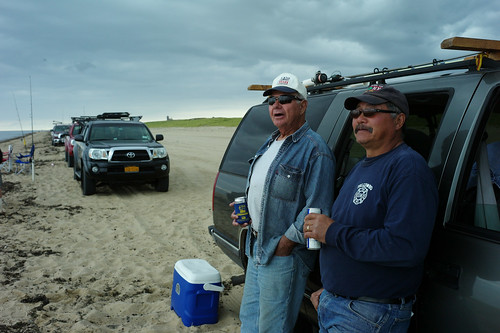
Looking down the beach from the museum, I noticed a caravan of trucks on the beach, and a group of people surf fishing. It was a long walk, but I had to see if I could find something interesting there. The fishermen were all New York City employees - policemen, firemen, sanitation workers. They have been coming to Ptown to fish together for over 30 years.
 
Surf Fishing
 
These guys were super-friendly, and full of stories. I hung around for an hour or so, and shot what I found interesting, which was mainly their personalities. The fishing wasn't productive, at least while I was there. Looking back on it now, this was potentially the "one that got away." If I'd been prepared to spend more time with them, I could have really gotten something good. As it was, I had only my bike and camera, and felt the need to get back to look through my images from earlier in the day and prepare for the next morning's review. If I had it to do over again, I would have done something to ensure that I could reconnect with this group later on. I am sure that their evenings together were as interesting as their days at the beach fishing.
 
When I did get back to review my images, I liked some from Rego Automotive. But, none of them really showed much human emotion or connection between people. I still was not there. At least I had something to show and get feedback on from Bruno the next morning.
 
I did realize how potentially productive the fishing group was, and planned to try to locate them again the next day. I could have helped myself out by getting contact information so that I could ensure success. Lesson learned.
 
On this evening, Bruno Barbey presented his work spanning 50 years in Magnum. So many of his images stuck in my mind, but one of a huge crowd in Poland, umbrellas getting covered in snow, was my favorite.
 
(Click Here) to see this awesome image on Magnum's website.
 
Another thing that really impressed me was Bruno's recent coverage of China. Caroline, Bruno's wife, shared an amazing video of Bruno shooting in the Chinese streets and interacting with the people. It really gave the presentation a different feeling, showing how people enjoyed his presence.
 
DMC-365.blogspot.com


Monday, October 6, 2014

Magnum Workshop Day 2/7 - Monday, First Day in Bruno Barbey's Group

I started Monday morning with a drive to a place I'd read about in Land's End (see Day 1 for a full reference on this book about Ptown), the Beech Forest. I was up before daylight, and drove into the National Seashore to find the place. I ended up hiking in the forest for an hour or so, knowing that I wasn't going to find my photo project for the workshop there, but still quite interested in the place.
 
Morning in the Beech Forest
 
Returning from the forest, I went for coffee at a place in Ptown called Wired Puppy. This ended up being my morning stop every day I was there.
 
I happened to run into Bruno Barbey there, and had a nice chat before starting our workshop at 9:00 AM. I was a little surprised to find that Bruno shoots a Canon DSLR and zoom lens. Bruno and his wife, Caroline, are very nice, extremely creative people, and are interested in the people they meet. It turns out that Caroline is a very gifted videographer.
 
Morning Coffee with Bruno Barbey
 
We began our first workshop day with each student presenting their portfolios. Bruno withheld comment, saying that he'd meet with each of us individually later to discuss them. I never really got the chance to get this feedback since I transferred into David Alan Harvey's group on Wednesday.
 
One statement that Bruno made that I liked very much, and that has stuck with me:
"Photography is a fantastic excuse to meet people."
Bruno Barbey
Viewing Portfolios (fellow student, Peter at top, Bruno Barbey below)
 
Bruno told us that we did not have to work on a project, but I was intent on finding some sort of theme to my week's work. At this point in time, I had no idea what that was. I also knew that a key to my learning would be to go at least one level deeper than just shooting pictures of strangers. Again, I had no idea how I would achieve that. This gave me more than a little anxiety about what was to come.
 
As soon as we broke at about lunch time to allow us to get out and shoot, I went to rent a bicycle for the week. My goal was to leave the car parked for the remainder of the week, which I achieved with only a couple of minor exceptions. Riding back from the bike shop, I stopped at the Ptown wharf, which I knew was a center for activity in the town. Shooting a few pictures, I left not feeling any closer to a real objective for the week.
 
I did stop in at the Center for Coastal Studies (coastalstudies.org), and learned of several interesting potential stories, including restoration of a historic sailing vessel, a fishing net entanglement project (where they go out and untangle turtles, whales, and other non-target sea life from nets), and even biological studies of whale age and bacterial environment using genomic and other technologies. Given more time in Ptown, this is where I would have focused my efforts. As it was, the group was at sea during most of the week, and I just couldn't rely on making contact later in the week. As it turned out, as much as I would have enjoyed it, I'm glad that I didn't rely too much on this one; we never did get to make contact when the boat came back in.
 
Ptown Wharf
 
One idea I'd picked up from Land's End was the transition that Ptown goes through between summer and winter. I saw a few indications of that transition at the wharf, but was unsure about how to proceed with it as a concept.
End of Summer, Ptown
 
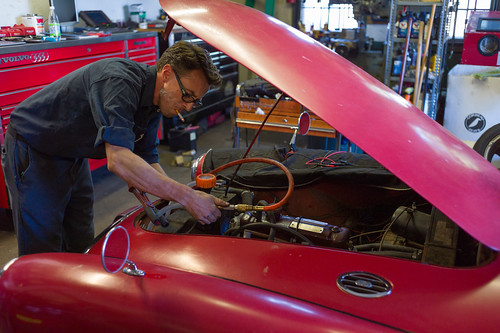
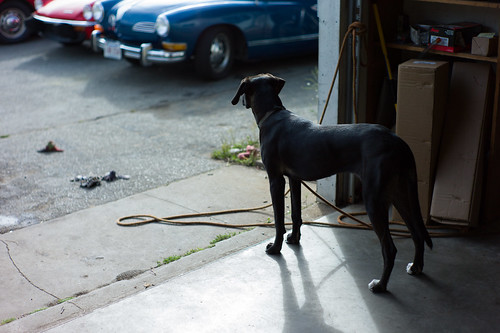
I continued to bike around town, including passing by a local auto repair garage (Rego Automotive), where my attention was caught by a 1974 Karmann Ghia, similar to the one I'd first learned to drive in, far ahead of my legal driving age. I went inside and introduced myself to Pat who runs the place. I asked him if I could shoot a few images, which he agreed to. He was working on a lovely 1959 MGA at the time.
 
Pat of Rego Automotive
 
Not sure how to go further, and feeling like I'd probably distracted Pat from his work for long enough, I moved on.
 
It was at this point that I stopped in to visit one of our workshop staff, Angela Russo, who runs a fine art photography studio in Ptown. (Click Here) to visit Angela's website and see some of her amazing color and large format photography. Feeling a little lost for a subject, having a conversation with Angela really helped me to get my head back in the game and keep looking. Angela is one of those few people I've met that I immediately knew I'd make friends with. She's a very special person, and continued to help me throughout the week, even though she wasn't assigned to work with either Bruno or David's groups.
 
Each weekday evening, one of the Magnum mentors gave a public talk and presentation of their work. On Monday, Olivia Arthur presented her work, largely centered around the Middle East and the treatment of women there. While Olivia found trends in the roles of women across the Middle East, she also found very interesting diversity from place to place. For example, she found Saudi Arabia to be culturally entirely apart from the other countries she worked in. In Dubai, she explored the cultural aspects of this rapidly developing country where only 10% of the people are citizens, and 70% are male. Olivia is a master story teller, and currently has two books in progress.
 
I left the workshop late that evening feeling very disconnected and concerned about being able to achieve the goal set out by Bruno Barbey as producing 8-10 presentable images in five days, one of which was now over. We were scheduled to meet at 9:00 each morning to review progress; I felt that I had nothing to show for my first full day of exploring.
 
DMC-365.blogspot.com
 

Sunday, October 5, 2014

Magnum Workshop, Day 1/7, Travel to Provincetown.

I've decided to document the experience of attending the Magnum Days workshop in Provincetown Massachussetts, one day at a time.
 
(Click Here) to read about Magnum Days.
 
I'm doing this after the fact, because our days were too full to do it in real time. I want to document for my own purposes, and share the process that I went through in the course of the five day workshop. I'll actually cover seven days, starting with Sunday, September 14, and ending with Saturday, September 20.
 
Sunday started early, with an hour drive from my home into DC to catch a flight from Reagan National to Boston's Logan Airport. There, I rented a car and drove the 2 1/2 hours to Provincetown, arriving in the mid afternoon. This allowed me the opportunity to meet up with my friends James and Maria, Boston natives who happened to be in Provincetown for a mini-vacation. We spent a little time together, and then I headed off to check in to my room and attend the first Magnum Days activity, a welcome party and barbecue.
 
Based on the fact that this was a Magnum event, I assumed that we would each work on a project throughout the week. In fact, I think it said that in the informational materials somewhere. In any case, I knew that we would have an exhibition of the workshop students' work on the following Friday. In order to prepare, I did a couple of things. First, weeks before the event, I started getting information about Provincetown (which I'll abbreviate as "Ptown," since that's fully accepted by the locals). I sent off an email to a historic lifesaving museum at the National Seashore, to see if there were any events during the time I'd be there. I received a nice response telling me there weren't, but that I was welcome to come and meet a historian on either Tuesday or Thursday afternoon, and see their museum. Didn't sound like much of a lead, but better than nothing.
 
I also decided to purchase a book on Ptown, entitled Land's End: A Walk in Provincetown, by Michael Cunningham. That turned out to be a very good primer about the town. It quickly became clear that Ptown is known for a few things: art, homosexuality, and partying. I also learned quite a lot about the land, lighthouses, and the National Seashore. Knowing that a Magnum workshop would be no place for landscape images, I wasn't sure if I could work any of that knowledge into my project. And, I wasn't particularly interested in covering the gay or party community, at least not on the surface of it.
 
I had also thought about the type of stories that our mentors have covered in their careers. Clearly, I wouldn't be covering a war in Ptown (thankfully). In fact, I tried to imagine anything there that may even reflect the fact that our country is currently involved in several military actions. The closest I could come was finding that Ptown had a Veterans of Foreign Wars (VFW) post. I thought that may lead somewhere.
 
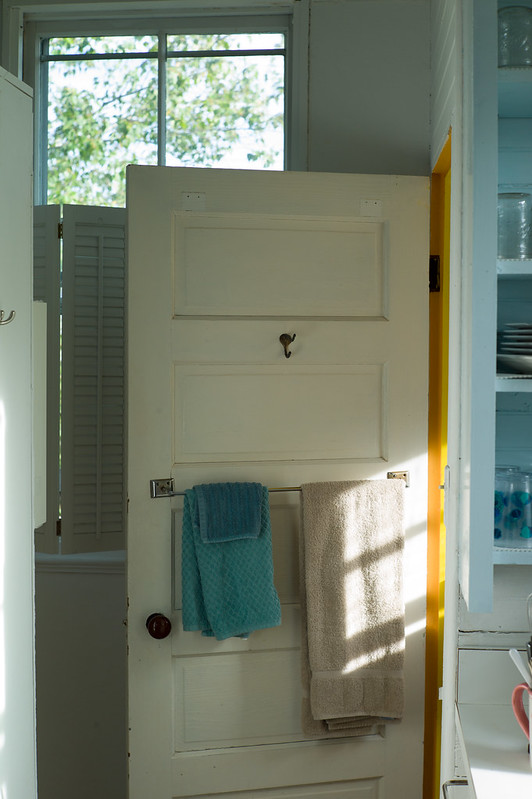
Of course, as I checked in and got my bearings, I shot a few images. You may have already seen this one, which has no interesting subject, but does show the beautiful nature of the Ptown light.
 
 
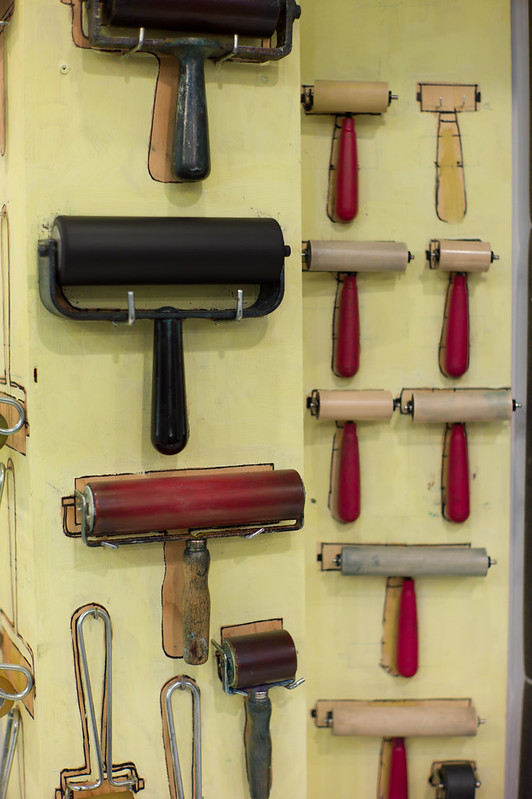
Attending the welcome party, we got a quick orientation to the Fine Arts Work Center (FAWC) in Ptown, which includes a fully-functional printing operation. I always love to look at tools, a practice that I'm sure came from my Dad. Check out these brayers. That's what I call organization.
 
 
After the party, I decided to walk down the main drag, Commercial Street, to see what it was like. I didn't want to just shoot random street photography during this workshop, and ended up spending much less time here than most of the other students.
 
 
When you're looking for a project idea, I think it's generally a bad idea to define what you don't want to do. But, on this evening, I did decide not to focus on drinking and homosexuality in Ptown. It was just too obvious. Not that this thought brought me any closer to what I did want to cover. I think you can see that I didn't have a coherent project idea at this point; it would take a while to form.
 
The other important development on Sunday was that those of us signed up to work with David Alan Harvey learned that he was stuck in Europe due to an airline strike, and would not arrive until Tuesday night. I decided to take this as a positive opportunity, as I was also very interested in learning from the other Magnum mentors, specifically Bruno Barbey. I got to spend the first two days with Bruno, which really added to the experience.
 
DMC-365.blogspot.com


Wednesday, September 24, 2014

Impromptu Portrait Session - an Add-On to my Magnum Workshop Experience

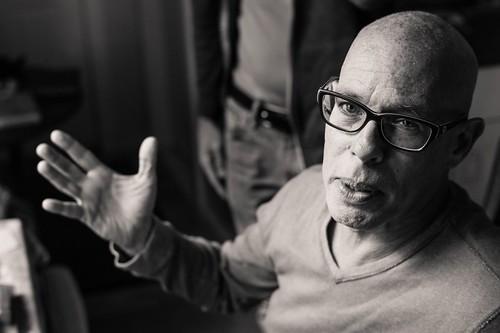
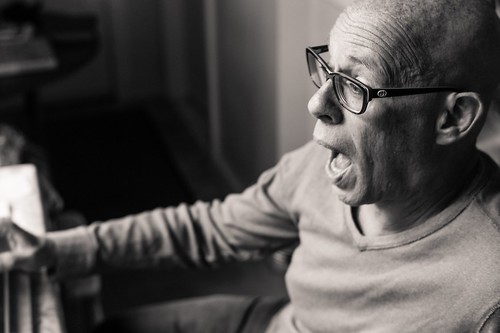
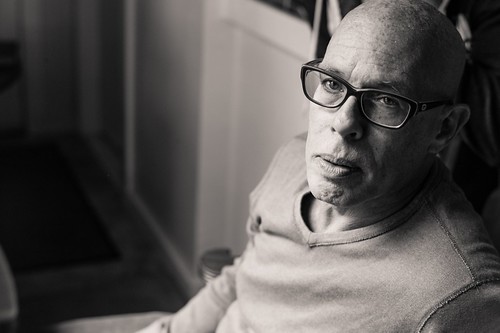
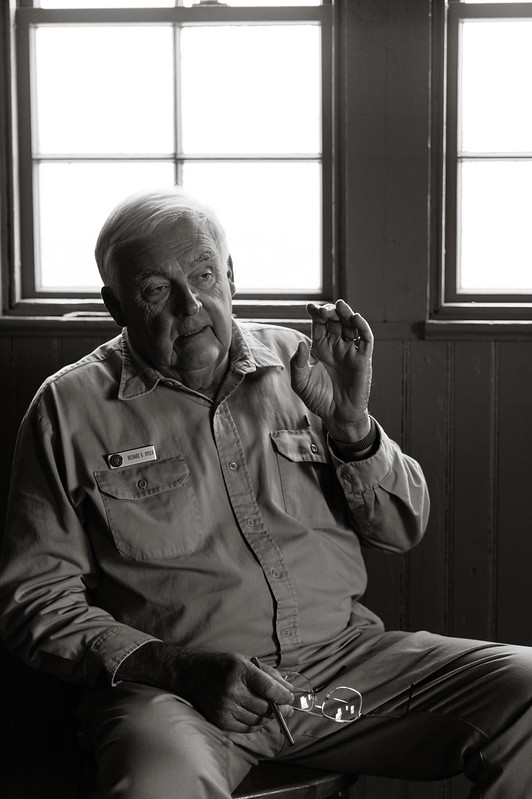
I had the good (great) fortune of meeting this gentleman at the very end of my Magnum workshop in Provincetown, Massachussetts. I met him by being open to opportunities, and by approaching him with an honest request to make a few images.
 
David is a figure of some prominence around here, and was planning to have a photographer visit him next week to shoot portraits for a magazine article. However, he gave me the opportunity to come into his writing studio and shoot a few of my own. Here are the best four shots I got from my ten minutes or so with him.
 
All of these were shot on my Leica M9 with 50mm f1.4 Summilux. I would have liked to use my 35mm lens, as the writing studio was quite cozy and I was challenged to get far enough away to make the picture I wanted. But, I only had the 50mm lens with me, and made the best of it.
 
One of the things I learned (re-learned?) in this workshop is the importance of being out there, being ready for opportunities to make images, and even creating opportunities when necessary. I worked for five days on a project, having a very difficult time getting to even the rather meager number of 5-8 images needed for our presentation to the workshop and to the public at the Fine Arts Work Center here in Provincetown. The experience of meeting David was exactly what I was looking for all week.
 
I ended up using only a single image of David in my presentation (not one of the images shown here), but feel that the experience of meeting him significantly added to my workshop experience.
 
DMC-365.blogspot.com
 

Sunday, September 21, 2014

Travel Day - Made it to Provincetown for Magnum Days

Today was a travel day. It started at 5:30AM at home in Virginia. Left home at 6:30 to drive into DC for a flight out of Reagan National. Arrived in Boston, Logan a little before noon, got my rental car, and drove 2 1/2 hours Provincetown, Massachussetts for the Magnum Days workshop at the Fine Arts Work Center.
 
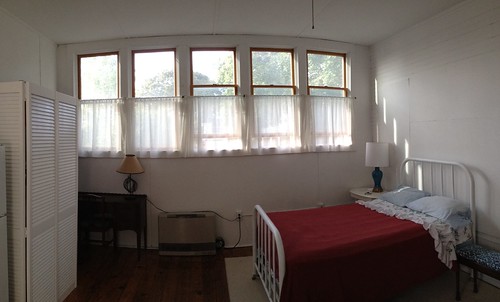
After meeting up with my Boston friends James and Maria, who happened to be in Provincetown for a getaway, I got checked into my room. Perfect. Here's what it looks like:
 
Provincetown Room, by Reed A. George
Apple iPhone, Pano setting
 
Sorry for the iPhone pic, but it actually did a nice job of it.
 
I've read that the light out here on the Cape is special. Well, judging from the afternoon light coming through my bathroom window, I think it may be true...
 
Afternoon Light, by Reed A. George
Leica M9, 50mm f1.4 Summilux
iso 200, f5, 1/125 sec.
 

Don't forget my delay in posting; by the time this posts, I'll be back in Virginia, hopefully with lots of new ideas, techniques, and creative directions! I'll post every day while I'm here, even though they have a very busy schedule planned for us.

DMC-365.blogspot.com


Friday, September 12, 2014

Time to Make My Portfolios

Meditative Photography, by Reed A. George
 
If you're a regular DMC-365 reader, you may know that I've been accepted into a Magnum workshop with David Alan Harvey this September. The workshop is already having a positive effect on my work, even though it won't start for another week. In short, I've been instructed to put together a portfolio of my work in preparation for the workshop.
 
I've known that it's time to update my portfolios, as well as my online presence at my website creativeobjective.com for quite some time. Now I have a deadline, at least for my portfolios.
 
Of course, I started by reading up a little to get some tips on making a powerful portfolio.
 
(Click Here) to read an article on PopPhoto on the subject.
 
In this article, Brian Dilg of the New York Film Academy's photography school offers a lot of insight. Here are the most important tips from my perspective:
 
  1. Don't include multiple images that are too similar or obviously taken in the same session. It can make it look like you're indecisive or incapable of editing your work.
  2. Stick to either landscape or portrait orientation within a series of images. This is a tough one for me.
  3. Don't pad your portfolio with less than the best images, ever.
  4. Every image should evoke a "Wow" from viewers, without the need for explanation.
  5. Your portfolio should focus on a subject; that should be the subject you'd love to be paid to photograph.
  6. Your goal is not to show competency as a photographer; it's to show creativity as an artist.
  7. Use mini-sequences within your portfolio. A simple three image sequence should follow this outline: create an expectation (1st image), establish a pattern (2nd), and provide a surprise or thrill (3rd).
  8. In most cases, a real print still rules. However, in a pinch, an electronic portfolio can be acceptable.
So, it looks like I have my work cut out for me.
 
DMC-365.blogspot.com
 

Sunday, August 31, 2014

Studying Up for Magnum Days Workshop

 
I'm very pleased to have been accepted into a Magnum workshop in Provincetown, Massachussetts, which is coming up in a few weeks.
 
I will be studying with Magnum photographer David Alan Harvey. Mr. Harvey has a wonderful online magazine, entitled Burn.
 
(Click Here) to read Burn magazine for yourself.
 
What interested me the most there today is a video interview with Constantine Manos, another Magnum photographer who happens to be located in Provincetown. Click the link below to see and hear Manos' thoughts on becoming a successful photographer.
 
 
Mr. Manos states that in order to be successful, a photographer needs to have a portfolio of at least forty images that show the message they want to communicate. That message should be focused, and the images should hold to a theme. This focus on a single theme, at least for the scope of each portfolio, seems to be critical. Manos also believes that printing an image is necessary for it to really exist.
 
I have a few projects that have led to this number of presentable images. Street photography from various cities, but in a single style, make up one of those. Live music, specifically local performers from the mid-Atlantic region where I live are another. Another of my current projects, focused on meditation, is not quite there yet.
 
Always more to do!
 
DMC-365.blogspot.com
Thursday, July 24, 2014

Magnum Workshop in Provincetown, MA - I'm Going to Apply

September 15-21, 2014 is Magnum Days at the Fine Arts Work Center in Provincetown, MA. Along with an impressive array of lectures, reasonably priced at $15 each, they're running a week-long workshop where students get to improve their work by studying directly with a Magnum photographer.
 
New Orleans Musicians, by Reed A. George
Panasonic Lumix DMC-LX7
iso 400, f2.8, 1/200 sec.
 
(Click Here) to go to the Magnum Days web page.
 
The workshop requires submission of a small portfolio, photographer's statement, and a non-refundable deposit. This is just the application phase, and I may not get in.
 
While I'm a big fan of Bruce Gilden and Constantine Manos, I will select David Alan Harvey or Bruno Barbey as my first choice for a mentor. Both of them have published work that fits with my interests, and shows how much I have to learn.
 
For example, (Click Here) to see Barbey's work at Magnum.
 
They only allow a maximum of 12 students per mentor, so I'd better get busy and put in my application. What a boost it will be if I get in and spend a week with this group!
 
DMC-365.blogspot.com


Saturday, June 7, 2014

Photography as a Passion

Point Reyes Contemplation, by Reed A. George
Nikon D70, Sigma 600mm f8 Lens
iso 400, f8, 1/640 sec.
 
I took the shot above ten years ago. I remember the thrill of getting my first DSLR, the Nikon D70. Quite a machine it was. I also remember the feeling of hiking at Point Reyes, California on that day.
 
Eric Kim has posted 35 Magnum photographers' advice to aspiring photographers. I haven't read them all yet.
 
(Click Here) to read the full post on Eric Kim's blog.
 
Here's the one that will be my thought for the day, by Alex Webb:
 
"Photograph because you love doing it, because you absolutely have to do it, because the chief reward is going to be the process of doing it. Other rewards — recognition, financial remuneration — come to so few and are so fleeting. And even if you are somewhat successful, there will almost inevitably be stretches of time when you will be ignored, have little income, or — often — both. Certainly there are many other easier ways to make a living in this society. Take photography on as a passion, not a career."
I do feel that I "absolutely have to do it." I find that part of the quote very interesting. Taken out of context, that could mean that photography is your career, thus you have to do it. I think the follow-on is important: "...the chief reward is going to be the process of doing it." Certainly true for me. The process is the thing for me.
 
DMC-365.blogspot.com
 

Monday, June 17, 2013

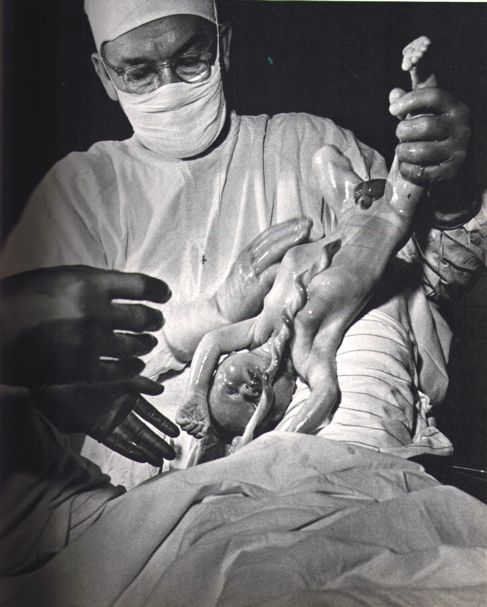
Sad News - Wayne Miller, Magnum Photographer, Dies at 94

Image Source: https://www.google.com/search?q=wayne+miller+photographer&client=safari&hl=en&source=lnms&tbm=isch&sa=X&ei=_aC0UcnpCdal4AP0xIGwBQ&ved=0CAoQ_AUoAA&biw=1024&bih=644#biv=i%7C25%3Bd%7Cb2oVpf6LZkPjBM%3A
 
Wayne Miller, celebrated Magnum photographer, who covered subjects ranging from World War II in the Pacific to child care (for Dr. Spock's books) recently passed away at 94 years of age.
 
My personal friend, who I met in a way completely unrelated to photography, is Mr. Miller's son. In fact, that's my friend being delivered in the image above. As I understand it, his grandfather is the doctor delivering him, and of course, his father, Wayne Miller, took the shot.
 
We have lost a treasure. Do a search of Mr. Miller's work to be inspired to shoot more, shoot better.
 
(Click Here) to read the story at the NY Times.
 
DMC-365.blogspot.com


Tuesday, September 11, 2012

Leica M9 Class - Interesting Twist With the New Leica M Monochrom
I took a nice Leica M9 user's class at the new Leica retail store in Washington, DC. It was a good chance to meet some fellow Leica photographers, and talk shop. Our instructor, Justin Stailey, Product Specialist for Leica M Products, North America, was a real source of great information.
 
I learned a few key things about setting up the M9 that I didn't know before, and also picked up some pointers on how to recognize great lighting opportunities for street photography.
 
I also got clued into something that wasn't obvious to me, relating to the new Leica M Monochrom. This is an M9-like camera which is designed specifically for monochrome (black and white) imaging.
 
Leica M Monochrome
Image Source: http://us.leica-camera.com/photography/m_system/m_monochrom/
 
Normal camera sensors, designed for color photography, accomplish their job by using filters of Red, Green, and Blue over a set of four sensors, in something known as the Bayer pattern. This means that in order to get all of the color information for a location in the image, the chip must blend information from four sensors on the chip. The new Monochrom does away with the Bayer filters, and uses all of those sensor locations to gather light level information in only black and white. This results in exquisite detail in monochrome images.
 
Well, here's the twist. Until now, digital imaging has sort of rendered those old red, green, and yellow filters we used for black and white film photography obsolete. When converting an image from color to monochrome, we can use our post-processing software to balance the color channels, effectively allowing us to apply filters digitally, after the fact. Since the Monochrom doesn't even gather any color information, that's impossible. So guess what? Dig out those old filters - they're useful again. I think that's kind of cool.
 
By the way - if you're in the area, there's a spectacular exhibition of images by Magnum photographer Jacob Aue Sobol, all taken with the M Monochrom. They are awesome. They really show how this camera can make black and white images that look like the classics, but with detail and tones that are just beyond belief.
 
I can't imagine paying that kind of money for a camera that only does black and white. But, if that's your thing, this is the camera.
 
The regular Leica M digital cameras are no slouches at black and white, either.
 
All in all, an interesting day at the Leica shop.
 
DMC-365.blogspot.com