Showing posts with label Press. Show all posts

Monday, June 22, 2015

Time to Get Back Out With the Mamiya Universal

Early Spring Color, by Reed A. George
Mamiya Universal Press
 
I have been neglecting my Mamiya Universal. It's time to get the beast back in action.
 
Just to get the juices flowing, I've been looking at work others have done with the Universal. (Click Here) to see a great photo-a-day blog using the Universal.
 
The Universal is such a great camera. Big, heavy, far from streamlined. But, those lenses, oh, man. Yes, I have to get it out soon.
 
DMC-365.blogspot.com
 

Saturday, May 2, 2015

I Love Slow Photography - Jim Austin Shares "SloFo" on Film Photography Project Blog

Slow, by Reed A. George
Mamiya Universal Press Camera
 
I love slow photography. Probably my favorite camera for ultra-slow, contemplative photography is the Mamiya Universal Press (MUP). You just don't hurry this camera up. It's big, heavy, and stubborn. It makes me do photography it's way.
 
Jim ("Jimages") Austin has written a nice blog post on the Film Photography Project's blog about slow photography, which he refers to as "SloFo." I'm not sure why we need a new term for it, but I enjoyed Jim's post nonetheless. Jim was shooting in the Bahamas with a selection of Konica, Nikon, and Nikonos film cameras.
 
(Click Here) to read the blog post on the Film Photography Project's page. Be sure to watch the video that's linked to from the text; it shares different pictures than are used in the text. Plus, it's kind of fun to see Jim paddling his boat to shore.
 
If you're a rapid-fire high speed continuous shooter, you owe it to yourself to try some slow photography. Personally, I find it much more rewarding and useful in sharing my creative vision.
 
DMC-365.blogspot.com

Wednesday, April 29, 2015

Another Birthday Portrait with the Mamiya Universal Press

A few days back, I posted an image I shot of my daughter on her birthday, taken with the Mamiya Universal Press (MUP) and Polaroid back, loaded with Fuji FP100C pack film. I also shared a scan of the color negative I recovered from that shot. (Click Here) to see that post.
 
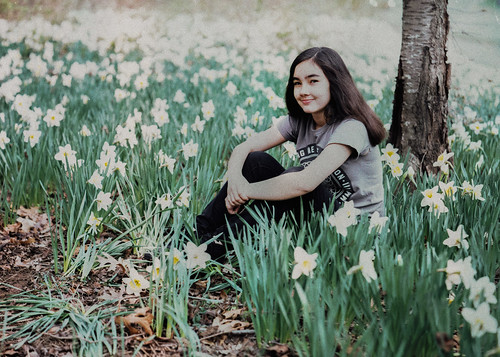
Today, I'll share another shot from the same time and place, only this one was made on Kodak Portra 400 color negative film, using the MUP's 6x9 film back.
 
Birthday Portrait, by Reed A. George
Mamiya Universal Press Camera, 150mm f5.6 Lens
Kodak Portra 400 Color Negative Film
 
I just got the negatives back from The Darkroom (thedarkroom.com). I actually made a mistake with this roll of film, and exposed the Portra 400 at settings for Portra 160. No problem. The Darkroom pulled the processing by 1.5 stops, saving the pictures for me. I'm pleased with the result.
 
I really enjoy shooting the MUP. It's a very large, heavy beast, with matching impressive lenses. But, when you have the time to set it up and think about your shot, it's great fun to use. This is slow photography. I like it.
 
DMC-365.blogspot.com
 

Thursday, April 16, 2015

Polaroid/Fujifilm FP100C Instant Negatives from the Mamiya Universal Press Camera

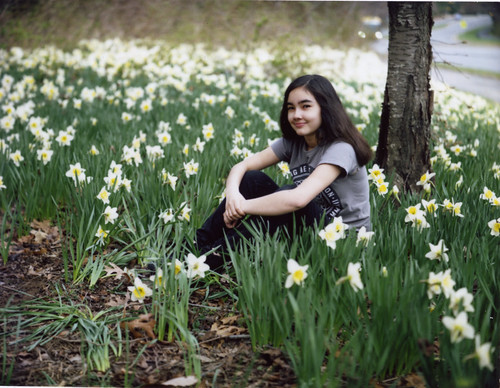
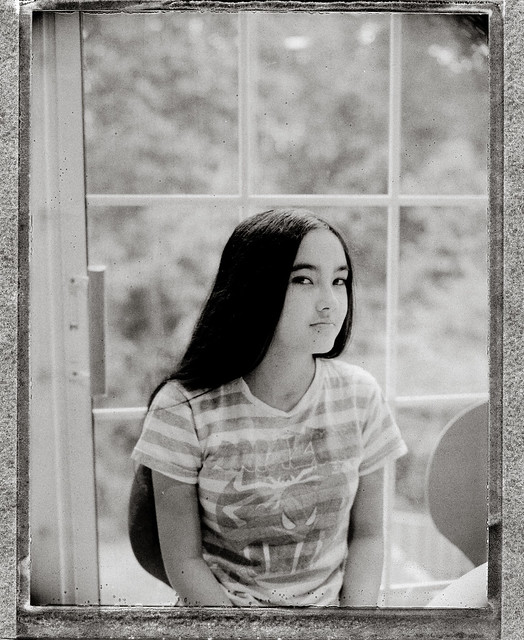
I'm still having fun with my Mamiya Universal Press (MUP) camera. Today, I used it to shoot some portraits of my daughter on her birthday using Fujifilm FP100C instant film. Note that pack film is larger than the 6x9 image that the MUP lenses are designed for, hence the vignetting in the corners.
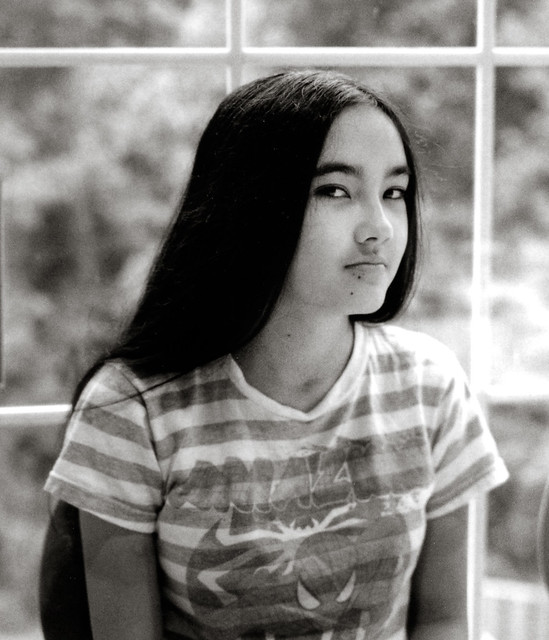
Scanned Instant Print, 14th Birthday, by Reed A. George
MUP, Fujifilm FP100C Film, f5.6, 1/125 sec.
 
 
I was so pleased with some of the images that I decided to figure out how to recover the negatives from the film backing, which you usually throw away.
 
(Click Here) to see a video from the Film Photography Podcast describing how to recover a negative from Fujifilm FP100C instant pack film. Beware that the process uses bleach. Wear gloves and keep a fan on while you work.
 
It was actually pretty easy to do, and the results are quite impressive. Here's a scan of the same negative that was used to make the print above:
 
Scanned Instant Negative, 14th Birthday, by Reed A. George
MUP, Fujifilm FP100C Film, f5.6, 1/125 sec.
 
I think I could have done a better job scanning this negative. The highlights are too high, and the colors are washed out compared to the print.
 
Here is a more impressive comparison, showing the scanned print (left) and negative (right) at 100% magnification.
 
100% Crops (Print on Left, Negative on Right)
 
As you can see, the negative has a lot more detail and sharpness, and grain. Pretty interesting. I could make a 5x7 print from the negative just fine.
 
DMC-365.blogspot.com


Wednesday, January 14, 2015

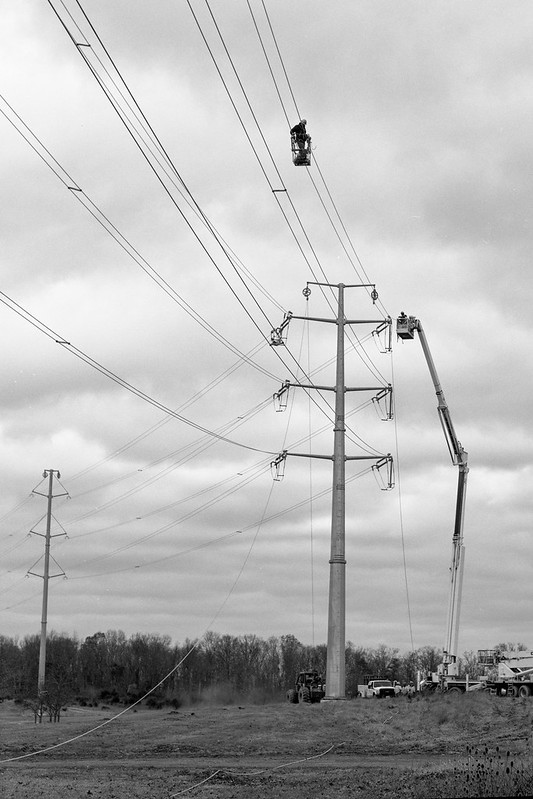
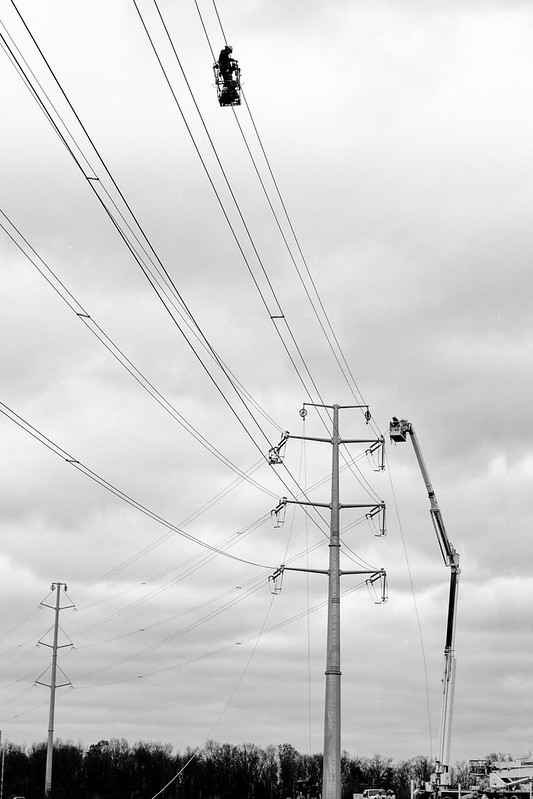
High Work, Powerline Installation

I've been watching these powerlines get installed near my home.
 
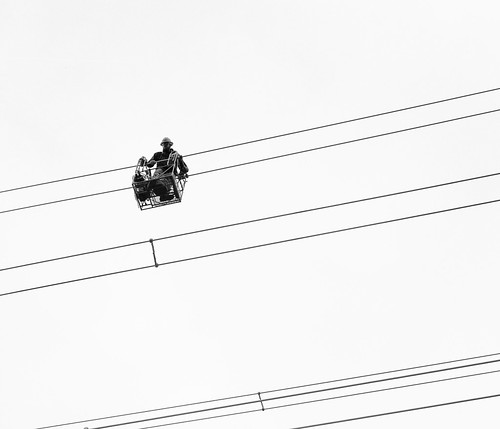
One day, when they were working very close to the road, I drove home and picked up the Mamiya Universal Press (MUP) and came back to photograph the installers at work. I approached some guys on the ground, and explained that I was going to take a few photographs. They said no problem.
 
I shot all of these with the Mamiya 150mm f5.6 lens. I used TMax black and white film and the 6x7 Mamiya back. I cropped the first two images to 6x9 format, to eliminate a bad scratch on the negatives.
 
 
The guy on the wires closest to me in the picture above was new to the job. He and his boss (on the ground) were yelling at each other the whole time I was there. Dropping the F bomb left and right. The boss explained to me that he'd left a line in the wrong place, and had to retrace his earlier work. He also told me that if that little carriage they're in goes off the cables, you basically have to climb out and get it back on. Pretty stressful stuff.
 
 
It was certainly worth the stop to photograph them. I found myself wanting a longer lens for this particular subject. Maybe I'll go back and catch them with my Nikon DSLR and a 300mm lens.
 
DMC-365.blogspot.com


Monday, December 15, 2014

Found Another Mamiya Universal User - and Review

 
A few months back, my medium format shooting capability was significantly expanded when my friend Dennis Gallus sold me his lovely Mamiya Universal Press (MUP) camera kit.
 
I've been searching for other users of the MUP online, and well, there aren't very many of us left. I recently found this review of using the MUP with instant film on one of my favorite new sites, Snap It | See It.
(Click Here) to read the review, which also remarks on using the MUP with flash, something I have yet to try.
 
I've been distracted from the MUP recently, with several other new-to-me cameras. I've simply got to get more hours in the week(end)s to shoot the MUP.
 
DMC-365.blogspot.com
 

Sunday, October 26, 2014

How A Shot Develops - Mamiya Universal Press (MUP) at the World War II Memorial

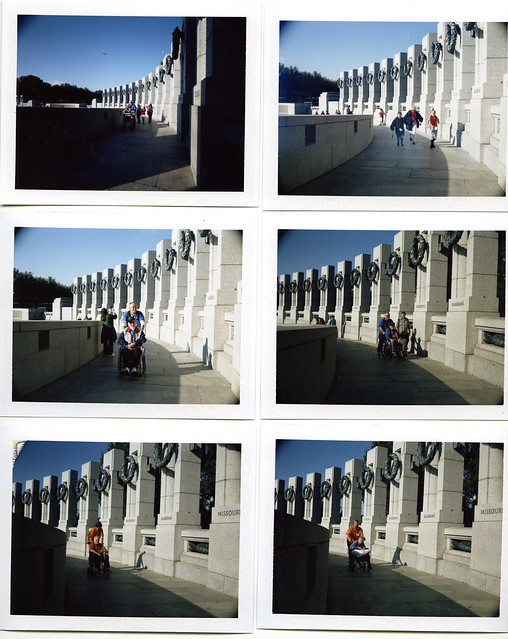
I had a couple of hours free this morning, so I packed up my MUP and drove into Washington, DC, to the World War II memorial. Planning to capture some people out in the fall color, I spent a little time doing that, and then walked over to the memorial itself. I saw a nice composition in my mind, with the columns and wreaths of the memorial (one for each state) tapering off into the background, and nice contrasty light separating them from the foreground. A steady parade of people, including veterans, mostly in wheelchairs, was coming up the walkway.
 
I set up the MUP on a tripod, changed the film back to my Polaroid back, which was loaded with Fuji FP100C color pack film, and started shooting. I shot a total of six images. They're shown in the contact scan below, and are in order from left-to-right, top-to-bottom.
"Contact Scan," by Reed A. George
 
You may notice the wider perspective in the first shot. It was made with the Mamiya 50mm lens, which is very wide on the MUP, especially with the oversized image of the pack film. Notice the vignetting in the corners, which is normal, since the MUP is designed for 6x9 image size and the pack film is larger than that. After the first shot, I changed lenses to the 100mm f3.5 "normal" lens for the MUP.
 
I was shooting at about 1/250 sec and f16 throughout the series.
 
I also slowly moved my tripod to the left as the series developed.
 
In the beginning, the veterans that were being escorted up the walkway were just too far away. I wasn't trying to make portraits of them, but wanted to capture some detail of them in the context of the memorial.
 
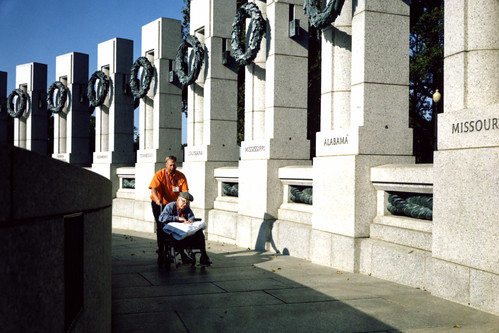
I consider the final two images to be pretty good, but the last one (bottom right in the contact scan) goes furthest in telling a little story of our remaining World War II veterans and the memorial that reminds us all of what they gave for their country.
 
Here it is, scanned at higher resolution:
Final Shot, by Reed A. George
 
Remember that these instant films are not really designed to be enlarged, so the image you see on your screen is probably much larger than intended by the engineers at Fujifilm. I think the color came out very nice, and there's enough detail to see what's going on here.
 
I've become very interested in how a decent photograph develops through the shooting process. This interest was sparked by starting to read the excellent book Contact Sheets by Magnum press. I highly recommend this book. Be sure to read the introduction, as it discusses a lot of aspects of contact sheets, like the fact that many photographers, including Henri Cartier Bresson, were not in favor of sharing them with viewers.
 
If you decide you want this book, please buy your copy by clicking on the Amazon link below. You'll get a great book for the same price as going directly to Amazon, and help support my blog in the process!
 
DMC-365.blogspot.com


Thursday, September 25, 2014

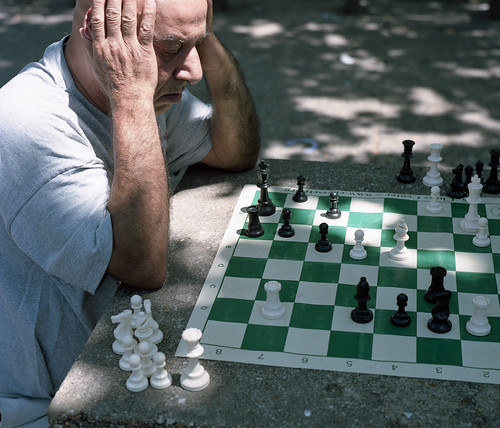
Next Move, Mamiya Universal Press

I photographed this example of intense concentration at DuPont Circle in Washington, DC.
 
Next Move, by Reed A. George
Mamiya Universal Press Camera, Mamiya Sekor 100mm f3.5 Lens
Kodak Portra 160 Color Negative Film
 
I just returned today from the Magnum workshop in Provincetown, Massachussetts. I've fallen behind in writing blog posts, but not to fear. I will catch back up with no break in daily posts. I have a lot to write about from the experience, but it will take some time to get my digital files and thoughts together.
 
And, I have four rolls of film either back or on their way back from The Darkroom (thedarkroom.com), so there's some new image material on the way from that as well. I must say I missed shooting film amongst all that digital photography last week.
 
DMC-365.blogspot.com
 

Saturday, September 20, 2014

More Street Portraits With the Mamiya Universal Press (MUP)

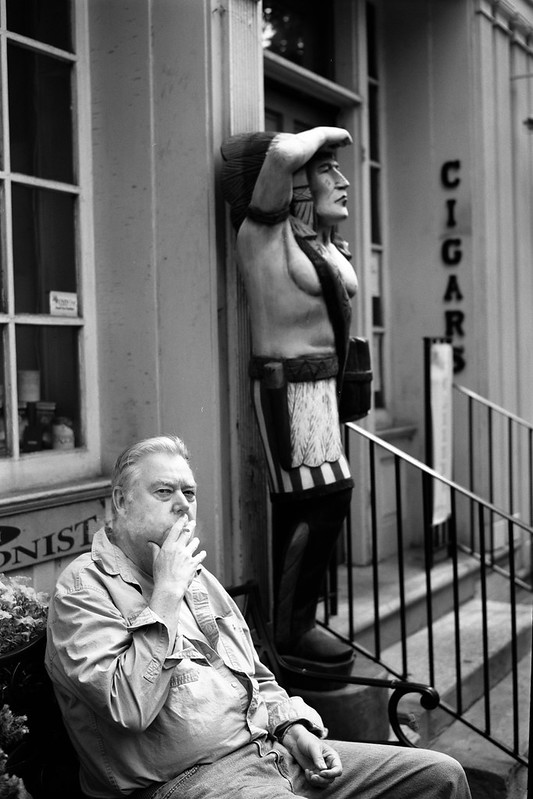
Yesterday I wrote about how using the MUP rarely goes unnoticed by the people I'm photographing. Here are a few more examples of street portraits, these all taken on a morning walk in Georgetown, Washington, DC.
 
Morning Smoke, by Reed A. George
Mamiya Universal Press Camera, Mamiya Sekor 100mm f3.5 Lens
Kodak TMax 400 Film
 
This gentleman was enjoying a morning cigaretter, out in front of the tobacconist shop. I felt that the combination of elements - him smoking, the cigar store Indian, and the sign went together very well.
 
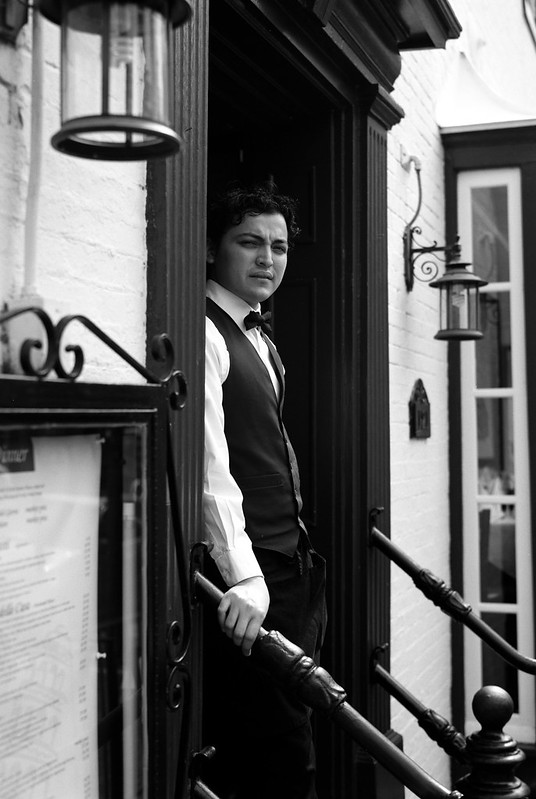
Waiter, by Reed A. George
Mamiya Universal Press Camera, Mamiya Sekor 100mm f3.5 Lens
Kodak TMax 400 Film
 
And this young waiter was more confused than concerned when I asked if I could shoot his picture. He didn't understand why I'd want to do that. It's tough to explain, I'll admit. I love the contrast in this image, and how the doorframe provides a nice dark background for his face.
 
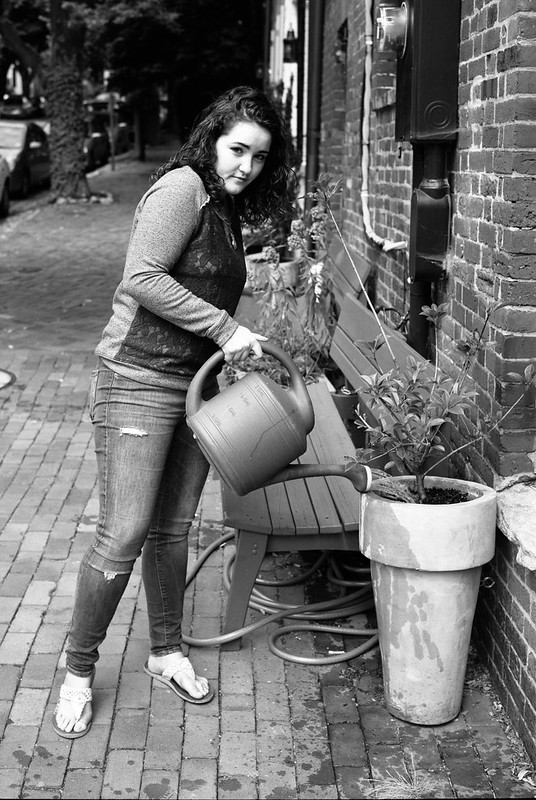
Watering, by Reed A. George
Mamiya Universal Press Camera, Mamiya Sekor 100mm f3.5 Lens
Kodak TMax 400 Film
 
And this young lady was quite comfortable with me photographing her with probably the biggest camera she's ever seen. One thing I believe is that the MUP immediately identifies you as a camera enthusiast (who else would carry such gear around?). Because of that, and because you can't even try to hide it, people seem to worry less about you sneaking pictures of them for some other (nefarious) purpose.
 
A different style of street photography for sure, but I am enjoying exploring it.
 
DMC-365.blogspot.com


Friday, September 19, 2014

Medium Format Cameras for Street Photography?

 
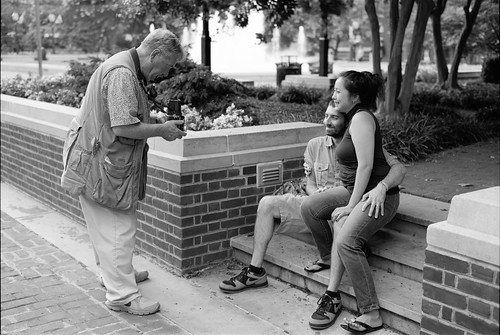
Jesse and Ayreene, Photographed by Charlie Arnhold
Mamiya Universal Press (MUP), Mamiya Sekor 100mm f3.5 Lens
Kodak TMax 400 Film
 
Of course, street photography started with the camera technology of the times. It's difficult, and not so important, to pinpoint exactly when that happened, but certainly a lot of street photography was done in the days when the Graflex 4x5 camera was the main game in town. Later, street photography was largely associated with 35mm cameras, and small 35mm rangefinders like the Leica and Contax in particular. Today, smaller and smaller high quality digital cameras are playing their role, as are smart phones.
 
So, can you really shoot street photographs with medium format cameras? Of course you can. In fact, one generation that I skipped over in the paragraph above is that of the twin lens reflex (TLR), led by the Rolleiflex. As you can see above, my friend and mentor Charlie Arnhold is quite comfortable shooting the Rolleiflex for this purpose. In this case, Charlie has engaged his subjects (Jesse and Ayreen, visiting DC from NYC). But, yes, the TLR has a firm place in the street photography game. Reasonably compact, especially for the negative size they produce (6x6 cm), TLRs are also pretty well-accepted by subjects on the street.
 
Okay, so what about other medium format cameras? Well, there are also reasonably compact medium format rangefinders, the main ones having been made by Mamiya and Fujifilm. They also work fine for street photography.
 
To push the upper size limits, I've been shooting some street scenes with my Mamiya Universal Press (MUP) camera. Yes, it's a press camera, which means it was designed to be taken out in public. But, it's a big beast, not one that will go unnoticed in the process. While it does a fine job of capturing the scene in a high quality image, I find that most of my subjects are looking at the camera. This is different from shooting anonymously with a smaller camera. Different, but not necessarily better or worse. I'll have more examples to share shortly.
 
My guess is that using the MUP for street photography is similar to what one would experience in going back even further, and shooting on the street with a Graflex 4x5 camera. I haven't done much of that at all. Maybe I'll give it a try again soon.
 
DMC-365.blogspot.com


Sunday, September 14, 2014

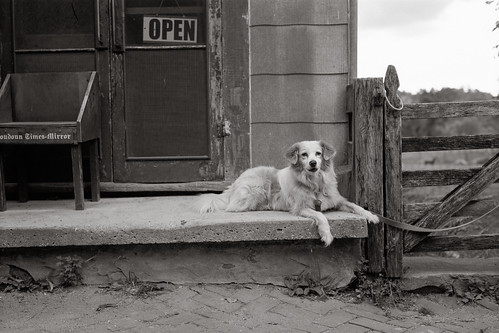
Merlin the Dog, Mamiya Universal

Merlin the Dog, by Reed A. George
Mamiya Universal Press Camera, Mamiya Sekor 100mm f3.5 Lens
Kodak TMax 100 Film
 
There's a great little store in Waterford, Virginia, one of very few in the town. I've shot here a few times before, including some of my favorite pictures of my daughter a few years back, drinking a Coke and hanging out on this same porch. This day, it was Merlin the Dog.
 
One shot, no automation. I really like shooting the Mamiya Universal Press (MUP) camera.
 
DMC-365.blogspot.com


Thursday, September 11, 2014

Small Town Scenes, Brunswick, Maryland

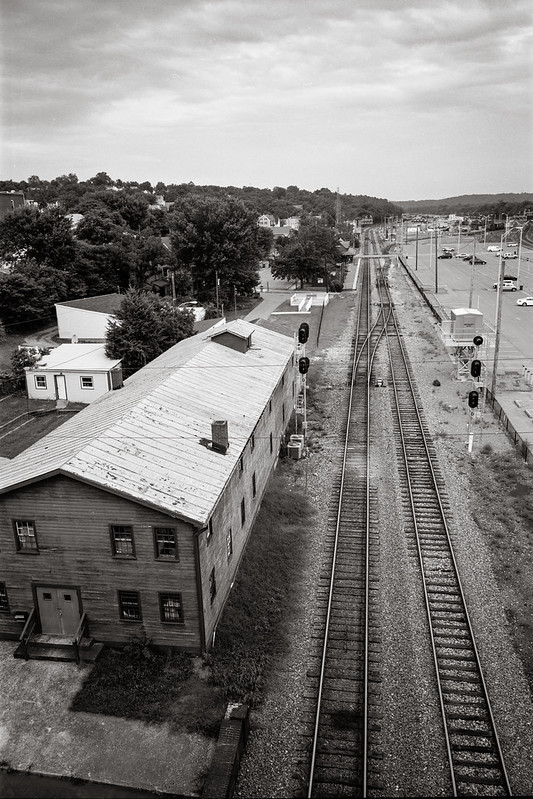
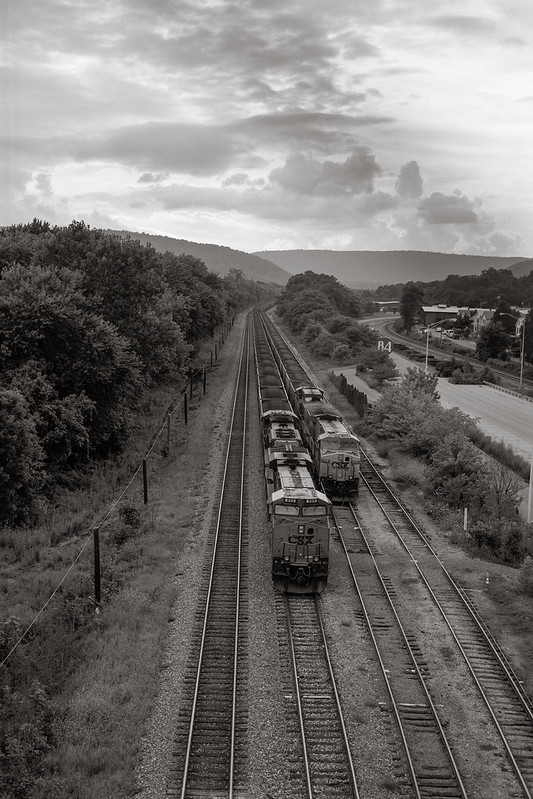
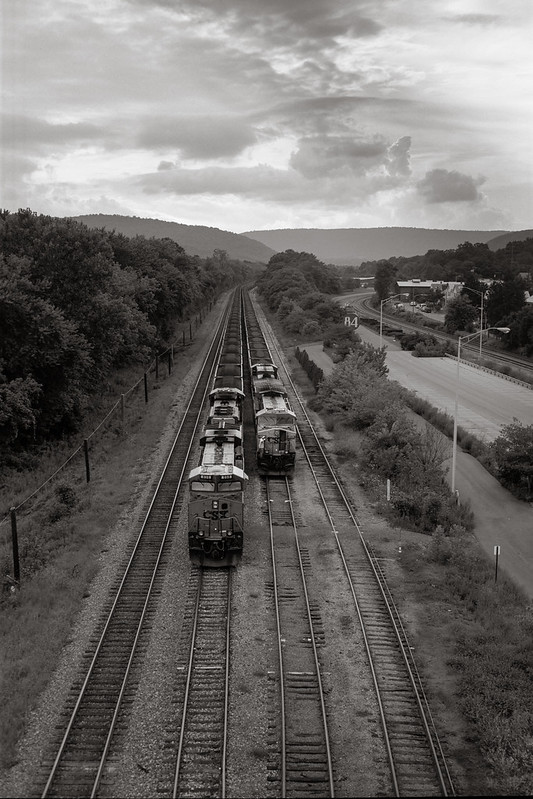
I took my new Mamiya Universal Press (MUP) camera out for some shooting in the small town of Brunswick, Maryland. Perfect location for some black and white imaging, Brunswick is located on the Potomac River, and is a historic transportation hub for goods moving from the inland farms to the more populated coastal cities like Baltimore and Washington, DC.
 
Two competing forms of transportation intersected at Brunswick - the C&O Canal, which runs along the river from Cumberland, Maryland into Georgetown in DC, and the railroad. The canal has long been out of service; the railroad continues to live on. I shot these three images from the highway bridge that runs over the river and the tracks. In the third image, if you look close, you can see a person climbing the steps on the front of the locomotive on the right.
 
I used the graduated filter in Lightroom to bring out the detail in the clouds.


Brunswick Railroad Scenes, by Reed A. George
Mamiya Universal Press Camera, Kodak Tmax 100 Film
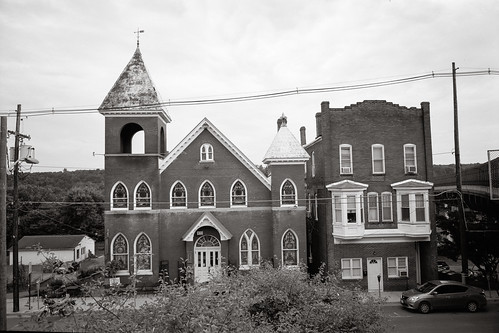
The shot below is of a historic building above the tracks, and below the modern bridge. I shot this one with the Mamiya Sekor 65mm f6.3 wide angle lens.
Historic Brunswick, by Reed A. George

Mamiya Universal Press Camera, Kodak Tmax 100 Film

As I've said before, I am thoroughly enjoying the MUP. I shot a total of about eight images (a full roll of 120 film at 6x9 format) in an hour. That's pretty fast for the MUP. It felt pretty fast for such a quiet day in Brunswick as well.

DMC-365.blogspot.com


Wednesday, September 10, 2014

Mamiya Universal Current Users? Not Many That I Can Find...

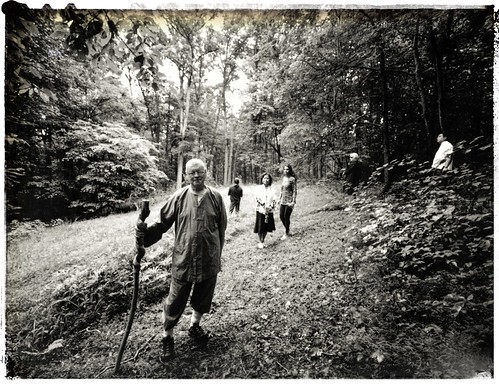
Yesterday I posted a picture of my new Mamiya Universal Press kit. One of the several fun things about the camera is using it with a Polaroid back. Here's an image I made recently on a meditation retreat:
Forest Monk and Followers, by Reed A. George
Mamiya Universal Press Camera, 50mm f6.3 Wide Angle Lens
Fujifilm FP3000B Instant Film, Scanned on Epson V750
Edited in Snapseed
 
Now, the Universal was probably never meant to be really, well, universal. It's hard to imagine the designers at Mamiya thinking "Let's make a camera that's perfect for everyone, truly universal." and coming up with this design. It's big, heavy, all manual. But, it does have capabilities that are difficult or impossible to find in other systems. It will never be near universal for me, but is definitely a favorite nonetheless.
 
I've been searching for others who are still actively using the Mamiya Universal Press (MUP) in 2014. I have not found many. I did find the "Simply Oxford Photoblog," which does have a few fairly recent posts using the MUP.
 
(Click Here) to see a post of lovely model shots made with the MUP on Simply Oxford.
 
I'm going to keep exploring this camera for a while, and find exactly where it best fits into my interests.
 
DMC-365.blogspot.com
 

Tuesday, September 9, 2014

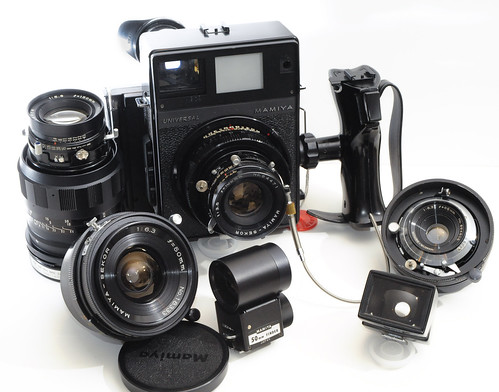
My Mamiya Universal Kit

My Mamiya Universal Press Camera Kit
 
I've been meaning to shoot some images of my new Mamiya Universal camera and lenses. Well, here it is. Pretty much a dream kit, it includes:
 
  • Mamiya Universal Body
  • Normal Lens: 100mm f3.5 with hood and caps
  • Wide Angle Lenses: 65mm f6.3 and 50mm f6.3, both with accessory finders (pictured), caps, 50mm hood
  • Telephoto Lens: 150mm f5.6 with hood and caps
  • Polaroid Film Backs: M80 (obsolete) and Pack Film Back
  • Roll Film Backs: 6x9 (2) and 6x7, all for 120 film
  • Ground glass focusing back and several cut sheet film holders
  • Assorted 55mm filters and additional cable release
I am the proud owner of all of this wonderful high quality medium format goodness because of one thing, my good friend Dennis Gallus, who thought of me first when he decided to sell it. Thank you, Dennis!
 
The more I use this camera, the more I like it. You're going to be seeing more images from it quite soon.
 
DMC-365.blogspot.com
 

Sunday, September 7, 2014

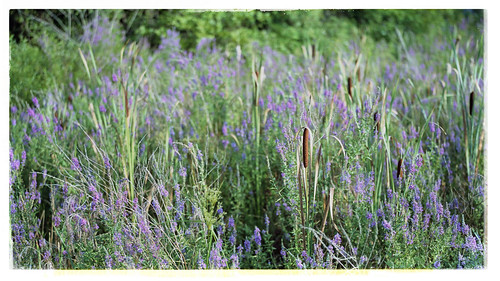
Nature's Tapestry

 
Nature's Tapestry, by Reed A. George
Mamiya Universal Press Camera, Mamiya Sekor 100mm f3.5 Lens
Kodak Portra 160 Color Print Film
 
A simple nature shot I made with my recently-acquired Mamiya Universal. I tried to keep the depth of field quite thin, and centered on the cattail just right of center. I love the color in this shot. The purple contrast to all the green and yellow works for me. I also really like how Portra gives such subtlety to color. I actually boosted the vibrance a little in post-processing.
 
I also cropped the image, and added some framing effects in Nik's Analog Efex Pro add-in.
 
I am really enjoying the slow, deliberate style that the new Universal forces on me.
 
DMC-365.blogspot.com
 

Friday, September 5, 2014

DC Artist - My Very First Shot with the Mamiya Universal

I've shared several images I've made with my new Mamiya Universal Press camera and instant film. Before I got the correct instant back for the camera, I shot a few rolls of normal 120 medium format film. This is the very first exposure I made with the camera:
 
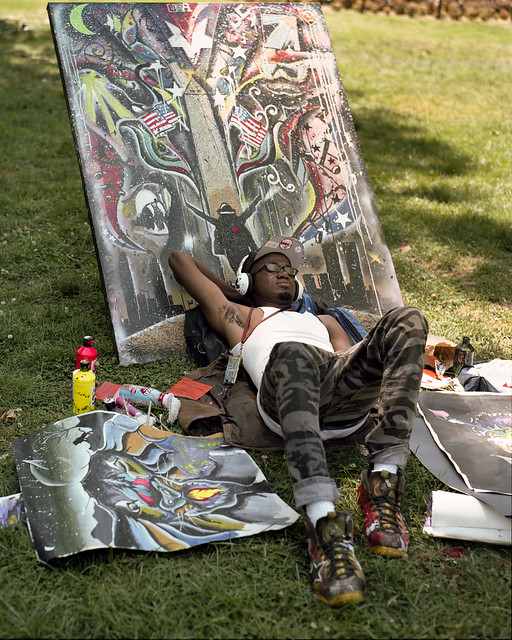
Artist, DuPont Circle, by Reed A. George
Mamiya Universal Press, Mamiya Sekor 100mm f3.5 Lens
Kodak Portra 160 Color Negative Film
 
The Universal is becoming a favorite for me. It's not your typical street photography camera. Not what you'd call subtle. When you lift this thing to take someone's picture, they're going to notice. So, I asked this guy if it was okay. He said "Sure," and then went back to being himself, which I very much appreciated.
 
I'm very impressed with the image quality that the Mamiya is capable of producing. This first roll was shot in the 6x7 format back, which gives me ten shots per roll of 120. Can you say "slow photography?" Think of the contrast of having to change film rolls every ten shots with modern digital photography. You can shoot that many images in two seconds or less with a DSLR. But why?
 
DMC-365.blogspot.com

Friday, August 22, 2014

Mamiya Press Universal and Fuji FP3000B

I'm continuing to enjoy shooting instant pictures with my new Mamiya Universal. Here's a shot I made with Fuji's black and white iso 3000 pack film. I used the standard 100mm f3.5 Mamiya Sekor lens for this one.
 
Cropped, From Scanned Print
 
And, for reference, here's what the whole image looks like, scanned from the paper negative:
 
From the Paper Negative
 
I really need to photograph the Universal camera so that I can share all the details of what's included. It's a big heavy beast, but has a lot of interesting features.
 
I've received my first online scans from film I shot in the Universal, and am really impressed with the image quality. As soon as my film returns home from The Darkroom (thedarkroom.com), I'll make high resolution scans of a few images and share them as well.
 
DMC-365.blogspot.com
 

Wednesday, August 20, 2014

Color Instant Shots with the Mamiya Universal

Yesterday, I posted about using Fuji FP3000B black and white pack film in the Mamiya Press Universal camera. So how does the color version (FP100C) work with this big old camera? Pretty well, I'd say.
 
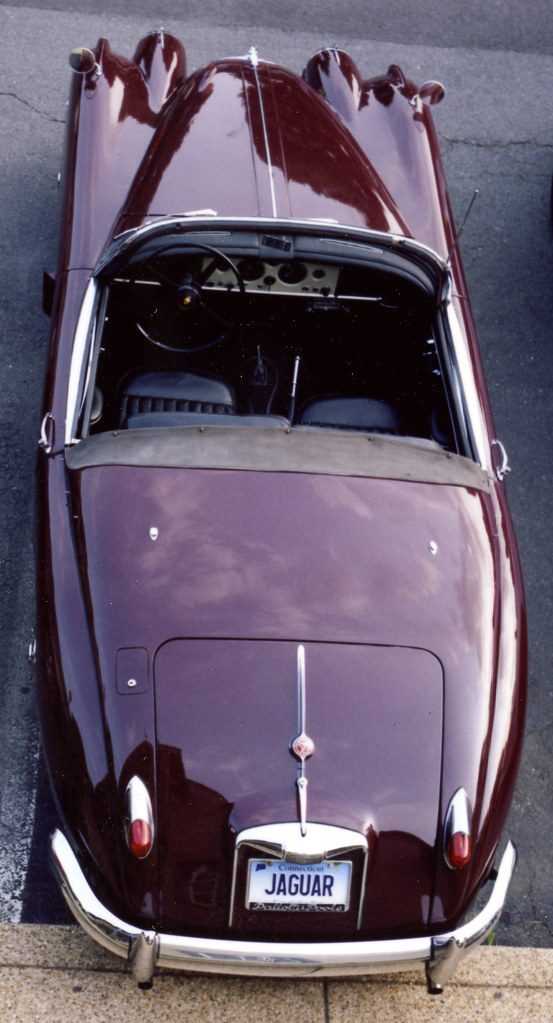
This first shot was made with the Mamiya 100mm f3.5 lens. It's cropped significantly. I focused on the convertible top, folded just behind the seats.
The following two shots were made with the Mamiya 50mm f6.3 (very) wide angle lens.
 
 
The FP100C does an amazing job on the color of skin tones. The shot below is with the 100mm f3.5 again.
 
I'm already having a lot of fun with the Mamiya Universal. I'll enjoy the Fuji pack film while it lasts!
 
DMC-365.blogspot.com
 

Tuesday, August 19, 2014

Fuji Instant Pack Film FP3000B, Negative and Positive,and Mamiya Press Universal

My very good friend Dennis recently sold me his Mamiya Universal kit. Initially, I was not interested, as the Universal is an enormous and heavy medium format kit. More on that later. I'll post some images of the kit and why I now really find that I like it.
Well, one of the things that came with the kit was a Polaroid back. Unfortunately, it is designed for Polaroid 80 series film, which is no longer available. About a week of trolling ebay yielded a very nice replacement, which allows use of Fuji pack film. Currently there are two film options in this format - color at iso 100, and black and white (FP3000B) at iso 3000. How's that for a range?
Unfortunately, the FP3000B film has been discontinued. There are still stocks of it around, but at 2.5-3X the original cost. I have a few packs, but probably won't be able to buy more.
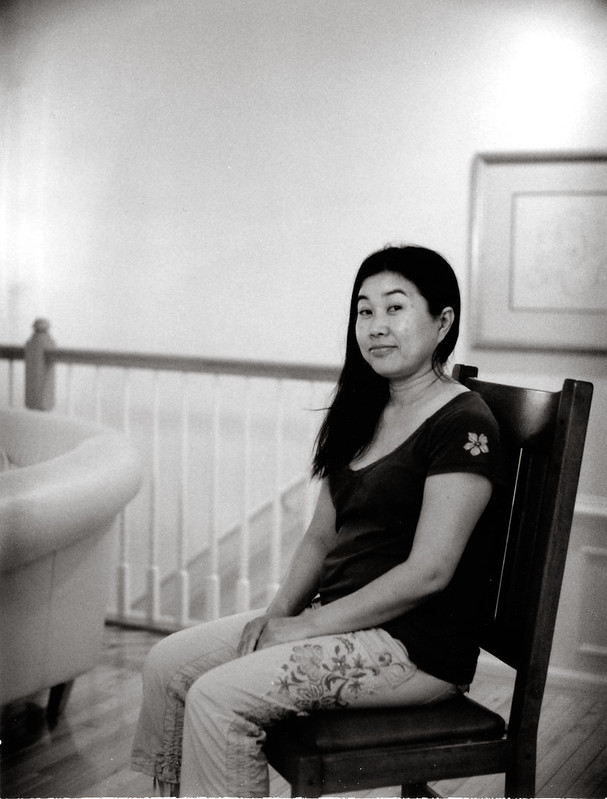
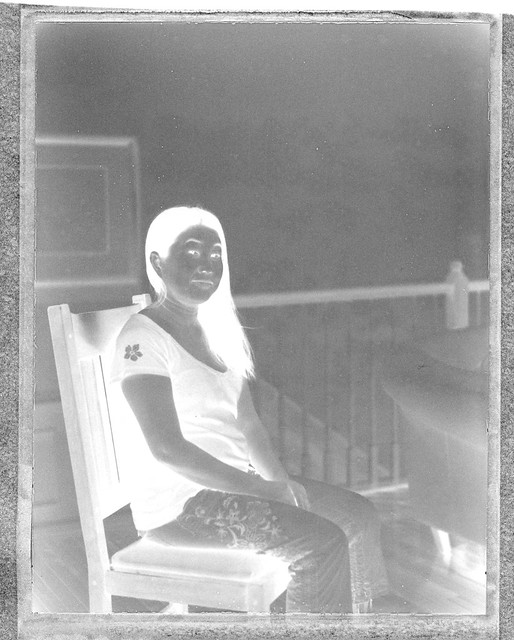
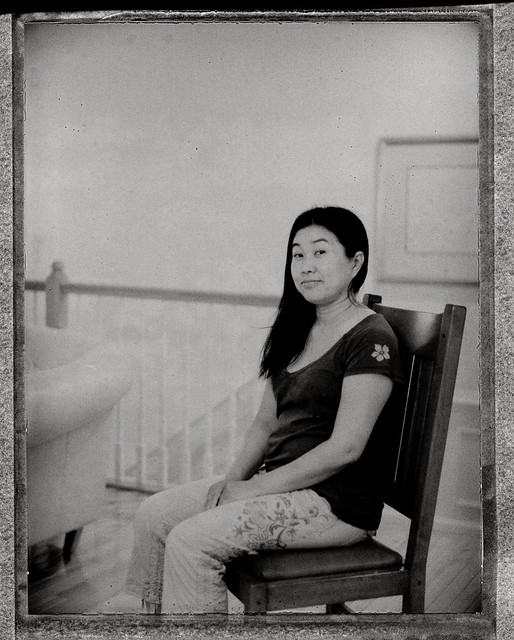
Here's a shot of my wife, made with the Universal, 150mm f5.6 lens, and FP3000B:
Scanned from Print
I was quite pleased when I saw this appear as I peeled the backing paper away. It's quite interesting to get a really sharp image with great optics on instant film. My old Polaroid camera just doesn't stand comparison.
Both types of pack film produce negatives in the process, but of very different types. The 100 speed color film negatives must be removed from the backing and bleached, producing a transparent negative. FP3000B produces a paper negative, which you simply have to protect and allow to dry in the dark (or near dark). Here's what the negative from the print above looks like:
Paper Negative, Fuji FP3000B Instant Pack Film
 
If you take the dry negative and scan it on a flatbed scanner (I use an Epson V750), you get something like the image above. Invert the tones and flip the image horizontally in Photoshop, and you get this:
 
Positive from Scanned Negative
 
Pretty cool, huh? The scan from the negative is sharper than the original print, but also shows grain. I love the slightly uncontrollable factors like the edge patterns and occasional black dots. This feels like real photography to me.
 
One note - you'll notice lens vignetting on instant prints from the Mamiya Universal. It's designed for maximum size images of 6x9 on 120 film. The pack film image is larger than that. Reportedly, the Mamiya 75mm and 127mm lenses don't vignette on pack film. I don't have either, so can't say for sure.
 
Having shot a few rolls of film in the Universal, I'm anxiously awaiting an email from The Darkroom, notifying me that the film I sent in last week is processed and scans are posted. Based on the instant results, I'm expecting some amazing image quality from the normal medium format film I've shot.
 
More to come from the Mamiya Universal!
 
DMC-365.blogspot.com
 
Need great film processing? (Click Here) to visit The Darkroom. They're the best in the business.