Showing posts with label telephoto. Show all posts

Friday, December 9, 2016

Back to Color, Digital, Lumix? Well, Maybe a Little

I've been offline, mostly, working with black and white film in the darkroom. And, enjoying it immensely.
 
But, I decided to give Micro 4/3 a go again, after never being able to quite fall in love with the DMC-GX7 body. The image quality is fine, quite fine, in fact, but the camera feels weird in my hand, and I don't like the electronic viewfinder (EVF) on that particular camera. So, I decided to jump on a Black Friday deal and get the similar but somewhat less full-featured DMC-G7. Much better, for me. I gave up in-body image stabilization (which the GX7 has), but gained a camera that feels right in my hand, with what I feel is a better EVF.
 
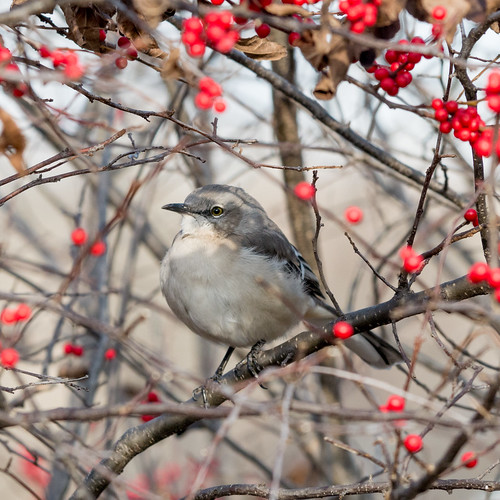
Here's a shot I made with the new G7 today, using the Lumix 100-300mm f4-5.6 zoom lens, at 800 iso:
Mockingbird in Winter
 
I'm still really having a blast in the darkroom, but this was SO easy, and shooting color again is also fun...
 
DMC-365.blogspot.com
 

Monday, July 4, 2016

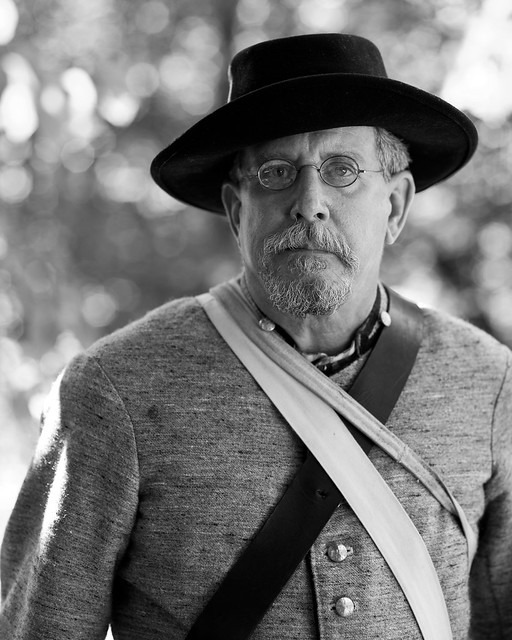
A Distinguished Couple

 
From an Asian festival in Washington, DC. Photos made with my Rolleiflex SL2000F and Sonnar 135mm f2.8 lens. That Sonnar is one of the very best telephoto lenses I've ever used.
 
DMC-365.blogspot.com


Monday, February 15, 2016

Snowy President's Day in Virginia


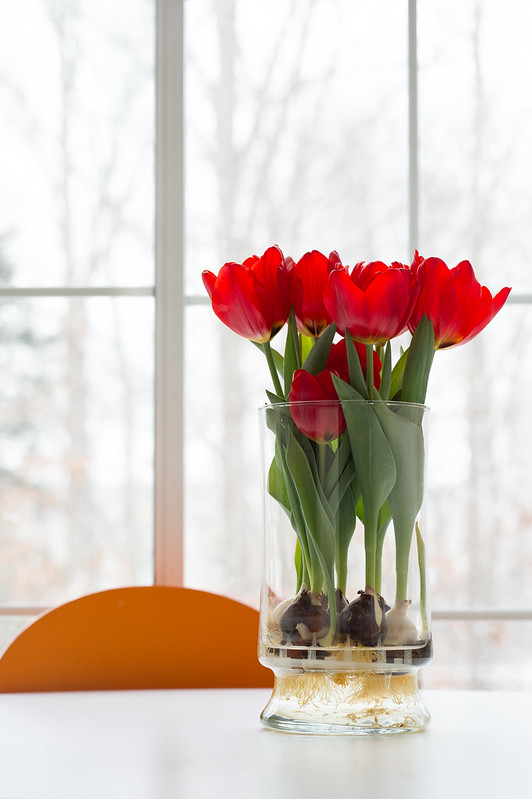
Valentine Flowers in Snow
Nikon Df, Carl Zeiss 85mm f1.4 Milvus Lens
iso 800, f5.6, 1/250 sec.
 
I have the great fortune of trying out two of the Zeiss Milvus lenses, the 85mm and 50mm f1.4, on loan. They are absolutely gorgeous.
 
DMC-365.blogspot.com
 

Thursday, February 11, 2016

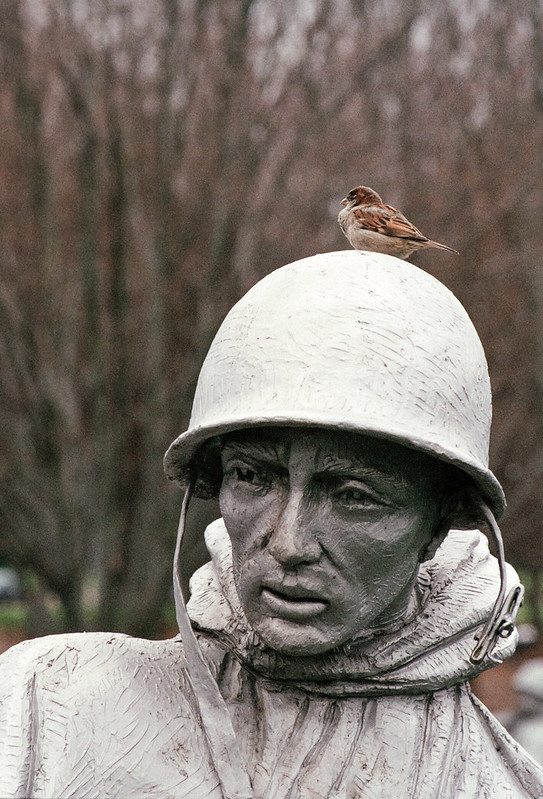
Korean War Memorial - Rolleiflex SL2000F

I'm still thoroughly enjoying the somewhat uncommon Rolleiflex SL2000F that I bought a while back. (Click Here) to read about it.
 
Here's a shot I made with the SL2000F and Rollei 135mm f2.8 lens.
 
Korean War Memorial, by Reed A. George
 
What a blast this camera is to use.
 
DMC-365.blogspot.com
 

Saturday, October 31, 2015

Upgrade of my Nikkor 85mm f1.8 Lens

I have had a Nikkor 85mm f1.8 AF-D lens for several years. Here's a shot I made with it some time ago.
 
Made with Nikkor 85mm f1.8 AF-D Lens][
'sadqwe
 
Not bad, right? The sharpness is not to be argued with. However, this is one of the few times that I've been unpleased with the "bokeh," or out of focus rendering characteristics of a lens. I don't like how the bright spots in the background are so regular and repeatable.
 
I recently decided to upgrade this lens, sending the AF-D off to KEH for a reasonable purchase price, and buying the newer Nikkor 85mm f1.8 AF-S G lens, refurbished by Nikon, for about $150 total cost (after selling the AF-D). I was not sure about this trade, especially since I am not a fan of G lenses overall. Their lack of an aperture ring makes them useless on my Nikon film cameras. But, the AF-S lens just hums on my Nikon Df (and the D810 for that matter).
 
Here's a sample shot from the new lens:
Made with Nikkor 85mm f1.8 AF-S G Lens
 
As you can see, the new lens has no trouble with sharpness, either. And, at least in this example, the bokeh is lovely. I have to gain more experience with this new lens, but it looks very good at this point.
 
DMC-365.blogspot.com

Saturday, September 19, 2015

So, How Is the Nikon D810?

I'm still getting my feet wet with this camera, but check this out:
 
Great Blue Heron, Ardea herodius, by Reed A. George
Nikon D810, Nikkor 200-400mm f4 AF-S VR G Lens
iso 1600, f5, 1/2000 sec.
 
The detail in the print I made of this shot is just stupendous. iso 1600? Not a problem at all.
 
At 6400, I do see image quality start to drop off, but still quite impressive. At 1600, it's lovely.
 
DMC-365.blogspot.com

Friday, September 18, 2015

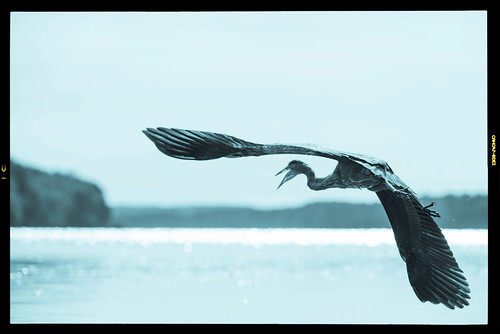
Kind of Blue - Heron, That Is

 
Kind of Blue, by Reed A. George
Nikon D810, Nikkor 200-400mm f4 AF-S VR G Lens
iso 160, f5, 1/2000 sec.
 
 
DMC-365.blogspot.com
 

Wednesday, September 2, 2015

Great Egret - Nikon D810 and Nikkor 200-400mm f4 AF-S G VR Lens

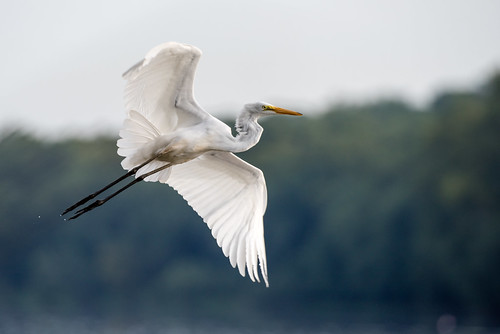
And here's my best bird-in-flight shot from Sunday's paddle trip.
Great Egret (Ardea alba), by Reed A. George
Nikon D810, Nikkor 200-400mm f4 AF-S G VR Lens
iso 200, f5, 1/1250 sec.
 
I watched this beauty, and his/her nearly-identical partner, approach me from far way, flying downriver toward my kayak. I was lucky enough to get the focus just right on this shot, and capture the wings spread wide. This camera / lens combination is just astounding. It's what I've been working toward for years in gear for nature photography.
 
I find myself tempted to try the new Nikkor 200-500mm f5.6 (Click Here), a much lower cost and lower weight solution, but it's not going to provide image quality like this. And, that extra stop of light gathering (f4) in my lens really matters.
 
DMC-365.blogspot.com


Tuesday, September 1, 2015

Back Home, on the River

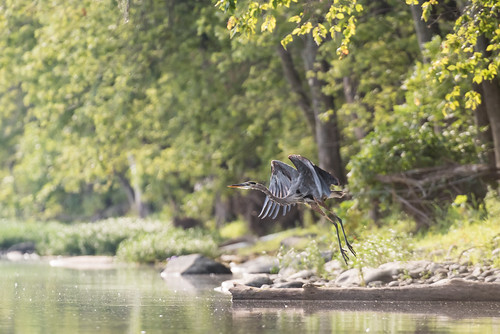
My long vacation over, I'm back out on the river in my kayak, with my Nikon D810 and 200-400mm f4 AF-S VR lens. Here's a shot from last Sunday on the Potomac.
Great Blue Heron, Ardea herodias, by Reed A. George
Nikon D810, Nikkor 200-400mm f4 AF-S G VR Lens
iso 1800, f5.6, 1/1250 sec.
 
On this particular outing, I focused on wildlife photography, leaving my fishing rod untouched. Rather than "running and gunning" down the river as I fished, I pulled the kayak quietly to shore in a few places, and was rewarded with more time to observe each creature that I came across, including several bird species, as well as a red fox.
 
DMC-365.blogspot.com


Monday, July 27, 2015

Well, I'm Going For It - Nikon D810

Nikon
 
I have long said that my Nikon D700 is the single best-performing camera I've ever owned. Not the highest fun-factor (as I love my rangefinders and old film cameras), but best at getting the shot, and in the most high quality way. So, I have not upgraded it, even after several years. I did add the Nikon Df, which is just a different beast, and brings the fun factor up considerably with its retro design, ability to take non-AI lenses, and smaller size.
 
What I did upgrade was my telephoto lens choice. Selling the spectacular 500mm f4 AiP manual focus lens, I invested in the first version AF-S 200-400mm f4 VR lens. Having fast autofocus significantly improves my chances of capturing great nature photographs. On the D700, the 200-400 really sings.
 
So why upgrade to the D810? Well, really for one reason, and one reason only - resolution. I will be able to shoot the D810 in DX crop mode and still produce 15.4 megapixel images. That is higher than the D700 at full frame, and turns my 200-400 telephoto into the equivalent of 300-600mm, without the 1.4X tele-extender! That's powerful. Or, I can shoot in full-frame (36 megapixel) mode, and crop in post-processing. That's really going to increase the number of bird-in-flight images that will be useful and printable at large sizes.
 
Resolution is the only reason that I know now. I have a feeling I'll find other reasons to love the D810.
 
I bought mine refurbished by Nikon. The cost savings was significant - I paid $2,550 at Adorama, including a third party "drops and spills" 3 year extended warranty. The camera lists for almost $3,300.
 
I don't expect the D810 to become my most-used camera; I love the Df and know the D810 won't replace it. I do expect the D810 to be my go-to nature and wildlife camera.
 
DMC-365.blogspot.com
 

Tuesday, May 26, 2015

Nikon 200-400mm f4 AF-S G VR Lens for Birds - The Warbler

My friend and I have just invested together in a very expensive lens - the Nikkor 200-400mm f4 AF-S G VR (version 1). Last weekend, I took it out in my kayak along with my super-sturdy Gitzo tripod and gimbal head.
 
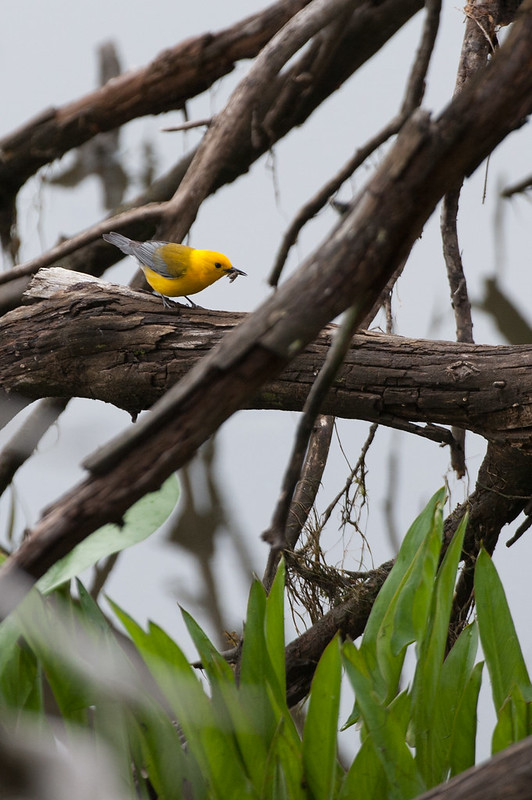
While I was waiting for large birds to fly by where I'd set up the tripod, this colorful little guy showed up.
Prothonotary Warbler, by Reed A. George
Nikon D700, Nikkor 200-400mm f4 AF-S G VR Lens
iso 720, f5, 1/1000 sec.
 
I had the D700 set to auto-ISO, so that I could set a fast (1/1000) shutter speed and the f-stop I wanted, letting the camera adjust ISO. As you can see, the warbler has an insect in his beak, a nice additional feature for the image.
 
Here's another shot of the same warbler.
 
Prothonotary Warbler, by Reed A. George
Nikon D700, Nikkor 200-400mm f4 AF-S G VR Lens
iso 1600, f5, 1/1000 sec.
 
We also purchased the Nikon TCIIE 1.4X teleconverter with our lens. I could have used it here. Both of these shots are cropped from larger compositions (hey, he's a pretty small bird!). I did get a chance to try the lens and converter together. I'll post some of those shots in the coming days.
 
This is one amazing lens.
 
DMC-365.blogspot.com
 

Sunday, May 24, 2015

Northern Water Snake - Nikkor 300-400mm f4 AF-S VR G Lens

I went kayaking today, for the third weekend in a row. Get it, in a row? Sorry about that. I think I'm a little punchy after so much exercise.
 
Today, I had the distinct pleasure of testing out a new telephoto lens, the amazing Nikkor 200-400mm f4. This is not an easy lens to handle, but mounted firmly on a gimbal head and super-heavy tripod, I was able to get it to shine, including with the Nikon TC14EII teleconverter. The focus is super-fast and accurate.
 
 
Northern Water Snake (Nerodia sipedon), by Reed A. George
Nikon D700, Nikkor 200-400mm f4 AF-S G VR Lens
Nikkor TC1.4EII Teleconverter (final focal length 360mm)
iso 2200, f8, 1/1250 sec.

I got some really nice bird shots today as well, including some really sharp shots of birds in flight. But, I'm too tired to process them tonight. So, you'll have to live with this teaser shot of a northern water snake until I get some sleep.
 
DMC-365.blogspot.com


Thursday, May 21, 2015

Practicing my Telephoto Technique - Nikon 70-300mm AF-S VR and the Ducklings

I am anxiously awaiting delivery of a used Nikkor 200-400mm f4 zoom lens that a friend and I have decided to co-own. It's an expensive lens, so this made it possible for both of us to have access to it.
 
Most of my lenses, especially telephotos, are older technology. Starting with the Ai-P 500mm f4, which is my longest lens, it's manual focus. It's a true beauty, and makes wonderful photos, but clearly doesn't have the latest AF-S focusing. Then there's my 300mm f4 AF-I, which does have autofocus, but not the blazing fast AF-S.
 
In fact, the only long lens I have with AF-S is the 70-400mm f4.5-5.6 G VR zoom lens. So, I decided to take that lens out for a quick shoot before work yesterday, to practice my focusing technique. Based on the video by Steve Perry that I posted yesterday, I set up my D700 for back button focusing and gave it a try.
 
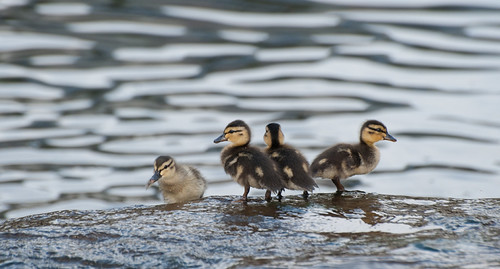
Not an action shot, but here's the best shot I made in that fifteen or twenty minutes of shooting yesterday.
 
Spring Ducklings, by Reed A. George
Nikon D700, Nikkor 70-300mm f4.5-5.6 G AF-S Lens
iso 800, f8, 1/500 sec
 
I wanted to test out the back button method, in which you leave your camera set to continuous AF, and use the button on the rear of the camera to decide when to freeze the focus, if at all. When photographing action (e.g. birds in flight), you just keep the button pressed, and the camera will focus through the entire shooting sequence. For static objects (e.g. these ducklings), you get the focus point you want, then release the rear button, locking the focus at that point. This worked very well for me here.
 
This 70-300mm lens is very good. It's not as sharp as I expect the 200-400mm to be, which should be obvious when you compare the specs and prices. But, I think it did a pretty good job for me in this case. And, it's very light and fast.
 
I can't wait to see what the 200-400 can do!
 
DMC-365.blogspot.com
Tuesday, May 19, 2015

Use Nikon Autofocus? You MUST Watch this Video by Steve Perry

I have been shooting some wildlife recently with my Nikon cameras. With the spring weather finally here, I love to get out in my kayak and photograph birds and other wildlife.
 
My current telephoto lenses are a 300mm f4 AF-I (very old autofocus lens) and a 500mm f4 Ai-P (manual focus). Both are excellent optics, but are a bit dated. I have worked on my manual focus technique with the 500mm, and can even catch the occasional sharp image of a bird in flight.
Bald Eagle in Flight, by Reed A. George
Nikon D700, Nikkor Ai-P 500mm f4 Manual Focus Lens + 1.4X Teleconverter
iso 1600, f5.6, 1/1000 sec.
 
Of course, things get easier with autofocus, especially Nikon's modern AF-S lenses. I'm about to get my hands on a lovely 200-400mm f4 AF-S VR lens, so I'm reading up on autofocus technique.
 
Here's an outstanding 12 minute video by Steve Perry, showing some of the key concepts for successful autofocus with Nikon DSLRs:
 
If you have problem with getting to the video, (Click Here).
 
One of the techniques that Perry practices is "back button" AF. This means using only the back AF-on button to focus, and not the typical half-press of the shutter release. With the camera set to continuous AF (AF-C), you simply let your finger off of the back button when you want to lock in focus, or keep pressing to follow and focus on a moving subject. Really helpful.
 
Just to try it out, I took my D700 and 70-300mm AF-S VR lens out tonight and gave it a shot with some flying geese. It worked really well. I literally can't wait to get my hands on that 200-400!
 
DMC-365.blogspot.com
 

Wednesday, May 13, 2015

Some Wildlife From my Kayak - Nikon Df and Nikkor 300mm f4 AF-IF Lens

I have an older Nikkor internal focus 300mm f4 lens. I have been tempted to upgrade it to the AF-S version, but mine is so good, I just haven't seen a reason to do it.
 
Yesterday, I loaded my Nikon D700 and 500mm f4 Ai-P (manual focus) lens and matching gargantuan Gitzo tripod that I picked up very used and very cheap, along with my Nikon Df and 300mm f4 and Tamron AF 1.4X tele-extender into my kayak and paddled out. I ended up never using anything but the Df and 300mm. Instead of setting up my tripod near my favorite osprey nest (even though the birds are on the nest), I decided to paddle further up the creek and explore.
 
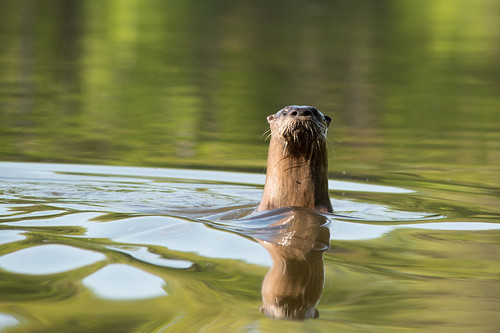
Stopping to rest in the shadow of a steep bank, not five minutes later I saw a swirl in the water, followed by a head coming to the surface. Thinking that it was likely a beaver, I started shooting. The sound of the camera clearly alarmed the animal, who quickly went under water, then returned to the surface looking straight at me. It was a river otter! The first one I've ever seen in the wild. He actually raised high out of the water to get a good look at me. I was ready, with my Df set to lock exposure with the rear button, meter set to spot metering, and auto-focus ready to go. Here's one of the shots I got.
 
 
River Otter, by Reed A. George
Nikon Df, Nikkor 300mm f4 AF-IF Lens
iso 1100, f8, 1/1000 sec.

Another otter passed through very quickly a minute later.

I had the camera in auto-ISO mode, and exposure in M. So, I had a fast shutter speed and optimal f-stop already set. The camera chose the ISO. With the Nikon Df, I could shoot with confidence, without worrying about digital noise from the relatively high ISO setting.
 
I've printed this image at about 10"x15" and it looks just great.
 
I've got some more images from the morning kayak trip, and will share them in later posts.
 
DMC-365.blogspot.com
 

Monday, March 30, 2015

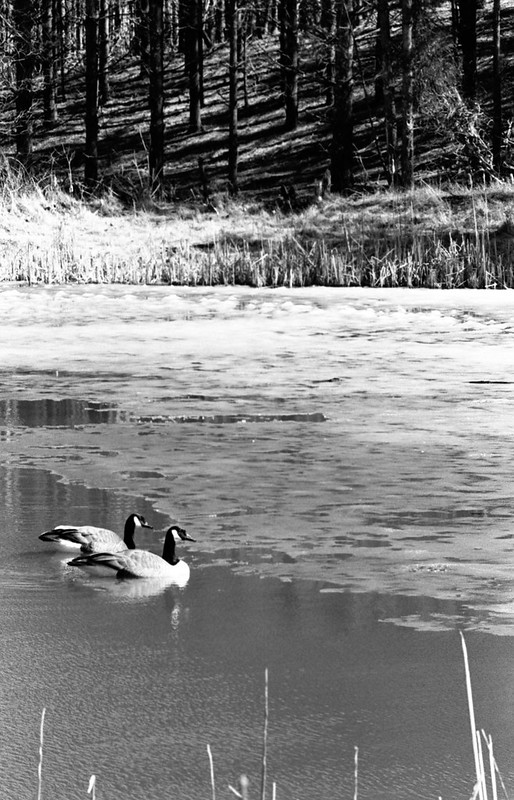
End of the Winter Season

 
End of Winter, by Reed A. George
Nikon F2SB, Nikkor Non-AI 135mm f3.5 Lens, Yellow Filter
Ilford HP5+ Film
 
I hope this will be one of the last images I take this season that includes ice. I like the layers in this composition, most notably the dark layer at the top, with its ordered rows of trees and shadows they cast.
 
DMC-365.blogspot.com
 

Saturday, March 28, 2015

A Nice Candid With the Nikkor 135mm f3.5 Non-AI Lens and Nikon F2SB

Juan and David, by Reed A. George
Nikon F2SB, Nikkor 135mm f3.5 Non-AI Lens
Ilford HP5+ Film
 
Not much to say here. Just a shot I happen to really like a lot. I captured it while Juan and David took a little breather from practicing parkour.
 
DMC-365.blogspot.com
 

Monday, August 4, 2014

Water Lily - Imperfections of Film and Long Telephoto

Water Lily, by Reed A. George
Nikon F Film SLR, Sigma 400mm f5.6 (pre-AI) Telephoto
 
I continue to explore the 400mm Sigma lens that I won in the Film Photography Project Walking Workshop giveaway. As you may have seen, it works pretty well on my Micro 4/3 Lumix DMC-GX7. But, it's not of the same quality as the more modern Micro 4/3 lenses. In fact, I think it's much more at home on the type of camera it was designed for, a film SLR.
 
As you can imagine, the shot above was taken from a long distance. 400mm has a very long reach.
 
I like the combination of the tight perspective of the telephoto, the narrow depth of field, and the significant vignetting in the corners. For all its imperfections, this image says what I want it to.
 
DMC-365.blogspot.com
 

Saturday, August 2, 2014

Combining Systems - Micro 4/3 (Lumix GX7) and Nikkor Super Telephoto 500mm f4 AiP Lens

Just for fun, I decided to take out my enormously heavy Nikkor AiP 500mm f4 lens, and mount my Panasonic Lumix DMC-GX7 body to it, for some bird photography. That's right, the body mounts to the lens in my mind, as it's tiny in size compared to the big telephoto.
 
I put the combination on my even heavier Gitzo tripod with Manfrotto gimbal mount, and commenced to photographing wading birds at my local nature walk. I set the GX7's in-body image stabilizer to 500mm, but left it on. You would usually turn it off when using a tripod.
 
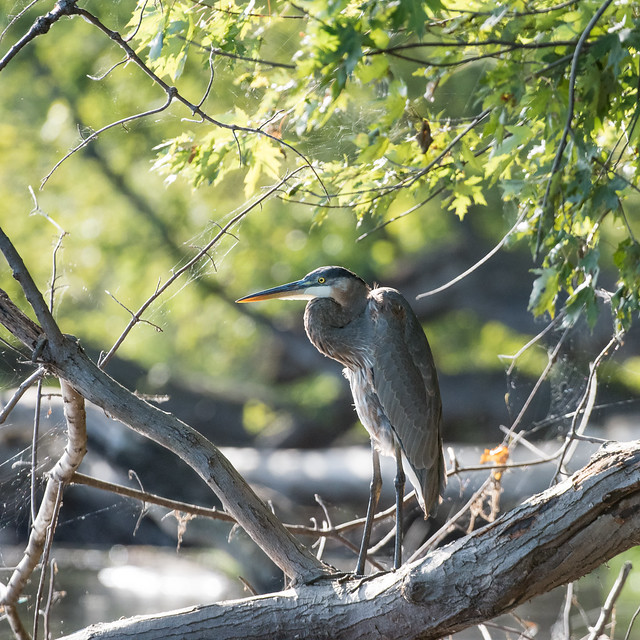
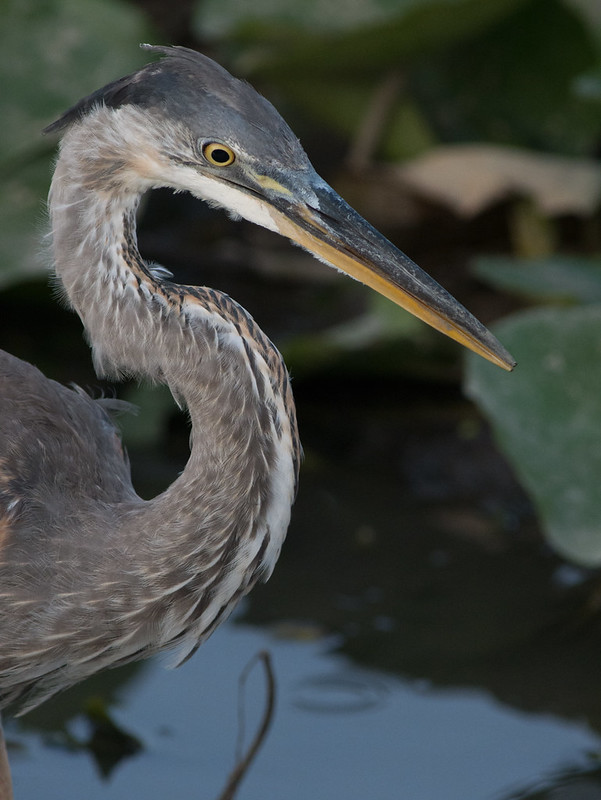
Here's an example shot of a great blue heron.
 
Portrait of a GBH, by Reed A. George
Panasonic Lumix DMC-GX7, Nikkor AiP 500mm f4 Lens (Manual Focus)
iso 1600, f8, 1/1000 sec.
 
With an equivalent field of view to a 1000mm lens on full-frame 35mm, it's obviously a challenge to manually focus this big lens, and hold it steady enough to get a decent shot, even at 1/1000 second exposure. The manual focus magnifier and focus peaking helped immensely, especially the magnifier. The peaking seems to be a little too forgiving, overestimating the depth of field at this long focal length.
 
This bird actually was a little too close for me to get the shot I wanted, not your normal situation in bird photography.
 
Even at iso 1600, the noise levels are quite reasonable with the GX7.
 
So, rather than worry about carrying a tele-converter to get just a little more reach from my 500mm lens, I can just carry the GX7 body! It probably weighs less than a converter, and you don't lose an f-stop of light gathering. Pretty cool.
 
Now that I know it technically works okay, I need to go back and see if I can get some more interesting images with this combination.
 
DMC-365.blogspot.com


Saturday, July 26, 2014

Great Egret - Super Telephoto on Micro 4/3

Yesterday, I posted an image of a green heron, shot with my GX7 and modern Lumix 100-300mm f4-5.6 OIS lens.
 
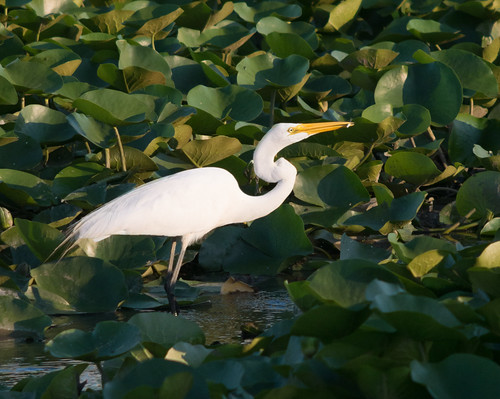
Just for fun, I decided to try shooting at the same place with my very old (Nikon Pre-AI mount) Sigma 400mm f5.6 lens, adapted to fit the GX7. Here's a great egret shot with that combination.
 
 
Great Egret, Ardea alba, by Reed A. George
Panasonic Lumix DMC-GX7, Sigma 400mm f5.6 Manual Focus Lens (Pre-AI Nikon mount)
iso 1600, f11, 1/1000 sec.
 
Not bad for an old lens, huh? By the way, this is the lens that I won at the Film Photography Project's Walking Workshop in May. (Click Here) to read more about that.
 
I know that most of you can't click and zoom on this image, due to the way I post from flickr. Here's a ~100% crop from the image above:
 
You can see that he's just caught a minnow. While the results from this 30-40 year old lens don't match the modern Lumix 100-300mm zoom, they're pretty good, in my opinion. This is an extremely low-cost 800mm equivalent field of view combination for someone who has the patience to shoot nature with a manual focus lens. The GX7's manual focus magnifier really helps out, but is obviously only useful for static subjects. The Nikon-to-Micro 4/3 adapter is also very inexpensive, and available on Amazon (please buy yours from the link below and support my blog!).
 
DMC-365.blogspot.com