Showing posts with label Luminous Landscape. Show all posts

Friday, August 1, 2014

Tips for Better Hiking Photography, Skip Spitzer on Luminous Landscape

I love to do outdoor and nature photography. I love to hike. My family hates to hike with me because I do too much photography on our hikes. Balance is important. However, now I have the excuse that I'm just staying aerobic, after reading Skip Spitzer's post on the Luminous Landscape blog.
 
Family Hike at Shenandoah National Park (Will They Ever Go Again?), by Reed A. George
 
In Skip's post, he gives quite a lot of information about how to be a better hiker and photographer at the same time.
 
(Click Here) to read the full post. Here are the points that were most important to me:
 
  1. Have a real relationship with the nature you're photographing
  2. Be skillful enough in your hiking to be at ease, feel the "flow" of the experience
  3. Focus on keeping your energy usage aerobic (go slow, with only short bursts of intense activity)
  4. Learn about the best hiking gear and materials (a cotton shirt isn't the best idea)
  5. Learn to understand, respect, and manage the risks so that you can enjoy the experience
In the post, you'll also see a link to Skip's video program, which you can view for only $10. I'll probably do that when I have time.
 
So, you see, the reason I stop every ten feet or so to shoot several pictures is that I'm trying to stay aerobic. Yes, I quite like that excuse.
 
DMC-365.blogspot.com

Saturday, September 21, 2013

A Report On the New Panasonic Lumix DMC-GX7 On Luminous Landscape

The New Panasonic DMC-GX7
Image Source: http://shop.panasonic.com/shop/model/DMC-GX7SBODY
 
I've been watching for some reports on the new Lumix GX7 Micro 4/3 camera from Panasonic. I only care about reports from people who've actually used the camera, rather than simply reviewed the specifications. I found a very nice, concise report from Michael Reichmann on Luminous Landscape, a site that I respect highly.
 
(Click Here) to read Mr. Reichmann's full report on Luminous Landscape.
 
Here are some of the high points of the report.
 
Pluses:
  • Camera size - unlike the flagship Lumix DMC-GH3, the GX7 is small. I believe that's one of the most important aspects of the Micro 4/3 format - small cameras and lenses.
  • Image quality - at least matching the DMC-GH3 and Olympus OMD, according to the report
  • In-body stabilization - this is important for those of us who like to use old "legacy" lenses on Micro 4/3 cameras. Olympus has had this for a long time, but the GX7 is the first Lumix to have the stabilization built into the body, rather than the lenses.
  • Electronic and mechanical shutters - the electronic shutter reduces wear on the mechanical one, and allows one to shoot completely silently. I need to read up on this - I'm not sure what the downside is. I'm sure there is one, or they would have done away with the mechanical shutter altogether.

Minuses / Bugs:
  • Image stabilization (in the body) doesn't work in video mode, or with lenses that have IS built-in, even if the lens IS is turned off. Maybe this can be fixed in firmware?
  • Auto ISO doesn't work in manual exposure mode
While I have been shooting some Lumix cameras (mainly the LX7 and TS5), I have really been neglecting my Micro 4/3 gear this year, in favor of shooting my Leica M9, and doing my ongoing series of Skeletons From The Closet, where I shoot a different old film camera each month. I'm thinking about what next year will look like here on DMC-365, and may decide to bring Micro 4/3 back in a bigger way. Those gorgeous lenses are waiting to be used.
 
The truth is, I love shooting many different types of camera. There's simply not enough time to shoot them all. Stay tuned, I'll be sure to not let it get stale around here.
 
DMC-365.blogspot.com


Tuesday, January 8, 2013

Luminous Landscape's "Best and Worst of 2012"

Luminous Landscape has posted their annual "Best and Worst of ..." results for camera equipment introduced in 2012.
 
(Click Here) to read the full story on Luminous Landscape.
 
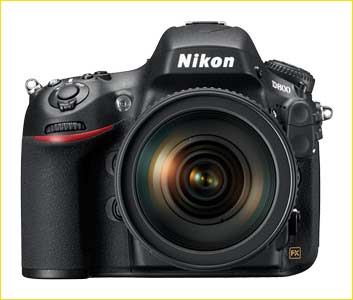
In their "Best" category, they include two new DSLR models from Nikon, the D800/E and the D600. Nikon is really on a roll with great full-frame (24x36mm) digital cameras. Personally, I'm still shooting my D700, and am completely satisfied, no, actually amazed, with it's performance. It's nice to know that Nikon's still pushing the technology even further.
 
Nikon D800
Image Source: http://www.luminous-landscape.com/essays/best_and_worst_of_2012.shtml
 
Also under "Best," they include the new Sigma DP2 Merrill, which uses the sensor originally designed for a $7,000 SLR (see "Worst"), stuffed into a very compact pocket-sized camera. I am very interested in this camera.
 
Also in the compact camera market, they like the Sony RX-100. This 20MP little wonder includes a Zeiss lens. For me, however, the lack of any type of finder, relegating me to only shooting from the LCD, is a major drawback. Otherwise, I would probaly already be shooting one. My experience with Sony digital cameras in the past has been excellent, including one of my first digital cameras, many years ago.
 
Finally, the new Sony RX-1 is being considered as a contender for next year, since it was just released in December 2012.
 
What does Luminous Landscape think of Micro 4/3 developments in 2012? They put them in the middle. First, they like the technical improvements in sensors, but feel that Panasonic is pushing camera body size outside what Micro 4/3 is known for - compact, lightweight equipment - with the DMC-GH3. They are more positive about the Olympus OM-D, which is certainly a hit with users. I agree that the GH3 seems a little bulky - if I can live with larger size, Nikon wins hands-down. So, I'm looking forward to a Lumix DMC-GX2 with the same sensor, in a more compact body. Everything I hear about the Olympus OM-D is positive, and I'm tempted to give it a try.
 
They also place the new Fuji mirrorless cameras in the middle. I'm very impressed with Fuji's product designs and lens quality. Once they iron out any peculiarities with their unique sensors (and the software needed to best use them), I predict Fujifilm will be a powerhouse.
 
Finally, the "Worst." That doomed $7,000 Sigma DSLR that I mentioned above. Hard to imagine buying a Sigma body for the price of two Nikon D800s.
 
The remaining two cameras in this category were not even on my radar screen this year - the Blackmagic Cinema Camera, which is reported to be failing due to small company problems rather than technical capabilities, and the Hasselblad Lunar, which is a trumped-up Sony NEX7. Neither of these interests me, personally.
 
My only question - what about the Lytro? This new camera technology that allows multiple focus areas was supposed to be revolutionary (and maybe it is?). Personally, I have not heard much other than the initial announcements.


Anyone out there tried one? Please let me know your thoughts if you've use a Lytro.
 
DMC-365.blogspot.com


Saturday, October 6, 2012

Luminous Landscape Publishes Final Report on Photokina 2012

 
Panasonic Lumix DMC-GH3
Image Source: http://shop.panasonic.com/shop/model/DMC-GH3KBODY
 
Luminous Landscape has published a nice report on many incredible new cameras and lenses introduced at this year's Photokina show in Germany.
 
(Click Here) to read the full report on Luminous Landscape
 
Rather than attempt to paraphrase the report, I refer you to it for your reading pleasure.
 
What strikes me? Well, of course, I'm tuned in to Leica and Panasonic.
 
Leica has announced the new Leica M, the first CMOS sensor-based digital rangefinder in the M line, and the M-E, which is a slightly stripped-down M9, priced significantly lower, but still >$5,000.
 
Panasonic brought out the long-awaited 35-100mm f2.8 X-Series zoom. This is sure to be a big seller. I recently reminded myself that I am a prime shooter by ordering the Lumix 12-35mm f2.8. Certainly a very nice lens, mine went back. In its place came a gorgeous Olympus 75mm f1.8, which I have yet to report on.
 
More interesting to me is the Lumix DMC-GH3. The GH3 is the largest Micro 4/3 body to date. While I really like the small size of the DMC-G3 that I use, I think a little more space will be welcome. However, if it gets as big as my Nikon D700 or thereabouts, I'm going to question why I'm shooting Micro 4/3s. Really though, the smaller size and weight of the lenses still answers that question successfully.
 
The GH3 has a new LiveMOS sensor that is reportedly better at high iso, and has better dynamic range than previous sensors. The body is weather sealed, and has five custom function buttons. The external buttons are very useful on the G3, even though it's limited to two - five would be nice. The GH3 shoot 6 frames per second. It also incorporates wifi capability, but that is yet to be supported by software that Panasonic is developing. I like the idea of triggering the shutter via wifi, and automatically uploading by same. This would make my iPad a nice remote controller and image reviewer.
 
Of course, the GH3 is targeted at video shooters as well, just as the GH1 and GH2 did. I'm not personally interested in video so much, but the ability to record high fidelity audio (including a plug in for external microphones) is attractive, especially for recording the music events that I regularly attend.
 
There are really some great offerings by other companies, perhaps most notably Sony, Fujifilm, and Nikon. So, check out Luminous Landscape's report to see all the news.
 
DMC-365.blogspot.com


Saturday, August 4, 2012

Luminous Landscape Article on Emotion in Photography - by William Neill

 
Goodbye Sunset, by Reed A. George
Leica M8, Voigtlander 28mm f1.9
iso 320, f stop not recorded, 1/250 sec
 
I just read this great piece on Luminous Landscape about how emotion can, does, and should affect every artist's work. Bill Neill describes how he fell into a 5' deep water hole with all of his camera gear at Zion National Park. The next day, he took a beautiful shot of water's effect on the desert floor, with the gear he was able to salvage.
 
(Click Here) to read his article on Luminous Landscape.
 
In my own experience, when emotion does affect me, it results in my most meaningful photographs. Of course, since I associate the emotion with the image, it is probably most meaningful to me. I have no real way of saying if that emotion translates to others.
 
In the shot above, I was driving around rural Maryland on my own, looking for something to photograph. I knew that my Grandma was quite ill, and it wouldn't last long. That said, we'd had a few false alarms already, so it was hard to tell just how serious it was. I heard later that night that she had passed on. This was Grandma's final sunset, even though she didn't get to see it. I literally caught it out of the corner of my eye, quickly pulled over, and shot it. It is not an ideal shot - a nice barn in the foreground would have helped. However, it was a vanishing instant, and was gone before I could relocate or recompose. For me, the shot has incredible meaning. I don't expect others to feel it. Actually, I'm quite happy experiencing that on my own.
 
This is why photography means something to me. I have no other way to communicate, or even remember the true feel of emotion at times like that.
 
DMC-365.blogspot.com