Showing posts with label Sony. Show all posts

Friday, April 26, 2013

Am I the Only One Who Wants My Fixed Lens to be 50mm?

 
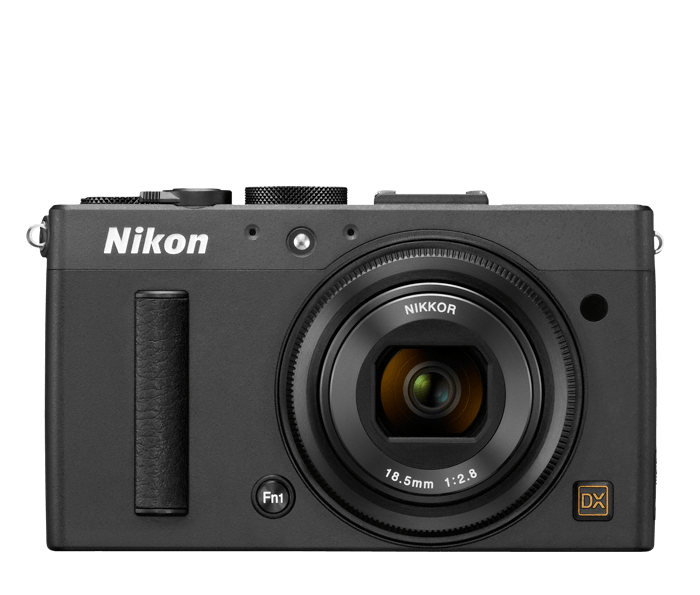
Nikon Coolpix A

Image Source:http://www.nikonusa.com/en/Nikon-Products/Product/Compact-Digital-Cameras/26423/COOLPIX-A.html

 
I like where the digital camera leaders are going - almost. I love the idea of a dedicated, fixed lens compact camera with a large sensor and great image quality. The good news is that many camera manufacturers are making them now. My favorites so far are the Leica X2 and Fujifilm X100S. Others include offerings from Sigma, Sony, and now Nikon and Ricoh.
 
When I think of these types of cameras, my thoughts go to the excellent Olympus, Canon, and Konica fixed lens rangefinders of the past. I would really love to see something equivalent to an Olympus SP, for example.
 
(Click Here) to see what the Olympus SP film rangefinder camera was like on Andrew Yue's site.
 
Now here's the rub, for me. All of the new fixed lens cameras have wide angle lenses, 35mm equivalent field of view, or wider. For me, the 42mm lens on the old Olympus SP was a bit wide, but actually a very good compromise between what I think of as a "standard" focal length of 50mm, and the admittedely popular 35mm lens. In fact, my 40mm Minolta Rokkor lens for Leica M mount cameras is one of my favorites.
 
If I'm going to buy a fixed lens camera, the lens really needs to serve most of my purposes. For me, and yes, it's personal preference, a 50mm lens would be best. I'm willing to be open-minded and take something as wide as 40mm, and actually would embrace that focal length.
 
When I saw the first announcement of the Nikon Coolpix A, I was excited. In my experience, Nikon does a great job of handling sensor noise (my Nikon D700 DSLR is the best low light camera I have), and I'm familiar with the menus. When I read that the A has an APS-C sensor and 28mm f2.8 lens, I got excited. I thought, hmm - 28mm X ~1.5 crop factor = 42mm equivalent. Great! Then I saw that it's actually an 18.5mm lens, and 28mm equivalent field of view. Really? I remember when 28mm was a rather extreme wide angle lens, one that was probably in your bag but sure didn't get the usage that a 35mm or especially 50mm lens did. This is way too wide to be a general purpose, fixed lens camera, at least for me.
 
Ricoh has also just come out with a new GR digital model - again 28mm equivalent field of view.
 
I think part of what's driving this trend is lens size. While the camera companies are trying to provide large sensors for their compacts (which is great news), they want to keep the lens size as small as is practical. I understand that. I also think this may be why some are stopping at a maximum aperture of f2.8, which I think is a little slow for a fixed lens camera. But, I still really want a litle longer lens, and fast, please.
 
I mean, let's face it, I never could really fit that Konica S1.6 with 45mm f1.6 lens (a 1970s fixed lens film rangefinder that produces incredible images) in my pocket.
 
DMC-365.blogspot.com


Sunday, April 7, 2013

I Was Tempted By The Fuji X100S, Sony RX1, and Leica X2 - I Think I'll Pass For Now


Image Source: www.amazon.com

I have been traveling for the past week or so with my Leica M9, Panasonic Lumix DMC-LX7 compact camera, and my Skeletons From The Closet camera for March, the Zeiss Ikonta folder.
 
I have been sorely tempted by the three fixed lens cameras mentioned in the title of my post. All three, the Fujifilm X100S, Sony RX1, and Leica X2 offer a lot of excellent features. However, I'm pretty convinced that if I were to buy a fixed lens camera, I would want a 50mm equivalent field of view, as opposed to the 35mm field of view of each of these cameras.
 
On this trip, I brought my Summilux 35mm f1.4 lens for the M9. That lens is my Whole Lotta Leica pick for March. While it's an amazing lens, I have felt throughout the trip that I'd have been happier overall with a 50mm lens. Of course, the M9 lets me change lenses, which I am not shy about doing. But, if I bought one of these new fixed lens cameras, I would not have that option. So, I am staying out of that market for now.
 
If I were going to go for it, it would be between the Fuji and Leica. I've now handled both, and they are extremely nice cameras. I've also handled the Sony, and like it. Just not to the tune of the price difference.
 
I wrote a couple of days ago about how I essentially traded in my year-old Lumix DMC-G3 kit for a new DMC-GX1 through Amazon (the GX1 is $275 brand new right now!). The new GX1 is waiting for me in its box until I get home. I'm thinking that the GX1 with the Lumix 20mm f1.7 pancake lens should give any of these cameras a run for their money, and for much less of it (money, that is). If I considered the combination of a flexible compact camera and a fixed lens higher image quality camera combination for travel, I would have thought about the Lumix DMC-LX7 (which I continue to explore and enjoy immensely) and either a Fuji X100S or Leica X2. Now, I'm thinking the GX1 with 20mm f1.7 will be the higher end choice. The GX1 is very compact, and yields great image quality. I know this from my experience with the DMC-G3, which shares the same sensor as the GX1. With the 20mm f1.7 lens, it's a very nice little package. And, I have the awesome 25mm Pana-Leica Summilux 25mm f1.4 if I really want the 50mm equivalent field of view.
 
Kirk Tuck recently wrote a post about comparing the high iso performance of the Fujifilm X100S with his Sony NEX, using the excellent comparison tool at dpreview.com. His conclusion is that the hysteria over the X100S may be warranted by the features of the camera, but not by high iso performance alone.
 
(Click Here) to read Kirk's post, entitled "New "Holy Grail" of Cameras Spanked by the Real Deal." How controversial that title sounds!
 
I decided to do the same comparison between the X100S and the GX1. Here's a screenshot of the raw images at iso 800:
 
DPreview iso 800 Raw Comparison of Fuji X100S, Fuji X100, Panasonic Lumix DMC-GX1,and Panasonic Lumix DMC-LX7
Image Source: http://www.dpreview.com/previews/fujifilm-x100s/6
 
You can easily switch iso level for all of the cameras in the comparison using the dpreview tool. I decided that iso 800 is important for me, as I need that level fairly often on travel, especially in cloudy weather. However, the f1.7 lens on the GX1 will need it less often than the f2 on the Fuji or f2.8 on the Leica.
 
My conclusion from this comparison is that, as expected, the LX7 really lags the other, larger sensor cameras in performance at iso 800. But, surprisingly, I like the GX1 result more than the Fuji cameras. While the Fujis certainly have a smoother image rendition, it is at the cost of detail. When considering raw files (before noise reduction is applied), I prefer to retain as much detail as possible. So, I think my GX1 will perform very well in comparison to the X100S at iso 800. The same trend applies at iso 1600 and up. Plus, I can change lenses when I want.
 
How about those LX7 results? Well, it's a compromise. The LX7 has so many features, including a nice zoom range, in such a tiny package, I'm willing to keep the iso level low to preserve image quality.
 
So, if you've followed my musings thus far, I won't be buying one of the new fixed lens wonders from Fuji, Sony, or Leica any time soon. I'd be more inclined if any of them came with a 50mm equivalent lens.
 
Now, I will admit that I'm still very attracted to the Fujifilm X20 for the flexible end, as competition for my LX7. I handled an X20 in Tokyo, and it's very impressive. The optical viewfinder is very nice, and it feels like a real camera. But, for now, I'm sticking with Panasonic for both cameras.
 
DMC-365.blogspot.com


Thursday, January 31, 2013

Could the Ricoh GR Digital V Be Another Runner in the Large Sensor Compact Market?

My wife has been using my Panasonic DMC-LX5 a lot recently. Given her record with damaging cameras, I'm starting to look for a replacement. Honestly, I probably should have taken advantage of the holiday deals on the DMC-LX7. It was available for $275. Now, it's back over $400.
New Ricoh Digital with APS-C Sensor Coming?
Image Source: http://www.petapixel.com/2013/01/21/ricoh-gr-digital-v-to-feature-an-aps-c-sensor/
 
 
In any case, it's a good time to look again and see what's out there. I would like a larger sensor than the LX7 offers. That brings up some excellent new cameras, all with large sensors and compact designs. Namely, I'm thinking of the new Sony RX1, Leica X2, and Fujifilm X100s. All of these are fixed-lens designs, without zooms. For my purposes, I think I want a zoom. This will be my pocket camera - the backup when needed, or sometimes the only camera I'll carry on a short trip. The Panasonic DMC-LX7 would be perfect, if it just had a little larger sensor.
 
Anyway, I read this short post about the possibility of a new Ricoh compact that may have an APS-C (larger than most other compact cameras) sensor.
 
(Click Here) to read the post on PetaPixel.
 
I think this one will likely have a fixed focal length lens as well. The GR IV does. But, I'll keep my eyes open.
 
Right now, the Fuji X20 seems like a possible good upgrade from the LX5. But, while it's sensor is bigger than the LX5 (and LX7), it's still much smaller than APS-C. Another potential is the Sony RX100, but it doesn't have a viewfinder of any type, so that's not going to work for me.
 
DMC-365.blogspot.com


Monday, January 14, 2013

It May Be a Good Time to Buy a Used Fuji X100

 
Fujifilm X100S
 
I have been very interested in some of the innovative and high quality products that Fujifilm has brought to market recently. Truly an innovative company, they have brought the world's first (and only?) hybrid viewfinder, which allows you to switch between an optical and electronic viewfinder, and also an innovative color filter design for their Xtrans sensors, which reportedly obviate the need for a low-pass filter. This has the effect of increasing image sharpness.
 
Fuji has a long history of building first-class lenses, as well. Their medium format lenses are spectacular. I once has a Fuji GS645 medium format rangefinder camera, with 60mm f4 lens. It was an amazingly light, high quality camera, perfect for landscape photography, especially good for hiking. I carried mine on a three day trek through the Grand Canyon, and was duly impressed with the results.
 
The Fujifilm X100 camera has been out for a while now (about two years), and has created quite a stir. The hybrid optical/electronic viewfinder seems to be well-received, and the sensor in the X100 reportedly does quite well at high iso. The X100 also has beautiful styling, reminiscent of Leica, for sure.
 
There were some initial problems with the X100 - namely slow autofocus (reportedly completely fixed by a firmware update) and an issue with sticky aperture blades. This also seems to have been fixed by Fuji.
 
By the way, Fujifilm has an excellent site online featuring lots of information about the design philosophy and implementation in the X100.
 
(Click Here) to see Fuji's informative site focused on the X100.
 
Well, now the X100S has been announced.
 
(Click Here) to see the full announcement.
 
Apparently, the S version offers a new sensor, using the Xtrans filter arrangement, and some new fast autofocus technology. It also has a higher resolution electronic finder in the hybrid arrangement.
 
It may be a good time to pick up a used X100 for a good price. However, the Xtrans sensor makes the X100S sound very attractive, too. That should make the X100 used prices drop significantly.
 
I've never used the X100, but a nice fixed lens (23mm f2) rangefinder-style with all manual controls seems great. It is not truly a rangefinder camera, but I'm sure the handling is very similar.
 
For me, the competition in this market consists of the Leica X2, and the Sony RX1. The X2 is very attractive, but as with the Panasonic X series cameras, if you add the accessory viewfinder, the nice clean and compact lines of the camera are lost. Same goes for the RX1. Not to mention that the accessory finders are quite expensive. I'd prefer the X100 design, with the finder built into the camera's body lines.
 
Keep the innovations coming, Fujifilm! I may have to try either the X100 or X100S (when it's available).
 
DMC-365.blogspot.com


Saturday, December 15, 2012

Sony RX1 Sample Pics

 
Sony RX1
 
The new Sony RX1 is really interesting. A full-frame, 24MP Sony sensor, permanently matched to a non-interchangeable Carl Zeiss Sonnar 35mm f2 lens. Nearly $3,000 price tag. Wow.
 
Pocket Lint has posted a brief introduction, and more importantly, some sample images from this camera, including using it at iso 25,600. Not bad. Not bad at all.
 
(Click Here) to see the post on Pocket Lint.
 
What are my thoughts on this camera? Well, first off, you have to shoot it at arm's length, if you use the LCD to compose. On the positive side, since it's a fixed-lens, fixed focal length, you can use an optical finder mounted in the flash shoe. I don't know how easy it is to set hyperfocal distance on the RX1, but that could be a good solution for street photography. Otherwise, there's an accessory electronic finder. In either case, it really takes away from the nice size and shape of the camera.
 
If I were looking for a smaller back-up to my Leica M9, the RX1 would be interesting. The Leica X2 is as well. The X2 has an APS-C sized sensor, smaller than the full-frame sensor in the RX1. I'm sure the Leica can't do nearly as well at high iso.
 
Right now, my answer to this is the nice little Panasonic Lumix DMC-LX5. Not in the same league of image quality, for sure. The LX5 is okay at iso 400, can be used up to 800 or maybe 1600, if you're not going to get hung up on noise. But, that's really pushing it. Otherwise, it's an amazingly well-equipped little camera, and with zoom and focus memory, hyperfocal settings, and silent shutter, it's an awesome street shooter.
 
I think I'll always need an eye-level finder, as opposed to composing on the LCD. I highly prefer an optical finder to electronic view finder (EVF), yet have used the EVF on my Micro 4/3 cameras extensively. With an optical finder, autofocus is a real problem; you don't know what you're focusing on. With either an optical or EVF, these compact cameras become signficantly less compact and streamlined.
 
So, for me, the perfect compact companion to the M9 does not yet exist. The RX1 is close. I probably shouldn't try one. If I found that manual and hyperfocus settings were easy, I may fall in love.
 
In any case, I'm happy to see new cameras that put supreme image quality at the top of their features. Nice job, Sony (and Zeiss).


Saturday, October 6, 2012

Luminous Landscape Publishes Final Report on Photokina 2012

 
Panasonic Lumix DMC-GH3
Image Source: http://shop.panasonic.com/shop/model/DMC-GH3KBODY
 
Luminous Landscape has published a nice report on many incredible new cameras and lenses introduced at this year's Photokina show in Germany.
 
(Click Here) to read the full report on Luminous Landscape
 
Rather than attempt to paraphrase the report, I refer you to it for your reading pleasure.
 
What strikes me? Well, of course, I'm tuned in to Leica and Panasonic.
 
Leica has announced the new Leica M, the first CMOS sensor-based digital rangefinder in the M line, and the M-E, which is a slightly stripped-down M9, priced significantly lower, but still >$5,000.
 
Panasonic brought out the long-awaited 35-100mm f2.8 X-Series zoom. This is sure to be a big seller. I recently reminded myself that I am a prime shooter by ordering the Lumix 12-35mm f2.8. Certainly a very nice lens, mine went back. In its place came a gorgeous Olympus 75mm f1.8, which I have yet to report on.
 
More interesting to me is the Lumix DMC-GH3. The GH3 is the largest Micro 4/3 body to date. While I really like the small size of the DMC-G3 that I use, I think a little more space will be welcome. However, if it gets as big as my Nikon D700 or thereabouts, I'm going to question why I'm shooting Micro 4/3s. Really though, the smaller size and weight of the lenses still answers that question successfully.
 
The GH3 has a new LiveMOS sensor that is reportedly better at high iso, and has better dynamic range than previous sensors. The body is weather sealed, and has five custom function buttons. The external buttons are very useful on the G3, even though it's limited to two - five would be nice. The GH3 shoot 6 frames per second. It also incorporates wifi capability, but that is yet to be supported by software that Panasonic is developing. I like the idea of triggering the shutter via wifi, and automatically uploading by same. This would make my iPad a nice remote controller and image reviewer.
 
Of course, the GH3 is targeted at video shooters as well, just as the GH1 and GH2 did. I'm not personally interested in video so much, but the ability to record high fidelity audio (including a plug in for external microphones) is attractive, especially for recording the music events that I regularly attend.
 
There are really some great offerings by other companies, perhaps most notably Sony, Fujifilm, and Nikon. So, check out Luminous Landscape's report to see all the news.
 
DMC-365.blogspot.com


Monday, October 1, 2012

Well, It's No Surprise, But the New Zeiss Lenses for Mirrorless Are Not For Micro 4/3 - Yet?

 
Image Source: http://forum.getdpi.com/forum/sony/40472-awesome-zeiss-lenses-news.html
 
Carl Zeiss has introduced a new line of autofocus prime lenses for mirrorless camera systems. Unfortunately for Lumix users, formats don't include Micro 4/3, at least not at this point. I guess this is no surprise, given Zeiss' relationship with Sony. Of course the NEX mount is the main platform.
(Click Here) to read more details on the Zeiss site.
At this point, they've announced the following lenses: 12mm f2.8, 32mm f1.8, and 50mm f2.8 macro.
What is a little surprising to me is that they did include the Fujifilm XPro mount. Great news for Fuji and users!
These three lenses all have autofocus capability, with complete system compatibility. None of them offer image stabilization.
Zeiss reports that they will be around the 1,000 Euro mark in price, and should be available in spring/summer 2013.
In the article, Dr. Michael Pollman, Consumer Lenses Product and Program Manager, leaves the door open for future Micro 4/3 lenses. He states that Zeiss wanted to focus on the larger APS-C sensor market first. He also makes it clear that the focal length and size of lenses designed for APS-C would not be optimal for Micro 4/3. I can go along with that. The 12mm focal length is well-covered by an excellent Olympus product, and the macro is covered by the Pana-Leica Macro-Elmarit 45mm f2.8.
Well, Dr. Pollman, us Micro 4/3 users will keep our fingers crossed! We'd love to welcome Zeiss lenses to our cameras.
DMC-365.blogspot.com


Thursday, September 13, 2012

Sony Announces A Real World-Beating Compact Camera! - DSC-RX1

8896: Sony announces the Cyber-shotâ„¢ DSC-RX1


Sony DSC-RX1 Full Frame (!) Compact
Image Source: http://dpnow.com/8896a.html


I remember my father-in-law getting me into digital photography. Living in Tokyo, he had access to the latest and greatest devices. First, he handed down a gorgeous Fujifilm camera, with a blinding 1.3MPixels. The optics on that camera were awesome. The sensor was good, but obviously not enough to make big enlargements from. That said, I did use it to shoot some artwork, which made it onto the front cover of Science. Not bad for 1.3MPixels.

The second generation gift from him was a Sony compact. At 3.2 MPixels, that little camera really had capability. In fact, it still does. It is well over ten years old. At one time, I used it in a Sony underwater case for diving. A little anecdote about Sony related to that camera. After using it for a couple of years, I was having trouble with charging the batteries. On a trip to Tokyo, I took it to Sony's service center, at their headquarters. Within two days, they had checked the camera out fully, and replaced both of my batteries, for free! That's service.

So, I have no issues whatsoever with Sony cameras.

In my work in science, which involves a lot of imaging (to put it lightly), I have developed a similarly positive relationship with Carl Zeiss. Their optics are simply wonderful. So, the combination of Sony cameras and Zeiss lenses is a natural fit for me.

I have an even closer feeling for Matsushita (Panasonic), having been accepted as a fellow and training in one of their factories in Japan for a year. Maybe that's why I got so into Lumix cameras in the beginning. Now it's because of the great equipment.

Anyway, with that introducion, let me say that I was amazed to see the announcement for the new Sony DSC-RX1 with Carl Zeiss Sonnar T* 35mm f2 lens and full-frame sensor in a compact camera body. When I read the headline, I thought it had to mean some sensor size other than 24x36mm (full-frame 35mm format). Nope. It's really there.

(Click Here) to read the announcement on dpnow.com.

With a full-frame CMOS sensor (and Sony sensors are used in a lot of other manufacturer's cameras) at 24.3 MPixels, this is awesome. It boasts iso settings from 100-25,600. You can literally shoot in near total darkness with that iso and f2!

The camera weighs in a 453 grams (1 pound)!

This is going to be interesting. Especially if Sony decides to make a similar camera with interchangeable lenses! With Zeiss lenses, it could even be an M-mount! Now I'm dreaming.

DMC-365.blogspot.com


Saturday, July 21, 2012

DMC-365 is Giving Away a Free Sony eReader! Enter Your Picture on Flickr!

 
DMC-365 Giveaway Prize!
Sony Reader PRS-950 - Enter on Flickr!
 
Let's have a little photo contest here on DMC-365!
 
The prize is a barely-used Sony Reader Daily Edition (PRS-950), with these features:
- Touch screen
- Wifi and 3G
- Audio player built-in
- Compatible with Sony Reader Store, Adobe pdf, other formats (not Amazon Kindle, however)
 
 
The reader works fine; I've just changed to the Kindle format, even though this one's compatible with many formats, and cost me $300 a little over a year ago!
 
You'll need to have a flickr account to enter (it's free).
 
To enter the giveaway:
 
1. Post a picture in the flickr group at this address:
 
http://www.flickr.com/groups/1988936@N25/
 
or (Click Here) to go directly to the flickr group.
 
Pictures must be taken with a Panasonic or Leica-branded Panasonic camera. Deadline is midnight 8/4/2012.
 
2. Include the tag "DMC-365" in your picture's tag list.
 
3. Leave a comment here (below), telling me that you've added the picture.
 
 
Enter up to ten images. There is no restriction on photo subjects (just have to be safe for all to view). Will only ship the prize to a continental US address.
 
The lucky winner will be contacted through flickr mail, and posted here. The Reader is completely free, and I'll pay to ship it to you (all entries must have a shipping address in the continental US).
 
I'll announce the winner and show the winning image by 8/11/2012.
 
Good luck!
DMC-365.blogspot.com