Showing posts with label new product. Show all posts

Saturday, October 31, 2015

Upgrade of my Nikkor 85mm f1.8 Lens

I have had a Nikkor 85mm f1.8 AF-D lens for several years. Here's a shot I made with it some time ago.
 
Made with Nikkor 85mm f1.8 AF-D Lens][
'sadqwe
 
Not bad, right? The sharpness is not to be argued with. However, this is one of the few times that I've been unpleased with the "bokeh," or out of focus rendering characteristics of a lens. I don't like how the bright spots in the background are so regular and repeatable.
 
I recently decided to upgrade this lens, sending the AF-D off to KEH for a reasonable purchase price, and buying the newer Nikkor 85mm f1.8 AF-S G lens, refurbished by Nikon, for about $150 total cost (after selling the AF-D). I was not sure about this trade, especially since I am not a fan of G lenses overall. Their lack of an aperture ring makes them useless on my Nikon film cameras. But, the AF-S lens just hums on my Nikon Df (and the D810 for that matter).
 
Here's a sample shot from the new lens:
Made with Nikkor 85mm f1.8 AF-S G Lens
 
As you can see, the new lens has no trouble with sharpness, either. And, at least in this example, the bokeh is lovely. I have to gain more experience with this new lens, but it looks very good at this point.
 
DMC-365.blogspot.com

Thursday, September 17, 2015

Exciting New Lenses from Zeiss - Milvus Line for DSLRs

 
Zeiss makes absolutely wonderful lenses. For Nikon camera bodies, the ZF lenses are all manual focus, and are unquestionably at the top of optical performance.
 
Not too long ago, they came out with the Otus 55mm f1.4 and 85mm f1.4 lenses for Nikon and Canon DSLRs. The Otus lenses are advertised as providing medium format image quality on the 35mm sensor size. They also cost at least $4,000. I'd love to try one.
 
Now, Zeiss has come out with the Milvus line. Announcing the full lineup all at once, there are Milvus models in the following focal lengths and maximum apertures: 21mm f2.8, 35mm f2, 50mm f1.4, 85mm f1.4, 50mm f2 Macro, and 100mm f2.8 Macro. Again in manual focus, the Milvus lenses are more reasonably priced, listing for less than $2,000 each on preorder at Adorama. They should be shipping in October.
 
So, what's special about the Milvus lenses? They're designed specifically for the new high pixel count sensors, with low light scattering, precision manual focus across the full focus range, and weather resistance.
 
(Click Here) to read more about the Milvus lenses on Zeiss' website.
 
It's great that Zeiss keeps bringing us high quality optics for various camera systems. I love the variety they're offering.
 
DMC-365.blogspot.com
 

Tuesday, July 28, 2015

So, Which of My Lenses Are Best on the Nikon D810?

 
Nikon
 
The advent of the D810, and its predecessors the D800 and D800E, caused many photographers to find the limits of their lenses. It used to be rare that the sensor was good enough to have the lens be the limiting factor in image quality, or acuity. Now, it's not rare at all.
 
So, which lenses from my (rather extensive) kit of Nikkors will work well on the D810 that's on its way to me in the mail?
 
I found a nice list on the DxO page, which lists the top choices for prime and zoom lenses for the D810. Testing over 100 lenses on the D810, they've compiled a list of the ones they found most suited to the new super-sensor. (Click Here) to read the full list.
 
As expected, my new 28mm f1.8 AF-S G lens, my most modern lens, makes the list. Importantly, so does the AF-S 200-400mm VR, though they tested the version 2 of this lens; mine is version 1. As the 200-400 is likely to be my most-used lens on this new camera, that's important to me. Another modern lens in my kit, the 70-300mm f4.5-5.6 VR zoom made it on the list. That's good.
 
Then there were a couple of surprise entries from my older lens selection: the 85mm f1.8 AF-D and the 50mm f1.4 AF-D (which I use all the time). Great to see those there, as well.
 
So, I feel that in addition to the 200-400, which will be my nature workhorse, I've got a full set of wide (28mm), normal (50mm), short telephoto (85mm), and long compact zoom (70-300) to choose from with this camera. I'll certainly use other Nikkors on the D810, but with these, I know that I can expect the very best results.
 
DMC-365.blogspot.com
 

Monday, July 27, 2015

Well, I'm Going For It - Nikon D810

Nikon
 
I have long said that my Nikon D700 is the single best-performing camera I've ever owned. Not the highest fun-factor (as I love my rangefinders and old film cameras), but best at getting the shot, and in the most high quality way. So, I have not upgraded it, even after several years. I did add the Nikon Df, which is just a different beast, and brings the fun factor up considerably with its retro design, ability to take non-AI lenses, and smaller size.
 
What I did upgrade was my telephoto lens choice. Selling the spectacular 500mm f4 AiP manual focus lens, I invested in the first version AF-S 200-400mm f4 VR lens. Having fast autofocus significantly improves my chances of capturing great nature photographs. On the D700, the 200-400 really sings.
 
So why upgrade to the D810? Well, really for one reason, and one reason only - resolution. I will be able to shoot the D810 in DX crop mode and still produce 15.4 megapixel images. That is higher than the D700 at full frame, and turns my 200-400 telephoto into the equivalent of 300-600mm, without the 1.4X tele-extender! That's powerful. Or, I can shoot in full-frame (36 megapixel) mode, and crop in post-processing. That's really going to increase the number of bird-in-flight images that will be useful and printable at large sizes.
 
Resolution is the only reason that I know now. I have a feeling I'll find other reasons to love the D810.
 
I bought mine refurbished by Nikon. The cost savings was significant - I paid $2,550 at Adorama, including a third party "drops and spills" 3 year extended warranty. The camera lists for almost $3,300.
 
I don't expect the D810 to become my most-used camera; I love the Df and know the D810 won't replace it. I do expect the D810 to be my go-to nature and wildlife camera.
 
DMC-365.blogspot.com
 

Sunday, April 26, 2015

The New Film Leica - the M-A


Have you heard about the new Leica film rangefinder, the M-A? That's right, a new, completely manual film rangefinder body from Leica. And when I say manual, I mean manual. There's no meter, not even a place for a battery.
 
Of course, the same can be said for the M2, M3, M4, and several other Leica M bodies of the past. You can always find a great example of one of these cameras, even get it serviced if necessary, and you're in the same boat, right? Well, maybe.
 
I read an interesting post about the M-A recently. (Click Here) to read Hamish Gill's thoughts about the M-A on his blog 35mmc.
 
I always enjoy reading about the details of a new camera like this. And, I liked seeing Hamish's photos as well. But, after reading that post, the only new idea I got was that this is the only opportunity to own a camera with these features from brand new. And I think that's worth something.
 
Let's face it - part of the lure of owning a Leica is what I'll call the "snob factor." As the owner of several Leicas, all used, I can admit that it's part of the equation. I can achieve my photographic goals, or the vast majority of them, with a cheaper camera. But, I don't have to. So why not own the finest camera I can afford? I don't mean that I do it to show off; I don't. But, for my own satisfaction, the snob factor helps me to enjoy photograph even more. Knowing that I can take out a beautiful piece of engineering and history and use it really turns me on.
 
The M-A lists for $4,750 new. Is it worth it? I'll let you decide. I'm not planning to buy one, but I do understand the lure of having a brand new film Leica that brings together a combination of features from some of the finest Leica cameras from the past.
 
DMC-365.blogspot.com


Friday, March 13, 2015

Ruslan Pelykh and the Leica D-Lux 6

Made with the Lumix DMC-LX7, Sister to Leica D-Lux 6
 
As you may know, I recently purchased a Panasonic Lumix DMC-LX100, which is the approximate equivalent to the new Leica DLux (Type 109). It was a tough decision to buy the LX100, as the previous camera in the LX series, the LX7, is so darned good. The LX100 has the LX7 beat hands-down in image quality; the Micro 4/3 sensor stuffed into the LX100 assured that. But, the LX7 has some features (built-in ND filter, manual focus memory, real depth of field preview) that the LX100 lacks. All that said, I'm very happy with my purchase of the LX100.
 
I was just reading about Ukrainian photographer Ruslan Pelykh, and how he's used the Leica DLux-6 (equivalent to the Lumix LX7) to make both films and still photographs that are most impressive. Pelykh now lives in NYC, and is "obsessed" with the hazy weather that sometimes comes to the City. While Pelykh focuses a lot of effort on his movies, I find his still work to be very good. He tends to plan his shoots roughly, but then let the unexpected factors take control. He likes to add some chance to his plans. Pelykh likes to use the DLux-6 in low light situations, usually at iso 200, which necessitates very long exposures.
 
(Click Here) to read the article on the Leica blog, and see Pelykh's movies and still shots with the DLux-6. I bet he's really going to love the DLux (Type 109) when he gets his hands on one.
 
DMC-365.blogspot.com
 

Wednesday, January 7, 2015

My New 6x17 Panoramic Camera Arrives

I wrote in the past about the "Reality So Subtle" medium format panoramic pinhole camera. (Click Here) to read about the camera.
 
I decided that it would be my 50th birthday present, and ordered one. It arrived a couple of weeks later, just before Christmas. I was pretty concerned when I saw this collapsed, wet package show up:
 
Opening the package, I did find that the enclosed user guide and exposure guideline documentation were ruined by the wetness. However, the camera was very well-wrapped in another layer of bubble wrap inside. It came through just fine.
 
I contacted James Guerin, the maker, to let him know it had arrived. James was concerned about the package, and said that he'll likely pack differently in the future. But, as I said, my camera's just fine. James will also send me the documentation again, electronically this time. If you're interested in this camera, you can check out James' website at aupremierplan.fr to learn more.
 
I've already put two rolls of 120 film through the camera. At only four images per roll, that was pretty easy to do. I will send them off to The Darkroom (thedarkroom.com) in the next few days. I can't wait to see what those enormous negatives will look like. You'll see them soon after I do!
 
DMC-365.blogspot.com
 

Sunday, November 2, 2014

Fifty Years of Nikon

Camera images from nikonusa.com
 
I am turning 50 years old in December, just two months away. I'm not too hung up on age, but 50 is a big one. Half a century.
 
I just pulled the trigger on the purchase of a Nikon DF (sold refurbished direct from Nikon). I thought long and hard about that investment, since I already have attention deficit problems with my existing cameras, and like to focus on particular cameras, at least for some period of time. But, the DF is just too attractive for a photographer like me. Familiar controls, real knobs instead of (or in addition to) menus, married with amazing digital sensor technology, and the ability to use any of my Nikkor lenses to boot.
 
So, I'm thinking that I may pair up my new DF with a camera that was around and in use when I was born, my Nikon F film SLR with plain prism. I don't know exactly what the project will be yet, but it will take advantage of fifty years of Nikon SLR technology, in my 50th year of life.
 
Stay tuned!
 
DMC-365.blogspot.com
 

Wednesday, October 29, 2014

Jorge Torralba Suggests We Think Twice Before Upgrading to the Newest Equipment

Shot With My Nikon F2 on Kodak TMax 400 Film
 
It's so easy to get caught up in the new equipment upgrade cycle. If you know me, you know that I love my old cameras. And, I still love to shoot film. I find it very rewarding, and while the results may not be as predictable (or confirmable) as shooting with the latest digital equipment, sometimes they can be outstanding.
 
I just found Jorge Torralba's blog, where he's written about resisting the urge to constantly upgrade. Specifically, he writes about his beloved Nikon AIS 50mm f1.2 lens, and how he enjoys using it on a film body (in his case the Nikon F6), as well as his Nikon DSLRs.
 
(Click Here) to read Jorge's post and see his images made with this classic, ultra-fast Nikkor lens.
 
My problem is that I simply love cameras. Old or new, big or small. So, even though my Nikon F2 is a great example of a camera that I love and will continue to use, the new Nikon DF is calling my name. I have not yet pulled the trigger, but it's on my mind.
 
So, I fully appreciate Jorge's point about appreciating the gear you have. I simply add to that the desire to test and enjoy the latest options, as well. In truth, Jorge shows images with the 50mm f1.2 on his Nikon D3S and D4 as well, which tells me he has the same approach.
 
DMC-365.blogspot.com
 

Wednesday, October 15, 2014

Nikkor 20mm f1.8 ED Lens - My New Wide Angle for Concerts?

Well, the engineers at Nikon are once again testing my resolve. My go-to camera for low light concert photography is the Nikon D700. The advent of the amazing Nikon DF has had me debating with myself for months now - with the retro design, relatively small size, and D4 sensor that trades resolution in favor of low light noise performance much as the D700 did two sensor generations back, the DF seems like a very natural fit for my style of shooting, especially in dark clubs and concerts.
 
Recently, I've been shooting really wide angle on my D700 at shows. My 20mm f2.8 AF-D lens does a nice job for me, but f2.8 just isn't really that fast.
 
Will and Larry, by Reed A. George
Nikon D700, Nikkor 20mm f2.8 AF-D Lens
iso 1600, f2.8, 1/250 sec.
 
Now, Nikon has announced a new product, the AF-S Nikkor 20mm f1.8G ED lens. An FX lens, meaning that it covers the full-frame sensor of the D700 or DF, this lens also has ultra-fast AF-S focusing and low dispersion ED glass. I don't really like "G" lens design, as it lacks an aperture ring, which means I can't use G lenses on my old film cameras. But, G design is the rule rather than the exception in Nikon's new lenses, so I'd just have to live with it.
 
Nikon
Image Source: http://www.nikonusa.com/en/Nikon-Products/Product/Camera-Lenses/AF-S-NIKKOR-20mm-f%252F1.8G-ED.html

I have "enabler" friends who would say that the choice is clear. I simply need to buy a new DF with 20mm f1.8 lens and be done with it. It's not that simple a decision for me, especially when I have less time than I need to shoot the camera gear I already have. I suppose it's good to always have something in mind that could improve my photographic experience. Thanks for that, Nikon.
 
DMC-365.blogspot.com


Tuesday, October 14, 2014

Thoughts on the Panasonic Lumix DMC-LX100

 
Size Comparison - DMC-GX7 (Left) v. DMC-LX100 (Right)
Image Source: http://www.dpreview.com/articles/0540594623/opinion-why-buy-a-panasonic-lx100-when-you-could-buy-a-gx7
 
I am a huge fan of the Panasonic Lumix DMC-LX7. I have owned LX-series cameras since the LX2 came out. They are absolutely amazing in terms of features, lens speed and quality (Pana-Leica lenses, including the DC Vario-Summilux f1.4-2.3 lens on the LX7), and compact design. Up until now, the only downside to the LX cameras has been small sensor size. Of course, that small sensor enabled some of the very positive features already mentioned, most clearly the overall compact design of both body and lens (not interchangeable). From the LX3 on, there has been an available accessory electronic viewfinder (EVF).
 
The newest LX-series camera is the DMC-LX100, which was announced a few weeks back. The LX100 addresses that small sensor question by putting a full-size Micro 4/3 sensor into a compact camera body. Not as small as the LX7, but still pocketable, the LX100 sports a 24-75mm equivalent f1.7-2.8 lens. And, the LX100 has a built in EVF. Very nice.
 
Knowing that the LX100 is a little larger than the LX7, I began to wonder if the GX1 Micro 4/3 camera I already have doesn't fill the space of the LX100. Both have the Micro 4/3 sensor, though the LX100 reported uses slightly less than the full sensor area. The GX1 is truly tiny, especially without the accessory EVF attached. Even with, it's quite small. But, I have nothing like a 24-75mm equivalent zoom with fast f1.7-2.8 aperture for the GX1. There's the 14-42 Series II kit lens, which is nothing short of great in my opinion, but it's a slow f3.5-5.6 aperture lens and makes the camera too big to fit in a pocket. The Lumix 12-35mm f2.8 zoom lens for Micro 4/3, slower than that on the LX100, quite expensive, and a lot larger, just doesn't compare.
 
If it weren't for the compact and fast lens on the LX100, I think the GX1 would make it completely redundant. As it is, that differentiates the LX100 as a very capable pocket camera from the GX1 or GX7 for that matter, which have the benefits of many great interchangeable lenses, but at the cost of size.
 
I still wonder how they can make this lens on a Micro 4/3 sensor as small as it is. Maybe I need to hold an LX100 to see just how compact it has remained (or not)
 
I decided to see if others had the same question about the overlap of the larger LX camera and the smallest Micro 4/3 cameras. Of course they did.
 
(Click Here) to read a comparison of the LX100 and GX7 on dpreview.com.
 
Author Damien Demolder comes to essentially the same conclusion as I did - the LX100 is indeed distinct from both the previous LX-series cameras, and the interchangeable lens G cameras.
 
At about $900, the LX100 is more expensive than the LX7 was. But, I'm pretty convinced that it's going to be worth every penny.
 
DMC-365.blogspot.com



Thursday, September 18, 2014

Leica Brings Out a New FILM M! Yes! The M-A.


Image Source: http://us.leica-camera.com/Photography/Leica-M/Leica-M-A/Details
 
I think this is really good news for us film shooters. Leica has announced the new M-A, an analog M camera body, with absolutely no electronics. None. Yes, there are lots of great historic Leicas out there that fit this bill, but it's exciting to see Leica still paying attention to film.
 
They even highlight Kodak TriX as a great match for the camera.
 
I hope this keeps the film companies interested in making film for us hardcore users!
 
(Click Here) for lots of information on the Leica website.
 
DMC-365.blogspot.com


Wednesday, September 17, 2014

Panasonic Lumix LX100 is Here! Micro 4/3 Sensor is a Huge Upgrade from the LX7.

Well, it's finally here. And the rumors were pretty much true.
 
The Panasonic LX100 has been announced. The big news is the sensor, Micro 4/3 size, more than four times the size in area over the sensor in the DMC-LX7. That's awesome.
Image Source: http://www.dpreview.com/previews/panasonic-lumix-dmc-lx100
 
(Click Here) to read a first-glance review on dpreview.com.
 
The lens is a DC Vario Pana-Leica Summilux Aspheric, 24-75mm equivalent, f1.7-2.8. Not quite as fast as the f1.4 lens on the LX7, the sensor size should more than make up for that difference. It also has a built-in electronic viewfinder (EVF), as opposed to the accessory finder on the LX7.
 
You probably already know that I'm a huge fan of the LX7. That said, I can see no reason not to upgrade to the LX100. This is very exciting news.
 
Actually, I'm not sure "upgrade" is the right way to refer to it. The size of the LX100 seems to be somewhere between the LX7 and, say, the GX7. But, the fixed, fast zoom lens on this size sensor had to result in some increase in overall size.
 
The introductory price is $900. Pretty steep. But, I think that $900 buys you quite a lot of camera.
 
DMC-365.blogspot.com

Sunday, September 14, 2014

Is That New Panasonic LX Series Camera Really Coming?

Were you waiting through the month of July for an announcement from Panasonic? Well, history did not serve as a great predictor for a new product introduction from Panasonic, at least not for a new LX series camera. As you may know, I'm a huge fan of the current LX7.
 
(Click Here) to read my (incorrect) musings about a successor to the wonderful DMC-LX7 being announced last July. It didn't happen.
 
Well, if the latest rumor on 43rumors.com is true, it will be worth the wait. Rated by the site as "FT5" (81-99% confidence), this rumor says the new "LX100" will have a Micro 4/3 sensor and 24-75mm f1.7-2.8 equivalent lens, all in a very compact body. It also says it will have a built-in electronic viewfinder (EVF). Now, I'm not sure how they'll make such a fast zoom for a sensor that size truly compact (at least in comparison to the current LX7 model). It hasn't really been done elsewhere. Some of it is limited by the laws of physics. I don't immediately see how they could make a fast zoom for this camera any smaller than the ones that are already available for the Micro 4/3 cameras, if they're going to take advantage of the full sensor size.
 
In any case, (Click Here) to read the latest rumors on 43rumors.com. If they're correct, we'll hear more today (September 15).
 
DMC-365.blogspot.com
 

Saturday, July 12, 2014

Fujifilm Instax Mini 90 Neo - Modern, Instant, Analog - My New Toy on the 4th of July

Image Source: http://www.fujifilm.com/products/instant_photo/cameras/instax_mini_90/
 
When I attended the Film Photography Project (FPP) Walking Workshop several weeks back, I sort of got re-energized about instant film photography.
 
(Click Here) to read about FPP. Support them - they're keeping film alive and available for us all, with the help of us all.
 
One of the many nice people I met there at the workshop had a Fujifilm Instax Mini 90 Neo camera, the one shown above (and available from Amazon with the link below - please buy yours with the link!). This camera uses the newer Fuji Instax Mini film, which I hope will be around for a very long time. It produces prints that are about the size of a 6x9 medium format image. They seem to scan pretty well.
 
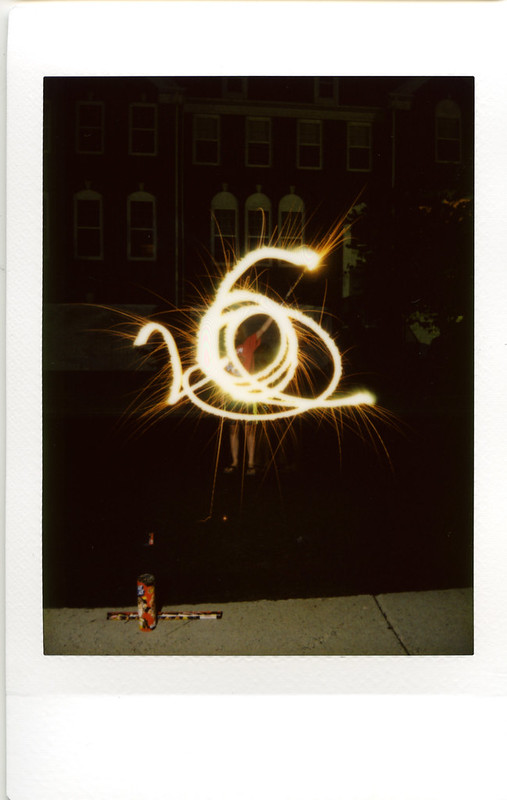
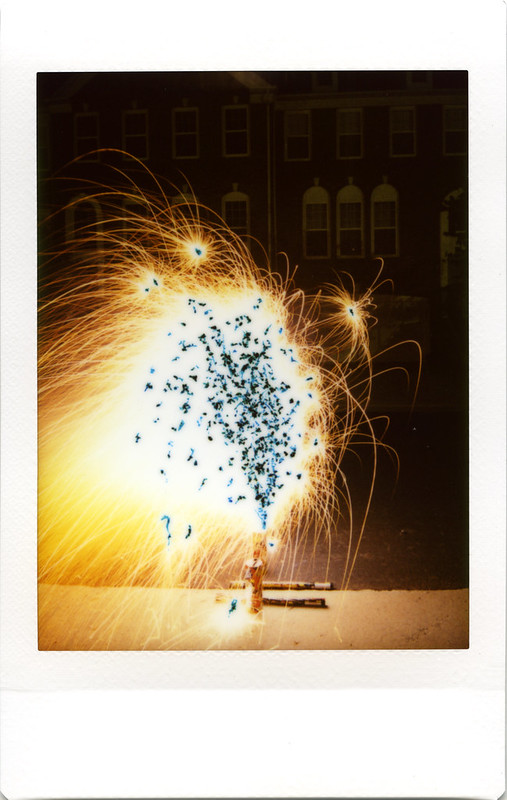
While most of the Instax cameras are completely automatic and not controllable to a large extent, the Neo has several features for more involved photographers. For example, it as a B setting for time exposures, for example. The following shots show you how I used the B setting to photograph our family fireworks on the 4th of July.
 
In B setting, the Neo has a maximum exposure time of 10 seconds. That proved to be plenty, since Instax film has a speed of iso 800. I also used an external flash to light up my daughter while the shutter was open.
 
 
In the shot above, a car drove by during exposure, leaving the horizontal streaks.
Areas with severe overexposure take on a crazy look, as shown above. I like it.
This shot is my favorite of the bunch.
 
I'll continue to explore the Fuji Neo in coming posts. It's a lot of fun for the money (~$150). In addition to the cool functional features, the Neo is styled after other Fujifilm cameras, and looks like a slightly mis-shapen X100.
 
So, join the modern world of analog instant photography! Buy your Neo and film with the Amazon link below.
 
DMC-365.blogspot.com



Sunday, June 22, 2014

Engineer Prints Arrived - Pretty Impressive!

A couple of weeks ago, I wrote about a new product from Photojojo - large, low tech monochrome prints. At 3' x 4' in size, these prints are made on lightweight (aka cheap) paper, using large printers designed for engineering drawings.
 
(Click Here) to read my previous post about Engineer prints.
 
Well, I ordered two, with very different images, to see if I like the result. Both images were shot with my 4x5 pinhole camera. Here they are:
 
Trunks, by Reed A. George
Wooden Pinhole Camera (4x5)
Arista EDU iso 400 film
 
In my opinion, this first image is almost perfect for the engineer print technology. It came out looking really great, and the quirky artifacts of the low tech printing really don't detract from the power of the image. I'm 100% pleased with how this one printed.
 
Walking Meditation, by Reed A. George
Wooden Pinhole Camera (4x5)
Arista EDU iso 100 film - 90 second exposure
 
The second image, Walking Meditation, is part of a new project I'm doing. As you can see, it's quite different from my usual work. Not a sharp element in the whole image, it's meant to be much less literal. I wanted this image to give the viewer a feeling, not an answer. The engineer print of this one is a little more difficult to judge. When I first viewed it, I was not pleased with the result, thinking I'd chosen the wrong image to print in this way.
 
Now that both of these huge prints are pinned to my wall, I'm enjoying both of them quite a lot. I'm thinking that I may make an entire exhibition of engineer prints of pinhole images. That in itself could be a fun project.
 
So, I consider this little experiment a success.
 
DMC-365.blogspot.com

 

Sunday, June 1, 2014

Hmm. Time for a new Panasonic LX Series Camera?

 
Japanese Sakura, by Reed A. George
Panasonic Lumix DMC-LX7
iso 200, f4, 1/320 sec..
 
I'm still quite pleased with my Lumix DMC-LX7 camera. So small, so capable. Nearly perfect as a compact travel camera, the LX7, like it's earlier LX-series brethren, offers the combination of a fast Pana-Leica lens, tiny form factor, manual everything, and auto everything (you select). The LX7 allows the use of the accessory electronic viewfinder as well. I'm always amazed at what this little camera can do.
 
That said, it seems about time for the next in the LX series to be announced. Here's the past announcement record:
 
LX3: July 21, 2008
LX5: July 21, 2010
LX7: July 18, 2012
 
So, it seems logical that we'll see an announcement soon. Since there's sensitivity about certain numbers in Asian culture, and based on the current pattern, I'd think it may end up being a DMC-LX9.
 
That said, I can't find anything on the web that indicates an impending announcement. In fact, I've read some speculation that the LX7 may be the last in the LX series. I sure hope not. To me, the LX cameras represent so much of what digital technology can achieve.
 
DMC-365.blogspot.com
 

Thursday, May 1, 2014

Sigma Steps Up Its Game - Mount Conversion Service

Image Source: http://www.sigmaphoto.com/change-your-mount

I have precious little experience with Sigma products. I have owned one or two of their zooms in the past, and have occasionally borrowed a Sigma lens from a friend while out in the field. Other than that, the only Sigma product I currently own is an 800mm mirror lens from way back. Not a high quality beast, but certainly interesting to use. In fact, it's time to dust it off and play with it again soon.

So why am I writing about Sigma now? Well, they're doing some very interesting things.

My take has always been that Sigma produces a very wide range of products, from the cheapest plastic consumer lenses to high end super telephotos. I think they're focusing on bringing their name up in the ranks by focusing more on the high end.

While hardly a competitor for more standard CMOS sensor cameras, the Sigma Foveon has many die hard adherents, and the results seem to be great. I've never tried one seriously.

More interesting to me is their new "Art" series of lenses, which now includes a 35mm f1.4 and newly-arriving 50mm f1.4, both reported to be best in class (or very near it), even as compared to the equivalent lenses from Nikon, Canon, and others. I've been eyeing both of these lenses for my Nikon kit. There's also the earlier 20mm f1.8 that sure would come in handy in low light concert shooting. My Nikkor 20mm f2.8 sees a lot of use in these shows, but I sure could do with the extra f-stops.

But, here's another example of Sigma catering to serious amateurs and professionals - a mount conversion service. How many times have you or one of your friends wished you could switch camera systems and mounts without having to start over buying lenses? Sigma will now convert any of their new lenses from the Art, Contemporary, or Sports lines between any two of these mounts:

  • Nikon
  • Canon
  • Four-thirds
  • Sigma
  • Sony
  • Pentax
  • Sony-Emount
Compared to the cost of purchasing new lenses, the service price is quite reasonable ($80-$250 per lens).

(Click Here) to read more about this very interesting service. It would be great to know that your conversion was done by the most capable Sigma lens technicians, and verified with precision test equipment.

DMC-365.blogspot.com
Saturday, April 19, 2014

Russar (Russian 20mm Wide Angle) Remake v. 2014

The folks at Lomography have been doing some interesting things lately. For me, any company that keeps film photography alive is okay. But their latest antic is really pretty interesting.
Image Source: http://microsites.lomography.com/russar-lens/
 
Lomography is producing an updated version of the 1958 Russian "Russar" 20mm f5.6 lens with what seems the perfect combination of classic optical design and modern materials and manufacturing methods.
 
The new Russar+ will be made in Leica Thread Mount (LTM), also known as "L39," which is great for us Leica users. That makes it native on the Barnack cameras, and easily adaptable to Leica M cameras. It also makes a nice base for adapting to other mounts, like Micro 4/3.
 
It sounds like they really are making some upgrades to the lens. For example, while the original lens body was made of aluminum, the new one is brass. Reportedly, it's being manufactured by Zenit in Russia. I don't know Zenit's full history, but I know from classic camera shopping that they've been around a while.
 
Now, a maximum aperture of f5.6 is a little hard to live with, especially if you're shooting film. But, that's the classic design, and one of the tradeoffs of using them. I have a Cosina Voigtlander 12mm f5.6 lens that rarely sees use because of that small maximum aperture.
 
But, any way I look at it, this is a cool development. One of my highest-use lenses is the awesome Carl Zeiss C-Sonnar 50mm f1.5. If the Russar+ implements a classic design with modern improvements in even a slightly similar fashion, it will be worth having.
 
You can pre-order yours by (Clicking Here). The price is US$649, and they're scheduled for delivery in July 2014.
 
 
DMC-365.blogspot.com

 

Monday, March 10, 2014

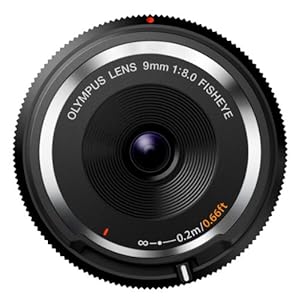
Olympus Body Cap Fisheye Lens for Micro 4/3

Image Source: http://www.amazon.com/gp/product/B00I19TVU2?ie=UTF8&camp=1789&creativeASIN=B00I19TVU2&linkCode=xm2&tag=dm36thyeofthl-20
 
I recently purchased a fisheye lens for my Micro 4/3 kit, a Bower 7.5mm model.
 
(Click Here) to see a post of images I shot with the Bower fisheye lens.
 
I haven't used the fisheye too much yet, but plan to.
 
Now it seems that Olympus has made a "body cap" lens with fisheye optics. These near-flat lenses that are so thin they double as body caps are really pretty cool. I have the older version Olympus 15mm body cap lens (not fisheye), which again, I have yet to use very much. You know the story, too many cameras, not enough days off.
 
The body cap fisheye is an ideal combination if you ask me. Since most of us will rarely use a fisheye lens, one of the challenges is that you don't tend to carry it along with you. Even the Bower lens, which is quite light and compact, takes up precious camera bag space. I think the body cap fisheye would solve that issue. And, it's pretty cheap at ~$100.
 
With a fixed aperture of f8, it's not real flexible, but again, this will be rarely-used equipment for most people. But, when you need it, you need it.
 
(Click Here) to see an example image posted by matt-pro on mu43.com
 
If I hadn't already purchased the Bower, I would certainly go for the Olympus body cap option.
 
DMC-365.blogspot.com