Showing posts with label review. Show all posts

Monday, March 16, 2015

Readers and Reading - On Books

 
Reading Japanese Books with Upside Down Face Covers, by Reed A. George
 
I absolutely love to read. Always have. Even though I'm not a fast reader by any means, I enjoy both fiction and non-fiction.
 
So what got me on this subject today? An incredible portfolio by Lawrence Schwartzwald, featured on Elizabeth Avedon's blog. (Click Here) to see it. You really must.
Japanese Subway Reader, by Reed A. George
 
So, go grab a book and learn something! Looking for something to read? Try The Lotus Eaters, by Tatjana Soli (see the link below).
 
DMC-365.blogspot.com


Monday, December 15, 2014

Found Another Mamiya Universal User - and Review

 
A few months back, my medium format shooting capability was significantly expanded when my friend Dennis Gallus sold me his lovely Mamiya Universal Press (MUP) camera kit.
 
I've been searching for other users of the MUP online, and well, there aren't very many of us left. I recently found this review of using the MUP with instant film on one of my favorite new sites, Snap It | See It.
(Click Here) to read the review, which also remarks on using the MUP with flash, something I have yet to try.
 
I've been distracted from the MUP recently, with several other new-to-me cameras. I've simply got to get more hours in the week(end)s to shoot the MUP.
 
DMC-365.blogspot.com
 

Sunday, August 3, 2014

More Fun With the Fujifilm Neo Instant Camera, and a Review

 
Hair, by Reed A. George
Fujifilm Instax Mini Neo 90
 
A couple of weeks back, I posted about the Fujifilm Instax Neo camera that I'd just bought. (Click Here) to see that post, which includes several images.
 
I've gotten more interested in instant photography lately. I really like the Fuji pack films which fit many Polaroid cameras, including my 103. (Click Here) to read about that camera. However, one can only guess that these films are not long for this world. In fact, discontinuation of one of the two types, Fujifilm's black and white FP3000B, has already been announced. FP100C is still being made, but who knows for how long.
 
So, probably the most attractive thing about the new Fujifilm Instax Mini Neo is that there's a good chance this film will be around for a while. Fuji's doing a good job of introducing new cameras, and even some with creative controls like the Neo, so hopefully that will keep the market strong.
 
(Click Here) to read a nice review of the Instax Mini Neo on SnapItSeeIt.com.
 
For not too much money, the Neo is really a nice, fun little camera. Buy yours through my Amazon link below!
 
DMC-365.blogspot.com


Saturday, September 21, 2013

A Report On the New Panasonic Lumix DMC-GX7 On Luminous Landscape

The New Panasonic DMC-GX7
Image Source: http://shop.panasonic.com/shop/model/DMC-GX7SBODY
 
I've been watching for some reports on the new Lumix GX7 Micro 4/3 camera from Panasonic. I only care about reports from people who've actually used the camera, rather than simply reviewed the specifications. I found a very nice, concise report from Michael Reichmann on Luminous Landscape, a site that I respect highly.
 
(Click Here) to read Mr. Reichmann's full report on Luminous Landscape.
 
Here are some of the high points of the report.
 
Pluses:
  • Camera size - unlike the flagship Lumix DMC-GH3, the GX7 is small. I believe that's one of the most important aspects of the Micro 4/3 format - small cameras and lenses.
  • Image quality - at least matching the DMC-GH3 and Olympus OMD, according to the report
  • In-body stabilization - this is important for those of us who like to use old "legacy" lenses on Micro 4/3 cameras. Olympus has had this for a long time, but the GX7 is the first Lumix to have the stabilization built into the body, rather than the lenses.
  • Electronic and mechanical shutters - the electronic shutter reduces wear on the mechanical one, and allows one to shoot completely silently. I need to read up on this - I'm not sure what the downside is. I'm sure there is one, or they would have done away with the mechanical shutter altogether.

Minuses / Bugs:
  • Image stabilization (in the body) doesn't work in video mode, or with lenses that have IS built-in, even if the lens IS is turned off. Maybe this can be fixed in firmware?
  • Auto ISO doesn't work in manual exposure mode
While I have been shooting some Lumix cameras (mainly the LX7 and TS5), I have really been neglecting my Micro 4/3 gear this year, in favor of shooting my Leica M9, and doing my ongoing series of Skeletons From The Closet, where I shoot a different old film camera each month. I'm thinking about what next year will look like here on DMC-365, and may decide to bring Micro 4/3 back in a bigger way. Those gorgeous lenses are waiting to be used.
 
The truth is, I love shooting many different types of camera. There's simply not enough time to shoot them all. Stay tuned, I'll be sure to not let it get stale around here.
 
DMC-365.blogspot.com


Tuesday, July 9, 2013

Quick Post From Last Day in Key West

Sorry for a somewhat lazy post, but we're packing up to head home from our quick 3-day weekend in Key West.
 
While we were here, I got the opportunity to test the Panasonic Lumix DMC-TS5 waterproof camera. It performed very well. Not flawless, but very very impressive given that I tested its limits of 43 feet waterproof certification. As much as I tried to avoid it, the TS5 did get banged around a little as we donned and doffed dive tanks and BCs. Anyway, here's my favorite shot from the dive:
Bubbles, by Reed A. George
Panasonic Lumix DMC-TS5
 
I'll be writing up the user report for Panasonic in the next day or two. I'll share all of my thoughts on this camera as soon as I've assembled them. But, I can certainly say that I'm sold on it. Compact, fast, tough as nails, and producing quite nice images. I'll show more soon.
 
DMC-365.blogspot.com


Wednesday, June 19, 2013

Leica's New X Vario - the "Mini M?" Not All Bad, Though

There was a lot of hype on the internet surrounding the announcement of Leica's latest camera, the X Vario.
 
Leica X Vario
 
Image Source: http://us.leica-camera.com/photography/compact_cameras/x_vario/#product-scroll-me-anchor
 
(Click Here) to see the camera on Leica's website.
 
Leica chose to emphasize ties between the M digital rangefinder cameras and the X Vario, which seems to have set peoples' expectations for something different than what was delivered. With a 28-70mm equivalent field of view zoom, and f3.5-6.4 aperture, this is no fast lens rangefinder. The forums are in an uproar. However, there's a lot to like with this camera, if you can get past the maximum aperture of the lens.
 
On the subject of maximum aperture, I go back to my belief that there are different cameras for different needs. While I'd never be completely satisfied if the fastest lens I had for my Leica M9 were f3.5, one of the cameras I still lust after is the Fujifilm GF670 medium format folding camera. (Click Here) to see the GF670. This camera has an f3.5 lens, but of world class design and manufacture. The GF670 would be a slow camera for me - not for action shots, for sure. In fact, it would likely take more images on a tripod than off.
 
Modeled far more after the X2 than an M, the X Vario has a relatively large APS-C sensor (1.3X crop factor). Being able to go higher in iso without noise issues could really compensate for the slower lens.
 
Nick Rains, an Australia-based photographer, wrote one of the first reports I've seen by someone who has actually used the X Vario.
 
(Click Here) to read Nick's post on nickrains.com.
 
Nick tested the camera in gloomy weather, so he shot at high iso (3200) a lot. Nick argues that the f3.5 lens is no slower than most kit lenses for DSLR cameras. True, but then you can change to faster lenses with a DLSR. One important point Nick brings out is that the Leica lens is as good (sharp, no chromatic aberration, great color) at f3.5 as it is at f8; that is not the case with kit lenses. Nick seems to like the X Vario at some level, and in his post demonstrates the great sharpness of the lens and low noise of the sensor. He made some 16x20 prints from the camera at iso 3200, and was pleased with the result.
 
So, before we let the forum hype tell us this camera has no place, let's see what results people can actually produce with it.
 
DMC-365.blogspot.com


Saturday, March 23, 2013

Review and Sample Photos from Lumix DMC-LX7 on Entropic Remnants


John Griggs has posted an impressive review of the little Lumix DMC-LX7 on his blog, Entropic Remnants.
 
(Click Here) to read John's full review and see lots of great low-light image samples.
 
I very much like the style of John's review. He's to the point, honest, as well as being an obviously-talented photographer. He didn't take the easy route in this review. He took the small-sensored LX7 deep inside a dark factory environment, and came out with some awesome pictures.
 
John always shoots raw files, and is not shy about admitting that he post-processes in Lightroom to the extent needed. In addition to hitting some of the main features of the LX7 - the fast 1.4 Pana-Leica lens, built-in ND filter, and aperture ring (like a real camera!), John points out any deficiencies when he sees them. The only one that jumped out at me is that the lens can be flare-prone.
 
John finds iso 400 to be the "quality limit" of iso on the LX7, and is quite happy with 16x20 prints shot at iso 400. He mentions that 800 is usable. He also demonstrates high dynamic range (HDR) images and a macro shot from the LX7.
 
I have recently purchased the LX7 myself, and am in the process of becoming familiar with it. Part of that process is working through all of the settings that I find important for real world use. I'm documenting that, and will make it available in ebook form in the coming weeks.
 
My ebook is now available in Kindle format at Amazon:
 
(Click Here) to buy the LX7 Real World Setting Guide for $2.99, or borrow it for FREE if you're an Amazon Prime member. I would really appreciate a positive review of the book on Amazon, if you can spare the time.
 
I am also about to spend some quality time with the LX7 on my upcoming trip to Japan. I've decided to carry my M9 and Whole Lotta Leica lens (the Summilux 35mm f1.4), my Skeletons From The Closet camera (Zeiss Ikonta medium format folder), and the LX7. The LX7 will be responsible for most of my daily shooting, all closeups, etc. So, I hope to have something to show.
 
Having a fast f1.4 lens really extends the range of the LX7. Here's a shot from the interior of an airplane that I recently shot:
James Bond in Sepia, by Reed A. George
Panasonic Lumix DMC-LX7, Sepia-toned jpg
iso 200, f1.4, 1/60 sec
 
I'm very pleased to be able to shoot at iso200 in a dark airplane interior.
 
I'm really looking forward to pushing the LX7 to some limits on my upcoming trip.
 
DMC-365.blogspot.com


Tuesday, December 11, 2012

First Report I've Seen on the New Lumix DMC-GH3

 
Panasonic Lumix DMC-GH3
 
Digital Versus has posted a short review of the new flagship Lumix DMC-GH3 camera.
 
(Click Here) to read the whole report on Digital Versus.
 
This is not a in-depth investigation of the camera, as you may find on dpreview. I also question whether they have a production model, since they mention some pretty strange software / firmware traits, saying that they should be fixable in later versions.
 
In any case, one thing I learned is that the GH3 has a wireless connection built-in, allowing you to look at images on your cell phone, and trigger the shutter from the phone. Kind of cool. I wonder if it also allows automatic backup to and image display on the Apple iPad?
 
Amazon is listing this camera for $1299 right now, even though it's not yet in stock.
 
If the rumor about an upcoming DMC-GX2 having the same sensor is true, I'm likely to wait for the GX2. I still like my Micro 4/3 cameras to be as small as possible, while incorporating the features I desire. Of course, that will mean an auxiliary electronic viewfinder on the GX2, but I can live with that.
 
DMC-365.blogspot.com


Friday, September 14, 2012

So What About the New Panasonic DMC-G5?

Well, I've written a little about it, but have not invested in one.
Panasonic Lumix DMC-G5
Image Source: shop.panasonic.com
 
The SoundImagePlus blog is covering the G5 in an ongoing series (four installments so far).
 
(Click Here) to see SoundImagePlus' review series on the G5. There are some nice sample images there, as well.
 
Here's what I've learned so far:
  • (+) Better grip than the DMC-G3, which is my current camera. Not surprising. The G3 is weak in this area. Can someone make a nice grip attachment for the G3?
  • (-) Newly-redesigned menus (sigh). This would mean working through another long set of menus, and writing a new eBook to figure out how to set it up.
  • (+/- no advantage) According to SoundImagePlus, essentially identical high iso performance to the G3 and GX1.
  • (+) Electronic shutter mode for silent shutter release.
  • (-) Different battery from the G3, which means carrying another charger.

So, here's where I am on this camera, at the moment. If I didn't already own the G3 (two, actually), would I buy the G5 instead? Yes.
 
Will I replace a G3 with a G5? No. There's just not enough improvement there to make the switch.
 
Of course, the buzz now is all about what the DMC-GH3, supposed to be announced this month, will bring. That may be a different story for me.
 
DMC-365.blogspot.com


Monday, July 2, 2012

LensRentals Has the New Lumix 12-35mm f2.8 - But You Can't Rent It Yet. Good Informal Review, Though


Panasonic Lumix 12-35mm f2.8 Zoom
Image Source: http://shop.panasonic.com/shop/model/H-HS12035
 
Apparently, Lens Rentals (lensrentals.com) has gotten its hands on one of the new 12-35mm lenses before it's officially in stock anywhere else.
 
(Click Here) to see Roger Cicala's impressions from shooting with the Panasonic Lumix 12-35mm f2.8 lens over at lensrentals.com.
 
They are planning to offer it up for rental in the next couple of weeks. I like that they are going to let this new lens sit on their own Olympus OM-D body for a while, just to make sure there's no crazy fungus living inside that will affect their customers' cameras.
 
Roger did an informal comparision of the OM-D and Lumix 12-35 to a Canon 5d MkIII and Canon 24-70 f2.8 lens (same field of view as the 12-35, except for the difference of 24x36mm vs. 4:3 format). This was a quick, admittedly unscientific comparison. All that I can gather from it is that the Lumix images look every bit as good to me, perhaps better in some cases. What is difficult to factor in though, is that the Lumix lens will have a larger depth of field than the full frame Canon lens, at a given focal length and f-stop. In other words, more will be in sharp focus with the Lumix lens. This is not always what you want as a photographer, especially when shooting portraits, where you'd like the background to be soft and unobtrusive.
 
Anyway, I look forward to trying out one of these lenses. Roger suggests that it performs very well, a little less well than equivalent primes, but at least as good as the fast, high priced zoom from Canon.
 
I may actually rent one before deciding on this lens. $1,300 is nearly a third of the way to a used Leica M9 body, which is something I'd rather have. And, I have the primes to cover most of this range already. Again, $1,300 is a lot to pay for the convenience of not having to switch prime lenses, especially if it comes with any image quality compromise, which of course it does.
 
I know that many people have already preordered this lens. For those of you - it looks like you may not have to wait much longer. I hope you all share your results! I'm looking forward to seeing more from this lens.
 
DMC-365.blogspot.com


Wednesday, May 23, 2012

Big News for Today? - dpreview Gets Their Hands On The New Panasonic Lumix 12-35mm f2.8 Fast Zoom!

Image Source: http://shop.panasonic.com/shop/model/H-HS12035

This is a lens that Micro 4/3 users, especially Panasonic shooters, have been waiting for. I won't recount dpreview's impressions on a lens I have not yet seen. I will just point out two things that are important to me:

  1. The lens is NOT equipped with powerzoom. GREAT! In my mind, powerzoom is primarily for videographers. I want the tactile response of a manual zoom. In fact, it's one of the very few tactile controls left in still photography.
  2. The size is very nice for such a wide zoom. While it doesn't have the shallow depth of field of it's equivalent field of view 24-70 lenses in full frame 35mm format, it is tiny compared to those beasts. dpreview indicates that it's best balanced on a camera with a grip, like the DMC-G3. Again, GREAT!
(Click Here) to read the rest of their impressions on the lens over at dpreview.com. I hope it's ready for delivery soon.
 
DMC-365.blogspot.com


Thursday, May 17, 2012

The PhoBlographer Tests the Zeiss Planar 50mm f2 M Lens on Micro Four Thirds

 
Zeiss Planar 50mm f2 on Olympus E-P1 by Phoblographer
Image Source: http://www.thephoblographer.com/wp-content/uploads/2012/03/P5112317_lr-1000.jpg
I read an interesting post about using the Zeiss Planar 50mm f2 (Leica M mount) lens on Micro Four-Thirds cameras.
(Click Here) to see the original post at www.thephoblographer.com
The author (Felix Esser) makes several important points. First, he says that while he's satisfied with the Zeiss lens performance on both the Olympus E-P1 and the Panasonic Lumix DMC-G1, neither delivers a certain image quality that he sees using the same lens on the Leica M8. This is difficult to evaluate. Each M4/3 camera has so many settings, I find it a little hard to believe that one couldn't fiddle long enough and pretty much replicated the Leica's color, tone, and sharpness. The Micro 4/3 cameras have more recent sensor technology than the M8. The only differentiating thing I can think of is the lack of an IR filter on the M8 sensor, which is supposed to increase sharpness, but at the cost of color accuracy. I find with my M8 that the add-on UV/IR filters are absolutely necessary to achieve good color rendition, so I any benefit from not having the filter there must be lost.
I also found Felix's comments comparing the Olympus E-P1 and Lumix DMC-G1 of interest. It seems that he prefers the native jpeg output of the Olympus, but finds the Panasonic much easier to use with legacy manual focus lenses. This is mainly because of the increased resolution of the G1's electronic viewfinder (EVF). I bet he'd really like it if he tried the DMC-G3 or DMC-GH2.
Felix also provides a little information on the history of the Planar, which has always rivaled the Leica Summicron, both considered benchmarks for image quality in the normal lens range.
I don't have a 50mm Planar. I do have a Zeiss 25mm Biogon T f2.8, which should make a very nice 50mm equivalent on Micro 4/3. The 25mm Biogon is as well-recognized for image quality as the Planar. On my Leica M8, the Biogon makes a wonderful 35mm replacement (at ~33mm equivalent field of view).
However, I must admit, I rarely use the Biogon on M4/3. Why? A few reasons: 1) manual focus, 2) f2.8 (I prefer faster), 3) the existence of the Pana-Leica Summilux 25mm f1.4. The Summilux offers autofocus, 2 stops of increased speed, and excellent image quality. So, it's just a little hard to grab the Biogon and leave the Summilux behind.
I would be interested in hearing others' opinions about this. For a normal lens, I don't see much reason to use anything other than the Pana-Leica 25mm Summilux on my M4/3 cameras.
DMC-365.blogspot.com


Monday, May 14, 2012

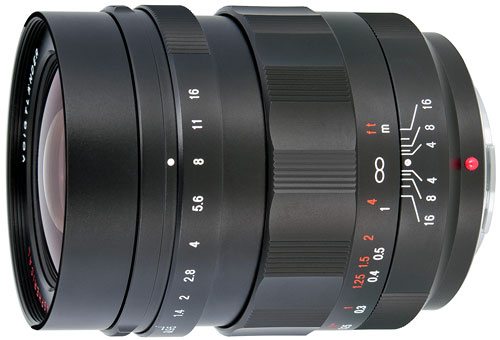
New Voigtlander 17.5mm f0.95 Micro 4/3 Lens

Cameraquest, United States distributor for Cosina (aka Voigtlander) is now taking deposits for a new native Micro 4/3 mount 17mm f0.95 (super fast!) lens.
(Click Here) to see it on Cameraquest's website.
 
Voigtlander 17.5mm f0.95 Micro 4/3 Lens
Image Source:
http://www.thephoblographer.com/2012/02/06/voigtlander-announces-new-17-5mm-f0-95-lens-for-micro-four-thirds-35mm-equivalent/
 
At $1,249, you may want to make the $100 deposit, then get a loan for the remaining balance. Just kidding. This is a lens for people who love fast lenses (meaning it gathers a lot of light, and can basically take pictures in the dark). Those never come cheap. It is a manual focus lens.
 
At 17.5mm focal length, this lens will have an equivalent field of view that a 35mm focal length lens would on full-frame 35mm cameras. So, it makes me think of a Leica Summilux 35mm (which is an f1.4). The new Voigtlander lens gathers more than 2 times as much light, making it the fastest commercial 35mm equivalent lens I've ever seen.
 
(Click Here) to read a brief user review of the lens, used on a Lumix DMC-GH2, by Daisuki Photo. Note that the author used a 3X neutral density filter to bring the light levels down low enough to open the lens aperture up, very useful for this type of testing.
 
Also be sure to catch the author's note on how he likes the new Fuji XPro-1 versus his GH2. Interesting.
 
I have been thinking about trying a Voigtlander lens for Micro 4/3. They also have the Nokton 25mm f0.95 manual focus lens. But, I'm so happy with my Pana-Leica Summilux 25mm f1.4, which is has autofocus, that I just don't really need to look further. I use the Lumix 20mm f1.7 for a rough equivalent to 35mm, and am also pleased with it. So, I can't really see laying out this kind of money for a manual focus lens. They're both really specialty lenses in my opinion. If you really need that amazing light gathering capability, go for it. I don't think I do. I considered whether either would help my concert photography, which is normally pretty challenging light. But, manual focus would be a bigger disadvantage than the extra speed would be an advantage. In my opinion, of course.
 
DMC-365.blogspot.com


Thursday, May 3, 2012

The Lumix 14-140mm f4-5.8 Super Zoom - User Reports

Panasonic Lumix 14-140mm f4-5.8 Zoom Lens
Image Source: http://shop.panasonic.com/shop/model/H-VS014140
 
Recently on mu-43.com, user Z-man posted an inquiry about practical impressions of the Panasonic Lumix 14-140mm f4-5.7 zoom lens.
 
(Click Here) to see the post and numerous informed replies.
 
I have this lens, and offered this feedback:
 
I find the 14-140 useful, with some limitations.I used to have the 14-45 kit lens and the 45-200, both quite nice for what they are. I should say here that I found the 45-200 to be a step better in my hands than either the 14-45 or 14-140. It was tough to give up, until the 100-300 showed up.I prefer to shoot primes most of the time. However, when I travel, I usually want a lens that I can be sure will cover most circumstances, especially when I'm with family or friends who aren't primarily photographers. That is my most common use of the lens. I agree that it doesn't gather much light, so that's the biggest limitation there.My other big use is for a telephoto for travel. Sometimes the Pana-Leica 45mm Macro-Elmarit just doesn't have enough reach. The 14-140 works well in that situation as well. It is not the sharpest lens at the extreme long end, but sure isn't bad. For me, the 100-300 is a specialty lens, one that comes in handy for birds and nature, especially. I don't carry it on travel very often.So, in summary, I find the 14-140 is in my bag quite often. Second only to my primes.
 
I also forgot to mention that the Optical Image Stabilization (OIS) works very well in my experience, though I have heard opinions that differ. Also, this lens is optimized to minimize noise during video capture - not important for me, but crucial for those who shoot a lot of video.

DMC-365.blogspot.com


Tuesday, February 28, 2012

Adobe Releases Photoshop Touch For The iPad

Adobe Releases Photoshop Touch for the iPad!
Image Source: http://www.adobe.com/products/photoshop-touch.html

I love the way my photographs look on the backlit screen of my iPad 2. Now that I have the ability to transfer images using the iPad Camera Connect Kit, there are only two things missing: 1) sufficient storage to treat the iPad as my backup device, and 2) software to edit images on the go.

Click below for a link to the Apple iPad Camera Connect Kit:


Now, Adobe has announced an iPad app called Photoshop Touch, potentially solving one of my two issues. The app reportedly provides a lot of Photoshop-like functionality, and interfaces with the touchscreen interface well.
 
(Click Here) for the Adobe page about the new app.
 
It is available on the App Store for $9.99. I will be downloading this in the next day or so, and will report on how it works for me.
 
Further Note - after reading a little further, I'm not so sure this is going to help me all that much. The adobe site says that image size is limited to 1600 pixels on a side. That's only 2.5 Megapixels, folks! Really? I'm sure that's enough to look good on the iPad screen, but means that the resulting files won't be big enough for other uses. Well, I may still give it a try...
 
DMC-365.blogspot.com


Sunday, February 5, 2012

Why Tyson Robichaud Chose the DMC-G3, As Did I

 
Tyson Robichaud's Article Explains Why He Chose the DMC-G3 as the Successor to his DMC-GF1
 Image Source: http://tysonrobichaudphotography.files.wordpress.com/2012/01/img_96661.jpg?w=680
 
I recently found Tyson Robichaud's excellent blog:
 
Mr. Robichaud and I seem to think alike.  I have recently standardized my Micro 4/3 kit on two Lumix DMC-G3 bodies, after using a DMC-G1 and DMC-GF1 for a few happy years.  Tyson explains in very clear detail how he made the decision to replace his GF1 with a G3, rather than a GX1 or other manufacturer's camera.  I made the exact same decision, after similar analysis.
 
(click here) for Tyson's article about moving from the GF1 to the G3
 
Mr. Robichaud states that one of his main reasons for upgrading at all is high iso noise performance.  He finds (and demonstrates) a nearly full 2-stop improvement in noise when comparing the GF1 to the G3.  He states that iso1600 is "very useable."  I fully agree.  In fact, I have made decent images at iso6400, which was previously impossible.
 
Like me, he was tempted by low holiday prices on the excellent GH2, but decided to go with the G3 mainly for size reasons.
 
Contrary to frequent complaints by others, he finds the grip on the G3 to be about right.  I have no complaints in this area, either.
 
We also agree that some of the buttons on the back of the G3 are too small and low profile - especially the two very useful custom buttons.
 
Tyson finds that the long shutter noise reduction is very good.  I have not tried that, but his post will make me get to it.
 
It is always nice to find a great new blog like Tyson's.  It is also good to find someone who can affirm my logic and direction in choosing equipment!
 
DMC-365.blogspot.com

Wednesday, February 1, 2012

ePHOTOzine Review of the DMC-GX1

I don't write general reviews of cameras and lenses, but I read them.  I thought I'd share this one.
 
As I've mentioned before, I currently don't see a place in my bag for the DMC-GX1, perhaps mostly because I have standardized on two DMC-G3s.  I also still have a DMC-GF1, in case I want to shoot that form factor.  However, that's just a matter of preference, as the imaging components are shared between the G3 and GX1.    I could have chosen two DMC-GX1s, or a mix of the two.
Lumix DMC-GX1 and 14-45mm X Lens
DMC-GX1 with 14-42 X f3.5-5.6 lens
Image source:  shop.panasonic.com
 
I also have not seen anything about the new X lenses that particularly floats my boat.  
 
Here is a review of the pair from ePHOTOzine:
 
Source:  http://www.ephotozine.com/article/panasonic-lumix-dmc-gx1-camera-review-18282?utm_source=feedburner&utm_medium=feed&utm_campaign=Feed%3A+Ephotozine+%28ePHOTOzine%29
 
I always read these reviews casually, and take them with a grain of salt.  However, every time I read another review about this camera, I worry that it will change my mind about needing a GX1.  This one certainly did not do that.  
 
ePHOTOZine's review didn't tell me much new about the GX1.  Perhaps the important parts for me were the findings on the 14-45 X lens.  They mention that it is less sharp than the non-X version, and report some vignetting.  The review author's opinion is that these downfalls are fair tradeoff for the smaller, more automated lens.  I disagree.  For me, image quality matters most, especially when the competition (the non-X lens) is already quite small and light.
 
DMC-365.blogspot.com