Showing posts with label small sensor. Show all posts

Sunday, August 25, 2013

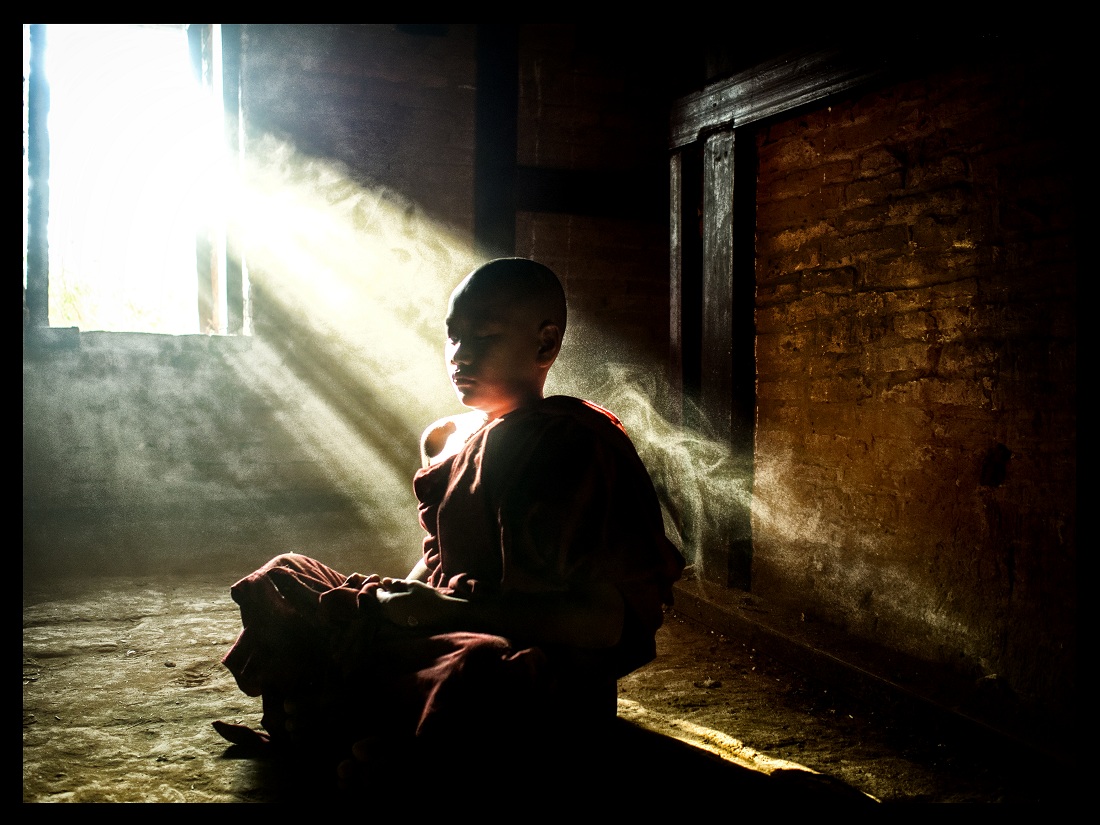
Suryo Widjaja Shares Olympus OM-D Photos From Myanmar on Steve Huff Photo

Image Source: http://www.stevehuffphoto.com/wp-content/uploads/2013/08/Semedi.jpg
 
Photographer Suryo Widjaja has written a guest piece on Steve Huff's blog, sharing several wonderful images he took in Myanmar in January of this year.
 
(Click Here) to read Suryo's post on Steve Huff's site.
 
Myanmar is definitely on my bucket list. I know a couple of people who've been able to gain entry to the country for tourism, and they have a lot of great things to say about the place. Anywhere that measures "Gross National Happiness" sounds okay to me.
 
Suryo reports that he took two Olympus OM-D bodies on the trip - his most-used lens was an Olympus 17mm f1.8, second was the Olympus 75mm f1.8. His 12mm saw little use. I have the 75mm f1.8, and it's a keeper.
 
I am about to take a week long vacation, and I'm planning to take my Leica M9, 35mm Summicron, and a medium telephoto (likely my Canon 135mm f3.5 LTM). This post encourages me to travel light, and my choice of lenses closely matches the field of view of Suryo's lenses on his Micro 4/3 gear. Of course, I'll carry the diminuitive Lumix DMC-LX7 as well. So much capability in such a small package simply cannot be left behind. Plus, it gives me closeup capability not available in the M9, at least not easily.
 
Suryo has shown how much you can do with two lenses. I'm impressed.
 
DMC-365.blogspot.com


Friday, April 5, 2013

Panasonic Lumix DMC-LX7 Shoots HDR in the Dark!

 
Kodaiji at Sunset, by Reed A. George
Panasonic Lumix DMC-LX7, HDR Scene Mode
 
I've been using the Panasonic Lumix DMC-LX7 extensively on my trip to Japan. What an amazing little camera.
 
On this particular night, I went to see a "light up" event at the Kodaiji temple in Kyoto. During the spring cherry blossom season, they light the trees up at night. It's an incredibly beautiful sight. In the picture above, I was hoping to balance the artifical light on the trees in the foreground left with the natural sunset. I decided to try the high dynamic range (HDR) scene mode on the LX7. I was blown away by the results. The camera took three consecutive exposures and merged them on the spot. They were taken handheld, as tripods were not allowed in this location. You're looking at the result straight out of the camera.
 
Needless to say, I used the same HDR scene setting throughout the night. Even when it was completely dark out, it did a great job handling the very challenging lighting situations.
 
 
HDR in the Dark, by Reed A. George
Panasonic Lumix DMC-LX7, HDR Scene Mode
 
The area inside the shrine above was extremely dark. The lamps were very bright. Again, you're looking at the result right out of the camera. I'm hoping to bring up the shadows some when I get this in Lightroom. Regardless, it's quite impressive, especially handheld.
 
Technology has come a long way in the recent past.
 
I'm sure that I won't be able to make large prints of these, but to be able to capture these images at all is a pleasant surprise to me.
 
DMC-365.blogspot.com
 
Get my Kindle eBook on the LX7 here:
 
 
Get your LX7 here:


Saturday, March 23, 2013

Review and Sample Photos from Lumix DMC-LX7 on Entropic Remnants


John Griggs has posted an impressive review of the little Lumix DMC-LX7 on his blog, Entropic Remnants.
 
(Click Here) to read John's full review and see lots of great low-light image samples.
 
I very much like the style of John's review. He's to the point, honest, as well as being an obviously-talented photographer. He didn't take the easy route in this review. He took the small-sensored LX7 deep inside a dark factory environment, and came out with some awesome pictures.
 
John always shoots raw files, and is not shy about admitting that he post-processes in Lightroom to the extent needed. In addition to hitting some of the main features of the LX7 - the fast 1.4 Pana-Leica lens, built-in ND filter, and aperture ring (like a real camera!), John points out any deficiencies when he sees them. The only one that jumped out at me is that the lens can be flare-prone.
 
John finds iso 400 to be the "quality limit" of iso on the LX7, and is quite happy with 16x20 prints shot at iso 400. He mentions that 800 is usable. He also demonstrates high dynamic range (HDR) images and a macro shot from the LX7.
 
I have recently purchased the LX7 myself, and am in the process of becoming familiar with it. Part of that process is working through all of the settings that I find important for real world use. I'm documenting that, and will make it available in ebook form in the coming weeks.
 
My ebook is now available in Kindle format at Amazon:
 
(Click Here) to buy the LX7 Real World Setting Guide for $2.99, or borrow it for FREE if you're an Amazon Prime member. I would really appreciate a positive review of the book on Amazon, if you can spare the time.
 
I am also about to spend some quality time with the LX7 on my upcoming trip to Japan. I've decided to carry my M9 and Whole Lotta Leica lens (the Summilux 35mm f1.4), my Skeletons From The Closet camera (Zeiss Ikonta medium format folder), and the LX7. The LX7 will be responsible for most of my daily shooting, all closeups, etc. So, I hope to have something to show.
 
Having a fast f1.4 lens really extends the range of the LX7. Here's a shot from the interior of an airplane that I recently shot:
James Bond in Sepia, by Reed A. George
Panasonic Lumix DMC-LX7, Sepia-toned jpg
iso 200, f1.4, 1/60 sec
 
I'm very pleased to be able to shoot at iso200 in a dark airplane interior.
 
I'm really looking forward to pushing the LX7 to some limits on my upcoming trip.
 
DMC-365.blogspot.com