Showing posts with label Amazon Prime. Show all posts

Wednesday, February 18, 2015

You Saw it Here! Panasonic Lumix DMC-LX100 for $720 New!

Okay, here's the best deal I've seen on this camera, by far.
 
 
$719.99, with Amazon order delivery and return policy. Excellent. Grab it now. I have not seen it below $799 before, and the list is $899.
 
Please use my link below to get this price, and support your favorite blogger, me!


Thursday, November 27, 2014

Incredible Price on the New Lumix DMC-LX100

Amazon has the silver version of the LX100 for $779.01 right now. It is out of stock, but apparently there were some available yesterday. That's a pretty great price. Please use my blog's Amazon link to buy yours!
 
The LX100 appears to be a worthy upgrade from the already very capable LX7 (which I have). The LX100 uses almost the entire area of a full Micro 4/3 sensor, much larger than the sensor in the LX7.
 
One of my friends just bought the Leica version of the LX100, the DLUX Type 109. He shared with me a couple of large prints (around 16x20). They were absolutely spectacular.
 
I'm not ready to pull the trigger on the upgrade for my LX7, but this price has me thinking.
 
Again, please use my link to Amazon to buy yours, and support my blog at no cost to you!
 
DMC-365.blogspot.com


Monday, April 15, 2013

Slowly Working Through Images From Japan - Another Nighttime HDR Shot From The Panasonic Lumix DMC-LX7

 
Fountain and Lanterns, by Reed A. George
Panasonic Lumix DMC-LX7, In-Camera HDR
 
I have been very busy since returning from Japan. I've finally made it through grading about 1,500 images, so that I've reduced it to a few hundred that I want to look at closer. I've also gotten my film back from The Darkroom - two rolls from my Skeletons From The Closet camera for April, the Zeiss Ikonta folder. So, I'm making progress.
 
I wrote a while back about the surprisingly good images that I got using the in-camera HDR feature of the Panasonic Lumix DMC-LX7, handheld, basically in the dark.
 
(Click Here) to read my initial post about the LX7 and HDR in the dark.
 
The shot above is another example. In this scene, the fountain was really nearly in complete darkness. The original jpeg did have a weird color balance on the fountain; the lanterns were nicely white and didn't need adjustment. I was a little worried, working with just the jpeg file (no raw file is made with in-camera HDR), but was able to adjust the color and bring up the brightness of the fountain with no issues.
 
This image would have been nearly impossible to capture handheld with other cameras. Even with a tripod, the extra processing of multiple images at the computer would have been much less fun. I've got plenty of other images to process.
 
I am really enjoying the LX7. Now, I've got to get back to editing and presenting some more pictures. Maybe this weekend...
 
DMC-365.blogspot.com
 
See my Kindle eBook on how I set up and use the DMC-LX7. Only $2.99, or free for Amazon Prime members:


Tuesday, April 9, 2013

Yayoi Okada - Leica D-Lux 6 (Lumix DMC-LX7) Pictures and Words on the Leica Camera Blog

 
Photographer Yayoi Okada shared a series of images, all monochrome, all shot with the Leica D-Lux 6 camera, on the Leica Camera Blog:
 
(Click Here) to see Yayoi's post
 
I still can't really believe just how good the Lumix DMC-LX7 is. The D-Lux 6 is Leica's version of the same camera.
Making Japanese Soba Noodles By Hand, by Reed A. George
Panasonic Lumix DMC-LX7
 
As I write this, I am still in Japan (will be home by the time this posts). Since I'm using my iPad on this trip, I'm merely backing up images, and not yet editing any of them. The shot above is a black and white jpeg from the LX7. This was shot in a relatively dark restaurant, where this master was making soba (buckwheat) noodles by hand. I'm looking forward to working with the raw file when I get home (I'm going to have a lot of raw files to deal with when I get home) to see just what I can do with this image.
 
I carried my LX7 and Leica M9 to Japan this time. I have enjoyed shooting the M9 here, but I am really wowed by the flexibilty and convenience of the LX7. Camera technology is really improving by leaps and bounds. The f1.4 lens on the LX7 is so useful.
 
DMC-365.blogspot.com
 
I used my custom preset for street photography to get this shot, even though it was not a street image. I love having presets in the camera to get me as close as possible to what I need on short notice.
 
Read about how I set my camera up and use it in my eBook, now available on the Amazon Kindle store (purchase for just $2.99, or borrow it for free if you're an Amazon Prime member):


Thursday, April 4, 2013

My Kindle eBook on the Panasonic Lumix DMC-LX7 Got A Nice Customer Review!


My LX7 eBook
$2.99 or free for Prime Members on Amazon

My new eBook on Real World Settings for the Panasonic Lumix DMC-LX7 just got its first customer review: 4 stars and lots of nice comments! I'm very pleased.

(Click Here) or use the link below to get your copy. Support my blogging and writing by giving it a try.

DMC-365.blogspot.com


Wednesday, April 3, 2013

Changing My Micro 4/3 Kit - A New Type of Bottom-Feeding


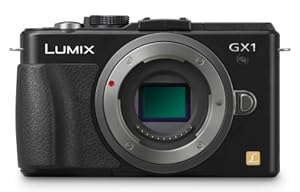
Old Technology (?) - the Panasonic Lumix DMC-GX1
Image Source: http://www.amazon.com/gp/product/B00604YTFM/ref=oh_details_o00_s00_i00?ie=UTF8&psc=1
 
If you've followed my blog for very long, you'll know that I am a frequent user of Micro 4/3 equipment, specifically Panasonic Lumix cameras. My standard kit for the past year or so has been two DMC-G3 bodies, a great collection of mostly Lumix prime lenses (plus one Olympus lens, the spectacular 75mm f1.8), and a couple of zooms (Lumix 14-140mm and 100-300mm). I have enjoyed the convenience of having two identical camera bodies, small enough to carry together without any back pains, and allowing me to minimize lens swaps.
 
Well, I am in the process of making a change. While I have been watching new cameras come out, I haven't sprung for the latest and greatest. That's where the bottom-feeding comes in.
 
Bottom-feeding in camera gear usually means buying very inexpensive equipment, typically used. I'm doing my own type of bottom-feeding, taking advantage of the amazing price drops that come along for cameras that are, or are near to being, one generation back.
 
As you probably have read, I recently bought a Lumix DMC-LX7 compact camera brand new for less than $300. Amazing. This camera is so powerful it is the bargain of the year, in my opinion. In fact, it is so good I wrote an eBook about how I set it up for my uses.
 
(Click Here) or use the Amazon link below to get my LX-7 eBook.
 
Well, when I got the LX-7, I also bought the accessory live viewfinder, the Panasonic DMW-LVF2. This is where Micro 4/3 comes in. The LVF2 also fits the Lumix DMC-GX1, cousin to my G3s, with the same sensor, but in a more compact body, without an integral finder. The GX1 has a few features that the G3 does not, but it's the form factor that interests me most. It is very reminiscent of a rangefinder (though it's not), and extremely similar to the older DMC-GF1, a camera that I really enjoyed in its time. So, of course, I began looking at the GX1.
 
I know, if I'm going to upgrade, why not to the latest sensor technology, either the Lumix DMC-GH3, or maybe even an Olympus OM-D? Two reasons:
 
  1. The GX1, a camera that sold for $699 a year ago, is now available brand new on Amazon for $275! Can't touch an OM-D or GH3 for that price!
  2. Amazon will give me over $250 buy-back value for my G3!
Additionally, I don't like the large size of the GH3. Small size is why I got into Micro 4/3 in the first place.
 
Sure, I had to include my completely unused 14-42 mm kit lens to get the full buy-back value of the G3, and the new GX1 is body only. No problem.
 
So, for essentially no cost (even shipping for both cameras is free), I get to trade in a one year old (still in mint condition) G3 and kit lens for a brand new GX1 body. Since I already have the LVF2 finder, this is a no-brainer for me.
So, I'll let you know how this works out for me. Not having identical bodies may have some drawbacks. I think I will probably use the GX1 with my smaller lenses, like the 20mm f1.7 and 14mm f 2.5. I expect the small size of the GX1 to appeal to me, even though the LVF2 does take away from that characteristic.
 
I am not yet ready to invest in the latest sensor technology, even though I know the benefits are large. Maybe the GX2, if it ever gets announced (and especially if it also uses the same lvf2 finder) will change that.
 
DMC-365.blogspot.com


Sunday, March 31, 2013

Springtime Closeups with the Panasonic Lumix DMC-LX7

I'm preparing to leave on a trip to Japan (will be back by the time this posts), and plan to rely heavily on my new LX7 for shooting while I'm there. Yes, I'll have other equipment with me, but the LX7 will likely get a lot of use.
 
I'll also be shooting my M9 a lot, and my Skeletons From The Closet camera for March, the Ikonta, when I get the chance. Neither of these has closeup capability, which I frequently find useful on travel. So, I decided to play around a little with shooting closeups last night.
 
Since Spring is officially here, I grabbed a low-hanging branch of blossoms from a neighborhood tree. Yes, I know, if everyone did it, that would be bad. Not everyone will. And I will only do it once a year. :)
 
Anyway, here are a couple of results:
Spring Traditions, by Reed A. George
Panasonic Lumix DMC-LX7
iso 200, f2.1, 1/40 sec.
 
"Bokeh" of Flowers, by Reed A. George
Panasonic Lumix DMC-LX7
iso 200, f1.5, 1/60 sec.
 
I have to admit, I stole the name "Bokeh" of Flowers from a commenter on Google+. If you don't know, "bokeh" is a Japanese word for "out of focus areas." It's broadly (too broadly) used in the camera tech world.
 
I like the second shot much more than the first. The regular patterned background of the cloth that the vase was sitting on works for me, just out of focus. The opening in the vase provides a second area of interest that doesn't compete too much with the blossoms. Both of these shots felt better in square format than rectangular.
 
Anyway, I'm feeling pretty good about the LX7 being along with me on this trip.
 
And don't forget! I wrote an ebook about the LX7 which can be yours for only $2.99! Thirty pages of time-saving hints and details. See the Amazon link below, or search for "DMC-LX7" under Books on Amazon. Support your friendly blogger!
 
DMC-365.blogspot.com


Saturday, March 23, 2013

Review and Sample Photos from Lumix DMC-LX7 on Entropic Remnants


John Griggs has posted an impressive review of the little Lumix DMC-LX7 on his blog, Entropic Remnants.
 
(Click Here) to read John's full review and see lots of great low-light image samples.
 
I very much like the style of John's review. He's to the point, honest, as well as being an obviously-talented photographer. He didn't take the easy route in this review. He took the small-sensored LX7 deep inside a dark factory environment, and came out with some awesome pictures.
 
John always shoots raw files, and is not shy about admitting that he post-processes in Lightroom to the extent needed. In addition to hitting some of the main features of the LX7 - the fast 1.4 Pana-Leica lens, built-in ND filter, and aperture ring (like a real camera!), John points out any deficiencies when he sees them. The only one that jumped out at me is that the lens can be flare-prone.
 
John finds iso 400 to be the "quality limit" of iso on the LX7, and is quite happy with 16x20 prints shot at iso 400. He mentions that 800 is usable. He also demonstrates high dynamic range (HDR) images and a macro shot from the LX7.
 
I have recently purchased the LX7 myself, and am in the process of becoming familiar with it. Part of that process is working through all of the settings that I find important for real world use. I'm documenting that, and will make it available in ebook form in the coming weeks.
 
My ebook is now available in Kindle format at Amazon:
 
(Click Here) to buy the LX7 Real World Setting Guide for $2.99, or borrow it for FREE if you're an Amazon Prime member. I would really appreciate a positive review of the book on Amazon, if you can spare the time.
 
I am also about to spend some quality time with the LX7 on my upcoming trip to Japan. I've decided to carry my M9 and Whole Lotta Leica lens (the Summilux 35mm f1.4), my Skeletons From The Closet camera (Zeiss Ikonta medium format folder), and the LX7. The LX7 will be responsible for most of my daily shooting, all closeups, etc. So, I hope to have something to show.
 
Having a fast f1.4 lens really extends the range of the LX7. Here's a shot from the interior of an airplane that I recently shot:
James Bond in Sepia, by Reed A. George
Panasonic Lumix DMC-LX7, Sepia-toned jpg
iso 200, f1.4, 1/60 sec
 
I'm very pleased to be able to shoot at iso200 in a dark airplane interior.
 
I'm really looking forward to pushing the LX7 to some limits on my upcoming trip.
 
DMC-365.blogspot.com


Monday, March 18, 2013

My Panasonic Lumix DMC-LX7 Real World Guide is Available on the Amazon Kindle Store! $2.99 or Free for Prime Members!


Want to learn how to quickly set up and use your DMC-LX7 without wading through >200 pages of Panasonic user manual? I have finished writing my guide for how I set up and use my Lumix DMC-LX7. It's now available on Amazon.

I share exactly how I set up the camera for street photography, travel, and macro, and explain many of the less-obvious functions of the camera.
 
(Click Here) (or use the Amazon link below) to buy it for $2.99, or borrow it for free if you're an Amazon Prime member. It's currently available in Amazon's Kindle format. After 90 days I may make it available in other formats.
 
By the way, $2.99 is the lowest price that Amazon allows. I want it to be affordable, and I also want to
have the convenience of using Amazon's automatic distribution. Twenty pages of information for $2.99 seems reasonable.
 
I hope you enjoy it!
 
DMC-365.blogspot.com