Showing posts with label light. Show all posts

Friday, February 27, 2015

Leica M9 - Still Something Special About It

 
Teen Style, Morning Light, by Reed A. George
Leica M9, Zeiss Sonnar C 50mm f1.5 Lens
iso 500, f1.7, 1/15 sec.
 
Yes, there's still something unique about how the Leica M9 sensor renders an image. Nothing in your face, for sure. But, this is basically the tonality that I had in mind when I made this shot on the way out of the house this morning. There's something subtle about the way this camera draws.
 
DMC-365.blogspot.com

Tuesday, August 26, 2014

Another Berkeley Favorite - Used Book Stores

Actually, this bookstore (Pegasus) is at Rockridge in Oakland, just across the border from Berkeley. I find used bookstores to be a sign of true culture. Of course, that' just my opinion.
 
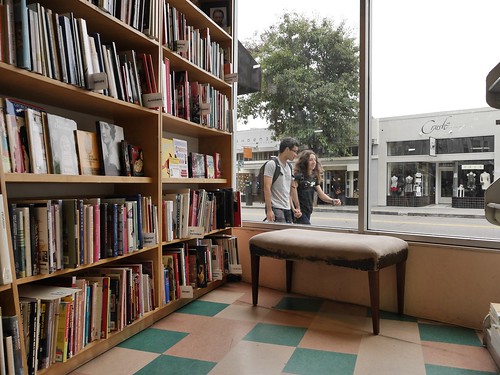
View from Pegasus, by Reed A. George
Panasonic Lumix DMC-GX7, 14-42mm f3.5-5.6 Series II Kit Zoom
iso 800, f5, 1/320 sec.
Unedited image straight from the camera
 
The light on this foggy morning was very subtle. It was the soft shadows around the bench the first caught my eye. Then the line of the bookshelves provided a nice lines, intersecting with the window ledge to focus attention near where the people outside were walking by.
 
Not an important shot, but a fun one none and an exercise in composition none the less.
 
DMC-365.blogspot.com


Thursday, May 29, 2014

Morning in Jackson Square, New Orleans

Morning in Jackson Square, by Reed A. George
Leica M6 Titan, Summicron 35mm f2 v.3 Lens
Ilford Delta 3200 Film
 
As I sit writing this morning in my local Starbucks, this image reminds me of the wonderful coffee and chicory I had just enjoyed at Cafe Du Monde a few minutes before I shot it. I like Starbucks; I loved my Cafe Du Monde coffee that morning.
 
Morning is very quiet in the French Quarter; most of its denizens are at least semi-nocturnal. I always enjoy seeing new places early in the morning, to get a different perspective.
 
The sunlight was just coming up over the bank of the Mississippi River, which would be on the right in the photo above. I like how the edge of the light follows the intersection of the two sets of stairs, going off at different angles. While the steps in the lower section are fully light, those in the middle have light only on their edges. The pigeon at right is similarly edge-lit, which gives it a bit of a focal point in my opinion.
 
DMC-365.blogspot.com
 

Wednesday, January 8, 2014

DIYPhotography Shows Great Photo Setups With Granite Tile

Still in the process of trying to recover my hard drive after the failed "within Lightroom" transfer process, I'm having to resort to cross-posting a little more than normal. No to worry, I'll be back post some of my own work very soon.
 
(Click Here) to read what happened to me in my file-transfer nightmare; maybe it'll help you avoid the same issues.
 
I saw a great post on DIYPhotography today, about how to use a granite tile as a base for cool product-style photography. Here's the shot that caught my eye:


Image Source: http://www.diyphotography.net/granite-tile
 
(Click Here) to read the full post on diyphotography.net
 
There are lots of good examples in this post, including how to integrate light painting with this style of shooting. Not exactly what you'd want to use for selling products on ebay, but certainly cool. There's another image of a Rolleiflex that I really love.
 
So, if you're bored on a cold winter day, there are certainly some ideas at the link above for you to play around with.
 
DMC-365.blogspot.com
 

Saturday, December 28, 2013

Too Much Emphasis on Low Light? Look for Good Light

 
Key West Cemetery, by Reed A. George
Lumix DMC-GX1
 
It really is easy to get caught up in technical capabilities of our cameras, focusing on what they can do in near darkness, rather than looking for good light, wherever it may be found. Frequently, the low light that necessitates super high iso and low noise performance isn't really that good.
 
Why am I thinking about this? I read a post along these lines on prosophos.com.
 
(Click Here) to read that post.
 
It reminds me how much we did (and some of us still do) with film cameras, where the realistic limit of iso is about 400, okay maybe 800 or 1600 by pushing the film. Delta 3200 was always so grainy at that iso setting, I always used it at 1600 max. Today, a digital camera that shows noise at 1600 is looked down upon by most.
 
Anyway, this inspires me to worry less about low light, f1.4, and iso 6400. I'll get out and look for some good light.
 
DMC-365.blogspot.com


Saturday, November 9, 2013

Leica in Nature - LHSA (International Leica Society) Muir Woods Photo Tour

I'm writing while I'm on the flight back from Northern California, where I attended the annual meeting of the LHSA (International Leica Society). One of our photo outings was north of San Francisco in Marin County, at Muir Woods, an amazing redwood forest in the coastal mountains. I've been here many times in the past, so I was hoping that I'd be able to bring a new perspective to the pictures I'd capture there. In addition to my familiarity of the place, which can be a blessing or a curse, we arrived at mid-day, when the lighting was strongest yet most harsh. However, the forest provides lots of opportunities to find good light.
 
By the way, I'm only sharing the digital images I made on my M9; the film is on its way to The Darkroom for processing now. And, my post-processing was all done on my iPad using Snapseed. Also, I don't have a way to view the EXIF information, so I'm only including what I can remember. You'll see that three of the five shots in this post are shot with October's Whole Lotta Leica Lens, the venerable 50mm Summicron f2 version 3.
 
Let's see how I did.
 
Sunshine Through The Canopy, by Reed A. George
Leica M9, Leica Summicron 50mm f2 Lens
 
 
Now, I think this is a fairly predictable image. I was able to take advantage of the backlighting on the stump, and really like the burst of light at the branch at the top of it, along with the sun itself. I also enjoy the stripes of light in the forest behind. But, again, pretty pedestrian.
 
Redwood Detail, by Reed A. George
Leica M9, Leica Summicron 50mm f2 Lens
 
Here's another from the same spot. Here I decided to open the aperture wide (f2.8, I believe) and isolate the redwood branch at left from the surrounding forest.
 
 
Dark To Light, by Reed A. George
Leica M9, Carl Zeiss Biogon 25mm f2.8 Lens
 
I love the way this shot shows the transition from the deep darkness of the forest understory to the bright midday sky above. The backlighting on the branches at the bottom are also nice. I decided to crop this image significantly to focus the interest where I want it. The Zeiss Biogon is a wonderful lens, and I can even say that I like using the bright 25mm Voigtlander accessory viewfinder. It makes composition a different and enjoyable experience.
 
Then, I decided to focus my attention on one particular subject, a redwood stump that was bathed in wonderful, subtle light. I set up my tripod and got to work. Most people walked by looking for an invisible bird or other subject that I must be photographing. I mean, who would spend so much effort to photograph a stump? Well, me, that's who. One person actually came up behind me and grabbed a snapshot of my subject with his handheld DSLR. He probably got home and thought, "now what the heck is that a picture of?" Here are my favorite two shots so far:
 
Study of a Redwood Stump, by Reed A. George
Leica M9, Leica Summicron 50mm f2 Lens
 
This is one of those examples that once again prove to me that we don't photograph subjects, we photograph light. I am also learning to try to photograph how a scene makes me feel, not how it looks. This shot achieves that at a certain level. I absolutely love the colors and tones. I also like the spotlight on the leaves in the stump.
 
Redwood Stump With Context, by Reed A. George
Leica M9, Carl Zeiss Biogon 25mm f2.8 Lens
 
This final shot shows a little more of the context around the stump. This shot could use some more post-processing to emphasize some areas of the stump. I'll work on that. To be honest, I much prefer the more closely-composed shot above.
 
So, what do you think? Did I succeed at getting some different perspectives on this much-photographed location? I sure enjoyed my time in the forest, and hope that I'm developing some new skills in making unique images.
 
DMC-365.blogspot.com



Sunday, August 25, 2013

Suryo Widjaja Shares Olympus OM-D Photos From Myanmar on Steve Huff Photo

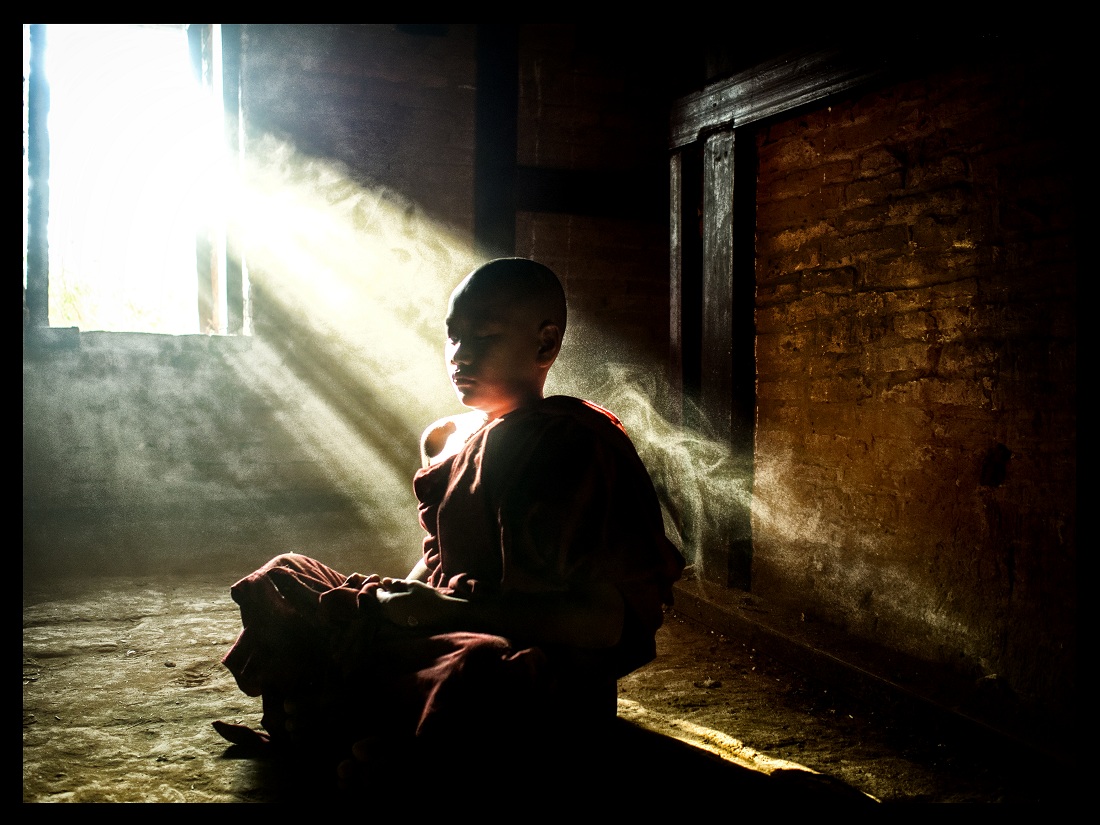
Image Source: http://www.stevehuffphoto.com/wp-content/uploads/2013/08/Semedi.jpg
 
Photographer Suryo Widjaja has written a guest piece on Steve Huff's blog, sharing several wonderful images he took in Myanmar in January of this year.
 
(Click Here) to read Suryo's post on Steve Huff's site.
 
Myanmar is definitely on my bucket list. I know a couple of people who've been able to gain entry to the country for tourism, and they have a lot of great things to say about the place. Anywhere that measures "Gross National Happiness" sounds okay to me.
 
Suryo reports that he took two Olympus OM-D bodies on the trip - his most-used lens was an Olympus 17mm f1.8, second was the Olympus 75mm f1.8. His 12mm saw little use. I have the 75mm f1.8, and it's a keeper.
 
I am about to take a week long vacation, and I'm planning to take my Leica M9, 35mm Summicron, and a medium telephoto (likely my Canon 135mm f3.5 LTM). This post encourages me to travel light, and my choice of lenses closely matches the field of view of Suryo's lenses on his Micro 4/3 gear. Of course, I'll carry the diminuitive Lumix DMC-LX7 as well. So much capability in such a small package simply cannot be left behind. Plus, it gives me closeup capability not available in the M9, at least not easily.
 
Suryo has shown how much you can do with two lenses. I'm impressed.
 
DMC-365.blogspot.com


Monday, August 5, 2013

Digital Photography School Presents "5 Important Components of a Powerful Image"

I really enjoy reading posts that remind me of the important things to consider when making a photograph.
 
Digital Photography School has a post about "5 Important Components of a Powerful Image":
 
(Click Here) to read it on digital-photography-school.com
 
As usual, I'll summarize it here, and show you what I think is most important in the article. First off, there's nothing new here. The components listed in the post are:
 
  1. Subject
  2. Strong composition
  3. Moment
  4. Light
  5. Emotional impact
Pretty obvious, right? But, we can all use the reminder. I decided to look through one of my photo sets on flickr, and see if I could identify these components. I'm not saying I nailed each of these, but I did find pictures in this small set of images of the Tozai railway, a historic railroad that takes you up the mountainside in Hakone, Japan, which at least illustrate some of the concepts. So, here we go:
 
Subject:
 
 
Composition:
 
 
Moment:
 
 
Light:
 
 
Emotional Impact:
 
 
I certainly struggled to find any emotional impact in this set. The image I selected makes me feel the experience of actually riding the train. I have no idea if anyone else will get that from the image.
 
I shot all of these images on Panasonic Lumix cameras: the DMC-GF1, DMC-G1, and DMC-LX5, all now relegated to the past in favor of newer models. Actually, my wife now uses the LX5 for her real estate business, and I still have the GF1, just don't use it much at all.
 
It is useful to review basic concepts and components of great photographs. I think you really get powerful images when you can combine multiple components into a single image. Of these images, I would say the closest to accomplishing that is the first - the subject and lighting are pretty good, and the moment is right to catch the driver's face in the best light.
 
DMC-365.blogspot.com