Showing posts with label ebook. Show all posts

Saturday, September 7, 2013

DMC-LX7 Landscape in Two Versions - Which Do You Prefer?

Here's a shot I took in Lahaina, Maui, Hawaii:
Lahaina Seawall's End, by Reed A. George
Panasonic DMC-LX7
 
I used Snapseed on the iPad to crop and straighten it. The square format worked much better than the original rectangular composition. I like the shot, but don't love it. The fence in the shadows is a major drawback in my opinion.
 
As I sometimes do, I took this image quite a bit further with some of Snapseed's effects. Here's the result:
 
Same Shot, Manipulated
 
Personally, I think the modified version has more feel to it. The fence is still there, but doesn't bother me nearly as much. I hate to admit that I enjoy manipulating images, as I consider myself a "straight" photographer. I also find it ironic to add imperfections to a perfectly good digital image. But, I do like the outcome.
 
Opinions?
 
DMC-365.blogspot.com


Friday, July 19, 2013

Key West, Florida - Shot With Panasonic Lumix DMC-LX7

 
Pier, by Reed A. George
Panasonic Lumix DMC-LX7
iso 100, f8, 15 seconds
 
As you may have seen from other recent posts, my family and I went to Key West, Florida for a mini-vacation. Three days is pretty short, but we definitely made the most of it.
 
Having focused a lot on my Leica and film camera photography for the first half of this year, it was time to shoot some of my Panasonic cameras. I've already written about the DMC-TS5 underwater camera and how it performed. The workhorse of this trip was the DMC-LX7. I also used my DMC-GX1 a little, and will share those images in a separate post. This one's dedicated to the LX7.
 
The Casa Marina resort in Key West has a long history, and is the brainchild of railroad magnate Henry Flagler. We liked having breakfast there, where everyone gets treated as if they're wealthy. I made this quick shot using the iAuto mode on the LX7.
 
Casa Marina Breakfast, by Reed A. George
Panasonic Lumix DMC-LX7
iso 80, f2.8, 1/800 sec.

Casa Marina also has great hammocks out by the water's edge.
Hammock, by Reed A. George
Panasonic Lumix DMC-LX7
iso 400, f2.3, 1/20 sec.
Here are some other scenes from around Key West. First, the lighthouse. I love the orange blossoms on the trees.
 
Key West Lighthouse, by Reed A. George
Panasonic Lumix DMC-LX7
iso 320, f4, 1/100 sec.

And one of the famous Key West roosters, this one on the sidewalk at the Hemingway house. This is one of those shots that's so sharp it's scary. When I do a 1:1 zoom on the rooster's head, the detail is downright astonishing.
 
Key West Rooster, by Reed A. George
Panasonic Lumix DMC-LX7
iso 100, f4, 1/80 sec.
 
A simple street scene that says "Key West" to me:
 
Store Window, by Reed A. George
Panasonic Lumix DMC-LX7
iso 100, f4, 1/40 sec.
 
And a parting shot of the kid, looking through a waterfall glass fountain.
 
End of a Nice Vacation, by Reed A. George
Panasonic Lumix DMC-LX7
iso 100, f2.1, 1/25 sec.
 
I've said it before, but I'll say it again. The LX7 is capable of so much, it's almost embarrassing. It makes it hard to justify all of the other camera equipment I own.
 
DMC-365.blogspot.com
 
Be sure to read my ebook on how I set up the LX7 for my uses, and why:


Monday, April 15, 2013

Slowly Working Through Images From Japan - Another Nighttime HDR Shot From The Panasonic Lumix DMC-LX7

 
Fountain and Lanterns, by Reed A. George
Panasonic Lumix DMC-LX7, In-Camera HDR
 
I have been very busy since returning from Japan. I've finally made it through grading about 1,500 images, so that I've reduced it to a few hundred that I want to look at closer. I've also gotten my film back from The Darkroom - two rolls from my Skeletons From The Closet camera for April, the Zeiss Ikonta folder. So, I'm making progress.
 
I wrote a while back about the surprisingly good images that I got using the in-camera HDR feature of the Panasonic Lumix DMC-LX7, handheld, basically in the dark.
 
(Click Here) to read my initial post about the LX7 and HDR in the dark.
 
The shot above is another example. In this scene, the fountain was really nearly in complete darkness. The original jpeg did have a weird color balance on the fountain; the lanterns were nicely white and didn't need adjustment. I was a little worried, working with just the jpeg file (no raw file is made with in-camera HDR), but was able to adjust the color and bring up the brightness of the fountain with no issues.
 
This image would have been nearly impossible to capture handheld with other cameras. Even with a tripod, the extra processing of multiple images at the computer would have been much less fun. I've got plenty of other images to process.
 
I am really enjoying the LX7. Now, I've got to get back to editing and presenting some more pictures. Maybe this weekend...
 
DMC-365.blogspot.com
 
See my Kindle eBook on how I set up and use the DMC-LX7. Only $2.99, or free for Amazon Prime members:


Saturday, April 13, 2013

End of the Road - Tokaido Road - Shot With Lumix DMC-LX7

 
Shijo Ohashi (Bridge), Western Terminus of the Tokaido Road, by Reed A. George
Panasonic Lumix DMC-LX7
iso 200, f2.8, 1/320 sec
 
Japan was ruled for over two hundred years by the Tokugawa shogunate. The shogun, top leader of the samurai class, moved the capital to Tokyo in 1603. There were five roads established at the time, all leading to the new capital in Tokyo, where the shogun required regional warlords to report periodically to pay usurious fees and allow him to stay on top of recent developments and engineer conflict between the regions. The Tokaido road led from Kyoto (a former capital of Japan and still the home of the imperial court) to Tokyo. It was the most-used of the five roads.
 
The Shijo Ohashi in Kyoto represents the western end of the Tokaido. The Tokugawa shogun also maintained a residence in Kyoto, in Nijo Castle. You'll be seeing some pics from Nijo as I continue working through my images from my recent trip to Japan.
 
This shot was taken on a morning walk, which I typically take every day on my visits to Japan. I love to be out at sunrise, and the jet lag works in my favor in this case. My family is usually still asleep when I head out.
 
On this morning, I ended up at the Kamo River, which the Shijo Ohashi crosses. While it's now a city street, looking up from the river below, it's easy to imagine the samurai trudging across the river at the end of their journey to Kyoto, or starting out on the long trip to the capital.
 
I like images that are timeless, or impossible to place in time.
 
On this trip, uncharacteristically for the spring, the sun never shone while we were there. Typically, I hate pure white cloudy skies in my images. In this case, I embraced it. The profile of the bridge against the white background was nice; the pure black crow overhead finished the scene for me. I waited about ten minutes to catch a crow in a suitable position in the sky.
 
I tinted this monochrome image a rather cold tone of blue in Lightroom. I feel it suits the mood of that morning.
 
I hope you enjoy this little glimpse of Japanese history.
 
DMC-365.blogspot.com
 
Check out my real world usage guide for the Panasonic Lumix DMC-LX7 on Amazon's Kindle:


Tuesday, April 9, 2013

Yayoi Okada - Leica D-Lux 6 (Lumix DMC-LX7) Pictures and Words on the Leica Camera Blog

 
Photographer Yayoi Okada shared a series of images, all monochrome, all shot with the Leica D-Lux 6 camera, on the Leica Camera Blog:
 
(Click Here) to see Yayoi's post
 
I still can't really believe just how good the Lumix DMC-LX7 is. The D-Lux 6 is Leica's version of the same camera.
Making Japanese Soba Noodles By Hand, by Reed A. George
Panasonic Lumix DMC-LX7
 
As I write this, I am still in Japan (will be home by the time this posts). Since I'm using my iPad on this trip, I'm merely backing up images, and not yet editing any of them. The shot above is a black and white jpeg from the LX7. This was shot in a relatively dark restaurant, where this master was making soba (buckwheat) noodles by hand. I'm looking forward to working with the raw file when I get home (I'm going to have a lot of raw files to deal with when I get home) to see just what I can do with this image.
 
I carried my LX7 and Leica M9 to Japan this time. I have enjoyed shooting the M9 here, but I am really wowed by the flexibilty and convenience of the LX7. Camera technology is really improving by leaps and bounds. The f1.4 lens on the LX7 is so useful.
 
DMC-365.blogspot.com
 
I used my custom preset for street photography to get this shot, even though it was not a street image. I love having presets in the camera to get me as close as possible to what I need on short notice.
 
Read about how I set my camera up and use it in my eBook, now available on the Amazon Kindle store (purchase for just $2.99, or borrow it for free if you're an Amazon Prime member):


Friday, April 5, 2013

Panasonic Lumix DMC-LX7 Shoots HDR in the Dark!

 
Kodaiji at Sunset, by Reed A. George
Panasonic Lumix DMC-LX7, HDR Scene Mode
 
I've been using the Panasonic Lumix DMC-LX7 extensively on my trip to Japan. What an amazing little camera.
 
On this particular night, I went to see a "light up" event at the Kodaiji temple in Kyoto. During the spring cherry blossom season, they light the trees up at night. It's an incredibly beautiful sight. In the picture above, I was hoping to balance the artifical light on the trees in the foreground left with the natural sunset. I decided to try the high dynamic range (HDR) scene mode on the LX7. I was blown away by the results. The camera took three consecutive exposures and merged them on the spot. They were taken handheld, as tripods were not allowed in this location. You're looking at the result straight out of the camera.
 
Needless to say, I used the same HDR scene setting throughout the night. Even when it was completely dark out, it did a great job handling the very challenging lighting situations.
 
 
HDR in the Dark, by Reed A. George
Panasonic Lumix DMC-LX7, HDR Scene Mode
 
The area inside the shrine above was extremely dark. The lamps were very bright. Again, you're looking at the result right out of the camera. I'm hoping to bring up the shadows some when I get this in Lightroom. Regardless, it's quite impressive, especially handheld.
 
Technology has come a long way in the recent past.
 
I'm sure that I won't be able to make large prints of these, but to be able to capture these images at all is a pleasant surprise to me.
 
DMC-365.blogspot.com
 
Get my Kindle eBook on the LX7 here:
 
 
Get your LX7 here:


Thursday, April 4, 2013

My Kindle eBook on the Panasonic Lumix DMC-LX7 Got A Nice Customer Review!


My LX7 eBook
$2.99 or free for Prime Members on Amazon

My new eBook on Real World Settings for the Panasonic Lumix DMC-LX7 just got its first customer review: 4 stars and lots of nice comments! I'm very pleased.

(Click Here) or use the link below to get your copy. Support my blogging and writing by giving it a try.

DMC-365.blogspot.com


Wednesday, April 3, 2013

Changing My Micro 4/3 Kit - A New Type of Bottom-Feeding


Old Technology (?) - the Panasonic Lumix DMC-GX1
Image Source: http://www.amazon.com/gp/product/B00604YTFM/ref=oh_details_o00_s00_i00?ie=UTF8&psc=1
 
If you've followed my blog for very long, you'll know that I am a frequent user of Micro 4/3 equipment, specifically Panasonic Lumix cameras. My standard kit for the past year or so has been two DMC-G3 bodies, a great collection of mostly Lumix prime lenses (plus one Olympus lens, the spectacular 75mm f1.8), and a couple of zooms (Lumix 14-140mm and 100-300mm). I have enjoyed the convenience of having two identical camera bodies, small enough to carry together without any back pains, and allowing me to minimize lens swaps.
 
Well, I am in the process of making a change. While I have been watching new cameras come out, I haven't sprung for the latest and greatest. That's where the bottom-feeding comes in.
 
Bottom-feeding in camera gear usually means buying very inexpensive equipment, typically used. I'm doing my own type of bottom-feeding, taking advantage of the amazing price drops that come along for cameras that are, or are near to being, one generation back.
 
As you probably have read, I recently bought a Lumix DMC-LX7 compact camera brand new for less than $300. Amazing. This camera is so powerful it is the bargain of the year, in my opinion. In fact, it is so good I wrote an eBook about how I set it up for my uses.
 
(Click Here) or use the Amazon link below to get my LX-7 eBook.
 
Well, when I got the LX-7, I also bought the accessory live viewfinder, the Panasonic DMW-LVF2. This is where Micro 4/3 comes in. The LVF2 also fits the Lumix DMC-GX1, cousin to my G3s, with the same sensor, but in a more compact body, without an integral finder. The GX1 has a few features that the G3 does not, but it's the form factor that interests me most. It is very reminiscent of a rangefinder (though it's not), and extremely similar to the older DMC-GF1, a camera that I really enjoyed in its time. So, of course, I began looking at the GX1.
 
I know, if I'm going to upgrade, why not to the latest sensor technology, either the Lumix DMC-GH3, or maybe even an Olympus OM-D? Two reasons:
 
  1. The GX1, a camera that sold for $699 a year ago, is now available brand new on Amazon for $275! Can't touch an OM-D or GH3 for that price!
  2. Amazon will give me over $250 buy-back value for my G3!
Additionally, I don't like the large size of the GH3. Small size is why I got into Micro 4/3 in the first place.
 
Sure, I had to include my completely unused 14-42 mm kit lens to get the full buy-back value of the G3, and the new GX1 is body only. No problem.
 
So, for essentially no cost (even shipping for both cameras is free), I get to trade in a one year old (still in mint condition) G3 and kit lens for a brand new GX1 body. Since I already have the LVF2 finder, this is a no-brainer for me.
So, I'll let you know how this works out for me. Not having identical bodies may have some drawbacks. I think I will probably use the GX1 with my smaller lenses, like the 20mm f1.7 and 14mm f 2.5. I expect the small size of the GX1 to appeal to me, even though the LVF2 does take away from that characteristic.
 
I am not yet ready to invest in the latest sensor technology, even though I know the benefits are large. Maybe the GX2, if it ever gets announced (and especially if it also uses the same lvf2 finder) will change that.
 
DMC-365.blogspot.com


Sunday, March 31, 2013

Springtime Closeups with the Panasonic Lumix DMC-LX7

I'm preparing to leave on a trip to Japan (will be back by the time this posts), and plan to rely heavily on my new LX7 for shooting while I'm there. Yes, I'll have other equipment with me, but the LX7 will likely get a lot of use.
 
I'll also be shooting my M9 a lot, and my Skeletons From The Closet camera for March, the Ikonta, when I get the chance. Neither of these has closeup capability, which I frequently find useful on travel. So, I decided to play around a little with shooting closeups last night.
 
Since Spring is officially here, I grabbed a low-hanging branch of blossoms from a neighborhood tree. Yes, I know, if everyone did it, that would be bad. Not everyone will. And I will only do it once a year. :)
 
Anyway, here are a couple of results:
Spring Traditions, by Reed A. George
Panasonic Lumix DMC-LX7
iso 200, f2.1, 1/40 sec.
 
"Bokeh" of Flowers, by Reed A. George
Panasonic Lumix DMC-LX7
iso 200, f1.5, 1/60 sec.
 
I have to admit, I stole the name "Bokeh" of Flowers from a commenter on Google+. If you don't know, "bokeh" is a Japanese word for "out of focus areas." It's broadly (too broadly) used in the camera tech world.
 
I like the second shot much more than the first. The regular patterned background of the cloth that the vase was sitting on works for me, just out of focus. The opening in the vase provides a second area of interest that doesn't compete too much with the blossoms. Both of these shots felt better in square format than rectangular.
 
Anyway, I'm feeling pretty good about the LX7 being along with me on this trip.
 
And don't forget! I wrote an ebook about the LX7 which can be yours for only $2.99! Thirty pages of time-saving hints and details. See the Amazon link below, or search for "DMC-LX7" under Books on Amazon. Support your friendly blogger!
 
DMC-365.blogspot.com


Saturday, March 23, 2013

Review and Sample Photos from Lumix DMC-LX7 on Entropic Remnants


John Griggs has posted an impressive review of the little Lumix DMC-LX7 on his blog, Entropic Remnants.
 
(Click Here) to read John's full review and see lots of great low-light image samples.
 
I very much like the style of John's review. He's to the point, honest, as well as being an obviously-talented photographer. He didn't take the easy route in this review. He took the small-sensored LX7 deep inside a dark factory environment, and came out with some awesome pictures.
 
John always shoots raw files, and is not shy about admitting that he post-processes in Lightroom to the extent needed. In addition to hitting some of the main features of the LX7 - the fast 1.4 Pana-Leica lens, built-in ND filter, and aperture ring (like a real camera!), John points out any deficiencies when he sees them. The only one that jumped out at me is that the lens can be flare-prone.
 
John finds iso 400 to be the "quality limit" of iso on the LX7, and is quite happy with 16x20 prints shot at iso 400. He mentions that 800 is usable. He also demonstrates high dynamic range (HDR) images and a macro shot from the LX7.
 
I have recently purchased the LX7 myself, and am in the process of becoming familiar with it. Part of that process is working through all of the settings that I find important for real world use. I'm documenting that, and will make it available in ebook form in the coming weeks.
 
My ebook is now available in Kindle format at Amazon:
 
(Click Here) to buy the LX7 Real World Setting Guide for $2.99, or borrow it for FREE if you're an Amazon Prime member. I would really appreciate a positive review of the book on Amazon, if you can spare the time.
 
I am also about to spend some quality time with the LX7 on my upcoming trip to Japan. I've decided to carry my M9 and Whole Lotta Leica lens (the Summilux 35mm f1.4), my Skeletons From The Closet camera (Zeiss Ikonta medium format folder), and the LX7. The LX7 will be responsible for most of my daily shooting, all closeups, etc. So, I hope to have something to show.
 
Having a fast f1.4 lens really extends the range of the LX7. Here's a shot from the interior of an airplane that I recently shot:
James Bond in Sepia, by Reed A. George
Panasonic Lumix DMC-LX7, Sepia-toned jpg
iso 200, f1.4, 1/60 sec
 
I'm very pleased to be able to shoot at iso200 in a dark airplane interior.
 
I'm really looking forward to pushing the LX7 to some limits on my upcoming trip.
 
DMC-365.blogspot.com


Monday, March 18, 2013

My Panasonic Lumix DMC-LX7 Real World Guide is Available on the Amazon Kindle Store! $2.99 or Free for Prime Members!


Want to learn how to quickly set up and use your DMC-LX7 without wading through >200 pages of Panasonic user manual? I have finished writing my guide for how I set up and use my Lumix DMC-LX7. It's now available on Amazon.

I share exactly how I set up the camera for street photography, travel, and macro, and explain many of the less-obvious functions of the camera.
 
(Click Here) (or use the Amazon link below) to buy it for $2.99, or borrow it for free if you're an Amazon Prime member. It's currently available in Amazon's Kindle format. After 90 days I may make it available in other formats.
 
By the way, $2.99 is the lowest price that Amazon allows. I want it to be affordable, and I also want to
have the convenience of using Amazon's automatic distribution. Twenty pages of information for $2.99 seems reasonable.
 
I hope you enjoy it!
 
DMC-365.blogspot.com


Thursday, July 19, 2012

Lest You Think I'm Asleep at the Wheel... Panasonic Lumix DMC-G5

 
Panasonic Lumix DMC-G5
Image Source: http://www.dpreview.com/products/panasonic/slrs/panasonic_dmcg5
 
Yes, I have seen the announcement(s) of the new G5. Yes, it looks interesting. Just don't want anyone to think I'm not paying attention.
 
At this point, I will remain quiet on this camera, until I have a chance to learn more. For now, I will rely on the excellent information source, dpreview.com.
 
(Click Here) to see what dpreview knows about the new DMC-G5
 
I find it interesting how it's being market as the mid-level Micro 4/3 solution. I can certainly see how it's higher than the GF series. I suppose they mean it's lower than the GH series (which is due for a GH3 announcement). At any rate, this camera has a good chance of replacing at least one of my DMC-G3s in coming months, especially if the new sensor really is better, as is being preliminarily reported.
 
Looks like writing a new eBook may be in my near future... Or at least an update to the G3 eBook posted here on DMC-365.
 
Stay tuned!
 
DMC-365.blogspot.com


Sunday, June 24, 2012

Quick Notes to Add to my eBook on the DMC-G3 - Manual Focus Tip, and Still Capture During Video

Panasonic Lumix DMC-G3
Image Source: http://shop.panasonic.com/dotAsset/1b37230b-19c7-46ef-8f25-c26c03bdf59d.jpg

Two features of the DMC-G3 have recently come to my attention, and need to be added to my eBook.

The first is related to focusing with manual lenses. In my eBook, I indicate that you have to press the left cursor button followed by the menu button to bring up the magnified focus aid. In fact, a much better alternative is to just push in the rear dial in toward the body of the camera. This really is a better way to do it. Thanks to reader martyvis for reminding me that it was not included in the eBook.

Second, someone asked me if the G3 is capable of capturing full resolution still images while capturing video. As I am only a casual user of the video functions, I did not know the answer. After looking into it, I see that it does have that function. Simply press the shutter release during video capture, and you have yourself a full resolution still!

DMC-365.blogspot.com


Sunday, June 10, 2012

Final Two Chapters of My Free G3 Settings eBook Available For Download! Get the Whole eBook Here, Free!

Lumix DMC-G3 by Reed A. George
Panasonic Lumix DMC-G3 and Nikon Nikkor AIS 28mm f2.8 Lens
by Reed A. George
 
Well, since I'm expecting the announcement of a new Panasonic Lumix Micro 4/3 body (the rumored DMC-G5? DMC-GH3?) any time now, I figured I had better wrap up my ebook on how I use the DMC-G3. In fact, I use two of them.
 
The final installment includes a chapter on setting up custom configurations, and a short chapter on my conclusions on the camera.
 
I learned a lot by working through every detail of how to set up this camera. And the best thing is, now that I've done it, and saved some custom configurations, I can forget about the details of what many of those menu settings actually mean. This camera has so many options, it's amazing. But, I want to set most of them once, and forget them. Custom Modes help a lot, as does the Quick Menu.
 
(Click Here) to download the final two chapters of my ebook, in Adobe pdf format.
 
For ease of navigation, I'm including links to the previous chapters below:
 
(Click Here) for Chapter 1 - Introduction and External Controls
 
(Click Here) for Chapter 2 - Menu Settings
 
(Click Here) for Chapter 3 - Focusing
 
I hope that you'll find them useful.
 
I recommend that you download and save all of them; I will consolidate them into a single file, but cannot guarantee that it will remain available for free forever...

 
DMC-365.blogspot.com

 

Monday, May 28, 2012

Chapter 3 of My eBook on the G3 Is Now Available For Free Download!

Panasonic Lumix DMC-G3
with Nikon Nikkor 28mm f2.8 Manual Focus Lens

If you've been following the development of my eBook, you may be interested to know that Chapter 3 is now available for free download. Chapter 3 takes on the subject of focusing - both the extensive autofocus (AF) technologies and the superb manual focusing tools resident in the DMC-G3.

(Click Here) to download Chapter 3 - Focusing


As a reminder, here are the links to the posts for the first two chapters:
 
(Click Here) for Chapter 1 - Introduction and External Controls
 
(Click Here) for Chapter 2 - Menu Settings
 
Writing this chapter helped me to work through some questions I had with AF settings. Probably the most important thing I learned is how cool Pinpoint Focus can be when used in conjunction with the Touch Screen. As a regular user of the Electronic View Finder (EVF), I don't use the Touch Screen often. However, after trying out Pinpoint Focus, I now have it in mind should the opportunity present itself.
 
I hope you're enjoying the eBook! Please comment, drop me a line, or even purchase something on Amazon by clicking through the link below. It doesn't cost you anything extra.
 
Enjoy!
 
DMC-365.blogspot.com


Sunday, May 13, 2012

Free Again! Chapter Two of My eBook for How To Set Up Your DMC-G3 Is Now Available For Download

DMC-G#
Image Source: http://www.imaging-resource.com/PRODS/DMCG3/ZURBE.JPG

My second ebook chapter on how I set up and use my Panasonic Lumix DMC-G3 is now available.

This one took a long while to write. In Chapter Two, I go through all of my settings in the Recording, Custom, Setup and Playback menus. These are the settings that most affect my daily shooting.

(Click Here) to download Chapter Two in Adobe pdf format.

Again, if you appreciate this document, drop me a comment, tell your friends, purchase your Amazon items by clicking through from this blog, etc. Any support is always appreciated.

Most importantly, if you see any mistakes, let me know!

My plan is to follow up these initial two chapters with some information about custom settings, and some real applications with the camera. Chapter Two is purely focused on menu settings, which I am glad to be through, to be honest.

I hope you find this useful. Let me know!

DMC-365.blogspot.com


Sunday, May 6, 2012

Free! My First Installment of an ebook on How to Set Up Your DMC-G3!

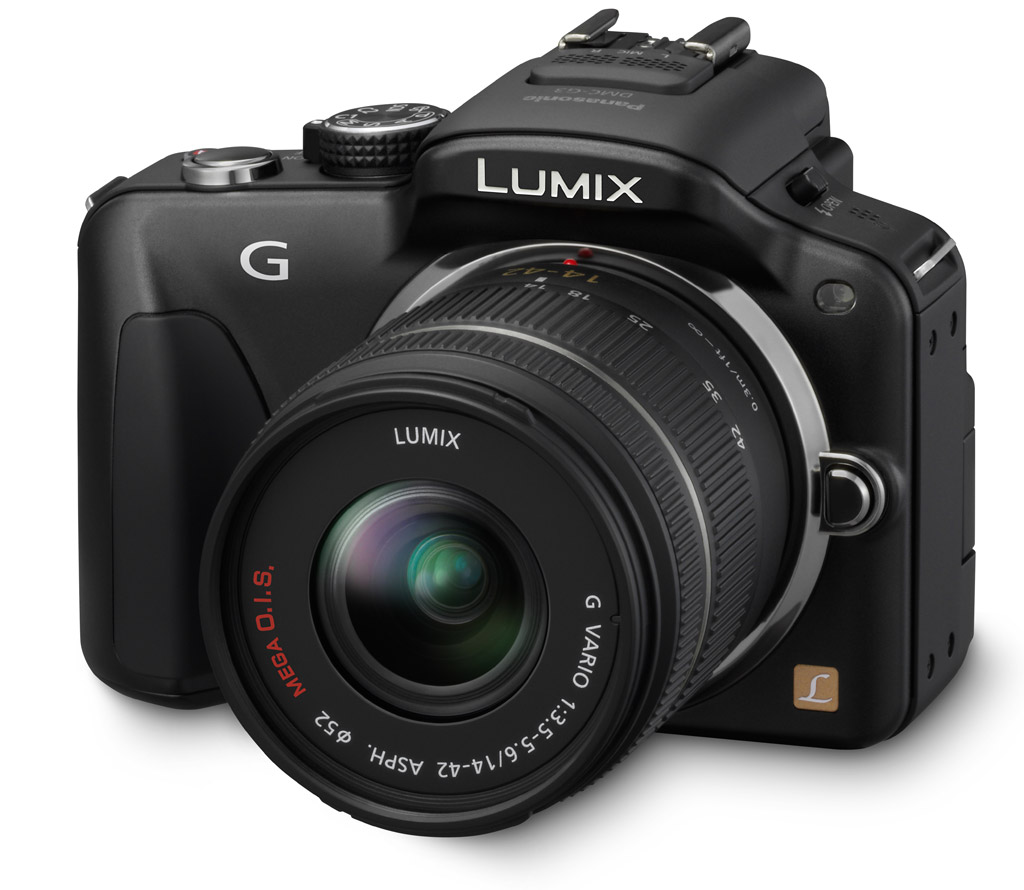
Image Source: http://shop.panasonic.com/shop/model/DMC-G3KK
 
Ok, folks, for those of you who are Panasonic Lumix DMC-G3 users, I've embarked on a project to document how I set mine up, and share it with all of you.
 
There is a dizzying array of menus and settings on the G3. I worked through all of them, at least to some extent, and documented not only HOW I set them, but WHY. Now I don't expect you to agree with all of my settings, but at least you'll know what you're disagreeing with, if you decide on a different setting.
 
I have completed the first chapter, which I share here with you now.
 
(Click Here) to download the first installment of my G3 Settings Manual in Adobe pdf format.
 
The second chapter, much more extensive, outlining my settings for the Priority, Shutter, and Aperture Priority and Manual modes, is nearly finished. It will be distributed in the same way.
 
All I ask in return is that you buy your Amazon items by clicking through from my site. That really hasn't paid off yet; I think I'm up to about $15 revenue, total, ever. Of course, if you'd like to contribute directly to this blog, rather than buying things from Amazon (on which I make a very small percentage commission), you can always send me Paypal at rgeorge911@hotmail.com.
 
But, I'm really not in this for the money. It would be great to bring in enough to pay my annual flickr and smugmug bills...
 
I sure hope you find this manual useful. I actually learned some things in the process of writing it.
 
UPDATE 5/13/2012: Chapter Two is now available as well! (Click Here) to get it.
 
DMC-365.blogspot.com