Showing posts with label Steve Huff. Show all posts

Friday, August 29, 2014

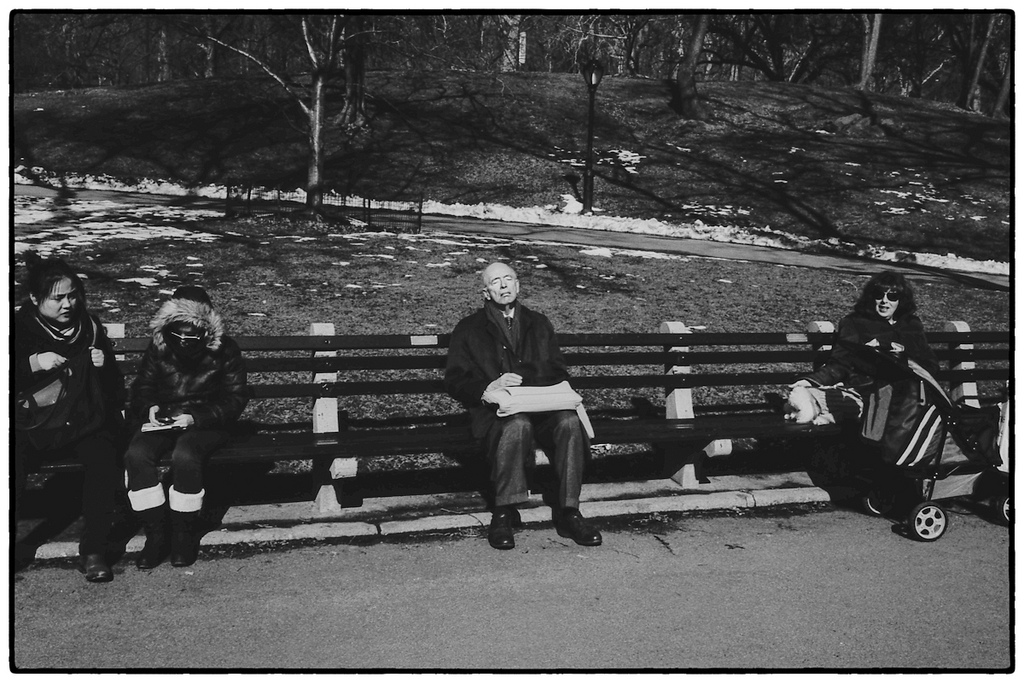
Professional Traveler Dusty Blackthorn Makes Great Images with Lumix LX5

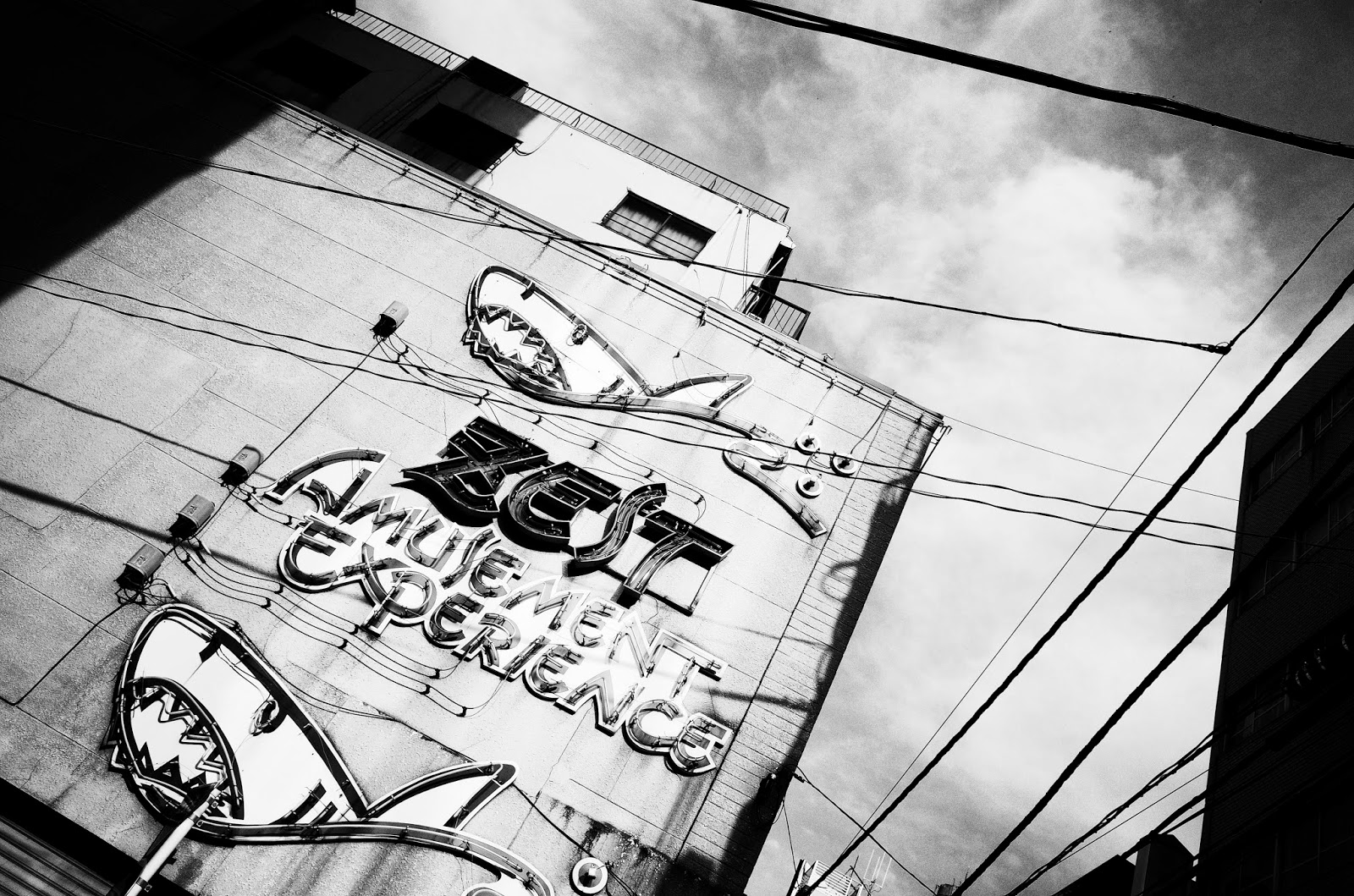
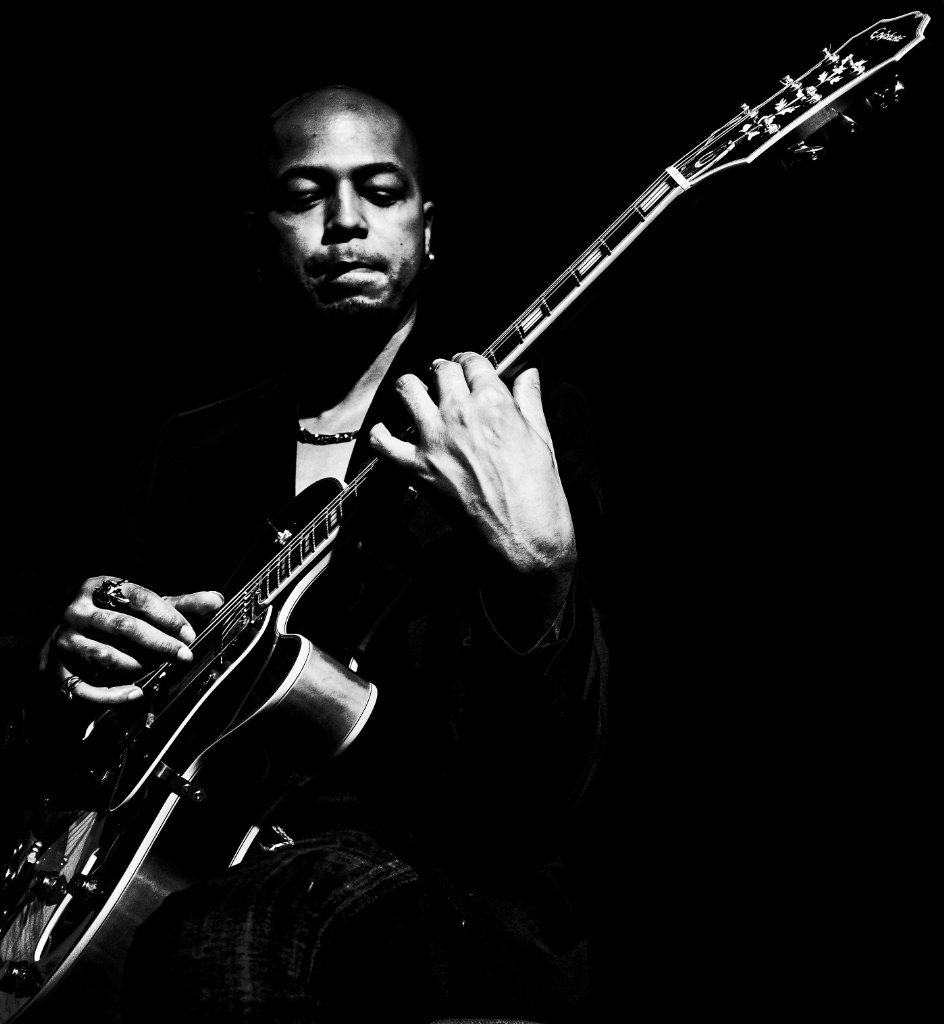
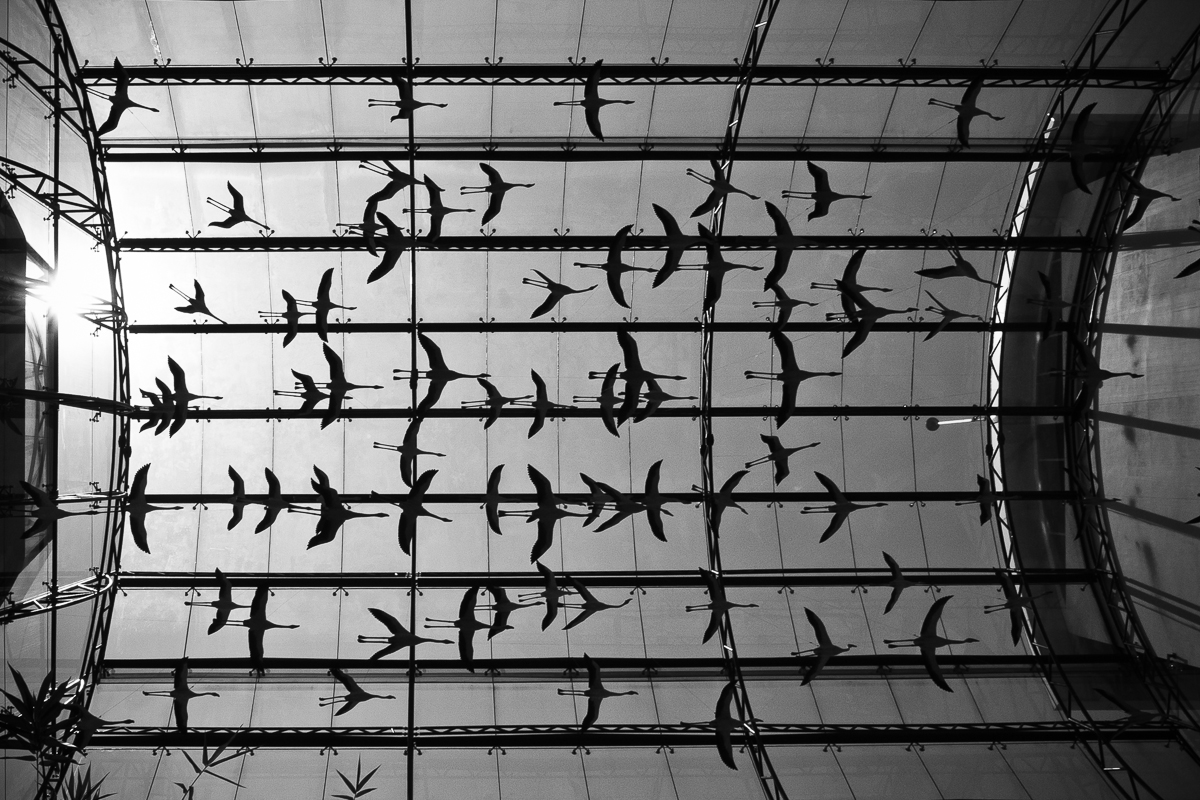
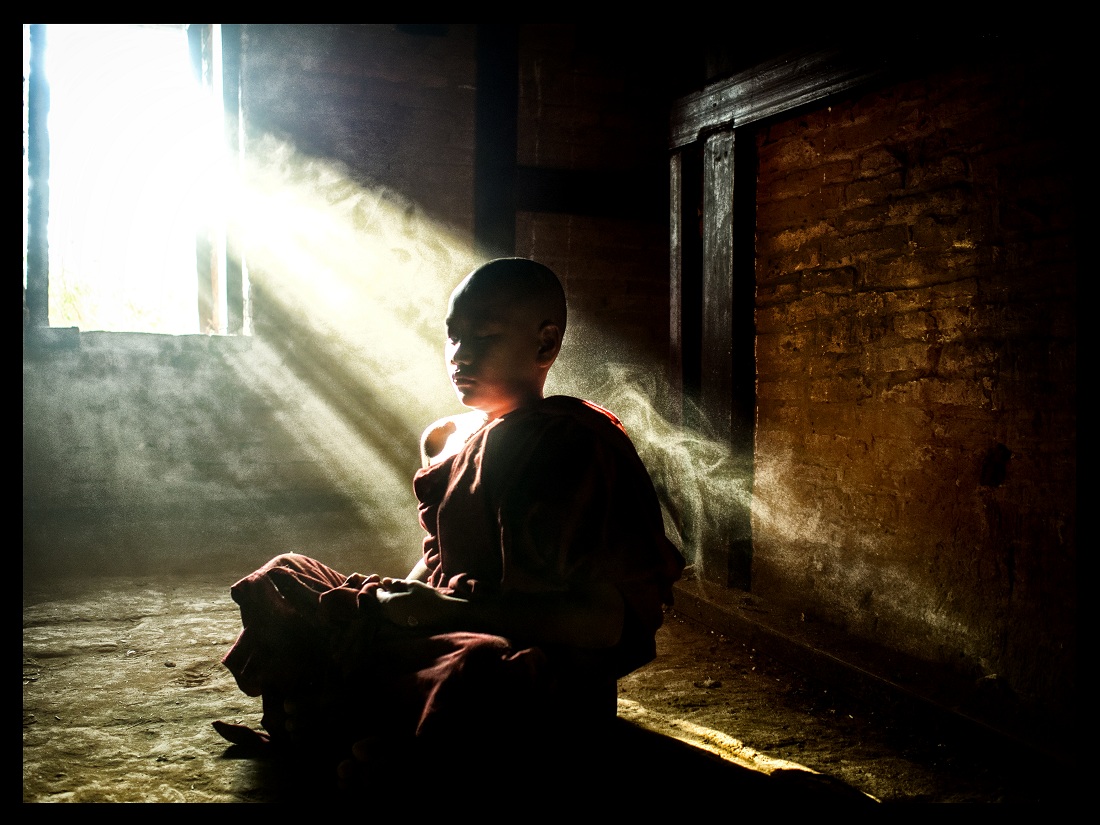
Dusty Blackthorn, guest poster on SteveHuffPhoto, is a "professional traveler." From the look of his pictures, Dusty takes some interesting modes of transportation.
Image Source: http://www.stevehuffphoto.com/2014/08/20/daily-inspiration-658-by-dusty-blackthorn/
 
Dusty has been using a Panasonic Lumix DMC-LX5, but says he feels his pushing the limits of that camera.
 
(Click Here) to read his post on Steve Huff's blog. He has a couple of other interesting shots there.
 
Dusty is looking for input on what camera to upgrade to. Personally, I think he's mastered the LX5 and should stick with it.
 
DMC-365.blogspot.com


Monday, March 24, 2014

The Joy of a Film Leica Rangefinder

Yoko Ono's Tree, by Reed A. George
Leica M4-2, Summicron 50mm f2 Lens
 
If you know me, you know that I love to shoot Leica rangefinders. And, I love to shoot film.
 
Having read a post by Rikard Landberg on Steve Huff's site, I just felt the need to find an old film Leica image and share it. Mr. Landberg writes of his experience of selling off all of his digital (Canon) gear and shooting film only for a year.
 
(Click Here) to read Mr. Landberg's post on Steve Huff Photo.
 
While I don't find it necessary to be exclusive of digital (or exclusive of anything in particular) in my photography, I do appreciate the narrowing of variables and focus on attention and concentration that Rikard discusses in his post.
 
He shoots Kodak TMax 400 film, usually at iso 1600, which leads to the high contrast you'll see in his shots there. I like the look. However, I also notice that all of his images have extremely large depth of field. This is likely due to the need to shoot at small apertures while shooting at iso 1600 outdoors. Not really a problem, but as you can see in my image above, I like to take advantage of very shallow depth of field in some cases. For me, if I had to pick a single iso to shoot at (thank goodness I don't), it would probably be 400.
 
 
If you're wondering, the note just left of center in the image of Yoko Ono's tree, above, says:
 
"I wish I was happy and no one I love feels sad."
That's a pretty noble wish.
 
DMC-365.blogspot.com


Tuesday, February 25, 2014

Ashwin Rao on a Year With the Real (Digital) Leica Monochrom

Image Source: http://us.leica-camera.com/photography/m_system/m_monochrom/
 
As you know, I'm playing around a lot with black and white these days, specifically in my Leica M4-2, which I'm using to emulate the modern Leica digital Monochrom rangefinder.
 
Ashwin Rao, frequent contributor to Steve Huff's excellent photography blog, has written up his thoughts after shooting a lot with the new Monochrom. He made over 15,000 exposures with it last year.
 
(Click Here) to read Ashwin's full report on Steve Huff Photo. He includes many, many excellent images.
 
Ashwin writes how constraining himself to monochrome imaging, thinking only in black and white, was at first a major challenge. He says he realized what he had given up by using a camera incapable of rendering color. But then, this challenged turned to "inspiration and motivation."
 
Ashwin prefers to use older rangefinder lenses with his Monochrom. Sound familiar? I happen to love old Leica and rangefinder lenses, so this only bring the Monochrom closer to my heart. Ashwin feels that modern lenses tend to give a surreal look, and that modern aspherical lenses suffer from loss of shadow detail. He feels that maybe the coating of older lenses, which were developed in a monochrome era, are better optimized for black and white. Clearly, color was not the main consideration fifty years ago. Or maybe, he admits, he is drawn to images made with older lenses because he learned to love the look of images he knew from the past.
 
Ashwin reports that the Monochrom is pretty much infallible at up to iso 3200, and 5000 in good light.
 
He also reports that there is so much dynamic range that images can have an overall gray look. This invites lots of post-processing, and leaves plenty of opportunity to fine tune the images to get exactly what he wants.
 
So, after a year, the Monochrom is still his favorite camera. Ashwin commits to continuing to explore this special camera, and share more results as he goes. Onward, Ashwin, and thanks!
 
DMC-365.blogspot.com
 

Thursday, December 5, 2013

Ricoh GR, Tokyo, "Daido Mode" by Colin Steel on Steve Huff's Site

This is the beauty of modern internet technology and photography blogs. This morning I got to read about a camera I've never handled, used in a place I know well but only see once a year, view photographs that a guy I've never met took and shared on another guy I don't know (but feel like I do)'s blog.
What I mean is that I got to see the awesome images that Colin Steel made in Tokyo with the Ricoh GR, and shared on Steve Huff's site.
Image Source: http://www.stevehuffphoto.com/wp-content/uploads/2013/11/colin4.jpg

In his guest post on Steve Huff's site, Colin Steel shares a series of images he made on a quick three day trip to Tokyo. Apparently at least one day was made up of 24 hours straight wandering the streets of Tokyo, shooting with the Ricoh's high contrast monochrome setting, referred to as "Daido mode," after Daido Moriyama, famous Tokyo photographer who also happened to shoot with Ricoh cameras.

(Click Here) to read Colin's post on Steve Huff's site.

Colin writes about how he and most serious photographers usually ignore the in-camera creative presets. I used to feel the same way until one very important thing happened in the cameras I have that include presets: they started enabling most of the presets to be used in raw+jpeg shooting mode! This means that I can get a jpeg with all of the preset effects, view it on the camera display in the preset way, but have a completely unembellished raw file stored on my card to post-process in any way I see fit later on. I can see a high contrast black and white rendition while I'm shooting, then come home and use the raw file to make a low contrast color print, if I decide to. Flexibility is a great thing.

I won't go into the details of the Ricoh camera, as I honestly have not looked at them. So many cameras, so little time, you know. My two points today are: 1) it's great to be able to see wonderful photography from around the world and people I don't know through the internet, and 2) don't ignore anything on your camera. It may come to creative use if you learn how to use it, and learn about things like having the unaltered raw files available, should you change your mind later.

DMC-365.blogspot.com


Sunday, October 20, 2013

Time for a New Micro 4/3 Body

Image Source: http://shop.panasonic.com/shop/model/DMC-GX7SBODY
 
I have been focused on other camera systems for most of this year, and have left my Micro 4/3 lenses (mostly Panasonic or Pana-Leica, but also the awesome Olympus 75mm f1.8) largely unused. I think I really need the latest advance in sensor technology (beyond my DMC-G3 and DMC-GX1 bodies) to get me back into the wonderful world of Micro 4/3. Not that the G3 or GX1 are slouches; they're not.
 
I have been having a lot of fun shooting my Leica M9 this year (see Whole Lotta Leica), and will not lose focus on Leica. I've also had a blast with my film cameras (see Skeletons From The Closet), but am ready to settle in with a few of those cameras for deeper concentration in the coming year. And of course, my Nikon D700 continues to impress and serve as my only choice for extreme low light applications (think live music in small dark venues).
 
So, with all that, why get back into Micro 4/3? Shouldn't I just sell my Micro 4/3 stuff and focus on the other outfits? Well, no. While many users consider a Leica rangefinder a great travel camera, I frequently need more focal length options than that system offers. I love to travel, so the optimum travel camera is something I'm always seeking. Film cameras fall from this category simply because of the issues of traveling with film. My Nikon DSLR can be a great travel camera, but at great cost of bulk and weight. So, once again, I'm pursuing Micro 4/3 mainly for this purpose.
 
I've always been a proponent of Panasonic Lumix cameras in Micro 4/3, preferring them over Olympus. This is not a decision based on performance. I have a long history with Panasonic, including working with Matsushita Denki (Panasonic's parent company) over multiple decades in my engineering career.
 
Olympus is testing my resolve in my Panasonic dedication with the E-M1. In fact, Steve Huff, while being very complimentary about the new Panasonic Lumix DMC-GX7, says the E-M1 outperforms it in most ways. Yes, the E-M1 is $500 more than the GX7, but that would not be a deciding factor for me.
 
(Click Here) to ready Steve Huff's GX7 review.
 
I am nearing the decision point, and need to look more into the E-M1 before making it final. Subjectively, I like the form factor of the GX7 more than the SLR-like E-M1; that may be enough to keep me with Panasonic.
 
Regardless of which way I go, I'm encouraged that Micro 4/3 may now be at the performance level to really hold its own against APS-C and larger sensors. I'm hoping that my next Micro 4/3 body will give me the equivalent jump in performance that I experienced in Nikon DSLRs, when I went from the D200 (which is a solid performer) to the D700 (which is simply amazing). If I can get that sort of improvement, specifically in high iso performance, I'll be very pleased. I know Micro 4/3 will not give me the same high iso as the full-frame D700. But, a similar jump in performance relative to the earlier generation will go a long way.
 
On top of that, I will get in-body stabilization, built-in EVF, and the silent shutter - all nice features that I'll love using.
 
So, as soon as my "due diligence" in exploring the E-M1 is complete, I anticipate pulling the trigger on a new Micro 4/3 body.
 
DMC-365.blogspot.com


Saturday, October 12, 2013

The New Leica? - Steve Huff Compares Leica M, Fuji X-M1 and Panasonice DMC-GX7

So Who Needs A "New Leica?" I Like the Old One
by Reed A. George
 
Steve Huff has a habit of making "crazy comparisons," many of which turn out to be very interesting.
 
This time, he compares the new Leica M and 50mm f1.4 Summilux Aspheric lens ($11,000 value) to the Fujifilm XM-1 and Zeiss 32mm Touit lens ($1,600 value) and Panasonic Lumix DMC-GX7 and Voigtlander 25mm f0.95 lens ($1,900 value).
 
People seem to be always looking for a "new Leica." The fact is, there isn't one. Steve acknowledges this, while challenging Leica's apparent disproportionate image quality:price ratio. It's true. Leica's images aren't 5X better than Fuji or Panasonic's. However, the fun of using the Leica may approach it. At least that's my opinion.
 
Huff says the Fuji feels like a toy made for a child, while the Lumix feels like a toy made for a photographer. I like the way he puts that into terms I can understand. I sure like my photography toys.
 
So, if there's a "new Leica," Mr. Huff thinks Panasonic is closer than Fuji. Interesting to know.
 
(Click Here) to read this entertaining comparison (this is just the first installment of it), on Steve Huff's site.
 
I am rather attached to the old Leica. In fact, the older the better in some ways.
 
DMC-365.blogspot.com
 

Thursday, October 3, 2013

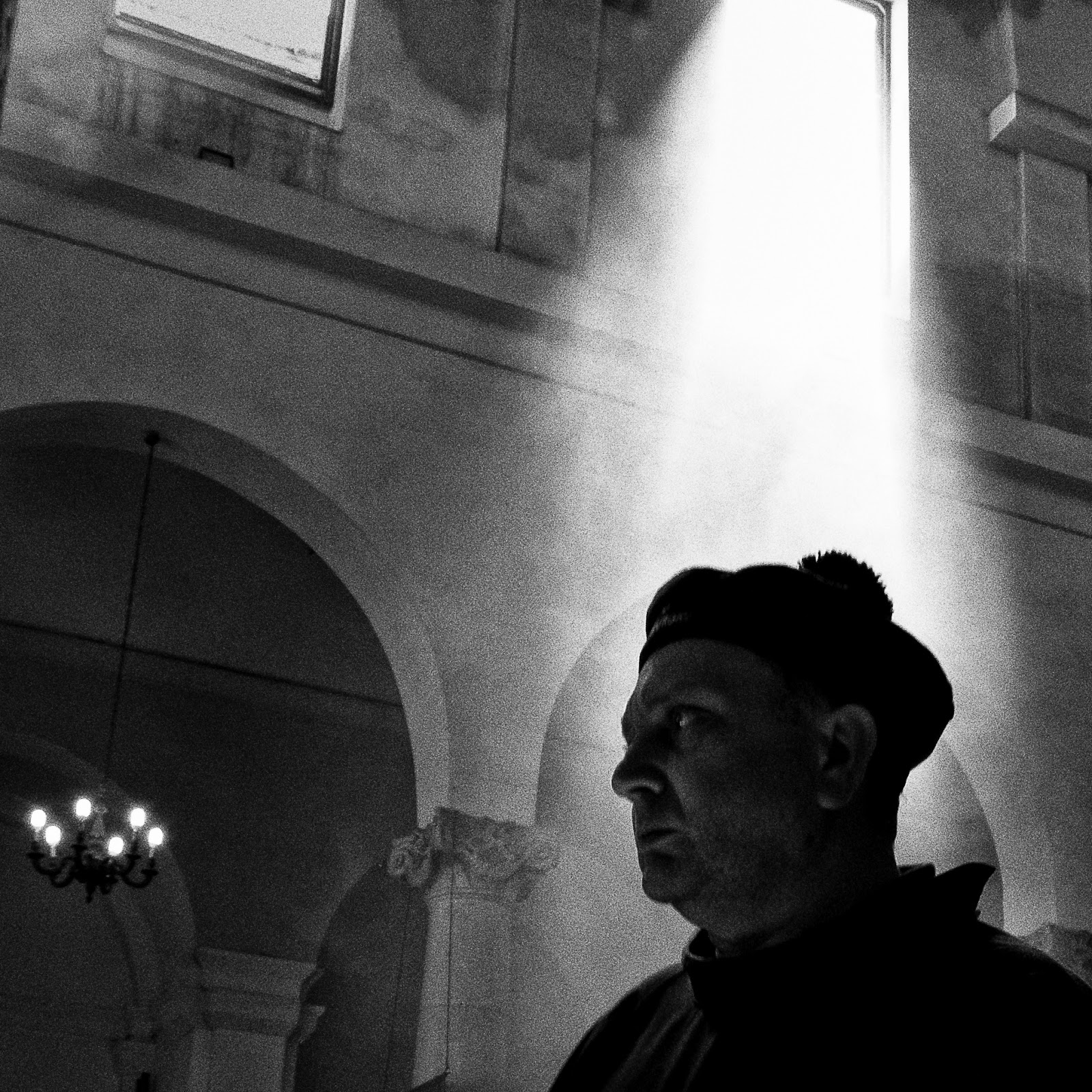
Wijnand Schouten Shares Fuji X100S Results on Steve Huff Photo

By Wijnand Shouten
Image Source: http://www.stevehuffphoto.com/2013/09/20/daily-inspiration-446-by-wijnand-schouten/
 
Steve Huff Photo has posted a few photos by Wijnand Shouten, who's just started working with a new Fujifilm X100S.
 
(Click Here) to read more about the camera.
 
(Click Here) to read the post on Steve Huff Photo.
 
It seems that Wijnand has experience with the Fujifilm X100, but is enjoying the upgrade to the S model. The S features an X-Trans CMOS sensor. Wijnand gets gorgeous deep blacks in his images.
 
I'm still tempted by the X100S at times, but have my hands full with my current camera selection. And, as I've said before, it doesn't have the perfect focal length for me, which is important with a fixed lens camera like the X100S. The same holds true for the lovely Leica X2. I'd rather have a 50mm equivalent lens.
 
Wijnand certainly shares with us that in the right hands, the X100S can sing.
 
DMC-365.blogspot.com
 

Tuesday, September 17, 2013

Look at this Amazing Shot by Darek Meyer (With Ricoh GR Digital IV) as Posted on Steve Huff's Site

By Darek Meyer
Image Source: http://www.stevehuffphoto.com/2013/09/06/daily-inspiration-443-by-darek-meyer/
 
Steve Huff commonly publishes posts by guest authors, which I think is great. When I saw this image by Darek Meyer, a Polish photographer, I was just astounded. Darek took it in Ho Chi Minh City, Vietnam. He was using a Ricoh GRD4.
 
(Click Here) to read Darek's post on Steve Huff's site and see a couple more of his excellent images. He writes about searching for the perfect travel camera after trying a DSLR. He was interested in the Leica Monochrom, but found the Ricoh to be best suited to his needs. Clearly it works very well in his hands.
 
DMC-365.blogspot.com


Sunday, August 25, 2013

Suryo Widjaja Shares Olympus OM-D Photos From Myanmar on Steve Huff Photo

Image Source: http://www.stevehuffphoto.com/wp-content/uploads/2013/08/Semedi.jpg
 
Photographer Suryo Widjaja has written a guest piece on Steve Huff's blog, sharing several wonderful images he took in Myanmar in January of this year.
 
(Click Here) to read Suryo's post on Steve Huff's site.
 
Myanmar is definitely on my bucket list. I know a couple of people who've been able to gain entry to the country for tourism, and they have a lot of great things to say about the place. Anywhere that measures "Gross National Happiness" sounds okay to me.
 
Suryo reports that he took two Olympus OM-D bodies on the trip - his most-used lens was an Olympus 17mm f1.8, second was the Olympus 75mm f1.8. His 12mm saw little use. I have the 75mm f1.8, and it's a keeper.
 
I am about to take a week long vacation, and I'm planning to take my Leica M9, 35mm Summicron, and a medium telephoto (likely my Canon 135mm f3.5 LTM). This post encourages me to travel light, and my choice of lenses closely matches the field of view of Suryo's lenses on his Micro 4/3 gear. Of course, I'll carry the diminuitive Lumix DMC-LX7 as well. So much capability in such a small package simply cannot be left behind. Plus, it gives me closeup capability not available in the M9, at least not easily.
 
Suryo has shown how much you can do with two lenses. I'm impressed.
 
DMC-365.blogspot.com


Friday, July 26, 2013

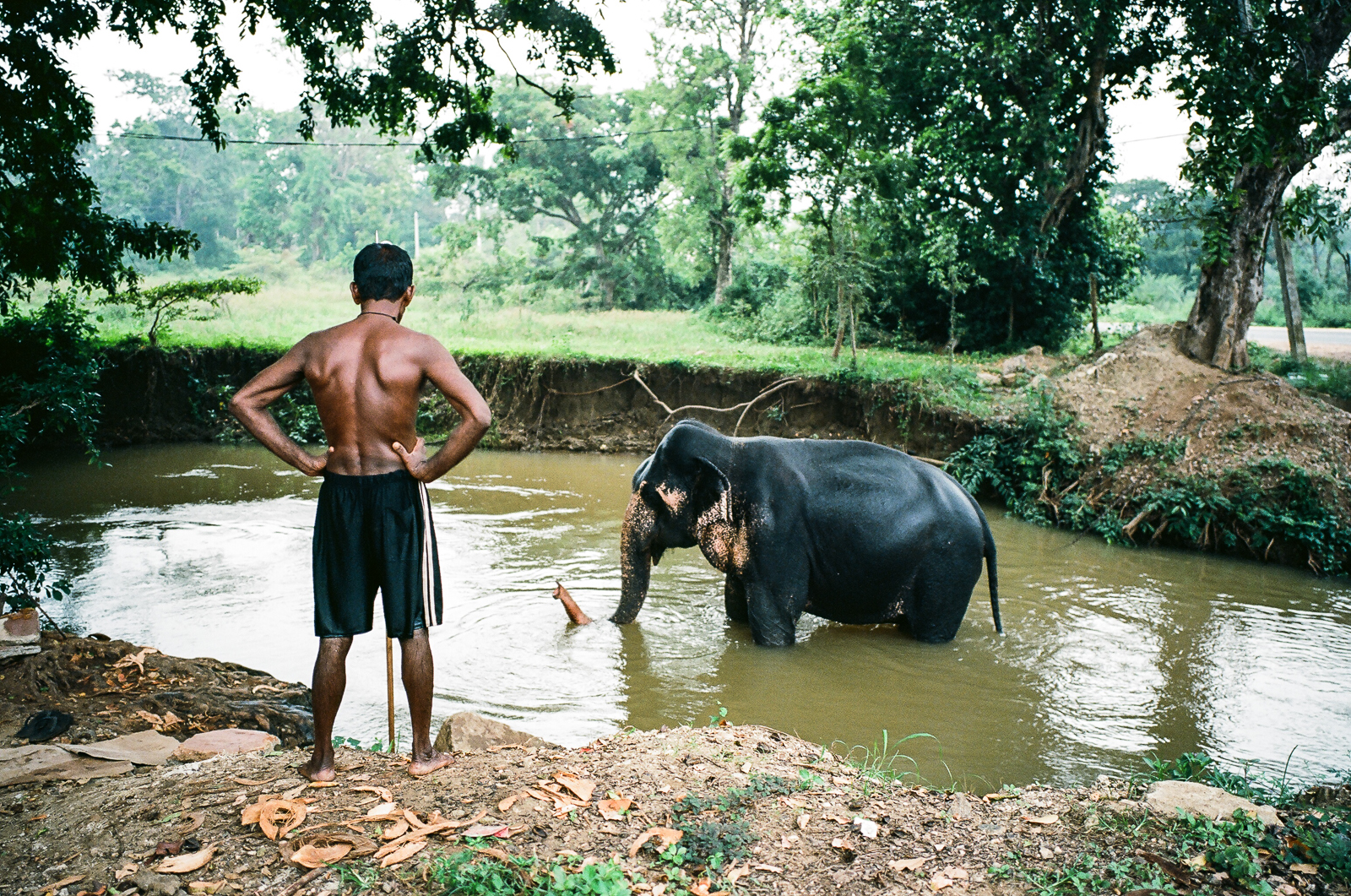
What About the Hasselblad Xpan Panoramic Camera?

I read an interesting post on Steve Huff's blog site, written by Brett Price, who is a new Xpan user. I used to own one, but sold it. I figured this was a good time to revisit that camera.
 
(Click Here) to read Brett's post and see some of his images.
 
Brett makes a few interesting points about using the Xpan. He uses the same normal lens I had, which is a 45mm f4, which he finds very sharp. Brett doesn't think his style of imaging changed much going to the panoramic format, but does think it makes his shots more dramatic.
 
I always felt a little limited with a maximum aperture of f4. I did find my Xpan to produce sharp images, but nothing like my Leica, for example. It's possible that my Xpan needed a rangefinder adjustment. I'll never know, as I no longer own the camera. Unlike Brett, I found that I had to completely transform my thoughts on composition to make images that worked with the panoramic format. This was a process, and one that I was happy to go through. In fact, once I learned how to use it, I was sort of done with the camera. I still like to shoot panoramas once in a while, but use my Bronica ETRS with wide 35mm film back when the urge strikes me. I also have a Lomo Sprocket Rocket (see Amazon link below) that shoots in panoramic format; it's a very fun camera.
 
Here are some examples of my images I took with the Xpan I used to own:
 
Farm Implement, by Reed A. George
Hasselblad Xpan, 45mm f4 Lens
 
 
Barn Door, Uncommon Composition, by Reed A. George
Hasselblad Xpan, 45mm f4 Lens
 
 
Barn and Trees, by Reed A. George

Hasselblad Xpan, 45mm f4 Lens

 
Sculpture, Hirshhorn Museum, by Reed A. George

Hasselblad Xpan, 45mm f4 Lens

 
Yoko Ono's Wish Tree, Washington, DC, by Reed A. George

Hasselblad Xpan, 45mm f4 Lens

 
Do I miss the Xpan? Not particularly. But, here's one place that I really agree with Brett - if Hasselblad were to produce a digital Xpan, I would be sorely tempted to buy one.
 
DMC-365.blogspot.com



Wednesday, May 22, 2013

Film to Digital and Back - Leica Rangefinder Brings Rikard Landberg To Film

 
Here's a short piece on Steve Huff's blog, written by Rikard Landberg, describing how he went from his first camera, the Canon AE-1 to Canon digital DSLRs, and now back to film with a Leica M2 rangefinder.
 
(Click Here) to read Rikard's thoughts and see several of his photographs on Steve Huff's site.
 
I am an avid film user, still. But, I can't really imagine going 100% film any more. To me, there's nothing funner than shooting a Leica film rangefinder with 50mm lens on the street. However, for example, I'm going to shoot a music event in a dark theater this evening. I can't even imagine trying to do that with the same equipment. Nope, I'll be cranking the Nikon D700 up to iso 1600 or 3200 for that show. But, just to illustrate the conflict, I'll probably use my rangefinder for the shots I get to take in a pre-show interview.
 
I no longer fool myself into thinking my next camera will replace all the others.
 
DMC-365.blogspot.com


Thursday, May 9, 2013

AMAZING Photography With New Fuji X100S and X20 - Colin Steel on Steve Huff Photo

Truly Inspired Photography by Colin Steel
 
Every once in a while I see a series of photographs that makes me say "I am not worthy." Well, thanks to Steve Huff's website, and Colin Steel's photographs from Sicily, that is how I feel right now.
 
I will summarize a few key points from Colin's write up, but you MUST
 
(Click Here) to see Colin's images on Steve Huff Photo.
 
Colin used the new Fujifilm X100S and X20 on this trip. I really enjoyed Colin's take on cameras and technology. He says that to him, image quality means "how effectively can I crate interesting photographs with these tools?" Colin concludes that there are many great camera options out there today, including the two new Fujifilm models. Instead of focusing on the equipment, he focused on capturing spectacular images, and boy, did he succeed.
 
He focused so little on equipment, the pictures don't even say which of the two cameras they were taken with.
 
Colin likes to shoot in square (1:1) format, in black and white. He reports that the X100S has a very nice square frameline in the optical finder. He also found the new manual focus tools in the X100S very useful. He says the X20 made a good pairing with the X100S, mostly based on the similarity of the controls.
 
Colin post-processes using Nik's Silverefexpro2 software, which I have just recently gotten myself. Interestingly, he likes the Tri-X film emulator in Silverefexpro2, which is my favorite so far. I tried many times to find Lightroom settings to emulate Tri-X; I never came close to what Silverefexpro2 provides.
 
As I wrote some time back, even though I'm very attracted to the Fujifilm X100S, I don't think a fixed 35mm equivalent lens works that well for me. I prefer 50mm field of view. The X20 is a different story. I handled one in Japan, and really, really liked it. For now, I'm still enjoying my new Panasonic Lumix DMC-LX7, but the X20 still may make its way into my kit.
 
In any case, Colin set a new benchmark for me with these images. I'm so impressed.
 
DMC-365.blogspot.com


Monday, April 1, 2013

Has the new "M" Lost the Leica Magic? Not Bloody Likely

 
The M9 Does Do Special Things With Light, by Reed A. George
 
 
I read an amusing post on Steve Huff's site this morning. Steve is sharing the range of opinions that he's getting from readers about the Leica "M," the newest Leica digital rangefinder and successor to the M9.
 
(Click Here) to read the full story on stevehuffphoto.com
 
While the feedback he's receiving is literally all over the place, there is a cyclic theme that Steve has observed each time a new Leica M body has been introduced. It goes something like this:
 
The new M sucks compared to the last M - it has lost the "magic," and is like any other camera - the old M (M-1) was so much better - well, now that people are using it, the new M is okay - actually, the new M is great - that old M (M-1) really sucked, and we can't see how we ever used it, let alone loved it - the new M is the last camera we'll ever need - introducing, the new M+1!
 
I can admit that I've been through this myself. As Steve describes the cycle going from the M8 to M9, I went from loving my M8 to not understanding how I ever put up with the manual coding, UV/IR filters, crop factor, etc. The M9 is really so much better.
 
But, guess what?
The M8 Also Did Special Things With Light, by Reed A. George
 
I am personally not driven toward the new M yet for very specific reasons. First reason, I'm still recovering from the cost of the M9. But, far more importantly, I haven't used the M9 enough yet. I'm going to work on that point, and use it as much as I can. While the M9 will never be my only camera, it is one of my very favorites. I'm going to spend a quality week with it in Japan, along with my new Lumix DMC-LX7. I'm looking forward to that with great expectations.
 
I actually feel that while the upgrade from the M8 to the M9 was the right decision, I didn't shoot the M8 enough, either. Here's to fully exploring the M9 before I even consider what the new M may offer!
 
DMC-365.blogspot.com

 

Wednesday, March 27, 2013

Pascal Vossen on SteveHuffPhoto.com - Traveling Sri Lanka with Leica M and Medium Format (Contax 645)

 
Steve Huff always has great guest writers on his blog. I found Pascal Vossen's review of the experience of traveling Sri Lanka with both a Leica M (M7) and medium format camera (Contax 645) very interesting. I am traveling to Japan again soon, and plan on taking my Leica M9 and a medium format camera, most likely my old Zeiss 6x6 folder with Tessar f2.8 lens.
 
(Click Here) to read Pascal's travel story on stevehuffphoto.com


Pascal mentions the normal reasons for carrying a Leica M on travel - image quality, size, unobtrusive appearance (though he mentions sometimes taping over the "Leica" logo to hide the name), fast and accurate focus, and quiet shutter. I find the part about the camera being unobtrusive interesting. I have had some pretty sketchy-looking characters ask me if that's a Leica, etc. I've even had people follow me to ask the question. And, Pascal carries his gear in a Billingham Hadley Pro bag - definitely not unobtrusive. If you get near an educated camera thief, Billingham will definitely attract them. Billingham bags cost more than some cameras.
 
Anyway, Pascal chose to carry three M lenses: a 28mm f2, 50mm f1.4 Aspheric Summilux, and a 15mm Voigtlander Heliar. It seems that the 15mm was included on a whim.
 
Now for the medium format kit. Pascal carried a Contax 645 with a Zeiss T* 80mm f2 lens. This allowed a minimum of lens changes in the field. Since the Contax was intended for two purposes, portraits (presumably including some environment around the subject) and landscapes, the 80mm "normal" length for the 6x4.5 cm format was a good compromise.
 
Pascal described that he would typically pick a Sri Lankan village and spend a couple of hours walking it, shooting mostly with his M7. Periodically, he would approach people he met along the way, engaging them in conversation, and shooting portraits with the Contax.
 
Pascal's only regret was that he didn't bring a medium format camera with a larger negative (6x4.5 is the smallest format on 120 film). Other options include the square format 6x6, and rectangular formats of 6x7, 6x8, and 6x9. As negative size increases, so does the overall quality of the image. It's sort of like getting more pixels on a full frame digital sensor for those of you who didn't come from the film world. However, as size goes up, so does the amount of time you spend changing film rolls. You can typically get in 16 shots of 6x4.5, only 8 shots of 6x9.
 
On my upcoming trip, my Zeiss folder will give me 12 shots of 6x6 square format. My folder has the advantage of being very compact compared to Pascal's Contax. On the other hand, it is 100% manual, including guess focusing. I'll have to bring some form of external rangefinder, which could be my Lumix DMC-LX7 even. It will be fun to shoot the old folding Zeiss, bellows and all, in Japan. However, like Pascal, I will mostly rely on my Leica M.
 
Go read Pascal's post at the link above. There are some great pictures there.
 
DMC-365.blogspot.com


Tuesday, March 19, 2013

Colin Steel Writes About the "Year Old" Fujifilm Model X10 on Steve Huff Photo

 
Colin Steel has written an informative post on Steve Huff's blog, about the virtues of taking advantage of extremely low prices on last year's camera models, in his case the Fujifilm X10.
 
(Click Here) to read Colin's post on stevehuffphoto.com
 
Colin picked his X10 up for the equivalent of $350 US. This reminds me of my own recent purchase of the Lumix DMC-LX7 for less than $300. There are some amazing deals out there. Amazon is a great place to find them (hint hint - use my link below).
 
Colin finds the power-on switch in the X10, which is linked to twisting the lens zoom ring, very fast and elegant. He has perfected his technique to end the power-on motion at 35mm focal equivalent for fast shooting.
 
All of these small sensor cameras suffer from the inability to get extremely shallow depth of field. Colin is not concerned with this, as he likes lots of depth of field. In fact, Colin mentions a discussion with Magnum photographer Nikos Economopoulos, who uses f11 or at most f8 for much of his shooting with the Leica M9, so that he can be free to arrange the compositional features within the frame, rather than relying on (or dealing with) out of focus features.
 
Colin finds the dynamic range on the X10 to be pretty good.
 
While the X10 has an optical viewfinder (rare on small cameras, and very important in my estimation), Colin finds that he composes most of his images on the LCD. This would not work for me. Colin says that he adapts to each camera, and composes more through the viewfinder on the Fuji X100 for example. The X100 has a much better finder than the X10.
 
I find it very interesting to read Colin's impressions of the X10. I certainly agree with him that there are some amazingly good cameras that happen to be last year's models for prices that are difficult to pass up.
 
Here's a shot I made with the Lumix DMC-LX7 last week.
Agitated Airline Customers, by Reed A. George
Panasonic Lumix DMC-LX7, out of camera jpeg
 
DMC-365.blogspot.com
 
Please use this link to find your own deal on last year's camera model!


Monday, December 24, 2012

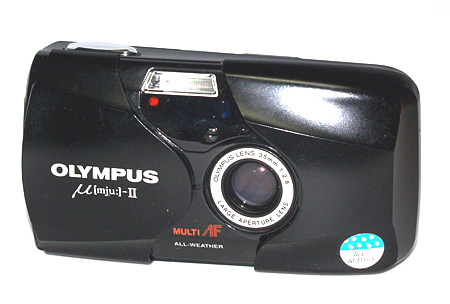
Here's an Example of Something I'm Considering for DMC-365

Olympus mju 2
 
Well, here's what happens when you write posts ahead of time. Two days ago, I posted a follow-up to this post, which I had meant to go up earlier. So, they're out of order.
 
If you've been reading my blog lately, you'll know that I'm exploring some changes to the format of DMC-365. One of the things I'm considering is highlighting some favorite cameras, including using them and sharing the results.
 
Steve Huff's site has hosted a very nice little post about the Olympus mju, written by Ilya Reddy.
 
(Click Here) to read Ilya's post about love for the mju on Steve Huff's site.
 
The post includes a nice description of why Ilya enjoys the mju so much, some critical review of some of the drawbacks (including the need to reset center focus and exposure, and turn off the flash, every time you turn the camera on), and several nice example images.
 
Way to go, Ilya and Steve. I hope to use a similar format to share some of my photographic favorites.
 
My wife has an old Olympus Stylus in a drawer. Maybe I'll drag it out for a weekend.
 
DMC-365.blogspot.com


Saturday, December 22, 2012

Outstanding Follow-Up to the Olympus mju Post On Steve Huff's Site

 
A few days ago, on December 18, I reposted a very nice piece from Steve Huff's site, featuring some beautiful images from the Olympus mju 2, a moderately-priced point and shoot camera. Today I share another piece from Steve's great site, a follow-up by Steve Barnes, who shoots a Yashica T5 (T4 in the US).
 
(Click Here) to see all of the pics on Steve's blog.
 
These are outstanding images, in my opinion. And made with quite modest gear. The Yashica T5 is a fully-plastic point and shoot, yet features a nice Zeiss Tessar lens. I have two of these in my camera closet, acquired as part of a package of other cameras way back when. I have not used either, as both have battery terminal corrosion problems. I'm not sure how to address those problems, without risking breakage in dismantling the outer cases. Maybe I'll give it a try with one of them.
 
These two posts on Steve Huff's site remind me of the recent fun I've had with the Holga lens on my Lumix G3. Simple photography can be really fun. As you can see above in Steve Barnes' shot with the T5, you can focus on the essential design elements of a great photo - composition, color, light. Very cool.
 
I'm not selling my M9, but there is certainly plenty to learn with inexpensive equipment.
 
DMC-365.blogspot.com