Showing posts with label night. Show all posts

Tuesday, November 17, 2015

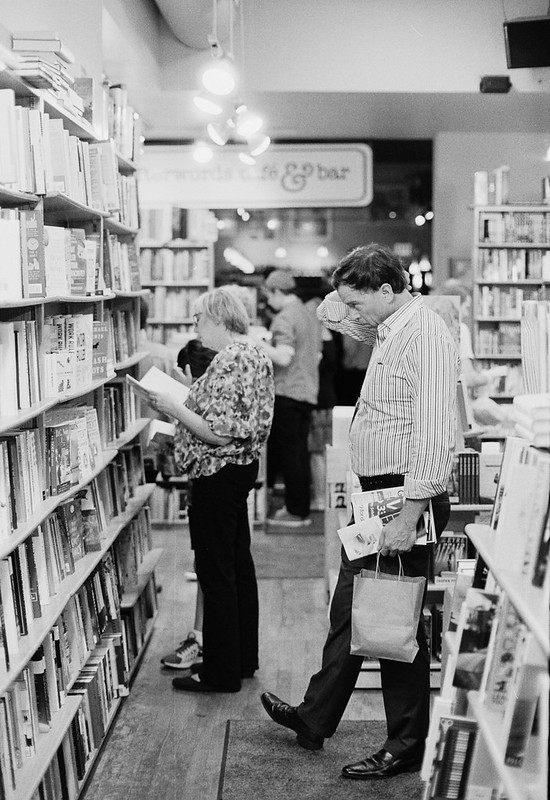
Some Shots with the Pre-AI Nikkor 55mm f1.2

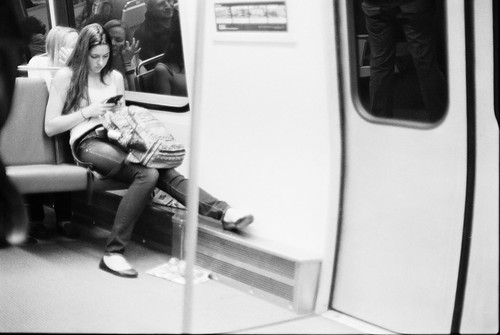
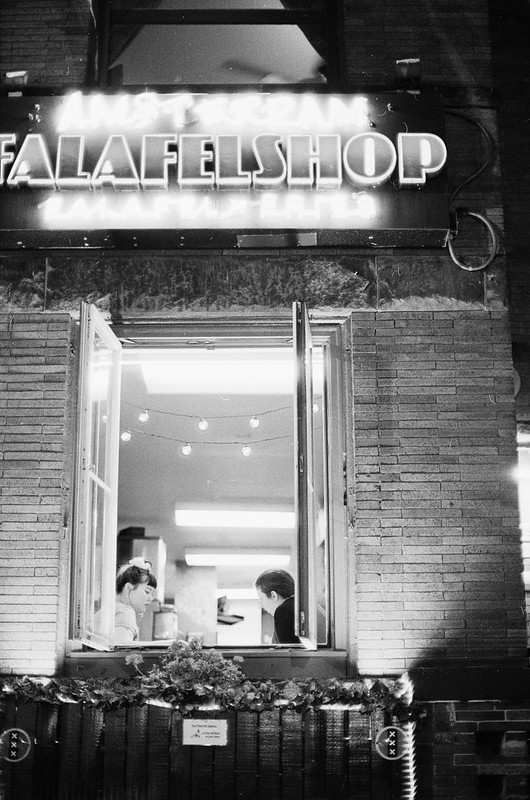
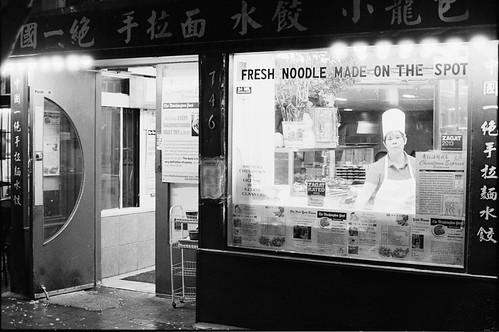
I took my old 55mm f1.2 Nikkor out, mated to my Nikon F2SB body, loaded with HP5, to Washington, DC. Here's what resulted:
 
 
Tough to focus (manually), lots of misses, but hey, what's a f1.2 lens for if not shooting in the dark? Fun stuff.
 
DMC-365.blogspot.com


Monday, September 28, 2015

Watching the Lanterns Lift Off

 
At the Watermelon Park Festival this last weekend, I got to spend some time with friends I haven't seen in a while. In this scene, as we sat around the campfire, my friend Rudy B and his lovely girlfriend Sarah watched as a group of people constructed, lit, and set free some Chinese Lanterns. They flew up and up, finally disappearing into the clouds of the night sky.
 
DMC-365.blogspot.com


Friday, June 19, 2015

Fire! At the Leesburg Car Show

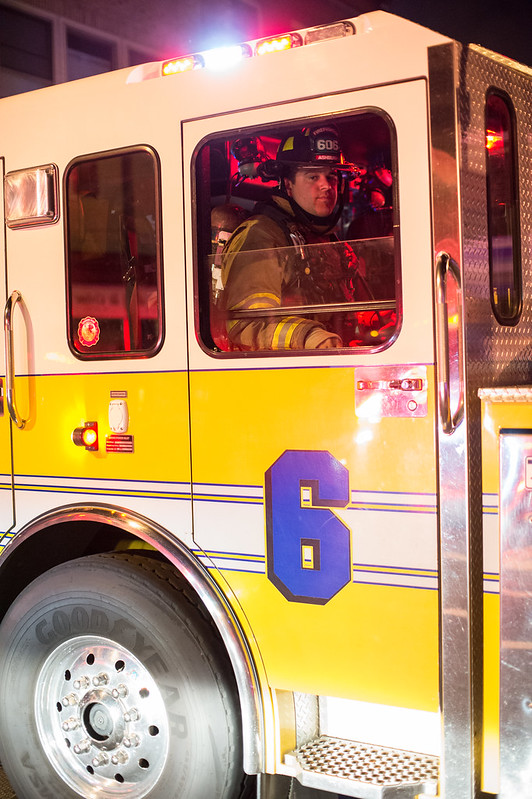
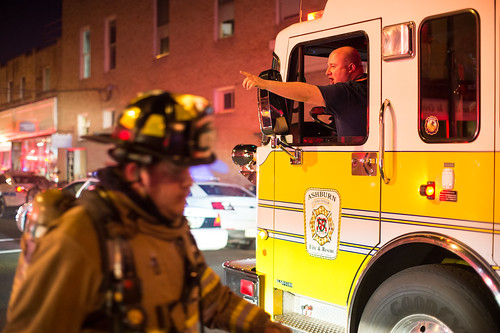
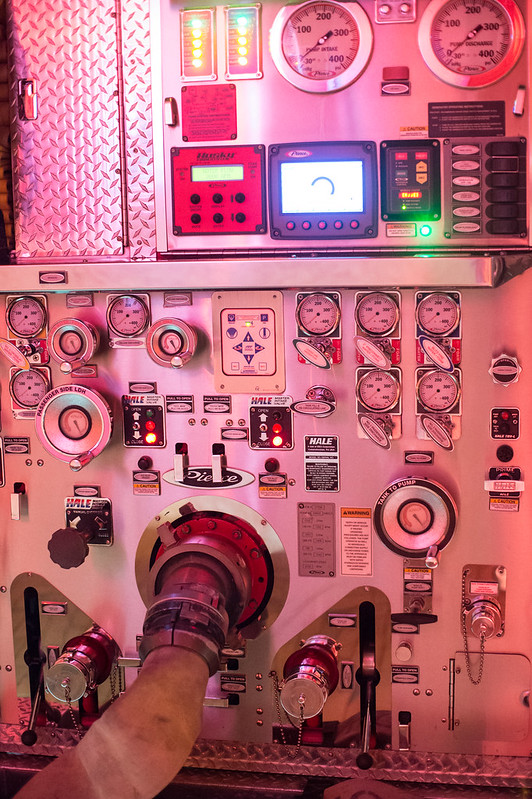
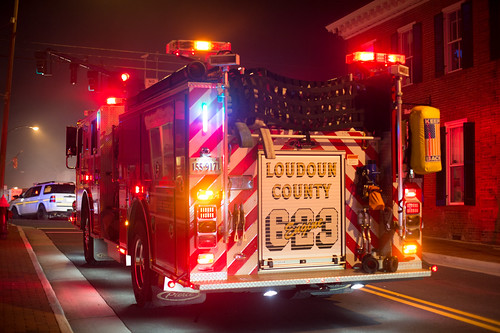
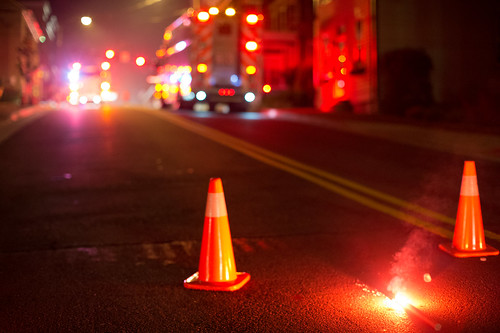
Yesterday, I posted some images I took after dark at the car show in Leesburg, Virginia. Just as we were leaving, one of the business buildings in town caught fire. More emergency vehicles than I knew existed in the area converged for the fun. Here are some images I made of the event, using my Nikon Df and Nikkor 50mm f1.2 AIS lens.
 
This is my favorite shot of the event. I love how sharp the firefighter's face is, the police car and fire truck in the foreground, and the burning building and ladder crew in the background. This one deserves a nice print.
 
Here are some other images I made in the few minutes we hung around.
 
 
My understanding is that luckily no one was injured in this fire. I feel fortunate to have had the Df and f1.2 lens with me; there wasn't much light to work with. I hope these images tell the story well!
 
DMC-365.blogspot.com


Thursday, June 18, 2015

How to Take a Unique Car Show Image? Go at Night!

My friends Dennis Gallus, James McKearney, and I have been frequenting a couple of annual car shows for a few years now. This year, with Dennis moved off to Arizona and James spending more time in Boston, I didn't even know when the Leesburg car show was scheduled. It just so happened that I took my daughter into town to enjoy the evening air and came upon it, just after dark.
 
These are some of the most memorable shots I've ever made there, and it's in large part due to the darkness.
 
Night at the Carshow, by Reed A. George
Nikon Df, Nikkor 50mm f1.2 AIS Lens
 
Later on in the evening, we got a surprise, which I'll cover in a future post.
 
DMC-365.blogspot.com
 

Sunday, May 31, 2015

Saturday, April 25, 2015

Another Panning Example With the Leica M9

 
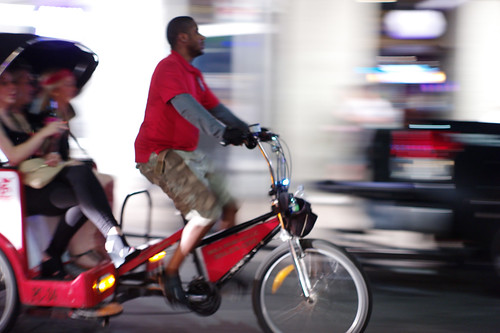
Bike Taxi, New Orleans, by Reed A. George
Leica M9, Summilux 50mm f1.4
iso 800, 1/15 sec.
 
As in yesterday's post, I used the panning technique to show a moving subject at night.
 
In this case, I didn't match the camera motion to the subject's speed as well as I did in the shot posted yesterday. However, this picture says more about being in New Orleans. Motorcycles can be seen virtually anywhere; bike taxis are less common. But, there are plenty of them in New Orleans.
 
So, as a travel photo in which I wantedd to say something about the place, this one works better.
 
DMC-365.blogspot.com

Friday, April 24, 2015

Panning at Night

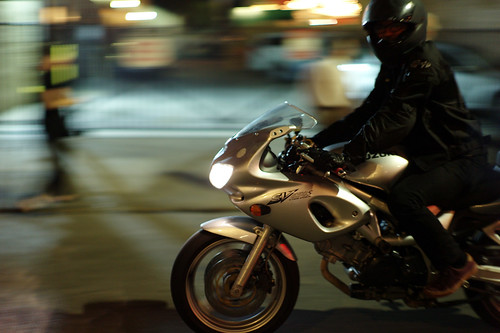
Panning is a technique in which you set your camera to a relatively slow shutter speed and follow the motion of a moving subject. If you follow at exactly the right speed, your subject comes out sharp. If your shutter speed is slow enough, everything but the subject is blurred due to the motion of the camera. It gives a great sense of motion to the image.
 
Here's a panning shot I made of a passing motorcycle in New Orleans:
 
Panning a Motorcycle at Night, by Reed A. George
Leica M9, summilux 50mm f1.4 Lens
iso 800, 1/15 sec.
 
In this case, the 1/15 second shutter speed was slow enough to give decent motion blur to the motorcycle's surroundings. Based on the fact that you can read the lettering on the motorcycle, I must have gotten the camera motion just right.
 
DMC-365.blogspot.com

Monday, April 20, 2015

Another Shot at Light Painting Cherry Blossoms with the Nikon Df

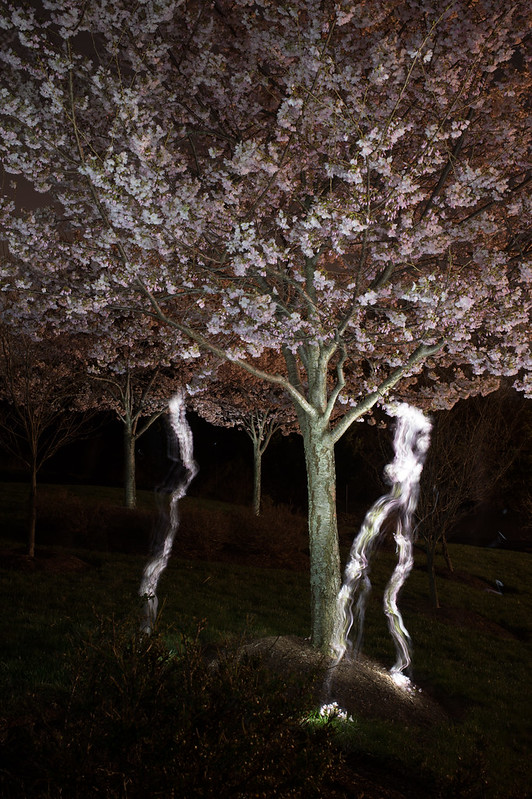
Referring to my post from two days ago, I decided to get back out with the cherry blossoms after dark one more time this year. Fighting my allergies, last remaining vestiges of jet lag from the Japan trip, and worries that my neighbors would wonder why this crazy guy was shining his flashlight up into the trees for an hour or so, I went for it. Here are my favorite light painting shots of the cherry trees this spring.
 
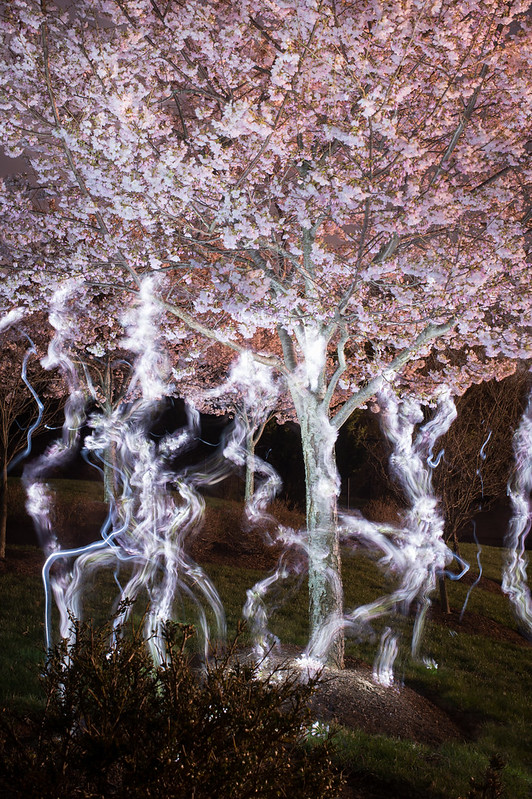
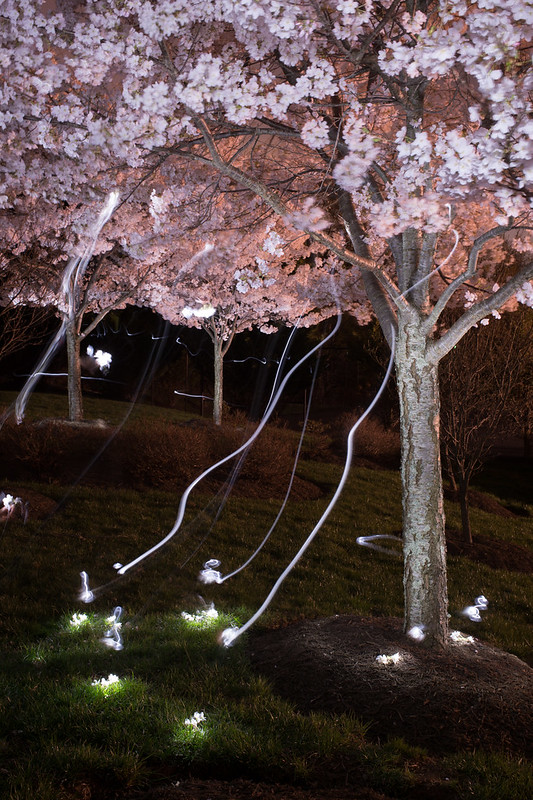
Falling Blossoms #1, by Reed A. George
Nikon Df, Nikkor 35mm f2 AF-D Lens
iso 100, f11, 479 seconds
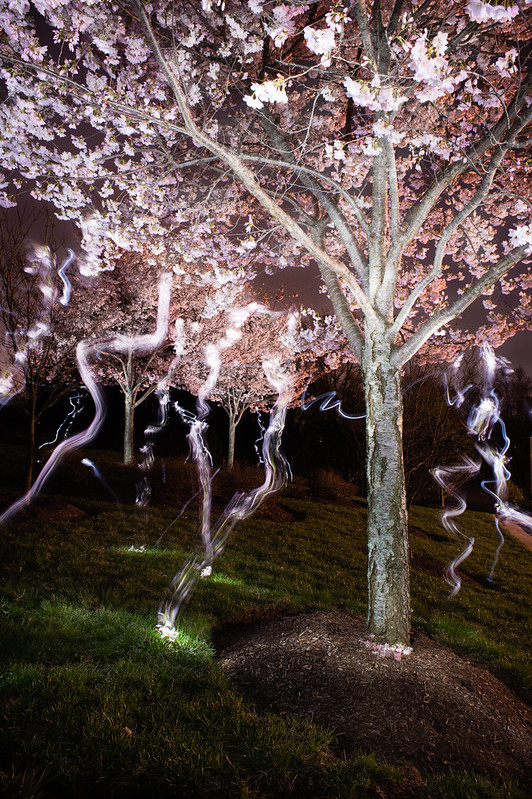
Falling Blossoms #2, by Reed A. George
Nikon Df, Nikkor 35mm f2 AF-D Lens
iso 100, f11, 357 seconds
 
Yes, it took me 6-8 minutes per shot to do all of the light painting you see here. I had to paint the trunks of all three trees, then the branches. Then, I did the falling blossoms (several per tree). All with one flashlight. I think it was worth it. I feel that I succeeded in making something unique if not beautiful. At least they're not just one more series of straight shots of cherry trees. And through the process, I learned some of what not to do as well as what kind of works in this type of photography.
 
DMC-365.blogspot.com
 

Saturday, April 18, 2015

Cherry Blossoms, Light Painting, with the Nikon Df

I have the opportunity to shoot cherry blossoms every year, usually in both the Washington, DC area, and in Tokyo. Very different opportunities, of course, but each very nice.
 
I find that when a subject becomes routine to me, I am challenged to make pictures that are interesting to me, and probably to anyone else who's looking. A few years back, a friend and I started to experiment with light painting the cherry trees (using flashlights to artificially light the trees in the dark). I feel that I've gotten better at this over time. Here's the first shot I was happy with from a quick outing last night with the Nikon Df.
Light Painting, Cherry Blossoms, by Reed A. George
Nikon Df, Nikkor 35mm f2 AF-D Lens
iso 100, f11, 131 secs exposure
 
Having gotten the first shot I had in mind, I started playing around with other ideas. First, I tried adding some red light (two small red light flashlights, one in each hand).
 
Light Painting, Cherry Blossoms, by Reed A. George
Nikon Df, Nikkor 35mm f2 AF-D Lens
iso 100, f11, 231 secs exposure

 
Okay, I guess, but nothing special. Then, I got an idea. I've always wanted to photograph the blossoms falling from the trees, or at least represent that concept. So, I grabbed a small branch of blossoms and used the flashlight to light it as I simulated it falling from the tree. Here's what that looks like.
 
Light Painting, Cherry Blossoms, by Reed A. George
Nikon Df, Nikkor 35mm f2 AF-D Lens
iso 100, f11, 202 secs exposure
 
Then, I decided to try more of that, switching from the 35mm to 24mm Nikkor.
 

Light Painting, Cherry Blossoms, by Reed A. George
Nikon Df, Nikkor 24mm f2.8 AF-D Lens
iso 100, f11, 435 secs exposure

Light Painting, Cherry Blossoms, by Reed A. George
Nikon Df, Nikkor 24mm f2.8 AF-D Lens
iso 100, f11, 384 secs exposure

These are kind of cool, and probably my favorites from the evening.
 
Then, I decided to put it all together. Maybe it's a bit much, but here it is.
 
Light Painting, Cherry Blossoms, by Reed A. George
Nikon Df, Nikkor 24mm f2.8 AF-D Lens
iso 100, f11, 486 secs exposure
 
This was an interesting evening of experimentation. It gives me ideas for some further exploration, but I have to do it fast; the cherry blossoms won't last long.
 
At least these aren't just like every other cherry blossom shot I see every year.
 
DMC-365.blogspot.com
 

Tuesday, April 7, 2015

Tokyo Nightlife, With the 50mm f1.2 AIS Lens

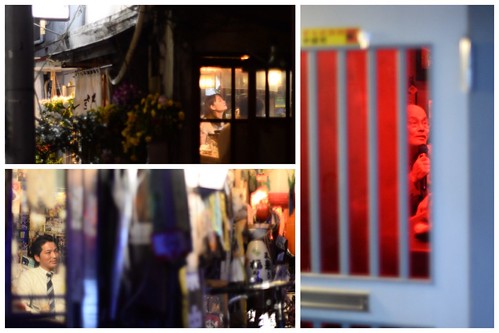
Tokyo Nightlife, by Reed A. George
Nikon Df, 50mm f1.2 AIS Lens
 
Here's a little montage of images I made while walking one of the backstreets near Monzennakacho Station in Tokyo. The 50mm f 1.2 lens not only allowed me to capture the images in near complete darkness at reasonable shutter speeds, it also allowed me to use selective focus to narrow the viewer's attention to an individual's face. I shot each of these from outside the bar's window. All of the surrounding distractions blur into the foreground or background.
 
That said, manual focusing was quite difficult. Even with the very wide aperture and a Nikon 1.2x magnifier on the Df, I missed quite a few shots. Great fun, though!
 
DMC-365.blogspot.com
 

Friday, March 27, 2015

Master of Darkness - My New Lens

 
I've just sprung for a new lens for my Nikon kit. It's the Nikkor 50mm f1.2 AIS manual focus from Nikon. They've been making it since 1981, and they still make it today.
 
I bought my very late production unit from my friend, Alain, for a great price. It's truly like new. It's also the fastest lens I own.
 
I'm hoping that it will be the perfect extreme low light lens for my Nikon Df. Given the Df's high iso capabilities, I should be able to do some incredible things with this combination.
 
I can already tell that it's tough to focus, though. The depth of field at f1.2 is just plain razor thin. But, that's the whole idea of a lens with an incredibly wide maximum aperture.
 
This lens will be going with me to Japan this spring. I can't wait to try it out in the Tokyo night time!
 
DMC-365.blogspot.com
 

Saturday, January 17, 2015

Refuge

Refuge, by Reed A. George
Nikon Df, Nikkor AF-D 50mm f1.4 Lens
iso 2500, f8, 1/30 sec.
 
How it felt at that moment.
 
DMC-365.blogspot.com
Friday, November 7, 2014

Light Painting in Japanese Shrine - Guest Author Allexandroff on DIY Photography Blog

Image Source: http://www.diyphotography.net/show-light-painting-photo-fushimi-inari-shrine-kyoto-japan/
 
A guest author, who goes by the name Allexandroff, has posted both the results and his process for shooting light painting shots at a famous Japanese shrine.
 
(Click Here) to read about it on diyphotography.net.
 
This makes me think about my next visit to Japan. I always enjoy visiting Japan, and have several favorite places that are a short walk from where I stay in Tokyo. However, I find that the familiarity makes it challenging to get exciting images there. Maybe next time I'll try some night shots, and maybe even some light painting. It could add a new dimension to how I think about photographing these places.
 
DMC-365.blogspot.com
 

Thursday, July 10, 2014

Whirling Disks and Rear Curtain Sync

Rear curtain flash sync is a function on many cameras. The way it works is that instead of triggering your flash when your shutter opens (generally for a much longer time than the length of the flash light pulse itself), it opens the shutter, then triggers the flash right before the shutter closes.
 
Why would you want this? Well, if you're using a slow shutter speed, you'll get motion blur or light trails from anything that's moving fast. With normal (front curtain) sync, the flash goes off, the shutter stays open, and you get trails that are made after the flash. With rear curtain synch, the trails are made first, then you get flash and light the rest of the scene at the end of the exposure. The classic example is a moving car, where you get an image of a car that's already gone by you, with fantastic blur behind it. Using front curtain sync, you'd get the car before it passes by, and light streak in front of the car, not nearly as cool.
 
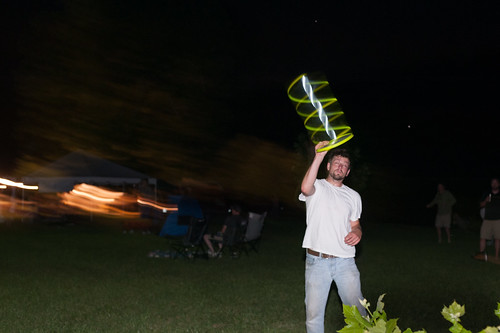
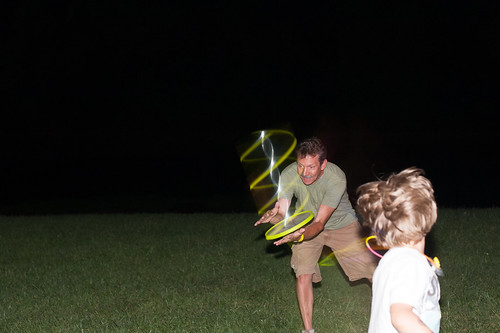
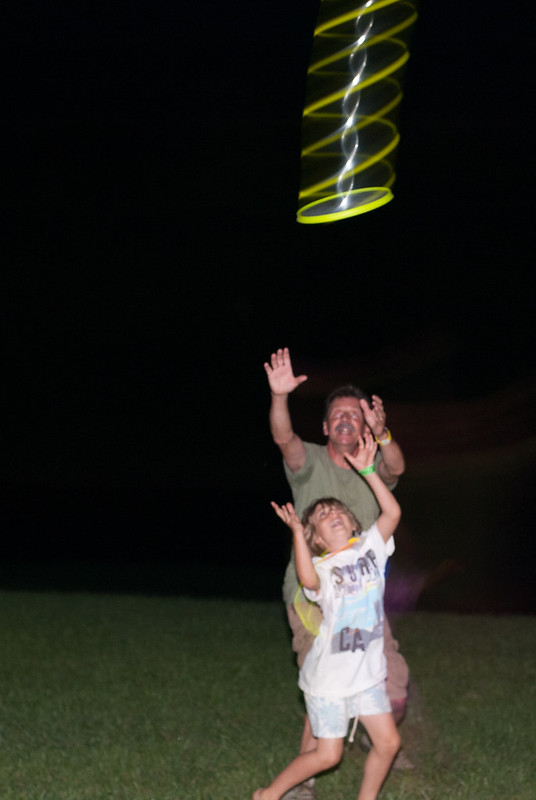
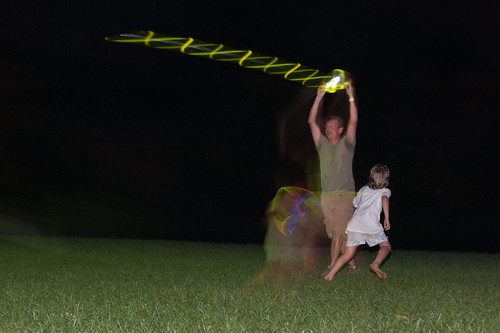
Well, I find it's pretty difficult to find applications other than moving cars for this cool technique. At the River and Roots music festival, I found one. These guys were playing what I would normally call "Frisbee," but with a disk that has its own light in it. They were playing in the dark. I thought, hmm. I bet that disk would make a great light streak. So, I tried it. Amazing! It made this really cool nested helix shape as it flew by. Next step, try rear curtain sync to see if I could capture the streaks and the player. Here's how that looks:
 
I like this shot a lot, but I wanted the streaks to be longer, and I didn't like the distracting lights in the background (at left).
First, the background lights. One of the other players was near the river, which was completely dark. Goodbye background distractions:
Getting the timing just right was tough, but I was getting the hang of it.
So, how to lengthen the light trails? Longer exposure, of course. So, I went to a full second exposure, with the flash at the end. Since the ambient scene was so dark, I didn't even have to change my f-stop or flash settings. This is exactly the effect I was looking for:
Whirling Disk, by Reed A. George
Nikon D700, Nikkor AF-D 50mm f1.4 Lens
iso 1600, f4, 1 second exposure, rear curtain sync flash
 
Great fun. I don't think any other photographer at the festival captured a shot just like this.
 
DMC-365.blogspot.com


Sunday, June 8, 2014

Under Cover of Darkness

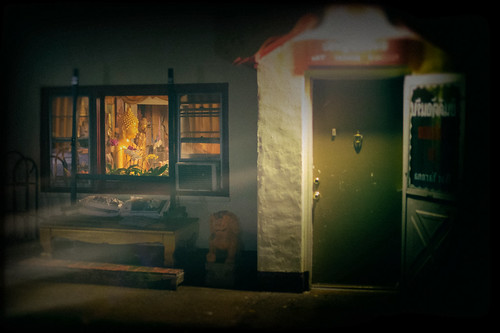
Under Cover of Darkness, by Reed A. George
Leica M6 Titanium, Summilux 50mm f1.4 Lens
TMax 3200 Film, f1.4, 1/30 sec. (?)
 
I shot this through the window of a very dark bar on my walk home from a show on Frenchmen Street in New Orleans. I feel that it's quite mysterious, and knew at the time that it would make an interesting image if it came out. I love the blazing bar light at right in the shape of a lion (or something), and the hands with no visible attached body at left. I also love the eyes of the person on the left looking upward.
 
DMC-365.blogspot.com


Wednesday, March 26, 2014

New Orleans by Night - Frank Relle's Project on NYT's Lens Blog

 
Image Source: http://lens.blogs.nytimes.com/2014/03/19/new-orleans-by-streetlight/?_php=true&_type=blogs&_php=true&_type=blogs&_r=1&#/2/

The New York Times blog, Lens, has reported on a project by photographer Frank Relle, a New Orleans
native. Relle started photographing New Orleans houses (from rich to poor) while in college, as a sort of therapy for a broken heart (his girlfriend had broken up with him). Thinking that Hurricane Katrina had ruined his project, Relle actually found that it extended it, gave it new life.

(Click Here) to read the story on Lens.

Personally, I really like Relle's approach to these images. Moving over the years from long exposures with existing light (or lack thereof) to his current approach of bringing his own lighting (in the form of a lighting truck) to some of the scenes, His goal is to provoke his viewers to make up their own stories about the lives inside these structures. This is not an explicit expose' of others' lives. Just hints are given, enough to make us think on our own.

DMC-365.blogspot.com
 

Thursday, September 19, 2013

Photographing Owls - Luck Is Important

I read a post by the expert nature photographer, Stephen L.Tabone, about photographing barred owls. It seems that the population near his place are becoming more accommodating, and he's taken advantage of the opportunity:
 
Barred Owl, by Stephen L. Tabone
Image Source: http://stevetaboneblog.com/2013/09/09/barred-owl/
 
I have been interested in photographing owls for a long time. I've attended talks about them, and gone out scouting in the correct terrain, time of year, etc., largely to no avail. Every once in a while, someone will show me an iPhone shot of an owl that happened to land next to their car or something, and it kind of drives me crazy.
 
I've decided that unless you commit your life to following these guys, luck must smile on you to get a great shot like the one above. As you may have seen here earlier in the year, that has happened to me once, and only once, as far as owls are concerned. Here's my prize shot of the same species of barred owl that Stephen is capturing:
 
Barred Owl (Strix varia), by Reed A. George
Panasonic Lumix DMC-G3, Lumix 100-300mm f4-5.6 OIS Lens
iso 400, f6.3, 1/800 sec
 
I can at least say that I was birdwatching at the time it happened; actually I was on my way to go birdwatching when I saw this beauty perched right alongside the road. Because I was ready to photograph birds (with my Lumix 100-300mm zoom mounted and in the car), I was able to react and get the shot. I consider this a gift from the bird gods.
 
DMC-365.blogspot.com


Saturday, May 4, 2013

Whole Lotta Leica Results - March's Summilux 35mm f1.4 in Black and White!

 
Kodaiji After Dark, by Reed A. George
Leica M9, Summilux 35mm f1.4 Lens
iso 640, f1.7, 1/15 sec.
 
I've already posted some night street shots taken with March's Whole Lotta Leica lens, the Summilux 35mm f1.4 lens. Here's one more night shot (above), or at least it was after sunset. I love the repeated patterns and lines in this shot.
 
I've been manually entering my lenses into the M9, so it can work its magic on vignette corrections, etc. I'm not sure what happened here, but the image data says I'm using a 35mm Summicron, rather than the Summilux. Therefore, I'm not sure about the f-stop information. I've got to look into that.
 
Here is another low light image (below), this time taken from a moving subway train.
 
Entering the Tunnel, by Reed A. George
Leica M9, Summilux 35mm f1.4 Lens
iso 640, f5.6, 1/4 sec.
 
The shot above could have been made with just about any 35mm lens. I decided that I wanted the motion blur caused by the train movement, set the shutter speed at 1/4 second, and then found the right aperture, which happened to be f5.6. I took several images like this but this is my favorite.
 
Ochanoyu, by Reed A. George
Leica M9, Summilux 35mm f1.4 Lens
iso 1250, f1.4, 1/30 sec.
 
The shot above shows the dreamy quality of the Summilux wide open (or nearly so). Again, due to the lens id issue, I'm not sure exactly what f-stop I used. If I remember correctly, it was f1.4. The lady in front's face and the tea cup are quite sharp, but everything else is smooth and creamy.
 
Finally, here's a shot taken in daylight. This was taken at the Kamo River in Kyoto, where people gather to enjoy the spring weather.
 
Jumping the Turtles, by Reed A. George
Leica M9, Summilux 35mm f1.4 Lens
iso 160, f9.5, 1/180 sec.
 
For the shot above, I decided to do the black and white conversion in Nik's Silverefexpro2. I have been looking for my own settings to emulate Tri-x (Kodak black and white 400 film) for some time, with no real success. For this shot, I used the built-in Tri-x setting in Silverefexpro2. I'm very pleased with the result. I like the line made by the upraised heads of the stone turtles, and the parallel lines of the stones the family is standing on and the stairway and stone wall at the river's edge. The little girl in mid-air between the stones finishes off the composition for me.
 
So, while I really do love the color rendition of my old Summilux 35, it also delivers quite well in black and white.
 
I hope you enjoy these images.
 
DMC-365.blogspot.com


Wednesday, May 1, 2013

Whole Lotta Leica - March's Lens the Summilux 35mm f1.4 - Night Street Photography From Tokyo, Japan

I'm a little late finishing up March's Whole Lotta Leica results. Here are some images I shot with the Summilux 35mm f1.4 on the Leica M9 while I was in Tokyo at the end of March.
 
(Click Here) to read my post about the Summilux 35.
 
The f1.4 allowed me to shoot easily in the darkness. The weather was cold and rainy on our trip this year, but I didn't let that slow me down.
 
The first two are shots from my walk around the Monzennakacho area.
 
Fruit Market, by Reed A. George
Leica M9, Summilux 35mm f1.4 Lens
iso 1250, f2, 1/125 sec.
 
Outside the Ramen Shop, by Reed A. George
Leica M9, Summilux 35mm f1.4 Lens
iso 1250, f1.7, 1/125 sec.
 
I also walked to Nihonbashi (literally "Japan Bridge"). The first bridge was constructed here in 1603. Nihonbashi has been an important merchant area since that time. The predecessor of Tokyo's famous Tsukiji fish market was first located at Nihonbashi. It's hard to believe, but people used to be able to see Mount Fuji from Nihonbashi; it is now completely covered by an overhead expressway.
 
Cherry Blossoms at Nihonbashi, by Reed A. George
Leica M9, Summilux 35mm f1.4 Lens
iso 640, f1.4, 1/30 sec.

 
I always like to shoot pictures of people with umbrellas. I really like the transparent umbrellas that are popular in Tokyo. They allow me to capture people's faces, even when they're under an umbrella. Pretty cool.
 
Transparent Umbrella at Nihonbashi #1, by Reed A. George
Leica M9, Summilux 35mm f1.4 Lens
iso 640, f1.7, 1/45 sec.

Transparent Umbrella at Nihonbashi #2, by Reed A. George
Leica M9, Summilux 35mm f1.4 Lens
iso 1250, f2, 1/60 sec.
 
I already wrote about how I prefer 50mm lenses over 35mm in most cases. I know that a lot of people prefer 35mm for street photography, and I can appreciate why. I really enjoyed shooting with this lens for the month. The color rendition is really, really nice in my opinion, and the added depth of field over a 50mm lens helped immensely in night time shooting.
 
You may find it interesting that two different instructors for Leica Akademie workshops I've taken both recommend 35mm over 50mm for street shooting. At the recent LHSA Spring Shoot in Fort Lauderdale, I attended a street photography seminar with Leica's Justin Stailey. Based on his recommendation, I shot the 35mm Summilux the whole time. I'll post some of those images soon as well. I definitely have come to value this classic lens more through learning how to better use it.
 
DMC-365.blogspot.com