Showing posts with label processing. Show all posts

Tuesday, June 16, 2015

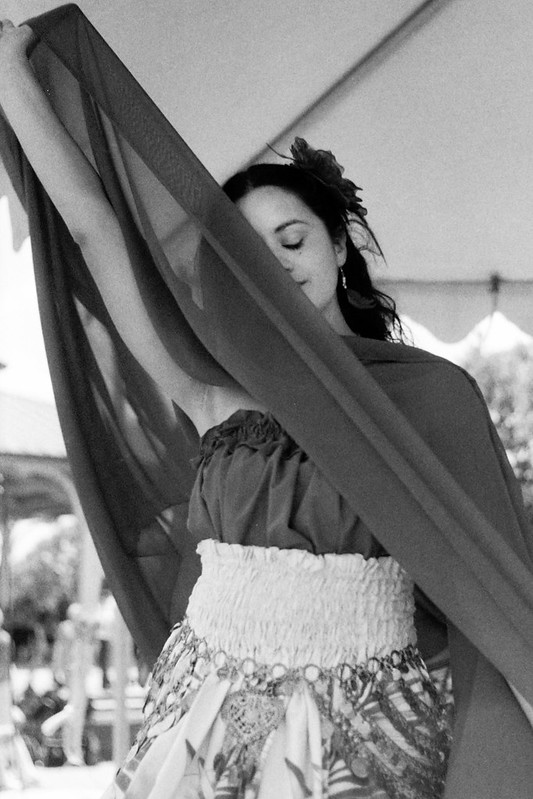
Dancer - Leica IIIG and Uncoated Summitar 5cm f2

Dancer, by Reed A. George
Leica IIIG, Summitar 5cm f2 Collapsible Lens
Agfa APX400 Film @ iso200
 
I think I have figured out this film. I actually like the grain it produces. Shooting it at iso 200 and developing for 10 minutes in undiluted D-76 does the job.
 
DMC-365.blogspot.com
 

Monday, June 15, 2015

Discontinued Agfa APX400 Film - Testing and Tuning Up

My friend Dennis Gallus gave me a 100' roll of Agfa APX400 that he had in his freezer. I shot my first roll of it at the indicated speed of 400, and processed it alongside a roll of Ilford HP5, which I developed for 11.5 minutes in Kodak D-76 developer at 1:1 dilution. Those negatives came out pretty thin overall and very low contrast (underexposed and/or underdeveloped). After reading some old posts online, I learned that APX400 was known to need additional exposure, with some people treating it as iso 320 film, others at iso 200. I also found development guidelines that indicated it needed more development.
 
So, a test roll ensued. I shot a short roll of the film, capturing the same scene exposed for iso 100, 200, and 400. I also changed my development protocol to 10 minutes in full strength D-76. Here are a couple of the results.
 
Scenes exposed at iso 400, 200, and 100, APX400 Film
 
From this, I conclude two things - 1) additional development in full-strength D-76 definitely helped, and 2) somewhere between iso 200 and 320 is probably best for this film.
 
On the same day, I guessed and exposed a full 36 exposure roll at iso 200. It looks pretty good overall. I think I've figured out this film. Not that this information is much use to anyone else; as far as I know you can't get this film any more, though I do see single rolls for sale in some places. But, 100' of it will keep me busy for a while!
 
Thanks again, Dennis!
 
DMC-365.blogspot.com
 

Wednesday, April 29, 2015

Another Birthday Portrait with the Mamiya Universal Press

A few days back, I posted an image I shot of my daughter on her birthday, taken with the Mamiya Universal Press (MUP) and Polaroid back, loaded with Fuji FP100C pack film. I also shared a scan of the color negative I recovered from that shot. (Click Here) to see that post.
 
Today, I'll share another shot from the same time and place, only this one was made on Kodak Portra 400 color negative film, using the MUP's 6x9 film back.
 
Birthday Portrait, by Reed A. George
Mamiya Universal Press Camera, 150mm f5.6 Lens
Kodak Portra 400 Color Negative Film
 
I just got the negatives back from The Darkroom (thedarkroom.com). I actually made a mistake with this roll of film, and exposed the Portra 400 at settings for Portra 160. No problem. The Darkroom pulled the processing by 1.5 stops, saving the pictures for me. I'm pleased with the result.
 
I really enjoy shooting the MUP. It's a very large, heavy beast, with matching impressive lenses. But, when you have the time to set it up and think about your shot, it's great fun to use. This is slow photography. I like it.
 
DMC-365.blogspot.com
 

Thursday, November 6, 2014

Signs of Autumn

I went out for a hike with my lovely wife, and with my Nikon FM2N and Micro-Nikkor 60mm f2.8 lens. We went to a local nature preserve, which is unfortunately only open on weekends. But, at least we could get in. In the past, it had been closed to visitors completely, due to lack of volunteers to staff it.
 
Autumn is fully underway here in Virginia. Here are a couple of shots I made on Walgreens 200 speed film (processed at The Darkroom) that I think signify the fall season pretty well.
Milkweed Gone to Seed, by Reed A. George
 
 
Golden Afternoon, by Reed A. George
 
Haven't tried The Darkroom yet? (Click Here) to give them a try. You'll be pleased with their professional and fast film processing.
 
DMC-365.blogspot.com
 

Sunday, September 22, 2013

Long Live Film(?)

This subject has been covered so many times. However, it seems timely to address it today for me, since I walked into one of the few remaining local processing stores (a Walgreens) yesterday, only to find that they'd removed their film processing equipment.
 
Don't get me wrong - I prefer the mail-in service of The Darkroom most of the time. But yesterday, I wanted to see some results from a new camera, same day. I was not happy to find that the machine was gone. I guess I can't expect to send most of my stuff to The Darkroom and maintain local processing. I made the right choice. So, long live The Darkroom!
 
(Click Here) to see the excellent services The Darkroom provides.
 
(Click Here) to see an interesting video trailer about an upcoming movie about film photography, featured on the blog THEME.
 
DMC-365.blogspot.com


Sunday, August 11, 2013

Skeletons From The Closet - July Results - Konica I Rangefinder

July's camera, the Konica I rangefinder, continues to entertain me. Very basic in design, it's just fun to use.
 
(Click Here) to read about the Konica I.
 
I shot a roll of Fuji 400 color print film in the Konica, mostly around the small town of Leesburg, Virginia.
 
Summer Evening Light, by Reed A. George
Konica I Rangefinder, Fuji iso 400 Print Film
 
 
Leesburg Rooftops, by Reed A. George
Konica I Rangefinder, Fuji iso 400 Print Film
 
I took an evening walk around the Rust Nature Sanctuary, and made these images:
 
View From the Porch, by Reed A. George
Konica I Rangefinder, Fuji iso 400 Print Film
 
 
Porch, Nearer to Sunset, by Reed A. George
Konica I Rangefinder, Fuji iso 400 Print Film
 
 
Plank Floor Detail, by Reed A. George
Konica I Rangefinder, Fuji iso 400 Print Film
 
Come On In, by Reed A. George
Konica I Rangefinder, Fuji iso 400 Print Film
 
Barn Roof, by Reed A. George
Konica I Rangefinder, Fuji iso 400 Print Film
 
Decent processing for 35mm film is continually getting harder to come by locally. My past favorite was a brand new CVS drugstore with a brand new system; they've stopped processing film altogether. I understand I'm a dinosaur, and film doesn't make any money. However, now that it's gone, I have zero reason to ever go to that particular store again. Usually, I end up buying other things while I'm there. Not any more.
 
My back-up, a local Walgreens, seems to have lost the touch. With this roll of film, I found a lot of chemical residue and continuous scratches across the top of all of the images. I know the scratch didn't come from the camera. My last roll with them came complete with negatives cut into in the sleeving process (inaccurate cutting), and enough dust and fiber to convince me the technician wore wool gloves while processing. As much as I don't like to wait, The Darkroom (www.thedarkroom.com) is my best bet. They always return my negatives in the best of condition.
 
The Kid, by Reed A. George
Konica I Rangefinder, Fuji iso 400 Print Film

In the shot above, you can see the scratch along the top, and the remaining spots that I couldn't remove after washing the negatives in water and scanning with Digital ICE. Pretty bad. Others were worse.

Here's one more, shot at the National Cathedral in Washington, DC:


National Cathedral Garden View, by Reed A. George
Konica I Rangefinder, Fuji iso 400 Print Film


Processing issues notwithstanding, I am really enjoying the little Konica rangefinder. The more I use Konica cameras, the more I appreciate their lenses. They are really first-class. No wonder the Konica lenses in Leica mount always demand high prices.

DMC-365.blogspot.com


Wednesday, May 15, 2013

So How Good Is A $4,200 28mm Lens? Leica On Loan at LHSA Spring Shoot!

At the recent LHSA (International Leica Society) Spring Shoot in Fort Lauderdale, Florida, Leica continued their tradition of providing the "Leica On Loan" program to LHSA members. At the beginning of the meeting, Justin Stailey of Leica wheeled in his suitcase literally full of Leica cameras and lenses for us to borrow and test. Yes, you could borrow a Leica M9 or even the M Monochrom, and just about any Leica M lens you can imagine. I decided to borrow the Summicron 28mm f2.
 
I immediately attached the 28 to my film body, an M4-2, where it stayed for most of the meeting. I shot a roll of Fuji Sensia slide film that I needed to use before age took its effects. Here are some of the results.
 
Villa Vizcaya, by Reed A. George
Leica M4-2, Leica Summicron 28mm f2 Lens, Fuji Sensia 100
 
How's that for color? No polarizer or filter of any kind.
 
Vizcaya Stairway #1, by Reed A. George
Leica M4-2, Leica Summicron 28mm f2 Lens, Fuji Sensia 100
 
I really enjoyed the wide angle and well-controlled distortion of the Summicron 28.
 
Garden Towers, by Reed A. George
Leica M4-2, Leica Summicron 28mm f2 Lens, Fuji Sensia 100
 
I picked this particular lens to challenge myself. Preferring 50mm for my normal lens, a 35mm feels wide to me. 28mm is even wider. It's not easy for me to compose with this lens. For example, in the shot above, the lady on the terrace just to right of the center of the image was an important element for me. While I kept the whole composition in mind, using the multiple frames of the towers, my mind was focused on her as a compositional element. As it turns out, she's barely visible due to the wide angle perspective of this lens. This is my limitation in seeing in wide angle, not a limitation of the lens.
 
Colonnade, by Reed A. George
Leica M4-2, Leica Summicron 28mm f2 Lens, Fuji Sensia 100
 
In the case above, the wide perspective allowed me to include the entire column closest to me, which really adds to the shot.
 
Leading Line and Fountain, by Reed A. George
Leica M4-2, Leica Summicron 28mm f2 Lens, Fuji Sensia 100
 
We visited the gardens at almost high noon - the worst light of the day. Combined with a wide angle lens, that presents quite a challenge.
 
Vizcaya Stairway #2, by Reed A. George
Leica M4-2, Leica Summicron 28mm f2 Lens, Fuji Sensia 100

The shot above is my favorite from Vizcaya. All it needs is an alluring lady dressed in white (or red) walking down the steps. Again, the 28mm allowed me to take in the full sweeping shape of this elegant piece of architecture. I love how my eye follows the stairs right up to the sky in this shot.

Now for a change of pace. When we visited the Leica Store in Miami at the Miracle Mile, we saw plenty of high end automobiles. This Ferrari really caught my eye.

Ferrari, Low Angle, by Reed A. George
Leica M4-2, Leica Summicron 28mm f2 Lens, Fuji Sensia 100
 
Ferrari, High Angle, by Reed A. George
Leica M4-2, Leica Summicron 28mm f2 Lens, Fuji Sensia 100
 
The high angle shots says "South Florida" to me - expensive car, palm trees and blue skies reflected in the hood.
 
So, Leica On Loan is yet another great benefit of being an active LHSA member. I can only guess what rental on a $4,200 lens would be for a weekend. Certainly not free as it was for me. If you're interested in joining LHSA, which includes a subscription (electronic or hardcopy) to the Viewfinder journal, access to an amazingly well-informed group of Leica folks, multiple annual events, a new Google+ community, and much more:
 
(Click Here) to join LHSA. If you have any questions about LHSA, feel free to contact me directly.
 
My slides were processed in highly professional fashion by my favorite mail-in processing service, The Darkroom.
 
(Click Here) to go the The Darkroom's page. Very reasonable prices, fast, high quality service, including automatic scanning of every image, posted to your album on the web. You get to see how your images turned out while you're waiting for the originals to arrive in the mail.
 
Thanks to Justin Stailey and Leica for letting me borrow this awesome wide angle lens!
 
 
DMC-365.blogspot.com


Wednesday, December 19, 2012

Steve Huff Tells Us of A Cool Development (Pun Intended)

 
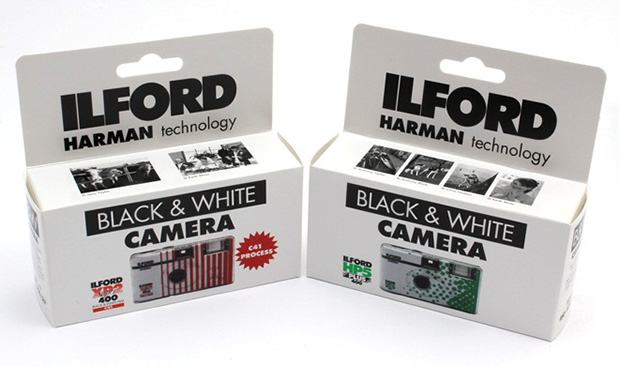
New Ilford B&W Disposable Cameras (Processing Included!)
Image Source: http://www.stevehuffphoto.com/2012/12/07/new-ilford-bw-disposable-cameras-xp2-and-hp5-to-go/
 
Ilford has announced that it is now selling instant cameras with black and white film - either XP2 for regular C41 (drug store) color processing that results in B&W images, or XP5, which requires standard black and white developing chemistry.
 
(Click Here) to read the announcement from Ilford.
 
This announcement was targeted to the UK. Apparently, they'll also be available in the US.
 
I think this is a great development. Even though color conversion to B&W has become easy in the digital world, it's fun to shoot directly in monochrome. This is evidenced by the interest in Leica's new Monochrom rangefinder, which does not shoot in color at all.
 
I recently shot a few rolls of Kodak Tmax400 in Barcelona, and loved so many of the shots. Great fun. As soon as I get a few minutes at home, I'll post some.
 
DMC-365.blogspot.com


Monday, November 12, 2012

Black and White Film for C-41 (Drugstore) Processing - And How To Best Shoot It

 
Chinese New Year Spectator, by Reed A. George
Leica CL, Voigtlander Heliar 75mm f2.5 Lens
 
I love to shoot film. I have found that over time, my choice of film has become easier. Rather than worry about color balance, contrast level, etc., I just go for a low contrast film, and adjust everything in Lightroom, after scanning. The reason I go for low contrast film is that you can always add contrast; you can't take it away. Fuji Reala 100 is (was) an incredibly good film for scanning. Now, I generally just buy inexpensive Fuji film of the speed I need. Actually, in retail stores, that's typically reduced to iso 200 and 400 only.
 
Anyway, I also normally use color film, even when I'm planning to have the final image live in black and white (b&w). Black and white conversion is so easy, good, and flexible in Lightroom that I rarely think about shooting black and white film anymore. When I did shoot b&w film, many times I would choose the films that could be developed in the ubiquitous C-41 process. This allowed me to just drop the film off at the local drugstore and get it back in an hour.
 
Mike Johnston of The Online Photographer has posted a piece on Ilford XP2 Super, which is a C-41 b&w film, and how to best use it. The C-41 b&w films, in addition to being convenient for quick processing, are also known to be very flexible in exposure latitude. That means that if you don't get the exposure just right, it's okay. Many people use this to push the film's native speed of iso400 to 800, or even higher. However, Mike suggests against that.
 
(Click Here) to read Mike's article on The Online Photographer.
 
Mike takes advantage of XP2 Super's characteristics to maximize the effect of the film's low grain in bright areas by typically overexposing, by shooting it at lower iso settings than the nominal 400. Here are his guidelines for iso settings with XP2:
 
  • In normal lighting situations, shoot at iso 200.
  • In very bright situations, shoot at iso 100.
  • In dim lighting, shoot at iso 400, never over 800.
The neat thing is, unlike normal b&w films, you don't have to adjust the processing conditions at all. So, you can still just drop it at the drugstore for processing, even if you shot at iso 100.
 
Go grab yourself a roll and try it out. And remember, to get the best out of XP2 Super, overexpose rather than underexpose it.
 
DMC-365.blogspot.com