Showing posts with label The Darkroom. Show all posts

Wednesday, April 29, 2015

Another Birthday Portrait with the Mamiya Universal Press

A few days back, I posted an image I shot of my daughter on her birthday, taken with the Mamiya Universal Press (MUP) and Polaroid back, loaded with Fuji FP100C pack film. I also shared a scan of the color negative I recovered from that shot. (Click Here) to see that post.
 
Today, I'll share another shot from the same time and place, only this one was made on Kodak Portra 400 color negative film, using the MUP's 6x9 film back.
 
Birthday Portrait, by Reed A. George
Mamiya Universal Press Camera, 150mm f5.6 Lens
Kodak Portra 400 Color Negative Film
 
I just got the negatives back from The Darkroom (thedarkroom.com). I actually made a mistake with this roll of film, and exposed the Portra 400 at settings for Portra 160. No problem. The Darkroom pulled the processing by 1.5 stops, saving the pictures for me. I'm pleased with the result.
 
I really enjoy shooting the MUP. It's a very large, heavy beast, with matching impressive lenses. But, when you have the time to set it up and think about your shot, it's great fun to use. This is slow photography. I like it.
 
DMC-365.blogspot.com
 

Thursday, November 6, 2014

Signs of Autumn

I went out for a hike with my lovely wife, and with my Nikon FM2N and Micro-Nikkor 60mm f2.8 lens. We went to a local nature preserve, which is unfortunately only open on weekends. But, at least we could get in. In the past, it had been closed to visitors completely, due to lack of volunteers to staff it.
 
Autumn is fully underway here in Virginia. Here are a couple of shots I made on Walgreens 200 speed film (processed at The Darkroom) that I think signify the fall season pretty well.
Milkweed Gone to Seed, by Reed A. George
 
 
Golden Afternoon, by Reed A. George
 
Haven't tried The Darkroom yet? (Click Here) to give them a try. You'll be pleased with their professional and fast film processing.
 
DMC-365.blogspot.com
 

Friday, August 22, 2014

Mamiya Press Universal and Fuji FP3000B

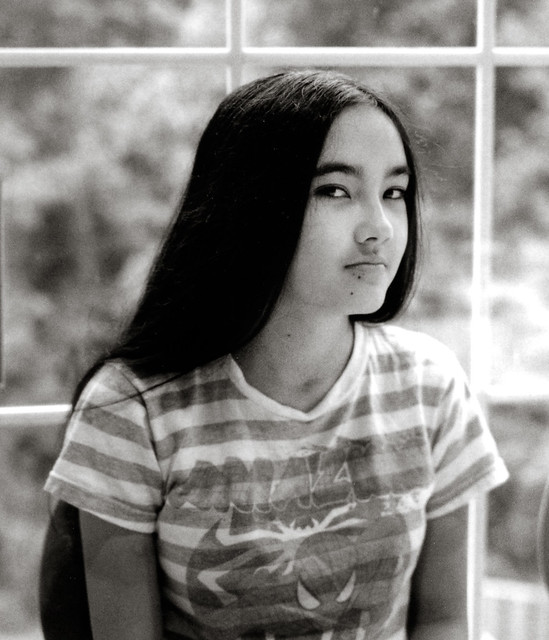
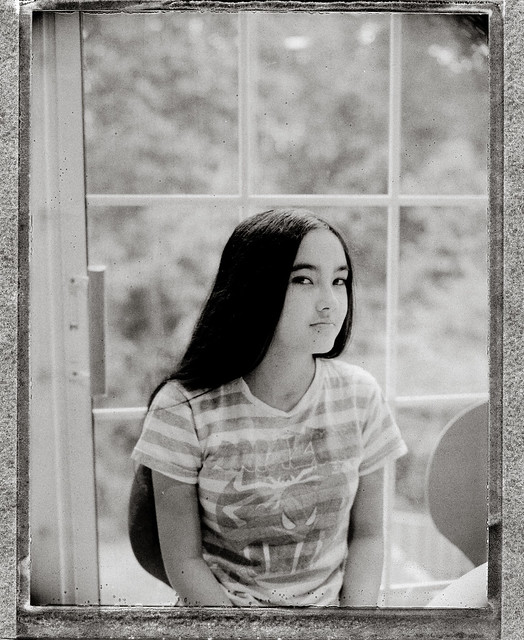
I'm continuing to enjoy shooting instant pictures with my new Mamiya Universal. Here's a shot I made with Fuji's black and white iso 3000 pack film. I used the standard 100mm f3.5 Mamiya Sekor lens for this one.
 
Cropped, From Scanned Print
 
And, for reference, here's what the whole image looks like, scanned from the paper negative:
 
From the Paper Negative
 
I really need to photograph the Universal camera so that I can share all the details of what's included. It's a big heavy beast, but has a lot of interesting features.
 
I've received my first online scans from film I shot in the Universal, and am really impressed with the image quality. As soon as my film returns home from The Darkroom (thedarkroom.com), I'll make high resolution scans of a few images and share them as well.
 
DMC-365.blogspot.com
 

Friday, August 15, 2014

Planning My Next Theme - Maybe

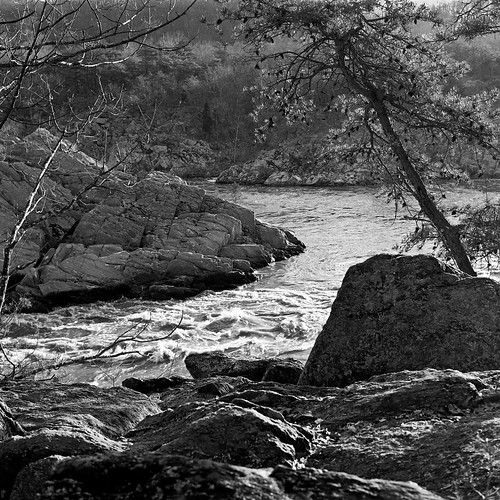
Great Falls, VA, at About 17 Degrees Fahrenheit, by Reed A. George
Rolleiflex
 
Well, if you've followed the twists and turns of this blog for a few years, you've seen it change quite a lot. If not, I can tell you that my focus shifted from mainly Panasonic/Lumix/Micro 4/3 gear in the first year to a prolonged emphasis on Leica, and on old film cameras. Recently, I've been thinking more about the creative process and how it relates to gear and format.
 
I think all of this has been useful for me, and I don't plan to drop any of it. I still shoot Lumix when the mood strikes me, and have zero problem relying on a full Micro 4/3 kit for much of my travel. I'll never lose the love for my Leicas. However, lately, some friends and I have been leaning more toward medium format film cameras for our weekend outings.
 
In my Skeletons From The Closet series, I used several of my old medium format cameras. My friends Charlie and Alain are Rolleiflex users. I love my Rolleiflexes as well. I recently picked up (through the favor of another friend) a wondrous Mamiya Universal Press camera kit. I also really enjoy medium format folding cameras, and my Bronica ETR (6x4.5 format) kit has been sitting idle for far too long.
 
So, I may just have to start a new emphasis on medium format film shooting. In fact, my first couple of rolls through the Mamiya are on their way to The Darkroom as I write this.
 
Don't know about The Darkroom? (Click Here) for the best film processing I've ever found.
 
As I've learned that focusing on just one type of equipment is only satisfying for a finite period of time, I'll figure out how to make the best creative use of this type of gear. I won't limit myself to one camera or maker. I will commit to the "slow photography" movement, at least for this part of my shooting. With a Mamiya Universal, you don't have much choice but to commit to slow photography. :)
 
Anyway, that's my thought at this point in time. Again, this will not be an exclusive focus. I surely won't be traveling with just a Mamiya Universal very often. But, it could be a new dimension to add to my subjects.
 
Input always appreciated! Drop me a comment with your thoughts.
 
DMC-365.blogspot.com
 

Tuesday, April 15, 2014

Quick Test of an Old Leica

A couple of months back, I had the fortune of finding two Leica IIIC cameras, separate but very close together in time, both manufactured at the end of World War II. Coming from separate sellers, the cameras are extremely similar, both having the wartime "stepper" design, and having been manufactured in 1945. In both cases, according to the best source on wartime Leicas anywhere (James Lager, my colleague in the LHSA), they were most likely sold to allied soldiers in Europe at the end of the war.
 
One of the cameras came with a date-matching Elmar 5cm f3.5 collapsible lens (the standard lens of the day). I used that lens for the images below.
 
I've now had both cameras serviced by Youxin Ye, and they're working as-new. I took the second one that I purchased out for a walk and test roll recently. You see the results below.
 
I happened onto a model yachting event in Reston, Virginia. These images are straight from the camera, Walgreens iso 200 color print film, processed by The Darkroom.


In the shot above, you can see what I believe is internal reflection in the lens/camera. I was not using a lens hood.
 
This final shot is my favorite of the bunch.
 
No Pulitzers here, I'm sure. However, I did accomplish my goal, which was to test the camera and lens. I kind of like the rather low contrast result, especially as the light was quite harsh. I'm not sure how much of the low contrast comes from the lens (most, I suspect), versus the film. The cheap Walgreens film tends to have this sort of look on its own. Most of these were shot at f8 or smaller aperture, and relatively high shutter speeds.
 
The images are plenty sharp, and I think the color representation is quite nice.
 
It's amazing to me that such a piece of photographic history, made well before I was born, still works and yields results that are at least as interesting as modern cameras. Certainly the technical performance of modern cameras and lenses is better, but I'm quite happy with the look this camera and lens produce. And that's what matters to me.
 
DMC-365.blogspot.com


Tuesday, March 18, 2014

CineStill iso 800 Tungsten Balanced Color Film - Something Else to Try

Image Source: http://aphotocontributor.typepad.com/aphotocontributor/2014/03/pretty-palate.html

I read a very interesting post on the blog "APhotoContributor," about a type of film I've never used before, known as "CineStill." It's an iso 800 film, color balanced for tungsten light sources. Not something I'd want to use every day. In fact, I think I've only used tungsten-balanced film once or twice, and it was film that a friend gave to me. The author used a conversion filter (85B) when shooting the film in daylight.

(Click Here) to see the post on APhotoContributor. There are lots of examples shot on this film, in many different lighting situations.

So why would I be interested in trying this film? I think it could be a very interesting way to shoot low light concerts in color. Granted, many modern music venues use the dreaded LED light sources, which are impossible to balance for. The issue is that they only emit a very narrow wavelength range, so you get full saturation in one color channel, nothing in the others. But, for those beloved stages still lit with filtered tungsten lights, this could be very interesting.

The CineStill film is available from Freestyle, but for quite a high price ($9 per roll). I'm going to assume these are 36 exposure rolls, but don't know that for sure. CineStill can be processed in normal C41 chemistry (what your few remaining drugstores who develop film use). I would send mine to The Darkroom (thedarkroom.com).

What makes the film even more interesting is that you can push it to iso 3200. That would definitely come in handy for some low light music clubs.

(Click Here) to see CineStill on Freestyle's site.

What I may do is try a roll or two, then see if I can replicate the look using my Leica M9 and adjustments in Lightroom, similar to what I've already done with Ilford Delta 3200.

I'm discovering new things to try, working between film and digital. What I've come to realize is that I should not try to make the same image style with my Leica M9 at iso 1600 as I would at iso 200. Once I understand that, it opens some doors. If I'm emulating Delta 3200, with its high grain and contrast, shooting the M9 at iso 1600 is no problem whatsoever. The grain added in Lightroom works just fine with the CCD noise generated in the M9 at such a high iso setting.
 
I feel like I'm leaving a plateau in learning over the past couple of months, and things are getting more interesting again.
 
DMC-365.blogspot.com


Thursday, February 20, 2014

Quick Report on Leica Store Event and Regional LHSA Meetup

I have been pretty active in the LHSA (International Leica Society) over the past year or so. One of the most rewarding things I've done is to schedule local meetups for LHSA members, roughly quarterly. These get a small yet dedicated attendance, and are always interesting.
 
(Click Here) to learn about and join LHSA.
 
For the most recent meeting, I decided to coordinate with the Washington DC Leica Store's photowalk event at DC's Chinese New Year celebration in Chinatown. A large group of Leica users met for the Chinese New Year parade, a mix of LHSA members and non-members.
 
(Click Here) to go to the DC Leica Store's home page. They have a beautiful store, and regularly host interesting events for Leica users.
 
We borrowed someone's camera and grabbed a nice Leica user group shot:
 
 
Since my M9 was in for service, I decided to shoot all film for this event. I brought my lovely M3 double stroke with 50mm Summicron f2 version 3 lens attached, and, stretching the Leica definition, my Zeiss SW body and Zeiss Biogon 25mm f2.8 lens.
 
I had a first-ever experience during this event. My M3's film advance mechanism jammed on me, preventing me from using it after about 15 exposures. I'd never experienced a mechanical problem with a Leica camera. Not to worry, it's already back from Youxin Ye, who quickly serviced it at no cost, since I had bought the camera from him last year.
 
Need Leica film camera service? Get in touch with Youxin. He does a great job and has my full recommendation.
 
(Click Here) to go to Youxin's home page.
 
Since we were meeting the very next week to share results at the Leica Store, I make the mistake of taking my film to one of the only local drugstores who still process film. Their processor must have needed service; the color came out just ridiculously bad, and in an unpredictable way. It seems that some frames were okay, others were almost completely devoid of red tones (you don't want to lose your reds in a Chinese New Year image), with a cyan tone. So, I had to work pretty hard in Lightroom to come up with a few images worth sharing.
 
NOTE: None of this would have been a problem if I'd used my regular processing solution, The Darkroom. I've used their mail-in service many, many times, and never had a single issue.
 
(Click Here) to look into The Darkroom's first-rate film processing service.
 
So, after overcoming a few challenges, here are the images I decided to share at the DC Leica Store:


We had our regional LHSA meetup at the National Portrait Gallery, just down the street from the Leica Store, before heading there to share images.
 
It was actually a lot of fun shooting the Zeiss SW and Biogon 25mm wide angle lens. It required getting very close, but I like the feel of the images.
 
DMC-365.blogspot.com


Friday, January 31, 2014

Dreaming in Monochrom(e) - High ISO Analog!

I've been playing around, using my Leica M4-2 film camera as a test to see if I really want a Leica Monochrom digital rangefinder. (Click Here) to read more about it.
 
I said at the outset that I understand that shooting black and white film in a Leica M4-2 has its limits in terms of emulating the amazing new Leica Monochrom digital black and white rangefinder. For example, the Monochrom is noted for its great performance at high iso settings.
 
Well, I decided to "push" (quite literally) the high iso limits of the M4-2 by push processing Kodak TMax 400 film to iso 1600. It was quite simple. I just shot at exposure settings for iso 1600 instead of 400, then instructed my favorite processor (The Darkroom, www.thedarkroom.com) to push the film two stops. This cost an extra $2 in processing costs. Pretty reasonable.
 
Here are some results from a concert I attended. I'll start with one of my favorite local performers, Melissa Wright and her band Mink:
 
 
Mink, by Reed A. George
Leica M4-2, Kodak TMax 400 pushed to 1600
 
And a few more, these of the band Dry Mill Road:


Dry Mill Road, by Reed A. George

Leica M4-2, Kodak TMax 400 pushed to 1600

 
All of these shots were made with my Zeiss Sonnar 50mm f1.5 and Leica Elmarit 90mm f2.8 lenses.
 
As you can see, the contrast is pretty high in these shots. They don't have the amazing dynamic range of the modern digital monochrome. But, the film grain is quite nicely controlled in my opinion. In fact, I think these look better than equivalent shots with my digital rangefinder Leica M9 would at iso 1600. I may have to do that comparison to further convince myself. Already this little project is teaching me something about how much I can do with film and the M4-2. I haven't pushed a roll of film in years, and I feel that it frees me up to take the M4-2 along for shooting musical events that I would have only really considered the Nikon D700 for in the past. I'm pleased with that.
 
I also want to continue to extend this, seeing how TMax 400 holds up at 3200 and maybe even 6400. I'm sure it will start to degrade significantly at 6400. But, I think I may be able to pull of 3200 with no real problem.
 
From what I understand, Kodak TMax 3200 is no longer being produced, but Ilford Delta 3200 is. I used the Ilford film in the past, but found the grain to be very high at 3200. I liked that film much better at 1600. Considering that the Ilford 3200 is more than twice the price of TMax 400, I'm not sure I have much motivation to give it another try, especially when I can get this type of performance from the TMax.
 
DMC-365.blogspot.com


Sunday, December 8, 2013

Chinatown Sky, San Francisco

Chinatown Sky, by Reed A. George
Leica M6, Kodak 400 Color Print Film
 
I have always been attracted to the Chinese lanterns and dragon-design lightposts in San Francisco's Chinatown. In this shot, the clouds against the bright blue sky, boxed-in by the building roofs, provide a nice backdrop for them. The diagonal line of the lanterns also works for me.
 
This is a low resolution scan that I downloaded from The Darkroom's online site. I added some saturation in the lanterns, and darkened up the shadows under the roof eaves, and added the frame in Snapseed. I may do some more work with this image when the negatives arrive in the mail next week. I'm sure it will look somewhat different if I scan it at home and post process with Lightroom.
 
DMC-365.blogspot.com


Monday, November 25, 2013

Street Photography Tip - Look for Interactions Between People

People have different definitions for "street photography." Some say it must be taken outside, others say it must include a street(!). I don't get hung up on technicalities. When I say that I enjoy street photography, I mean candid (mostly) images of people, going about their lives. Sometimes I talk with people before photographing them; I would call that street portraiture. In any case, today's example is a candid.
 
Street photography without a human element falls flat for me. I need to see people doing something. Not always interacting with others, but something. Interaction is usually one of the most powerful behaviors to capture in my opinion.
 
What's the Special Today?, by Reed A. George
Leica CL, Minolta 40mm f2 Rokkor Lens, Kodak TMax 400 Film
 
In the shot above, I actually liked that the dining booth seat separated me from the lady in glasses, obscuring most of her face. I think this focuses the attention on her eyes, always the photographically most important feature on someone's face. I prefocused my CL, made a quick guess at the exposure, then anticipated their interaction. I lifted the camera to my face for less than a second, releasing the shutter right as she looked up into the server's eyes. No one took notice.
 
I knew I had captured the exact moment that I wanted. That's not always (or even usually) the case. All I had to do now was wait to see the negative come back from The Darkroom (my favorite film processor).
 
(Click Here) to read about The Darkroom's processing services. I use them almost exclusively at this point for my film developing. Quick service (online images are usually up within a day of them receiving my film), excellent quality, great prices ($10 per roll). Give them a try.
 
DMC-365.blogspot.com


Wednesday, May 15, 2013

So How Good Is A $4,200 28mm Lens? Leica On Loan at LHSA Spring Shoot!

At the recent LHSA (International Leica Society) Spring Shoot in Fort Lauderdale, Florida, Leica continued their tradition of providing the "Leica On Loan" program to LHSA members. At the beginning of the meeting, Justin Stailey of Leica wheeled in his suitcase literally full of Leica cameras and lenses for us to borrow and test. Yes, you could borrow a Leica M9 or even the M Monochrom, and just about any Leica M lens you can imagine. I decided to borrow the Summicron 28mm f2.
 
I immediately attached the 28 to my film body, an M4-2, where it stayed for most of the meeting. I shot a roll of Fuji Sensia slide film that I needed to use before age took its effects. Here are some of the results.
 
Villa Vizcaya, by Reed A. George
Leica M4-2, Leica Summicron 28mm f2 Lens, Fuji Sensia 100
 
How's that for color? No polarizer or filter of any kind.
 
Vizcaya Stairway #1, by Reed A. George
Leica M4-2, Leica Summicron 28mm f2 Lens, Fuji Sensia 100
 
I really enjoyed the wide angle and well-controlled distortion of the Summicron 28.
 
Garden Towers, by Reed A. George
Leica M4-2, Leica Summicron 28mm f2 Lens, Fuji Sensia 100
 
I picked this particular lens to challenge myself. Preferring 50mm for my normal lens, a 35mm feels wide to me. 28mm is even wider. It's not easy for me to compose with this lens. For example, in the shot above, the lady on the terrace just to right of the center of the image was an important element for me. While I kept the whole composition in mind, using the multiple frames of the towers, my mind was focused on her as a compositional element. As it turns out, she's barely visible due to the wide angle perspective of this lens. This is my limitation in seeing in wide angle, not a limitation of the lens.
 
Colonnade, by Reed A. George
Leica M4-2, Leica Summicron 28mm f2 Lens, Fuji Sensia 100
 
In the case above, the wide perspective allowed me to include the entire column closest to me, which really adds to the shot.
 
Leading Line and Fountain, by Reed A. George
Leica M4-2, Leica Summicron 28mm f2 Lens, Fuji Sensia 100
 
We visited the gardens at almost high noon - the worst light of the day. Combined with a wide angle lens, that presents quite a challenge.
 
Vizcaya Stairway #2, by Reed A. George
Leica M4-2, Leica Summicron 28mm f2 Lens, Fuji Sensia 100

The shot above is my favorite from Vizcaya. All it needs is an alluring lady dressed in white (or red) walking down the steps. Again, the 28mm allowed me to take in the full sweeping shape of this elegant piece of architecture. I love how my eye follows the stairs right up to the sky in this shot.

Now for a change of pace. When we visited the Leica Store in Miami at the Miracle Mile, we saw plenty of high end automobiles. This Ferrari really caught my eye.

Ferrari, Low Angle, by Reed A. George
Leica M4-2, Leica Summicron 28mm f2 Lens, Fuji Sensia 100
 
Ferrari, High Angle, by Reed A. George
Leica M4-2, Leica Summicron 28mm f2 Lens, Fuji Sensia 100
 
The high angle shots says "South Florida" to me - expensive car, palm trees and blue skies reflected in the hood.
 
So, Leica On Loan is yet another great benefit of being an active LHSA member. I can only guess what rental on a $4,200 lens would be for a weekend. Certainly not free as it was for me. If you're interested in joining LHSA, which includes a subscription (electronic or hardcopy) to the Viewfinder journal, access to an amazingly well-informed group of Leica folks, multiple annual events, a new Google+ community, and much more:
 
(Click Here) to join LHSA. If you have any questions about LHSA, feel free to contact me directly.
 
My slides were processed in highly professional fashion by my favorite mail-in processing service, The Darkroom.
 
(Click Here) to go the The Darkroom's page. Very reasonable prices, fast, high quality service, including automatic scanning of every image, posted to your album on the web. You get to see how your images turned out while you're waiting for the originals to arrive in the mail.
 
Thanks to Justin Stailey and Leica for letting me borrow this awesome wide angle lens!
 
 
DMC-365.blogspot.com