Showing posts with label wide angle. Show all posts

Friday, September 11, 2015

Day Sleepers - Cool Project

My Day Sleepers (NYC), by Reed A. George
Panasonic Lumix DMC-LX7
iso 800, f1.8, 1/125 sec.
 
I captured these guys sleeping on the subway in NYC. It's interesting to see people sleeping in public places, especially when they're not unfortunate homeless people.
 
I read an interesting piece on the Leica Camera Blog about Eric Leleu, a Frenchman who did an extensive project, photographing "day sleepers" in China. Interestingly, Eric used a Leica M6 for many years, and more recently a digital Leica M240, but in both cases with just one lens - a 35mm f1.4 Summilux.
 
(Click Here) to read the story on the Leica Camera Blog. Knowing he shot all of these with a 35mm wide angle impresses me. He had to get pretty close in many cases.
 
DMC-365.blogspot.com

Monday, August 3, 2015

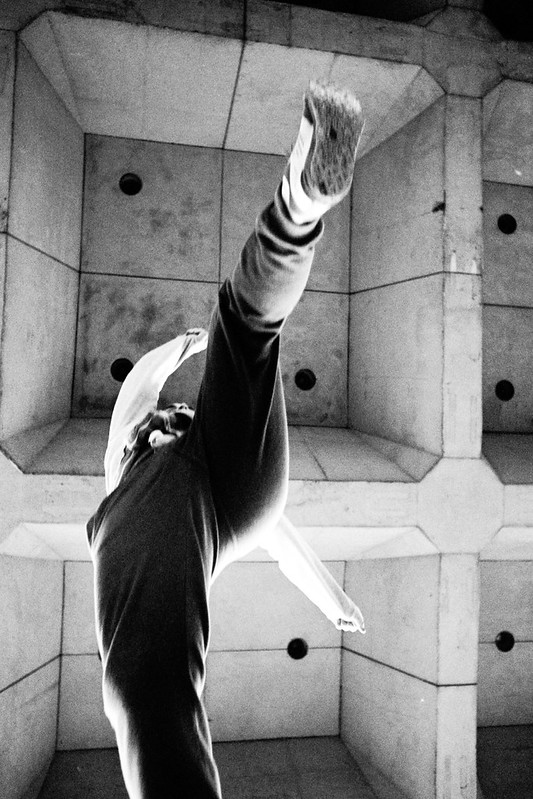
More Parkour - Fisheye Shots

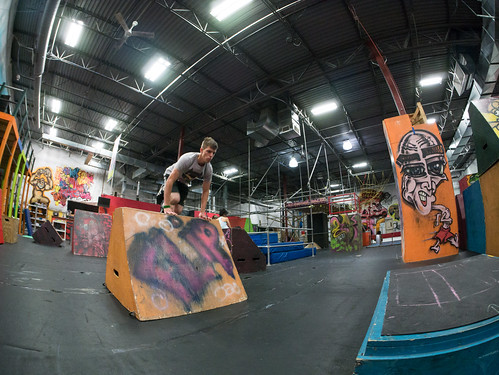
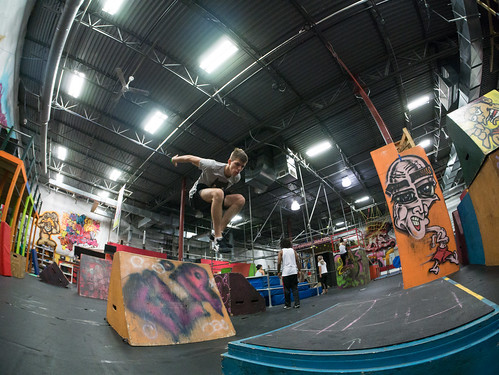
Here are some fisheye images I made with the Panasonic Lumix DMC-GX7 and Bower fisheye lens. These were taken at the same parkour workout that I wrote about yesterday.
 
 
I shot these at the end of the workout, choosing to use high iso and no flash. I really need to try some fisheye images with rear curtain, slow shutter flash. That will be cool.
 
DMC-365.blogspot.com
 

Monday, July 13, 2015

Summer Leaves

There's something about trees. They have this incredible range of dimension, from the microscopic detail of leaf structure, to the sometimes impressively large structure of the trunk and root system. There's a lot going on inside this one living organism, and even more just outside.
 
Photographers, including me, love to shoot the autumn leaves. I found this tree, which happens to be at its peak summer health, equally interesting
 
Summer Leaves, by Reed A. George
Nikon Df, Nikkor 28mm f1.8 AF-S G Lens
iso 3200, f5.6, 1/125 sec.
 
I spot metered a point on the gray tree bark to get this exposure. Of course, that meant blowing out the highlights in the white sky around the leaves, but that's okay.
 
DMC-365.blogspot.com

Monday, July 6, 2015

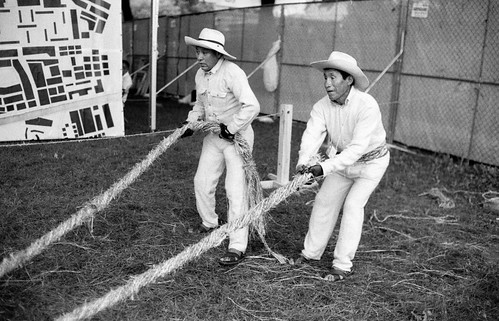
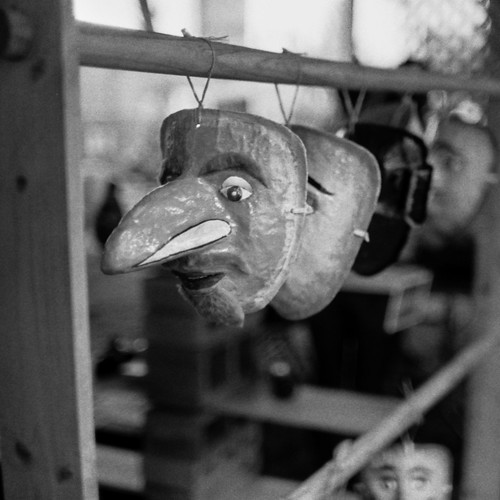
Smithsonian Folklife Festival - Featuring Peru - Shot with Nikon FM2 and Nikkor 35mm f1.4 AIS Lens

I just replaced the seals on my Nikon FM2. My latest roll of film showed evidence of a minor light leak. That's all fixed up now. It took about an hour to get all the old seal residue off and install the new ones, but it was well worth the effort.
 
To test it, I mounted my new Nikkor 35mm f1.4 AIS lens, loaded a roll of Agfa APX400 film (thanks again, Dennis!), met my friend Charlie, and headed into DC. We attended the Smithsonian Folklife Festival, which featured Peru this year. Here are a few of the first pics I've scanned.
 
 
I just got the lens from another friend, Alain, a short time back. I haven't used it a lot. I think I like it.
 
I will be posting more from this event as I get them scanned.
 
DMC-365.blogspot.com

Sunday, June 7, 2015

Parkour - By Maik Scharfscheer, Leica Photographer

 
Parkour, by Reed A. George
Nikon F2SB
 
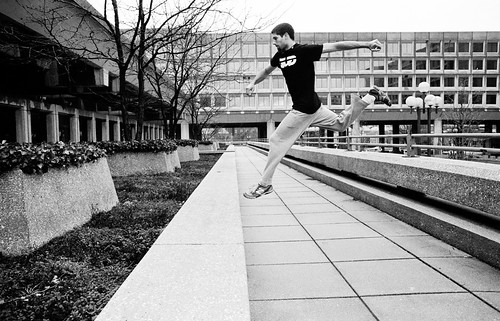
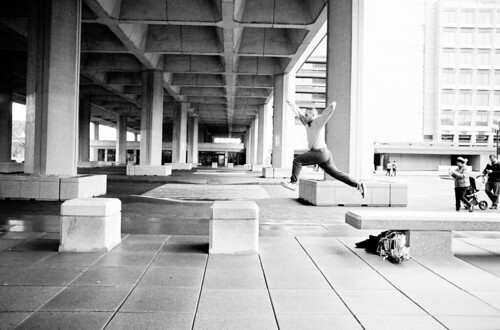
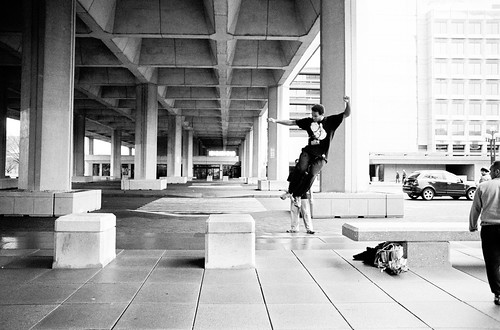
I've recently gotten into photographing the sport of parkour. These urban acrobats are excellent photographic subjects, and I've just started to scratch the surface.
 
I found an interesting post on the Leica Camera Blog about photographer Maik Scharfscheer, who made a series of photographs of a parkour practitioner in the city of Marrakesh. (Click Here) to see the post.
 
As you can see above, my first session shooting parkour was with a manual Nikon film SLR. My inclination, as with most photographers I'm sure, is to use a fast camera for this subject, something like a DSLR. In fact, I have now used my Nikon Df for that purpose. But, I've also been playing with Micro 4/3 (using a fisheye lens), and most recently with a Zeiss SW 35mm camera with a Voigtlander 12mm f5.6 lens. This sport works so well with wide angle lenses.
 
So, in some ways, I'm taking an approach similar to Scharfscheer, who chose to shoot parkour with a Leica, carefully selecting his moments rather than capturing high speed sequences with a DSLR.
 
That said, I captured some pretty cool sequences today at a parkour event with my Nikon Df. As I said, I'm trying a variety of approaches to develop my own look at this exciting sport. I'll share more parkour images in the near future.
 
DMC-365.blogspot.com


Wednesday, March 25, 2015

Parkour! The Benefits of Simply Getting Out to Shoot

It has been a long winter. Last weekend, cabin fever got the best of me, and I drove into DC with my Nikon F2SB (loaded up with HP5+), 50mm f1.4 AI, 28mm f3.5 pre-AI, and 135mm f3.5 pre-AI lenses. Having literally no idea what I was going to photograph, I decided to park at L'Enfant Plaza and walk over to the Smithsonian castle.
 
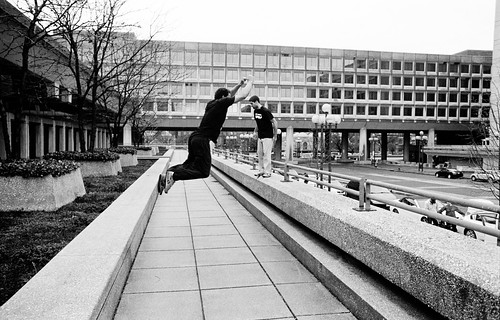
As soon as I got out of my car, I noticed two young men practicing parkour at the Department of Energy building. Don't know what parkour is? (Click Here) to find out.
 
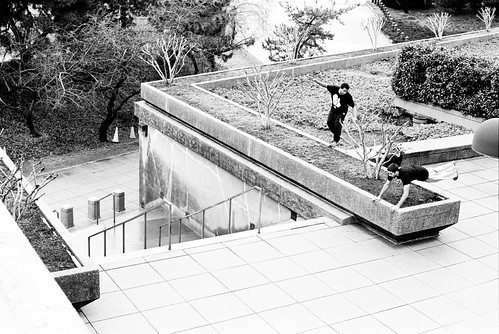
That was all I needed. I wound up following them around for two hours, shooting their acrobatic antics. I've only developed the first of two rolls of HP5 I shot, so there are more to come. Here are some that I liked from the first roll.


I ended up shooting mostly with the 28mm lens, getting as close as possible to the action. I also shot a few with the 50mm f1.4.
 
It took me a little while to get comfortable and find the right angles to shoot from. The first two traceurs, David and Garrett, were joined by Juan. All three of them were extremely friendly and welcoming of a tag-along.
 
This experience reminded me that finding an interesting subject is not always a contemplative exercise. I never would have dreamed up the idea of finding a local parkour group. I had to be out there looking. And now, I'm sure this is something I'll continue to photograph for some time to come.
 
DMC-365.blogspot.com

Friday, December 19, 2014

New Nikon 20mm f1.8 - Samples Posted on SoundImagePlus

By and By, by Reed A. George
Nikon D700, Nikkor AF-D 20mm f2.8 Lens
 
I have grown to love my older Nikon 20mm f2.8 lens over the past few years. At first, it just seemed too wide for me to use much. As I've shot more live music, especially in small venues or where I can get very close to the stage, I love to use it. It's pretty cool to be so close and still get the whole band in a single shot.
 
At a maximum aperture of f2.8, I sometimes feel I need something faster. Of course, that must be balanced with the need for depth of field (which diminishes at wider apertures), but at 20mm focal length, that's not really too much of an issue.
 
And, the advent of better and better sensors, makes it less urgent as well. I don't mind shooting at f2.8 or even f4 at all, if my sensor can handle the iso settings that are necessary in a dark club. The Nikon Df sure seems to do that for me.
 
Anyway, the new Nikkor 20mm f1.8 G lens looks very interesting to me. Reasonably priced at around $800, my only (typical) complaint is about the lack of an aperture ring. Fine on my D700 or Df, it does mean that I can't effectively use the lens on older film bodies.
 
The blog SoundImagePlus has recently posted some very nice image samples with this new lens.
 
(Click Here) to read the post and view the samples on SoundImagePlus.
 
Ready to buy this lens? Please support my blog by ordering yours through the Amazon link below. It costs you nothing, and helps me a lot!
 
DMC-365.blogspot.com


Thursday, November 20, 2014

What You May Have Found in a Photojournalist's Bag in 1945

As you probably can see, I love vintage cameras. I've put together a nice Leica kit, all with equipment that was made before or during World War II. Here it is.
It includes:
  1. Leica IIIC (stepper) camera
  2. 5cm f2 Summitar (uncoated) normal lens
  3. 3.5cm f3.5 Elmar (uncoated) wide angle lens, with auxiliary finder
  4. 9.0 cm f4 Elmar telephoto lens (black), with auxiliary finder
The 9.0 cm Elmar and IIIC body were made during the war years; the other two lenses were made earlier.
This is a very capable kit, still today. Covering wide to long focal lengths, it all fits in a small camera bag, and doesn't weigh much at all. It's a blast to use.
 
DMC-365.blogspot.com


Wednesday, October 15, 2014

Nikkor 20mm f1.8 ED Lens - My New Wide Angle for Concerts?

Well, the engineers at Nikon are once again testing my resolve. My go-to camera for low light concert photography is the Nikon D700. The advent of the amazing Nikon DF has had me debating with myself for months now - with the retro design, relatively small size, and D4 sensor that trades resolution in favor of low light noise performance much as the D700 did two sensor generations back, the DF seems like a very natural fit for my style of shooting, especially in dark clubs and concerts.
 
Recently, I've been shooting really wide angle on my D700 at shows. My 20mm f2.8 AF-D lens does a nice job for me, but f2.8 just isn't really that fast.
 
Will and Larry, by Reed A. George
Nikon D700, Nikkor 20mm f2.8 AF-D Lens
iso 1600, f2.8, 1/250 sec.
 
Now, Nikon has announced a new product, the AF-S Nikkor 20mm f1.8G ED lens. An FX lens, meaning that it covers the full-frame sensor of the D700 or DF, this lens also has ultra-fast AF-S focusing and low dispersion ED glass. I don't really like "G" lens design, as it lacks an aperture ring, which means I can't use G lenses on my old film cameras. But, G design is the rule rather than the exception in Nikon's new lenses, so I'd just have to live with it.
 
Nikon
Image Source: http://www.nikonusa.com/en/Nikon-Products/Product/Camera-Lenses/AF-S-NIKKOR-20mm-f%252F1.8G-ED.html

I have "enabler" friends who would say that the choice is clear. I simply need to buy a new DF with 20mm f1.8 lens and be done with it. It's not that simple a decision for me, especially when I have less time than I need to shoot the camera gear I already have. I suppose it's good to always have something in mind that could improve my photographic experience. Thanks for that, Nikon.
 
DMC-365.blogspot.com


Sunday, October 12, 2014

Another Watermelon Park Festival Highlight - The Knicely Family Band

I'm working through my Watermelon Park images, in between traveling for work (I'm in Albany, NY at the moment), and several other projects. Here's a shot of the Knicely Family Band.
 
Knicely Family Band, by Reed A. George
Nikon D700, Nikkor 20mm f2.8 AF-D Lens
iso 3200, f5.6, 1/125 sec.
 
As you probably already know from my posts, the Knicely family is kind of a core of musical talent here in Virginia. Danny Knicely (second from right) is a musical powerhouse, playing in multiple bands as well as producing his own music, including his latest CD, "Waltz for Aimee." Those are his brothers on the ends, and Mom and Dad next to him.
 
(Click Here) to go to Danny's website and purchase the new CD.
 
I knew that I wanted to get all of their faces in this shot, to the extent possible. The wide angle 20mm f2.8 lens allowed me to do that from right at the front of the stage.
 
Along those lines, Nikon has a new 20mm f1.8 lens out. I'd love to have that extra speed in my 20mm lens. I've been using the 20 more lately for live music, in dark spaces. The extra 1.4 or so f-stops would really help. See the link below to see the new lens on Amazon.
 
DMC-365.blogspot.com


Wednesday, October 1, 2014

More From Chalk Fest, Leica IIIC with Summaron 3.5cm f3.5

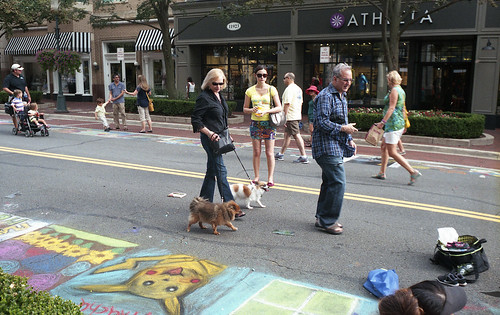
Here are a few more pics from Chalk Fest, all shot with my Leica IIIC and Summaron, on Fuji 100 color negative film.
 
The Summaron 35 is a spectacular little lens, and I do mean little. I love the subtle color rendition that this lens produces.
 
DMC-365.blogspot.com


Wednesday, September 10, 2014

Mamiya Universal Current Users? Not Many That I Can Find...

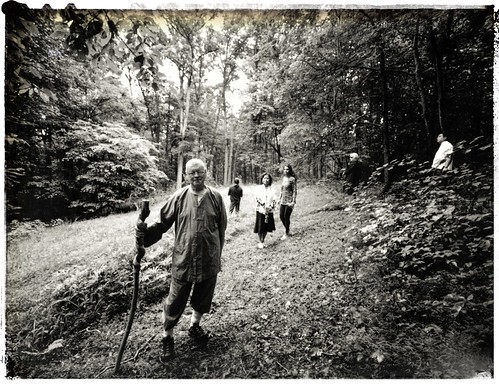
Yesterday I posted a picture of my new Mamiya Universal Press kit. One of the several fun things about the camera is using it with a Polaroid back. Here's an image I made recently on a meditation retreat:
Forest Monk and Followers, by Reed A. George
Mamiya Universal Press Camera, 50mm f6.3 Wide Angle Lens
Fujifilm FP3000B Instant Film, Scanned on Epson V750
Edited in Snapseed
 
Now, the Universal was probably never meant to be really, well, universal. It's hard to imagine the designers at Mamiya thinking "Let's make a camera that's perfect for everyone, truly universal." and coming up with this design. It's big, heavy, all manual. But, it does have capabilities that are difficult or impossible to find in other systems. It will never be near universal for me, but is definitely a favorite nonetheless.
 
I've been searching for others who are still actively using the Mamiya Universal Press (MUP) in 2014. I have not found many. I did find the "Simply Oxford Photoblog," which does have a few fairly recent posts using the MUP.
 
(Click Here) to see a post of lovely model shots made with the MUP on Simply Oxford.
 
I'm going to keep exploring this camera for a while, and find exactly where it best fits into my interests.
 
DMC-365.blogspot.com
 

Saturday, August 23, 2014

Small Music Venue? Try a Fisheye!

 
Jake and the Burtones with Melissa Wright, by Reed A. George
Panasonic Lumix DMC-GX7, Rokinon 7.5mm f3.5 Fisheye Lens
iso 3200, f3.5, 1/50 sec.
 
I'm getting ready to leave on a trip, and pulled the card out of my GX7 to download what was on there, before formatting and getting ready to leave. I remembered this shot of local band Jake and the Burtones and guest Melissa Wright when it came up.
 
They were playing at the Mad Horse Brewpub in Lovettsville, VA when I decided to give this shot a try. It's not really a small venue, but the band was tightly packed into the corner. I also wanted to try to get the whole group and include some of the artwork on the walls in the shot.
 
One of the challenges I've had shooting these guys is that there's a single microphone for vocals, which you see just left of center in the image above. This means that they spend a lot of time facing each other, with the microphone in between them. My real goal is to get the fisheye right up to that mic, with all of them looking in to sing at the same time. This was really just a test shot to see how the fisheye renders a group close up.
 
Apart from the extreme distortion at the edges, which is par for the course with a fisheye, it looks pretty good. I'll have to pursue the shot I really want soon.
 
DMC-365.blogspot.com
 

Thursday, August 21, 2014

Pana-Leica Summilux 15mm f1.7 For Micro 4/3 - Great, but Neither Here Nor There?

Image Source: http://shop.panasonic.com/shop/model/H-X015K
 
Leica's product emphasis seems nearly as varied as my own these days. With the advent of the new Leica T system with APS-C sensor, Leica seems to have made it even more clear that sensors smaller than that are not serious enough to warrant their direct attention. That said, their compact camera offerings continue, and are pleasing to many. To me, it seems that Micro 4/3 is in a bit of a no man's land with Leica.
 
Actually, Micro 4/3 is occupying a similar place for me personally. With only so many hours free to use my camera gear, I find my interest pulled in many directions. Leica rangefinders are my most common companions. However, on any given day, you may also find me with a Nikon SLR, a medium format film camera, or even a 4x5 pinhole camera in my hand. Yet, my Micro 4/3 gear persists. It's still my favorite choice for many types of travel.
 
Anyway, back to Leica. Their collaboration with Panasonic continues, and the newest addition to the Pana-Leica lens kit is the 15mm f1.7 Summilux. I won't speculate on the performance of the lens, except to say that I expect it to be wonderful, just like the 25mm f1.4 Summilux is in my opinion. For more on those aspects, please
 
(Click Here) to read a nice introduction to the lens by Napier Lopez on mu-43.com.
 
From my point of view, the 15mm focal length, which provides an equivalent field of view as a 30mm lens on full frame 35mm sensors, is an odd choice. To me, it's neither here nor there. In between the classic lengths of 35mm (a wide normal) and 28mm (what was once considered a very wide angle lens), 30mm equivalent field of view would take some getting used to. Now, my view on this is not purely based on sticking to the most common lengths. For example, I find the 40mm focal length on full frame to be nearly ideal for my style of shooting.
 
I am very pleased to see the Pana-Leica lens lineup continue to grow. I'm certain that many people will make great use of this non-standard field of view lens. I'll have to keep my eyes and mind open to see if it leads to any new styles or views that I should consider.
 
DMC-365.blogspot.com



Sunday, July 6, 2014

And Here's the Image My Friend Picked from My New Orleans Trip

My friend James did me the amazing favor of lending me his house in New Orleans. This enabled me to spend a long weekend without any responsibilities, to explore the city. When I returned, I shared my favorite images with James, and asked him to pick one to have framed for his place, if he wanted. He chose several, and told me to surprise him with the final selection.
 
Because James felt a little funny about having his neighbors in any of the images, he selected only those without people in them.
 
Here's the one I chose to frame for him:
 

Untitled-28.jpg

Trompe O'eil, by Reed A. George
Leica M6 Titan, Leica Summicron 35mm f2 v.3 Lens
 
The subject is a Trompe O'eil (Fooling the Eye) mural, accompanied by a bronze statue of a girl. For fun, someone gave her a paper hat from Cafe Du Monde.
 
I think it's a fitting print for James' French Quarter home away from home.
 
DMC-365.blogspot.com
 

Friday, June 20, 2014

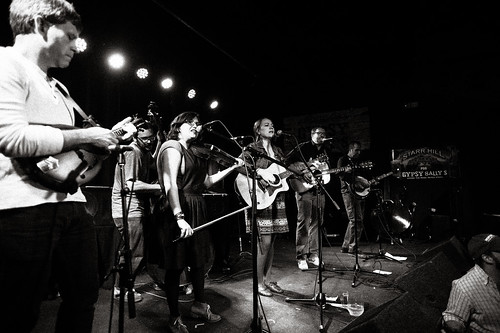
The Plank Stompers

Some of my best music buddies are in a band called The Plank Stompers. They were nice enough to give me a couple of tries at a group shot last week.
 
The first try was in nice but direct sunlight, and didn't work out that well. My only real chance to beat the contrast was a small amount of fill flash, and I'm not satisfied with the result. We went at it again a little later, when the sun was going down. Much better. Here's my favorite:
The Plank Stompers, by Reed A. George
Leica M9, Leica Summilux 35mm f1.4 v.3 Lens
iso 640, f9.5, 1/125 sec.
 
 
I've gotten a few more requests for whole band promo shots recently. I need to work on the techniques for getting this right. A little practice with the Plank Stompers helped me in that respect. I hope they'll find the pictures useful.
 
The Plank Stompers play a great down-home mix of bluegrass, folk, and space groove.
 
(Click Here) to find out more about them.
 
DMC-365.blogspot.com


Saturday, April 19, 2014

Russar (Russian 20mm Wide Angle) Remake v. 2014

The folks at Lomography have been doing some interesting things lately. For me, any company that keeps film photography alive is okay. But their latest antic is really pretty interesting.
Image Source: http://microsites.lomography.com/russar-lens/
 
Lomography is producing an updated version of the 1958 Russian "Russar" 20mm f5.6 lens with what seems the perfect combination of classic optical design and modern materials and manufacturing methods.
 
The new Russar+ will be made in Leica Thread Mount (LTM), also known as "L39," which is great for us Leica users. That makes it native on the Barnack cameras, and easily adaptable to Leica M cameras. It also makes a nice base for adapting to other mounts, like Micro 4/3.
 
It sounds like they really are making some upgrades to the lens. For example, while the original lens body was made of aluminum, the new one is brass. Reportedly, it's being manufactured by Zenit in Russia. I don't know Zenit's full history, but I know from classic camera shopping that they've been around a while.
 
Now, a maximum aperture of f5.6 is a little hard to live with, especially if you're shooting film. But, that's the classic design, and one of the tradeoffs of using them. I have a Cosina Voigtlander 12mm f5.6 lens that rarely sees use because of that small maximum aperture.
 
But, any way I look at it, this is a cool development. One of my highest-use lenses is the awesome Carl Zeiss C-Sonnar 50mm f1.5. If the Russar+ implements a classic design with modern improvements in even a slightly similar fashion, it will be worth having.
 
You can pre-order yours by (Clicking Here). The price is US$649, and they're scheduled for delivery in July 2014.
 
 
DMC-365.blogspot.com
 

Monday, March 31, 2014

Fisheye Image - Zen Heart - Panasonic Lumix DMC-GX7 and Bower 7.5mm Fisheye Lens

As I write this, I'm on the final day of a trip to New Mexico. I've had precious little free time, which means the meeting I'm attending is actually pretty good.
 
I decided to make this a "Micro 4/3 only" trip, in an attempt to bond with my new GX7. I must say it's working. The image quality from this camera is stunning. I'm still not completely sold on how it feels in my hand, actually preferring the feel of either the earlier DMC-GX1 (which is also along for the trip), or one of the more SLR-shaped Lumix cameras (which I've now sold off).
 
Here's a shot I made at the Upaya Zen Center in Santa Fe:
 
Zen Heart, by Reed A. George
Panasonic Lumix DMC-GX7, Bower 7.5mm f3.5 Fisheye lens
 
I visited the Center for an early morning meditation session (7:00 am). It was really worth the drive up from Albuquerque, where I'm staying. I was back in time for my meeting.
 
(Click Here) to read about Upaya Zen Center. They host a no-charge meditation session every morning.
 
This silver heart pendant (about 2" in size) was attached to the fence around Upaya's community garden. My lens was about 4" away from it, which is one of the cool features of the fisheye. You can get very close focus. In the background, you can see the Center and the base of their windmill (on left) and prayer flags on the back fence (on right). I like how this single image has the focal point of the heart, but also includes a lot of information about the place.
 
I really am impressed by the image quality of the GX7. Now if I can just get comfortable with it in my hand.
 
DMC-365.blogspot.com


Monday, March 10, 2014

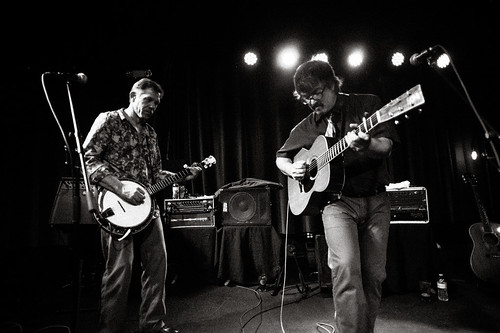
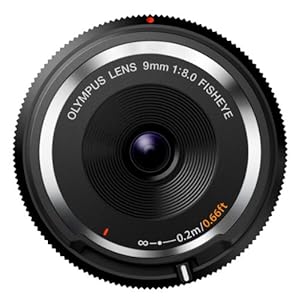
Olympus Body Cap Fisheye Lens for Micro 4/3

Image Source: http://www.amazon.com/gp/product/B00I19TVU2?ie=UTF8&camp=1789&creativeASIN=B00I19TVU2&linkCode=xm2&tag=dm36thyeofthl-20
 
I recently purchased a fisheye lens for my Micro 4/3 kit, a Bower 7.5mm model.
 
(Click Here) to see a post of images I shot with the Bower fisheye lens.
 
I haven't used the fisheye too much yet, but plan to.
 
Now it seems that Olympus has made a "body cap" lens with fisheye optics. These near-flat lenses that are so thin they double as body caps are really pretty cool. I have the older version Olympus 15mm body cap lens (not fisheye), which again, I have yet to use very much. You know the story, too many cameras, not enough days off.
 
The body cap fisheye is an ideal combination if you ask me. Since most of us will rarely use a fisheye lens, one of the challenges is that you don't tend to carry it along with you. Even the Bower lens, which is quite light and compact, takes up precious camera bag space. I think the body cap fisheye would solve that issue. And, it's pretty cheap at ~$100.
 
With a fixed aperture of f8, it's not real flexible, but again, this will be rarely-used equipment for most people. But, when you need it, you need it.
 
(Click Here) to see an example image posted by matt-pro on mu43.com
 
If I hadn't already purchased the Bower, I would certainly go for the Olympus body cap option.
 
DMC-365.blogspot.com
 

Friday, February 14, 2014

Is 40mm (or Equivalent) the Most Natural Field of View?

I have always liked the 40mm field of view on a 35mm camera. It's a nice middle point between 35mm (which I'm learning to love, but initially felt a little too wide) and 50mm (which has always been my standard focal length, but can be a little tight).
 
I first discovered the 40mm focal length with my Leica CL and Rokkor 40mm f2 lens that was designed for it. A world-class lens, the Rokkor (or otherwise branded 40mm Leica Summicron) is about as good a lens as I could hope for.
 
I rediscovered the focal length with the Lumix 20mm f1.7 on my Panasonic Micro 4/3 cameras (giving the same field of view as a 40mm on 35mm format). Here's an example shot with the 20mm f1.7:
 
Perfect Field of View?, by Reed A. George
Panasonic Lumix DMC-GF1, Lumix 20mm f1.7 Lens
iso 100, f8, 1/80 sec.
 
(Click Here) to read a great post on mu-43.com to see what other people think. Be sure to click on the link to read a related piece by Mike Johnston.
 
Not being a real wide angle shooter most of the time, I find the Leica CL's standard 40mm and 90mm focal lengths to be an excellent choice for a two prime lens travel kit. If I pick either 35mm or 50mm as my standard lens, I feel that I need to carry three lenses (35, 50, 90). The biggest issue I have with the 40/90 two lens kit is that my CL is the only rangefinder camera I own with 40mm framelines. Of course, the Micro 4/3 format fixes that with the electronic viewfinder (EVF).
 
DMC-365.blogspot.com