Showing posts with label war. Show all posts

Thursday, November 20, 2014

What You May Have Found in a Photojournalist's Bag in 1945

As you probably can see, I love vintage cameras. I've put together a nice Leica kit, all with equipment that was made before or during World War II. Here it is.
It includes:
  1. Leica IIIC (stepper) camera
  2. 5cm f2 Summitar (uncoated) normal lens
  3. 3.5cm f3.5 Elmar (uncoated) wide angle lens, with auxiliary finder
  4. 9.0 cm f4 Elmar telephoto lens (black), with auxiliary finder
The 9.0 cm Elmar and IIIC body were made during the war years; the other two lenses were made earlier.
This is a very capable kit, still today. Covering wide to long focal lengths, it all fits in a small camera bag, and doesn't weigh much at all. It's a blast to use.
 
DMC-365.blogspot.com


Tuesday, October 28, 2014

Asian Archery - Japan and Korea

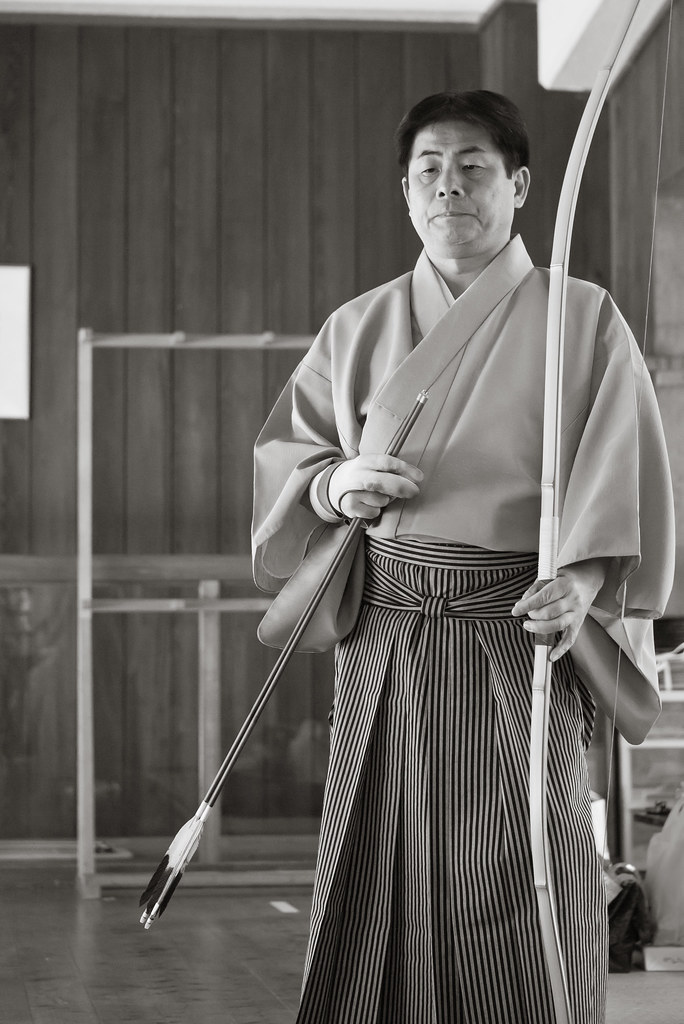
Japanese Kyudo Practitioner, by Reed A. George
Panasonic DMC-G1, Pana-Leica 45mm f2.8 Macro-Elmarit Lens
iso 400, f2.8, 1/50 sec.
 
Japanese archery, known as kyudo, has been practiced in Japan since prehistory. It first shows up in art a few hundred years B.C. No longer a part of military weaponry, kyudo in Japan is a contemplative art form, as well as a sport.
 
I found a related post on Walter Ulreich's blog, in his case writing about archery in Korea.
 
(Click Here) to see images of Korean archery, both today, and in some photojournalist's photos Walter found from 1961. Very cool.
 
Ulreich's blog reports the following:
 
"In the year 1894 bows were excluded from military use, but Emperor Gojong gave command to use archery for the cultivation of mind and body of the Korean people. As a result of that command, the Hwanghakjeoung pavilion was built in the Royal Palace and opened to the public. It is said, that Emperor Gojong personally enjoyed archery and often visited Hwanghakjeoung."

So, it seems that archery has made a similar transition from warfare into mental and physical concentration exercise in Korea, as it did in Japan.
 
DMC-365.blogspot.com
 

Monday, May 26, 2014

Memorial Day Tomorrow - Planning to Shoot with Wartime Leicas

Wartime Leica IIIC
 
I'm going out today, Memorial Day, with a good friend. We're going into DC, where we'll photograph events on the National Mall. I'm going to shoot only wartime Leica gear, or at least gear that would have been in use at the time. That is, my kit will include a 3.5cm Elmar lens from 1937. The remaining pieces, two Leica IIICs and a 5.0cm Elmar, were all made during the years of WWII.
 
I'm really looking forward to seeing what I can do with this kit. I hope to have some images to share from the day soon.
 
DMC-365.blogspot.com
 

Friday, January 24, 2014

My First Results of "Dreaming in Monochrom(e)" - War Memorials in the Rain

I've decided to try and emulate a Leica Monochrom in analog form, using my Leica M4-2 and TMax films.
 
(Click Here) to see what I am planning. I understand the differences and limitations in this comparison.
 
Here is my first installment of images for the project. I don't normally go in for photographing the monuments in DC, but on this particular morning, I thought being out in the driving rain and seeing the few visitors hearty enough to be out in it was worthwhile. It turned out to be a good set of conditions for photographing the Korean and Vietnam War memorials, and led me to think carefully about war.
 
One theme that kept coming up in my mind is the notion that "Freedom isn't free." I must admit that I don't fully understand that notion. It's like saying "Happiness doesn't make you happy" to me. Let me be crystal clear: I come from a family with significant veteran experience and respect that service very highly. On the other hand, I basically despise war and all that it entails. How's that for conflicted? Anyway, here are my impressions from that rainy morning walk amongst the names on the wall, and the terribly expressive faces on the statues of Korean War soldiers.
Vietnam Memorial
 
Korean War Memorial
 
All images were made with the Leica M4-2, 35mm Summicron f2 v.3, and TMax 400 film. Processed in typical excellent fashion by The Darkroom (thedarkroom.com).
 
DMC-365.blogspot.com
 

Tuesday, January 7, 2014

Leica IIIC Pictures From Japan, 1949-1950 - Gordon Coale's Grandfather

I have just purchased my second "wartime" Leica IIIC, this one with a date matching (1945) Elmar 5cm f3.5 lens. The wartime IIICs are slightly different than newer units, with the rewind lever position on a step on the metal top plate. They are therefore sometimes referred to as "steppers." My new stepper IIIC needs a clean, lube, and adjust (CLA), so it's on its way to see Youxin Ye in Boston.
 
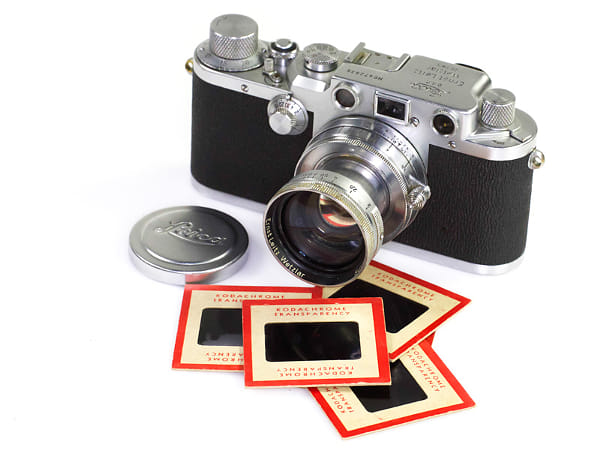
Anyway, googling around for IIIC stuff, I found Gordon Coale's site. Here he shares lots of images shot by his grandfather, who lived in Morioka, Japan, from 1949-1950. He shot a IIIC (post-wartime, no step), and the faster Summitar 5cm f2 lens, with Kodachrome slide film. Here's Gordon's grandfather's camera:
 
Image Source: http://gordoncoale.500px.com/my_grandfather_s_photos
 
(Click Here) to go to Gordon's site and see many of his grandfather's images. Love it.
 
It's inspiring to me to think that these old cameras took such great pictures way back when. It's amazing, but they can still do it now.
 
Mine was likely sold to an American serviceman in the post-war occupation of Europe. I'll look forward to getting it back from Youxin and using it.
 
DMC-365.blogspot.com


Wednesday, August 14, 2013

Results From August's Agfa Record III (Skeletons From The Closet) and a New Critique Group, PhotoWorks!

I got invited to a great photo group, known as PhotoWorks. They meet monthly at the Glen Echo Park, just outside Washington, DC.
 
(Click Here) to learn more about this very welcoming group. In addition to critiques (one of which I attended), they offer gallery space, an incredible darkroom facility, and more.
 
I decided to bring along a set of five prints, three from a recent roll of film shot in my SFTC camera for August, the Agfa Record III 6x9 folding medium format camera. The two square format images are from my Minolta Autocord, May's SFTC camera. (Click Here) to read about the Autocord.
 
These were shot at a recent world war II reenactment event.
 
All of my images were well-received, and I had to push a little to get some critical feedback. I'll mention it under each shot.
 
While everyone liked this shot, the light is a little flat. The out of focus people in the background are somewhat distracting.
 
These guys may be too happy to be real soldiers.
 
There was a suggestion to crop this picture, leaving only the guys on the right (in bright light in). This was instructive to me, because the facial expression on the guy furthest left is the important part to me. Unfortunately, he's not in great light. What I see as most important really isn't emphasized in the shot. It was also mentioned that this image doesn't fit with the others.
 
I had to admit that I cropped out an air conditioner unit on the right of this image.
 
This is Mike. I emailed him this shot, and he really enjoyed it, saying he's always disliked pictures of himself. This one changed his mind. This shot was very well-received. The framed picture in the back is Mike's wife back home in the states (reenactor in character).
 
Here are a couple of shots from the critique session, just to give you a feel for the setting. These were shot on my Leica M9 with Voigtlander 28mm f1.9 lens.
 
 
This is a very experienced group, and I stand to learn a lot from them. I will certainly be back.
 
DMC-365.blogspot.com


Wednesday, July 24, 2013

Photographers Go To Inhospitable Environments To Get the Shot

 
Cactus, Joshua Tree, California, by Reed A. George
Panasonic Lumix DMC-G3, Lumix 20mm f1.7 Lens
iso 160, f4.5, 1/500 sec
 
National Geographic (and other) photographers regularly put themselves into inhospitable environments, and even harm's way, just to get the shot.
 
Most of us know of famous war photographers killed in action, including Robert Capa. (Click Here) for a list of ten famous photographers killed in action.
 
Not all of the dangers are that glamorous. I found this page on the Photo Society's website which lists the hazards that National Geographic photographers have experienced in their duties.
 
(Click Here) to read them on photosociety.org
 
Lots of amoebic dysentery, plenty of hypothermia (frostbite listed separately, which has happened 29 times, 23 for the same photographer). How about two attacks by a Florida Panther - that's two attacks on two different photographers on different assignments - same panther. Spitting cobra attack, anyone?
 
So why did I select the Joshua Tree picture for this post? I actually took a step off-trail into a ravine on this highly-traveled short loop trail and ended up miles off-course. By the time I crossed a road in the desert and convinced someone to pick me up (several drivers refused to even look at me as they drove past), I was on my last ~.25 liter of water. I don't think I would've died out there, so close to civilization and along a road. But, dry and sunburnt in just a couple of extra hours in the desert, it reminded me that the risks are real, especially if we do something dumb like go off-trail in the desert.
 
DMC-365.blogspot.com