Showing posts with label Barnack. Show all posts

Saturday, May 23, 2015

New Orleans' Royal Street - Leica IIIC and Summar 5cm f2 Lens

 
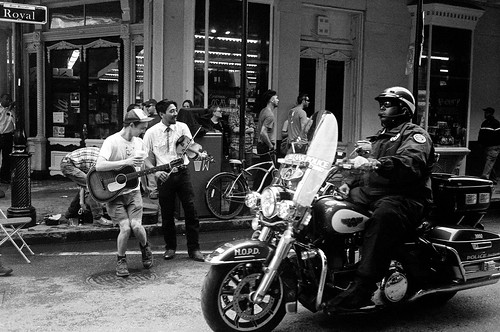
Royal Intersection, by Reed A. George
Leica IIIC Sharkskin, Summar 5cm f2 Collapsible Lens
 
I was scanning a roll of film that I shot in New Orleans while attending the LHSA Spring Shoot 2015 when I came across this shot.
 
This corner on Royal Street, at Rouse's Grocery, is one of my favorite spots in the city of New Orleans. Always hosting live musicians, rain or shine, it's a real crossroads for everyone who frequents the French Quarter - musicians, tourists, locals, and yes, police officers. This image says a lot about this particular place that I love so much.
 
DMC-365.blogspot.com

Sunday, May 17, 2015

French Quarter in the Rain - Leica IIIC and Summar 5cm f2

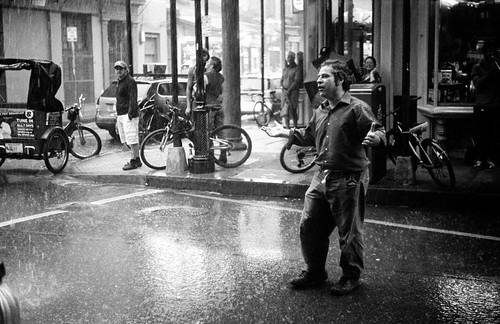
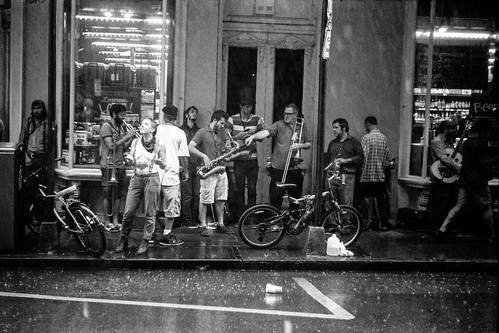
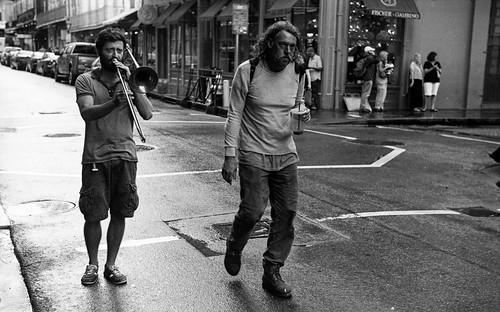
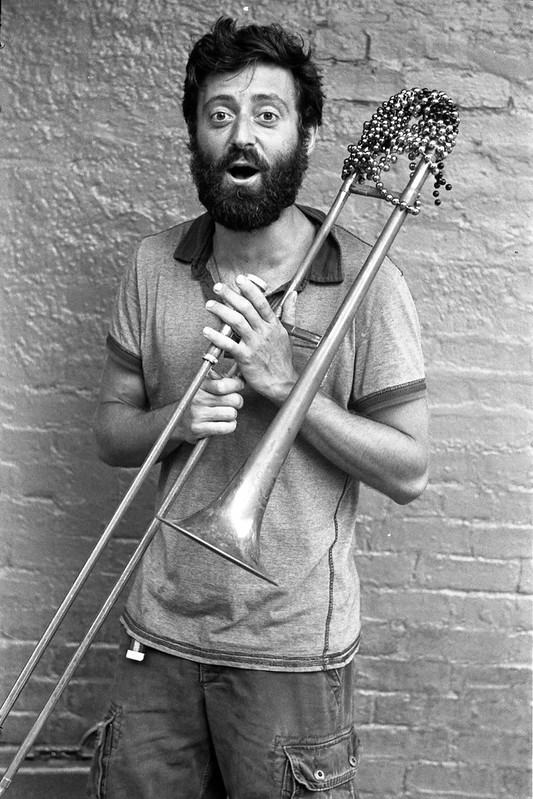
I recently attended the LHSA (International Leica Society) Spring Shoot in New Orleans, Louisiana. One of my favorite places to photograph, I was hoping we'd get some inclement weather to build some mood into my pictures. I was not let down - it rained on and off, sometimes quite heavily, during my whole trip. I loved it.
 
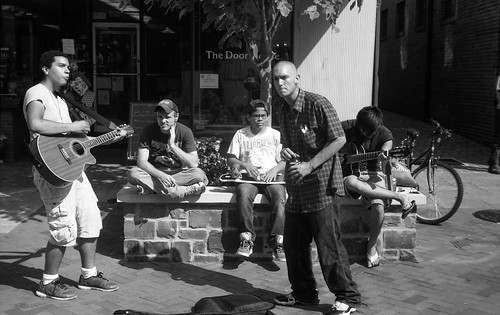
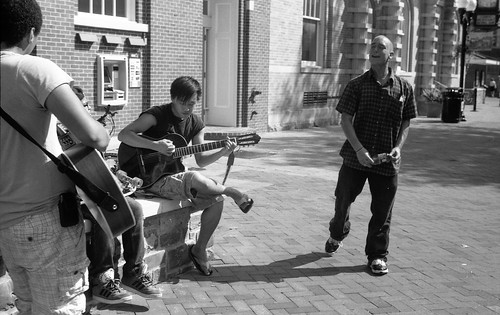
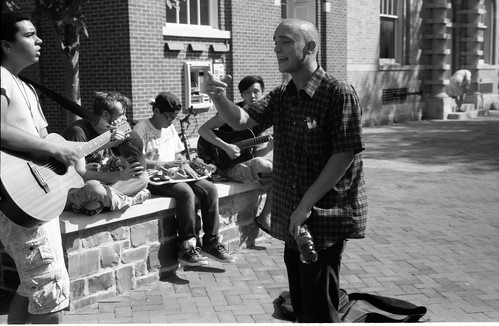
Here are some shots of street musicians playing in front of Rouse's Grocery on Royal Street as a rain storm rolled in and subsequently left.
 
All were shot with the Leica IIIC and Summar 5cm f2 lens. One of Leica's earliest fast lenses, the Summar is infamous for being being soft. I happen to have a clean copy, without a scratched front element, which is rare. I find it to be a wonderful lens.
 
 
Shooting iso 400 film (Kodak TMax 400), I couldn't quite get a fast enough shutter speed to capture the rain as I wanted. I hope that you can see it in images 2 and 3.
 
DMC-365.blogspot.com


Sunday, May 3, 2015

Finding Space in the Big City of Tokyo - with Leica IIIG

 
Urban Space, by Reed A. George
Leica IIIG, Ilford HP5 Film
 
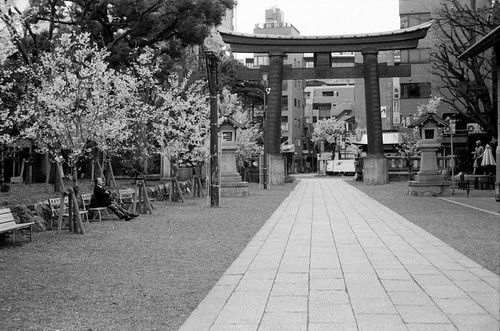
This gentleman on left was out early in the morning at the Tomioka Hachiman shrine in Tokyo. The lesser shrines are always a good place to go for some space and relaxation. The big ones, like Meiji Shrine, are frequently very crowded. The secret in either case is to be out early.
 
I find this to be true in almost any big city. New York City, Barcelona, Tokyo, they're all pretty quiet in the early mornings.
 
Here's another shot from the shrine. I focused on the cherry blossoms, rendering the fountain slightly out of focus with shallow depth of field. There was no one else in sight when I shot this.
Quiet Morning, by Reed A. George
Leica IIIG, Ilford HP5 Film
 
So, if the crowds in the big city get to you, simply get up early! Jet lag sure helped with that while I was in Tokyo.
 
DMC-365.blogspot.com
 

Friday, March 6, 2015

Lion and Dragon Dancers - Leica IIIG Film Shots

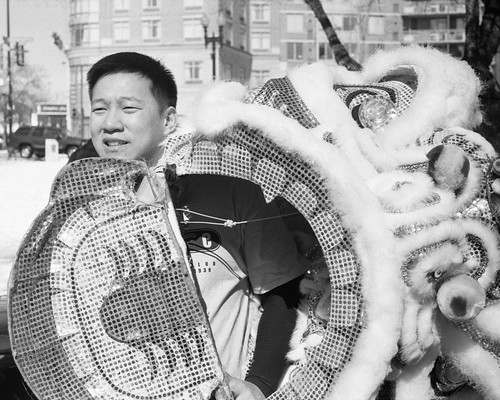
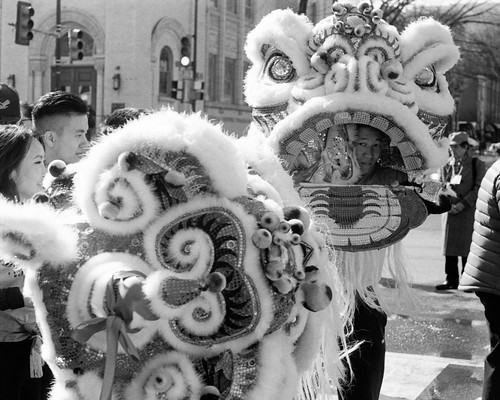
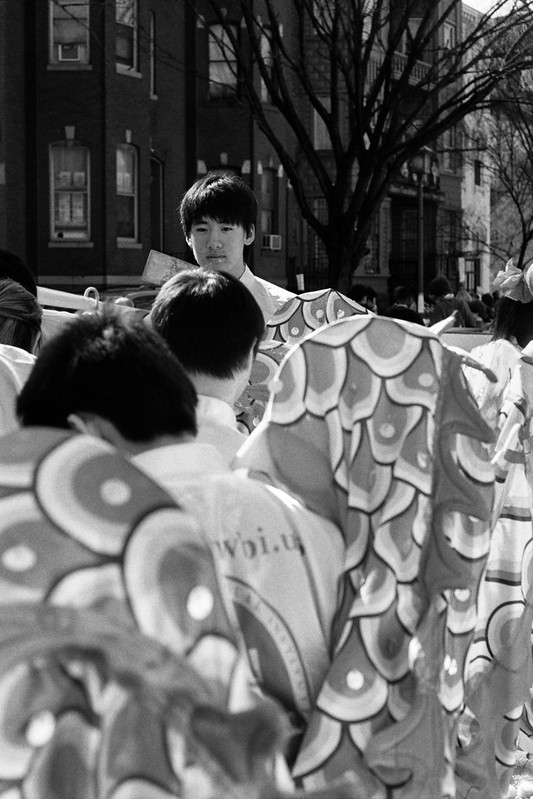
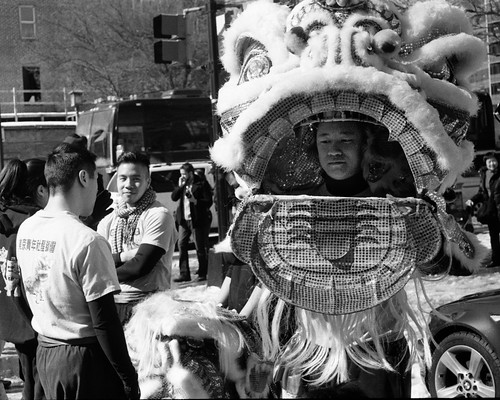
Here are some images of the lion and dragon dancers from the Chinese New Year celebration in DC this year. All were shot with my Leica IIIG rangefinder and 50mm f2 Summicron collapsible, on Ilford HP5+ film.
 
And here's my favorite:
 
 
I absolutely love using the IIIG. The viewfinder is wonderful. Focusing is a bit of a pain, but works. The early Summicron really performs.
 
Burning through that 100' of HP5+!
 
DMC-365.blogspot.com
 

Wednesday, March 4, 2015

A Shot I Like from Chinese New Year

 
Noodle Shop Spectators, by Reed A. George
Leica IIIG, 50mm f2 Summicron Collapsible
Ilford HP5 Film, Developed for 7 1/2 mins. in D-76
 
The Chinese New Year parade in Washington, DC had much lower attendance in 2015 than last year. I managed to shoot a 36 exposure roll of Ilford HP5, but really spent as much time talking and having lunch with my friend, Charlie, as I did shooting. This is the noodle shop we decided on, where the chef is making noodles by hand in the front window. You can see the ducks hanging on the right.
 
We both had a nice bowl of roasted duck noodle soup, and then stopped at the Chinese bakery next door for a pastry.
 
I do have some more images from this roll of film to share, but this one is one of my favorites.
 
DMC-365.blogspot.com


Thursday, February 26, 2015

Win Hamish's Leica IIIC!

Image Source: http://www.35mmc.com/06/02/2015/win-leica/
 
I'm always looking for new blogs to follow. I've recently discovered Hamish Gill's blog, 35mmc.
 
Hamish is running a fun photo contest, and the first place prize will be his Leica IIIC and Russian lens (above). In order to win, you must submit a photograph made with a cheap 35mm camera. In fact, the film and camera together must have cost no more than US$15. Hamish wants the photograph you took, and a photo of the camera you used, along with a brief description.
 
(Click Here) for all of the contest details on 35mmc, and good luck! I entered a shot made with my Ricoh 500G, which I got for free.
 
DMC-365.blogspot.com


Sunday, December 28, 2014

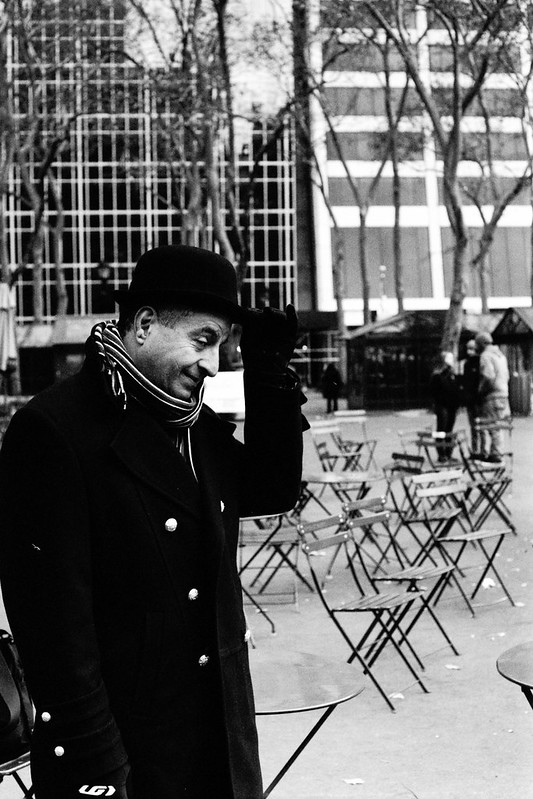
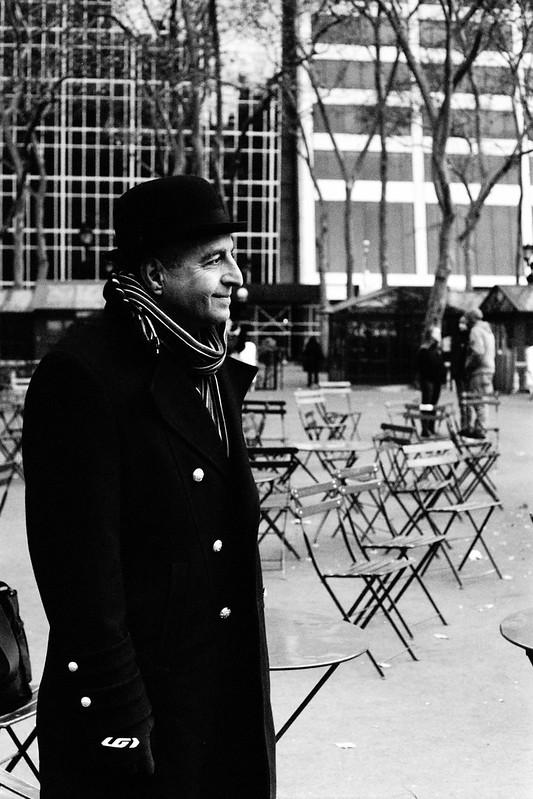
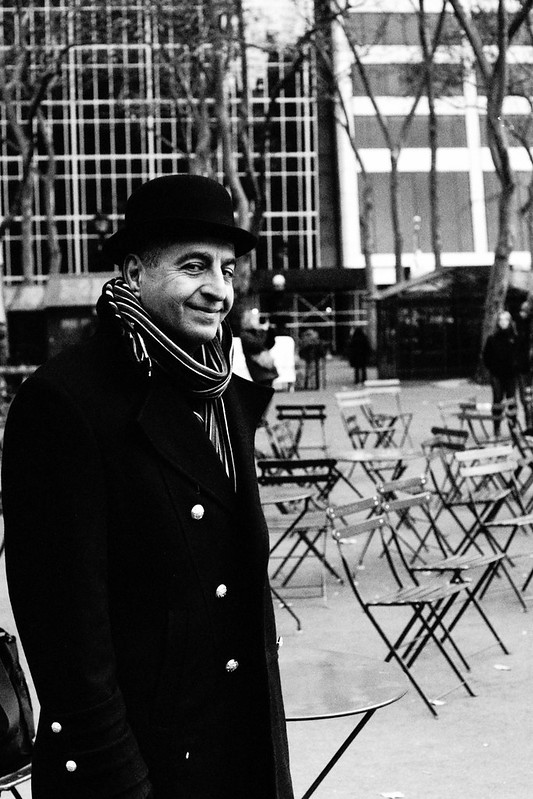
My Persian Friend

This is Alex. We met early one morning in Bryant Park in NYC when I was out taking pictures. I thought he was the perfect model for winter coming on in NYC. Finally, I got enough courage to ask permission to take his picture.


Alex, by Reed A. George
Leica IIIG, Summicron 50mm f2 Collapsible
 
Alex was born in Persia and has lived in NYC for over 30 years. We talked about the fact that under our feet at that very moment, there were 28 miles of stacks (archived documents) in the basement of the NYC Public Library. So much knowledge.
 
Meeting Alex was a major positive influence on me, though I'll probably never see or hear from him again.
 
DMC-365.blogspot.com


Saturday, December 27, 2014

Alone, Again

Alone, Again, by Reed A. George
Leica IIIG, Summicron 50mm f2 Collapsible
 
I have often thought about a project centered on "Alone in the City," or "Alone in a Crowd." Maybe it's time.
 
DMC-365.blogspot.com
 

Friday, December 26, 2014

Wednesday, December 24, 2014

Black Friday

 
Black Friday, by Reed A. George
Leica IIIG, Summicron 50mm f2 Collapsible
 
DMC-365.blogspot.com

Thursday, November 20, 2014

What You May Have Found in a Photojournalist's Bag in 1945

As you probably can see, I love vintage cameras. I've put together a nice Leica kit, all with equipment that was made before or during World War II. Here it is.
It includes:
  1. Leica IIIC (stepper) camera
  2. 5cm f2 Summitar (uncoated) normal lens
  3. 3.5cm f3.5 Elmar (uncoated) wide angle lens, with auxiliary finder
  4. 9.0 cm f4 Elmar telephoto lens (black), with auxiliary finder
The 9.0 cm Elmar and IIIC body were made during the war years; the other two lenses were made earlier.
This is a very capable kit, still today. Covering wide to long focal lengths, it all fits in a small camera bag, and doesn't weigh much at all. It's a blast to use.
 
DMC-365.blogspot.com


Saturday, November 15, 2014

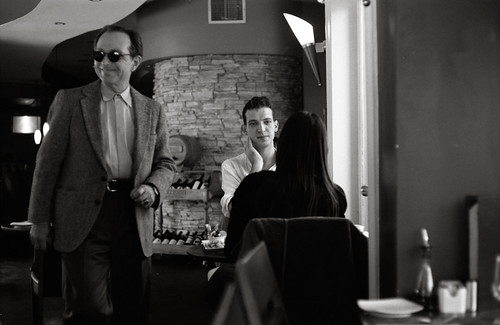
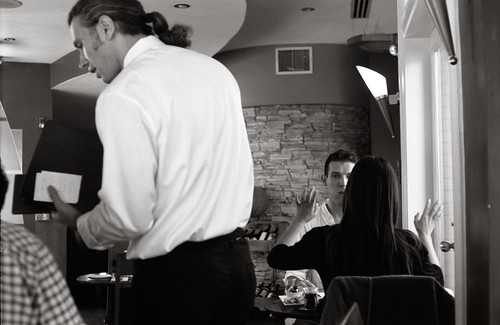
Restaurant Conversation - Shot with Leica IIIG and Summicron 50mm f2 Collapsible Lens

The Leica IIIG is the ultimate evolution of the early Leica camera, designed by Oskar Barnack. The IIIG was made at the same time (1957-1960), and actually introduced after the advent of the M series cameras with the M3 (1955-1968). I used my IIIG with my LTM 50mm f2 Summicron Collapsible and Kodak TMax 400 black and white film to capture these two images.
 
Restaurant Conversation, by Reed A. George
 
The IIIG really is a very nice camera to use. It has a nice, bright viewfinder, and framelines for both 50mm and 90mm lenses.
 
DMC-365.blogspot.com
 

Thursday, November 13, 2014

Nick De Marco's Leica IIIa

Nick De Marco runs a nice blog called Rangefinder Chronicles. I've featured some of his posts here before.
Image Source: http://rangefinderchronicles.blogspot.com/2014/11/my-1930s-leica-iiia.html
 
I don't know Nick, but with his taste for old Leicas, I'm sure we'd get along just fine.
 
Nick has posted about a recent purchase, his 1930s Leica IIIa with 50 mm f3.5 Elmar collapsible lens.
(Click Here) to read Nick's post on Rangefinder Chronicles.
 
It's great to see that Nick has the same trepidation and worries that any reasonable person would have buying and trying to use an 80 year old camera. Come to think of it, would any reasonable person even do that? Anyway. It's also great to see the fine quality images that the old beast produced in his hands.
 
Yes, I've firmly got one foot in the digital photography game, but my other's still in the past. As long as that means that I get to shoot old machines like Nick's, or my new Leica IIIG (ultimate evolution of the Barnack design at Leica), that's okay with me.
 
DMC-365.blogspot.com

 

Friday, October 3, 2014

Street Musicians, Early Street Camera - Leica I Model C

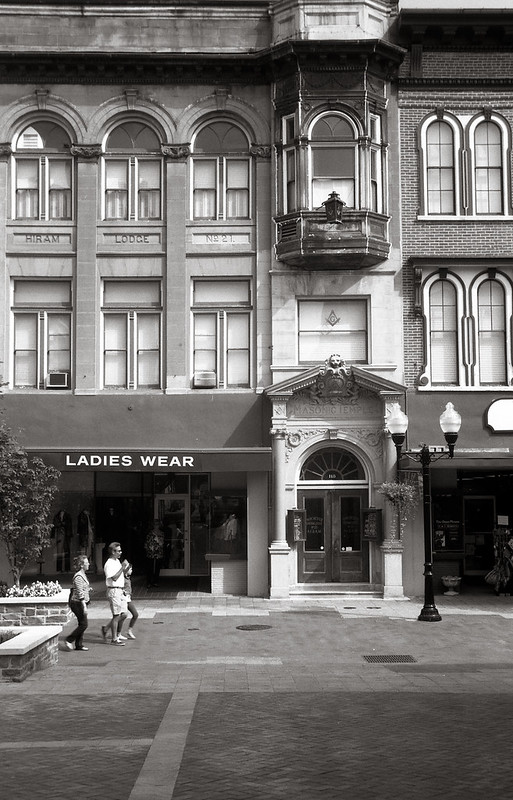
A few more images from my Leica I Model C and Summar 5cm f2 lens:
 
These were all shot in Winchester, Virginia. It's a very nice little town, with a great pedestrian street (Loudoun Street).


I've been suffering the loss of my wireless keyboard on my iPad, so my posts have not been vey verbose this week. That situation will be remedied very soon!
 
DMC-365.blogspot.com
 

Thursday, October 2, 2014

More From the Leica I Model C and Summar - Architectural Illusions

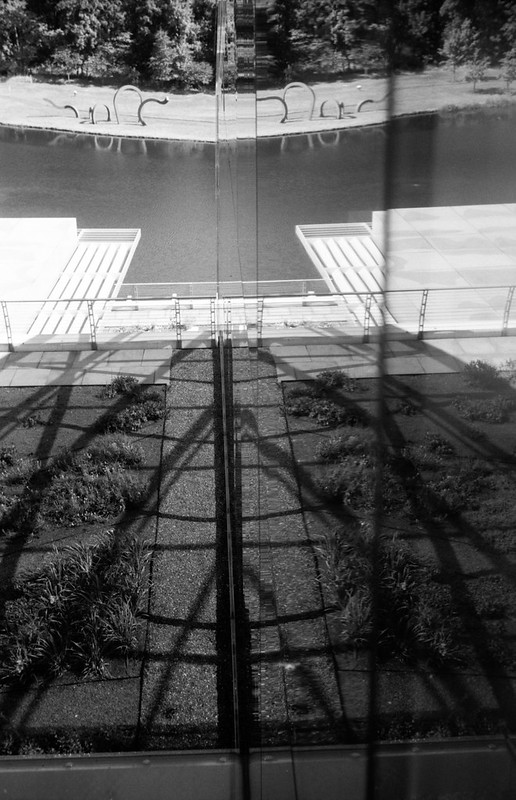
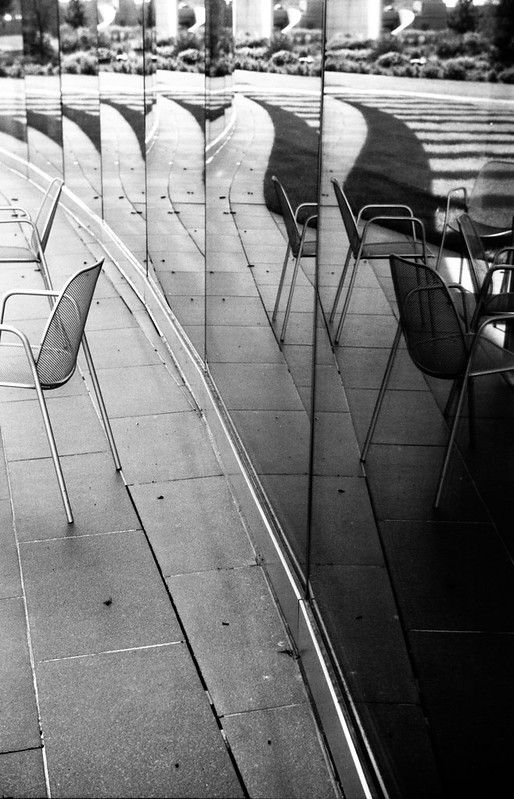
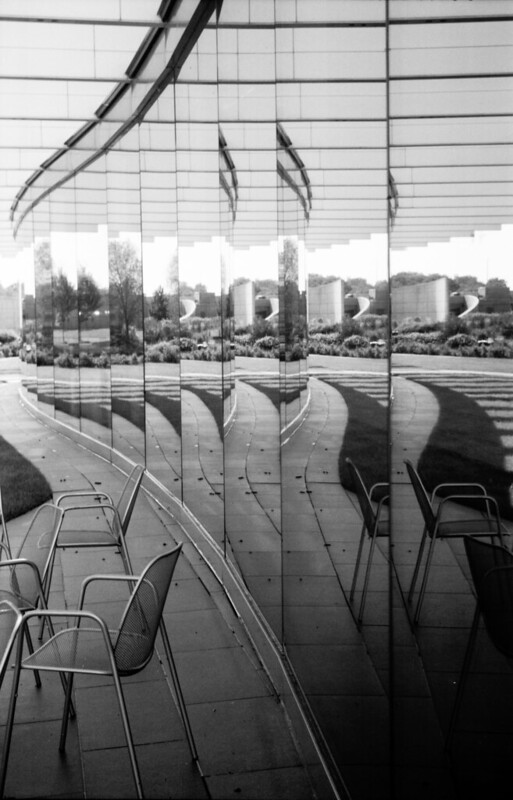
The building I work in is an amazing feat of architectural design. I don't photograph there very often, but on the day I was testing my new 1931 Leica I, I happened to notice a couple of interesting illusions formed by the architectural glass and surroundings. All were shot with my Summar 5cm f2 and Kodak Tmax 100 film.


The Leica I doesn't have an integrated rangefinder, so it is "guess focus.". The little viewfinder you use to compose feels inaccurate, and obviously doesn't provide for parallax compensation. But, it's a gas to use this little piece of history.
 
DMC-365.blogspot.com
 

Wednesday, October 1, 2014

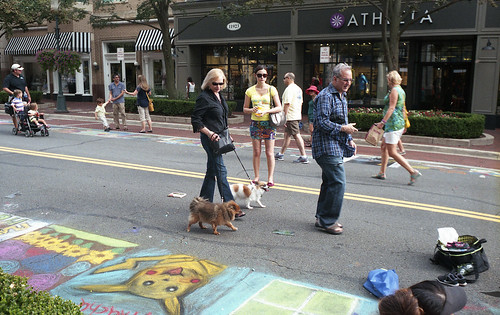
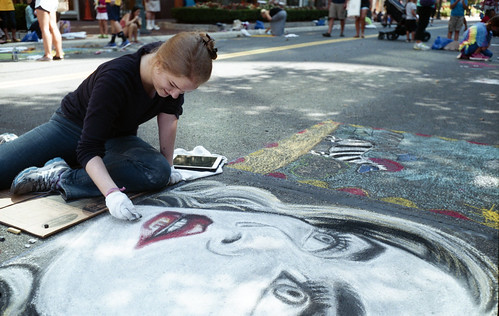
More From Chalk Fest, Leica IIIC with Summaron 3.5cm f3.5

Here are a few more pics from Chalk Fest, all shot with my Leica IIIC and Summaron, on Fuji 100 color negative film.
 
The Summaron 35 is a spectacular little lens, and I do mean little. I love the subtle color rendition that this lens produces.
 
DMC-365.blogspot.com


Tuesday, September 30, 2014

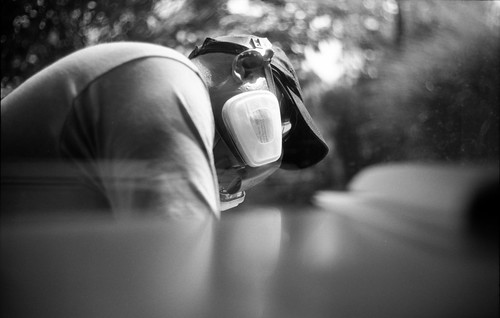
The Mask

 
The Mask, by Reed A. George
Leica I Model C, Leica Summar 5cm f2 Lens
Kodak Tmax 100 film
 
I prefer for this one to remain a little mystery.
 
It was part of the first roll of film I put through a nice little Leica I Model C. The camera was serviced by Don Goldberg some time back, before I purchased it. It works nicely, and the Summar produces quite a nice image as well.
 
DMC-365.blogspot.com
 

Sunday, September 28, 2014

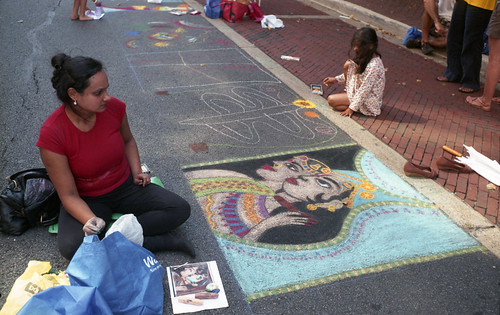
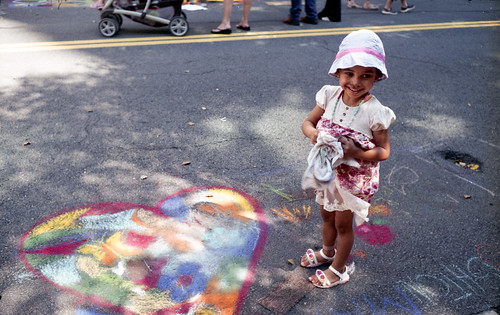
Street Art, on Film With Leica IIIC and Summaron 3.5cm f3.5 Lens

Street Art, by Reed A. George
Leica IIIC, Summaron 3.5 cm f3.5 Lens
Fuji iso 100 Color Print Film
 
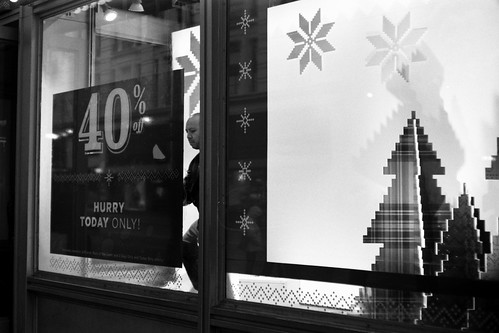
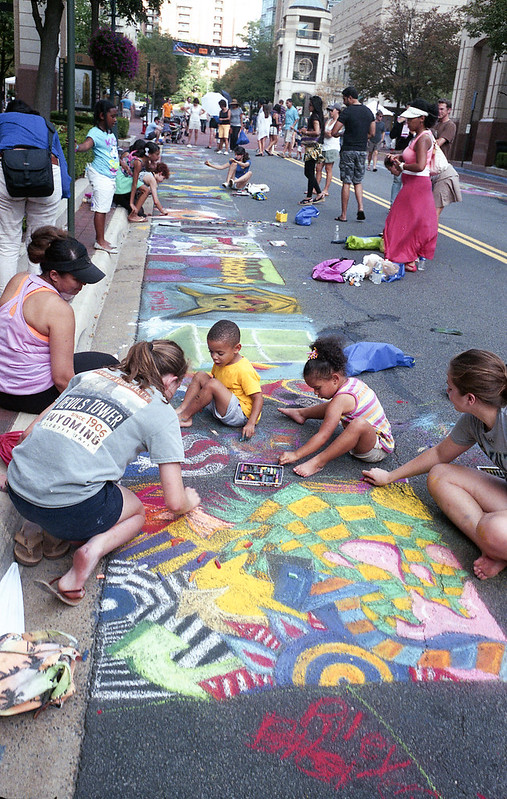
Man, do I love to shoot my old Barnack cameras. On this particular day, I chose to carry only this camera and lens to photograph "Chalk Fest" in Reston, VA.
 
When I started shooting in the late morning, the light was bright and harsh. The shade was fine, though. I ended up coming back later in the evening to finish up, when the light was much more agreeable. I'll have more to share from this event later.
 
The tiny little Barnack camera and lens, topped with a Russian 35mm viewfinder, caused little or no distraction amongst people at the festival. It is small, quiet, non-threatening. I can see why Barnack's little camera was able to transform photojournalism back in the day.
 
DMC-365.blogspot.com
 

Wednesday, July 16, 2014

The Iconic Leica Images - Assembled on the Leica Website for the 100th Anniversary of the Leica Camera

"Flood in Wetzlar - Oskar Barnack, 1920"
Image Source: http://us.leica-camera.com/World-of-Leica/100-years-of-Leica-photography/Leica-100-years/Iconic-photos
 
100 years ago, Oskar Barnack started a revolution in photography by making a 35mm still camera that was worthy of commercialization. Originally built to test exposures for movie films, Barnack quickly recognized that the smaller negative (as compared to the standard 4x5 or larger of the day) was a reasonable compromise in image quality that gained you amazing portability. This eventually turned photojournalism on its head.
 
As part of their 100th anniversary celebration, Leica has added a very nice section to their website, including a collection of iconic Leica images taken over those 100 years.
 
(Click Here) to see the images, many of which you'll probably recognize.
 
The small camera revolution, started back in 1914, continues today. In my way of thinking, the new compact digital cameras, including those in cell phones, are pushing the compromise between ultimate image quality and the ability to have your camera ready and get the picture at all. I think APS-C and Micro 4/3 sensor technologies are both cases in point. It's pretty well-accepted these days that APS-C can provide professional image quality, even at high iso settings. Micro 4/3 is right on the cusp, in my opinion. We'll see where this all leads in the coming years.
 
In the meantime, I'm still having lots of fun with Leica cameras, including those designed early on by Barnack himself!
 
DMC-365.blogspot.com
Tuesday, April 15, 2014

Quick Test of an Old Leica

A couple of months back, I had the fortune of finding two Leica IIIC cameras, separate but very close together in time, both manufactured at the end of World War II. Coming from separate sellers, the cameras are extremely similar, both having the wartime "stepper" design, and having been manufactured in 1945. In both cases, according to the best source on wartime Leicas anywhere (James Lager, my colleague in the LHSA), they were most likely sold to allied soldiers in Europe at the end of the war.
 
One of the cameras came with a date-matching Elmar 5cm f3.5 collapsible lens (the standard lens of the day). I used that lens for the images below.
 
I've now had both cameras serviced by Youxin Ye, and they're working as-new. I took the second one that I purchased out for a walk and test roll recently. You see the results below.
 
I happened onto a model yachting event in Reston, Virginia. These images are straight from the camera, Walgreens iso 200 color print film, processed by The Darkroom.


In the shot above, you can see what I believe is internal reflection in the lens/camera. I was not using a lens hood.
 
This final shot is my favorite of the bunch.
 
No Pulitzers here, I'm sure. However, I did accomplish my goal, which was to test the camera and lens. I kind of like the rather low contrast result, especially as the light was quite harsh. I'm not sure how much of the low contrast comes from the lens (most, I suspect), versus the film. The cheap Walgreens film tends to have this sort of look on its own. Most of these were shot at f8 or smaller aperture, and relatively high shutter speeds.
 
The images are plenty sharp, and I think the color representation is quite nice.
 
It's amazing to me that such a piece of photographic history, made well before I was born, still works and yields results that are at least as interesting as modern cameras. Certainly the technical performance of modern cameras and lenses is better, but I'm quite happy with the look this camera and lens produce. And that's what matters to me.
 
DMC-365.blogspot.com