Showing posts with label photojournalism. Show all posts

Friday, June 19, 2015

Fire! At the Leesburg Car Show

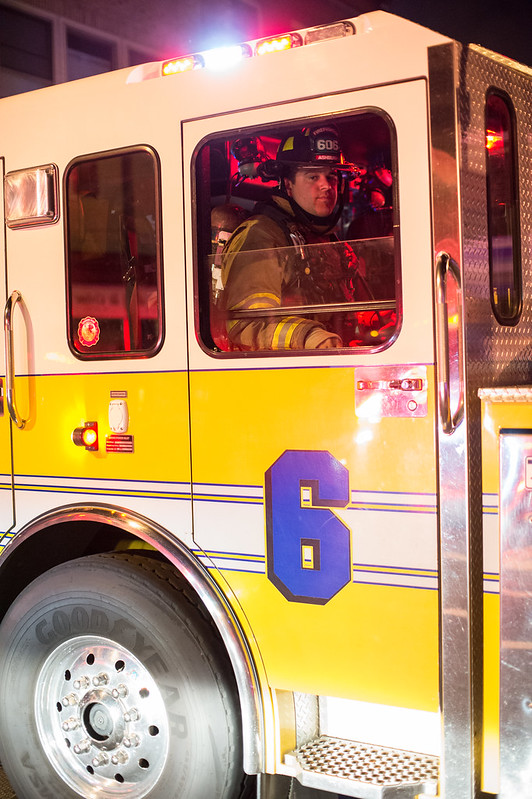
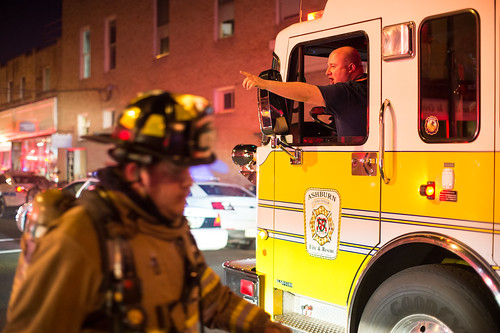
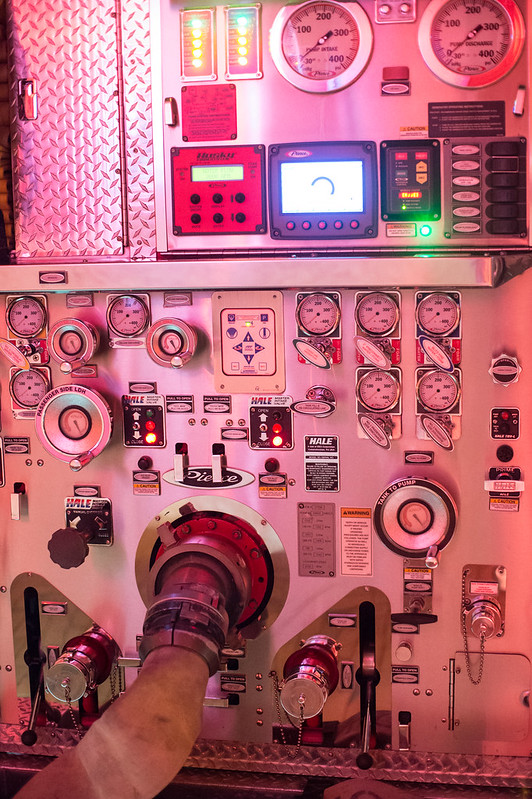
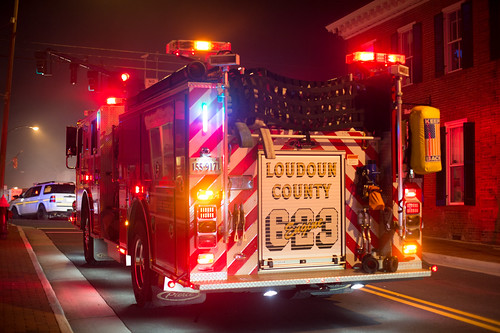
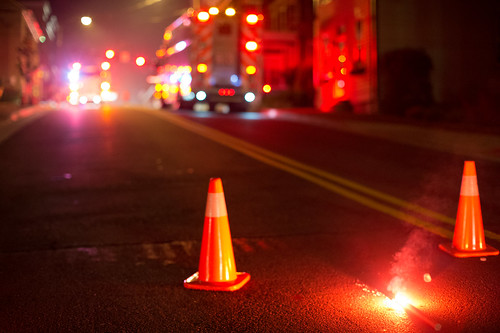
Yesterday, I posted some images I took after dark at the car show in Leesburg, Virginia. Just as we were leaving, one of the business buildings in town caught fire. More emergency vehicles than I knew existed in the area converged for the fun. Here are some images I made of the event, using my Nikon Df and Nikkor 50mm f1.2 AIS lens.
 
This is my favorite shot of the event. I love how sharp the firefighter's face is, the police car and fire truck in the foreground, and the burning building and ladder crew in the background. This one deserves a nice print.
 
Here are some other images I made in the few minutes we hung around.
 
 
My understanding is that luckily no one was injured in this fire. I feel fortunate to have had the Df and f1.2 lens with me; there wasn't much light to work with. I hope these images tell the story well!
 
DMC-365.blogspot.com


Tuesday, May 5, 2015

Is Photojournalism Really Dead? NY Times' Blog "Lens" Discusses Storytelling and Honesty

 
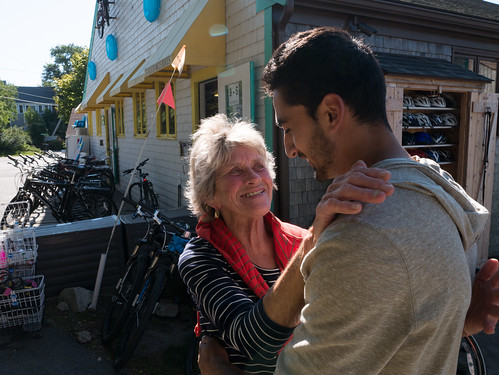
End of Summer Goodbyes, by Reed A. George
Panasonic Lumix DMC-GX7, 14-42mm Series II Kit Lens
iso 400, f11, 1/500 sec.
 
I just read an interesting article entitled "Modern Photography," about the state of photojournalism (PJ) today on the NY Times' blog, "Lens."
 
The piece compiles the thoughts of several photographers, curators, and editors, including Maggie Steber, who I recently had the great fortune to meet at the LHSA (International Leica Society)'s Spring Shoot in New Orleans. Maggie was our keynote speaker.
 
I used the photograph above for this post, as it is a piece of honest PJ that I shot, of a lady in Provincetown, Massachussetts, saying goodbye to a young man from Bulgaria who was returning home after his summer employment there. The change in P-town's population during the tourist season was a subject of interest to me.
 
More importantly, perhaps, I asked this young man to carry his suitcase out of his place of work for me, so that I could get a shot of him leaving. Actually, he was leaving the next day. He wasn't able to do that for me, but if he had, would that have been too much staging to qualify as PJ? Upon reflection, I think it would have been. These are tough lines to see and stay within.
 
Some of the interesting points in the Lens Blog post:
 
  • In earlier times, PJ could be used simply to show or prove that something was occurring outside the direct view of some readers. But, those events - war, famine, crime, etc. are now known to everyone. We don't need proof. Now, the photographer needs to somehow go further, to tell a story, to make it more "real" for the viewer/reader.
  • In fact, because the events represented are now known to everyone, a picture of the event can have the effect of trivializing the situation. Sort of "Oh, another famine," rather than engage the viewer in what it really means.
  • Because of this point, at least one authority states that "photojournalism is dead."
  • Many photographers engage in long term projects, where they certainly do affect the poses of their photographic subjects, move to better light, etc. This is where the lines get blurry.
  • The most important thing is for the photographer to be honest about how they produced their pictures. Admit what they are and are not showing.
  • When it comes to honesty, it used to be that a professional photojournalist would lose all credibility, and probably their job, if they were dishonest in representing a subject. Now, there's very little risk to most photographers, especially those who just happen to have a camera with them and capture events as they happen.
  • Honesty in photography has been a problem ever since photography was invented. We now know that some famous civil war photographers staged scenes, and even used the same body twice - once as a Union soldier, another time as a confederate.
These were the things that I found most interesting about the Lens Blog piece. (Click Here) to read it for yourself.
 
DMC-365.blogspot.com


Friday, February 13, 2015

You've Got to See the World Press Photos of the Year

Image Source: http://lens.blogs.nytimes.com/2015/02/12/a-subtle-moment-becomes-the-world-press-photo-of-the-year/?_r=1#
 
(Click Here) and watch the slideshow of the 14 selections for this year. Incredibly powerful.
 
The images that stick with me are the delirious ebola patient, and the still life with blood from the Ukraine. All of them are amazingly powerful.
 
I'm also struck by the pictures of the Nigerian schoolgirl's uniforms - you get the whole story of the kidnapped girls from a single image, which does not even include a person. The same is true of the Ukrainian still life.
 
These give me something to aspire to.
 
DMC-365.blogspot.com
 

Thursday, November 20, 2014

What You May Have Found in a Photojournalist's Bag in 1945

As you probably can see, I love vintage cameras. I've put together a nice Leica kit, all with equipment that was made before or during World War II. Here it is.
It includes:
  1. Leica IIIC (stepper) camera
  2. 5cm f2 Summitar (uncoated) normal lens
  3. 3.5cm f3.5 Elmar (uncoated) wide angle lens, with auxiliary finder
  4. 9.0 cm f4 Elmar telephoto lens (black), with auxiliary finder
The 9.0 cm Elmar and IIIC body were made during the war years; the other two lenses were made earlier.
This is a very capable kit, still today. Covering wide to long focal lengths, it all fits in a small camera bag, and doesn't weigh much at all. It's a blast to use.
 
DMC-365.blogspot.com


Saturday, October 11, 2014

Magnum Workshop Day 7/7 - Honoring Bruce Davidson

Bruce Davidson
Image Source: http://onlinebrowsing.blogspot.com/2011/05/bruce-davidson.html
 
Saturday, the workshop is officially over. I slept in, rolling in to the work center sometime in the late morning.
 
The big event was a presentation by Bruce Davidson, who arrived the night before. Bruce has been in Magnum for 56 years.
 
Davidson met Henri Cartier-Bresson while stationed in France with the US military. This clearly had a positive effect on Davidson's direction and focus in photography.
 
One of Bruce's most famous projects was "East 100th Street," where he documented life in an almost-exclusively black neighborhood in NYC. Davidson shot 4,000 negatives, most of them 4x5, in this project. In order to gain access to the neighborhood, he presented the residents with his work and his goal in photographing them. They held a neighborhood meeting and voted to let him in. That said, he still required a "helper" for the first year of the project.
 
Another famous project set in NYC, Davidson documented the subways and people who rode them. In this project, Davidson was mugged, and witnessed a lot of crime against others. One picture that stuck with me was an armed mugging.
 
(Click Here) to see that picture on the Magnum website.
 
Once color film became widely available and useful, Davidson could normally be seen carrying two Leicas - one loaded with color, one with black and white - and only one lens (a 35mm).
 
When asked for advice for photographers trying to improve their work, Davidson repeated what I'd heard multiple times during the workshop, and multiple times from David Alan Harvey: "Stick Around." By this, he meant don't be in a hurry, find the scene and let it develop. This is probably the most important lesson I learned during the weeklong workshop.
 
It is apparent that Davidson also has an interest in nature, as he's photographed it in urban settings including Central Park in NYC, Los Angeles, and Paris. He has a current work in progress where he's photographing people interacting with displays at the Museum of Natural History with a digital Leica and Voigtlander wide angle lens.
 
So, this is the last post about the Magnum Days workshop in Provincetown. What are my conclusions?
 
  1. Definitely a worthwhile experience for me.
  2. I learned, firsthand, many of the things I've read and only partially practiced over the years.
  3. Each and every Magnum photographer is different, and their personalities are wide-ranging.
  4. Telling a story with pictures in a relatively short time is difficult.
  5. Magnum is very exclusive; the workshop assistants are great examples of first-rate photographers who are not in Magnum.
  6. There are a lot of amazing photographers developing out there. The students in this workshop are not just digital "point and clickers." I'm encouraged about the future of people making quality images.
I really feel that I was exposed to both the history and future of photojournalism for a week, and loved the experience. Thanks to everyone at Magnum, in Ptown, and a the FAWC who made it happen.
 
DMC-365.blogspot.com
 

Tuesday, October 7, 2014

Magnum Workshop Day 3/7 - Still Searching

Tuesday. Now I was really feeling that I needed to find a groove and produce some pictures. I knew just how quickly it was going to be Friday.
 
I didn't sleep well on Monday night, thinking of just how I might get a photo story out of this week. Ptown was winding down for the season and I didn't want to shoot the more obvious topics. The Center for Coastal Studies was an intriguing possibility, but the chances of getting together with them while they were so busy were just too low.
 
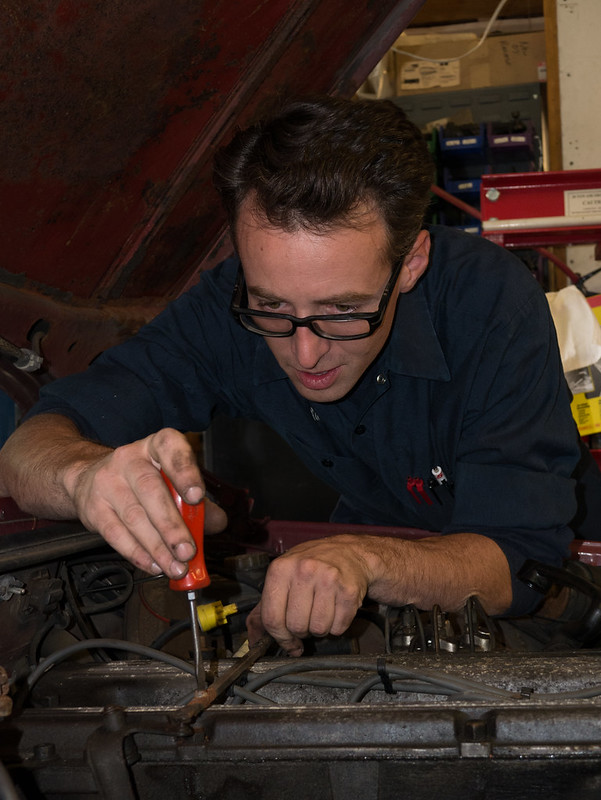
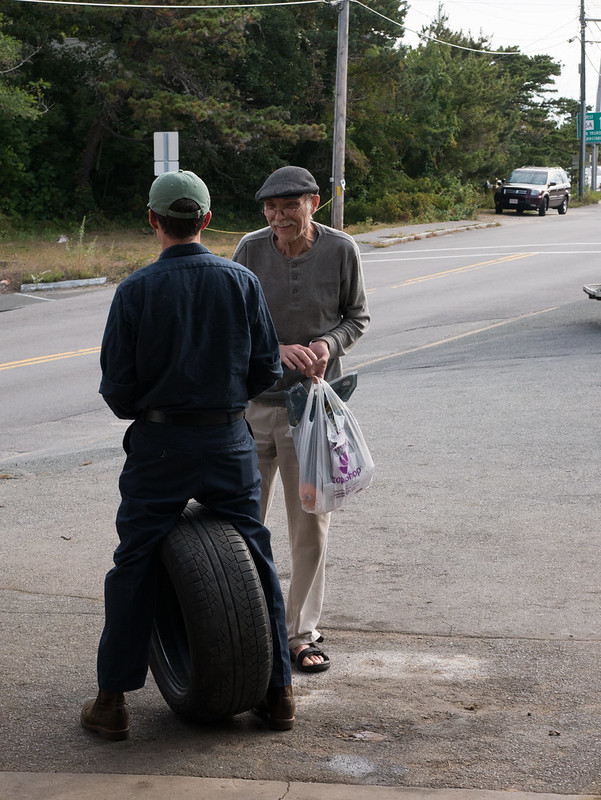
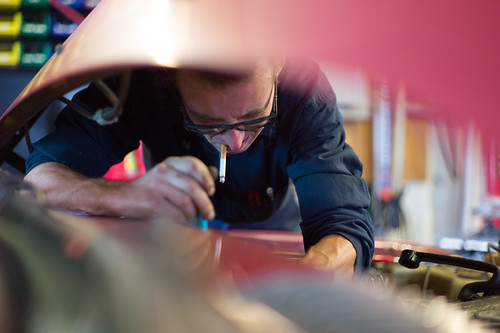
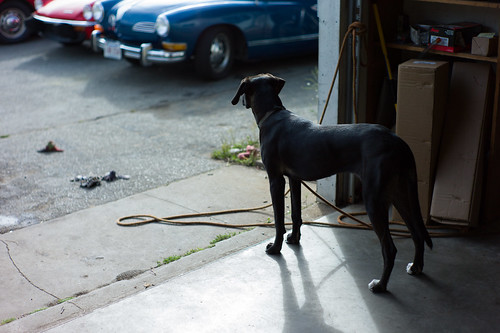
I knew that I was thinking too hard about it, and needed to pursue something. Stop thinking and start doing. I convinced myself that the best opportunity to go a little deeper was at Rego Automotive. No, it wasn't a flashy story, but Pat was an interesting and talented guy, working hard to make a small business successful in Ptown. Since I didn't really get any photographs to share on Monday, I let Bruno know that I would miss the morning session and go pursue some images at Rego Automotive.
 
I was very pleased to find Pat already hard at work when I showed up, and that he was willing to let me hang around and shoot more pictures. I supplied several images to Pat and his wife, Lacey, to use on their facebook page. I am happy to see them on the Rego Automotive page, and hope they help!
 
Anyway, I spent a few hours hanging out, talking with Pat while he worked, and photographing the course of his business.
 
I left around lunch time, feeling that I had at least pushed a little further into a story. I wasn't sure that I had enough to make a project from, but the experience had been good and in the right direction.
 
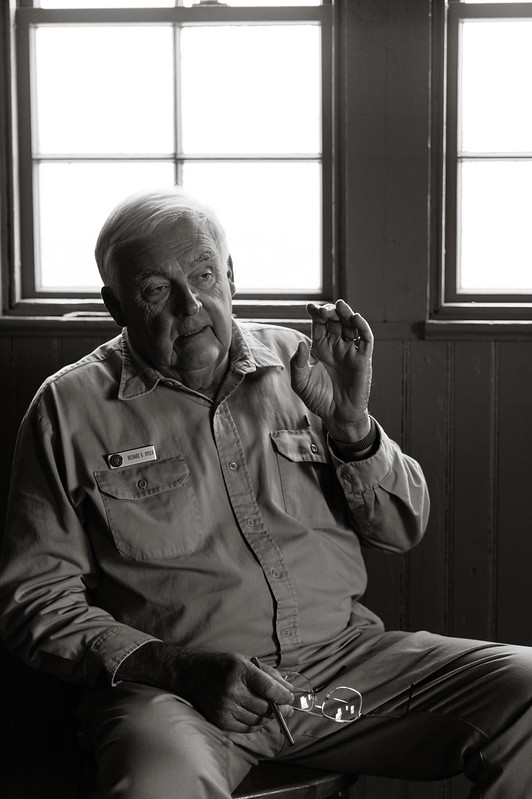
In the afternoon, I rode my bike out to the National Seashore to visit Richard Ryder at the Lifesaving museum. Mr. Ryder had answered my email inquiry from before the workshop. There were no special events during my week in Ptown, but he invited me to come and see the regular displays at the museum. I very much enjoyed meeting Richard, and shot some portraits of him in the old station, where his family members had served in generations past.
 
Richard Ryder, Lifesaving Museum Historian
 
There was certainly a good story in Richard's own family history with the station, but the kind of story that's best told by a writer, not a photographer. Pleased to have met Richard, I had to scratch that story off my list as well, and move on.
 
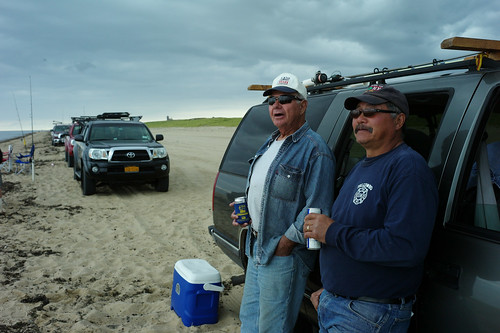
Looking down the beach from the museum, I noticed a caravan of trucks on the beach, and a group of people surf fishing. It was a long walk, but I had to see if I could find something interesting there. The fishermen were all New York City employees - policemen, firemen, sanitation workers. They have been coming to Ptown to fish together for over 30 years.
 
Surf Fishing
 
These guys were super-friendly, and full of stories. I hung around for an hour or so, and shot what I found interesting, which was mainly their personalities. The fishing wasn't productive, at least while I was there. Looking back on it now, this was potentially the "one that got away." If I'd been prepared to spend more time with them, I could have really gotten something good. As it was, I had only my bike and camera, and felt the need to get back to look through my images from earlier in the day and prepare for the next morning's review. If I had it to do over again, I would have done something to ensure that I could reconnect with this group later on. I am sure that their evenings together were as interesting as their days at the beach fishing.
 
When I did get back to review my images, I liked some from Rego Automotive. But, none of them really showed much human emotion or connection between people. I still was not there. At least I had something to show and get feedback on from Bruno the next morning.
 
I did realize how potentially productive the fishing group was, and planned to try to locate them again the next day. I could have helped myself out by getting contact information so that I could ensure success. Lesson learned.
 
On this evening, Bruno Barbey presented his work spanning 50 years in Magnum. So many of his images stuck in my mind, but one of a huge crowd in Poland, umbrellas getting covered in snow, was my favorite.
 
(Click Here) to see this awesome image on Magnum's website.
 
Another thing that really impressed me was Bruno's recent coverage of China. Caroline, Bruno's wife, shared an amazing video of Bruno shooting in the Chinese streets and interacting with the people. It really gave the presentation a different feeling, showing how people enjoyed his presence.
 
DMC-365.blogspot.com


Sunday, September 28, 2014

Street Art, on Film With Leica IIIC and Summaron 3.5cm f3.5 Lens

Street Art, by Reed A. George
Leica IIIC, Summaron 3.5 cm f3.5 Lens
Fuji iso 100 Color Print Film
 
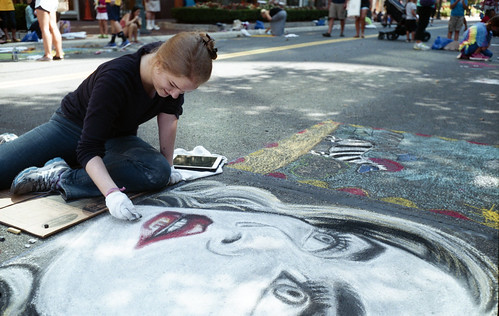
Man, do I love to shoot my old Barnack cameras. On this particular day, I chose to carry only this camera and lens to photograph "Chalk Fest" in Reston, VA.
 
When I started shooting in the late morning, the light was bright and harsh. The shade was fine, though. I ended up coming back later in the evening to finish up, when the light was much more agreeable. I'll have more to share from this event later.
 
The tiny little Barnack camera and lens, topped with a Russian 35mm viewfinder, caused little or no distraction amongst people at the festival. It is small, quiet, non-threatening. I can see why Barnack's little camera was able to transform photojournalism back in the day.
 
DMC-365.blogspot.com
 

Tuesday, May 6, 2014

The I.C.P. is Moving, Physically and Conceptually

The International Center for Photography (I.C.P.) in NYC, started by Robert Cornell Capa, is moving.
Museum Queue (not I.C.P.), by Reed A. George
Panasonic Lumix DMC-LX2
iso 400, f2.8, 1/8 sec.
 
The I.C.P. is one of those places I love to visit when I'm in NYC. Admittedly, I have not been there in a couple of years, but it strongly holds my interest. Started by Cornell Capa, brother of photographer Robert Capa*, the I.C.P. is a home for photographers, and hosts multiple simultaneous exhibits, typically focused on some aspect of photojournalism and reportage. I saw the fabled "Mexican Suitcase" exhibit there.
 
(Click Here) to read about the Mexican Suitcase and the work by Chim, Capa, and Taro that comprises it. A real look into the lives of these three masters, see it if you get the chance.
 
The I.C.P. also has a great store filled with all kinds of fun photographic paraphernalia and books.
 
Well, the I.C.P. is moving. A post in the New York Times' blog Lens describes what this means to Mark Lubell, Executive Director, and where he sees the I.C.P. going in the future.
 
(Click Here) to read the full article on Lens.
 
There are a couple of obvious conclusions that I can draw from the article. First, the I.C.P. plans to continue operations. Second, in the longer term, it plans to consolidate all activities, including the exhibition center and education program into a single location. Third, they plan to stay in Manhattan.
 
Beyond that, it's a little hard for me to really get where they're going conceptually. The interview focuses a lot on recent technological aspects of photojournalism, the use of smart phone cameras and immediate upload to communicate what's going on the world. I can almost detect the hint of virtual displays, with less focus on the physical output and display of prints. On the other hand, Mr. Lubell says that photography should be somewhat independent of technology, and that the Center should be a place for discourse on photography itself. I suppose these ideas can go together.
 
I was interested to find that Mr. Lubell thinks that Robert Capa would have been an enthusiastic user of Instagram. I'm sure the speed to market of photographic information would have impressed him.
 
DMC-365.blogspot.com
 
*Thanks to James McKearney for correcting my mistaken assertion that Robert Capa started ICP.
 

Wednesday, March 12, 2014

Four of Twenty Nine Chicago Sun-Times Photogs Return to Work - But Is It Really Good News?

Image Source: http://www.diyphotography.net/wordpress/wp-content/uploads/2014/03/7594964986_f37f2b9913_b.jpg
 
Last summer, I posted about the Chicago Sun-Times laying off all of their staff photographers, including the legendary John White. Well, apparently they've hired four of them back.
 
(Click Here) to read my post from last summer.
 
While this sounds like great news, the details in a post on diyphotography.net tells that the rehiring was really due to union contract negotiations, rather than necessarily being related to their need for professional photographers. It also says that in their rehired positions, they'll need to be "multimedia," with significant focus on videography.
 
(Click Here) to read about it on diyphotography.net
 
Well, I hope it's good news for these four photographers; it doesn't really sound like great news for the photojournalism trade.
 
DMC-365.blogspot.com
 

Friday, July 12, 2013

Former Chicago Sun-Times Photographer John White Keeps it Light

 
M. Spencer Green / Associated Press
 
Recently, the Chicago Sun-Times fired all of their staff photographers. In today's world of digital music downloads and ongoing extinction of book stores, this doesn't seem like such a surprise. So much of the visual media is recorded on cell phones these days. But, you have to look a little deeper.
 
For example, one of those photographers was at the pinnacle of the craft. Pulitzer prize winner John White is now a former Sun-Times photographer.
 
(Click Here) to read an article on the NY Times blog, Lens, about Mr. White and how he mentored NY Times photographer Michelle Agins to a successful career in photography.
 
But, Mr. White is keeping his chin up. He says he's not fighting the darkness, he's lighting candles.
 
Here's to the true master photographers out there, adjusting to the modern world. Some of us still value what you can do - with a cell phone or a Nikon. And, you did it every day for a whole career.
 
DMC-365.blogspot.com


Sunday, June 23, 2013

Excellent Photo Reportage From Turkey - nickthetasmaniac on mu-43.com

 
Poster nickthetasmaniac has posted an excellent series of images from the upheaval currently going on in Turkey. Shot with the Olympus OM-D, these images really give the feel of the place and situation.
 
(Click Here) to see the whole post. Pay particular attention to the fifth image in the series, of press videographers donning gas masks. Very cool commentary on the situation
 
Nick did very nice work with the OM-D.
 
DMC-365.blogspot.com


Wednesday, February 27, 2013

Kodak Tri-X Black and White Film - So Many of Us Grew Up On It


The first roll of black and white film I ever shot and developed was most likely Kodak Tri-X asa 400. It was certainly the standard in my 6th grade middle school darkroom, and for the yearbook project. Tri-X was also the standard for the photojournalists of the time, and for a very long time.
 
For years, I bulk-loaded my own cassettes from 100' rolls. Those were the days. And that emotion seems to keep lots of people using Tri-X.
 
Personally, I have moved on to Kodak Tmax 400 as my standard film. Tmax has finer grain. But Tri-X does have a very special look to it.
 
John Bragg has started a post about how he just can't get Tri-X out of his system.
 
(Click Here) to read his post, and other users' comments on rangefinderforum
 
John should not be in any hurry to change. The shot above, shot on a Nikon FM2N and Vivitar 135mm lens leaves little to be desired.
 
DMC-365.blogspot.com


Monday, January 7, 2013

Leica M Digital - No Longer Just a "Dentist's Camera?"

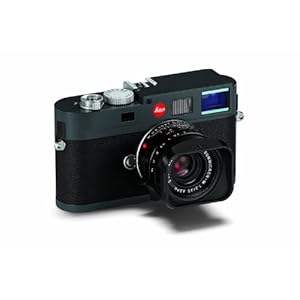
Photographer Sarah Lee from the UK's Guardian has started using a Leica M-E, the camera that's nearly identical to the M9 (missing only the frameline preview lever and USB connection), yet significantly less expensive.
The Leica M-E Digital Rangefinder
Image Source: www.amazon.com
 
(Click Here) to read Sarah's thoughts on the Leica M-E on the Guardian's blog
 
Sarah discusses how the Leica M9 was not well-adopted by professional photojournalists because of price. In fact, she says that the pros refer to it as the "dentist's camera." I suspect a little of this is also involved in her decision to tape over the red dot on her M-E.
 
Like the M9, the useful iso is limited at about 1250, and it shares the slow write speed and small image buffer of the M9. Otherwise, her comments are quite positive, and par for the course as other photographers have reported. For Sarah, it has taken her back to shooting for fun, and to the reasons she became a photographer in the first place. It even has her printing images again.
 
Sarah Lee with her gaffer-taped Leica

Sarah Lee with her gaffer-taped Leica. Photograph: Sarah Lee for the Guardian

Image Source: http://www.guardian.co.uk/artanddesign/photography-blog/2012/dec/28/leica-m-e-rangefinder-photography
 
Another comment by Sarah is interesting to me - it has to do with her Pentax K1000 (my featured "Skeletons from the Closet" camera for January), and how she still appreciates it. That's cool.
 
You should read the whole article if you're interested in Leica digital rangefinders. But, to sum up, she says that once you can afford this type of camera, "it changes everything."
 
I would venture to add that going back and shooting the K1000 for a while may change everything as well. Don't get me wrong - I'm no dentist, but I do own an M9, so am certainly not a detractor of Leica. I just think that shooting with the basics, whether it be an M9 or a manual film SLR, changes the way you look at photography.
 
Buy your "inexpensive" Leica through my link below :).
 
DMC-365.blogspot.com


Tuesday, December 18, 2012

Interesting Photo Challenge - Simplify, Focus on Framing and Timing

Here's a challenge, presented on the facebook page of Next Cameras (http://www.facebook.com/NextCameras?ref=stream
 
"...Hmmm. So here's a simple technique to try: shoot like a Reuter's PJ next time you head out. Bring a wide angle zoom and start with it at the widest focal length. Set aperture priority with your fastest aperture. Change only one camera setting: ISO value to keep your shutter speed in a range you're comfortable that you'll get sharp images from (and if
you're really following the rules, set your Nikon body to one-stop increments for ISO ;~). Spend all your remaining energy on just three things: framing, focus, and timing. Note that "framing" may mean moving forward, backward, and sideways! You, not the zoom. (For those that think landscape photography can't be done this way, think again. It's actually very close to the way I learned from Galen Rowell and still practice, only we don't usually set maximum aperture, but rather something like f/8.

I'll make a small wager: you get better images by concentrating this way. PJs do, so why should you be any different? ;~)
Thanks to Thom Hogan for the idea."
I like this. It reminds me of the shooting I recently did with my new Holga lens on the Lumix DMC-G3.


Shot With Holga 25mm f8 Lens on Lumix DMC-G3
Sometimes it's just plain good to narrow the variables. I will try Thom's suggestion above.
 
DMC-365.blogspot.com


Saturday, October 20, 2012

Gandhi and Henri Cartier-Bresson - In Gandhi's Final Hour

The Photography Daily THEME announces an exhibition at the Nobel Peace Center in Oslo, Norway, remembering two giants of cultural life - Mahatma Gandhi and Henri Cartier-Bresson (HCB).
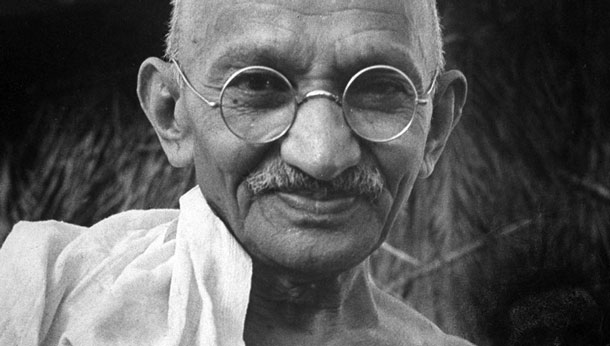
Mahatma Gandhi, by Henri Cartier Bresson, Magnum Photos
Image Source: http://the.me/gandhi-and-henri-cartier-bresson-hcb/?utm_source=feedburner&utm_medium=feed&utm_campaign=Feed%3A+themephoto+%28theme%29
 
It turns out that HCB was the last to photograph Gandhi, meeting with him one hour before he was assassinated by a Hindu fanatic. What a terrible shame.
 
(Click Here) to read the whole story on THEME.
 
I am so used to seeing HCB's street photography that I wonder what it was like to experience him on an assignment to photograph a single person. I have seen some of his portrait work, like that above, and it certainly shows his mastery of the photographic media. But, I think of him as the "capture the moment" guy, rather than covering a single personality on assignment.
 
HCB stayed on in India after the assassination, covering the public's response to the event.
 
DMC-365.blogspot.ocom