Showing posts with label Low Tech Wonders. Show all posts

Saturday, September 6, 2014

Low Tech Wonders - A Little Fun with the FPP Debonair

Sometimes I just want to have a little photographic fun. I want to drop all pretense and concern about the technical aspects of photography, and shoot. I suppose I still (kind of) think about composition, but that's about all I control when I shoot my "Debonair" 6x4.5 medium format toy camera from the Film Photography Project (FPP).
 
(Click Here) to check out the awesome Debonair, a <$20 real film real toy camera on the FPP website.
 
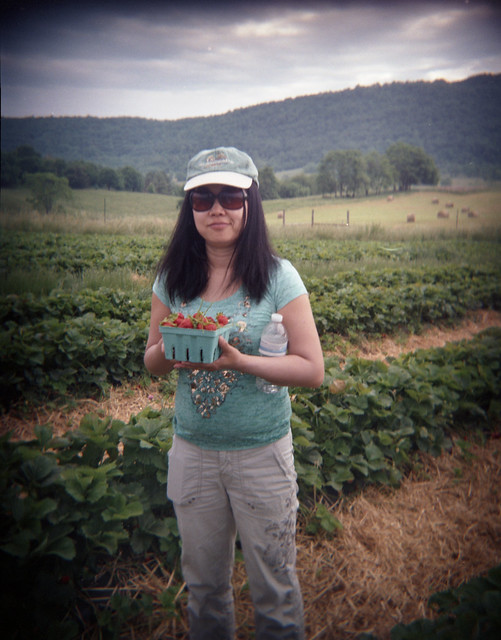
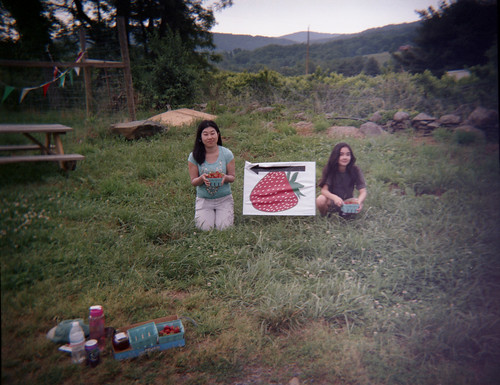
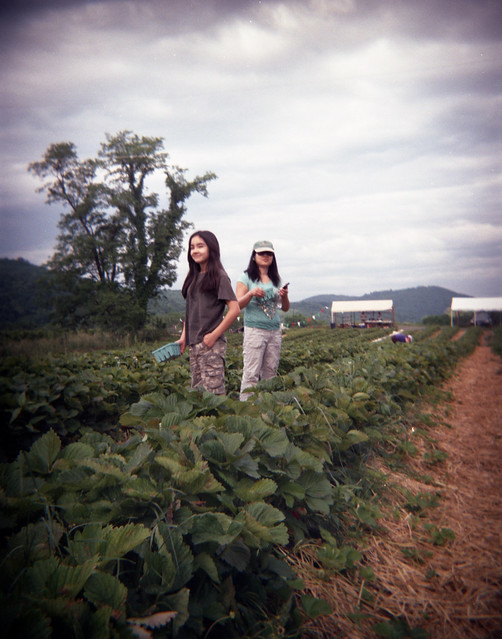
Here are some shots I took on an outing to a local farm to pick strawberries with my family last year (it took a while to finish the roll and send it off to The Darkroom).
 
All of these were shot on expired Konica Centurian film, which judging by the name should be good for 100 years, right? I love the vignetting you get with the cheap plastic lens. It's actually kind of sharp in the center, but that falls away very quickly. Theses are pretty much out-of-camera scans, with only cropping in Lightroom.
 
DMC-365.blogspot.com
 

Tuesday, June 24, 2014

Holga 25mm f8 Lens on Lumix Micro 4/3 - Down by the Riverside

I attended the Shenandoah Riverside Festival in Brunswick, Maryland last weekend.
 
(Click Here) to read a little about the festival, and hosting organization, Earth Korps.
 
In addition to my Nikon D700 kit, I brought along the tiny Panasonic Lumix DMC-GX1 and a couple of specialty lenses, including a plastic toy lens, the Holga 25mm f8. I had some fun with that, and here are the results.


And here's my favorite:
 
Fun with the Holga 25mm f8 Lens for Micro 4/3, by Reed A. George
All Images Made with Panasonic Lumix DMC-GX1
 
For $20, the Holga lens is worth a try. See below for a link to yours on Amazon.
 
Recently, I've been having fun with low tech. Not only cameras that were once state-of-the-art but happen to be from the age of film, but also things that started out low tech, like the Holga lens and my pinhole camera.
 
I've got an exhibit in mind along these lines. Just a concept, I need to work through writing an artist's statement and see if it holds up. It's time for a new project.
 
DMC-365.blogspot.com


Tuesday, December 17, 2013

First Snow - Shot With Low Tech Wonder, Polaroid 103

 
Snow is Coming Down, by Reed A. George
Polaroid 103, Fujifilm FP-3000B Instant Film
 
As I write this, it's December 8, 2013, and we're having our first winter storm of the year. Being a self-respecting photographer, I couldn't just sit at home and finish scanning film (which is also on my list for today). So, I packed up a few cameras and drove out to the local wildlife reserve. Here's the only shot I made with the Polaroid 103 today. You can see the snow streaking down. I increased contrast in Lightroom (after scanning the print). I think it came out pretty darned good.
 
This was shot on the endangered Fujifilm FP-3000B instant black and white film. (Click Here) to see an earlier post about Fuji's plans to do away with this film. I sure hope they can be convinced to change their minds, but I am sure the market's small.
 
As will all things, they can't last forever. I am glad that I got the chance to use this excellent film, and enjoyed the result today.
 
DMC-365.blogspot.com
 
Perhaps if you buy some film for that old pack film camera you've got sitting around, Fuji will keep making it for a while. Here's a link:


Wednesday, September 18, 2013

Recovering Polaroid (Fuji Pack Film) Negatives - I Must Try This

Image Source: http://delvauxkoen.blogspot.be/2013/08/creating-negatives-from-fuji-fp-100c.html?utm_source=buffer&utm_campaign=Buffer&utm_content=buffer882a7&utm_medium=twitter
 
You may have seen my Low Tech Wonders post about the Polaroid 103 camera that my parents sent me. I really enjoy shooting it, and the results are pretty impressive. Using modern Fuji pack film that is still easily available (see Amazon link below), the 103 just needed a simple modification to run on AAA batteries to be once again functional.
 
(Click Here) to read my post about the camera.
 
I had heard somewhere that in addition to the instant print you get from the Fuji film, you could recover the negative image for scanning. I found a post by Koen Delvaux about how to do this.
 
(Click Here) to read Koen's instructions on recovering instant negatives.
 
Koen demonstrates that the negatives are actually much sharper than the instant prints. While the process for recovering them involves straight bleach (fairly dangerous stuff), I think it's worth a try. I don't know what to expect in terms of being able to store these negatives long-term, but if I can get a good scan of them, that's probably good enough. My Epson scanner does a much better job on negatives than on prints as well.
 
Thanks, Koen, for the clear explanation of how to do this!
 
DMC-365.blogspot.com


Wednesday, August 28, 2013

Low Tech Wonder - Konica C35 Rangefinder

Konica C35
Photo Attribution: Lewis Collard
 
Looking at this camera, you may wonder why it made it under the "Low Tech Wonder" label, rather than into my "Skeletons From The Closet" series. The answer is simple, and it has to do with the little badge on the front of the camera that reads "automatic." Produced in 1968, the Konica C35 has many makings of a great little rangefinder camera, and in some ways, it is. However, being automatic, the camera selects both your f-stop and shutter speed for you. Even though the Hexanon 38mm f2.8 lens is really nice and sharp, this automatic "feature" turns the camera into a point (focus) and shoot camera. I couldn't live with that lack of flexibility for a month of shooting.
 
My C35 came from an antique shop in Ohio (thanks to Mom!). It took some disassembly, lighter fluid, and a new battery to get it working again. I was concerned that the exposure may be off, as the little indicator that shows the combination of shutter speed and f-stop didn't seem to change enough as I changed the ASA setting. But, I decided to try it out. I shot a roll of drug store iso 200 color print film at a local civil war historic site, the Mount Zion Church in Aldie, Virginia.
 
(Click Here) to read more about the Mount Zion Historic Park in Aldie.
 
Here are my results:
 
The shot above is my favorite from the roll.


I find the gravestone above quite creepy.
 
So, what are my impressions of the Konica C35? First, bitingly sharp lens, as I've come to expect from Konica. Second, the exposure seems to be pretty much spot on, at least within the latitude of color print film. I didn't try a really wide range of exposures, but this lighting level seemed to work just fine. So, what I think I've got here is a slightly less compact version of an Olympus XA, with perhaps even better image quality and definitely better rangefinder focusing, but sadly no overexposure switch like the XA has. Not bad, not bad at all. Now if it only had manual exposure override. Then I would carry it around for a month.
 
DMC-365.blogspot.com


Tuesday, June 18, 2013

Low Tech Wonders - Converted Polaroid 103 Images

 
I wrote a little about my Polaroid 103 camera, rescued from a dusty shelf in an antique shop, some time back. (Click Here) to read about how I got it going again.
 
Since then, I've also tweaked the "electronic eye," adding a handmade paper diaphragm (a hole punched in a piece of paper) to reduce the light coming in. I found that it was underexposing, even with the exposure adjustment all the way toward the bright side. The paper aperture fixed it, and it shoots just about right with no exposure offset.
 
So, I bribed the kid - sure, you can have a piece of cake after dinner, if you come outside and let me shoot pictures of you as you eat. Here are the results, scanned on my Epson V750:
Oops, a little motion blur. Here's my favorite from this series:
 
She said "It looks like I'm summoning lightning." I agree.
 
And here's the most artistic shot I've made with the 103 so far:
 
It's actually a very capable camera.
 
One thing that's interesting - there are two types of Fuji pack film that are available and work in the camera (see links below). One is iso 100 color, which you see used in all the images above. The other is iso 3000 (!) black and white. Here's the funny thing. Since the camera is fully automatic, you can't change the exposure. Apparently, it uses a much smaller aperture for the black and white, making it shoot at approximiately the same shutter speed as the iso 100 film. I thought I should be able to make great low light images with iso 3000 black and white film. Not so. Indoors, because the aperture is small, the shutter speed is quite long, even with iso 3000.
 
Anyway, I'm glad my Mom sent me the Polaroid. It is a nice diversion.
 
DMC-365.blogspot.com


Friday, June 14, 2013

Low Tech Wonders - A Triptych From The Brownie Bullet

I was looking over some of the first images I made on the Brownie Bullet last night. You may remember that I figured out a way to rig it to shoot panoramic images on 35mm film.
 
(Click Here) to read about how I did that.
 
Anyway, three of the images seemed to go together. Following up on some recent advice I got in my Leica Akademie workshop, which was to "live with your images," I printed out a big 13x19 triptych of them. Here's what it looks like:
 
Brownie Bullet Triptych, by Reed A. George
Brownie Bullet Camera, Converted To Shoot 35mm Panos
 
Personally, I like it. Imperfections and all.
 
DMC-365.blogspot.com