Showing posts with label cheap. Show all posts

Saturday, March 14, 2015

Spring Really Coming? And Some Thoughts on Cheap Cameras.

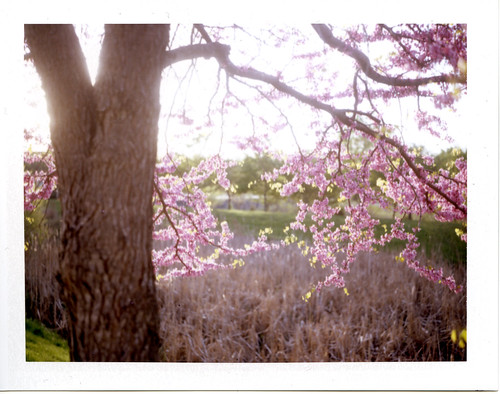
Previous Spring, by Reed A. George
Polaroid 103, Fuji FP100C Instant Film
 
I was talking with a couple of friends today about favorite and not-favorite photographers, what I like about cameras and photography and why, and the like, today.
 
It was an interesting discussion, starting off with the fact that neither of them is fond of Gary Winogrand's work; I find it fascinating. Then, we moved on to cameras. Now, you probably know that I love fine cameras. But, I also love cheap ones. This brought me to the realization that some of the images that stick in my mind were made with the cheaper, less precision-made cameras. This image is a good example of that. I can still remember the smell of spring in the air, and the fact that my allergies had started up. It almost makes my eyes itch to look at this picture. But, it also reminds me that spring is right around the corner.
 
Would this image win any popularity contests? Almost certainly not. But, it works for me.
 
DMC-365.blogspot.com

Monday, February 16, 2015

Brownie Reflex 127 - Some Results

Remember when I posted the question pondering why cheap old cameras are so much fun? (Click Here) if you don't remember, or want to see what the Brownie Reflex looks like.
 
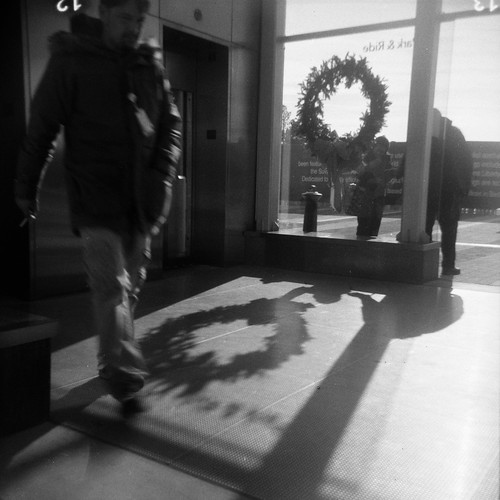
Here are a couple of results from my first roll of Efke 127 (I bought it a couple of years back), developed by Dwayne's. The first is just an odd perspective of the new Metro station in Reston, Virginia. I actually like the way the film exposure numbers show up at the top (who knows why?).
 
Metro, by Reed A. George, Kodak Brownie Reflex Camera
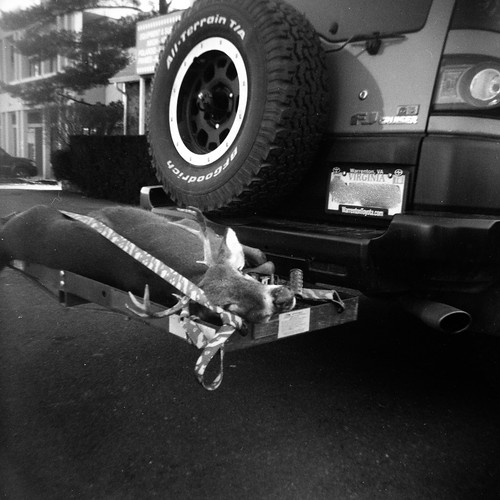
And here's a scene you may have seen before, as I shot it with both the Brownie and my new Nikon Df. (Click Here) to see the Df version.
End of the Season, by Reed A. George, Kodak Brownie Reflex Camera
 
I like the randomness of shooting with very basic old cameras. They're cheap, and I think at least as much fun as shooting with a Holga. Once you've loaded film, the only variable in your control is composition. Exposure and focus are fixed.

This Brownie Reflex was $10, and cleaned up very nicely. However, getting 127 film is not easy, and it's expensive ($11-$12 per roll, twelve exposures). The only place I know to get it reliably is The Frugal Photographer (frugalphotographer.com). I bought a few rolls last time, including some black and white and some color.
 
You can still get 127 developed with no problem. This time, I used Dwayne's. But, I'm not as happy with their work as I am with The Darkroom (thedarkroom.com). Just my opinion. It's good to have them both as options.
I've got a few more images to share from this first roll, so stay tuned!
 
DMC-365.blogspot.com

Saturday, September 6, 2014

Low Tech Wonders - A Little Fun with the FPP Debonair

Sometimes I just want to have a little photographic fun. I want to drop all pretense and concern about the technical aspects of photography, and shoot. I suppose I still (kind of) think about composition, but that's about all I control when I shoot my "Debonair" 6x4.5 medium format toy camera from the Film Photography Project (FPP).
 
(Click Here) to check out the awesome Debonair, a <$20 real film real toy camera on the FPP website.
 
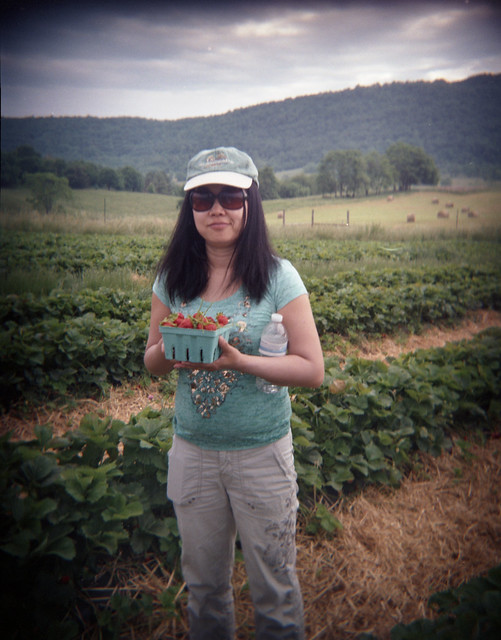
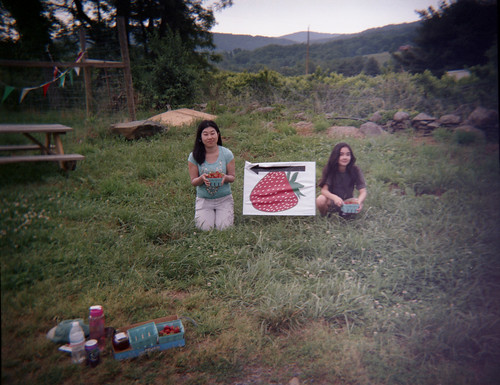
Here are some shots I took on an outing to a local farm to pick strawberries with my family last year (it took a while to finish the roll and send it off to The Darkroom).
 
All of these were shot on expired Konica Centurian film, which judging by the name should be good for 100 years, right? I love the vignetting you get with the cheap plastic lens. It's actually kind of sharp in the center, but that falls away very quickly. Theses are pretty much out-of-camera scans, with only cropping in Lightroom.
 
DMC-365.blogspot.com
 

Thursday, June 5, 2014

"Engineer" (Low-Fi Large Format) Prints from Photojojo

I have a couple of images that I want to print very large. I posted one of them yesterday, which I shot at Audubon Park in New Orleans. I have a very large square frame that I rescued from the trash can, waiting for that shot. Another is a pinhole image that I recently made, which I have not yet shared. It's a much less sharp (obviously, having come from a pinhole camera), more interpretive image that I want to print as large as possible to see if the effect scales.
 
Large prints are very expensive to make. At least photographic quality prints. This morning, I found a post about "Engineer" prints from Photojojo.
 
Image Source: http://photojojo.com/engineerprints/img/tutorial_photos/Engineer-Prints-457_Full1600new.jpg
 
These are apparently made on printers designed for architectural drawings, and on rather lightweight paper. They are 3' x 4' in size, and only in black and white. The description includes this statement about what to expect:
 

"Streaked, striated and wacky black and gray tones combine to create a super unique look that’s no ordinary photo print."

 
So, don't expect a perfect print. However, at $25, and with free shipping, it may just be worth a try with my pinhole image. That shot is made on 4x5 film, so I can make a very large scan of it to send for printing. Yes, I think I'll give it a go. I'll let you know how it turns out.
 
(Click Here) to read more about Engineer Prints from Photojojo.
 
DMC-365.blogspot.com


Thursday, February 7, 2013

Low Tech Wonders - A New Series on DMC-365 - The Lomography Sprocket Rocket

Optically Flawed, Visually Interesting, by Reed A. George
Lomography Sprocket Rocket Camera, iso400 Film
 
I've been enjoying a few plastic "toy" cameras recently. This post will be the first of a series on the results. If you're not familiar, just do a google search for the word "Holga." There's an entire counter-culture of photographers using these things. They take all of the technical work out of photography, allowing you to focus on composition. The lenses are typically low quality, sometimes even plastic. There are light leaks. These are not high end or expensive cameras.
 
My parents sent me a new toy for Christmas - the Lomography Sprocket Rocket. Here's what it looks like (buy yours at my link to Amazon at the bottom of this post):
 
Lomography Sprocket Rocket Superpop! Blue Camera
Image Source: www.amazon.com
 
Mine is black.
 
What's cool about this camera? Well, first off, the sprockets. It's designed to expose all the way to the edges of the 35mm film, including the sprockets. It also shoots in a wide panorama format, as you can see above.
 
Keep in mind that this is a toy camera from the same folks that sell Holgas. It has a fixed focus wide angle lens (actually, it also has a "macro" setting for subjects less than 1 meter away), and the depth of field is so large, focus is not really an issue. There is one shutter speed (~1/100 of a second). There are two aperture sizes: if you set the camera for daylight exposure, it's about f16, for cloudy, it's about f10.8. Film advance is manual, and you have to look down into a squinty little window to see when to stop turning the film crank. It does have a working hotshoe for flash (more on that in a future post).
 
In order to scan the film, I use another Lomography product, called the Digitaliza, on my Epson scanner. The Digitaliza holds the film by the very edges, exposing the sprocket holes to be scanned.
 
I think this thing is very cool. It really does bring down all pretense of photography being serious business, and lets you play. I recently carried mine, along with a little Nikon flash, to an indoor event. I had a blast with it. I'll be posting pictures from that soon.
 
By the way, there are cheaper plastic cameras to play with that accomplish many of the same things. I'll be posting about at least one of those in the near future as well.
 
In the meantime, if you want to have some fun, pick up a Sprocket Rocket from the link below.
 
DMC-365.blogspot.com


Friday, December 28, 2012

Another Lens Option for Focusing on Composition With Micro 4/3

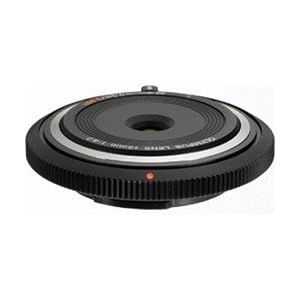
Olympus 15mm f8 "Body Cap" Lens
Image Source: www.amazon.com
 
I've posted some images that I've taken with the Holga 25mm f8 lens for Micro 4/3 recently. Today, I read a nice post by Ray_S on mu-43.com, where he shared several pictures he took in Philadelphia, using the new Olympus 15mm f8 "Body Cap" lens. Ray_S has listed copyright protection on his images, so I didn't repost any here (too bad, I'd say it's limiting his exposure, but that's not my call).
 
So, (Click Here) to see his images.
 
I really like the composition and look of some of these pictures. There's clearly some processing going on here that makes them look like HDR to me. A bit artificial looking, again in my opinion, but the lens clearly works pretty well.
 
The Olympus lens is a 15mm (30mm field of view equivalent on full-frame 35mm sensors), fixed aperture f8 lens. Just like the Holga, it is a slow lens (f8 requires quite a lot of light), and has a little bit of focus adjustment capability, but it's only rough. At 15mm focal length, focus is not much of an issue anyway - the depth of field is enormous. The Olympus lens is wider angle than the Holga, and I'd venture to say the optics are higher quality than the Holga (not a high bar). The other cool thing about the Olympus lens is that it's tiny. In fact, as the name indicates, you can use it as a body cap for your extra Micro 4/3 camera body; it's only 9mm (~1/3 of an inch) thick. It can also focus close-up, to a minimum distance of 30cm (12 inches).
 
The Olympus lens is more "expensive" than the $25 Holga, but at ~$55, it's hardly going to break the bank for anyone who can afford a Micro 4/3 camera body. My conclusion is that the Olympus Body Cap lens adds nicely to the goal of Micro 4/3 gear overall - compact, easy to use, good (not extraordinary) image quality. Maybe I'll try one.
 
DMC-365.blogspot.com


Wednesday, December 5, 2012

Why Is This So Bloody Fun? Holga Plastic Lens on Micro 4/3.

So, on a whim and a suggestion (from Andrea Costa, one of my readers), I recently picked up a Holga plastic lens for my Lumix DMC-G3 Micro 4/3 camera. Total cost? $22 including shipping, and a couple of weeks waiting for shipment from Hong Kong.
 
(Click Here) to go to Holga Direct if you want one.
 
I used mine on our last day in Barcelona. I can't really explain why, but it's sort of freeing to not worry about the technical quality of your images. It's a blast to just snap whatever comes in front of your eyes. One very rough focus knob is all there is. The f-stop is always f8. I used aperture priority sometimes, manual shutter speed settings, other times. Most of the time I used iso 400, but went up to 3200 in dark places.
 
This shot was taken from the cable car going up to Montjuic Castle. These guys were working on the roof of a building in the part.
Roof Repairs, by Reed A. George
Panasonic Lumix DMC-G3, Holga 25mm f8 for Micro 4/3
Going Up, by Reed A. George
Panasonic Lumix DMC-G3, Holga 25mm f8 for Micro 4/3

I find that this lens works best with bold shapes and colors. Maybe that's one of the things I like about using it. It just kind of captures blurry little memories of what you're experiencing. I really, really like using it.
Vines, by Reed A. George
Panasonic Lumix DMC-G3, Holga 25mm f8 for Micro 4/3

Montjuic Castle Arches, by Reed A. George

Panasonic Lumix DMC-G3, Holga 25mm f8 for Micro 4/3

 
Lamps, by Reed A. George
Panasonic Lumix DMC-G3, Holga 25mm f8 for Micro 4/3
Tomatoes, by Reed A. George
Panasonic Lumix DMC-G3, Holga 25mm f8 for Micro 4/3

I highly recommend that you get one of these. I can feel it being a great solution for creative block, when I just can't think of anything to shoot, or what to say with my photography. I wondered about whether I'd regret using it on a trip to Barcelona - didn't I want all nice, sharp images? The answer is no. The Holga lens really added to my trip, and the shots here will be part of my memories of the trip.

DMC-365.blogspot.com


DMC-365.blogspot.com